Penny Drake, the 5'11 Wonder Woman
hails from San Antonio Texas USA and is not just a pretty face with a
killer body but is smart, funny and easily the most coolest babe that we
had the pleasure of interviewing. Of course it helps that she knows her
gaming, although we would probably be a little scared to challenge her
in Rock Band.
From model to actress, drop dead gorgeous
to vicious Zombie, she is truly a diverse and talented person.
Thankfully she agreed to be interviewed by Impulse Gamer, rather than
squashing us under her heels. Of course, Penny Drake became known to us
through her exploits as the sexy wicked witch called Bayonetta and if
SEGA are reading this, we demand a live action Bayonetta series starring
Penny Drake.
With that in mind, it's easy to see why
Penny has so many fans! Oh... apparently she's psychic or so the rumours
go but then if that was the case, she wouldn't have agreed to this
interview or would she?
The REAL Bayonetta!
Even
though MAXIM.com and even Playboy have their own Bayonetta competitions,
we all know who the REAL Bayonetta is!
Tell us a bit
about yourself? I’m tall. Hey, you said to tell you “a
bit”.
What made you
get into modeling and acting? Nothing “made”
me get into it. Hell, so many people desire to be a model or
actor, I’m just lucky to have some of the attributes it requires
to qualify (Amazon height), then the ambition and timing to have
landed some great things.
What do you
enjoy about modeling/acting? The overall
environment is creative and an entire team pulling together for
an end product is a great thing to be a part of.
What would your
dream job be? A good sitcom would be amazing. I love
comedy.
How did you
become the face and BODY of Bayonetta? My agency sent
me on an audition for SEGA at the G4 studios in Los Angeles. I
had to wear form fitting all-black attire, a pair of glasses and
hold a gun. I was instructed to do my best gaming vixen walk
and pick a line from the Bayonetta game to say in my best
Bayonetta imitation. What put me above the rest was that I had
actually seen the trailer for the game and knew that Bayonetta
had a particularly taunting laugh. I did the laugh. The SEGA
reps told me that was what set the bar.
How do you keep
in shape? I generally eat well and work out like a
champ! It takes a lot of effort. I hit the gym to lift
weights. I hike regularly and take yoga on the weekends. I
just started jogging to prepare for an obstacle course challenge
in April 2010 called Warrior Dash. Look it up
www.warriordash.com I’m in it for the Viking hat and
costumes.
What did you
enjoy about Bayonetta? I loved getting
to taunt people at the live events. It was amazing how many
people would go to each one just to see if it was still the same
girl playing Bayonetta every time.
What are three
technological things you cannot live without? My Blackberry
phone, my iPod and the internet.
What is your
favorite video game? HANDS down, Rock
Band. I am a complete sucker for that game. I once sang 35
songs in a row! I was on tour. My fans needed me. LOL. When I
was working E3 in Los Angeles, every time I took a break, I
would make a bee line for the Rock Band stages and belt my heart
out. I once played drums with a group of gamers and one of the
guys noticed my badge with SEGA on it. He asked, “What do you
do for SEGA?” I responded in an English accent, “I’m Bayonetta,
love.” He nearly wet himself. I had no idea I would get that
response.
Married or
Single? That would be Single with a capital “S.”
What do you look
for in a guy? A pulse and a sense of humor. Dead guys can
be funny, too. But zombies don’t tend to smell good after a
while.
What is your
favorite movie? My all time fave
is “Labyrinth”. Two words: David Bowie. That package was lit
so freakin’ well. It was my introduction to a real rock star.
Who is your
favorite actor? Tim Curry. I’ve been a fan from the “Rocky
Horror Picture” days, to him as the devil in “Legend”, to “The
Three Musketeers.” His comedic timing and delivery style are
something I envy.
Favorite Music?
Everything! I love alternative rock, to
gangsta rap (cause I’m hard core like that), to symphonic, to
pop, to electronica…just NO country.
Favorite Food?
The stuff that tastes like heaven and holds
no actual calories so I don’t have to worry about my weight…oh,
wait, that doesn’t exist, so I guess I’ll go with Italian.
Favorite Color?
RED! Just like my hair!
Favorite TV
Show? “Family Guy.” I’ve actually attended a table
read and watched Seth McFarlane have a conversation with himself
as 6 different characters. It’s amazing.
Favorite Animal?
Giraffes, they are tall and awkward like me!
Your motto for
life? Live life on the edge of constant discovery
and challenge.
Do you have a
fan site like twitter, myspace or facebook? YES!!!
Are there any
scoops you could give Impulse Gamer? Currently
The-Body-of-Bayonetta, as I like to refer to myself, is working
on a new sketch comedy. As many of my fans know, I am a scream
queen and a sketch comedian. I work closely with Scream HQ, who
brought the world the irreverent and politically incorrect
movie, “Zombie Strippers.” We have developed a sexy sci-fi,
comedic webisodic called “Star Chicks.” I am calling on ALL of
my fans and supporters to check out the show and help back us so
that we can produce the first 10-13 episodes. For any amount
that you pledge, you will get great merchandise, memorabilia
and, hell, if you pledge $100 or more you get original art work
by me! $1000 or more and you get a walk-on role.
What does the
future hold for you? Hopefully, more
gigs as Bayonetta. She really is a wonderful character to get
to play. Also, I’m hoping the best for the projects I’m working
and a productive 2010 with lots and lots of work!
Ten words or
less for your fans? Email SEGA that
you want more of the REAL Bayonetta!
That e-mail address that Penny
would be referring to would be
info@segahelp.com, so you know what to do... click and send!
Kirill Yudintsev the creative
director of Gaijin Entertainment and the Project Manager for the upcoming
WWII air-combat game “Wings Of Prey” took some time out to give us a little
in-site about this upcoming title. You can view the games screen shots and
renders here http://www.airwargame.com
Impulse Gamer: Out of all the battles of that period,
with aircraft in use, why where those certain battles chosen? Any particular
reasons?
Kirill Yudintsev: There were different reasons. We wanted to make different
locations and military operations for different reasons. We wanted to make
the game as a story of the WWII air-war from the beginning in 1940 till the
victory in 1945. So Battle of Britain and Berlin were defined. Also we
wanted to show the second European front in 1944 and break points
Mediterranean and Eastern front – so Stalingrad Battle, Sicily “Operation
Husky” and Ardennas “Battle of the Bulge” got their places. Korsun
operations are not as famous but that was great and interesting battle so we
added it also.
Impulse Gamer: What kind of players are you trying to
attract with this title? Will it only be for hard core air-combat simulation
gamers?
Kirill Yudintsev: No, it will not. We want to attract not only hardcore
players. There are specially a lot of simplifications on the arcade level of
difficulty, a tutorial with hints and also hints during the game. Also our
campaign designed with principal “less than a minute before action” (with an
optional take-off for hardcore gamers). We are looking forward to enlarging
the typical audience and attracting new virtual pilots. When a newbie
settles down to the game, they will be able to increase their level of
difficulty step by step sinking into the deeper parts of simulations and the
details of air battles and tactics.
Impulse Gamer: From what we have seen of some of the
screen shots the plane graphics are spectacular. How extensive was the
research on the aircraft? Will we see some of the historic and known
strengths and weaknesses of some of the aircraft?
Kirill Yudintsev: We have been developing this game for more than 3 years -
and we continue making the game better. It certainly is the cutting edge in
technologies at this time. It is unlikely that virtual pilots will see
something else with such stunning levels of details and visuals any time
soon. Undoubtedly, the planes in the game as much as possible reproduce
advantages and vulnerabilities of their real prototypes. Of course not
everything can be showed in the game – ergonomics of cockpits for example.
But all-in-all it is extremely detailed reproduction.
Impulse Gamer: While air to air combat is exciting of
course, air to ground operations can be even more exciting... are there air
to ground missions and can you tell us what some of those are? Any ammo
train strafing?
Kirill Yudintsev: Almost half of the game both in a single and multiplayer
is air to ground missions. Trains, antiaircraft guns, airfields, ships,
tanks, fortifications - these are great and complex targets.
Impulse Gamer: Many games
make use of realism settings, can you tell us what some of the settings
players can customize for their gaming experience in “Wings Of Prey” ?
Kirill Yudintsev: Physics realism (3 level – from arcade to simulator),
engine auto-control, limited fuel and ammo. We decided to refrain from the
total freedom in choosing realism settings. Firstly, most of the players
play not in a great amount of variants. Secondly, we have chosen the most
basic types and settings to include.
Impulse Gamer: Tell us about some of the damage modeling and effects that
are incorporated in the game.
Kirill Yudintsev: It is better to take a look to a demo version with your
own eyes, but here are some of the effects that were never seen before: rain
drops on windows, splashes of oil from padded planes, rain drops on the
plane. There are also things as the punched oil radiators, petrol tanks,
water cooling and other, of course.
Impulse Gamer:We know some of the information about the
game support for direct X 9 and above, how will dual- core or even quad core
systems effect this game? Are there any advantages in visual and performance
for the game (Other than the obvious) and does the game make use of the
extra processors?
Kirill Yudintsev: As the multiplayer is an essential part in our game there
cannot be any significant differences in a game-play or visual depending on
capacity of a desktop. However multiprocessing in our game is fully used -
it means that there are more fps for those who have Dual Core processors,
and maximum level of video settings is available for those who have modern
powerful video systems, they will have more detailed graphics.
Impulse Gamer : How different is the experience from IL-
2 Sturmovik: Wings Of Prey for the Xbox 360?
Kirill Yudintsev: The game became deeper in a single-player — start with
take-off option (where possible), arcade mode is also more realistic in
respect of speeds of planes.
Lots of new multiplayer features — like join-in-progress or migration host,
which increasing important experience to the player and keeping online
sessions alive.
Another example is the "replay" feature — the player now is able to record a
single or multi-player mission and view it from different points-of-views or
save it and send it to friends for playback.
The Natural Point TrackIR™ views — much more detailed controls and more
options of controlling the plane that were impossible on consoles and are
exclusive for the PC.
Most of the buildings will become destructible.
There will be historically accurate tracers that provide a more authentic
look of the battle and help players in the Simulation level.
And, of course, 10 times higher air-craft detail levels — this level of
detail will be highest in all games for a long time.
Impulse Gamer : Is there any story to the game? Will
their be pilots that a player can actually care about during a mission? Or
is it much like IL-2 where archival footage moves the missions along only?
Kirill Yudintsev: In certain degree, there is. The plot of our game is not
one story with one character — the main idea was to show players all the
main European air battles from the beginning of the War and up to the end.
However, we wanted player to feel that in any war there are not just pilots
who were fighting but people who had their own problems and feelings and job
to do. For this purpose we added diaries and biographies of pilots and
dialogues between them. Battles of the war are illustrated with the real
historical chronicles.
Impulse Gamer: It seems like with the PC version the bar is being raised
even higher in several areas. How difficult has it been to keep to the
scheduled release?
Kirill Yudintsev: The development is still in process so that it is
difficult to comment on it now. In some ways it is easier, in other it is
more difficult than on consoles. In any case, it is challenging.
Impulse Gamer: Mission builders can raise the
playability of a game... is there any kind of mission builder in Wings Of
Prey?
Kirill Yudintsev: There is training mode — the player can adjust an
environment, choose a location, time of a day, weather, specify quantity of
enemies and their experience and also define their plane and weapons.
Probably, more powerful editor of missions will be added into the future
updates.
Impulse Gamer : There has been rumors of future
Downloadable content...is this true and what can be expected?
Kirill Yudintsev: We already work over new content now. As it was possible
to notice in a trailer - we were involved with Pacific Ocean. But I can not
speak more about details now.
Impulse Gamer : What is the over all experience your
hoping the player get's out of this game?
Kirill Yudintsev: A feeling of flight and the sky. Sensations from uneasy
and dangerous but venturesome life of the pilot.
Impulse Gamer : Tell us a bit about the multi- player
parts of the game.
Kirill Yudintsev: List of some features: 32 players, join-in-progress,
"friends" and "the black list", servers searching, replays, voice chat in
the game. In general, there are a lot of features in comparison with other
games in genre and with our console game.
There will not be dedicated server feature, at least in a release date, but
may be we'll add it later.
Impulse Gamer : What's YOUR favorite WW2 aircraft in the
game and why?
Kirill Yudintsev: They are different for various cases. IL-2 or P-51 for air
to ground missions, La-7, Bf-109, Spifire for head-to-head. But I fly on
different air-craft.
Impulse Gamer: thank you for taking time for this
interview. Open floor now... what would you like the readers to know about
“Wings Of Prey”?
Kirill Yudintsev: Demo version
will be available very soon. Try it!
Interview with Hiroaki Yura
A Night in Fantasia
Impulsegamer chats with Hiro Yura, the
Founder and Director of the
Eminence Symphony Orchestra which plays at the Sydney Entertainment Centre
on the 26th of September 2009. Tickets can be purchased via
www.ticketmaster.com.au.
[IG] Hi Hiroaki, thanks
for your time and agreeing to be interviewed by Impulse Gamer, Australia's
largest and oldest independent online review site. Tell us a
little about yourself and what were you doing before founding Eminence
Symphony Orchestra?
[Hiro] Before I started doing what I
am doing now, I was a classical violinist representing Australia and Japan
in International Competition. All I performed was classical music and was a
solo performer.
[IG]
You play the violin, how long did it take to master
this instrument?
[Hiro]I
don't think I've mastered it yet! I have been playing for 22 years though.
[IG] The violin has the ability to portray a
variety of emotions. How do you draw our these emotions and stories from the
violin?
[Hiro]
Easy. It all comes down to either
soft or loud, short or long. These elements when used correctly portray a
million emotions. Oh, and a hell of a lot of practice!
[IG] If you could choose to master another
instrument, what would it be and why?
[Hiro] I have no desire to
master another instrument. I can start thinking about the next instrument
once I have mastered the violin.
[IG] How did you come up with the idea of Eminence
Symphony
Orchestra and what were your motivations?
[Hiro] Eminence Symphony
Orchestra's sole aim, is to have young people who have no prior classical
background at all to enjoy concerts performed by classical instrumentalists.
Why did I think of it? That's because all I see in classical concert is a
sea of grey hairs or no hairs at all. No offense to the older people who
supports us, but if we don't do something now, by the time I'm at the end of
my life, what I love dearly would not exist.
[IG] How many people is part of Eminence Symphony Orchestra?
[Hiro] Currently there are
over 120 people in Eminence. If you include people who helped us in that
past, well over 300. If you include other companies and people around the
world like composers who supports us, 500?
[IG] How long did it take to prepare this latest
concert?
[Hiro] 12 months. And we're
still behind schedule!
[IG] With thousands of great musical scores from
video games and anime, how did you narrow down your selection? It must have
been a difficult task.
[Hiro]
I narrowed down the selection
through artistic value, what people are familiar with and who would be
coming to our concert as our guest. We are constantly over time and yes, it
is an extremely hard process
[IG] Although your work load must be quite busy, do
you do anything else (musically) aside from Eminence Symphony
Orchestra?
[Hiro]
Well I guess I get asked to perform
for foreign diplomats and functions to perform classical music back in
Sydney. Now that I live in Tokyo, I have started to get asked by the
Australian Embassy to play at their functions. All very fun! When I have
time, I go to live performances by friends like Kow Otani (Shadow of the
Colossus) or Minori Chihara (Yuki Nagato from Melancholy of Haruhi Suzumiya).
I want to start a violin centric band and start rocking away too. It seems
fun and I want to explore a lot of music as much as I can.
[IG] What’s your favourite video game and why?
[Hiro] That's a hard
question. I have a lot of favourites. I recently quit WoW so that was a big
step for me. I think Secret of Mana would be my favourite game overall, as I
love the game's battle system, story, the music and the design.
[IG] What your favourite anime or mainstream movie
and why?
[Hiro]
Mmmmmm... this question is even
harder. I like Hajime no Ippo, it's a great boxing manga/anime and it
depicts such greatness of people who work very hard. In terms of movie, I
love "The Professional", "Snatch"... oh and "Tropic Thunder". That was
an awesome movie.
[IG] What is your favourite piece of music and why?
[Hiro] Music wise, I have a lot of favourites. So I won't go into it. But
let's talk about what people would know. I do like Black Eyed Peas, Coldplay
to Sean Kingston. I don't listen to much Japanese bands these days since I
think a lot of them is just really bad... but I'm secretly hoping the
industry would get their act together and make good music like from the 90s
era. I'm deliberately not talking about Sound Track because... I won't.
[IG] What
was the hardest aspect of bringing the music of A Night in Fantasia
together?
[Hiro]
Financing! It costs a lot...
[IG] Can you fill us in as to who the guest stars
will be in Australia?
[Hiro]
I'm sure that's all in the media
release haha! But they are all cool people I met personally. They are
awesome. They are either beautiful, handsome, sexy, pretty, intelligent,
cool or a combination (or more) of the above.
[IG] Will there be plans for a Night in Fantasia to
tour Australia?
[Hiro]
Maybe. One day hopefully!
[IG] What are current and upcoming music CD’s?
[Hiro] We'll announce that
soon but we are doing something really really big. And cool.
[IG] COSPLAY… who would you dress up as?
[Hiro]
Either Ruffy from ONE PIECE or
Colonel Mustang from Full Metal Alchemist. Why? Because I have short black
hair and I'm slim built.
[IG] Lastly, what can the audience expect on the
night of your concert in Sydney?
[Hiro]
Pure awesomeness and the absolute
best that the human race can offer. Well that's what the Youtube results
said anyway!
[IG] Thanks for the interview Hiro and good luck for a
Night in Fantasia!
AVG LinkScanner
Interview with Lloyd Borrett
With criminals
and hackers targeting more and more people on the Internet, browsing the
Internet has become the next big threat. Originally viruses and Trojan
horses were the main concerns; however the threat landscape has considerably
changed since the conception of the internet.
As viruses’
targeted information on the computer, criminals have now targeted other
vulnerabilities such as online identify theft which may include banking and
credit card details.
Thankfully
companies such as AVG continue to address these threats and their latest
venture into this territory is AVG LinkScanner which scans websites in
real-time, ensuring that they are safe to use. Best of all, this product is
free to users and Impulse Gamer went one on one with Lloyd Borrett from AVG
(AU/NZ) about this protection technology and the future of the Internet.
[Impulsegamer]
Thanks for being part of this interview Lloyd and for the uninitiated, could
you please tell us a bit about AVG and how you became part of this company?
[LB] AVG
Technologies, formerly Grisoft, was founded in 1991. The company focuses on
providing home and business computer users with effective protection against
computer security threats.
AVG (AU/NZ)
distributes the AVG security products to the Australian, New Zealand and
South Pacific markets. I joined AVG (AU/NZ) as the Marketing Manager in
October 2007 to raise the awareness of AVG beyond its traditional “AVG Free”
reputation.
[Impulsegamer]
How did AVG come up with the idea of LinkScanner?
[LB] AVG
Chief Research Officer and expatriate Australian, Roger Thompson recognised
a few years ago that the cyber criminals were fast moving into using the web
as their primary distribution mechanism for viruses and other malware,
drive-by downloads and other stealthy web threats.
The cyber
criminals hack into existing web sites and either put their exploits on the
hosts pages, or embed links to their own poisoned web pages. Any type of web
site can be affected, from a small business to a government department to a
major brand-name company. If a user simply visits one of these poisoned web
pages they don't even need to click on anything to get into real trouble, to
lose their credit card details, their ID or other valuable information or
files. Today, 95% of online threats are web-based and cannot be stopped with
anti-virus software alone.
Roger realised
that the blacklist/database based safe search and surf approach being worked
on by other security vendors wouldn’t, by itself, work effectively against
this problem. Relying on information about a web site's relative safety days
or weeks in the past cannot protect users against threats that remain in one
place for less than 24 hours. Thus LinkScanner was developed to provide a
real-time safe search and surf protection solution.
[Impulsegamer]
Why is this product being offered free to users?
[LB] AVG
believes that every computer user has the right to basic security
protection, regardless of their ability to pay. Over 80 million users are
already protected by AVG products. They use AVG Anti-Virus Free Edition, or
have opted for the enhanced protection of the paid AVG products. These AVG
users have been protected by AVG LinkScanner since the introduction of the
AVG 8.0 product range in March 2008.
Now AVG
LinkScanner is being made available to the users of other security software
products, to provide them with the same enhanced protection against online
threats. AVG LinkScanner runs smoothly alongside other major brands of
security software. Now any PC user can surf and search the web with
confidence and without fear of losing their ID, bank account information,
credit card details, valuable file and information to cyber criminals.
[Impulsegamer]
Tell us a bit about the features of LinkScanner?
[LB] AVG
LinkScanner provides a two-layered approach to your safety online.
The
LinkScanner Search Shield component scans your Google, Yahoo! and
Microsoft search results and places a safety rating next to each link, so
you know where it’s safe to click.
When you click
on any link to load a web page into your IE6, Firefox 2 or later browser, or
enter the URL into the browser address bar, the LinkScanner Active Surf
Shield component scans the web page for exploits. If the page is
poisoned, it warns you not to open it. This happens so quickly that you
won’t even notice it.
The fact that
AVG LinkScanner works in real-time makes it unique. The software doesn’t
just rely on "blacklists" of sites that have previously been poisoned, but
instead checks for active threats right at the time you try to view the web
page.
It’s not just
when you click on links in your browser that AVG LinkScanner protects you.
When you click on a bookmark, links in e-mails and instant messages, your
browser is asked to load the web page. AVG LinkScanner then checks the web
page for exploits.
[Impulsegamer]
How is this software product different from Symantec’s version?
[LB] All
of the safe search and surf solutions I know of from other security vendors
are almost purely blacklist/database based. They are not real-time
solutions.
Consider this.
On any given day, some two million web pages are poisoned with hidden
threats. The AVG researchers are seeing some 200,000 to 300,000 new web
sites being created every day to host web threats. And 60% of those web
sites are active for less than one day. 80% are active for less than 10
days. The highly transient nature of those threats makes real-time link
scanning crucial. No blacklist based solution can keep up-to-date with this
volume of exploited web pages, especially given the highly transient nature
of the problem.
Unlike other
solutions, AVG LinkScanner analyses individual pages on a web site to
generate a rating for those pages. Imagine that one or two pages on a vast
site like Facebook or MySpace are being used to spread malware. If a
safe-surfing solution only rates entire sites based on what it finds on a
couple of pages, a bad rating on those one or two poisoned pages would
result in blocking users' access to all of their friends' pages on that
site. AVG LinkScanner only blocks the poisoned pages, while they are
poisoned.
There was a
recent study of about 33,000 web sites infected with malicious code. A
competing product to AVG LinkScanner, regarded by many as the leading safe
search and surf protection solution, only flagged 1.26% of the web sites as
dangerous. LinkScanner blocked well over 90%. Now every PC user can have the
superior, real-time protection of AVG LinkScanner for free.
Some of the
other security vendors are playing up the reach of the “user community” they
have established to help compile the database for their blacklist based safe
search and surf solutions. Well AVG LinkScanner has as extensive a
“neighbourhood watch” approach and it’s been operating for five years.
Roughly 40% of AVG users opt in to provide information back to AVG Labs.
There are more than 80 million AVG users. One in eight web users come across
a poisoned page at least once a month.
This user input
increases the ability of AVG LinkScanner to provide relevant protection to
users — putting the protection focus on where users actually go and when
they go there, rather than trying to map and secure the entire Internet.
AVG’s LIVE Intelligence Network has focused solely on this area of evolving
threats through the combined resources of:
a global
team of expert human researchers and a network of 'hunting pots'
an
intelligent filter for known and suspected threat distribution sites and
mechanisms
automated
threat encounter feedback, ensuring focus on real-world threats that
affect real users
AVG LinkScanner
aggregates intelligence gained through these channels, correlates it in real
time, and integrates it back into the threat analysis process to continually
improve user protection.
So just some
other security vendors, AVG uses a neighbourhood watch approach to improve
the quality of the AVG LinkScanner safe search verdicts. But unlike the
others, AVG also feeds the changes in exploits into the detection methods
used by AVG LinkScanner to provide real-time safe surf analysis of web
pages. Running AVG LinkScanner will protect users against new as well as
existing forms of social engineering trickery.
[Impulsegamer]
Will this be built in to your future AVG products?
[LB] The
patent pending AVG LinkScanner technology has been built in to the AVG
Anti-Virus and Internet Security software solutions since March 2008.
[Impulsegamer]
Social networking sites like Facebook and MySpace have become hugely popular
with a variety of users, how does LinkScanner distinguish between a malware
infected page as opposed to a non-malware infected page?
[LB] In
simple terms, AVG LinkScanner looks at the code and content of the web page
for the various exploit techniques used to distribute malware via web site
pages. It also checks if the links on the web page are pointing to web pages
that are known to be poisoned, or on web sites known to host poisoned pages.Exploits
are usually distributed through a network of Internet-connected computers.
The originator of the exploit will place the code on a server with the sole
purpose of distributing that exploit as widely as possible as quickly as
possible. Thus if AVG LinkScanner examines a web page you’re trying to visit
and picks up links to the hosting computers, web sites and web pages used to
deliver exploits, it knows something is likely to be amiss.
At the more
technical level, your browser is a data and code rich environment with a
socket tunnel through your firewall that’s used for sending and receiving
data. Thus it’s the point of entry into your system for any downloaded code.
AVG LinkScanner monitors your socket-level traffic for exploits, closing the
socket when an exploit is detected so that it can’t enter your PC.
[Impulsegamer]
Before the Olympic Games in China, a "bogus" website was created to sell
fake tickets, would LinkScanner have stopped this?
[LB]
These web pages used social engineering exploits to trick people into buying
what they thought were legitimate tickets. The web site pages weren’t being
used to distribute malware by way of web exploits and drive-by downloads.
Thus the real-time AVG LinkScanner safe surf technology would see the web
site as safe. However, once such web sites are flagged as using social
engineering trickery by AVG’s user community and/or researchers, then such
web sites are added to AVG LinkScanner’s list of bad web sites. From then
on, AVG LinkScanner warns users about the web sites.
[Impulsegamer]Is
www.impulsegamer.com a safe site?
[LB]
Maybe, or maybe not! AVG LinkScanner currently says the pages on Impulse
Gamer are okay. But I wrote this at 3:30 p.m. on Wednesday 22 April 2009.
Any time in the period since then a cyber criminal may have hacked the site,
or just one web page, and put an exploit there. The bad guy may be turning
the exploit on and off, so that it’s only active when your site receives its
peak traffic. This is the problem that the real-time protection of AVG
LinkScanner solves.
Bad guys may
have put posts into the Impulse Gamer forum with links to poisoned web
pages. Or purchased adverts on the Impulse Gamer web site that link through
to poisoned web pages. So your web site would still be technically “safe”,
but it wouldn’t be safe for your users. Some blacklist based solutions may
eventually flag the Impulse Gamer web site as unsafe. Would they be right or
wrong? And at what point in time would they be right or wrong? Would they be
right an hour after your webmaster cleaned up any such problems?
With AVG
LinkScanner you know you are safe because the web page is checked for these
issues right at the time you try to load it.
[Impulsegamer]
What do you believe are the biggest threats to being online?
[LB] The
biggest threat online is that it’s now cyber criminals that are behind most
security threats today. They want your money. It’s not about hackers “having
fun” anymore. It’s about bad people trying to rip you off. Or they obtain
your personal information and steal enough bits of your identity so that
they can rip others off.
Online gamers
are a prime target for identity thieves. Game account details are worth
money and are often sold on the online black market by the bad guys. Digital
worlds grow their own economies and virtual currencies are converted into
real money and back. It’s only natural that the digital profits are targeted
by cyber criminals.
The cyber
criminals are patient and clever. They don’t necessarily try and get all of
the information they need in one hit. They’ll get one piece here, another
there, and compile a dossier. Once they have what they need, the trouble
begins.
[Impulsegamer]
Do you feel
safe using the Internet for online banking and purchases?
[LB] Yes,
most of the time. However, I only do online banking from PCs I’ve setup and
maintain, from known secure locations. I wouldn’t use an Internet Cafe, a
friend’s PC, or a public Wi-Fi connection to do online banking. But that’s
just what I’m comfortable with. I don’t need to do online banking very
often, so I can arrange to do it from safe systems in secure locations.
While I know I can be just as safe in other circumstances, I simply don’t
need to go there.
I often buy
stuff online. (Maybe that’s why I need a 40 foot shipping container to store
my overflow stuff!) But if there is something suspicious about the web site,
I check it out in more detail. If I still think it’s potentially dodgy, I
don’t buy from that web site.
[Impulsegamer]
What
strategies do you suggest to people to protect themselves from these
threats?
[LB] When
I’m online, I’m always protected by AVG Internet Security 8.5. This is the
most comprehensive security suite solution available from AVG and includes
AVG LinkScanner, plus AVG Identity Protection. In other words, I have in
place the best security software protection available. Interestingly, most
AVG customers feel they same way. The majority of customers buy the full
protection of AVG Internet Security 8.5, rather than other less
comprehensive product offerings.
Plus I keep
everything up-to-date. The AVG software checks for definition and program
updates every four hours. The operating system software on all of the PCs I
use is kept fully patched and up-to-date, as are utilities (PDF reader,
media player, other 'plug-ins') and software applications. The Conficker
worm succeeded in getting onto so many PCs simply because they weren’t kept
up-to-date. One of the most successful worms still infecting PCs was created
six years ago, six month after Microsoft provided a security patch for the
problem. People think they’re up-to-date, but when you check you find many
aren’t. Is yours?
Also, I know a
thing or two about staying safe online. I’ve been a computer
user/programmer/systems programmer/IT manager/web developer for more than 35
years and I’ve educated myself about the sort of exploits and traps out
there. Even a great security solution like AVG Internet Security 8.5 can’t
protect me if I’m stupid enough to respond to social engineering exploits.
You don’t even
consider looking into offers for penis or breast enlargement products,
medications, online gambling, file sharing etc. You don’t win lottery draws
you didn’t even enter. You’re not going to inherit a fortune from some
benefactor or long lost distant relative. If what is being offered is too
good to be true, then pass on it. Don’t buy anything from any business that
thinks spam e-mail is a legitimate marketing tool.
In other words,
use a common sense approach to shopping online, just as you do when deciding
to purchase in a brick and mortar store.
[Impulsegamer]
As the threat landscape have changed so much, what do you believe the next
threat will be?
[LB] AVG
researchers are constantly looking into this issue and introducing new ways
to tackle the various new types of threats.
One of the
biggest issues in recent times has been the sheer volume of new threats, the
number of threat vectors and the performance hit introduced when you try to
protect people.
The AVG Labs see
some 40,000 to 50,000 new malicious files per day, plus 200,000 to 300,000
new poisoned web sites per day. Yet there are only about 700 or so exploits
that are typically used. So it’s an intelligence test. Do you deal with the
volume of the threats, or the nature of the threats?
In practice, to
provide the best protection you do both. You have multiple layers of
protection, each layer using different combinations of protection
technologies. Then you fine tune the protection layers so that they all work
efficiently together, maximising protection and minimising system impact and
overheads.
Consider the AVG
Firewall. This is one of the protection layers in AVG Internet Security 8.5.
It’s designed to run in conjunction with all of the other protection layers
in that product, including Anti-Virus, Anti-Spyware, Anti-Rootkit, Resident
Shield, E-mail Scanner, Anti-Spam, Web Shield, LinkScanner, Identity
Protection etc. Thus AVG Firewall doesn’t have to duplicate the protection
functionality provided by those other protection layers. If you were to turn
off all of those other layers of protection and compare AVG Firewall by
itself against some standalone firewall product, it would probably compare
poorly. But turn all of the layers on and run AVG Firewall the way it’s
intended to be used, then it’s a far better solution. (By the way, AVG
Firewall has a gaming mode feature.)
Running separate
standalone anti-virus, anti-spyware, anti-rootkit, anti-spam, firewall,
identity protection, plus safe search and surf solutions will introduce far
more overheads and problems than running a comprehensive, full suite
solution where the individual layers are engineered to work properly
together. This is the primary reason as to why people are increasingly
choosing to buy full suite solutions like AVG Internet Security 8.5.
But that’s
looking at threats just one way. There are other ways to look at it.
Mac users like
to think they don’t need any protection against cyber criminals. But the bad
guys are now waking up to the fact that the Mac user base is now a
significant enough proportion of the marketplace. Plus Mac users are
vulnerable because they think they’re safe. They’re an easy target for the
bad guys. So in recent times we’re seeing an increase in attacks aimed at
Mac users.
[Impulsegamer]
Where can our readers get more information about LinkScanner and AVG
products?
Information about the full
range of AVG home and business security solutions is online at
http://www.avg.com.au.
Plus we have more than 2200 resellers in the region.
[Impulsegamer]
Thanks for
your time and all the best for LinkScanner
Dan Vondrak Interview
From the
editor: X-men Origins: Wolverine is hitting the big screen very soon, and it
looks hot. Of course gaming fans also are looking forward to the game with the
same name, with everyone’s favorite Xman of all WOLVERINE. Of course with the
large crop of games based on movies that have already been done, there are only
a very few that even come close to engaging entertainment in any way. So of
course fans and even more so reviewers and reporters are all wondering what will
the latest delve into the mix offer? Screen shots look impressive; you just
cannot beat the premise. On the flip side, so many times in the past that has
been said about a game to only turn out falling way short, some even out right
embarrassing. X-Men Origins: Wolverine, so far looks like it has all the right
stuff, And the folks involved with creating the game have been nice enough to
answer a few questions. Well, what can we possibly ask that has not been asked a
few dozen times already? Well fellow Impulse Gamer’s let’s do this….
Edwin, Donna
and Shael Millheim joined together to come up with the questions. Some are the
common fare, some perhaps not so common. They also show the passion of the game
creators in what may well be a hit title, X-Men Origins: Wolverine.
1: How did you
approach such a huge franchise project?
DV:
Wolverine was a passion project from the start. This same team was just
finishing up Marvel: Ultimate Alliance when rumors of a Wolverine game at
Activision started cropping up – we jumped at the chance. We got started before
it was even officially a movie game. We are huge fans of Wolverine, I am
personally a big fan. We knew Wolverine games haven’t hit the mark in the past
and our entire focus was to finally treat this guy with the respect he
deserves. So we approached this with a single question, “What if someone made
the best Wolverine game ever, what would it be?” Don’t think about any
limitations, technical, rating – just list everything that kicks ass about
Wolverine and let’s make it happen. The first thing we told Activision is “we
know this is going to scare some of you, it’s something you’ve never seen with a
Wolverine – but we’re making this a brutal, realistic, visceral portrayal of
Wolverine”. We’ve never looked back from that point – and we love how the game
has turned out.
2: There are
always restrictions with movie based games, things you can and cannot do. How
much leeway did you have with the game? Story, events that take place?
DV:
Restrictions… that isn’t part of this game, that word didn’t exist to us during
the development. We had a vision for what this game was going to be and there
was no way we were going to compromise for anyone. The overall rule was to
always make this feel like Wolverine. For the story stuff, if there was a
character or a moment we believed in from our version of the story, we worked it
into the movie version. We kept getting script updates from Fox and would
constantly work our own plotlines and characters. In the end we were happy with
where the movie story was going so it was easy to work with.
3: What do
you think the best ways to deliver a entertaining movie based game are? What are
some of the pit falls that can hinder those goals?
DV:
Well first off you shouldn’t think of it as a movie game – you have to make a
great game regardless of the movie (or license). Once you have the gameplay
foundations set, make up your own story that you think is cool – it’s your job
to deliver an experience that’s unique but familiar to the people who have seen
the movie. Next you start by integrating the movie story into your story, not
the other way around. I would never just take a movie script and start from
there, it’s going to change a ton. So decide the story you want to tell and
pull pieces from the movie into it. That’s what we did and we ended up getting
90% of the movie story into our game – but we’ve also got an additional 30-40%
of extra content, comic stuff, etc. that makes the game experience unique. But
again never lose track of gameplay, gameplay, gameplay – the movie shouldn’t
have any bearing on that. A movie or a license gives you a box to work inside
of – that doesn’t mean you can’t find cool parts within that box.
4: there are
always things in a games development process and testing that just do not work.
What was one of the things that had to be dropped from the game X-Men Origins:
Wolverine, and why?
DV: I
don’t know what you’re talking about. … Oh you’re still here. Okay, let’s see.
Believe it or not, with the extra year of development time we were given from
the movie being pushed back we were able to get almost everything in there. We
had originally planned (and actually made) missions where you were allowed to
play as Wade Wilson (aka Deadpool) and (another character I can’t mention
because she’s in the game still, but not playable). It was pretty cool, you had
scenarios where you could snipe at a distance as Deadpool to protect Wolverine.
Ultimately we realized that people were going to want more and more out of
Deadpool and it was going to take our resources away from making sure we nail
Wolverine 100%. When the decision was made I just said there’s no way we can
ever think we took time away from Wolverine to make another character better –
so let’s focus everything on Wolverine.
5: Tell us
your favorite part of the game, be that a level, a feature, a design.
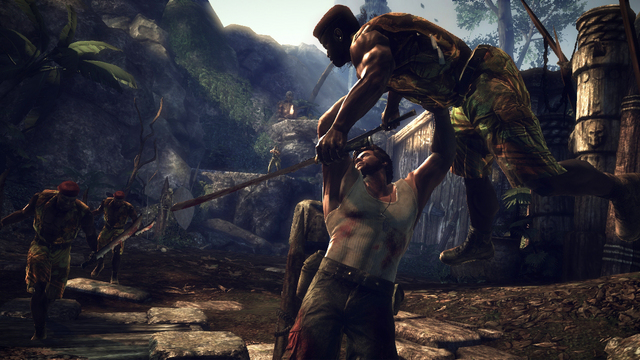
DV: The
combat just kicks ass, so many things to talk about, it’s freedom,
responsiveness – but I’ll pick just one move: the Lunge. If you’ve ever opened
up a Wolverine comic you are sure to see him pouncing on guys in the classic
Wolverine pose, arms out, jumping off a building or across a group of bad guys
to smash into the dude he’s trying to take out – that is Lunge in our game.
Target anyone you want and lunge towards them, 20, 30 feet away -- it is so
powerful and gives you an awesome ranged attack that closes the distance. Oh
and one more thing – the blood and dismemberment – it adds an incredibly
satisfying layer to the whole game.
Stoya Interview
LORNE, Australia, March 27,
2009. Impulse Gamer interviews Digital Playground's Stoya, who is smart, sexy and sassy and is as far away as
possible from the stereotypically porn star that the media tries to
sensationalize. She
knows what Cosplay is and regularly updates her Twitter page. Stoya has won a plethora
of awards in 2008, including the AVN Best New Starlet and XBIZ New Starlet of
the Year. She loves her job as an adult film star and is a huge fan of science
fiction and knows exactly where she is headed.
Please note that you must be
over 18 to read the following interview due to adult content. It is your
responsibility to comply with local laws. By clicking here
to continue, you are certifying that you are of legal adult age.
Ross Isaacs Interview
Emmy nominated cinematographer,
Ross Isaacs has over thirty years experience as an underwater photographer,
cinematographer and film maker. He has produced a number of books and
documentary films on whales.
Ross' home base is Port Douglas in far North Queensland, Australia, adjacent to
the most spectacular locations on the Great Barrier Reef. His experience
includes major features films, television drama, nature documentaries, as well
as television commercials.
Originally conceiving this film on humpback whales, since 2001 he has completed
many expeditions to Hawaii and Alaska to shoot this project. Specializing in
natural history, He has worked with some prestigious organizations such as
National Geographic Television and BBC Natural History Unit, and has sold his
own documentary films in over 50 countries. He brings a special understanding of
the main subject of this film.
[IG] Ross, thanks for sharing
your experiences with Impulse Gamer. The question on our minds that we would
love to be answered is… how did you get into underwater photographer? This could
be a dream job for some, however I’m sure that the work can be quite difficult
at times.
[Ross] I have always had a fascination for what lives below the surface of
the oceans and photography is one way of bringing the treasures back from under
the surface to share with people above.
[IG] You've filmed animals from around the world, what is your favourite
place where you like to film? And do you have a favourite species?
[Ross] I absolutely love the outer Great Barrier Reef for variety and the
extraordinary spectacle of life. I recently got to film some of the strange
organisms which live underwater in South East Alaska. [IG] What do you believe your greatest achievement is? [Ross] For me producing "Humpbacks- From Fire to Ice" has been one of the
most wonderful journey's and perhaps my most fulfilling achievement. [IG] Could you tell us what an average day of filming involves?
[Ross] On an average day we are
usually involved in preparation of equipment and positioning the crew to best
film the subjects.
[IG] In terms of an average day filming “on set”, how much time do you
spend underwater? [Ross] I would spend probably 20% of the time underwater depending on where
and what we are filming. [IG] What are some of the dangers that you have encountered while filming
underwater? [Ross] Dangers are usually created by our inexperience with the task at hand
such as when we use new complex breathing equipment like the closed circuit
rebreather.
[IG] Have you ever been threatened by the wildlife that you have filmed? [Ross] Rarely have I been threatened by the animals I am filming except if
you push the boundaries and try to interact to closely there by creating stress
for the animal which we try to minimize. [IG] Could you inform us of some of the highlights of your career? [Ross] One highlight of my career was to work with David Attenborough who is
generous as he is inspiring. [IG] What were your thoughts and emotions when you first came across a
whale? [Ross] I was extremely focused when I had my first encounters with whales
and tried to remain calm to get the shot with my camera.
[IG] How did you come up with the premise behind Humpbacks from Fire to
Ice?
[Ross] I had been filming
humpback whales in Hawaii and it seemed like the obvious story line to follow
their full migration from the volcanoes in Hawaii to the icy waters of Alaska
and back again. [IG] With your history with wildlife, do you believe that mankind can
stem the damage they have created? Will whales still be seen in 100 years from
now? [Ross] Human kind have to try and live more harmoniously with nature if we
want to sustain the environment into the future...I worry that some species my
be threatened and may not be here for our grand children in a 100 years.
[IG] What is your favourite moment from Humpbacks from Fire to Ice? [Ross] My favorite moment was when I got to film a singing whale. I was down
25 meters and it was just me and the lone whale which was booming out this
extraordinary sound totally engulfing my body with noise. [IG] In Humpbacks from Fire to Ice, you follow a whale calf, how did you
manage this extraordinary feat?
[Ross] Over time we got to know individual whale and filmed them in both
Hawaii and Alaska.
[IG] Was the calf named by your team and if so, was there a meaning to
this name? [Ross] We named the female calf Kai which means ocean in Hawaiian.
[IG] With thousands of
humpback whales arriving in these tropical islands, how did they react to human
presence?
[Ross] Some whales are
inquisitive but most go about their daily routine ignoring our presence as long
as the boats stayed the regulated distance from the whales. [IG] Is it possible to compare whales to humans in relation to how they
interact with each other? [Ross] Whale like human all seem to have different personalities. In Hawaii
they are mainly seen in competitive groups of males trying to get into the
primary escort position next to the female. We also see lots of mother calf
pairs which have a very close maternal bond.
[IG] What does the future hold for Ross Isaacs? [Ross] I have a few films on the drawing board which have a focus on global
climate change in relation to the ocean.
[IG] Thanks for your time and
good luck for the future. Humpbacks From Fire to Ice is available at all good
DVD stores.
Andrew Bistak, Editor
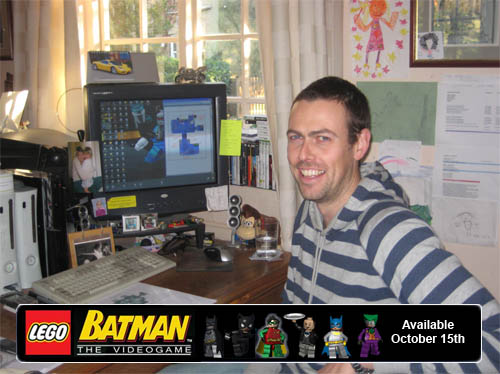
LEGO Batman the Videogame Interview Loz
Doyle - Head Producer on LEGO Batman: The Videogame.
[IG] LEGO Batman the
Videogame... dare we say the most anticipated game of the year? DC Comics has
one of the richest universes available, what inspired you to create a game based
on one of the world’s most popular superhero characters?
[LD] It was a fairly easy
decision. LEGO had made some fantastic Batman sets and were in a sense, already
bringing a LEGO Gotham to life. The rich, colourful, comic environment also lent
itself very well to a LEGO adventure. All of the mini-figures in these bright,
primary colours, look fantastic when bought to life. You’ve also made a good
point when you describe him as ‘one of the world’s most popular superhero
characters’ – Batman has over 70 years of heritage and is known by all ages the
world over. It was too good an opportunity to turn down!
[IG] For comic and non-comic fans, the story sounds like it is dripping with
Batman, how did you come up with the great idea of Batman cleaning up the
streets of Gotham after a deadly breakout from Arkham Asylum?
[LD] We worked with DC to come up with this very classic Batman story. We’d
always wanted to break all of the criminals out as they are so cool to have in
the game! One of the great strengths of the Batman universe is the array of
colourful villains and we’re now able to bring them to life in mini-figure
format. As we weren’t working from any film we have been able to have a lot of
fun bringing it all to life, both in the levels and especially in the cutscenes.
[IG] From the screenshots, it seems that LEGO Batman the Video may be based
on the animated series with a strong homage to the comics. After over a century
of Batman stories, how did you pick just one era? For many, this task may have
been too much, how did you handle this rich history?
[LD] There’s no perfect formula, we just tried to create a LEGO Batman taking
inspiration from the wide array of source material. You’ll see there are
situations and settings where we’ve paid homage to some of the spectacular
stories that have gone before, but we’re still creating a LEGO Gotham.
[IG] You've already wetted out appetite by informing us that the characters
in the game can control a variety of different Bat vehicles, does this mean we
can fly the Batwing through the LEGO streets of Gotham?
[LD] Of course! It wouldn’t be a Batman game if you didn’t get a chance to jump
into his vehicles and go and kick some bad guy ass.
[IG] As gamers can play either as Batman or Robin, they also have access to
his rogues gallery which include the Joker and Catwoman to name a few, what
other characters do players have access to that may not be the norm?
[LD] There’s a huge array of heroes and villains in the game, some are very well
known, others I hadn’t heard of until we started making the game. I think two of
my favourite characters, who aren’t the most famous in the Batman universe, are
Clayface and Killer Moth. Neither are the sharpest tools in the box and add a
lot of comedy to the proceedings in the game.
[IG] Batman versus Joker? Who
would win and why?
[LD] One of the great things about this game is that as you can play as the
heroes and villains you can try this out for yourself. I’d have to back the bat
in this one – he’s a bit too tough and smart for the Joker, although you can
guarantee the Joker would try to have the last laugh.
[IG] We’ve seen romance in the game between Batman and the Catwoman, any
other “Bat” relationships that you have added to the game?
[LD] We’ve been able to bring some of Harley’s infatuation with the Joker in to
the game, as you’ll see in some of the cutscenes. I’m not sure if that counts as
a romance, as it is a bit one sided. Poison Ivy is also able to use her charms
to manipulate those more weak minded characters in the game.
[IG] With regards to
characters, who is your favourite character in the video game and what can they
do in this LEGO inspired gaming world?
[LD] Clayface and Killer moth are great fun, but I think Man-Bat is my
favourite. Once again he isn’t the most legendary of Batman’s foes but he looks
great in mini-figure form. He was also one of the characters that our artists
were able to create from scratch. They have done a great job!
[IG] Are there any homage’s to other Batmen? For instance, the Adam West
Batman or Christian Bale as Batman?
[LD] We managed the resist the temptation to put Adam West in the game! As the
films have gone down a very dark path, we’re able to create a more fun, tongue
in cheek Batman universe, not one where you’d find Christian Bale’s Batman.
That’s not to say that fans of the bat won’t recognise scenes and settings where
we have been able to pay homage to some of the classic Batman stories.
[IG] The LEGO series of games generally has a healthy dose of humour in their
titles, what were some of the classic moments when transferred this humour into
the game?
[LD] It’s been good fun with this game as the content of the story and therefore
the cutscenes have not been dictated by any films. We’ve therefore had license
to create our own comic moments in the cutscenes and the game. For me, Killer
Moth is a cutscene legend – just watch him struggle with those lamps!
[IG] Are there any other DC Comic Super Hero guest stars in the game such as
Superman or the Flash?
[LD] There were more than enough characters in the immediate Batman universe to
populate the game. There are so many awesome heroes and villains that I think
everyone will have their own favourite character, there is no one stand out
character in LEGO Batman.
[IG] Do you have any hints as to some of the "Easter Eggs" that gamers might
find in the video game?
[LD] Well, as with all eater eggs you’ll need to keep your eyes peeled! You
should definitely check out the artwork in the gallery level though.
[IG] Featuring the inspirational music by Danny Elfman which could almost be
considered the definitive theme of Batman, how did you come to choose this great
composer for the music of the title and how does it interact with the gameplay?
[LD] It was great to be able to drop that score into the game. As soon as we
first played it with that classic them it really made the atmosphere just right.
[IG] What were some of the challenges that you faced while creating this
game?
[LD] We always work really hard to keep the LEGO games fresh and make sure that
each really captures the feel of the story that we’re working on. With Batman
that meant we had to work on the combat in the game. The Dynamic Dup are highly
trained martial artists and skilled athletes, so we worked to add depth to the
combat so that you can now grapple with the goons and dispatch them in a variety
of ways. You’ll also find that the gameplay is faster than previous titles as a
result.
[IG] What are you favourite
moments in the game?
[LD] Probably the scenes from inside the asylum when you see all the villains in
their cells. You should check out Killer Moth and Clayface.
[IG] Creating a game for various console sounds like a challenge, how do
create such a diverse game for such diverse consoles? Does each console version
support its unique control system or graphical capabilities?
[LD] The 360 is the lead console and the game is essentially the same experience
across all platforms apart from the DS. We’ve had a dedicated team working on
recreating the LEGO Batman console experience on the DS and they’ve done a great
job.
[IG] Lastly, the game won’t be released in Australia till the 15th of October
2008, what advice can you give gamers to help during this wait?
[LD] There’s always plenty of things to build with LEGO in those few days!
[IG] Thanks for your time and all the best for the release!
Andrew Bistak, Editor
Free Ride Games
Free Games For Your PC!
Free Ride games site may be a
bit more costly in the way a game runs than a gamer is willing to pay. No,
you’re not paying any money but Free Ride games are played with an internet
connection and ads bombarding the players to the left of the screen and also
along the bottom. Not in a small strip but an obnoxious good quarter of screen.
This it seems is how they deliver some free gaming your way, by selling ads.
It’s an interesting concept and unless the gamer has some computing power in the
graphics department, the ads some of which are animated at times themselves in
constant changing to new ads, can slow a game down to a slide show crawl. This
is best defeated by going to options within the game and tweaking a few things.
The first game we tested was Zoo Empire, until we tweaked the mouse sensitivity,
turned off the music and changed the scroll speed, the game was unplayable on an
older Pentium 4 system until we made these changes. On A dell laptop XPS system
it was not too bad, and of course on the Quad Core Alienware area 51 7500 it ran
just fine with just the occasional graphic stutter due to the ad bombardment.
This service offers full version PC games for free. No payment or registration.
They say there is no catch, other than the ads of course. The whole Ad concept
it rather interesting and for those who don’t mind the advertisements in your
face while gaming, Free Ride games is a good little deal.
The site shows as a BETA service
and in order to play any of the wide variety of games, you have to download the
Free Ride Games Beta Player. Think of it sort of like a music service, only for
games. The theory of how it works is that the Beta Player Caches data that is
stored on your PC so it does not have to be cached again. Each of the offered
games requires a certain amount of cached data before the game is playable. Once
cached though, the game starts up.
Are there some possible downsides to this? In some respects yes, In order to use
the Free Ride Games Beta subscription service you have to be connected to the
Internet. The games will not play without being connected to the internet. To
even launch any of the games you have to use the play button on the Free Ride
Games Beta Site. As you play the game additional components of the game download
in the background. Depending on your connection this can possibly be a problem,
with a fast connection you should have no issues, we experienced a mix of slow
playing graphics to internet hiccups. These can perhaps be attributed to the
connection itself. Either way some settings and connections have to be tweaked
for the optimum gaming experiences. We will be doing some full game reviews on
various Free Ride Games from the site, till then you can check them out at
http://www.freeridegames.com/do/index
As always,
Have fun, play games
Edwin Millheim
Edwin’s Interview with Ray Lederer,
game artist.
EDWIN: I understand that other
than computer game art and animation, you have worked on comic books and strips
as well. Such titles as Dare Devil, The Incredible Hulk, from the more well
known comic publishers, all the way to the far lesser known comic strips with a
small fan base such as Bright Future. (Bright Future went on to be a role
playing game and is currently about to be republished with expanded role playing
game material, the new publisher is Hamster Press, Engle Matrix Games)
Tell us a bit about how it was to work on those Comic Book titles, how much
freedom do you have from the large publisher to the small publisher?
RAY: Well all of the stuff I worked on for major comic publishers was really
subcontract work I did for some inkers before I went to Ringling. Basically I
inked backgrounds or anything else that required straight edged line work and
filled in blacks. It was amazing and somewhat terrifying to ink over some of the
best talent in the industry at the time.
It was great fun and a really
confidence boosting time early in my career. As for creative freedom to work
with larger houses - I honestly don't know. I had no real freedom when working
on a sub contract basis - and that's ok. As for working independently I think
It's always more creatively rewarding. It's just not always financially
rewarding. That said, some of the best times I had working in comics was when I
was working on Bright Future with you and Roland.
EDWIN : You have done some incredible eye catching work in both comics and in
role playing game art. Even some of the static art seems to have some dynamic
elements to them, or even a glance or expression the subject is displaying, or
the angle on which your
presenting the scene to the reader. Do those ideas come to you easily?
RAY: Uh it's never easy:)
EDWIN: Can you name a few of the gaming projects you have worked on?
RAY: My first game project was a sequel to the Amiga title Hired Guns using the
Unreal engine. That got canceled when Psygnosis went under. Afterwards was
Nightcaster and Nightcaster2, Goblin Commander, NeoPets, and Auto Assault. Today
I'm working on some thing we cant really talk about.
EDWIN: Do you have a any games that you have worked on that where more
challenging to work on, and why?
RAY: That's tough to say. I'll say this though, I'm amazed that games even reach
the shelves at all. I think all game reviewers should add a point to any game
they review on that basis alone!
EDWIN: What's your latest project? Can you tell us a bit about it?
RAY: Well, like I said, I can't really talk about anything at this time...I get
to conceive and drive many of the creative elements of a project which is really
what I've been seeking for many years in this industry. That's all I can really
say.
EDWIN: I have worked with several artists over the years and have always had the
utmost respect for their abilities, researching a bit more there are massive
amounts of information and technique that has to be learned and it seems rather
daunting. Way back when working in art class in schools like Ringling School of
Art and Design...did you ever have any doubts about if you where going to make
it?
RAY: I still have those doubts however I know that creativity is the key to my
vitality and art is the vehicle for it. My goals have changed over the years as
I've matured too. I actually am getting closer to my roots again as part of my
creative evolution. After years of learning advanced 3D animation Texture
Mapping, Modeling, Terrain Building I've come back to the realization that the
thing I enjoy the most is putting pencil and paint to paper. Go figure.
EDWIN : Looking at some of the
games you have done, you ever look back now and go..gee I should have done it
this way or designed it this way instead?
RAY: I've learned to accept what I can do within the time I'm allowed.
Ultimately I can only take what I've done in the past and use the knowledge
towards the next thing. That said I'd like another crack at designing the main
character for Nightcaster.
EDWIN: When doing the concept art for who ever is lead on a gaming project, are
there massive amounts of concept sketching before they see something they
like?Or do you go in with several design concepts for them to choose from and
make requests on? How does that work?
RAY: Usually we meet for a few minutes discuss the needs - I go back and do a
few thumbnails - I call the lead(s) over and get an approval and then do the
final. Usually that's enough but sometimes it take more iterations if it's
something important like a major character or an important setting etc.
EDWIN : I know you have said in past interviews about trying to surround
yourself with people who knew a lot or had some skills you could learn from. Can
you name a couple of people you have worked with that you have learned from?
What was it you learned?
RAY: Good smart people, travel, books, and good music are the keys to growing
and inspiration. Variety's the spice of life eh? Well certainly working with you
was a cool collaborative process that taught me allot about working with a
writer. Roland Paris is another one. He's inking at Marvel now after a long
hiatus from Comics. Go Roland! My good friend Adam Adamowicz who's working over
at Bethesda doing concepts for Fallout3 and is an absolute genius. Mike Gieger
who's like a master renderer and a machine when it comes to art. I don't know
how he keeps up his stamina.
There are too many to list... As
for learning experiences - some were more harsh than others - One time I got a
page handed down to me by one of my Inker clients.One of the panels had a bunch
of characters holding guns. The problem was the penciler didn't bother drawing
the guns in any of the scenes so it was up to the inker to invent one. That task
was handed down to me by the inker and I thought "Wow! This is my big chance to
really shine and show these guys just how creative I am. So I spent like 30-40
minutes drawing this really detailed weird looking gun. Boy did I feel proud of
myself. Yessiree they're gonna love this sweet baby. I handed it back to the
inker the next day and he slaps his forehead and say 'You son of a BLEEP! now I
have to draw that damn thing 20 more times!'
EDWIN: That’s great to hear about Roland. (To our Impulse Gamer readers, Ray and
I worked with Roland Paris on Bright Future) Tell me, How different is what you
need to know to be a gaming artist now as apposed to say ten years ago?
RAY: Nowadays the emphasis is no longer on low resolution, low poly count
models. What AD's look for now is film quality models, textures etc.
RAY: So far it's not really a problem for our domestic workforce. In fact it's
almost the opposite. We have a glut of unqualified candidates that are either
inexperienced or simply lack the core traditional art skills. No, the real
problem is finding experienced and qualified candidates in the states. The good
ones already have jobs and are well taken care of. Even with all the training
these kids are getting with game dev programs cropping up today it's still rare
to find a really good candidate. There are many kids who go through these
programs to be an artist that don't have a lick of real art training. They grow
up playing games instead of drawing or reading or going outdoors and it shows in
their work. As Brad Bird asks 'How can you create the illusion of life if you
have no life?'
EDWIN : Today's next-gen games
can cost $15-20 million each, up from $5-7 million just a few years ago, the
cost sounds really surprising for those that do not realize how much work
actually goes into one of these games. How many hours do you think counting
every department working on a game?
RAY: uh... You'd have to talk with my producer about that. I don't carry around
those kinds of numbers in my head. I just make the pictures.
EDWIN: You are a happily married artist now! (yes I feel like crap for missing
the wedding actually) How in the world do you manage to balance the work load
with home life? Do you bring your work home? Or can you shut that part off for a
bit?
RAY : Sometimes I work from home. It's what I love to do so it's sometimes hard
to leave it at the office. The real challenge is finding the time to work on
personal projects like landscape paintings or comics etc...
EDWIN : For our readers that are
thinking of getting into being a game artist, can you give them some advice?
RAY: Love art for art's sake. Get yourself grounded in traditional art training
before you start wedding yourself to a particular tool.
EDWIN: Open floor, what do you want the readers to know?
RAY: Being a game artist is a lot more fun than it was even a few years ago.
There is so much more flexibility in what you can get away with now than before.
Poly counts aren't as much of an obstacle anymore. It's a great time to be an
artist!
EDWIN: Ray, thank you very much for taking time to do this interview.
RAY: Thanks Edwin!
Edwin and Shael
perform an Autopsy on Alienware
In this electronic market, there
are a dizzying amount of choices for the computer gamer. From low end systems
that are just enough to get the job done, all the way to those dream systems
that will take any game you throw at it. There are plenty of companies out
there ready to sell you a computer rig for what ever your needs are. One such
company that has been around for a modest amount of time is Alienware.
Alienware's claim to fame is that the company manufactures a wide variety of
customizable computer systems. Not only do they offer high performance desktop
systems, but media centers, notebook computers, professional workstations and
even servers. Throw in various peripherals and gadgets such as flash drives,
headphones, batteries and adapters, and all other forms of computer goodies and
you have a one stop computer aficionados shopping experience.
Alienware target markets to a diverse customer base, from the average home user
to the gamers, businesses. While known for its gaming and multimedia systems,
Alienware also has a significant government business. Its customers include the
Defense Department, Army, Air Force, Navy, NASA and the National Geo-Spatial
Intelligence Agency.
The Alienware marketing department states the company uses cutting edge
components, and innovative engineering. This is fairly evident if the saying is
true that you get what you pay for. If nothing else the Alienware case designs
definitely set it apart from the crowd. Looking more like a sci-fi fans ultimate
dream, the designs are eye catching and a definite conversation starter. Shael
and I wanted to delve a bit deeper and do our own Alien autopsy so to speak.
CEO Nelson Gonzalez who turned out to be pretty open about the company and the
product, took some time out to answer these interview questions.
1: The company is based in
Miami, Florida and was founded in 1996 by its current CEO, Nelson Gonzalez, and
COO, Alex Aguila. Tell me a little about the beginning. Was it really in a
garage?
If you want to go back even
farther, you might even say the company had its beginnings on the playground
where Alex and I met when we were just kids. We kind of grew up in the same
neighborhood, and we just sparked up a friendship that's lasted more than 30
years at this point.
In the beginning days of Alienware, if we had an "office," it was probably in
the garage or a bedroom, wherever there was spare room to lay out parts and
build the machines. The downside was there wasn't a lot of space. The upside, of
course, was that there was no commute.
It really did begin with a dream and a few maxed out credit cards. But that
initial investment of a few thousand dollars really paid off. I know when we
were 13 years old and always playing video games, our parents weren't too happy
about that, but that paid off, too.
It all comes back to gaming for us. We loved flight simulator games, but, back
in the day, most PCs just weren't good enough to offer much realism when you're
trying to run a flight sim. I just started building my own machines so I could
run the flight sims the way I wanted. All of my friends who were also into games
saw what I was doing and asked if I'd build them machines, too. I did, and, at
some point, the light just went on, and Alex and I realized that if our friends
wanted these high-performance machines, maybe there were a lot of other people
out there with the same interest. As it turns out, we were right.
2: What do you want most for
yourself and Alienware?
For myself, I think I just want the same things I've always wanted - to wake up
every day with a big smile and the knowledge that I'm doing something I love and
helping to make a few people happy. For Alienware, I obviously want the company
to keep growing and becoming more successful. I suppose the ultimate goal would
be an Alienware in every home! The more people gaming and using high performance
computers, the better that's going to make the entire computing experience -
whether that's for gaming or for someone learning to perform surgery with
virtual reality applications. High-performance computing makes a lot of really
amazing options available, and I'm glad Alienware is part of that.
3: Do industry/competitors still keep you on your toes?
We have a lot of great industry partners that really help us get access to the
best technology out there to build our machines, and of course we know what
other PC makers are doing. However, if you're asking whether I think there's
anyone that comes close to providing the overall user experience that an
Alienware customer receives, then the answer is "No."
I do think that technology is always changing, and the advances in technology
mean that PCs are going to keep getting better and faster and, hopefully, more
fun.
4: What are your future expectations for Alienware?
I think Alienware is going to keep growing, but we're going to do it in a smart
way. We're not looking to become a huge PC powerhouse overnight. Like any
company, we want to continue to grow our market share. For us, that means
further dominating the high-performance PC space. We've done it for the past
several years, and we're going to continue to be a leader.
5: Alienware has been pretty successful in the industry. What qualities of
the company do you think have attributed to the companies success?
We know our customers really well - because we ARE our own customers. We design
our machines for the toughest users out there, and we know what they want,
because we're not easy on machines. We've always kept our focus on performance
and style. Over the years, you haven't seen us diversify our offerings and sell
a $400 machine. That's not who we are, and we're not going to be that company. I
think that focus on the demanding customer has been the source of our success.
It's what drives our people to create more powerful machines, sexier cases and a
better overall user experience. We're dedicated to producing the best computer
you can buy, and we're not going to back away from that.
6: The next generation of gaming has been a phrase used a great deal in the
media, with Vista and DirectX 10 coming along, how is Alienware meeting the next
wave of gaming technology?
I think it's important to recognize that Microsoft Vista brings some great
benefits with DirectX 10, but if you don't have a PC that is powerful enough,
you won't really be able to take full advantage of those benefits. Alienware
started shipping Vista on the majority of our systems on the day Vista went
live. We really feel like the best way for gamers to take full advantage of
Vista is with an Alienware.
7: Every company has its bumps along the road. Is there anything that stands
out in your mind that was a challenge to yourself or the company?
Those first couple of years were really make-or-break for us. I think it's
probably like that for a lot of new businesses, but it was even more so for us.
We didn't have a bunch of investors or the backing of some powerful company. It
was just us and our credit cards, but we made it work, and we really are living
the dream now.
8: Back on March 22, 2006,
Dell purchased Alienware. Alienware continued to operate under its own brand
name, now being a Wholly-Owned Subsidiary. That must have sent more than a few
ripples through employees in the beginning? How well embraced was the change,
and what where the benefits?
Any major change like that is going to make people ask a lot of questions, but,
since the time of the acquisition, employees and customers have seen that
Alienware is still Alienware. We're still committed to the same things -
unparalleled performance and style - and our connection to Dell gives us even
more avenues to provide our customers with the hottest PCs out there.
10: How important is customer service, from point of speaking to a sales
person, on to after the consumer has made a purchase?
Customer service is one of the essential elements to Alienware's success. We've
won several third-party awards from some key publications and other
organizations, and our commitment to providing excellent customer service and
overall ownership experience keeps getting stronger. Alienware customers are
special, and we're committed to treating them that way.
11: There have been a smattering of grumbles and complaints here and there on
customer service response and sometimes on length of time on delivery of a
system purchase. How extensive is the building of the system and then quality
assurance testing of the system?
We refuse to sacrifice quality and customization for the sake of pushing more
systems out the door. Our policy on building systems has always been, "build it
as if it were your own", and we take that very seriously. That's why we give
customers such an extensive offering of customization options that we then
diligently integrate into their specific system. Afterward, each system goes
through a meticulous 200-point quality control process to ensure that everything
is just right. Now, all of that is not going to happen overnight. Most of our
customers understand this, and they find that their patience is richly rewarded
with a highly reliable and personalized system that exceeds their expectations.
12: How seriously does the company take customer concerns and or complaints?
We take all customer concerns very seriously, and we work to resolve any issues
quickly and to the ultimate satisfaction of our customers. We're constantly
polling our customers to gauge what we're doing right and what we could be doing
better. It's an impossible task to make everybody happy, but that won't stop us
from trying.
13: That aspect of the business must be difficult to balance customer service
with common sense and company growth.
I don't think it's a difficult balance at all. To me, it's just common sense to
offer excellent customer service. That's what makes the company grow. When a
customer is satisfied, everybody wins. That customer will recommend us to their
friends and family, and will likely return to us in the future for their next
PC. So, really, you can't have the growth without the commitment to your
customers.
14: How would you rate Alienware's customer service?
Again, I think we do a great job, but you don't have to take my word for it.
We've been recognized by publications like PC World and Smart Computing for our
excellent customer service, plus we consistently receive praise emails and
letters from a multitude of customers whose #1 compliment is the outstanding
service they have received.
15: Most companies have some form of quality assurance in place for customer
service representatives, in the form of quality coaches, some level of
accountability. How are Alienware customer service representatives evaluated?
Each customer service representative that a customer encounters can ultimately
be the difference between that customer having a very positive experience and a
very negative experience, so we fully realize the importance of having the very
best people in place. We closely evaluate the effectiveness of our customer
service representatives through a number of methods internally and, once again,
we also listen closely to the feedback we receive from the customers themselves.
16: Jumping around a bit here, Alienware has over the years been awarded some
rather impressive Government and Military contracts. Is that a whole other
division of the company?
It's not an entirely separate division, per se, but we do have people dedicated
to working with government, military and enterprise customers. When you think
about the type of high-performance computers Alienware produces, it makes total
sense that certain key branches of the government and military, as well as some
enterprises, would look to us to address their computing needs.
17: What are some of the most important things happening in the computer
industry right now?
I think the PC industry is finally starting to come around to the idea that
gamers are the ones driving forward the real progress. Take a look at how
powerful PCs are becoming, and we have gamers and other power users to thank for
that. The multi-core processors, the GPUs that keep getting better, the
multimedia processing capabilities - these are all, in some way, related to the
kind of demands that gamers and other power users make of their PCs. The major
players in the industry are beginning to take their cues from what's going on in
these more advanced PC sectors. As a gamer myself, it's exciting to know that
I'm part of that and that Alienware is a key player in all of this.
18: What do you see as future trends in the industry?
I see increasing importance placed on gaming and high-performance computing.
People are now using their PCs for a lot more than just running spreadsheets and
checking e-mail. As they increasingly watch movies and play games, that interest
in the PC as a hub for work and play is only going to grow. I think we're going
to see the PC as a conduit to increasingly "real" virtual worlds where human
beings can interact in new and better ways - be it for gaming purposes or other
uses like remote surgery. The possibilities of virtual reality really are
endless, and the growing power of PCs is going to give us better and more
productive access to those virtual worlds. There may be a time - I think in our
lifetimes - when the line between what is real and what is virtual is blurred to
the point where it's no longer distinguishable.
In the more immediate future, I think the PC also has the potential to finally
become the true center point of the home. I think it will go beyond just
becoming an entertainment center and will act as a single point from which the
habitants of a home can control entertainment, home appliances, security systems
and a host of other things. This exists in a much more elaborate format now for
very high-end home automation systems, but what I'm talking about is the
"common" household PC being this powerful hub that allows control and management
of a multitude of applications.
19: Open floor, What would you like Readers, customers, and future customers
to know about Alienware?
I'll keep this simple. I want everyone to know that they should expect Alienware
to keep pushing the envelope of performance and style. The demands of our
customers match the demands we place on ourselves to keep staying ahead of the
industry and producing PCs that put everyone else on notice. We're going to keep
revolutionizing the PC industry, and we're going to stay focused on keeping our
customers happy.
20: Thank you very much for
taking the time for this interview.
You're welcome. It's been a good experience.
There you have it Impulse Gamer readers. While I have to admit for a moment
there it felt like the Spanish inquisition.and no one expects the Spanish
inquisition, Mr. Nelson Gonzalez answered all the questions, even the ones that
where on the difficult side with a gamers passion. Alienware is in good hands
and where ever the course is charted, Alienware will be there making those
wicked cool gaming and multimedia computers. Direct your browser on over to
www.alienware.com to see what they have to offer.
Have fun, play games
Edwin Millheim
Kick back, relax, let's play.
Shael Millheim
Auran's Joseph Hewitt
interview
by Edwin Millheim
(January 2007)
When and why did you begin the type of
work you do?
I went
to an after school tutoring place back in high school. They also ran an
educational software company where I eventually started working as both
a tutor at the school and as a game designer and artist making education
software.
I
eventually had it out with them over a variety of issues and quit. I was
telling a friend of a friend the story at a party; and he told me some
friends of his also used to work there and were forming a real game
company. I didn't think much of it, "Oh a 'real' game company. I'm sure
they are. That's nice. Oh look over there, they are serving punch..."
But he
passed my information on to them and next thing I know I was working for
Westwood. I worked there till EA closed the studio in 2002, then I
worked for Sony Online briefly before moving to Australia to work for
Auran.
I can
assure you that is all true and anything you might have heard about them
finding the bodies, fleeing the country one step ahead of the law, and
that sort of thing is completely exaggerated. Those bodies will never
be found and the law was quite happy that I was leaving the country.
How was Auran formed?
Well
in the beginning, the universe was created. This made a lot of people
very angry, and has been widely regarded as a bad idea. Then some other
stuff happened and some guys formed Auran.
Maybe
I should pass on this question. Auran has been around for awhile and
I've only been here a few years. I'm ashamed to admit I don't really
know the founding story. I think it involved a magic sword and a umm
dragon and… Yeah, I got nothing here. I'll pass.
What inspires you in game designing?
My
inspiration is really just the desire to create something people enjoy
and have fun with. I enjoy playing games and I think it is great that I
get to create games for other people to play and have fun with. I love
having people tell me about how much fun they had playing games I've
worked on.
My
motto is "cogito ergo ludo" which is Latin for "I think; therefore I
play."
Who or what has influenced you in some
of the games you have worked on?
I do
it all for my legions of adoring fans. And soon as I get some fans,
I'll be set. I'd be happy with just two or three. Anybody? Hello?
Has your environment/upbringing colored
what you bring to a project?
I have
played quite a number of games over the years; video games, arcade
games, role-playing games, live-action. I've read a lot of books, got a
huge comic book collection, and watched a lot of movies. I have
basically lived quite a bit of my life entrenched inside a rich fantasy
life. I've really tried to bring that experience as somebody who not
just enjoys all this, but eats it up and lives it.
Do you have a specific style yourself?
How diverse are other members in the design house?
Do I
have style!? I have more than style! I am so amazingly cool you could
keep a side of meat in me for a month. I am so hip I have difficulty
seeing over my pelvis.
Seriously though, we as a team are pretty diverse in style. We each
have our own little area that we focus on.
The
best part is we all have a lot of experience both as developers and as
players. Combined we cover a lot of ground so when trying to brainstorm
a particularly difficult game system or problem we have a lot of things
to draw knowledge and inspiration from.
The
bad part is I have a real hard time BSing them. I try to make up some
story about why I did something stupid, go off on some story about some
other game and no dice because one if not all of them have played that
game!
What genre are you most comfortable
with?
I am
probably 'most' comfortable with RPG or Action/Adventure type games,
though I am okay with just about any game type. I am probably a little
burnt out on RTS games after doing so many C&C games.
I am
not as comfortable with sports games in the traditional sense, like a
base ball or snowboarding games.
Though
to be fair you could say Fury is a sports game as it follows a lot of
the same underlying principals. You form teams, compete against other
players on a playing field; using a set of laid out rules, competing for
rank on a ladder system.
Do the folks at Auran come up with the
titles on projects? Or are most projects coming from some place else and
Auran works on them?
Auran
generally comes up with its own game ideas for its in-house projects.
For example Fury was conceived and created entirely by Auran.
Auran
is also a publisher so we also distribute other developer's projects in
Australia.
Is there ever any message in your games
that you want players to grasp?
I hide
my name in the Drow wallset in "Eye of the Beholder." Oh, not that kind
of message?
I
don't consciously put messages into games I've worked on but I would say
most games impart a message of over-coming obstacles. Games present the
player with a set of challenges and obstacles which the player has to
confront and overcome.
That's
sounds pretty sappy doesn't it?
Are experiences in a game ever based on
someone you know, or events in your own life?
Oh of
course, the whole gambit; from inside jokes to full blown
characterizations of friends. Anytime I can make fun of somebody I know
by hiding stuff about them in a game, oh yeah I'm going there.
I am
personally infamous for sticking Douglas Adam's references in all over
the place. Even my design documents are full of them. Just about all
of the user interface pictures I did in the social specifications use
names from "Hitchhiker's Guide to the Galaxy." For example the mockup
of the 'ignore player confirmation' says "Are you sure you want to
ignore Zaphod Beeblebrox?"
If you had to choose, which designer or
other person would you consider a mentor?
A
programmer named Barry Green really took the role of mentor to me in my
early days. Although there are lots of people who grind away to get a
game to completion; looking back I have a lot of memories of where it
was just me and him at the core of the process. We'd get some high
concept stuff and the two of us would have to figure out how to get it
to work in the game. Then I would draw it and he would program it.
What games are you playing now?
"World
of Warcraft" mostly, doing a lot of PvP. I'm playing through the latest
"Mario Brothers" on my DS and I finally got around to playing
"Half-Life: Episode 2" this weekend even though I bought it way back
when it was first released on Steam.
What are Auran's current projects?
Besides Fury which is the bulk of the company at the moment, there is
the "Trainz" team which is always going. We also have some Xbox Live
Arcade games we are working but I don't think they have been announced
yet.
If you had to do it all over again,
would you change anything in your latest game? What and Why?
Fury
is the game we wanted to make. There really hasn't been anything done
that I wish we could change. There is stuff that we've had to put off
with that ever popular phrase "for the expansion."
Now
there are some things that were redone… maybe even redone a few times.
You would be amazed at how often something is worked on, slaved over,
made just perfect… and then scrapped and done over. I remember telling
a bunch of new artists that if they didn't have to redo something at
least three times, chances are it had been cut from the game.
So I
guess you could say that I already have done it all over again. Maybe
that's why Fury coming together so well.
Can you share a little of Auran's
current work with us?
You
want to help do some of the work? Yeah sure, can you draw trial award
icons?
Is there anything you find particularly
challenging in what you do?
Covering all the bases is the biggest challenge. You have to make sure
you take everything into account when designing game systems so that you
don't get some exploitable bug or loophole.
For
example in Fury you can switch around, rebuild, or load a new
incarnation whenever you want. So what happens if you are in middle of
changing your incarnation around when you enter the War Zone?
What
happens if you try to add somebody to your friend's list who is already
on your ignore list or vise versa? What happens if you invite somebody
to your group and he doesn’t press the yes or no button right away so
you invite somebody else to your group and then the first guy finally
presses yes but now the group is full?
There
are lots of little things along those lines that you have to account
for. The hardest part is when some system changes later in the
development cycle to make sure you aren't adding any holes in other
systems.
Next generation gaming has been a
phrased that has been used in the media a lot. What is next generation
gaming to you?
Honestly, it doesn't mean much to me. It's just the phrase used to
promote the latest and greatest new system as if it were something
completely and wholly different than anything we had ever even dreamed
of before. They always try to make it sound we had been playing nothing
but "Combat" on the Atari 2600 all this time and now suddenly we have
"Gears of War."
Technology is always going to improve but it is going to do it at its
own pace. If you want to be impressed by 'Next Gen' go into suspended
animation for a few decades.
Next generation game platforms like the
Xbox 360 and the Playstation 3 are seen by most as a threat in some ways
to PC gaming. Do you have any thoughts on that?
I
think all of that is rather silly. It's the game, it's the fun and
enjoyment you have playing the game. The equipment you use to play the
game on is irrelevant.
Sure
games on the PC are different than console systems but that's because
they are being designed around the input devices and strengths of those
system and as those change the so will the games.
A
console system is still a computer, it just has a controller instead of
a mouse and keyboard because those are kind of hard to use on the living
room couch. But what will the future hold? Headsets are becoming more
common and it is much easier to talk than type. The Wiimote may not be
up to a mouse yet but in the end all I really care about is how I get
things done in the game. It's all about the interface with the game
experience. I want to swing my sword, shoot the basket, drive the car or
whatever.
Today
I want however I do that to be easy and tomorrow; I want to feel like I
am actually doing it.
Do you have any advice for people
wanting to break into the game industry?
The
biggest thing you can do is start doing it. There are plenty of games
that come with their own editors. Use them, start making your own stuff
and getting it out there. The first thing developers look for is
experience.
Second, education is important. For example there is a lot of math
behind game balance. The power progression / leveling curve isn't
something that's put together with guess work. If you don't have a clue
about economics you certainly aren't going to be able to balance a game
world's economy. Even some sort of literature background will give you
a lot of help with content creation and writing.
Do you have anything specific that you
want to say to our readers?
Just
remember there is never enough time to do it right, but always enough
time to do it over.
The birth of AURAN
For your historical knowledge, AURAN was “founded” by me and a hot
shot “genius” gamer called Greg Lane. The company began with the
name Australis Microprogramming on Jan 1, 1995. Its name was changed
to AURAN about a year later.
The company was then “saved” by the Hilliam family who became
involved in 1998. Tony commenced as a full time working director in
2000. He and I own the AURAN group of companies.
Greg lane has left the building.
Kind regards
Graham
Share this page
All content is TM and (c) copyright www.impulsegamer.com and may not be reproduced without permission. All other imagery, text etc is the property of its respective owner and is used with permission.