

Aphelion Review (PS5)
Summary: Aphelion is a beautifully created game by Dontnod and while it's gameplay has its issues, the narrative is pure sci-fi perfection
4.5
narrative perfection
The highly anticipated game Aphelion by Dontnod is finally here, from the same studio behind Life is Strange, Tell Me Why, Remember Me and Vampyr. If you’re missing the Artemis 2 coverage, this game might be the perfect panacea with its grounded sci‑fi and survival‑driven storytelling. Set in 2061, the Hope‑01 mission represents humanity’s attempt to secure a future beyond Earth and the planet of Persephone may be a potential lifeline for our species. While its own game, Aphelion definitely has parallels to the films Interstellar and The Martian plus the excellent game The Invincible, so if you enjoyed those stories, you are in for some narrative sci-fi perfection.
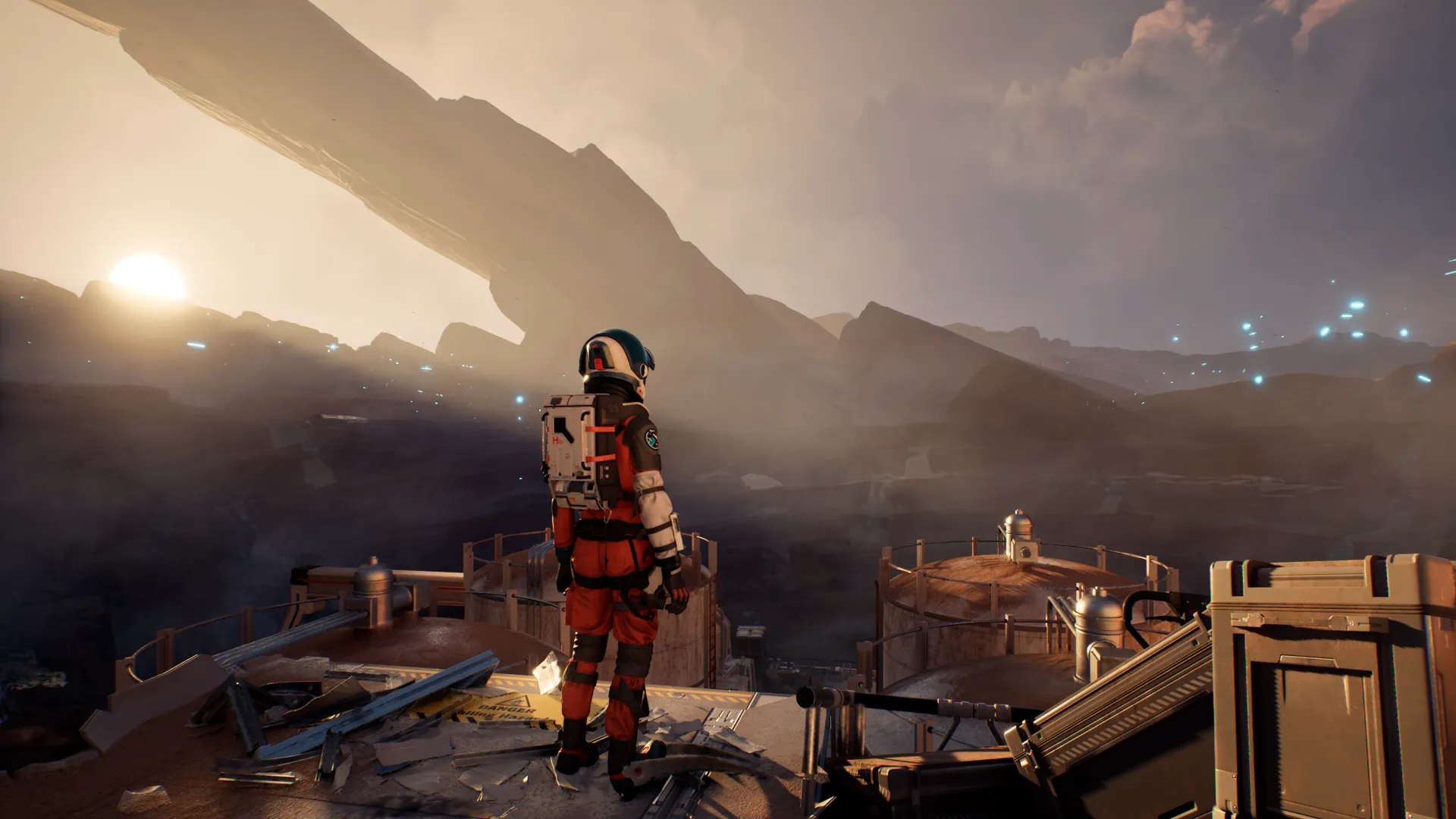
The mission is led by the European Space Agency (ESA), with the tone of Aphelion leaning into near‑future realism as the story begins with Ariane, the primary protagonist, waking in the frozen wreckage of the crash. As the player is thrown into the deep end, the sense of urgency feels real. With no contact with mission control, no clear sense of what went wrong and no sign of the rest of the crew, the sense of dread and survival is immediate. From the first steps into the frozen world, Aphelion frames itself as a survival experience shaped by harsh terrain, shifting weather and the pressure of isolation.
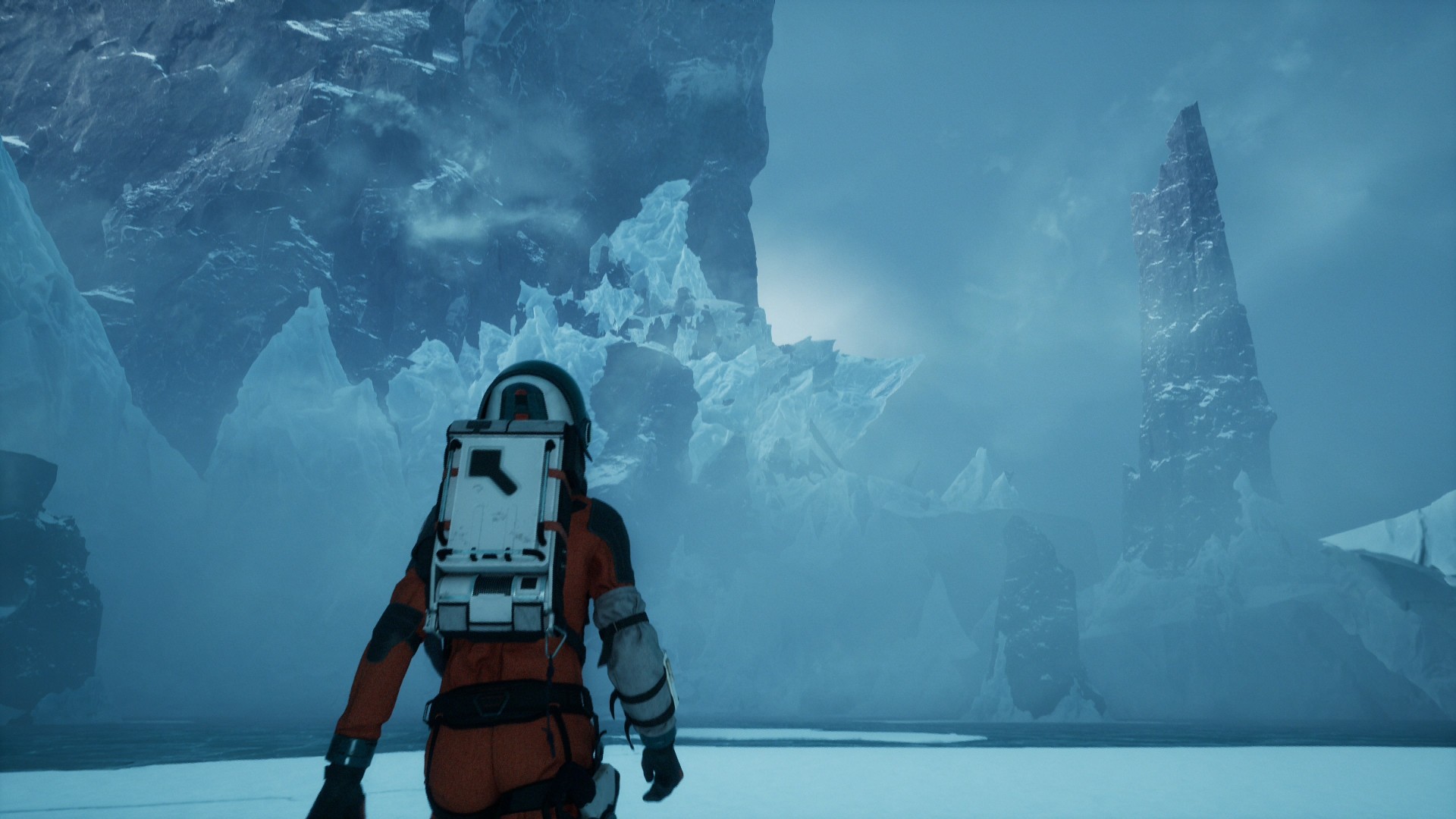
With a clever twist that Dontnod is known for, you also play as Thomas, the secondary protagonist whose perspective is slower and more introspective, shaped by injury and limited mobility. His role isn’t to compete with Ariane’s arc but to complement it, filling in narrative gaps, decoding the planet’s anomalies and giving the story a second lens that deepens the mystery.
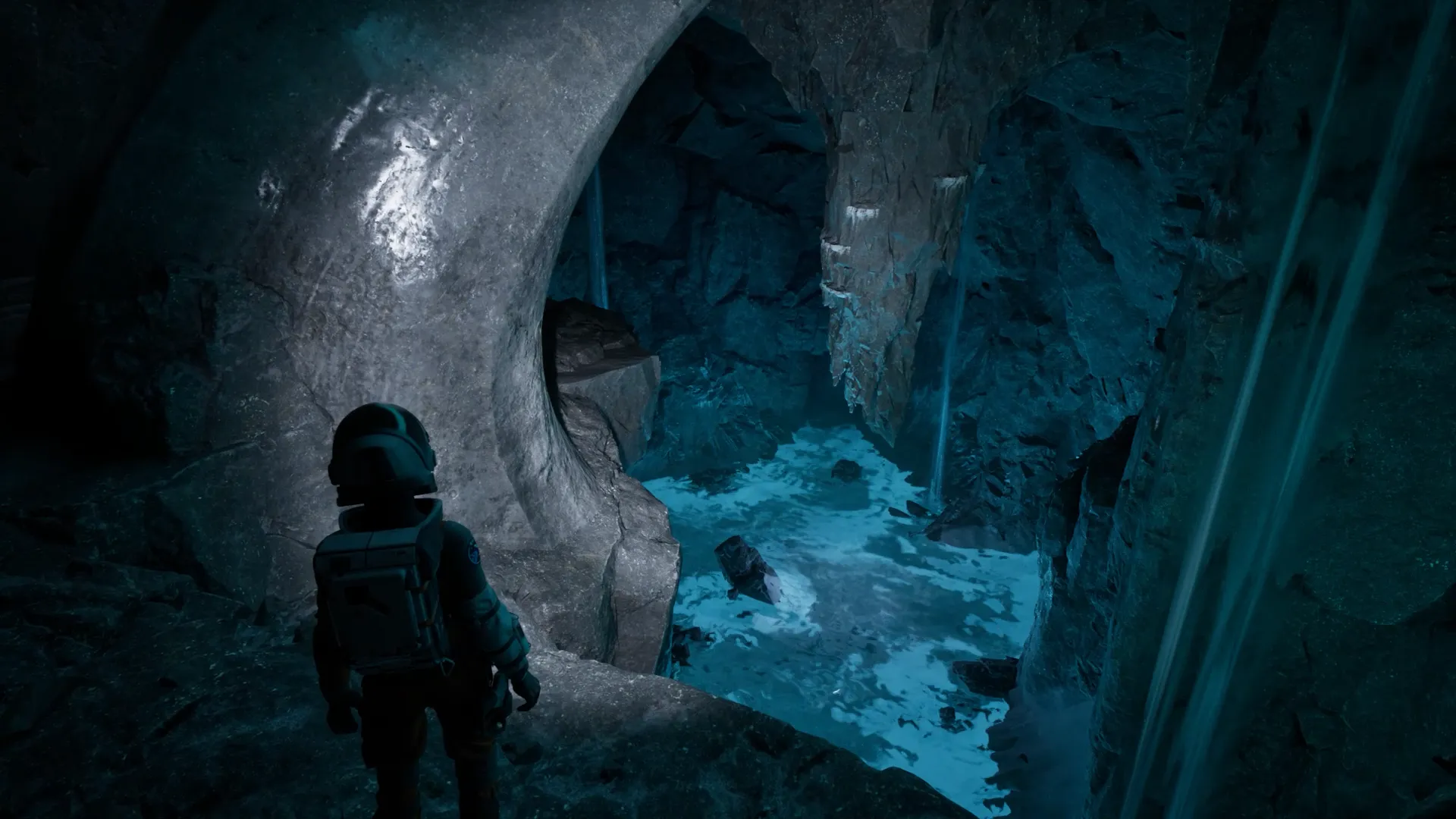
Across 11 chapters, the game alternates between Ariane’s physically demanding journey (who could go head‑to‑head with Tomb Raider‘s Lara Croft) and Thomas’s more analytical sections, with both gameplay modes perfectly complementing this beautifully woven sci‑fi story. Ariane’s chapters are built around movement and momentum, such as climbing ice walls, navigating collapsing shelves and pushing through storms that feel dangerous.
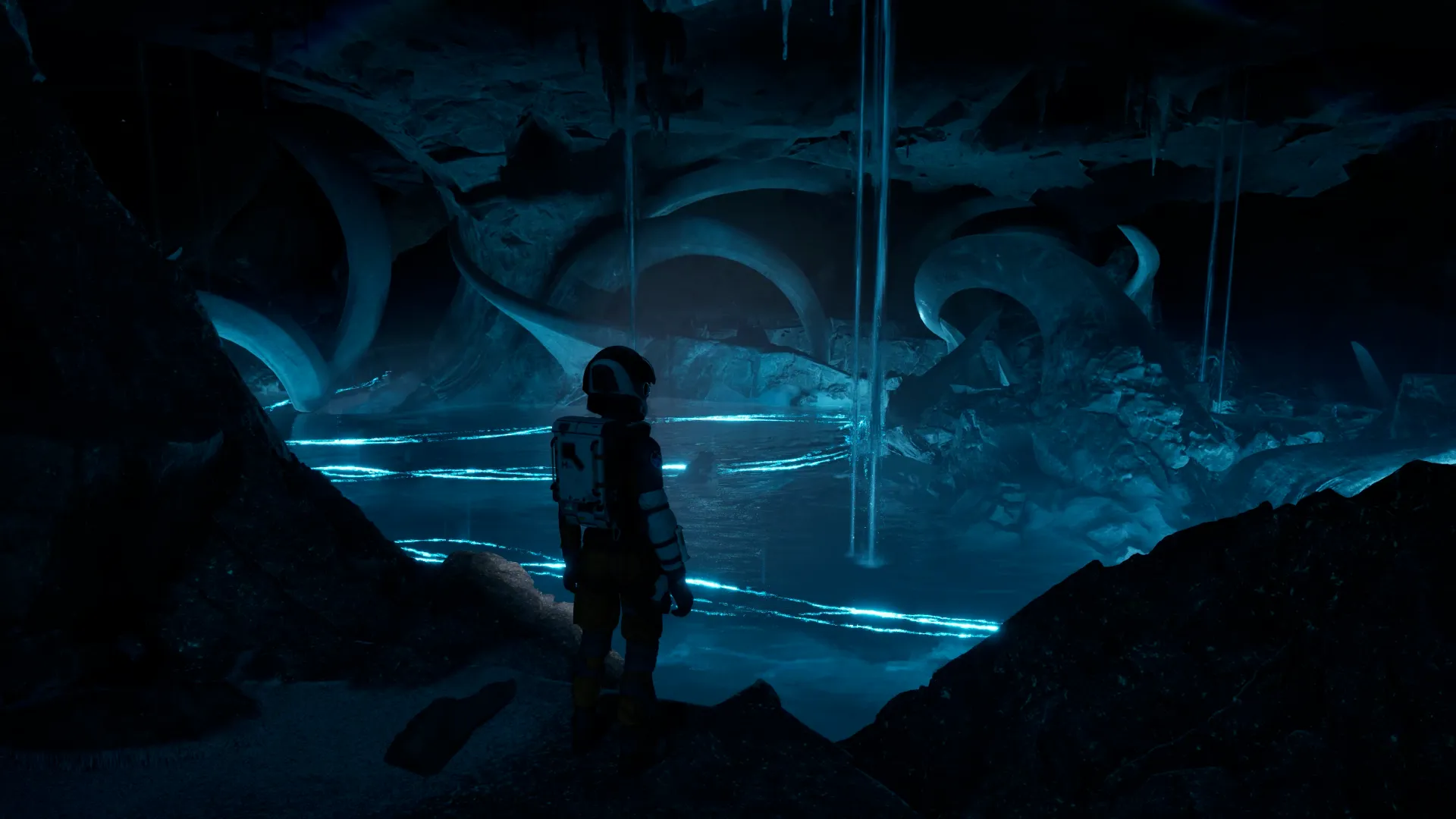
Thomas’s chapters slow the pace, shifting toward investigation and environmental analysis, which provides the player with some much‑needed respite. The way their stories cross over is another highlight of how Dontnod creates its narratives. For example, early on, Thomas realises he’s lost a small personal charm (an oak seed) tied to his past and when Ariane finds it, it creates an immersive bond between both characters. While it may be a small, understated moment, this is never the case with Dontnod titles.
The other character is Persephone itself. Initially it presents as a harsh, frozen world, but as Ariane and Thomas travel deeper, the environment begins to shift. Temperatures rise in pockets, ice melts where it shouldn’t and structures appear that don’t match the planet’s natural formation. Something is going on and without spoiling anything, the game slowly hints that Persephone may not just be a planet; it may be something living, with its magnetic field behaving in unusual ways. The way the environment reacts, the way the magnetic field pulses, the way structures seem to grow rather than form… it all builds toward a bigger, stranger truth.
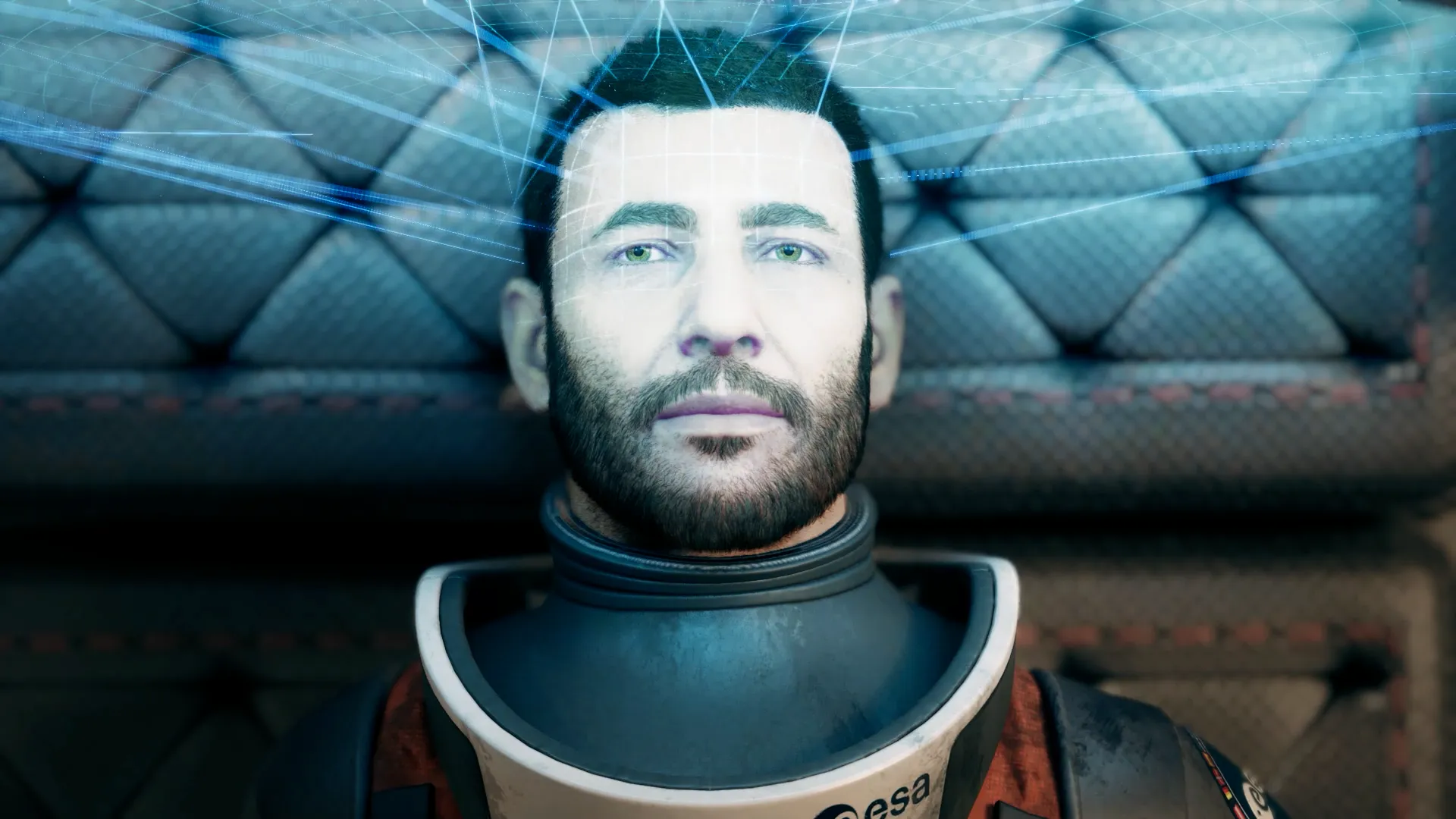
Thomas’s chapters also take him into an abandoned man‑made facility, a stark contrast to the natural ice fields Ariane traverses. It poses new questions about what happened to the doomed crew before them, rather than solving the mystery of the newly discovered ninth planet at the edge of the solar system.
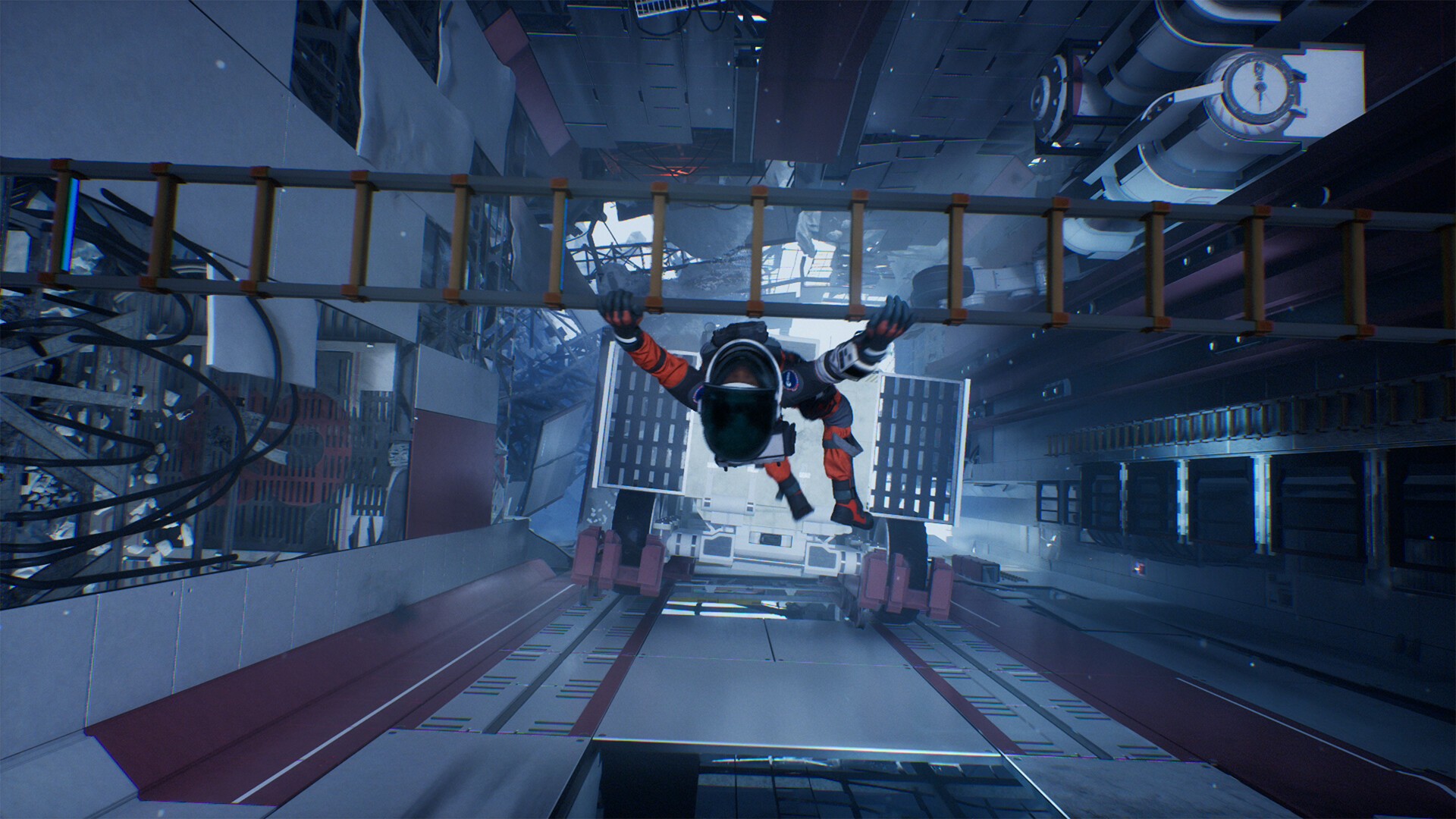
Climbing is the backbone of Ariane’s gameplay as she scales sheer ice walls, squeezes through tight tunnels, sprints across unstable terrain and makes dangerous jumps, including with a very useful grappling hook. Her movement has weight and the game often forces you to commit to momentum. Balance mechanics add tension as you inch across narrow, crumbling bridges, adjusting your stance to avoid falling.
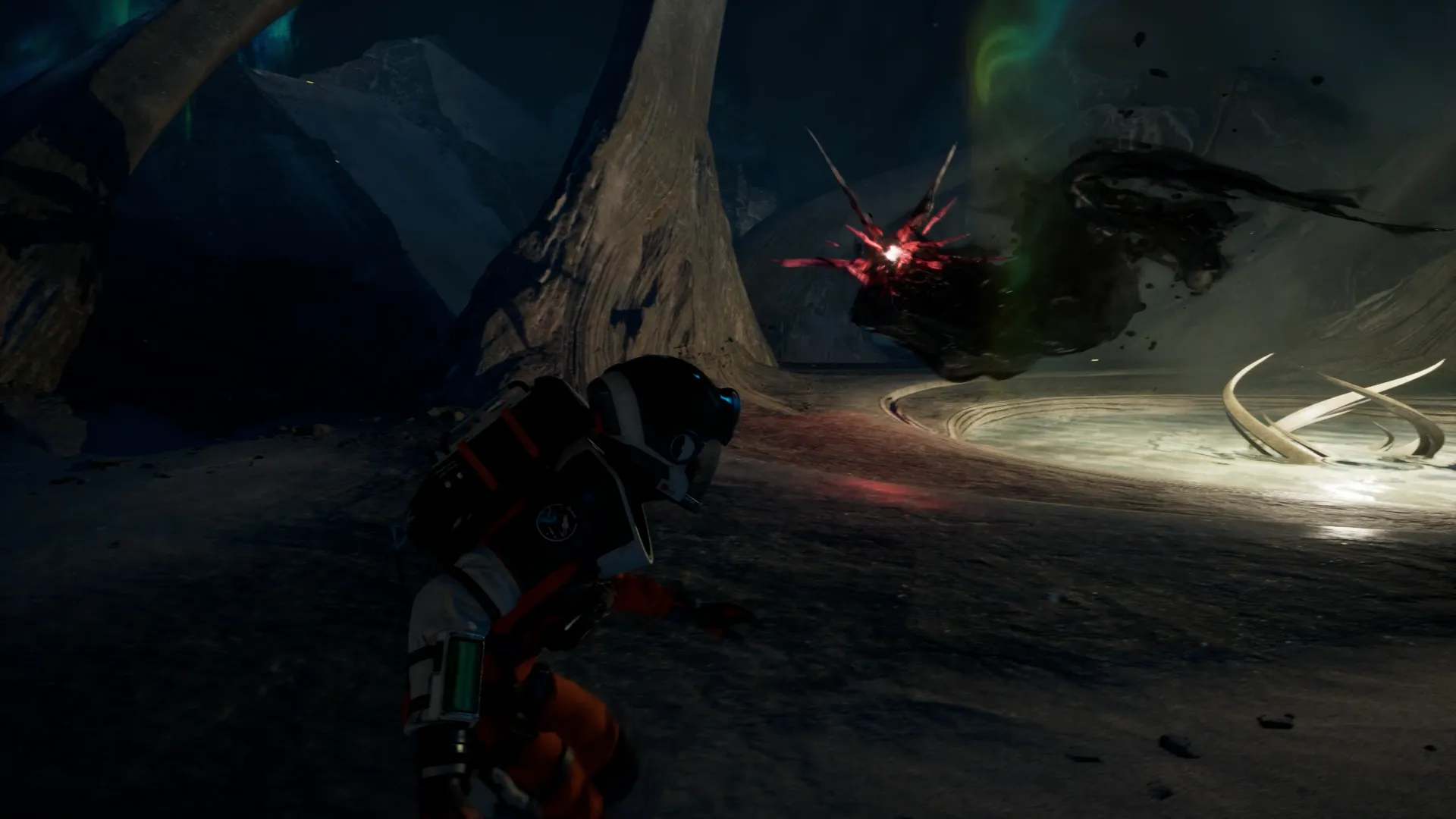
Helping Ariane is her Pathfinder, which provides guidance throughout her journey, including an EM scanner that allows her to shift the energy on the planet to create new pathways. Stealth also plays a key role, especially when dealing with the hostile lifeform known as the Nemesis. Its design feels like something straight out of Lost, an eerie, looming presence with a raven‑like head that doesn’t want you reaching the mysterious “source”. On the PS5, the haptics during stealth are intense, with subtle vibrations that add a physical layer of tension.
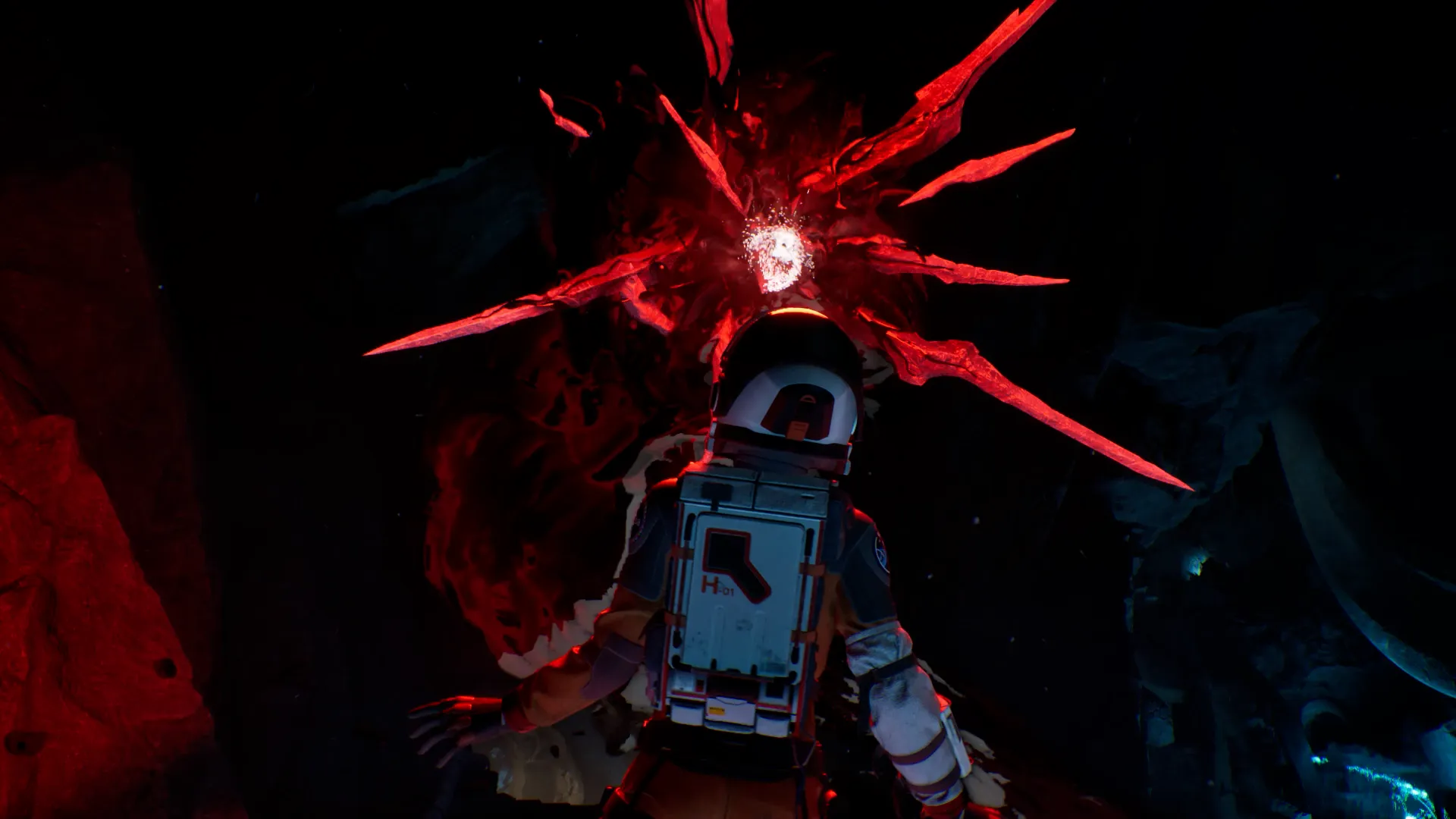
As a con, some of the gameplay can be a challenging grind, particularly when you die repeatedly. You will curse the Nemesis and when you finally reach the next safe area, the sense of victory keeps you going. Some puzzles and areas are also unclear in how to progress, adding frustration. This becomes more evident near the end of the game, but the narrative, characters, cinematography and gametography are exceptional.
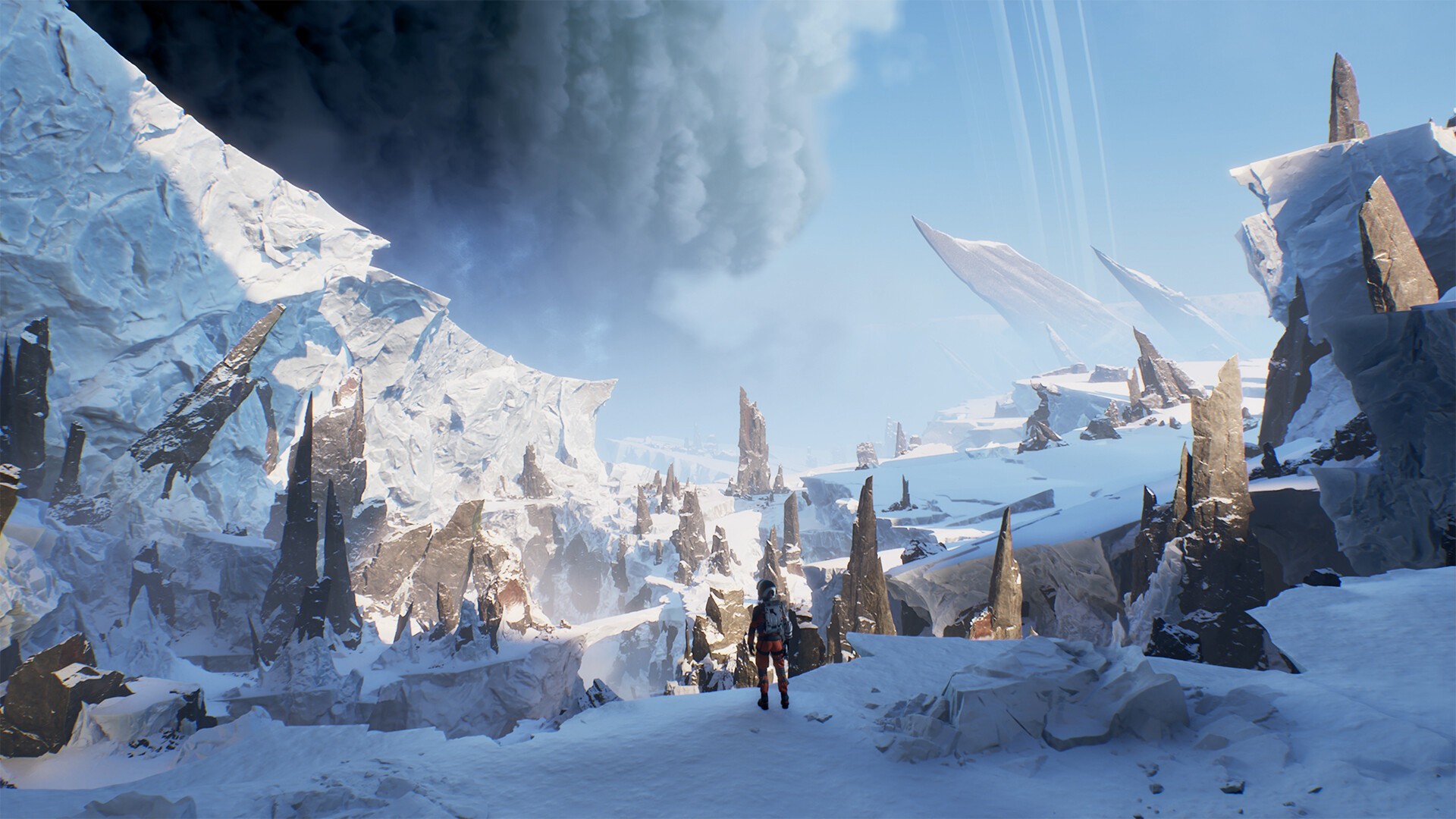
Graphics
Graphically, Aphelion is visually impressive and Persephone’s frozen landscapes are rendered with sharp detail, atmospheric lighting and a strong sense of scale. Wind, snow, reflections and ice deformation all contribute to a world that feels harsh but believable. It’s what an alien ice planet should look like. The cave lighting is a standout, with fluorescent blues, bioluminescent reflections and the glow of Ariane’s helmet creating some of the most striking underground environments in recent sci‑fi games. On the flip side, Thomas’s story takes you to warmer, desert‑like areas as you painstakingly explore the terrain and various man‑made structures. It’s the same world but experienced through two very different states of mind.
Audio
Audio plays a crucial role in Aphelion, made clear early in the game through the crunch of snow, the hiss of wind and the echo of cracking ice, all of which create a constant sense of tension. Ariane’s breathing shifts with her stress and exhaustion, grounding her humanity and making close calls feel personal. The Nemesis is often heard before it’s seen, turning sound into a survival tool that heightens the atmosphere. The voice acting is wonderful, with Vanessa Dolmen as Ariane and Eric Gevnes as Thomas delivering emotional and powerful performances. The soundtrack adapts to the action, swelling during tense climbs and fading during quieter moments. Several cues echo the emotional tone of Interstellar without feeling derivative. Kudos to Amine Bouhafa, the composer of Aphelion.
Final Thoughts
Aphelion is a grounded and atmospheric sci‑fi survival game that, while not without its faults, is one of the most engaging titles I’ve played this year, particularly due to its character‑driven story. Ariane’s journey is the heart of the experience, while Thomas’s perspective adds depth and context. The dual‑structure works well and the ESA partnership gives the world a believable foundation. All in all, Aphelion is beautifully presented on the PS5 with clever gameplay, strong visuals and audio that combine to create your own interactive sci‑fi blockbuster.
Launch Trailer
.
Gameplay
.
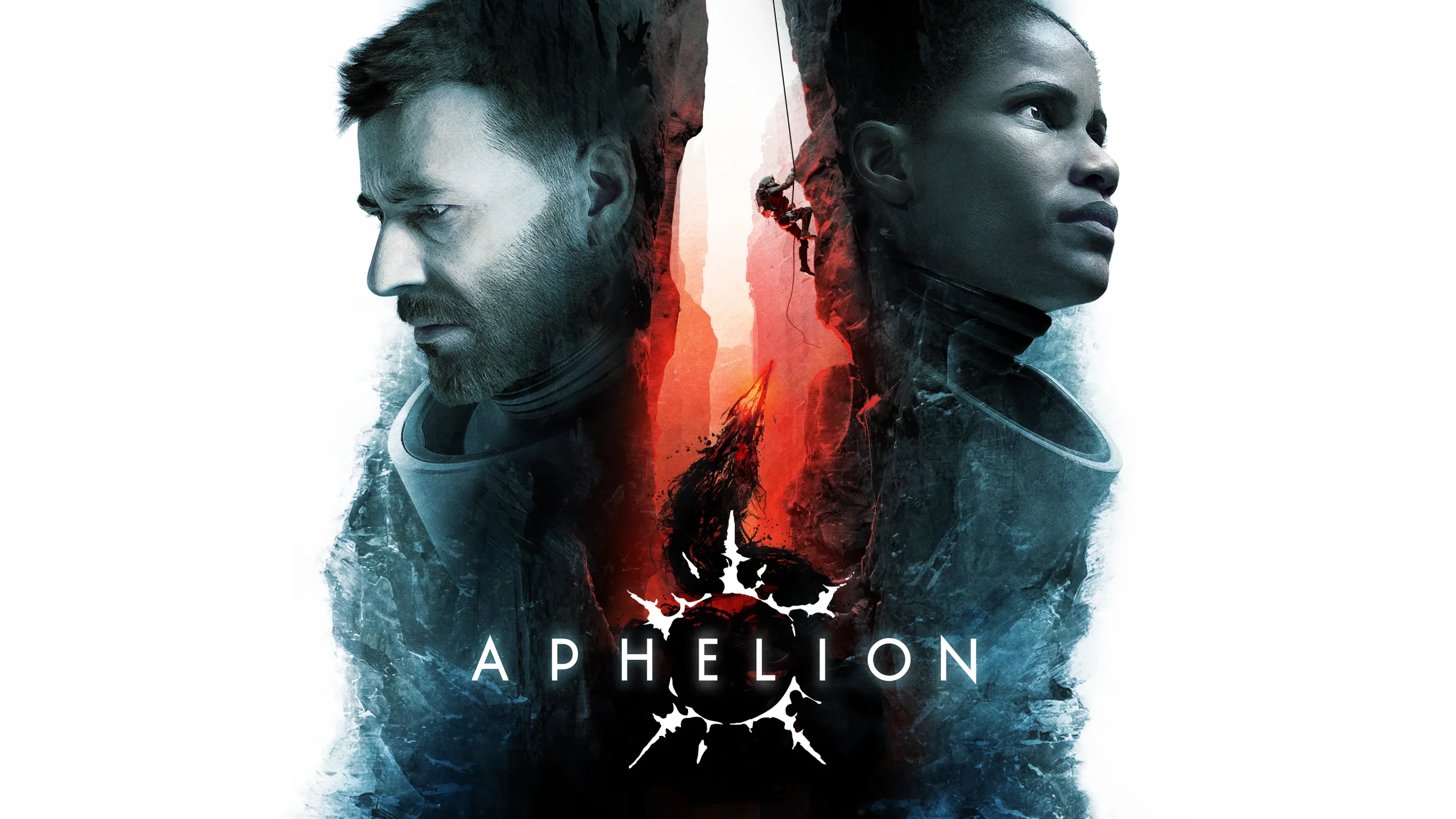
Aphelion — OUT NOW on PlayStation 5, Xbox Series X|S and PC (Steam / Epic Games Store).
About the Author

Andrew Bistak When he's not trying to save the world, Andrew enjoys travel (although loathes turbulence), going to the movies, reading and being a dad to his two dogs (and now twins) with his wife.
Related Posts

Monopoly: Star Wars Heroes vs. Villains Review (PS5) →

Halo: Campaign Evolved PS5 Review →

The Caribou Trail Review (PS5) →