
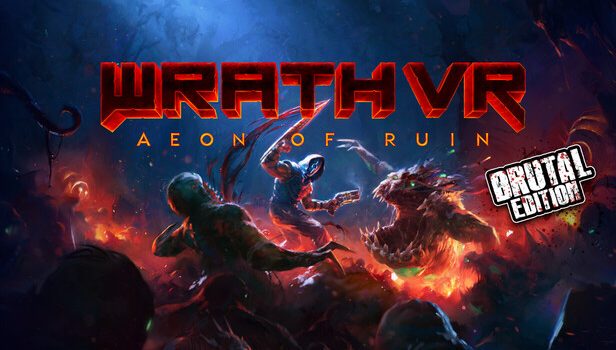
WRATH: Aeon of Ruin VR – Brutal Edition Review (PSVR2)
Summary: WRATH: Aeon of Ruin VR - Brutal Edition drops you into a dying world where constant movement and quick decisions are the only way to survive. You push through large, secret-filled levels using a mix of ranged weapons, close combat, and fast traversal tools that keep every fight in motion. It’s a gritty, old-school inspired VR shooter that thrives on speed, pressure, and learning to stay one step ahead of everything coming at you.
4.3
Brutal Boomer
Fast, heavy, and built for momentum, this is a shooter that feels right at home in VR. WRATH: Aeon of Ruin VR – Brutal Edition is an action-heavy boomer shooter brought into virtual reality by Flat2VR Studios and Team Beef, with publishing handled by 3D Realms and Flat2VR Studios. It launched on April 9, 2026 for Meta Quest 2, 3, Pro, PlayStation VR2, and PC VR, building on the original flatscreen release that arrived in 2024. This version isn’t just a straight port. Brutal Edition leans into what VR does best, making combat feel more immediate, increasing the intensity with heavier gore and stronger feedback, and refining audio and effects across the board. The result is a fast, aggressive shooter that clearly pulls from the DNA of classics like Doom, Hexen, and Quake, but finds new life through physical movement, dual wielding, and the sheer presence that VR brings to every encounter.
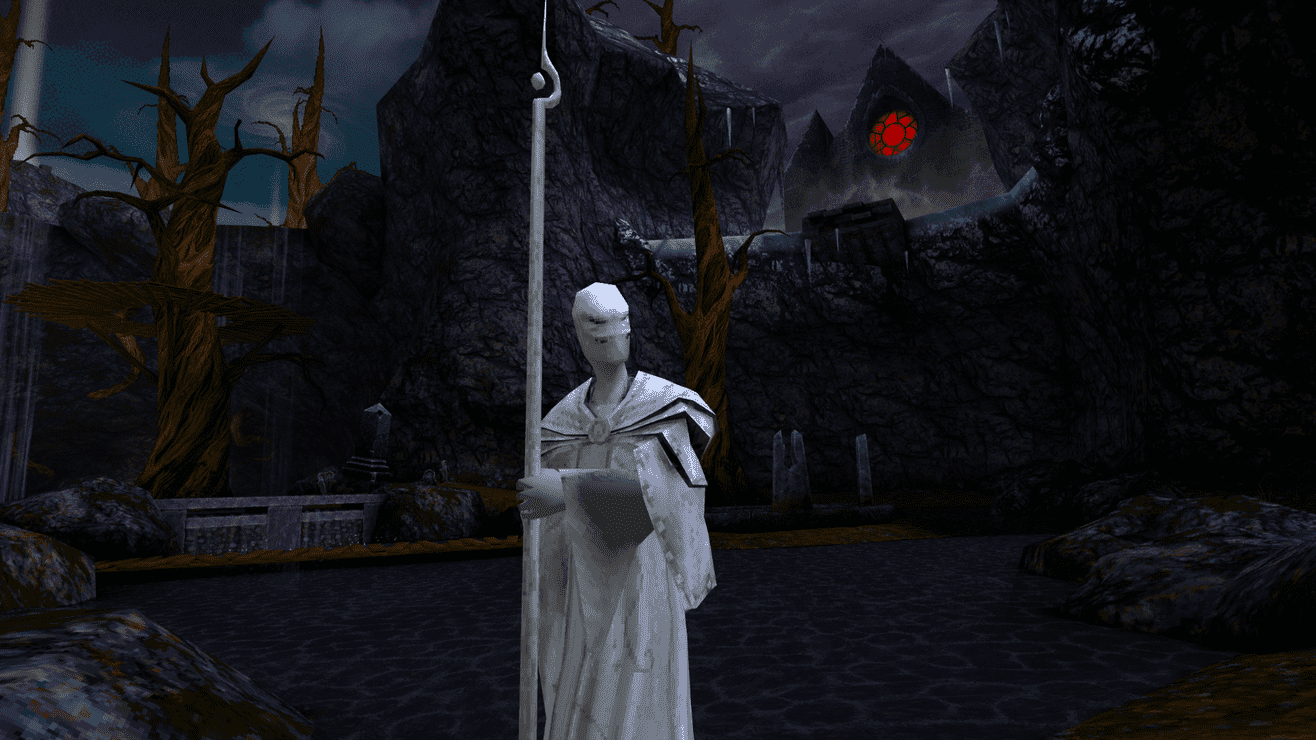
You play as a being known as the Outlander, drifting into a decaying world from the Ageless Sea. After meeting the Shepherd of Wayward Souls, you’re given a clear purpose: hunt down and destroy three corrupted Guardians tied to this dying land. The story is simple and mostly stays out of your way, which fits the tone the game is going for. Bits of lore are scattered through scrolls and enemy descriptions, giving you optional context if you want to dig deeper. It’s not a narrative that drives the experience forward in a big way, but it does enough to establish the atmosphere and reinforce that bleak, old school mood.
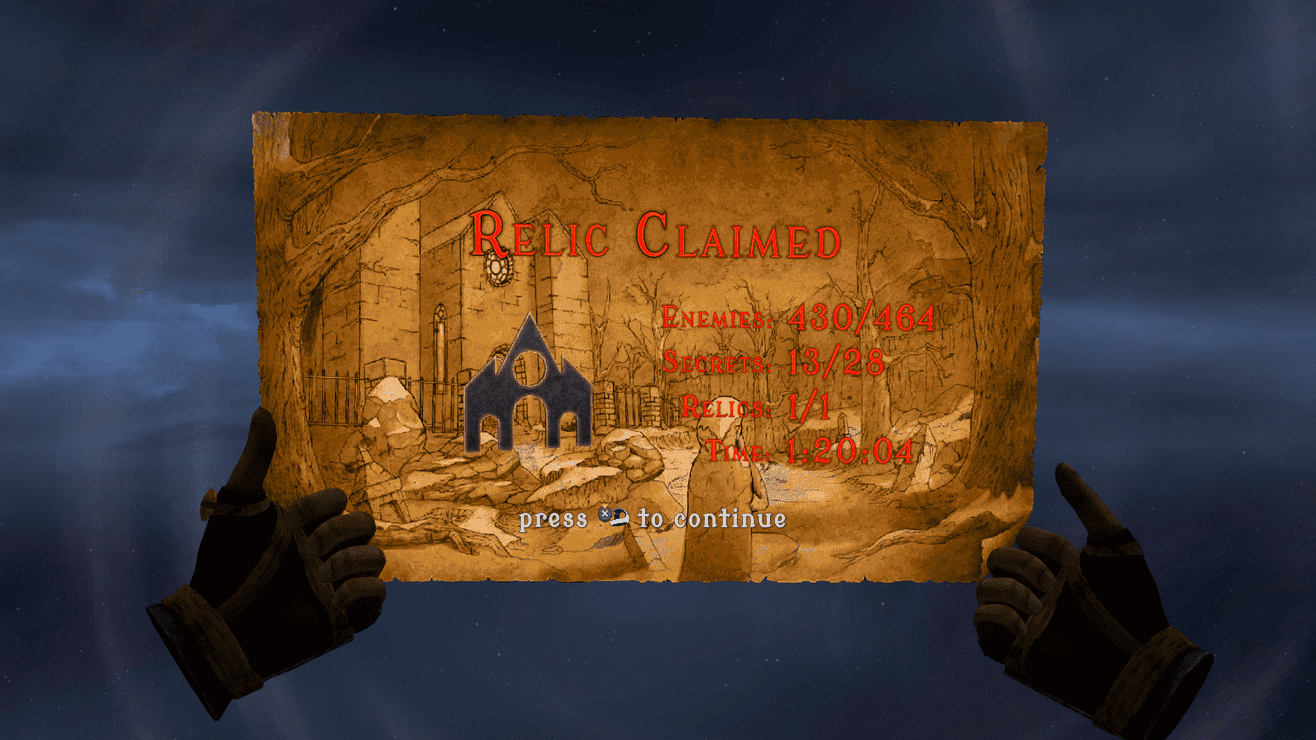
The structure of the game is built around exploration and progression through hub worlds. After a brief tutorial, you’re set loose in a central area that branches into multiple levels you can tackle in any order. Each level tasks you with finding a crest and escaping through a portal, and once all crests are collected, you unlock a boss back in the hub. This loop repeats across three hub worlds, totaling fifteen large levels plus boss fights. These stages are not small. Even moving at a steady pace, you can spend anywhere from thirty minutes to well over an hour in a single level, especially if you take time to explore, get turned around, or hunt for secrets. There’s a lot here to sink into, and the scale alone gives the game a strong sense of presence.
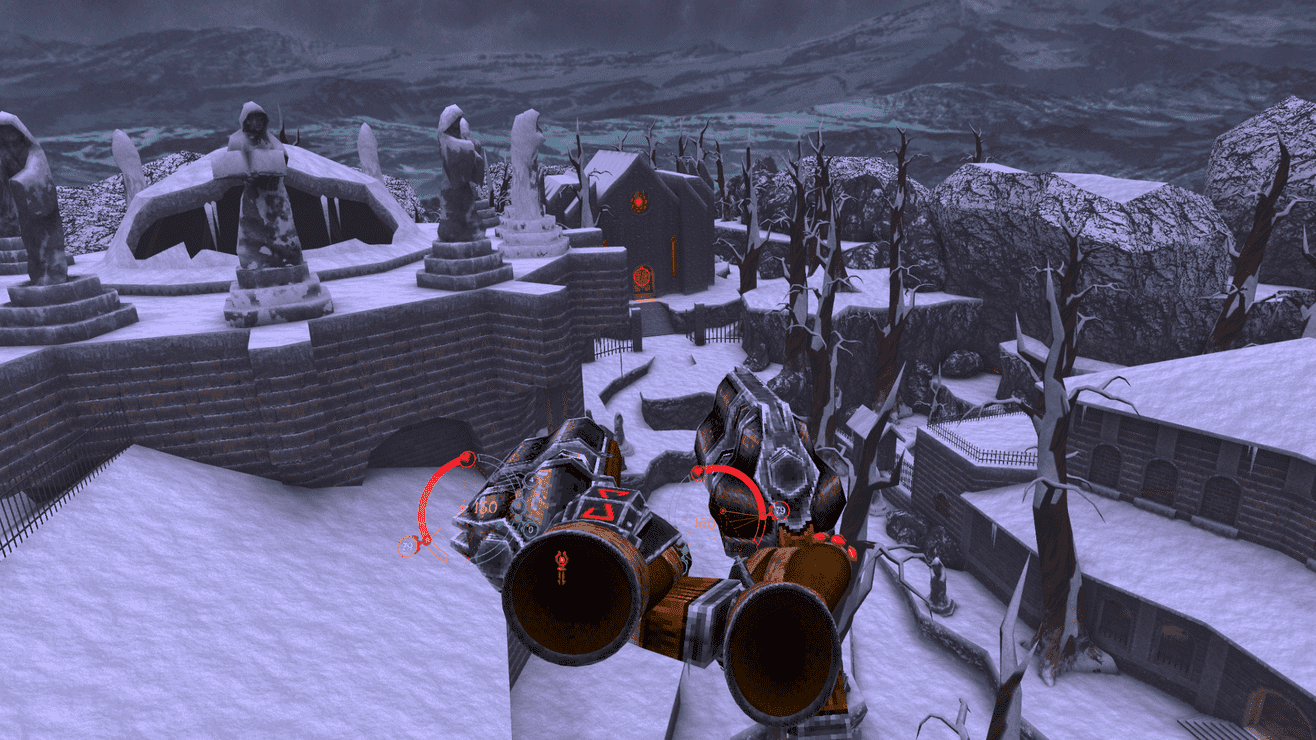
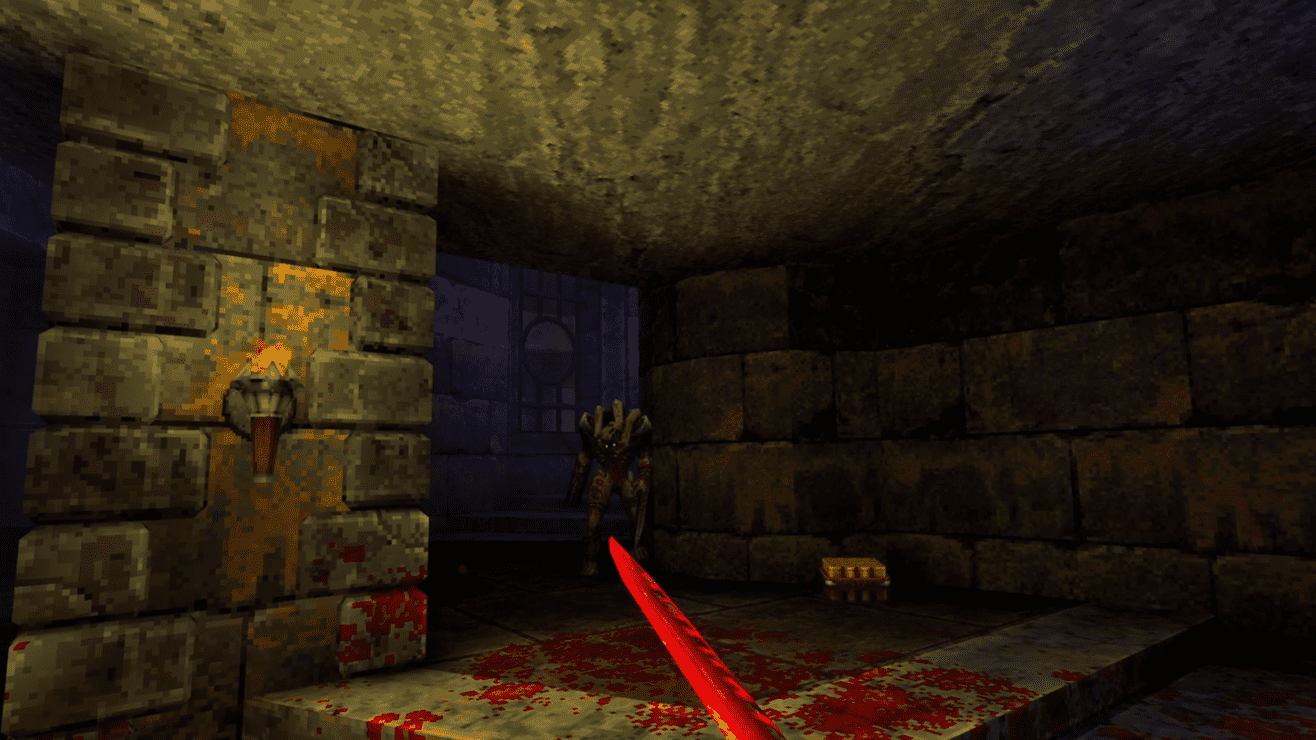
Movement and combat are the main mechanics and attraction. You’re constantly in motion, running at a brisk pace, sliding through tight spaces, crouching under threats, and using your sword for damage and mobility. Charging the blade lets you dash forward, which becomes essential for both combat and traversal. You can launch yourself across gaps or slam directly into enemies, and because the sword is always accessible with a quick trigger press, it naturally weaves into everything you do even when you’re focused on firearms. That constant flow between shooting and movement gives the game a rhythm that feels great once it clicks.
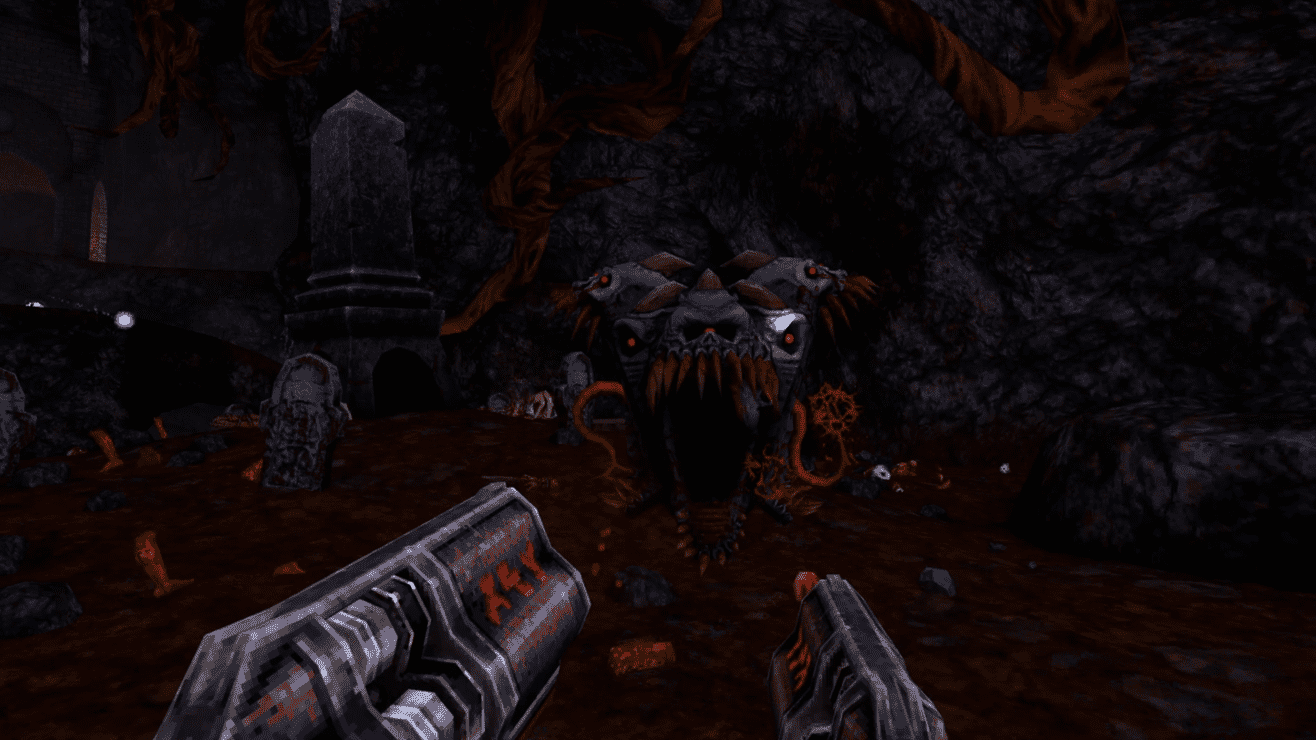
The weapon variety keeps that rhythm from getting stale. You start with familiar tools like a revolver and shotgun, but quickly gain access to more creative options, including weapons that fire enemy remains or spread explosive projectiles that can trigger chain reactions. Dual wielding is a core part of the design, letting you mix and match weapons to handle different threats at once. You might be blasting a close range enemy with a shotgun while picking off distant targets with a revolver in your other hand. You can also grip weapons with both hands to activate alternate fire modes, which adds another layer of strategy, though in practice it can feel less natural compared to keeping both hands active with separate weapons.
Artifacts add another dimension to combat and survival. These items range from defensive tools like forcefields to offensive or utility effects such as turning enemies against each other or revealing secrets in the level. The Soul Tether system allows you to save anywhere, but since it relies on consumable items, it introduces a light layer of resource management. In reality, the game is fairly generous with these, along with autosaves and healing shrines, so the system doesn’t feel overly restrictive. It’s an interesting idea that adds tension early on, even if it becomes less critical as you gather more resources.

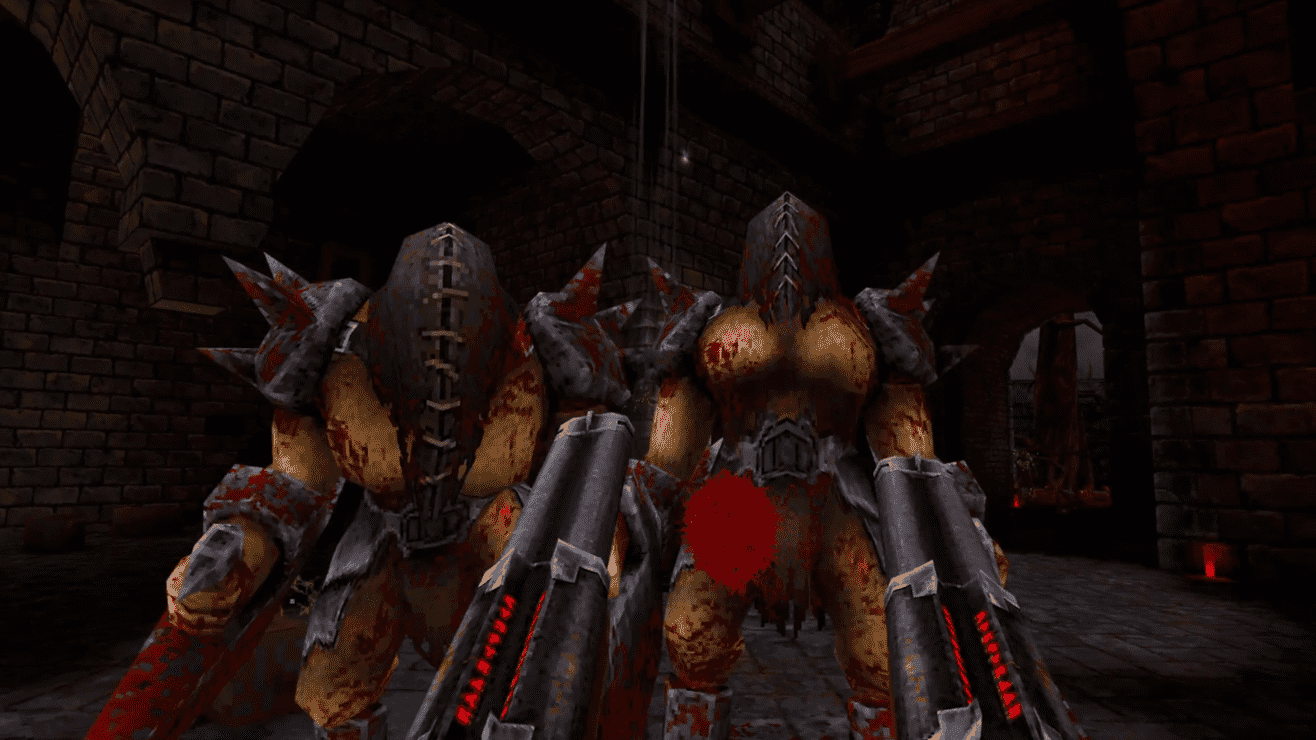
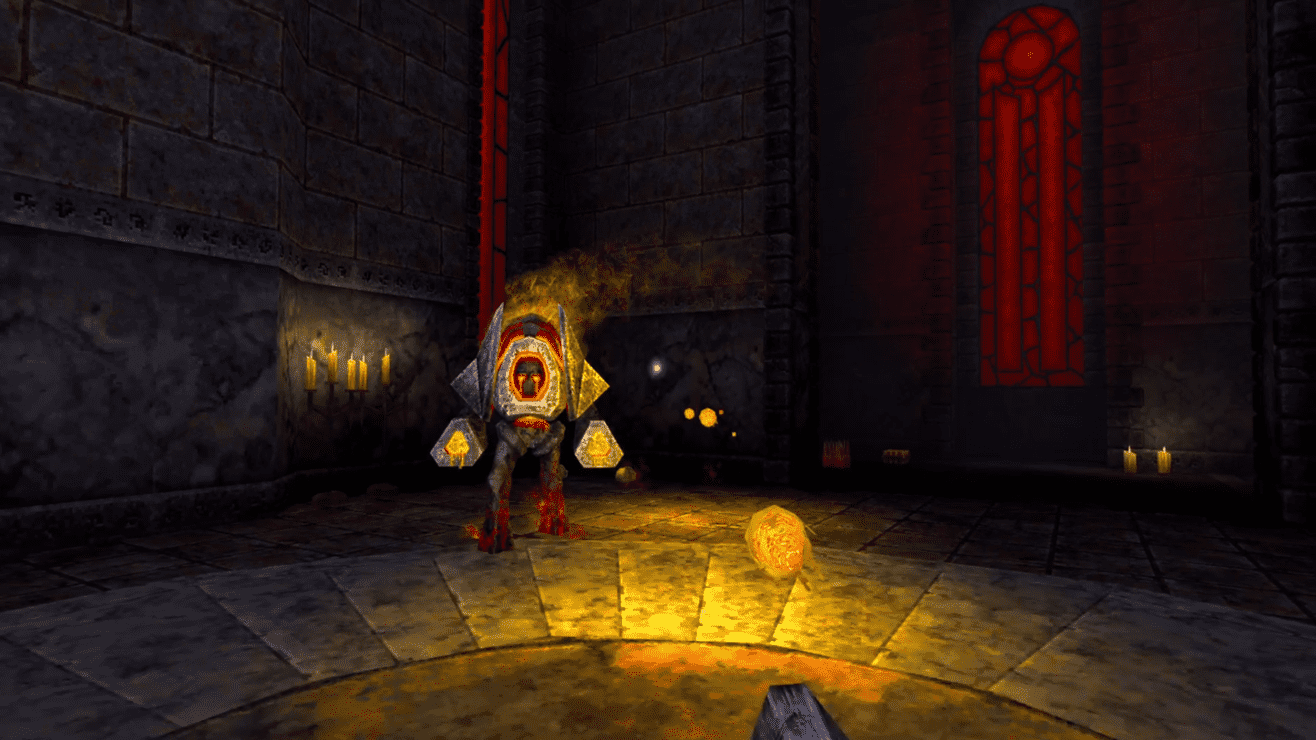
Combat in VR is where Brutal Edition really excels. Enemies love to invade your space. Fast moving threats, ranged attackers, and larger creatures all demand constant attention, and fights can quickly spiral if you lose control. There’s a slow motion ability on a cooldown that can help you regain footing during chaotic moments, and it often feels like a necessary tool rather than a gimmick. The large, open environments support this style of combat well, giving you room to move, dodge, and reposition while enemies pour in. Once you settle into the flow of dashing, shooting, and reacting on instinct, the game becomes incredibly satisfying.
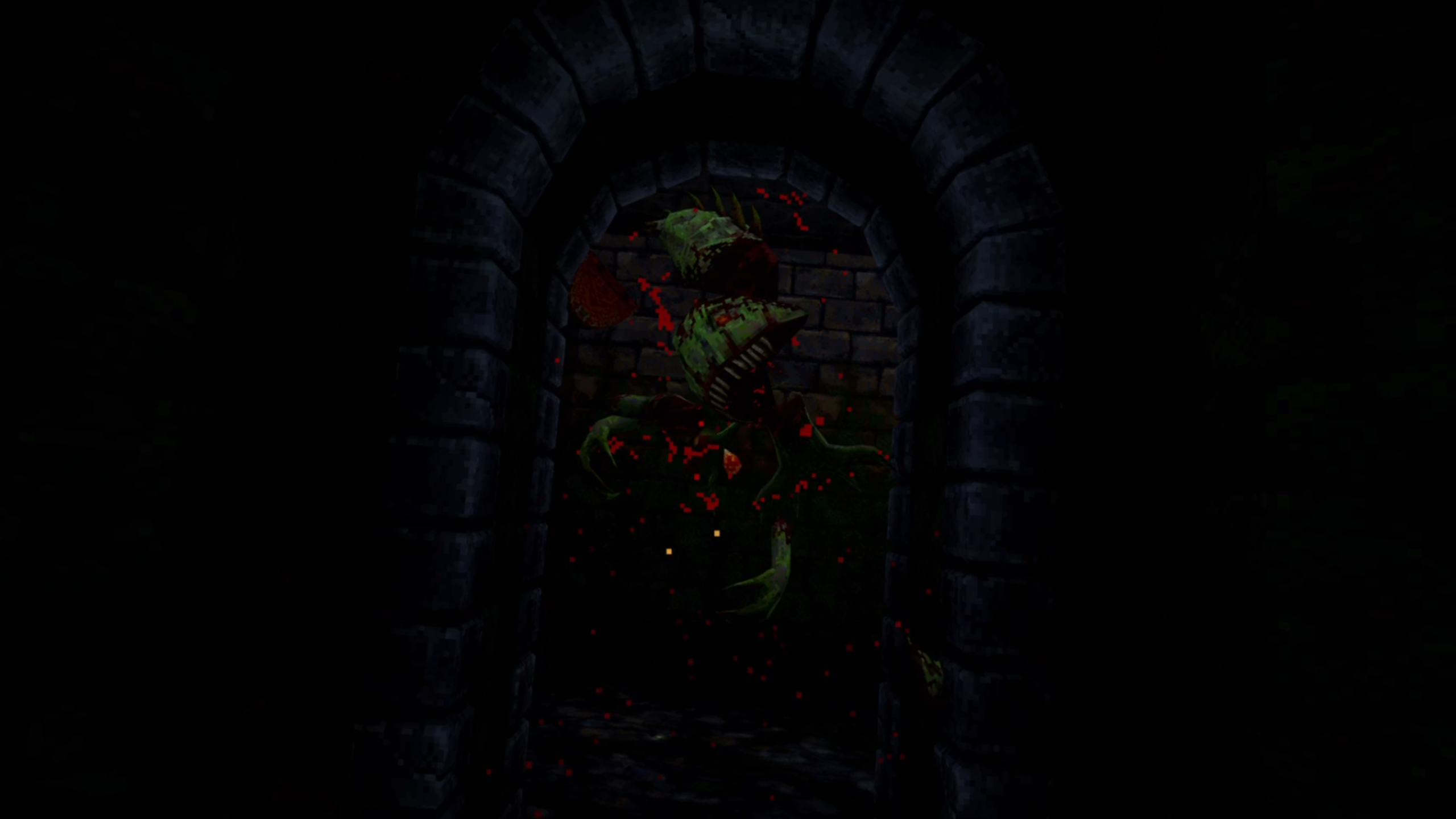
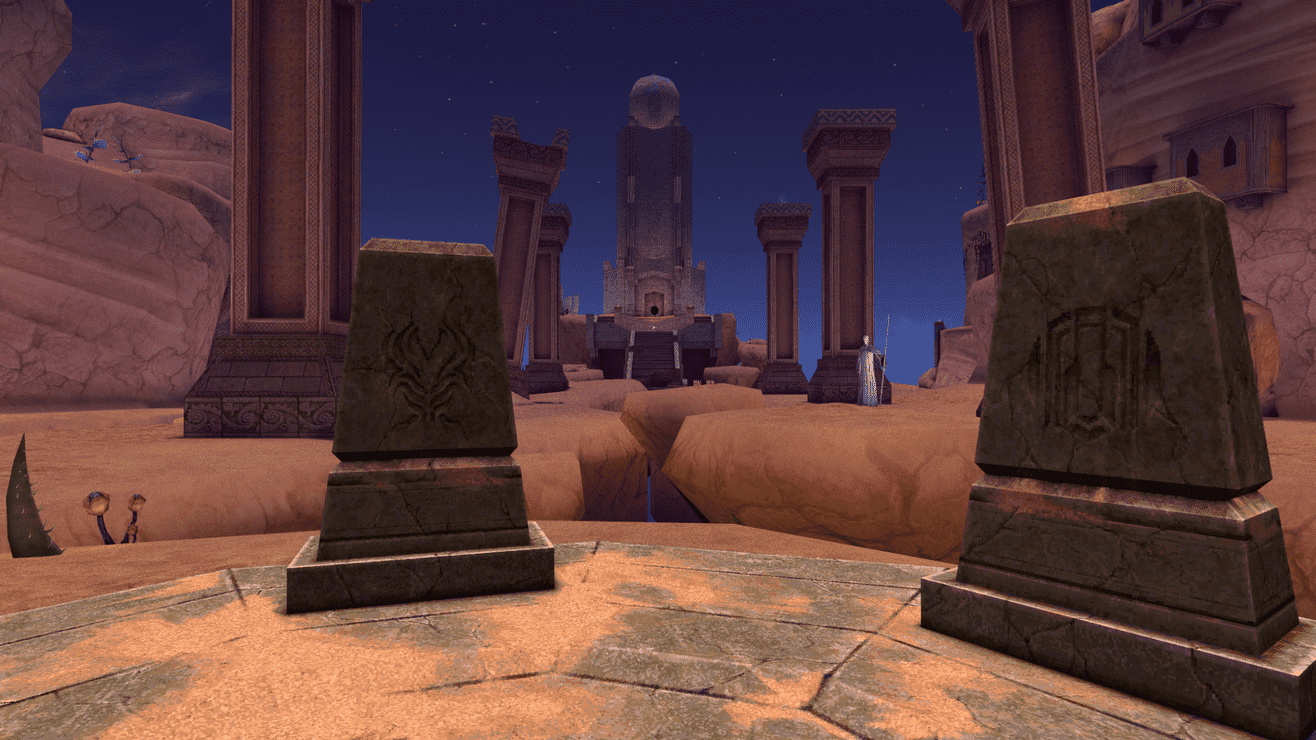
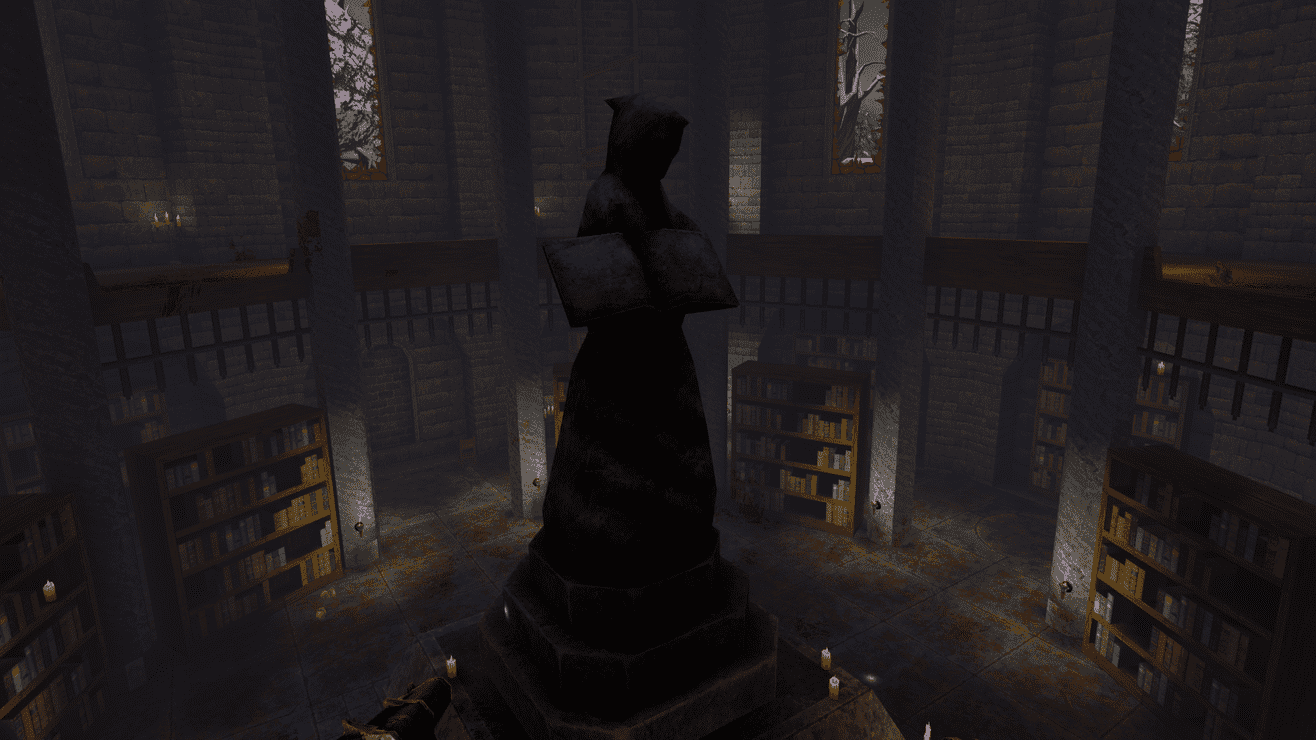
Visually, the game sticks to a deliberate retro style built on the Quake engine, with blocky geometry and stylized enemy designs. It’s clean, readable, and surprisingly immersive in VR. The environments themselves are varied, taking you through forests, snowy peaks, and ancient ruins buried in sand. Each area is packed with secrets, from hidden walls to tucked away switches, rewarding curiosity without ever feeling forced. Performance is smooth, which is crucial for a game this fast, and it helps keep the experience comfortable even during intense encounters.
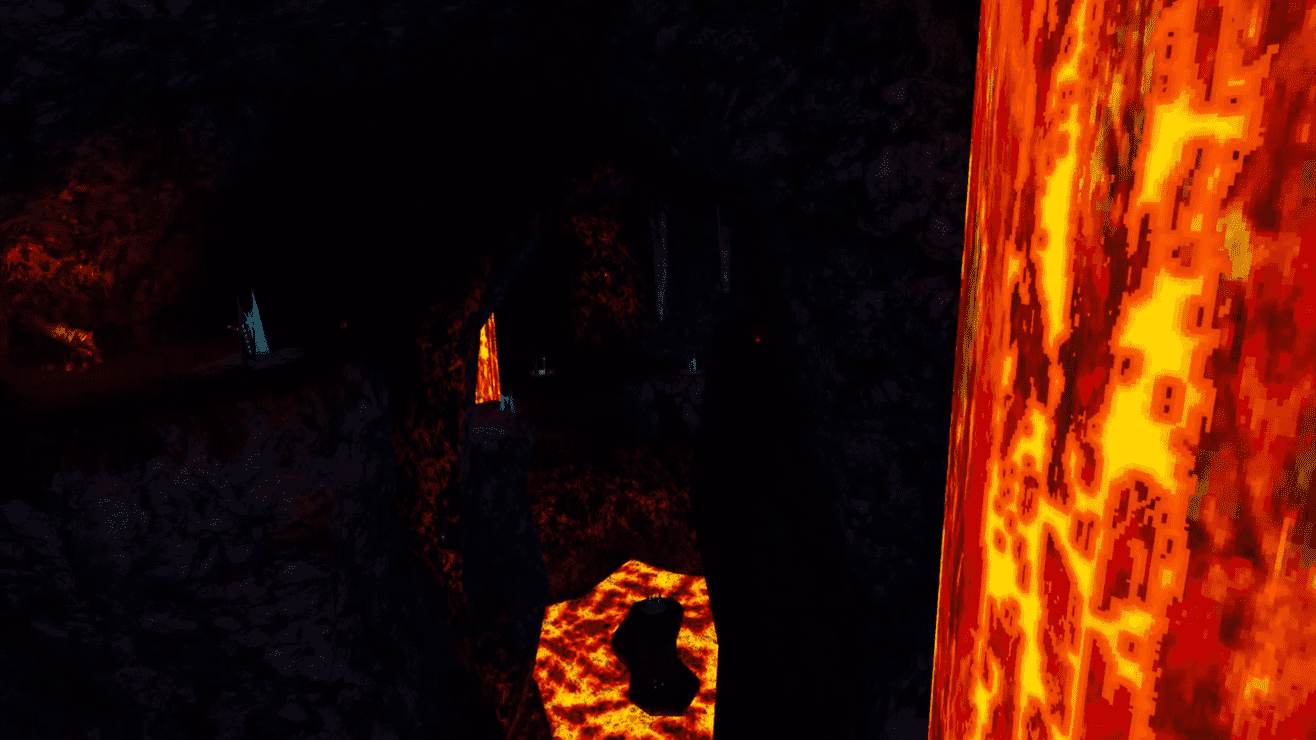
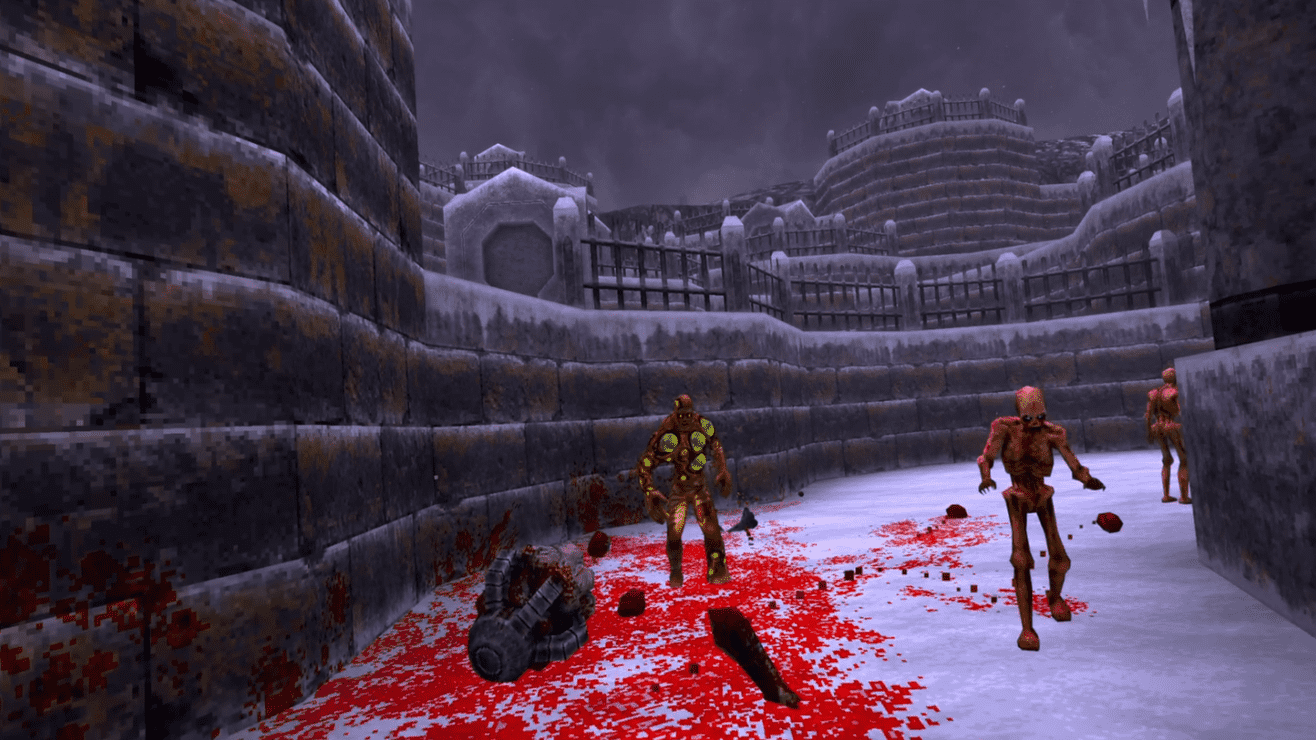
The audio design leans heavily on atmosphere. Music is used sparingly, often replaced by ambient sounds and low background tones that build tension. Enemy noises, environmental effects, and the sound of your own movement all stand out clearly. In VR, this works especially well. Hearing something just out of view and turning to face it adds a layer of immersion that traditional versions can’t quite match. Combined with the improved effects in this edition, every action feels more impactful.
Final Thoughts?
It’s easy to lose track of time here, moving from one fight to the next, exploring every corner, and having fun with the constant sense of momentum. Between its satisfying combat, strong sense of scale, and commitment to its old school roots, this is one of the more memorable VR shooters to come out recently. If you enjoy fast paced action and don’t mind a bit of a learning curve, this is the kind of game that can keep you hooked for hours without even realizing it.
About the Author

Nay Clark Gaming holds a special place in my heart and I never stop talking about video games. I really love all types of games and have an interest in games that have complicated stories and lore because I enjoy untangling the mystery of it all. When I'm not gaming, I unsuccessfully try to control three amazing and incredibly bright kids.
Related Posts

I Am Cat Review (PSVR2) →
RAGER Review (PSVR2) →

Umami Grove Review (PSVR2) →