
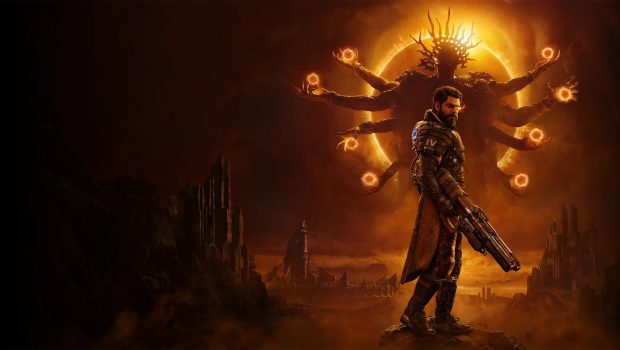
Saros PS5 Review
Summary: Saros, while not without some notable flaws, is still an engaging, intricately crafted, and intriguing roguelike action game that sets a new bar for Housemarque as an upgrade to Returnal in many ways.
3.8
Eclipsing Gameplay
Saros is the spiritual successor to Housemarque’s beloved fan‑favourite roguelike shooter Returnal. The game replicates several of the elements of the previous title excellently while introducing new elements of its own that work well. However, unlike its predecessor, it fails to make it engaging outside its gameplay elements.
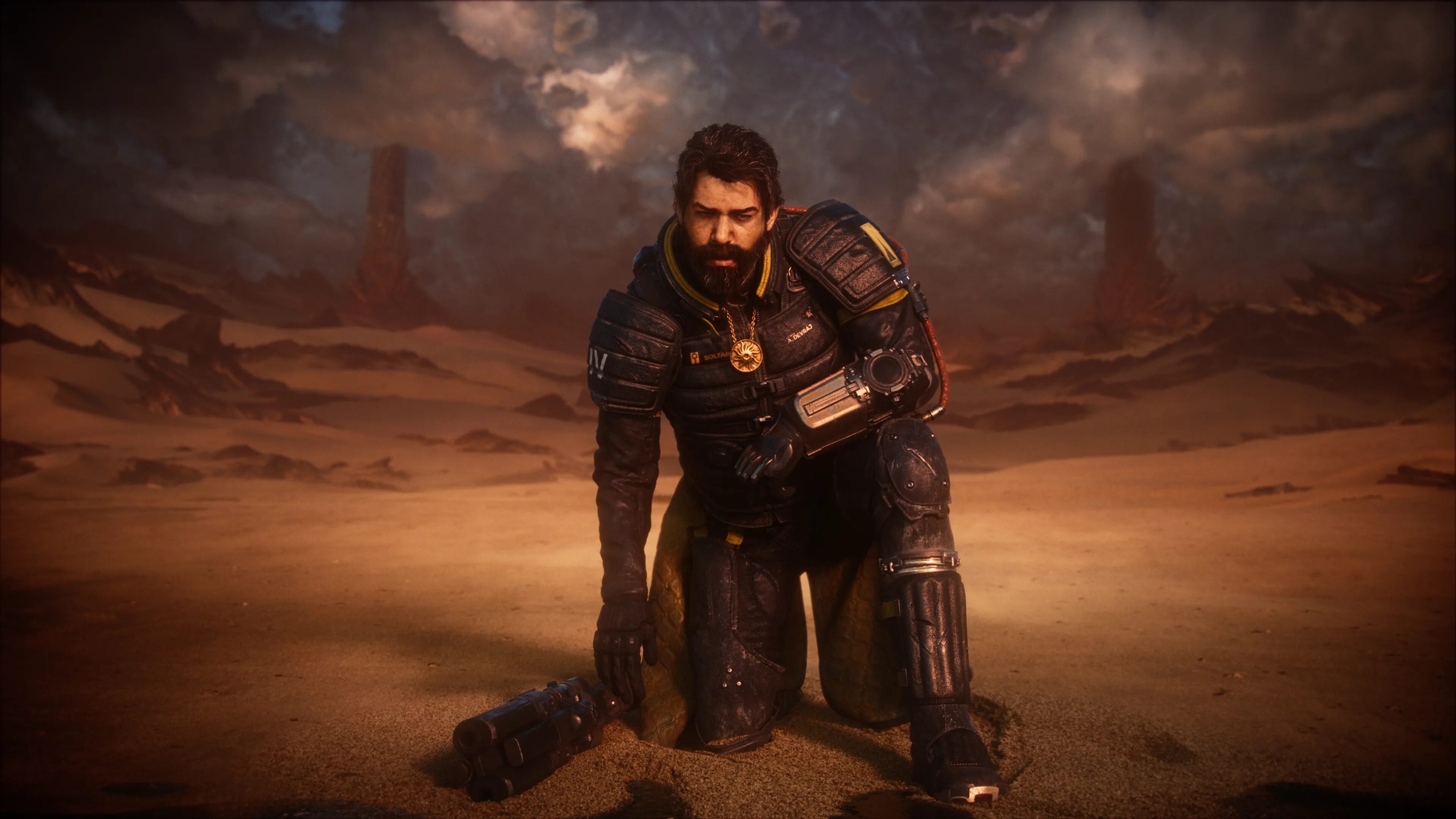
Saros follows Arjun Devraj, a Soltari company enforcer and part of Colony IV, a team sent to find missing members of previous colonies on their expedition to the mysterious planet of Carcosa. Arjun is hellbent on finding answers as well as a mysterious woman whom he clearly cares for on the planet. However, the planet’s mysterious eclipse, which constantly shapes its landscape and turns everyone on it mad, along with how he keeps coming back every time he dies, gets in the way of Arjun’s goals. Despite this, Arjun presses forward each time, taking out enemies, rescuing colony members, and learning the truth behind the madness of the planet and what happened to previous colonies in the process.
The game’s narrative, while having a lot of potential, especially given Carcosa’s mysterious elements, is unfortunately presented and portrayed in a disappointing way. The story is unsatisfying, especially compared to Returnal, as Saros mostly focuses on gameplay elements. There aren’t many cutscenes exploring Arjun’s or other characters’ backgrounds or stories, as there aren’t many cutscenes in general.

And as most characters serve only as static NPCs Arjun talks to when not exploring Carcosa or over voice comms during missions, they are not characters with much depth or stories to tell, making the overarching narrative feel lacklustre. The only narrative elements that are interesting are the mystery of Carcosa, the madness it eventually brings to everyone in it, and Arjun’s ability to return from the dead. While the narrative isn’t all that interesting, these mysteries at least serve as a motivator to keep pushing through the game’s several challenging runs.
However, what Saros lacks in narrative, it more than makes up for in its gameplay and combat. Saros is almost a complete upgrade to Returnal in many ways. The game provides several ways for players to dispatch and defend against all the threats Carcosa throws at them. This includes several types of firearms, artefacts that increase various stats, the new shield mechanic, and the sub‑weapon projectile mechanic.

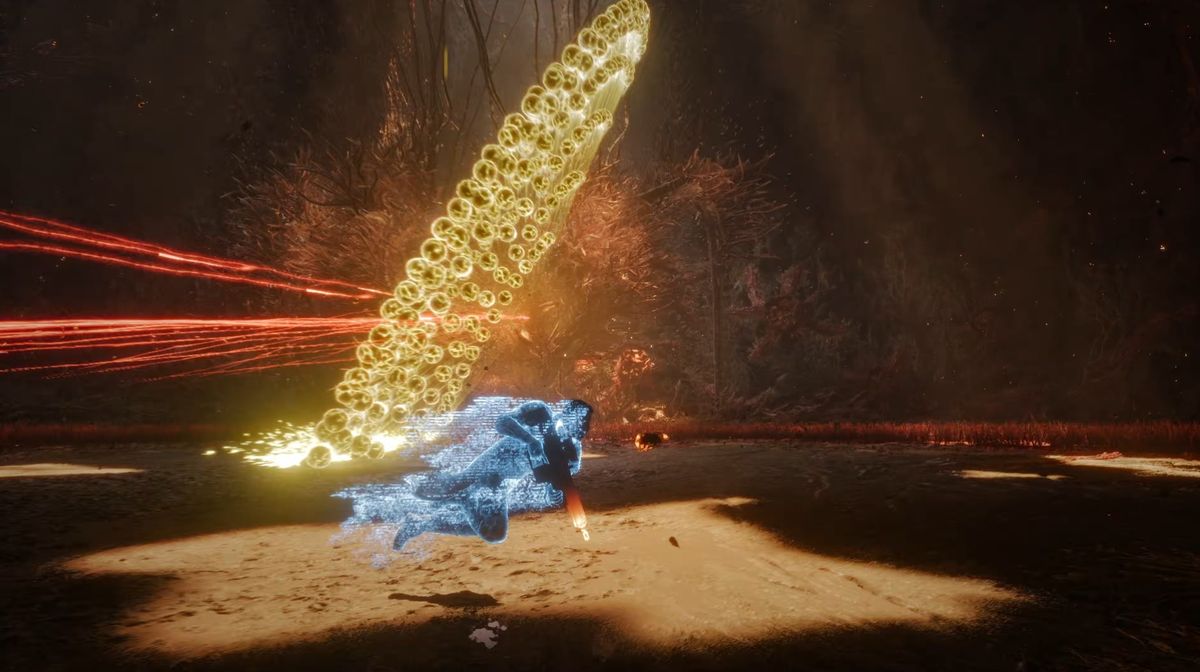
Firearms include pistols, assault rifles, shotguns, and more. Each of these weapon types has several bullet types, ranging from bouncing bullets to armour‑piercing rounds and explosive rounds. Earlier in the game, Arjun also receives an arm enhancement that serves as a secondary projectile. This sub‑weapon serves as an intricate and exciting way to deal more damage to enemies, as it also varies with the primary weapon players have equipped. While limited, players can recharge the projectile by absorbing bullets when their shield is activated. This makes combat much more intricate and adds a strategic element to gunplay. Speaking of shields, the shield mechanic is a great new addition that also switches up combat from the developer’s previous title. While you cannot shoot while it is activated, the shield helps with recharging projectiles. It also makes it easier to handle the incessant and unwavering waves of bullet‑hell projectiles around you, making it a critical new element.
Other than that, players will also run into several stat‑upgrade pickups. Like in Returnal, players will find some helpful upgrades and artefacts at no cost, while others will provide great upgrades at the cost of a significant debuff, like more health but longer dash cooldowns. These pickups make the roguelike element of Saros engaging and make each round unique compared to the last, especially as players can reroll pickups once they unlock the ability.
Another new inclusion that sets Saros apart from its predecessor is the new Carcosan Modifiers mechanic. This is a new balancing system that makes the game’s initially brutal nature more forgiving or even more cruel, depending on your playstyle and choice. Modifiers include the Protection and Trial tiers. The former makes aspects of gameplay easier, while the latter does the opposite.
Protection Modifiers serve as buffs that range from reduced incoming damage to easier perfect reloads, extended shield uptime, reduced shield power consumption, and more. Trial Modifiers, on the other hand, range from increased enemy aggression, degraded weapon power over time, the option to remove abilities like “Second Chance”, and more. However, players cannot simply stack all positive or negative modifiers, as they must maintain a balance to prevent extreme settings. This new system provides greater accessibility and serves as an excellent alternative to traditional “easy/normal/hard” settings, allowing players to tailor the experience to their skill level.
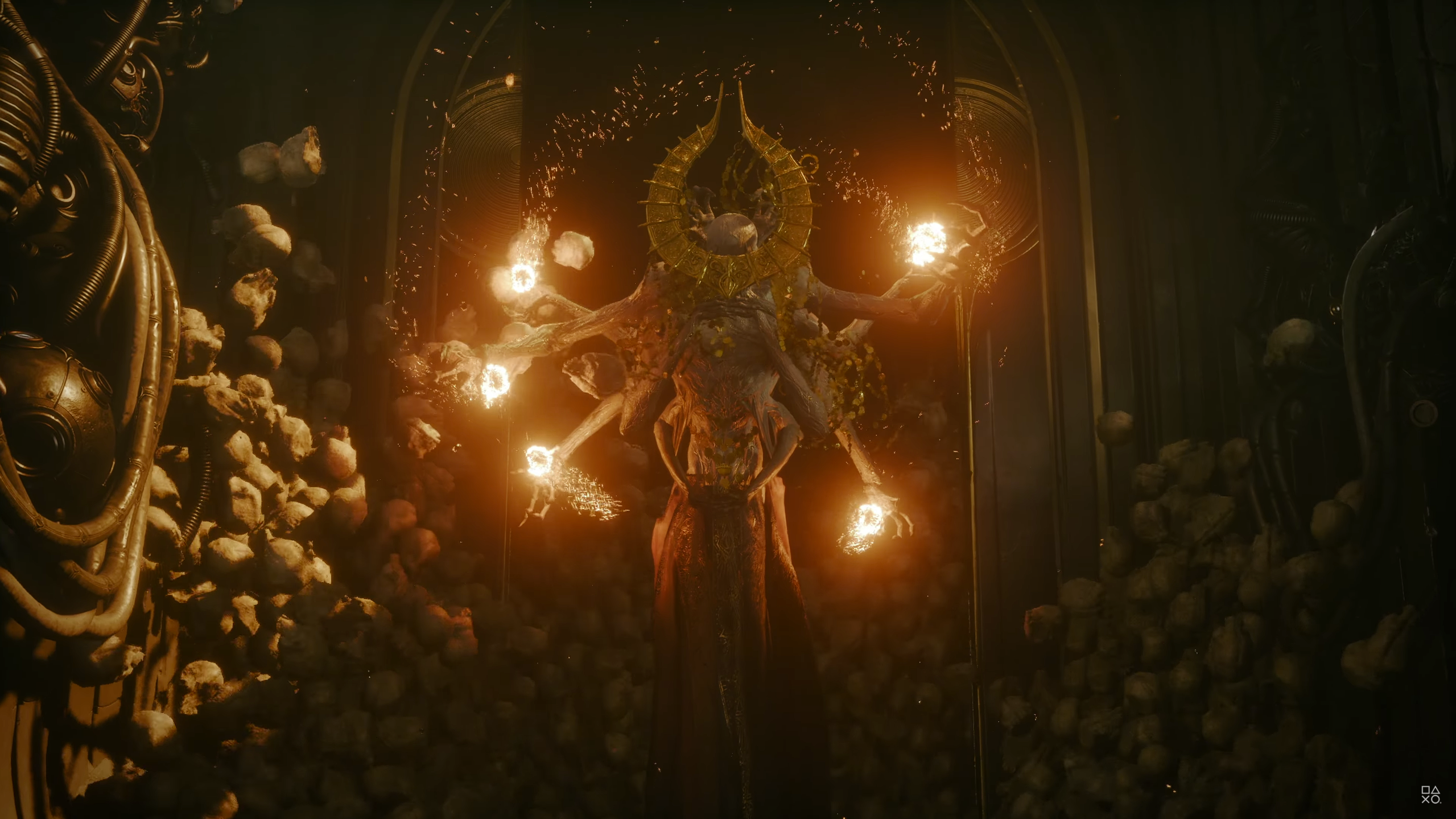
Additionally, the developers went even further to ensure players didn’t have too easy a time by including the Eclipse system. During an Eclipse, enemies hit harder and the landscape changes. It also makes projectiles from enemies inflict Corruption, a debuff that reduces your overall health bar.
The combination of all these elements makes Saros’ gameplay and combat excellent, especially when paired with its unique enemies, platforming hurdles, and bosses, all of whom are challenging but memorable in different, intricate ways. The gameplay is also immensely addictive, as once you get started and immersed, it’s hard to stop.
Gameplay aside, visually, Saros is surprisingly less impressive than expected, especially compared to Returnal. While the game sports excellent art direction and intricate and eye‑catching level and enemy designs, the character models and every other visual detail are lacklustre. The models and cutscenes pale in comparison to other PlayStation Studios titles. However, it’s worth noting that the visuals don’t affect the game’s enjoyable aspects.

Final Thoughts?
Overall, Saros, while not without some notable flaws, is still an engaging, intricately crafted, and intriguing roguelike action game that sets a new bar for Housemarque as an upgrade to Returnal in many ways.
About the Author

Abdul Saad Abdul Saad is an avid gamer and computer geek. He's been writing for four years on news, reviews, previews, and more on multiple gaming sites. When he isn't writing or playing the latest JRPG, he can be found coding games of his own or tinkering with something electrical.
Related Posts

Halo: Campaign Evolved PS5 Review →

The Caribou Trail Review (PS5) →

Denshattack! (PS5) review →