Pragmata PS5 Review
Summary: Capcom digs into their past to pave the way for their future, taking the tight gameplay experiences of their PS2 era games with a fresh new hook.
4
Capcom Returns
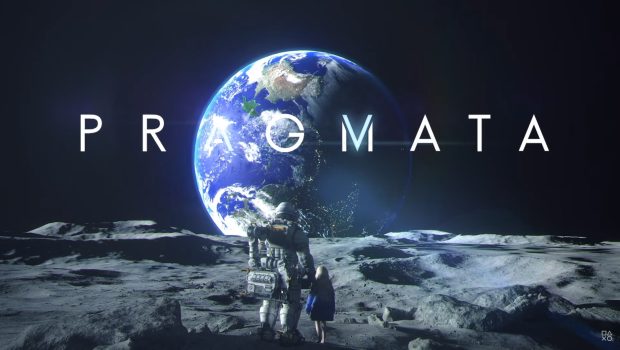
For its first big original IP in over a decade, Pragmata sees Capcom looking to its past and its future. What results is an often delightful mash up of tight PS2 era action game designed with a current day aesthetic and feel. While this might have been enough to hang their hat on and make a solid yet unspectacular sci-fi shooter, Pragmata goes one step further with a genuine innovation that will have action game fanatics wanting more.
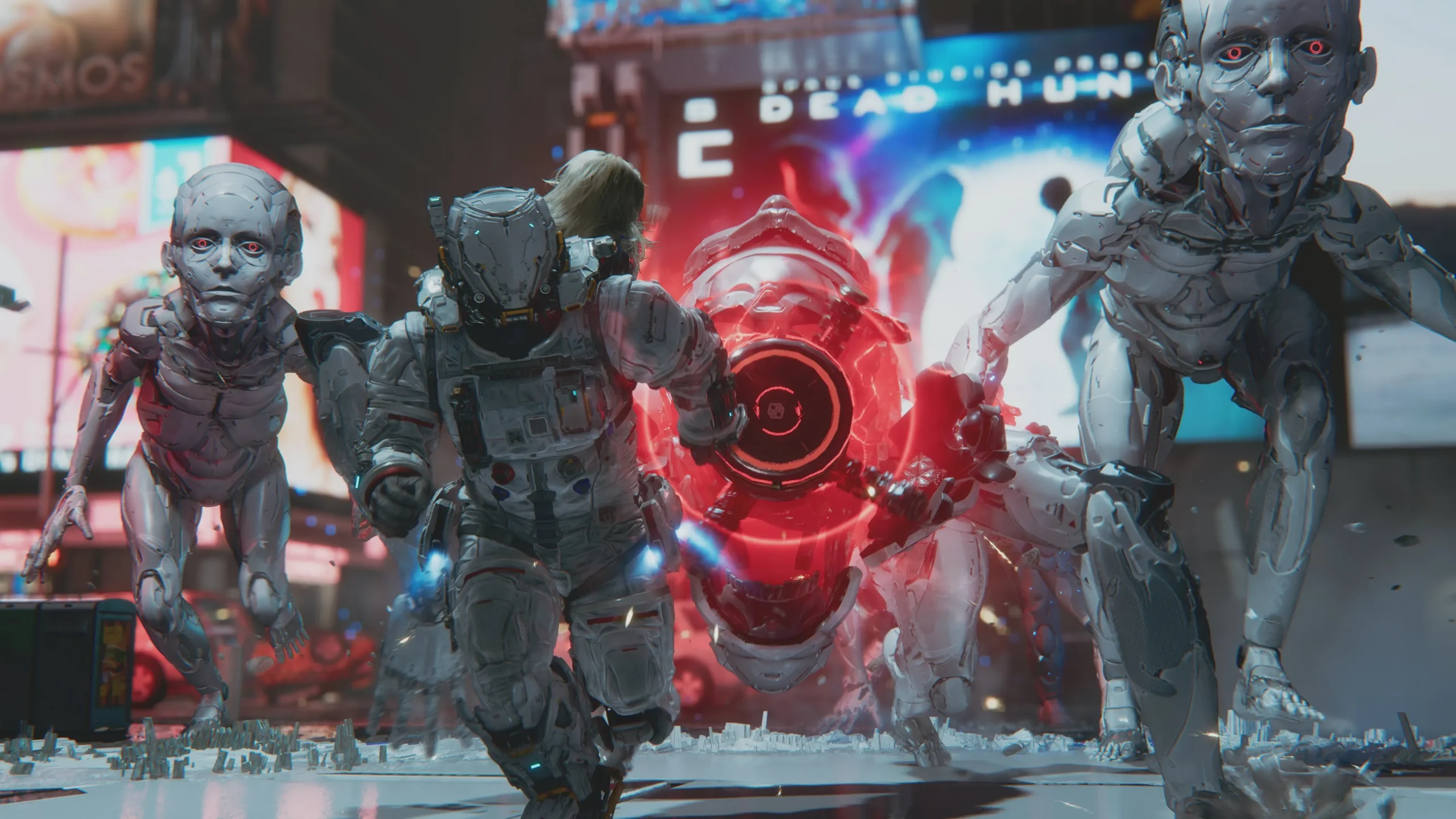
Taking place in the near future, a powerful corporation has uncovered a material on the moon called Lunafilament that can be used with a special replicator to recreate absolutely anything. Said corporation has set up a gigantic base on the moon called the Cradle to mine Lunafilament and assigned a benevolent AI system to oversee the project. You play as systems engineer Hugh Williams, who is sent with a team to investigate why communication between Earth and the station has been cut off. If you’ve seen a science‑fiction film before, you can probably guess what happens next. The station is empty, Hugh is separated from his team and a rogue AI is killing everybody. The fun added wrinkle is that the rogue AI has also gone rogue with the 3D printer, making gigantic AI‑slop recreations of real Earth locations. It sounds funny that a world‑destroying threat is something you can buy at Officeworks but again the devil is in the details. Seeing the uncanny‑valley AI reproductions of real‑life cities perfectly captures the eerie “close to life but something is off” feeling of AI art.
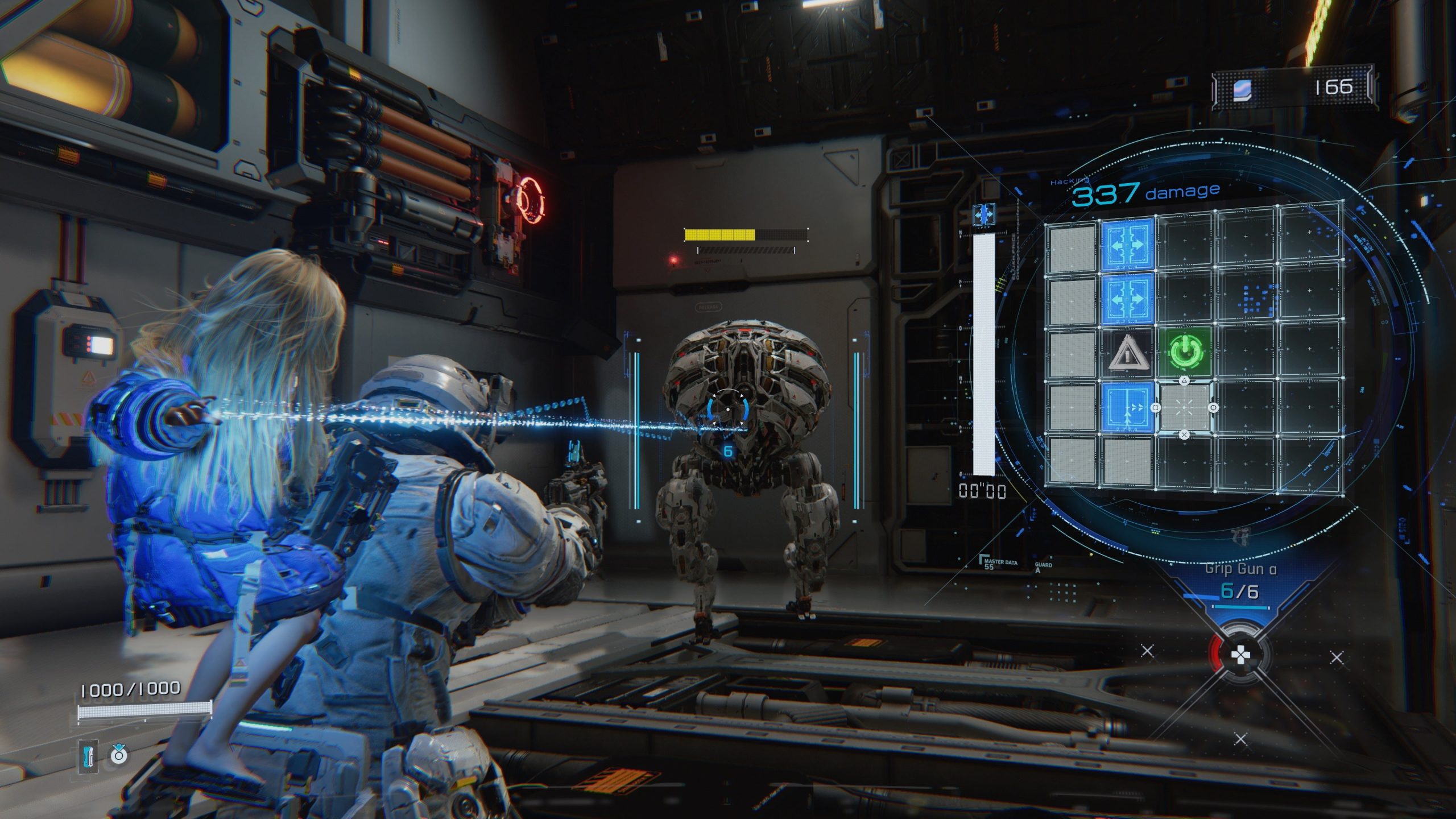
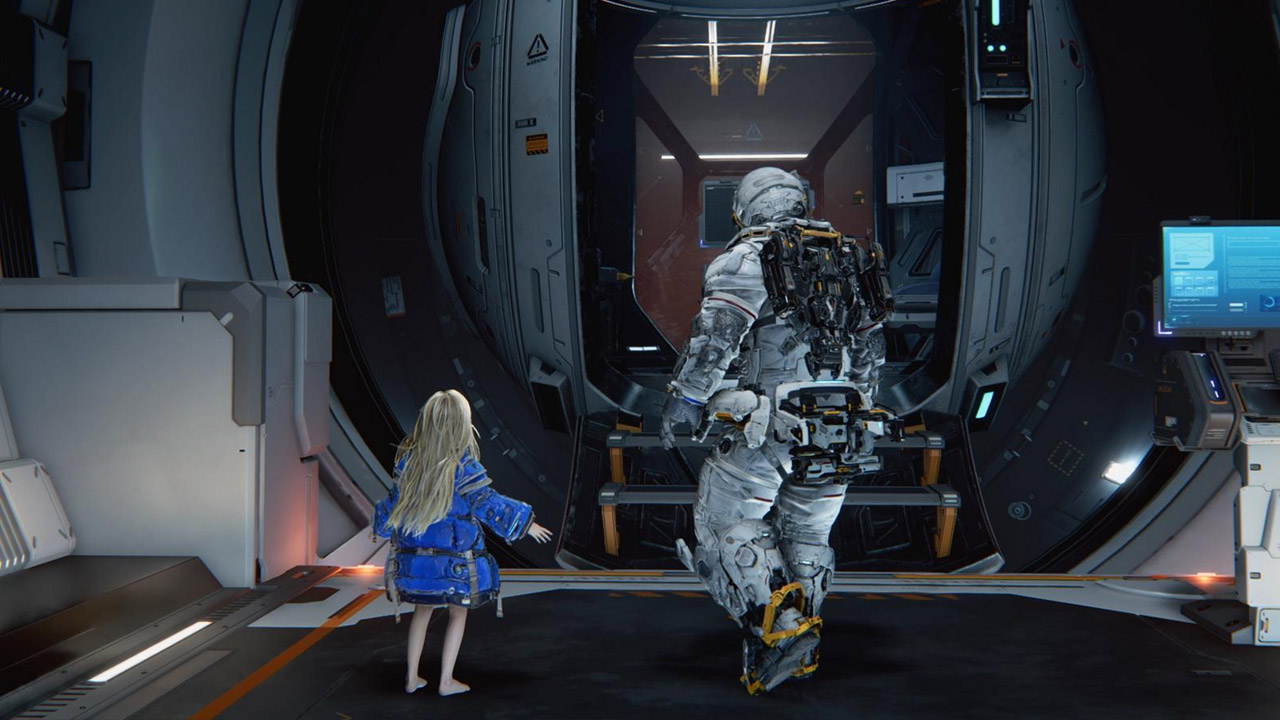
It’s a meat‑and‑potatoes romp and will win no awards for storytelling but deserves plaudits for how no‑nonsense it is. The basic story is introduced within 10 minutes and then a bunch of guns are put in your hand and you are sent off to save the day. But where Pragmata shines is its introduction of your travelling companion Diana. Diana is an android that looks like a little girl and acts like a little girl but also possesses powerful hacking abilities. As the story progresses Hugh and Diana bond and form a parental relationship. It is these moments that I appreciated most in the story as they are so drama‑free. Hugh isn’t bogged down with a tragic backstory, he’s just something of an everyman — an everyman with a gigantic collection of space guns and an android little girl on his back.
Diana is often delightful and in many ways acts as a subversion of the father‑daughter trope from other games. Diana may need protecting, but she’s far from helpless. In fact she’s pretty much the only reason Hugh isn’t killed violently within his first hour exploring the Cradle. Diana is also where the game shows off its hook, as the use of her hacking mechanic is what sets the game apart from being a fairly standard yet polished third‑person shooter.
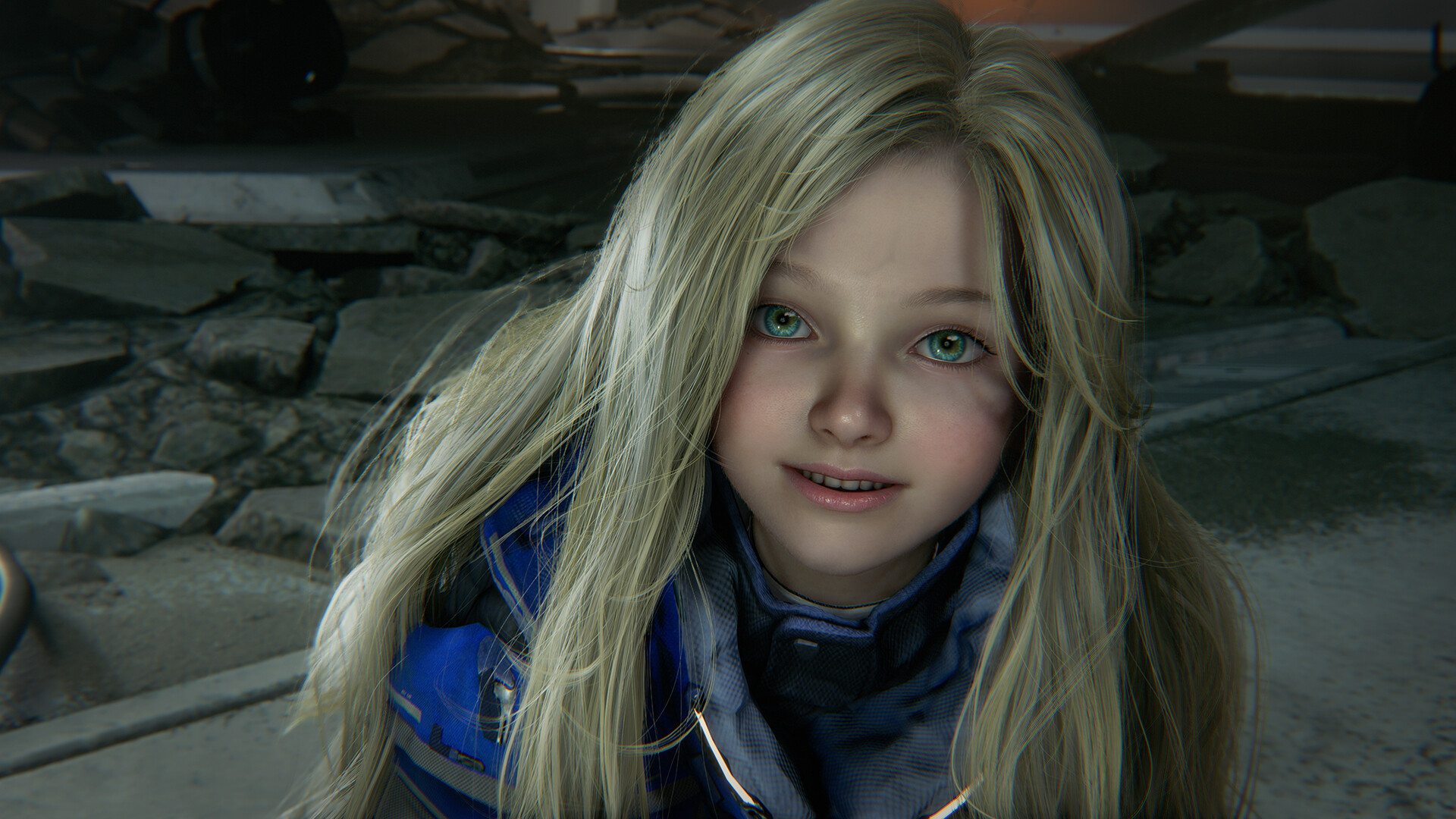
When fighting enemies you use Diana to hack their weak spots. Once you aim your weapon at an enemy it will summon a fairly simple grid puzzle where you have to move your node along a path to a goal. Getting to said goal enables you to blast the enemy for more damage. Activating special nodes around the grids grant special bonuses, and as the game progresses other nodes are designed to set you back. All of this is done in real time, the game does not give you time to figure it out while an enemy bears down on you. It is the shooter equivalent of learning to play the drums, as you are focusing on two different things at the same time and learning to use them in harmony.
Capcom has found a way to make the hacking integral to the combat, as without it you basically cannot damage even the weakest enemies. It takes a little getting used to but it is incredibly fun, never getting too complex that it takes all your brainpower but never so simple that it feels like an afterthought. For a completely new game mechanic it is remarkably well balanced and implemented. It also works in tandem with the story, as the frantic pace of the hacking and shooting adds to the atmosphere of feeling alone and outgunned against an army of creepy AI robots.
This is the core gameplay loop. The levels are fairly expansive yet straightforward areas that can be navigated with a minimum of fuss. You go through, solve a few simple hacking based puzzles, kill a few crazed robots and then eventually get to the boss battle. The boss battles are usually huge monstrosities that require multiple stages to take down. You have to learn attack patterns, identify weaknesses, determine the most effective weapons and use Diana’s hacking skill to the best of your ability. These battles are some of the games highest points and there is a huge sense of accomplishment in taking them down.
As previously mentioned, it is the replica of New York City that is the most interesting part of the journey. While the rest of the game does throw in unique challenges and plenty to pick up and learn about the world, the levels that focus more on the space station tend to suffer from looking like… a space station. There are a few flourishes based on the Lunafilament run amok that add variety but it still looks very much like a number of other futuristic sci‑fi shooters. There are also the 2000s‑era standards of datapads and emails to read to flesh out the story.
When you’re not blasting away at nightmarish robots you spend time in the Shelter. The Shelter is your home base where you can upgrade stats, weapons and customise your loadout. You can also gift Diana items that you find in the levels. These items usually teach Diana something about life on Earth and feature some sweet bonding scenes between Diana and Hugh. You also will meet Cabin, a sentient tablet computer that gives you rewards for finding coins out in the wild. The Shelter scenes offer respite and a chance to beef yourself up. Frustratingly though, when you die you get transported back to the Shelter. From there you then have to ride the tram again back to the last checkpoint. In a game where so many of the PS2‑era aspects have been improved, this one feels a little archaic.
Speaking of the PS2, this game clocks in at a very friendly 10-12 hours. The bloat that is so common with today’s AAA games is missing, as this game is lean and mean. There is a new game plus and some post game challenges that offer an extra few hours of gameplay and are recommended for those who want to see absolutely everything. Plus it gives you some extra time and challenge with the games addictive combat system.
Final Thoughts
So Capcom has found themselves another winner with a game that feels straight from the Devil May Cry and Onimusha school that made it such a success in the 2000s. The hacking mechanic is a delight and adds a new dimension to the frenetic gunplay. The story might not be anything to write home about but the relationship between Hugh and Diana is sweet and sustains the hours you’ll spend playing the game. There is nothing mind‑blowing here, just a lot of basic things done very right.

Related Posts

Nickelodeon Extreme Tennis: Next! Review (PS5) →

Hollowbody Review (PS5) →

Darksiders Warmastered Edition Review (PS5) →