

Tales of Berseria Remastered PS5 Review
Summary: Tales of Berseria Remastered is a great game despite some disappointing aspects. The new improvements make gameplay noticeably better but the drawbacks make the experience a little worse than it could have been.
4
Edgy Tales
Tales of Berseria released in 2016 in Japan and 2017 worldwide. After almost a full decade later, Bandai Namco has remastered the game via Tales of Berseria Remastered for a newer audience and newer platforms to varying degrees of success. Tales of Berseria serves as a distant prequel to Tales of Zestiria, though it tells a largely self-contained story. What makes Berseria memorable is not simply its combat system or world design, but its unique narrative and themes.

The story follows Velvet Crowe, a young woman whose quiet rural life is shattered by betrayal and ritual sacrifice, when her brother is killed by her brother-in-law as part of a sacrifice, and she is turned into a Daemon known as a Therion. Velvet is not written as a traditional savior figure. She is often cold, selfish, and single-minded, and the game does not shy away from showing the consequences of her mindset. However, despite this, her motivations are understandable, even when her methods are not. Over the course of the game, players see the character grow and overcome her adversities. The character-focused storytelling is the game’s strongest asset, and it keeps the experience compelling even when other aspects falter.
The supporting cast elevates the narrative even further. Each party member joins for their own reasons, and many of them exist in moral gray areas rather than clearly defined heroic roles. Rokurou seeks strength and redemption, Magilou masks her intelligence behind comedy, Eizen wrestles with fatalism, and Eleanor constantly questions her beliefs. The group dynamic is sharp, often funny, and surprisingly tender. Skits, a longtime staple of the Tales series, are used effectively here to deepen relationships. Instead of feeling like filler, many of these conversations display the game’s themes of free will, order, emotion, and more. However, pacing can be uneven. The opening hours are intense and gripping, but the story slows down as the party grows and the world opens up. Some parts involve extended travel or tasks that feel like they are there to pad the runtime. However, whenever the main plot takes center stage, the writing pulls you back in.

Gameplay wise, Berseria refines the series’ Linear Motion Battle System into something fast and flexible. Combat takes place in real time within open arenas, allowing players to chain together artes, special attacks, into customizable combos. Each face button can be mapped to a sequence of artes, giving a sense of freedom in how battles flow. Velvet’s unique ability allows her to sacrifice health for increased damage and temporary invulnerability, encouraging aggressive play. Other characters bring different mechanics to the table, from spellcasting to counter-focused techniques. On lower difficulties, battles can feel button mash-heavy, but on higher settings the system rewards timing, resource management, and strategic character switching.
However, despite its strengths, the combat is not flawless. Enemy encounters can become repetitive over time, particularly in longer dungeons. The Soul Gauge system, which dictates how many actions a character can take in a chain, can feel restrictive at times. Some players may find that details about customization are not fully explained, leading to early frustration. On lower difficulties, it is possible to get through many encounters by repeating the same patterns. Some mechanics are not explained clearly, which can make the early hours confusing. Dungeons often throw waves of similar enemies at you, and by the midpoint of the game, it starts getting repetitive. Raising the difficulty helps the system shine more, since it forces you to pay attention to weaknesses, timing, and resource management. Players who enjoy experimenting with builds and strategies will likely get more out of it than those who prefer a simpler approach.

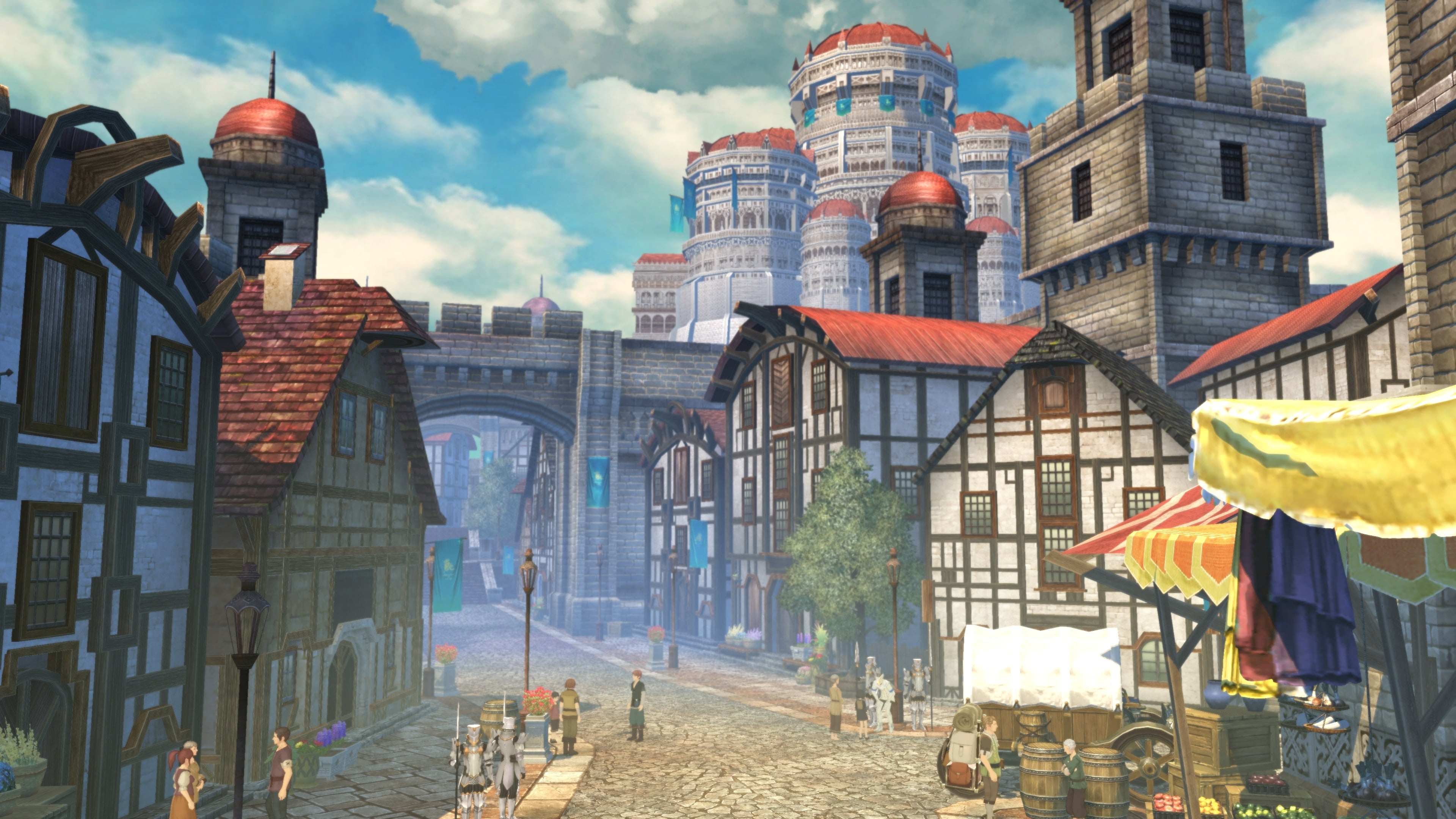
The game’s soundtrack supports the mood effectively. Battle themes are energetic, and emotional scenes are backed by softer tracks that fit the game’s tone. Voice acting, available in both Japanese and English, does a fantastic job of bringing the cast to life. Velvet’s performance especially stands out, capturing both her fury and her quieter moments. Visually, the remaster enhances the game’s visuals. The remaster sports detailed models, great art direction, and impressive effects. However, aside from art direction and slightly improved level designs, the visuals are comparable to the original version.
The remaster also introduces several quality-of-life improvements that make the game smoother to play. This includes a new retry option in Normal difficulty mode and above. Fast travel is available from the start, auto-save has been added, movement speed has been slightly increased, and new icons and indicators help make navigation clearer. However, not all of the changes are satisfying. Navigating dungeons still feels tedious, there are still occasional frame rate dips, and some options can only be chosen at the start of the game. All of these make the remaster disappointing in many ways, but it is still worth it for new players.
Final Thoughts?
In short, Tales of Berseria Remastered is a great game despite some disappointing aspects. The new improvements make gameplay noticeably better, but the drawbacks slightly diminish the experience. It could have been more polished, but the core story and combat still shine.
About the Author

Abdul Saad Abdul Saad is an avid gamer and computer geek. He's been writing for four years on news, reviews, previews, and more on multiple gaming sites. When he isn't writing or playing the latest JRPG, he can be found coding games of his own or tinkering with something electrical.
Related Posts
Riven (PS5/PSVR2) Review →
Warhammer 40,000: Speed Freeks (PS5) Review →

Warhammer 40,000: Mechanicus II (PS5) Review →