
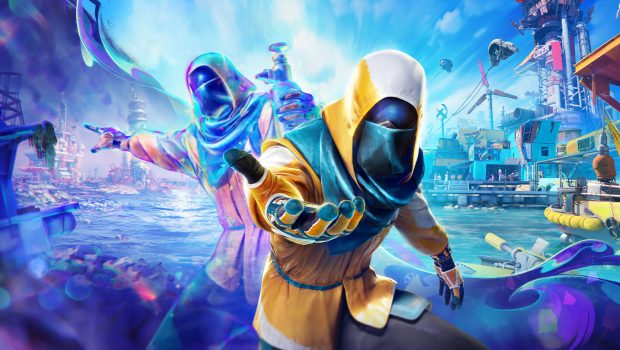
Tides of Tomorrow PC Review
Summary: Tides of Tomorrow set out to overhaul the choice-based games genre with it's Story-Link feature and, while promising, it is a relatively shallow mechanic. Still, the original wrinkle it adds on top of a solid, albeit flawed single-player choice-based game is a welcome addition to the genre.
3.8
Micro-Innovation
After the success of Road 96, a procedurally generated, choice‑based, replayable road‑trip adventure, developer Digixart revealed a new concept and an interesting wrinkle on the choice‑based formula in the form of Tides of Tomorrow last year. A game that promised to introduce a groundbreaking new gameplay mechanic called the Story‑Link feature, where you follow in the footsteps of previous players. Their stories affect yours, and your stories will affect the ones that come after. Tides of Tomorrow promises wildly different playthroughs depending on the choices of the player that came before you. But is that really the case?
Life in Plastic
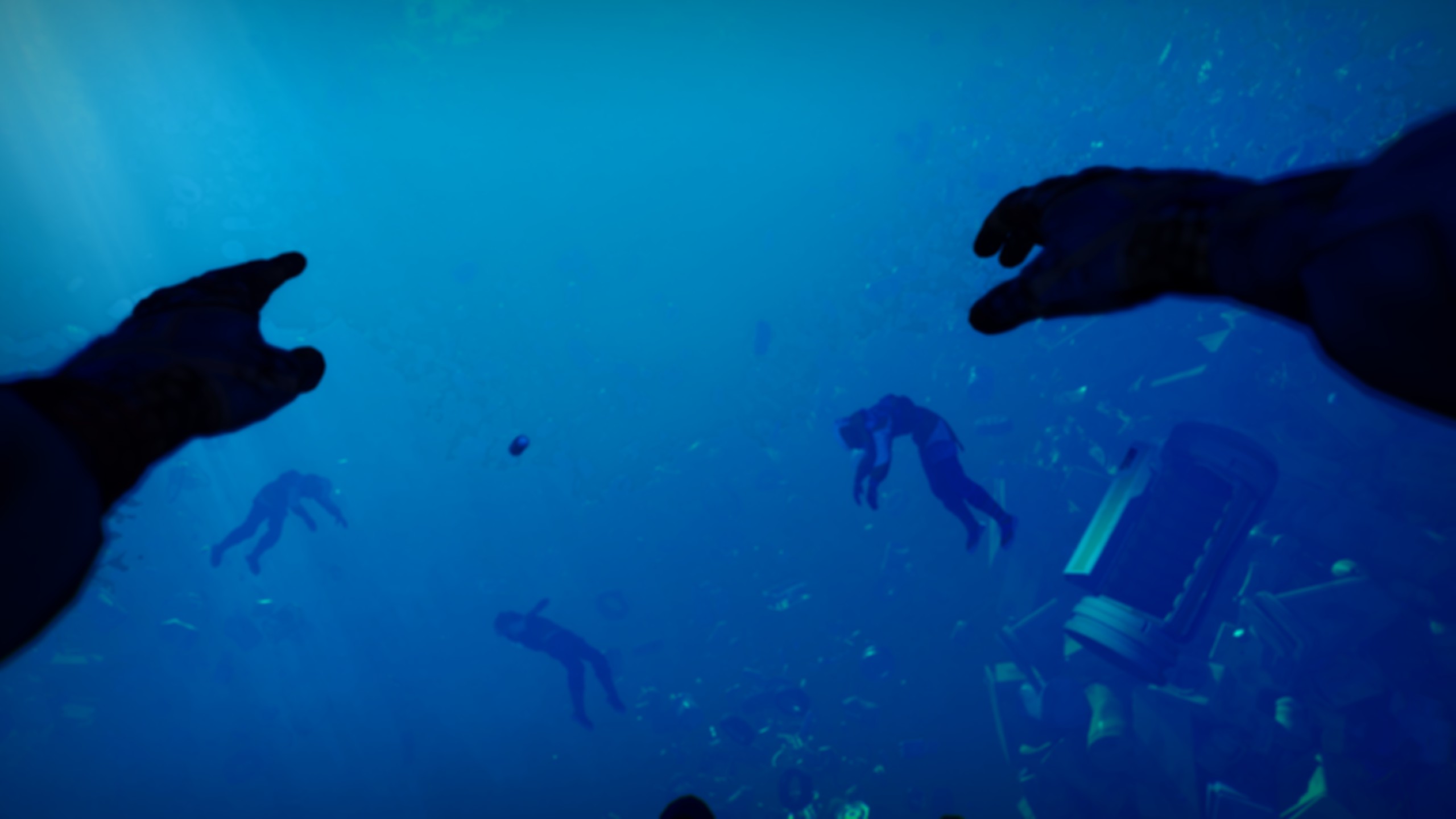
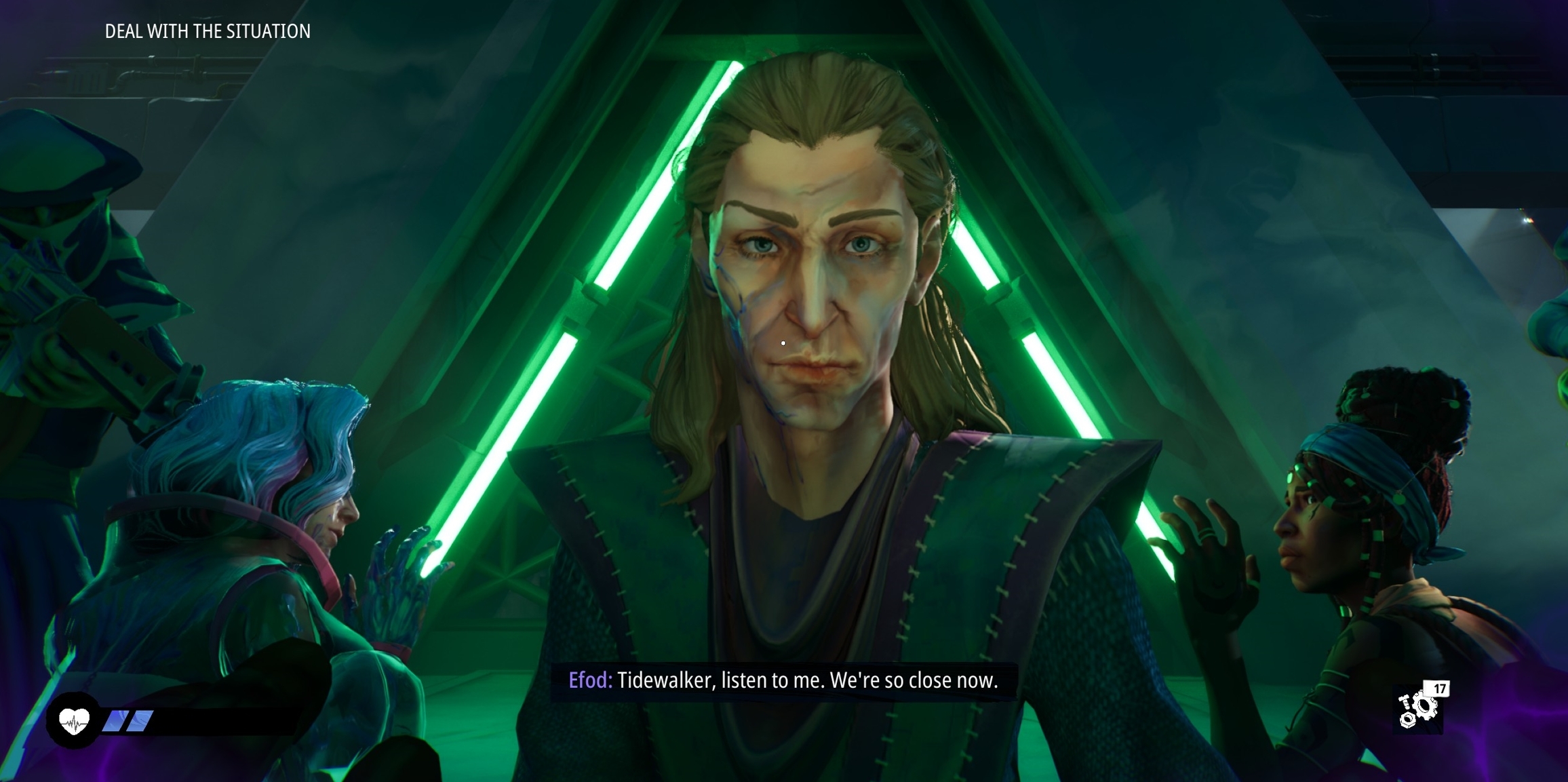
In Tides of Tomorrow, you play as a Tidewalker — a mysterious faction of people who are able to have visions of the past and shape their own story based on these visions. The world has been flooded and is ravaged by a plastic‑based virus called Plastemia, infecting and slowly killing any humans, as a virus does. There is no cure, and Ozen, the only medicine able to help those infected, is in short supply. Worst of all? You start the game infected with Plastemia after taking a dive.
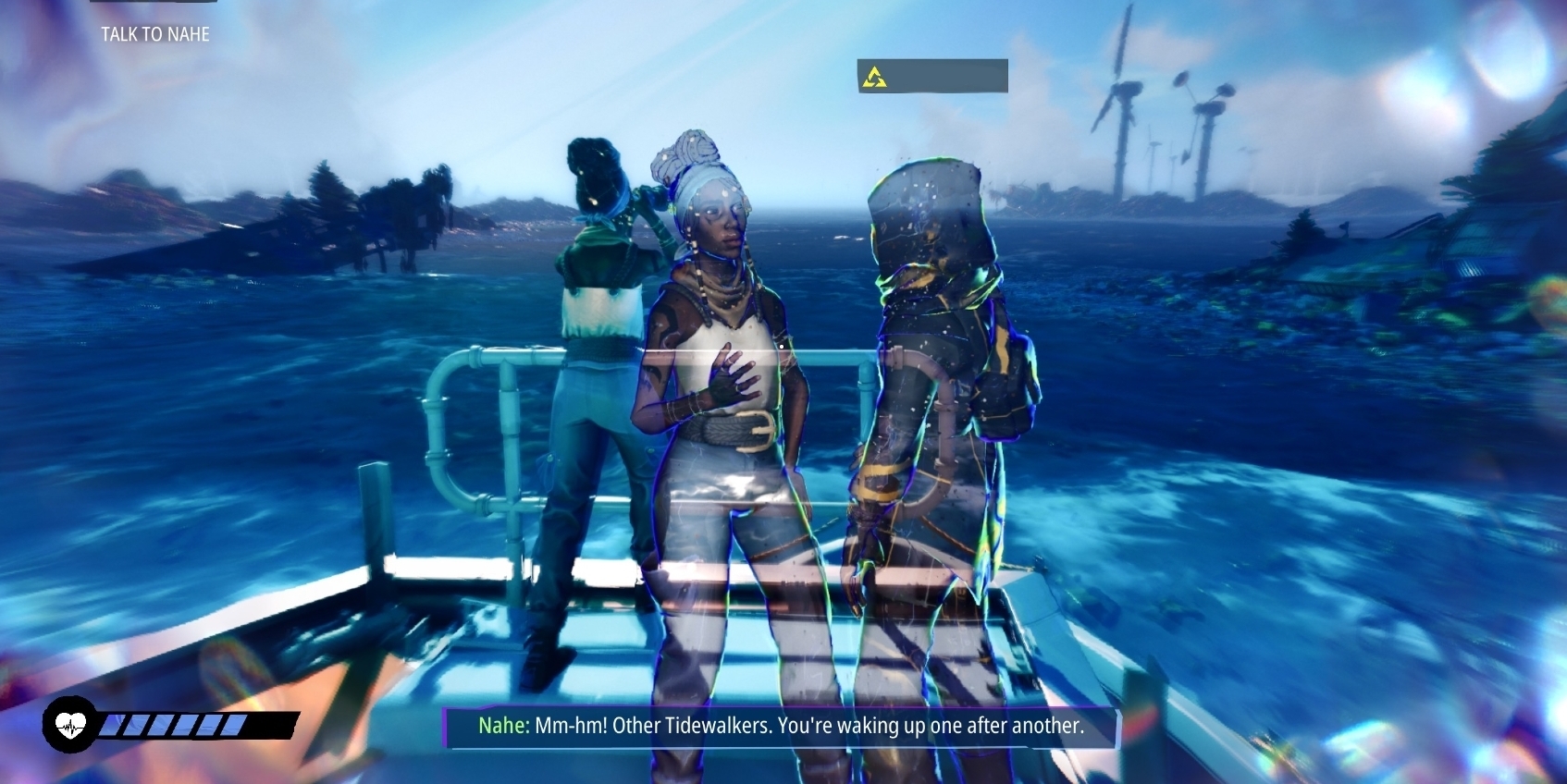
When creating your character, the game will ask you to follow someone else’s Tidewalker, offering you a list of random players or letting you enter the specific seed code belonging to a player — be that a friend, popular streamer, developer, or celebrity. The game opens with you being rescued and quickly whisked away to different places and islands. Soon enough, you’ll discover the effects the previous Tidewalker’s story can have on yours, causing certain islands to be wary of other Tidewalkers due to the chaos they’ve caused, or very friendly and helpful towards you thanks to their actions.
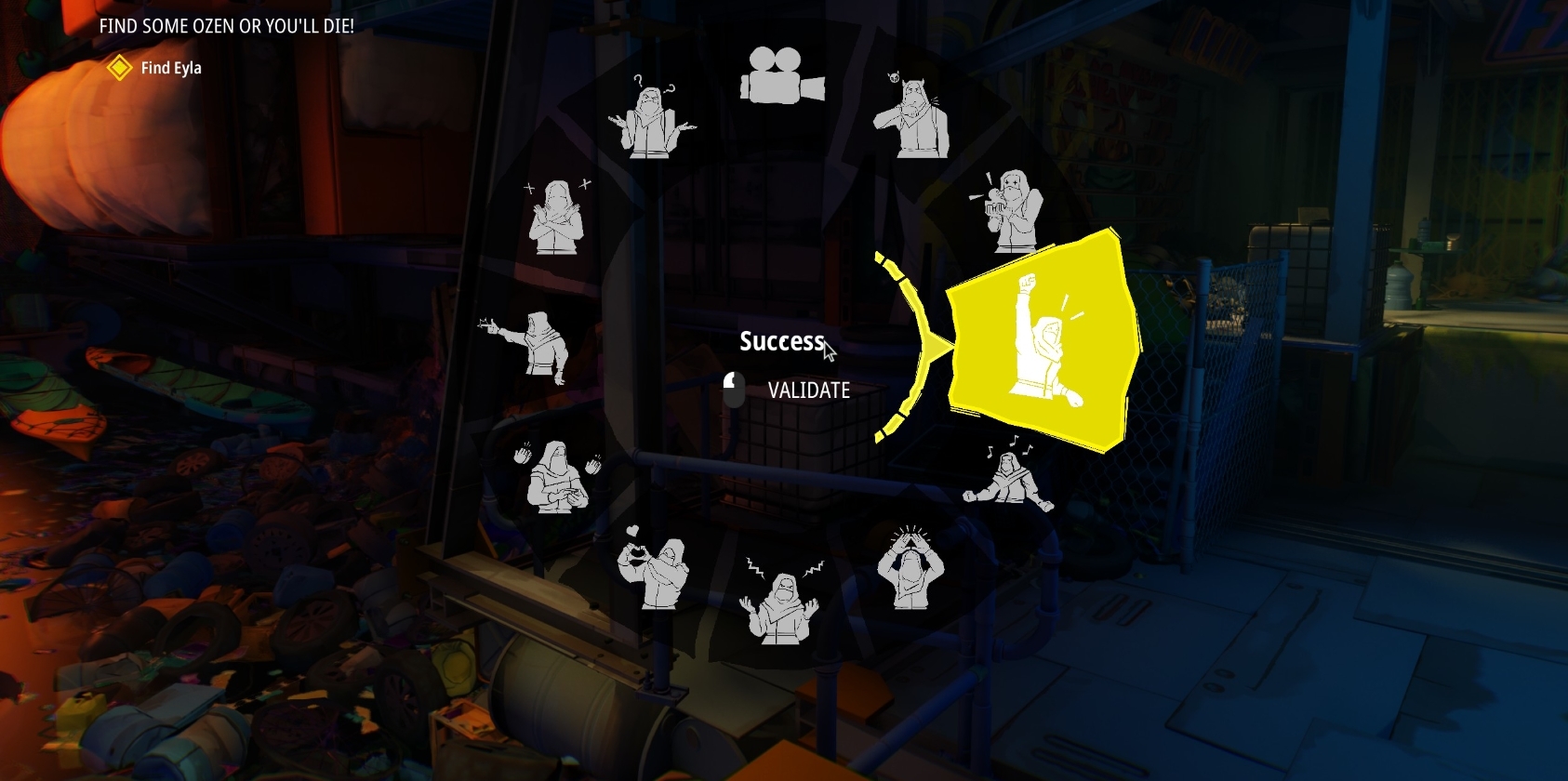
This new Story‑Link feature was the most promising aspect of the game, and quite an original idea. Imagine it like the echoes and messages you can see in Dark Souls, as unhelpful as some of those can be. And you can definitely steer or be steered in the wrong direction yourself in this game. Tidewalkers are able to co‑operate across playthroughs, leaving supplies or Ozen for future players, or hoarding it all for themselves. Leaving messages through emotes to point people in the right direction, or intentionally steering them onto the wrong path. But not much more beyond that.
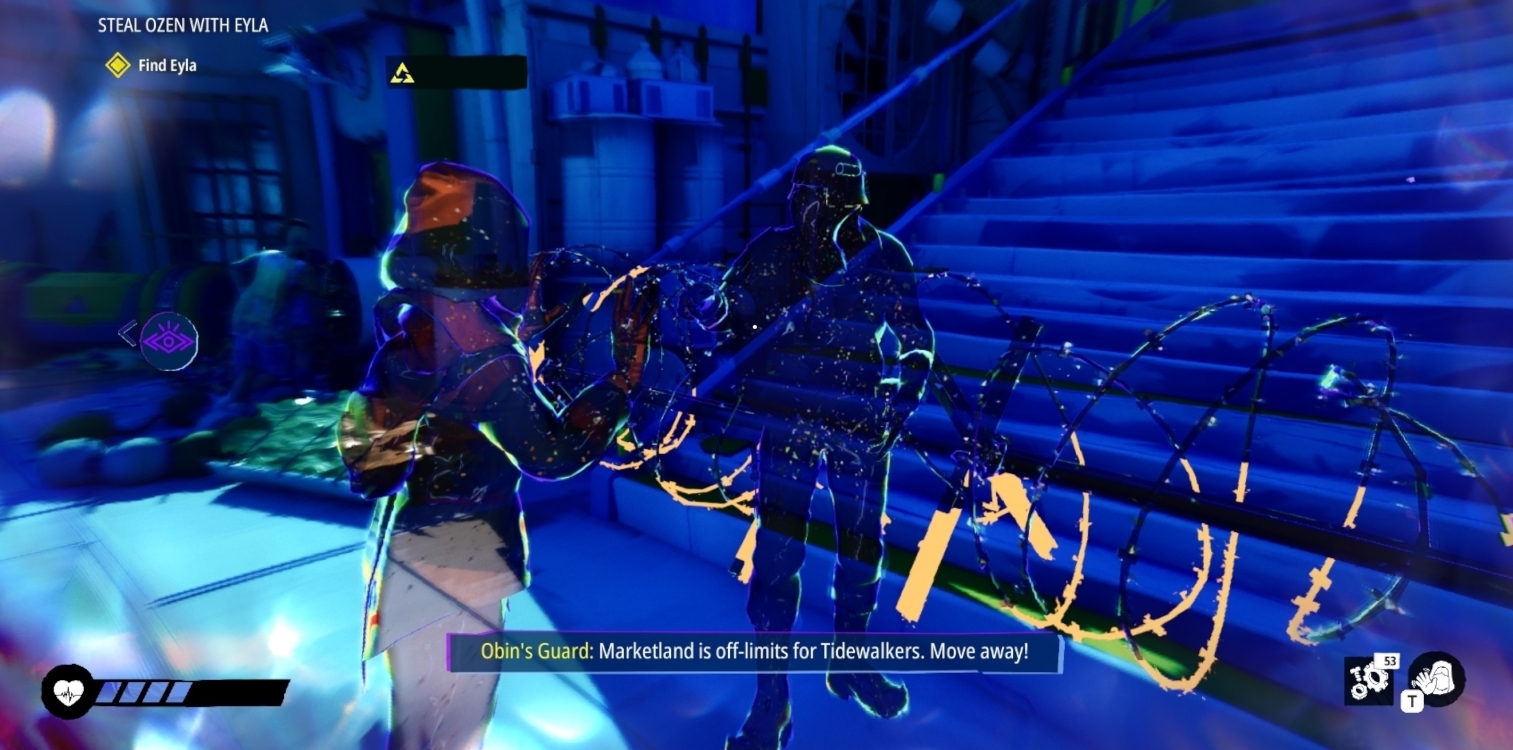
The Story‑Link feature of other players affecting your story was made out to be very promising in trailers, but is quite shallow in reality. Based on the previous Tidewalker’s choices, you might play a different version of a level where the guards are on edge — but that is practically it. You’ll play an alternative version of an entire level, or have a slightly tougher or easier time at certain points in the story. But most of the narrative will still remain the same regardless. It’s a shame, because Tides promised to be a far greater innovation on the genre than it turned out to be.
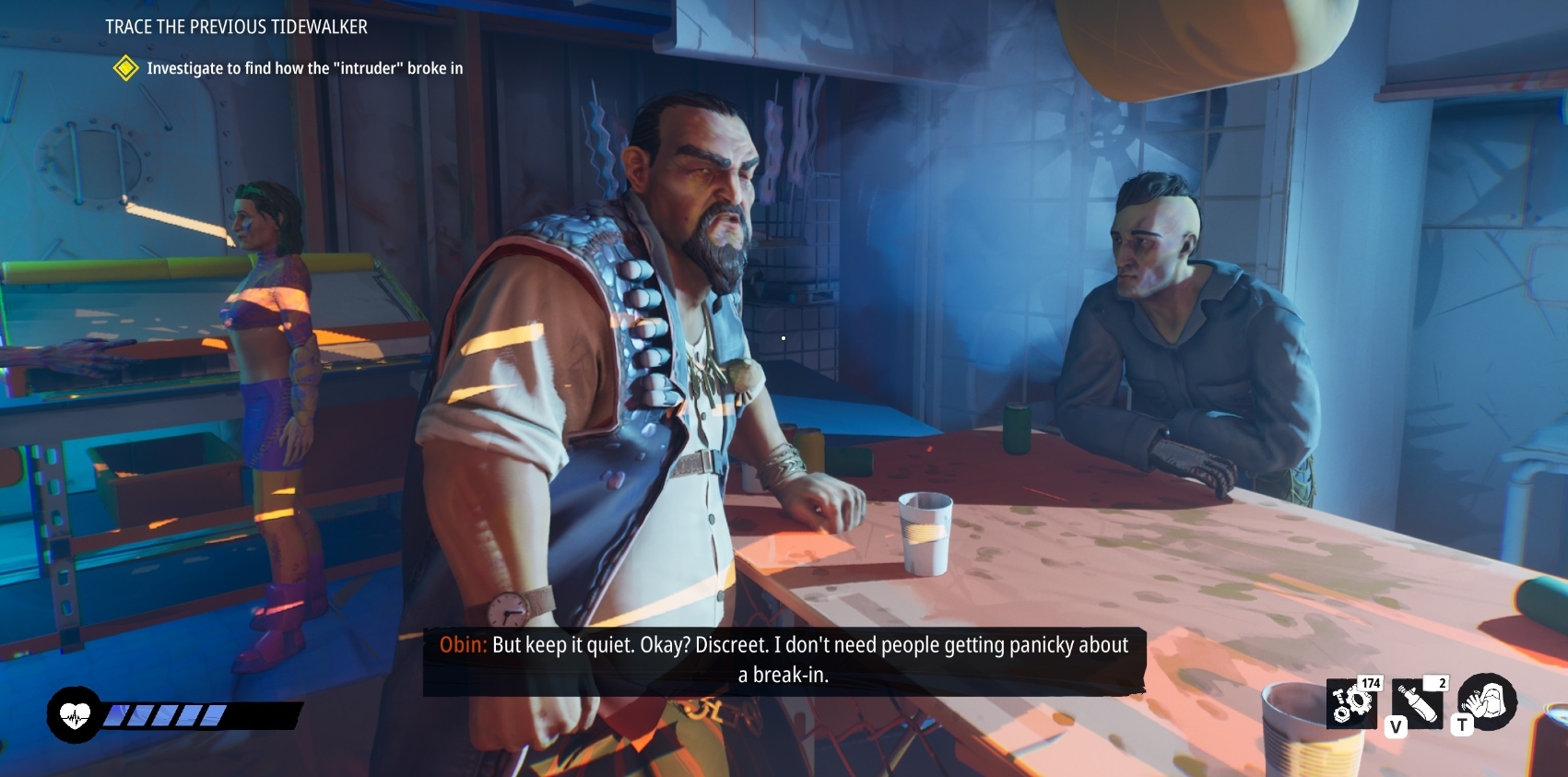
At the same time, Tides’ identity as a choice‑based game suffers from how the Story‑Link mechanic is executed. You are not able to play the game alone, being required to follow another player at the start. On top of that, all Tidewalkers get confused for one another, so you, the player, can lack an identity of your own. You could really screw over Marauder boss Obin on one island, go to the next level, and suddenly be best pals with him due to the state the previous Tidewalker left that level in.
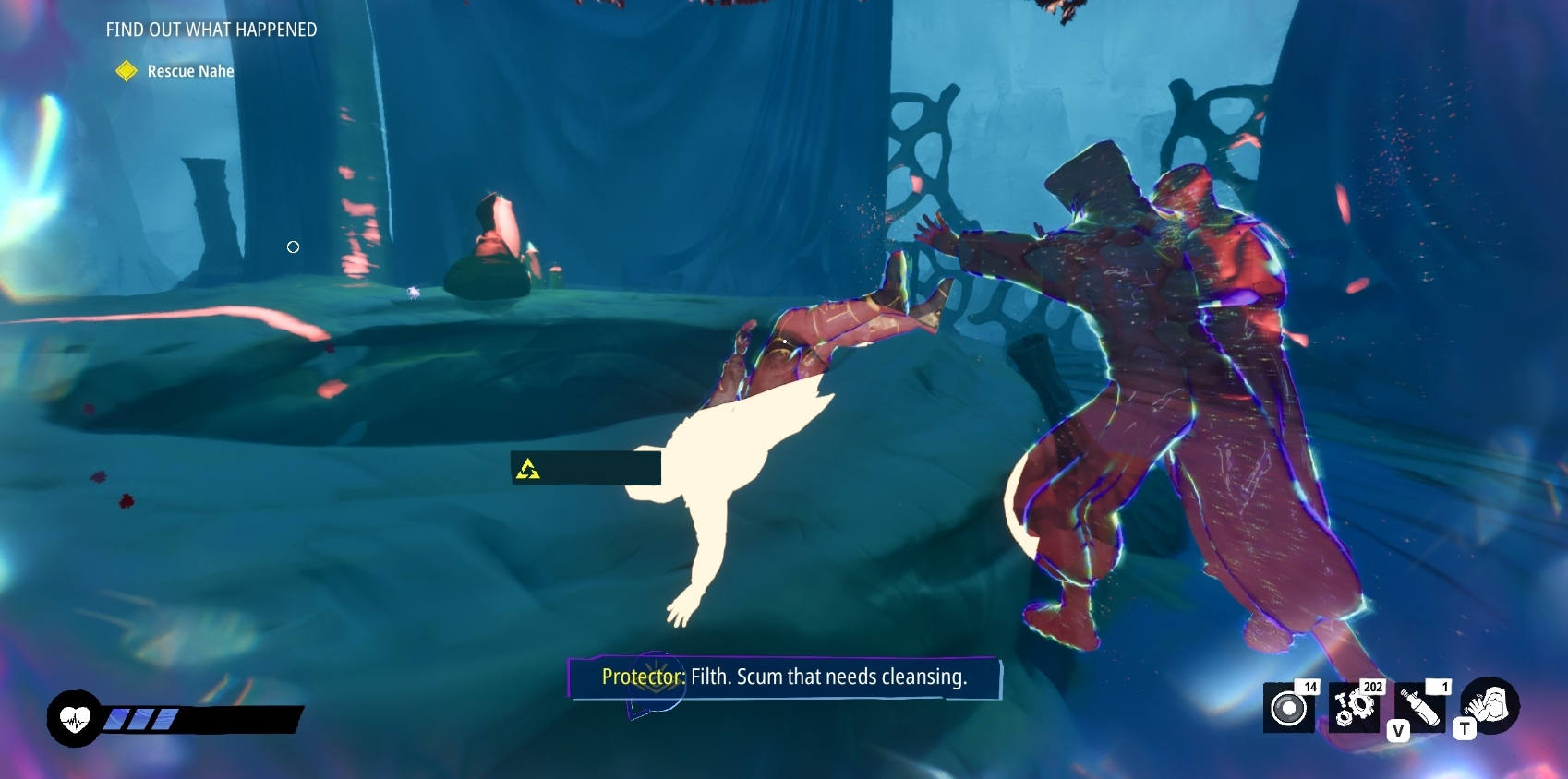
Most levels seem to have two different set routes based on what someone before you did, rather than a full branching narrative. Your own choices do not carry over or matter too much until the very end of the game, where I can say everything comes to a satisfying conclusion — but mostly based on your own playthrough.
Just your Choices
Tides of Tomorrow is at its best when the other playthrough affecting yours actually works. Especially when you’ve been following the same player for a while, noticing how they behave and act. At some point, you may be asked which choice a previous Tidewalker made; choose correctly and you’ll get a reward. The player I was following left hints in the form of emotes that I could see through my visions, leading me to that reward. When playthroughs intersect properly, and it feels like you’re communicating with other players, it feels like Tides succeeds at what it set out to innovate on.
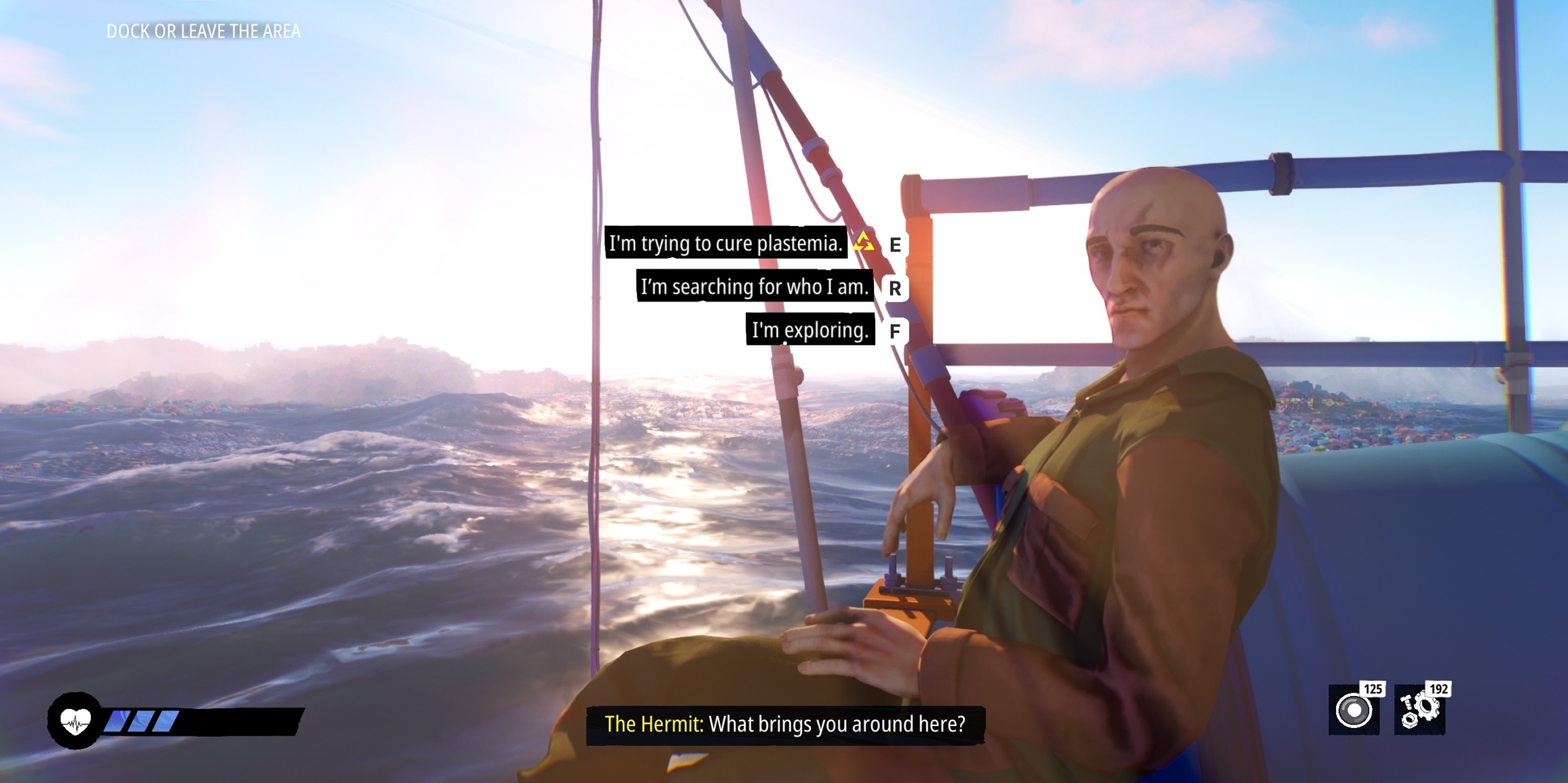
But most of Tides of Tomorrow is just a classic, single‑player choice‑based game — just with the interesting wrinkle of following another player’s story. The world and its design are beautiful. The whole world is flooded and covered in plastics, tonnes and tonnes of plastic bottles and other rubbish having taken over the seas and dotting the human‑made floating settlements that remain. The game revolves around a few different factions: oppressive Marauders, Reclaimers just trying to live and survive, and Mystics who follow the ancient ways of the “Deltas” — the people who were around before the world was overtaken by Plastemia.
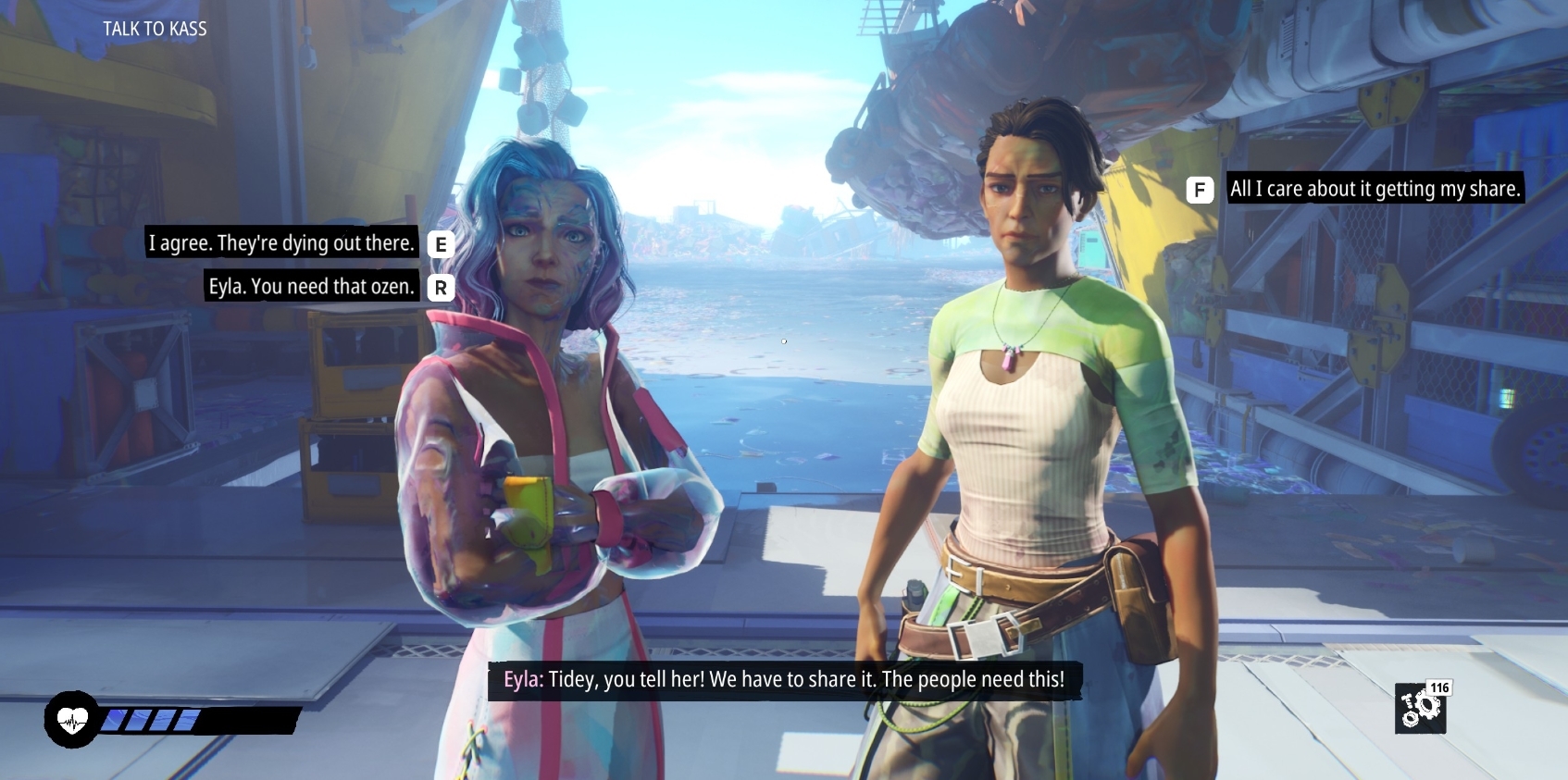
You’ll meet several characters and friends belonging to each faction, and all their stories will intersect with one another too. Tides of Tomorrow doesn’t tell a particularly deep or surprising story, but its themes of ecology, nature, and allegiance to your faction or family did manage to be compelling at times. I flip‑flopped between finding the game dull near the middle to being fully in for the ride by the end. Through a few heartfelt scenes and character moments, Tides managed to hook me a lot deeper into its story. And the moral dilemma at the core of your decisions was executed quite well too.
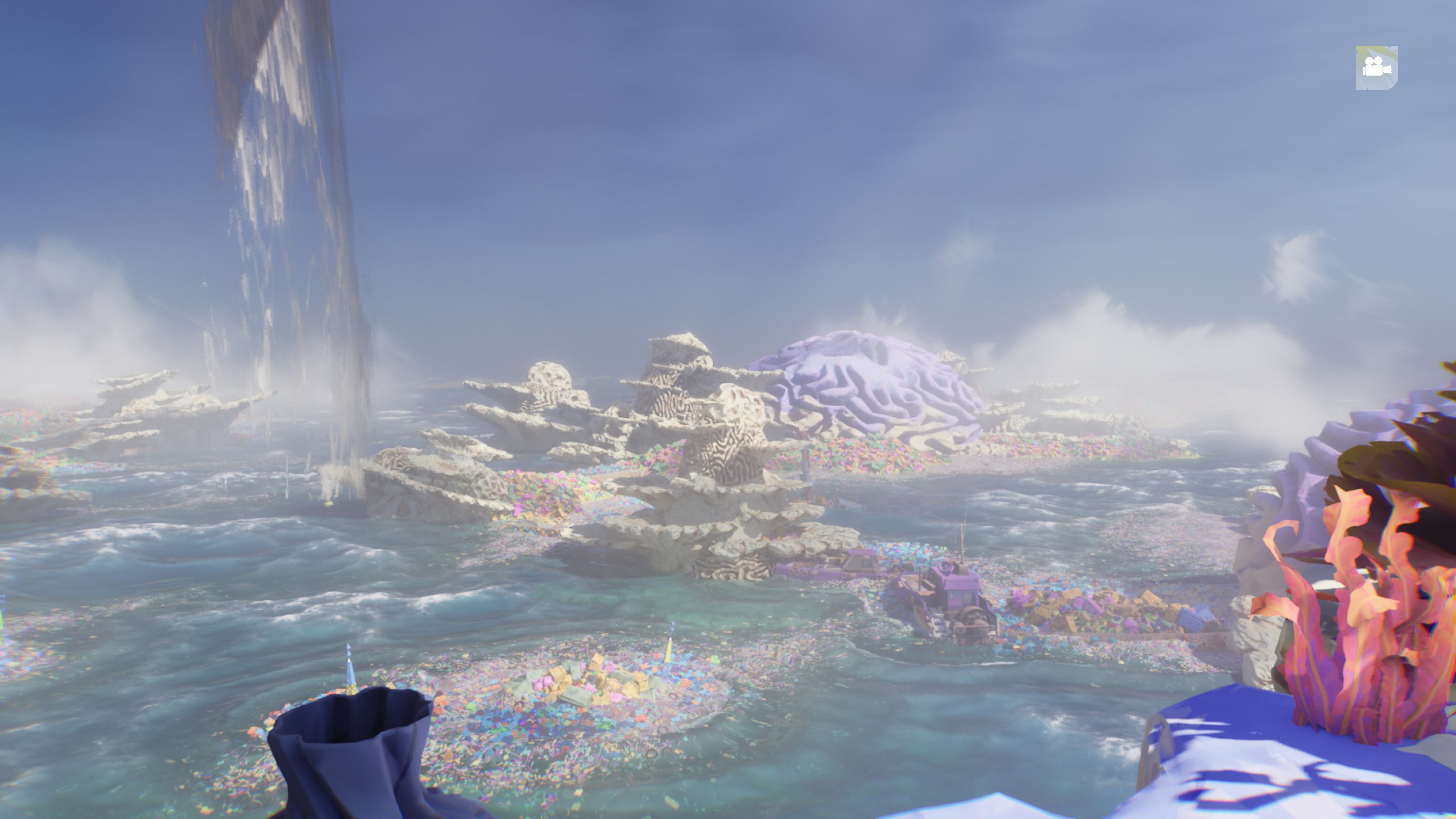
Once again, the game and its designs are beautiful, with a similar visual identity to something like Sea of Thieves and obviously Road 96. You’ll be travelling to outposts, coral reefs, mystical temples, diving underwater and more — all over a pretty great OST. The soundtrack is fittingly ocean‑y, with jives and bops that genuinely made me want to get up from my chair and dance when approaching each island.
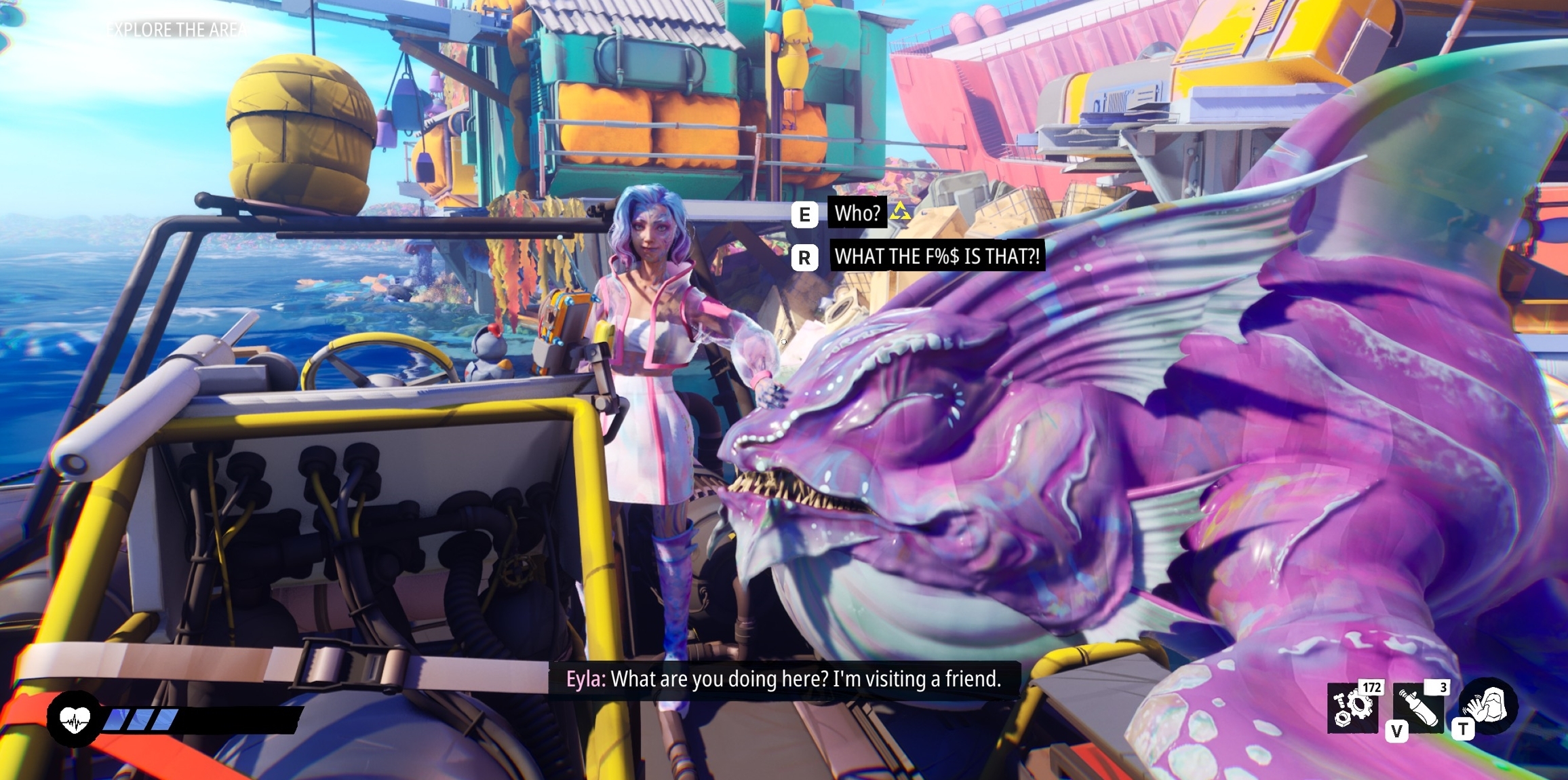
Besides a minor animation bug or two, I had no issues with crashes, graphical glitches, or other bugs during my playthrough. The only place I found bugs was in the Story‑Link feature. If I was in the middle of a level, the previous player left me some resources or fixed part of an island that needed to be repaired, and I restarted the level — their progress would no longer be there. So any bugs you encounter will likely revolve around the player you’re following and the small effects they have on your playthrough disappearing in a specific level.
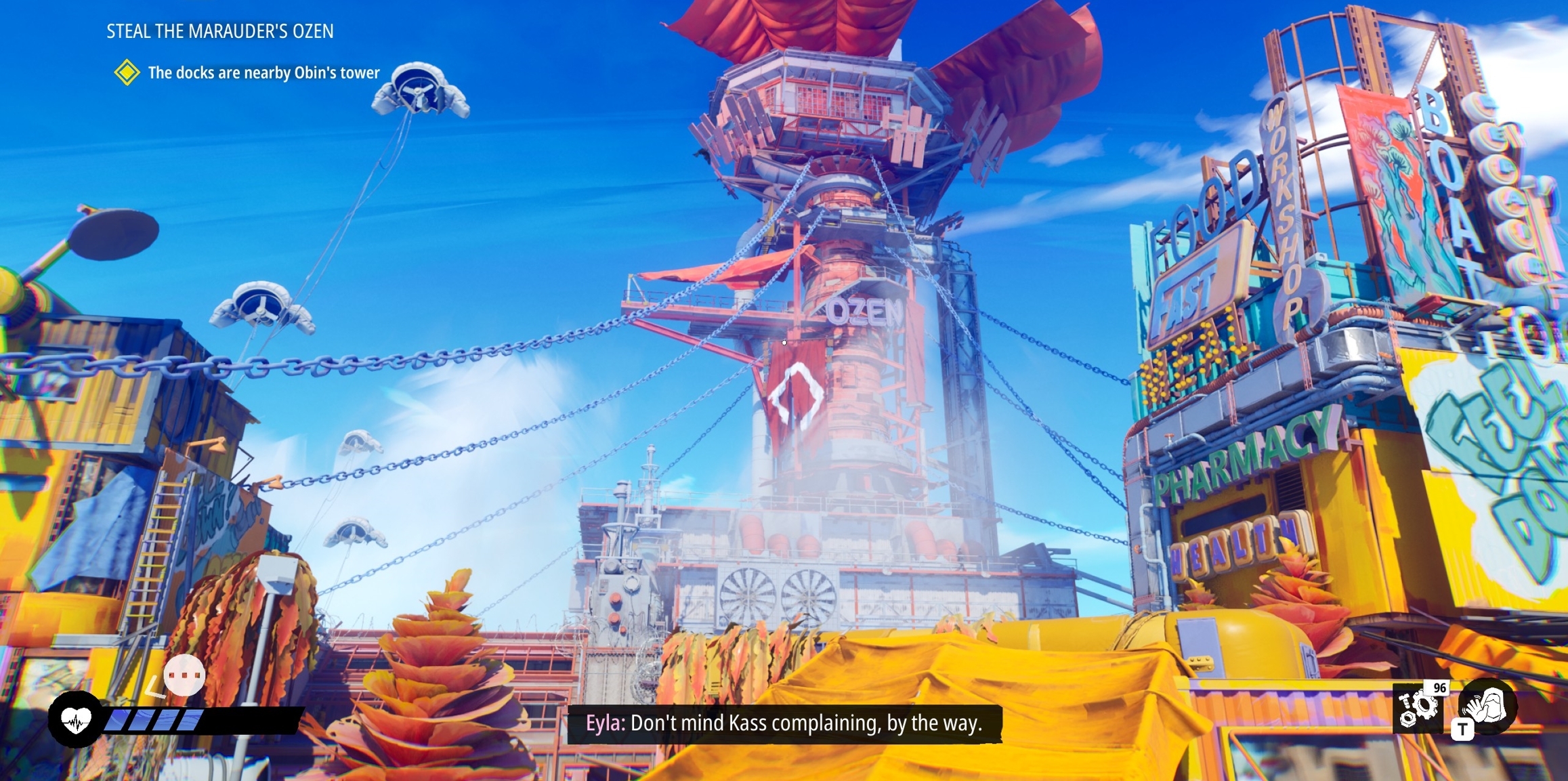
The game took me 10–12 hours to finish, and that was with exploring most of each level for extra resources and visiting pretty much every bonus island or event you’re offered for extra scrap or Ozen. Each level took about half an hour or more to complete.
While the writing could feel flat at times, the innovative mechanic could’ve been executed better — especially compared to what was promised — and your own choices can feel a bit lacking, I still had a wonderful time by the very end. Everything came together quite neatly to give you a selection of compelling endings, and I was happy with mine.
Final Thoughts
All in all, Tides of Tomorrow is a solid choice‑based single‑player game. Its greatest flaw is its failure to innovate on its new Story‑Link feature in a meaningful way, and how that affects the core choice‑based game beneath it. But small character moments, a great visual identity, and a compelling moral dilemma coming together in a satisfying choice of endings make up for the missteps it makes.
By the end of the game, I did have quite the bond with the player I followed after witnessing their story alongside my own. Perhaps Tides could’ve been even better if it focused on being a straightforward single‑player choice‑based game. But I’ll take the brief moments and promising interactions I shared with the Tidewalker I followed over that. Just like we learn from previous Tidewalkers, I’m more curious what future games will learn from Tides of Tomorrow.

About the Author

Lander Van Poucke Lander is a passionate gamer from Belgium with a flair for the dramatic. Valuing storytelling & narrative in games, he favours single-player games, RPG's & fighting games for their lore and vast array of characters.
Related Posts

Granblue Fantasy Relink Endless Ragnarok PC Review →

Powerwash Simulator 2 – Star Wars DLC: Review (Steam) →
Rose & Locket Review →