
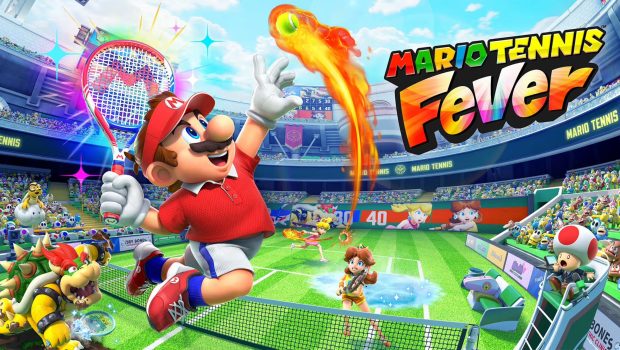
Mario Tennis Fever Switch 2 (Review)
Summary: With a terrific new fever racket system and wonderful couch coop mechanic, Mario Tennis Fever is a highlight of the longstanding series.
3.9
Fever Frenzy
It has amazingly been a quarter of a century since Camelot Software Planning first started creating Mario Tennis titles. The patriarch of this series is now thankfully represented in the Switch’s robust emulation suite (available with a Switch Online subscription), which is also where my now 8-year-old first discovered the franchise. Enter Mario Tennis Fever, the sequel to the good-but-not-great Mario Tennis Aces, which is now shockingly seven-plus years old itself.
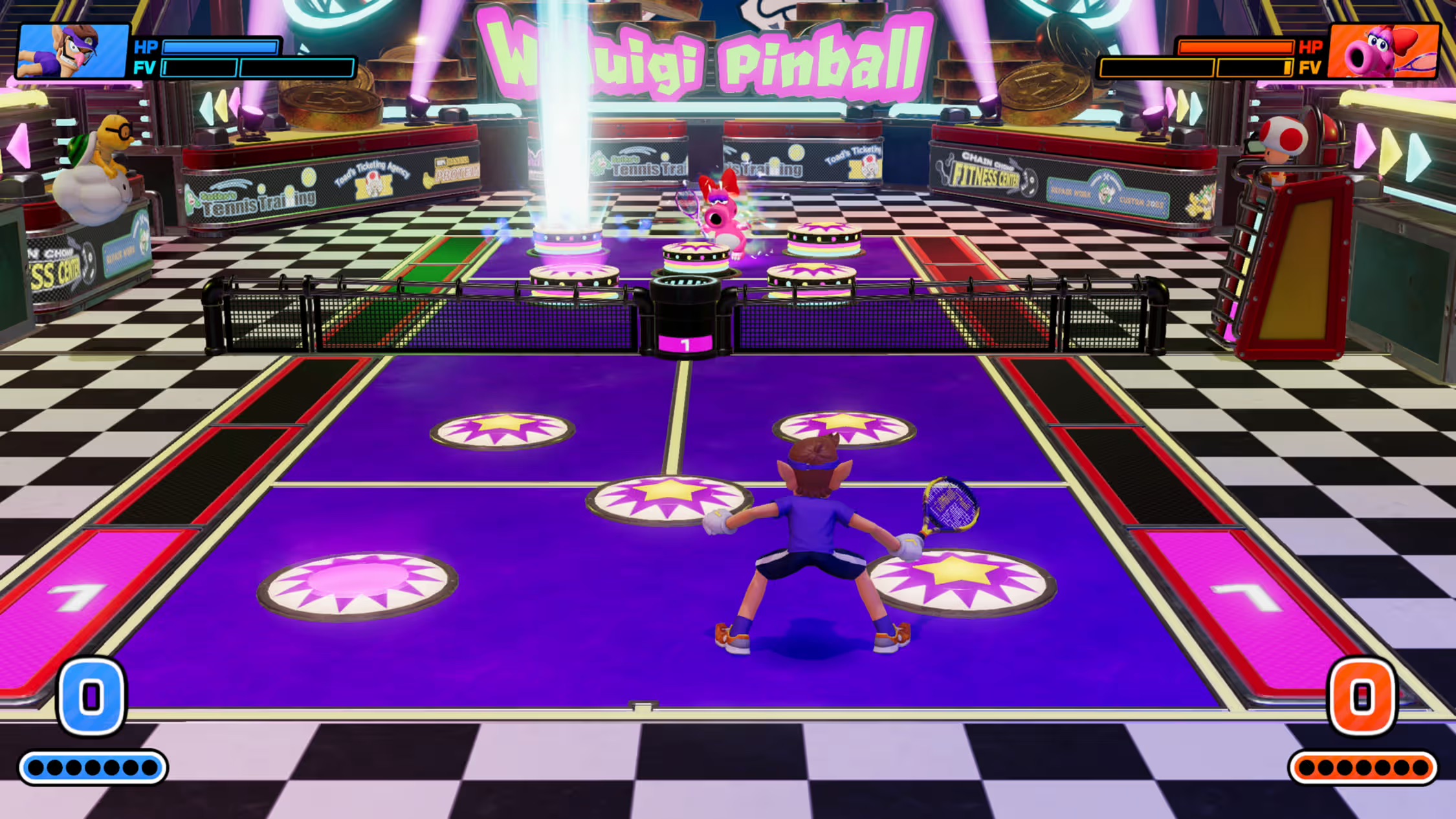
The biggest selling point of Mario Tennis Fever is the new titular “Fever Racket” system. This system is comprised of 30 unlockable Fever Rackets and corresponding power abilities. During matches, Fever Gauges build up, allowing players to unleash Fever Racket abilities—literal game-changers that require opponents to react quickly and/or respond with a Fever Racket ability of their own. Fever Rackets are assigned by default to the deep 38-character roster based on appropriateness. For example, Donkey and Diddy Kong feature Banana Fever Rackets (where activating the ability produces banana peels). In contrast, Kamek comes equipped with a magical staff racket. Literally every Fever Racket plays differently.
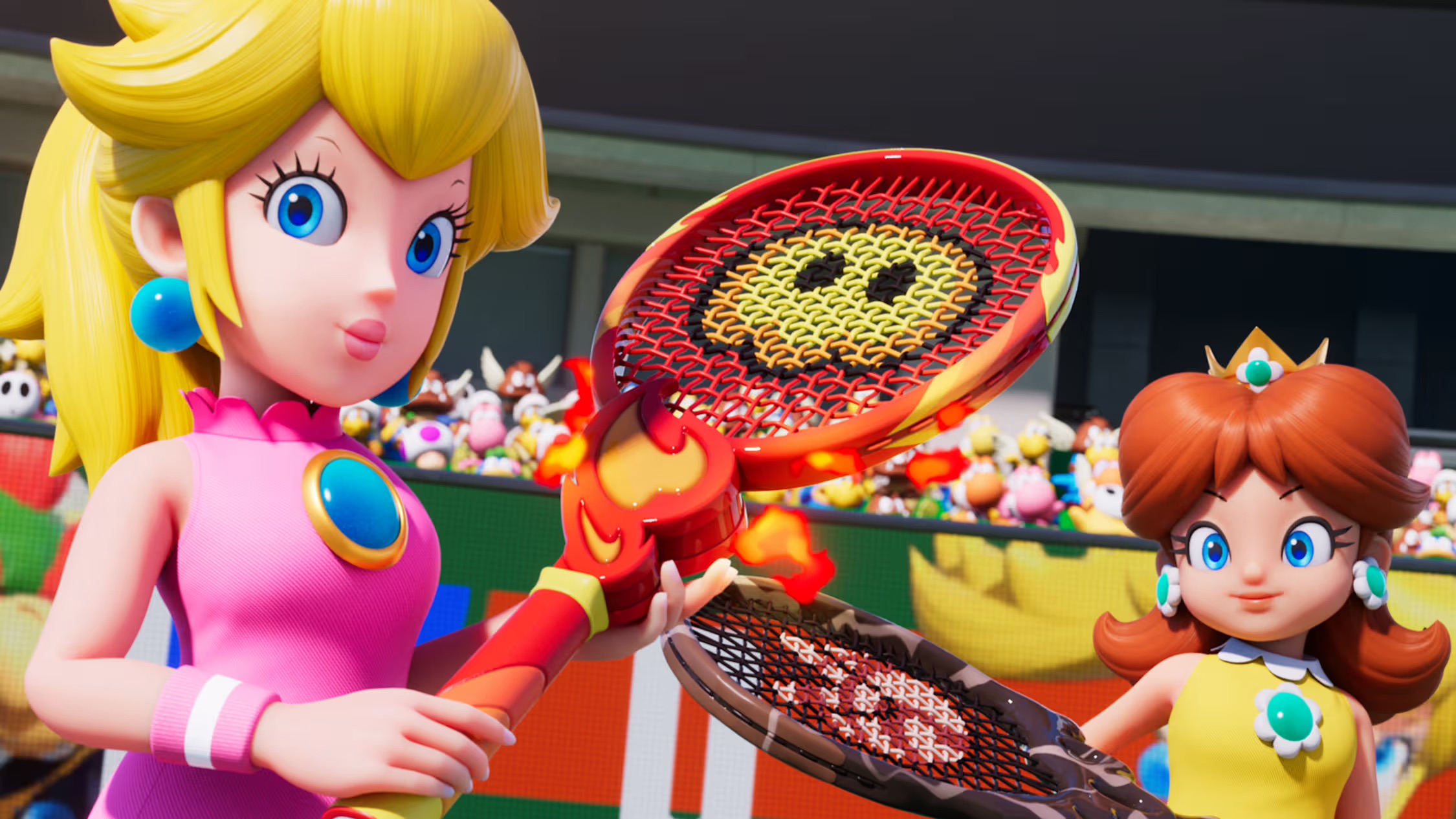
Thankfully, Fever Rackets are not fixed. This means players can pair any character with any unlocked racket. As arguably the most fun rackets are not associated with a specific roster member, this opens up an array of gameplay possibilities. Similarly, each of the 38 unlockable players possesses a specific playstyle ranging from All-Around to Speedy, Technical, Defensive, and Power. Pairing a player type with an appropriate Fever Racket equates to the soundest strategy.
While I did find some Fever Rackets overpowered, Mario Tennis Fever is meant to be an insanely involved back-and-forth triggered by Fever Racket shots and counters. Specific court elements also factor into play, creating odd bounces, changes in speed, or interactions with players and balls.
Online play offers players a chance to test their mettle based on overall rank. Noting that I was playing just prior to and after release, these areas were a bit empty when accessed.
Overall gameplay mirrors all other Camelot Mario Tennis titles. Holding shot buttons down increases power, while slices, flat shots, and lobs are easy to execute. Serves are simply a matter of tossing and hitting the ball at its highest point. Star shots offer chances to return poor volleys with greater force. Fever Rackets provide a little more wiggle room in the space between a player and the ball, and can save an otherwise missed return volley. Players are similarly easy to move around, with timing windows remaining large even on higher difficulties.
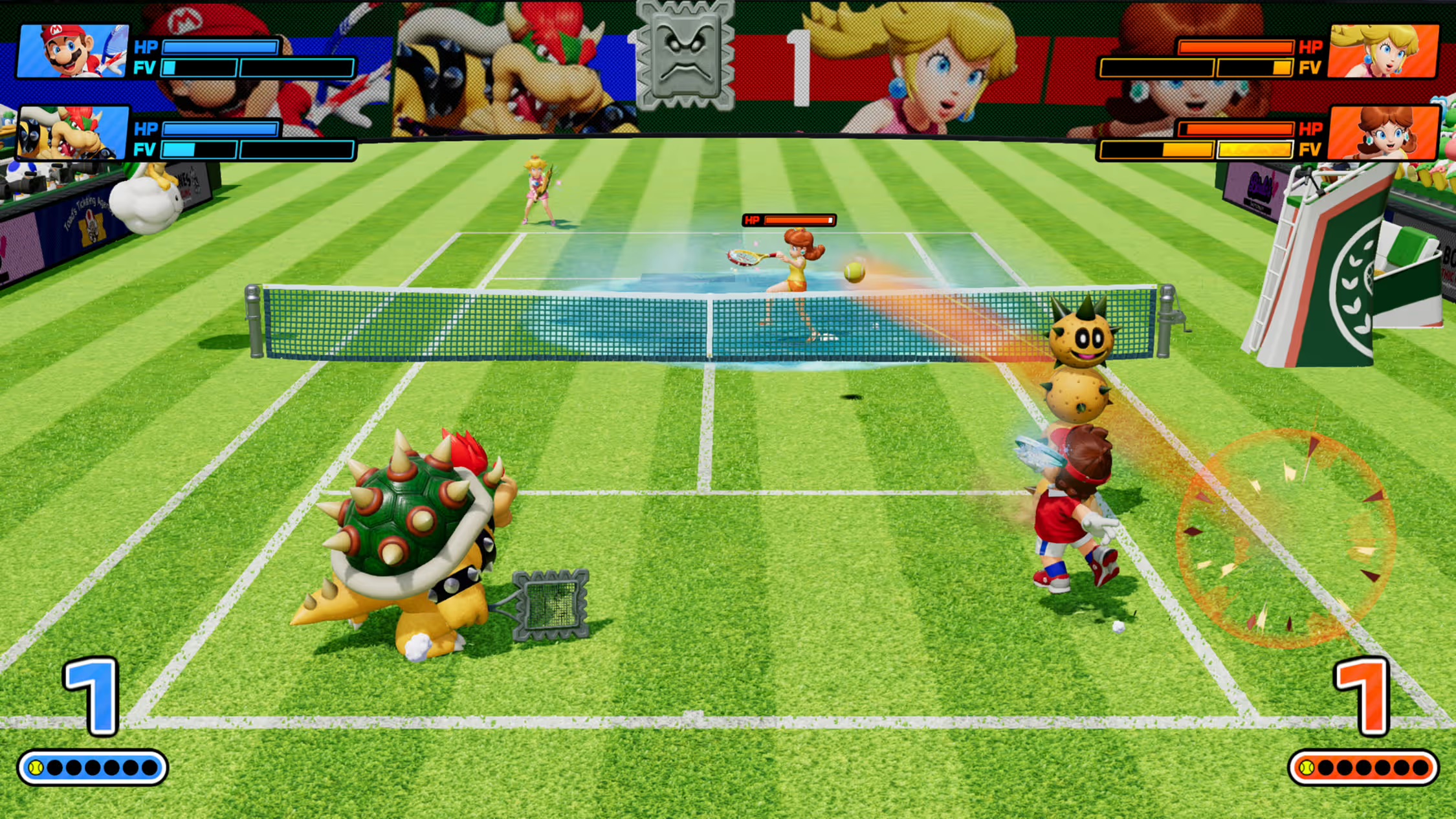
Mirroring previous Camelot offerings, there’s an abundance of different gameplay options, from score trials and court-inspired challenges to a tower completion mode (of progressively increasing difficulty) and, of course, tournaments.
Single players will be drawn to the Adventure Mode, where players increase their abilities by completing gameplay-specific tasks within Toad’s Tennis Academy. The plot is a bit silly (involving players being turned into babies who must help Peach by becoming better tennis players), but it does possess a nice, lighthearted script that younger players will likely enjoy. Importantly, Adventure Mode also unlocks specific courts, players, and rackets for other modes.
Presentation-wise, Mario Tennis Fever is absolutely terrific. Characters are simply adorable, sporting their trademark looks, personalities, and expressions. When engaged in an all-out Fever Racket exchange, the action can be insanely colorful and bombastic. The announcer, Talking Flower, is just the coolest. He constantly provides excellent commentary, including when and where Fever Racket play is possible.
In a very wise programming decision, unlocks occur naturally—win or lose—as matches and modes are completed. Kudos to Camelot for not placing the burden of success on the player just to enjoy a new racket, player, or skin.
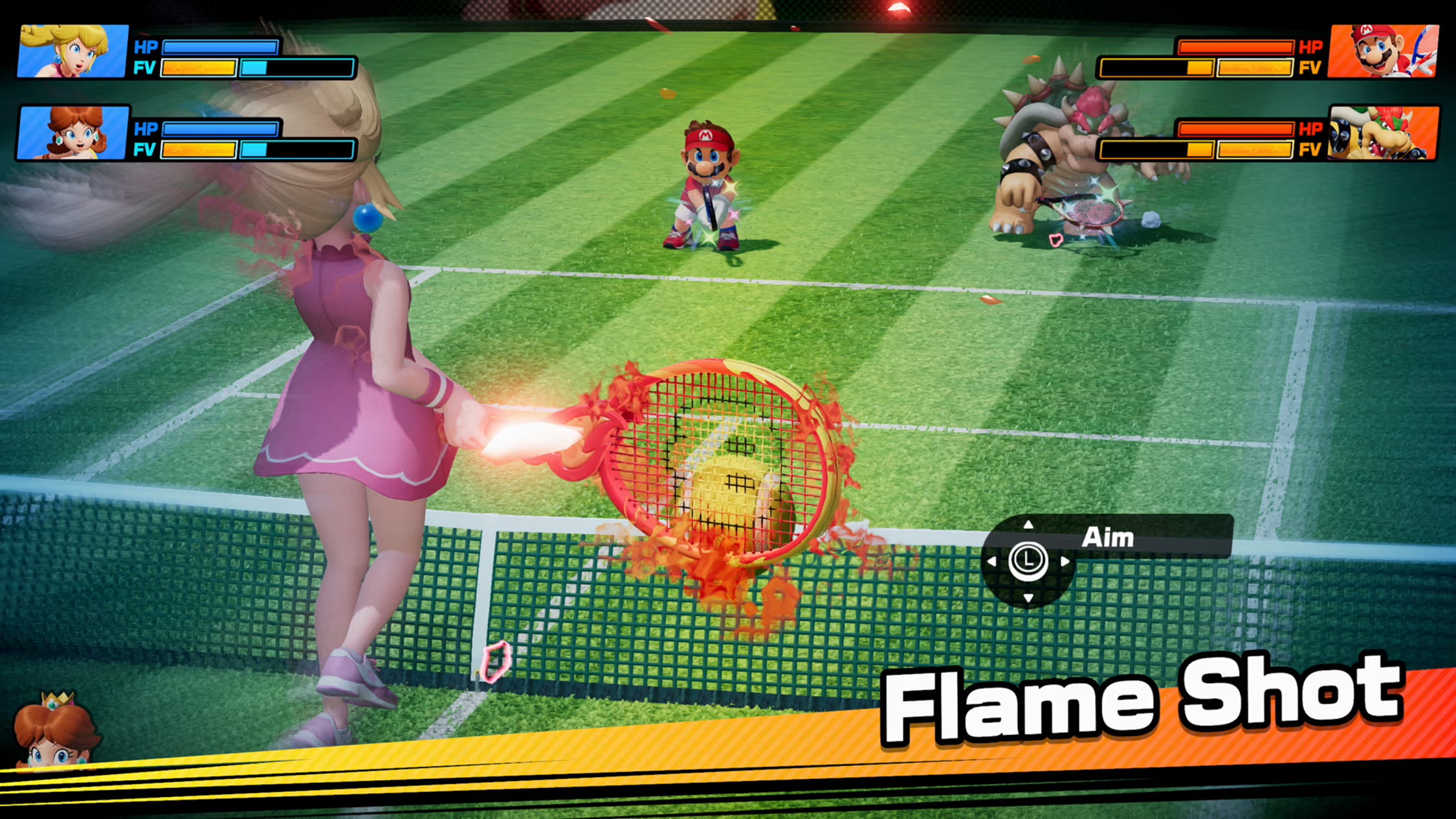
If you’re a couch co-op player—as I am with my son—Mario Tennis Fever is easily one of (if not the) best of its kind on the Switch 2. Playing doubles in any mode (other than Adventure Mode, which is single-player only) is awesome. The game is ridiculously easy to dive into and won’t frustrate players until the difficulty is significantly raised. There are also sub-options to tweak ball speed and bounce, which can add additional gameplay nuance if desired. I’ve played dozens of hours in co-op, and it hasn’t even begun to get old.
In contrast, I can see Mario Tennis Fever being a bit thin for single players. Adventure Mode is a tad stale, and CPU opponents are mainly distinguished only by playstyle and Fever Racket. None truly play uniquely, and—like most sports games with progression nuance—a “grindy” feel eventually kicks in.
Moreover, Mario Tennis Fever is anything but a simulation. Gameplay—even when playing with a buddy—can be both its greatest strength and its greatest weakness. While executing chaos via Fever Rackets for up to four couch co-op players in doubles can rock, there isn’t much tennis substance behind the curtain. For instance, partner players get hit in the back by their own teammates far too often, and body shots from opposing players are quite common. Also, 99% of the time, shots do not go out of bounds or hug the lines.
All in all, for fans of Mario Tennis, Mario Tennis Fever is certainly one of the brightest spots in the series. The terrific presentation, deep roster, and wonderful addition of Fever Rackets make it a blast to play. Combined with the ridiculously low barrier to entry and sensational couch co-op, it’s a terrific game for family and friends to dive into. It is a bit limited, however, in gameplay depth and experience diversity.
 Final Thoughts
Mario Tennis Fever scores a winner with the introduction of Fever Rackets and offers a wonderful experience for local co-op players. Fast, frenetic, and fun gameplay is present, albeit a bit limited for single players.
About the Author

Paul Stuart A gamer for over 30 years with 400+ reviews across four sites literally spanning the globe, Paul Stuart has an unhealthy obsession with Assassins Creed, God of War, and all things Lord of the Rings.
Related Posts

Teenage Mutant Ninja Turtles: Empire City Available April 30 on Meta Quest, Pico, and Steam VR →
Hellboy Creator Mike Mignola Expands the Lands Unknown with URI TUPKA AND THE DEVILS →

Avatar Legends: Realms Collide Celebrates 1-Year Anniversary with New Event + Mode →