
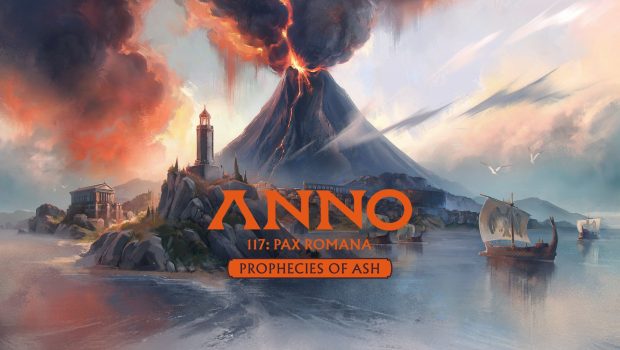
Anno 117: Pax Romana Prophecies of Ash Review
Summary: Prophecies of Ash is a good first step in the right direction for Anno 117: Pax Romana. The volcanic eruption cycle adds a much-needed challenge to the game and prevents the playthrough from becoming monotonous, while it can be switched off by those who would rather not worry about natural disasters burning half of their cities to the ground.
4.3
Burning New Ideas
Anno 117: Pax Romana was a well-received new installment in the city builder series that according to our review of the game on PC both casual and hardcore fans could enjoy it. After almost six months of waiting, the next chapter of the game is unveiled in the Prophecies of Ash DLC.
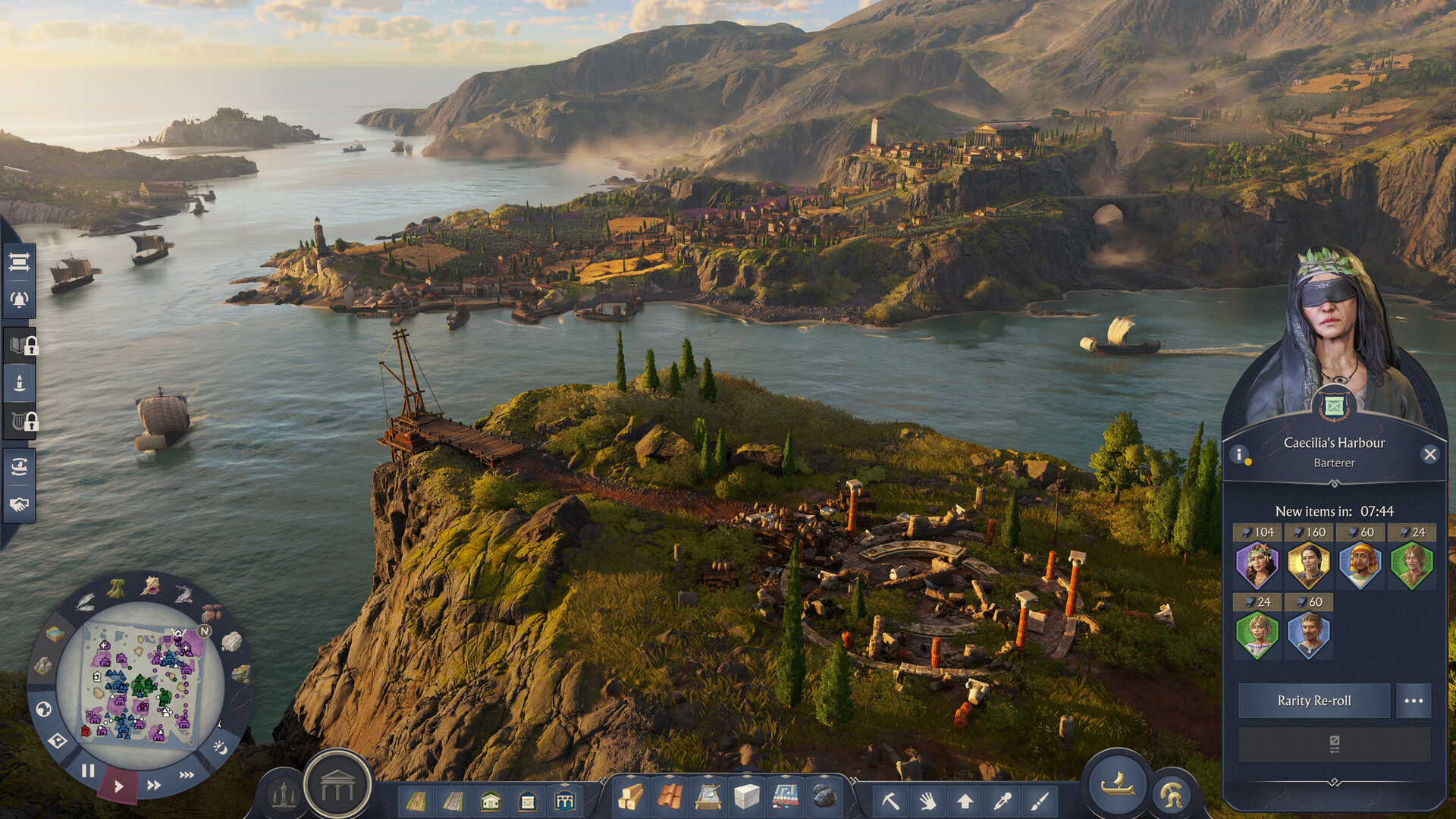
As the first DLC of the game, Prophecies of Ash adds six new islands to the Latium region, but the most — and probably the only — important one is Cinis; home to a dormant volcano and the oracle Caecelia. Caecelia is a servant of Vulcan — AKA Hephaestus — the god of fire and smithery. She warns the protagonist of a looming catastrophe born from the fire and ashes of the dormant volcano unless the governor can please the forgotten god and quell his anger.
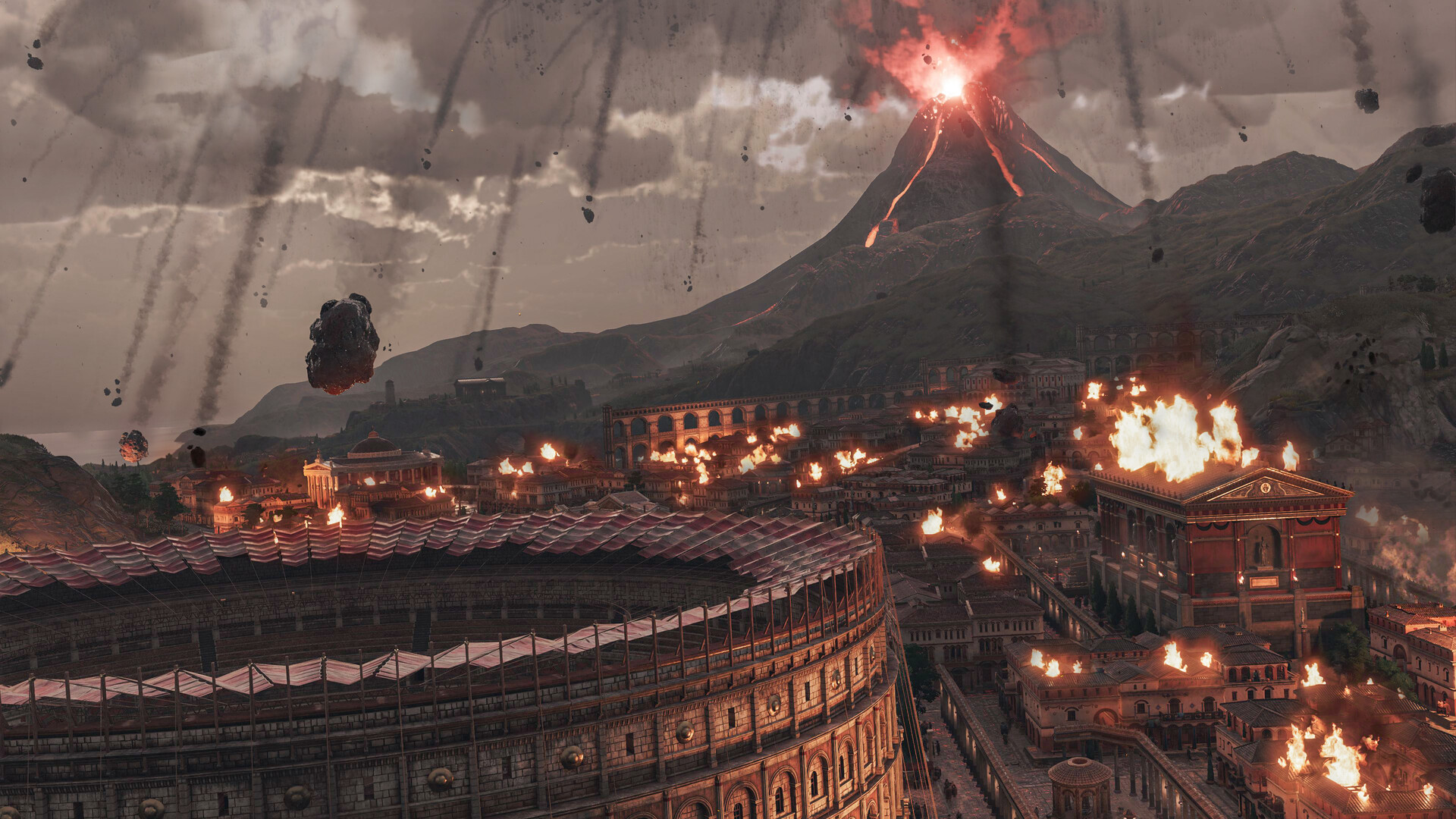
The volcano and its cycle of eruption are the most significant elements of the game. At first, the volcano is calm and dormant, but gradually earthquakes start to occur, damaging the buildings on the player’s islands. That is the first sign that a disaster is coming, and as the governor, players need to make sure their subjects have enough food and health supplies to endure it. The next phase is the eruption, during which cities will be engulfed in raging infernos, houses need to be evacuated using military units, and Vigiles patrols should fight the fire. This is the most chaotic and destructive phase. Then comes the volcanic winter caused by the ashes darkening the skies, resulting in a sharp decrease in farm and fishery productivity. But those who survive and rise from the ashes are rewarded with bountiful harvests as the rain and minerals added to the soil increase its fertility and, consequently, the productivity of farms.
The DLC also adds a major new resource/currency: Obsidian. Obsidian can be obtained as a by‑product of any type of mining operation in Latium, and unlike other resources in the game, it is finite, meaning a limited amount of Obsidian can be farmed from each mine. This new resource is extremely rare, to the point that around 10 pieces of it can be mined from each mine during a volcanic cycle. Each volcanic eruption refills the Obsidian charges of mines and increases their yield. Unfortunately, Obsidian is the bottleneck of the economic cycle of the game, as it is not only used to create products such as statuettes that meet the needs of citizens, but it is the only currency Caecelia accepts for trading. Players can hire specialists from Caecelia, but most of them cost around 70 Obsidian, which is a lot considering the process and rarity already mentioned.
With new islands, new resources, and new gameplay mechanics, the only thing left is a new god. As already mentioned, Vulcan is the new Roman god introduced in the game, who can be chosen as the patron god of Latium; worshipped throughout the kingdom. Worshipping Vulcan will increase the production of mines and other mountain slots, increase the workforce‑to‑population ratio, increase fire safety, and allow players to actually mine coal instead of turning a jungle into charcoal.
Final Thoughts
Prophecies of Ash is a good first step in the right direction for Anno 117: Pax Romana. The volcanic eruption cycle adds a much-needed challenge to the game, especially for the late-stage builds, where there are no military and economic challenges left for the players, and prevents the playthrough from becoming monotonous, while it can be switched off by those who would rather not worry about natural disasters burning half of their cities to the ground. While the dual nature of Obsidian as a currency as well as a finite resource hinders gameplay progression and stretches the story campaign thin, it not only fits the thematic cohesion of the game world but also encourages the players to take the risk of volcanic eruptions, hoping to mine it incrementally. After all, victory belongs to those who dare, and there is no better proof of that than the Roman Empire!

Related Posts
PC Game Reviews →
Vultures – Scavengers of Death PC Review →

Voidling Bound PC Review →