

Reanimal Review (NS2)
Summary: A haunting, surreal and disturbing journey that sticks with you long after the credits roll
4
Lambs to the Slaughter
Reanimal has been haunting my thoughts ever since the credits rolled.
The latest from Tarsier studios, the twisted creators of the Little Nightmares series. Reanimal feels like an evolution of the small kids in a scary world formula – and not just because it’s clear these children are well on their way to adolescence.
The nightmarish scenes in Reanimal are far bigger, twisted, and more shocking than their Burtonesque forebears ever were. It’s not a game for the faint of heart, and that’s me being diplomatic.
That scene with the sea of shoes in Little Nightmares is one of the most unsettling things I have experienced playing a game, and I don’t want to ruin it, but Reanimal tops it in the first hour or so.
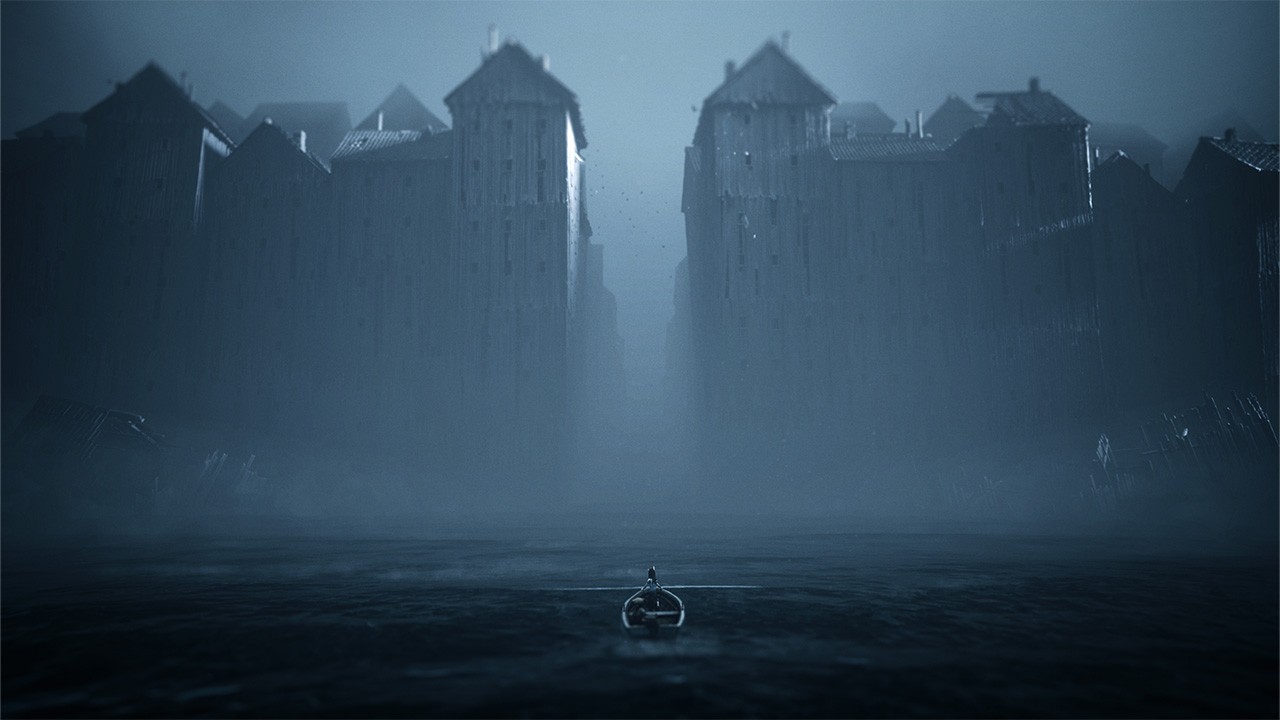
Opening with a boy with a hemp sack on his head and a rope around his neck, in a small boat guided by a series of buoys, he soon pulls a girl in a bunny mask that looks like a junior Splicer out of what feels like an endless ocean and exclaims, “I thought you were dead”.
It perfectly sets the tone for what is one disturbing trip through several surreal hellscapes that don’t just hint at something wholly unsettling beneath the surface, just off-screen, like Nightmares did. It’s laid bare.
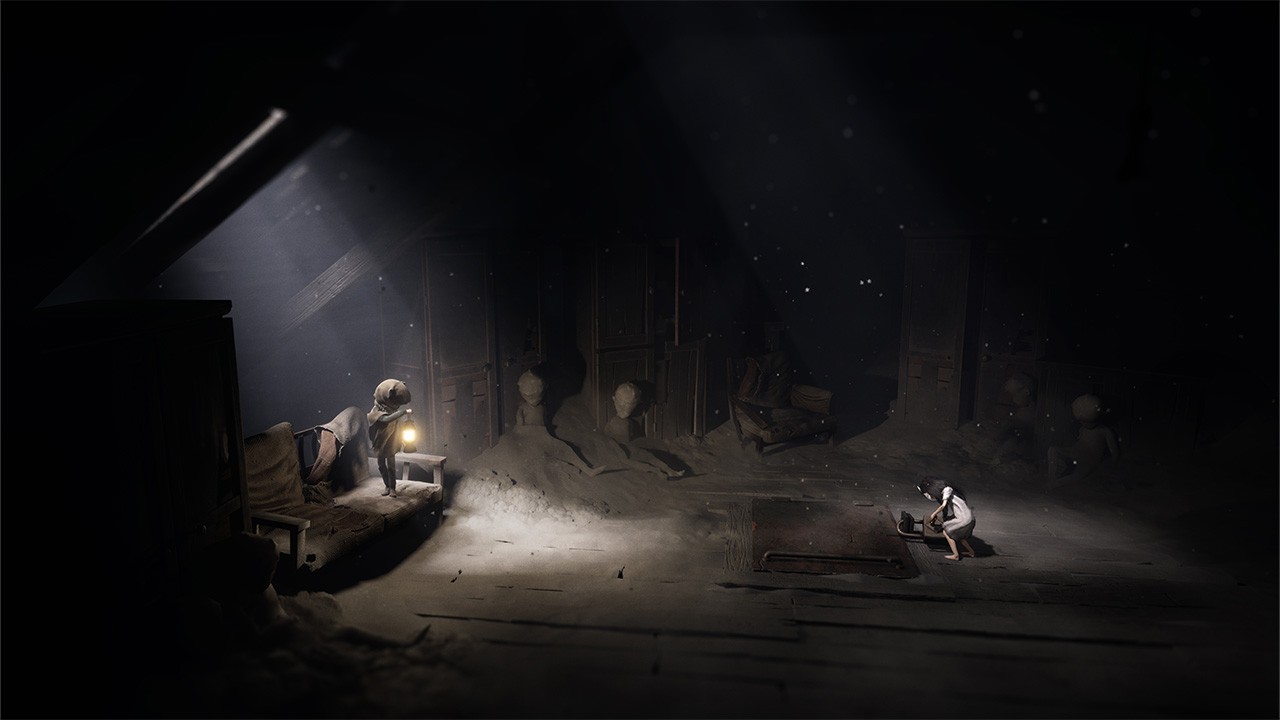
Themes of child abuse, suicide, and genocide are put front and centre. As the kids face all manner of twisted abominations that retain that same uncanniness from Tarsier’s earlier work, yet they somehow feel even more grotesque.
Less storybook, more brutal, more immediate, there’s this recurring motif of people being hollowed out in various ways. Becoming lesser by the grim reality they face, some become literal skin sacks that litter the environment. They’re everywhere. Did that one move? Surely not.
At its core, Reanimal is a cooperative puzzle-platformer with light combat that likes to switch up its gameplay with some stunning set pieces that see our heroes work together to use a push cart, drive a truck, and defend themselves from all manner of unnerving foes.
If you’ve noticed I’m being vague – that’s because I don’t want to ruin it. You are best going into Reanimal knowing as little as humanly possible, and bringing a friend along for the ride. Preferably, the one you played Little Nightmares 3 with. Though gameplay-wise, even though both are cooperative platformers, Reanimal doesn’t have the same awkward Little Big Planet-style physics and grabbing mechanics.
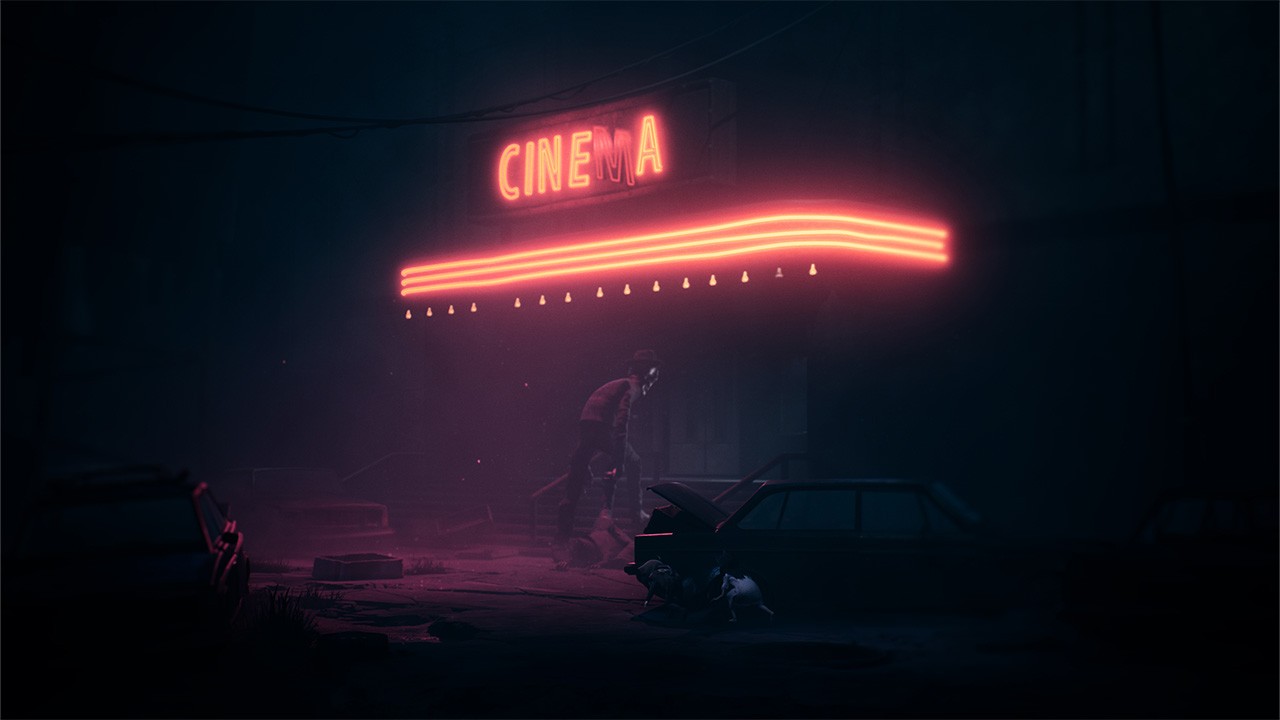
Reanimal feels very different to play, it’s got a lot more contextual button prompts like sliding through gaps in the wall and giving each other boosts up walls. The chase controls, the running, sliding, crouching, and hiding are fantastic; what’s more, the numerous chases and moments when you’re being stalked feel more open. There’s more margin for error, though admittedly not much. As a result, survival feels earned. Enemies can be outfoxed and outmanoeuvred, rather than the occasionally frustrating trial-and-error that dogs Little Nightmares.
Throughout Reanimal, there are plenty of offshoots and secrets to find, including gorgeous concept art, strange statues, and more than a dozen masks for our protagonists to pop on, ranging from the odd to the downright gross. During my play session, I found one that looked like bundled up intestines, and my girlfriend refused to keep playing until I changed it. It was that off-putting.
It’s definitely best played with a player two, even though the AI is serviceable, but it’s far more fun to trauma bond with your best friend. With that in mind, Reanmal has plenty of options, including local and online multiplayer as well as Gameshare on the Switch 2. However, it is worth bearing in mind that you have to put up with the irritating Gameshare border on Nintendo’s consoles.
The presentation is gloomy and bleak, most of the world feels dusty, dark, and long-forgotten. Things shift in the darkness, seemingly inconsequential details are highlighted in ways that make you instantly suspicious of them. Light plays a key role in Reanimal, with our pair of protagonists holding their own light source; the girl has a lantern, and the boy a lighter. These are used not only to push back the ever-encroaching darkness but also to interact with the environment and help find secrets.
The sound design is also fantastic. The music perfectly accompanies the action on screen and does a marvellous job, even during the quieter moments, of keeping the mood tense and unnerving. Reverberating industrial noises, discordant strings, and deep brass notes punctuate its darker moments; the grunts and growls of animals and things skittering and slithering in the darkness get right under your skin. It’s unnerving, it constantly reminds you that there’s always something waiting to harm you, and you probably won’t know until that blurry shape in the darkness starts to move and coalesce into something absolutely frightful.
Final Thoughts
On the surface, Reanimal is very much to Little Nightmares as Dark Souls is to Demon’s Souls.
However, rather than a rebranded retread, it pushes everything so much harder than its predecessor did. To the point where I’m not sure I’d necessarily recommend it to Little Nightmares fans unless they are well aware of just how much further Tarsier has pushed the envelope this time.
I’m aware this review has been pretty light on details, and there’s a sound reason for it. I honestly believe it’s best to play Reanimal knowing as little as you can going in. So I’ll leave you with this: if you are a fan of the kind of horror that permeates your skin, lingers long after the credits roll, plays on your mind, and has you reading between the lines for weeks. You are going to love Reanimal.

Related Posts

The Disney Afternoon Collection (Switch2) Review →

Tales of Arise Beyond the Dawn Edition Review (Switch 2) →

Crocs Levels Up With New Super Mario Collection, Launching 15 July →