
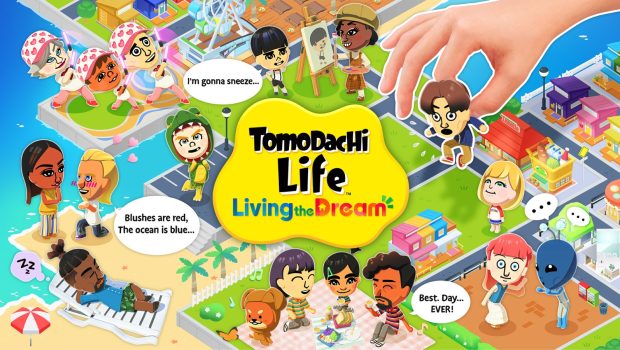
Tamodachi Life: Living the Dream Switch 2 Review
Summary:
4
Playing God
It might have taken over a decade, but it’s good to see Tamodachi Life back on our consoles. The last time Nintendo’s weirdest sim saw the light of day was way back on the 3DS, so I bet you’re wondering: what’s changed for our Switch-era Miis? Well, the answer is not that much, but honestly, that’s okay.
How to explain Tamodachi Life: Living the Dream to the uninitiated? Well, you create Miis based on, well, anyone – family member, your favourite US President, Love is Blind finalist, K-Pop idol – and watch them live out their lives. It’s entirely unserious and endlessly memeable, which are exactly the boxes Tamodachi Life wants to tick. Your creations will get stuck in holes, develop the hiccups, take up whatever hobby you force upon them, and spend their days complaining, socialising and falling in and out of love, all while begging you for headrubs.
Interacting with your Miis is really the bread and butter that holds Living the Dream together, and this time around, your cast of misfits and miscreants has never felt more alive. Each Mii has their own unique personality, with their own likes and dislikes, whether it’s food, dating preferences (with Tamodachi Life allowing for non-binary and queer dating preferences and pronouns), or a preference in what other Miis they want to spend their time with. While one Mii might be utterly perplexed as to why you’ve turned their home into a greenhouse, another might relish in its natural delights, and there’s a genuine joy in discovering the quirks of each Mii.

Keep your Miis happy, and they’ll level up, allowing you to give them gifts. While some of this will be familiar to Tamodachi aficionados, one new element is the addition of quirks. It’s another way to give your Miis depth and their own unique personality. Want them to greet other characters flirtatiously, for example? Sure. What about spending some time shaping how each Mii walks? There are dozens of options available, and each one gives your Mii more personality than seen in the series before.
If you get bored of micromanaging, you can also take a more hands‑on approach with your Miis. You’ll often find yourself playing a ridiculous minigame or two, like a quick round of red light/green light, or answering a quiz to earn prizes. Keep your Miis happy and you’ll also earn in-game money you can use to pay for new items for both your Miis and your island, such as new clothing, food, and themes for your Miis’ housing. There’s no shortage of items to discover, with quite literally hundreds of things to buy or unlock, so your Miis have no excuses when it comes to keeping themselves occupied.
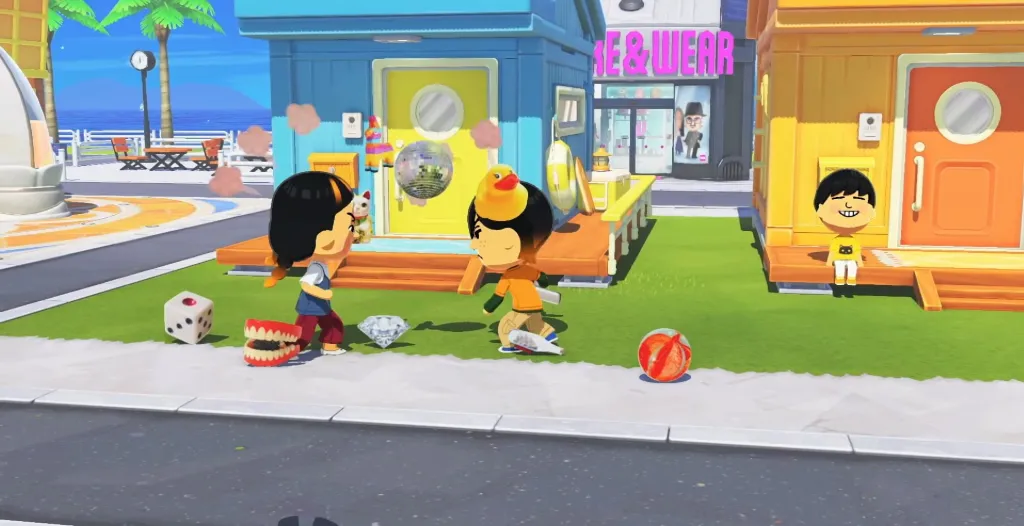
If all this sounds odd so far, it’s not even half of it – Living the Dream is dripping with weirdness. For the most part, things will look after themselves, which means you’ll spend a lot of time just watching your characters mill about. Oddly, this is one of the best bits about the game, as your Miis will get into tonnes of random, off-piste situations. For example, you might catch one of your inhabitants in the midst of a dream about a water flea. On another occasion, you might witness one of your Miis being chased by a giant bowling ball or watch them come into contact with a UFO. While there’s plenty of randomness, a lot of these scenarios are only triggered by meeting a set of conditions, for example, by interacting with a Mii while in the restaurant, so I constantly found myself winding my islanders up to see what silly event I could trigger next.

Of course, it’s not just about watching your Miis do their own thing. The first few hours of Living the Dream, in particular, will keep you on your toes, as you add a steady influx of new Miis to your island and encourage them to create meaningful relationships and friendships. Once you’ve played God for long enough and encouraged your Miis to level up, you’ll unlock a steady stream of new buildings and features both old and new. While these first few hours might keep you busy, though, long-term, Living the Dream’s gameplay loop is far more rewarding in short bouts. Check on your Miis regularly, make sure they’re fed, deal with any queries or concerns they have, do your daily tasks, and that’ll set your island up for the day. That said, even 30 or so hours in, I still felt compelled to check in with my island a couple of times a day to ensure everything was well in my little slice of paradise.
If you do feel like investing in a longer play session, though, there’s still stuff to keep you occupied in Living the Dream. The island builder tool gives you the ability to shape your island however you want (or, more often than not, how your inhabitants want), with new features and tools filtering down the more you play. For example, if you want to turn your island into a completely concrete jungle, go ahead. On the flip side, if you want to focus on making it a tropical wonderland, that option is there for you, too.
Where Living the Dream packs the most punch is through its Mii creator, and if making an island full of celebs is your favourite thing to do, you’re in luck, because it’s a feature that has never been so robust. It’s deeper than ever, allowing you to really focus and hone your creativity to shape your dream islanders. Perhaps the most impressive addition to the Mii creator is the face painting tool, which allows you to add, well, whatever you want to your Miis. It allows you to get super artsy, and it’s packed with plenty of clever tools to let your creativity shine, with everything from a wide selection of pen tools to a sizeable colour palette.
Still, while it’s a great addition to the series, it’s not perfect, and it might be a tad overwhelming for some. Dragging the joysticks isn’t nearly as accurate as it needs to be to feel totally beneficial, and while you can use touch controls, it still doesn’t feel like it gives complete artistic freedom. That said, if you’ve got the skills to back it up, you can have tonnes of fun creating, basically, anything, and there’s also an easy mode for those who want to have a go at semi-complex designs without fully committing.
It’s also worth noting that the tool is powerful enough to let you create all manner of monstrosities, so you aren’t limited to human inhabitants – and yes, that includes creating awful, terrifying anthropomorphic versions of your pets. Perhaps what’s impressive is that the tool isn’t just limited to Miis. Many aspects of your Mii’s life can be completely customised. Have an idea for a new food item or maybe a new piece of clothing you know your islanders will love? Go ahead, draw it up and get it into your shops.
But for every great new feature, there’s another area of Living the Dream that seems to have missed the mark. In particular, how you share Miis with others has taken something of a downgrade. The game no longer supports online sharing, and you can only send your Miis while playing locally with someone else. The Mii limit is also lower than in the 3DS version, restricting you to 70 inhabitants. That may sound a lot, but if your main interest is filling your island with weirdos, you may feel a little stunted the deeper you progress into your island creation. There are also some features completely omitted from Living the Dream, too. For example, the fan-favourite concert hall is nowhere to be found, and while your Miis can still stop you for a musical performance when they feel up to it, it’s a shame that such an iconic piece of Tamadotchi history is missing from Living the Dream.

I attempted to break Living the Dream by seeing how close I could get to the Mii limit before the game became unplayable, and I was impressed at how well the game held up. Even when my island started to get a little packed out, things chugged along at a decent pace with very few frame rate drops. I also didn’t encounter any bugs during my playthrough. It’s worth noting that I played Living the Dream on the Switch 2, so I can’t comment on how well it performs on the original Switch, but I had no concerns running on Nintendo’s latest console.
Final Thoughts
Tamodachi Life: Living the Dream might not be the bold reinvention some fans hoped for, but it doesn’t need to be to recapture the series’ charm. Even with its missing legacy features and a few creative tools that don’t quite hit the mark, it remains a wonderfully daft, personality‑driven sim that thrives on the unexpected. Perhaps what’s most important, though, is that even after spending a serious amount of time with Living the Dream, it remained funny. It’s the kind of game you dip into for ten minutes and suddenly find yourself grinning at a Mii having a meltdown or, well, trying to stop a Mii from making an ill-timed proposal to someone that’s just not that into them. If you’re willing to embrace its quirks and forgive its limitations, Living the Dream is a welcome, delightfully weird return to one of Nintendo’s most eccentric worlds, and an even better introduction to those yet to familiarise themselves with the Tamodachi universe.

Related Posts

Tales of Arise Beyond the Dawn Edition Review (Switch 2) →

Crocs Levels Up With New Super Mario Collection, Launching 15 July →

Dracamar Review (NSW2) →