UNBEATABLE PC Review
Summary: Unbeatable wears an undeniable amount of flair, but as of writing, it comes with its fair share of rough patches that have yet to be smoothed over.
4.6
Be gay do crime
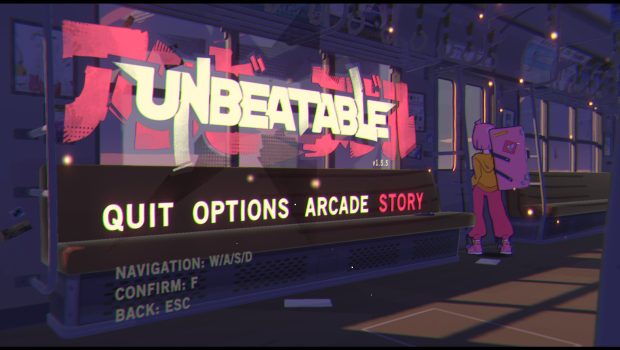
Filled to the brim with nostalgic flair, Unbeatable has at last made its way from its beginnings as a humble Kickstarter project to a full-fledged two-button rhythm game. Set in a world where music is illegal, story mode follows our cast of characters named after music terminology in a rebellious quest to fight the policed regime. Considering the arcade mode is where the pure competitive rhythm charts are being played, story mode is surprisingly touching underneath some of its edgier writing and is worth the 8–10 hours of your time overall.
Reportedly though, the game has quite a few areas where it’s possible to soft-lock yourself (at least as of the launch build), but it has received a few patches since. I didn’t encounter any myself, but I did spend a fair amount of time looking to interact with as much as I could, so it may be something to note for more brisk playthroughs.
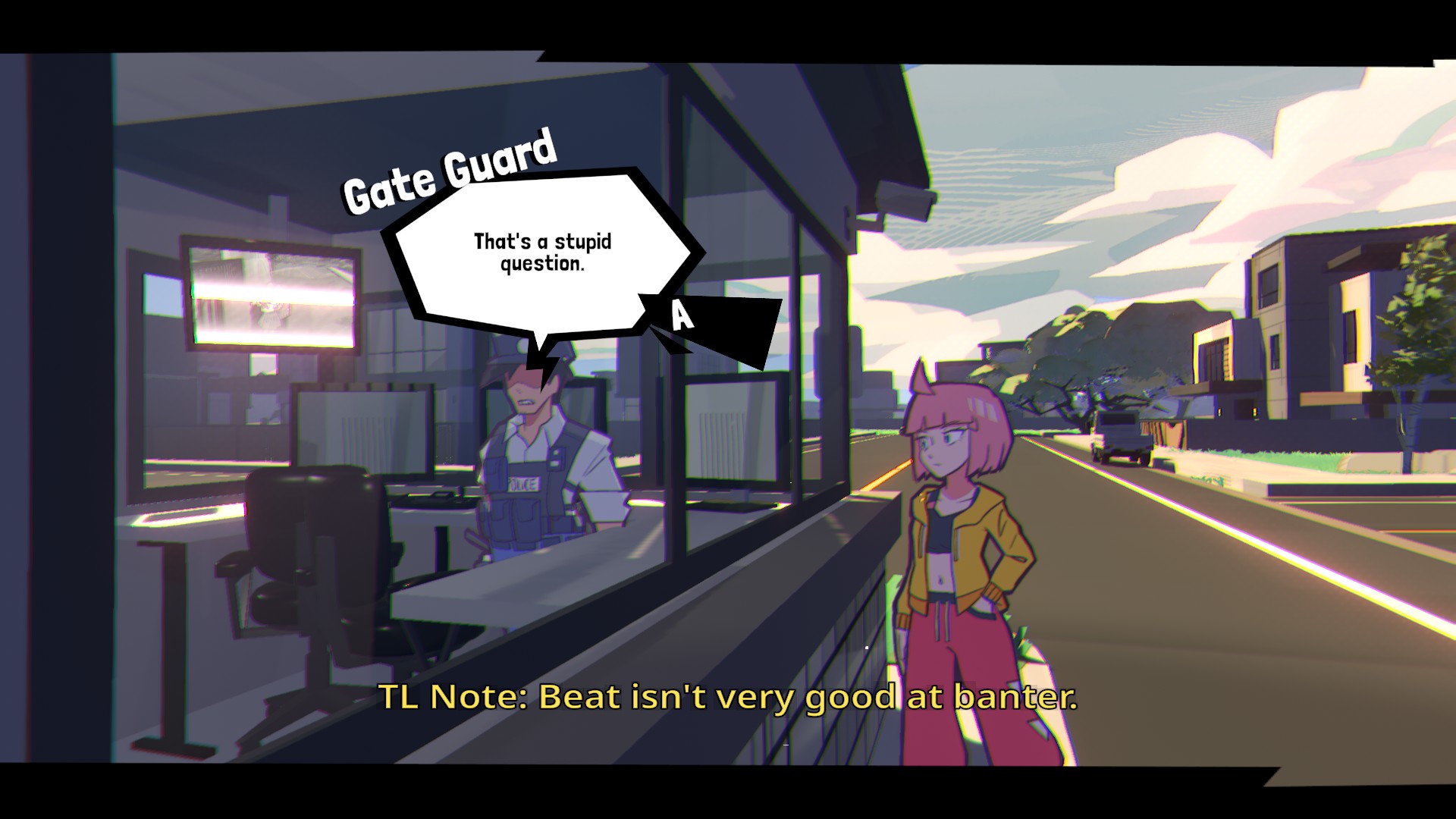
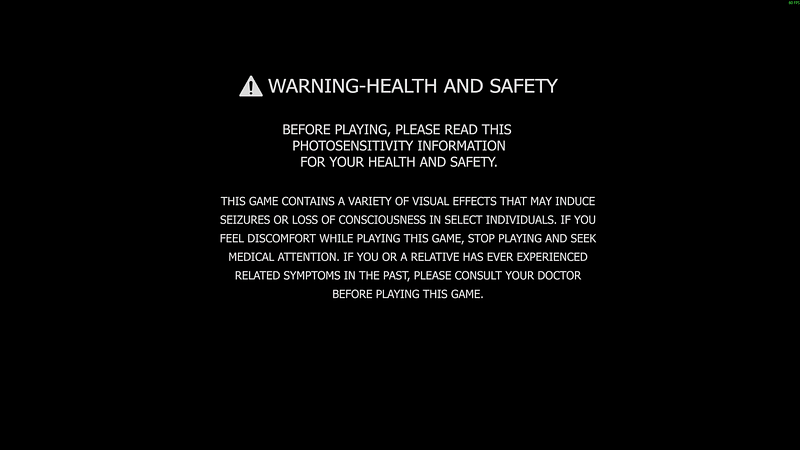
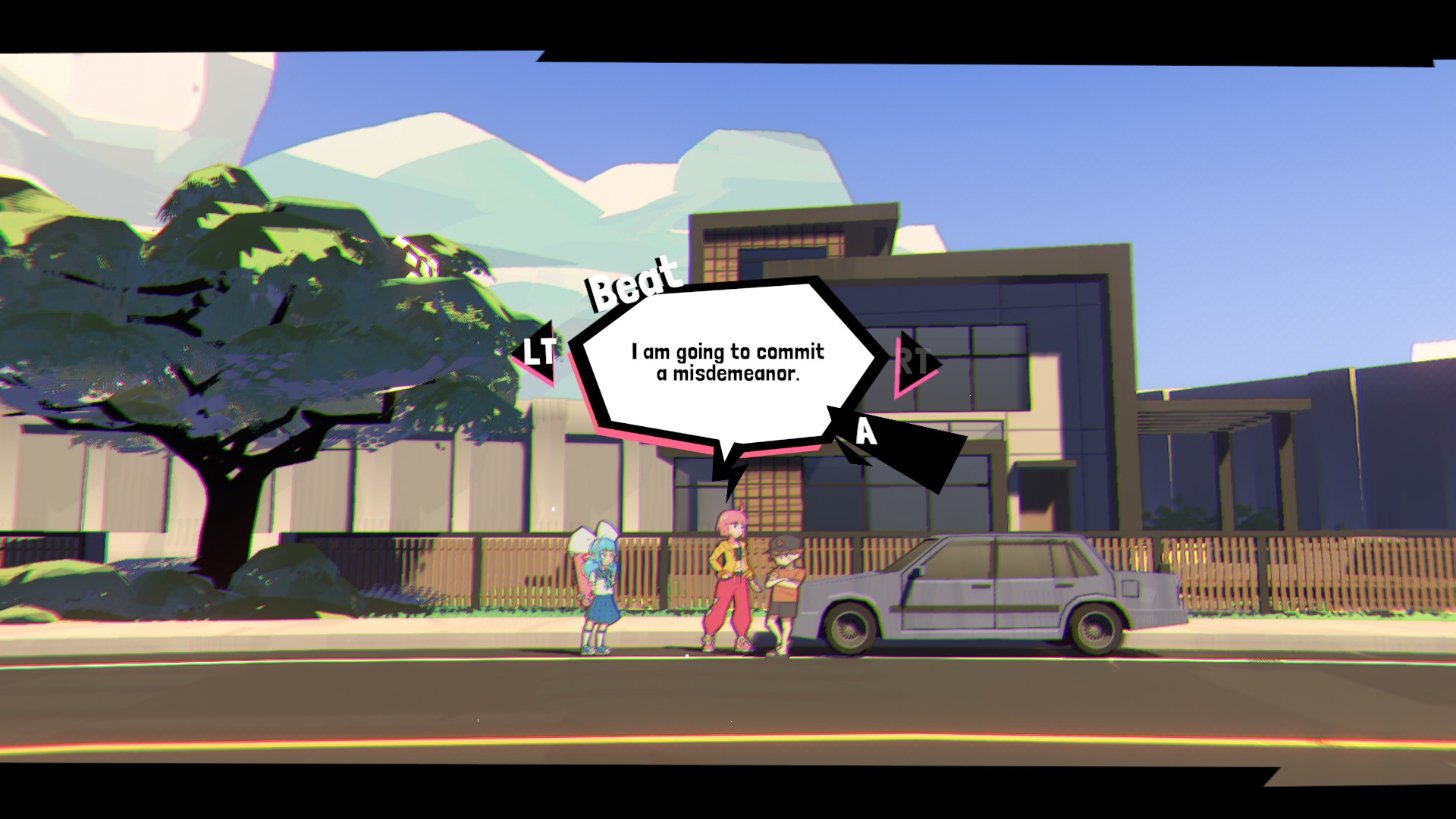
In contrast to the modern feel of its prose, the graphical style is a nostalgic love letter to retro 2D animation, particularly that of ’80s and ’90s Japanese anime and manga; character sprites are 2D in the 3D environments, somewhat akin to the early Danganronpa games, there are several gags pertaining to ‘TN’ (translator’s note) in the vintage yellow anime subtext, certain cutscenes collapse to a 4:3 aspect ratio, and the entire game has a heavy VHS glow and film grain post-processing. Even in the story itself, protagonist Beat has an attachment to her Walkman tape player rather than an MP3 player or mobile phone. I have to say I’m also very big into the Nintendo Wii-inspired health and safety splash screen before the game even starts.
Along the way are some minigames and puzzles, usually rhythm-based. Minigames like jump rope and baseball come with oblique expectations of guessing when the call phrase ends and when to begin inputting the response, and they felt too trial-and-error for me to stick with.
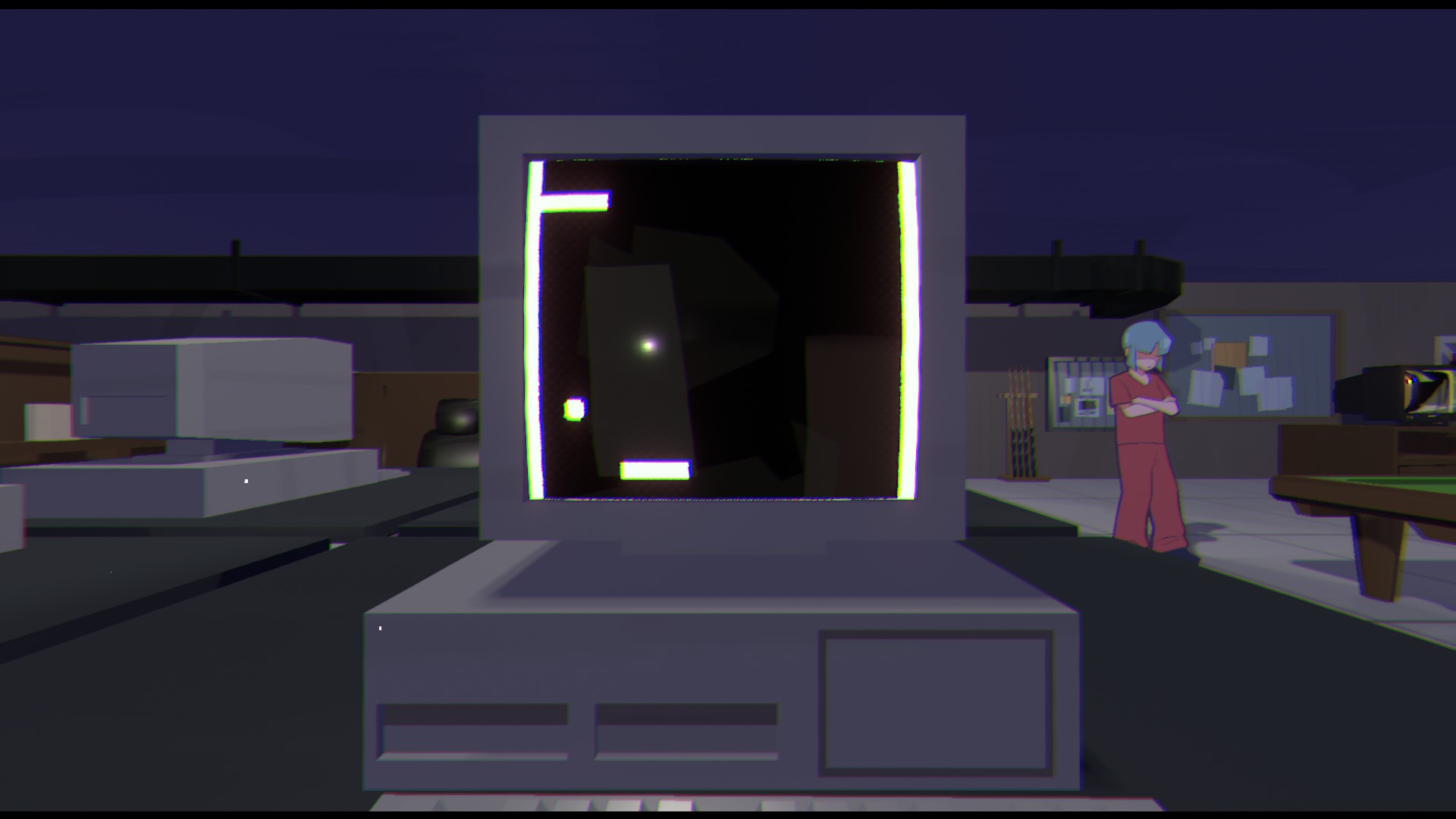
Another offender of giving absolutely no support is Prisonball, a game of snooker that seems to play on ice and has no middle ground in shot energy between a light putt and driving the ball off the table. Prisonball might be fantastic once you know how it works; unfortunately, this game is the last place you’ll learn that from.
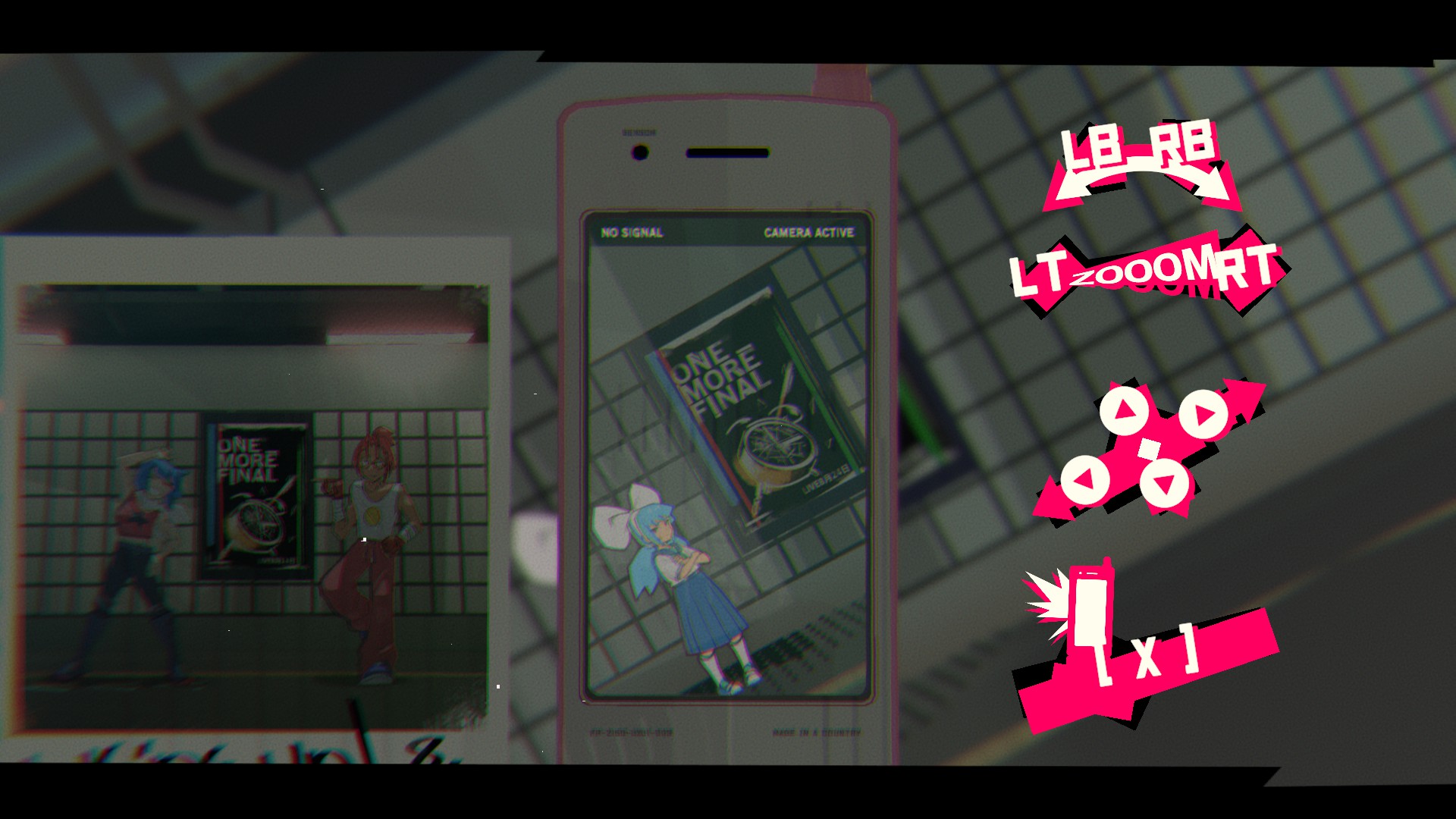
Not all smaller gameplay sequences are bad though, taking photos is cute, the assembly line minigame is engaging (to begin with), and a Simon Says call-and-response game to vandalise advertisements and remember songs are all refreshing breaks from the usual gameplay loop. Plus, in the same room as Prisonball are Breakout and vertical Pong, which function pretty much as one would expect.
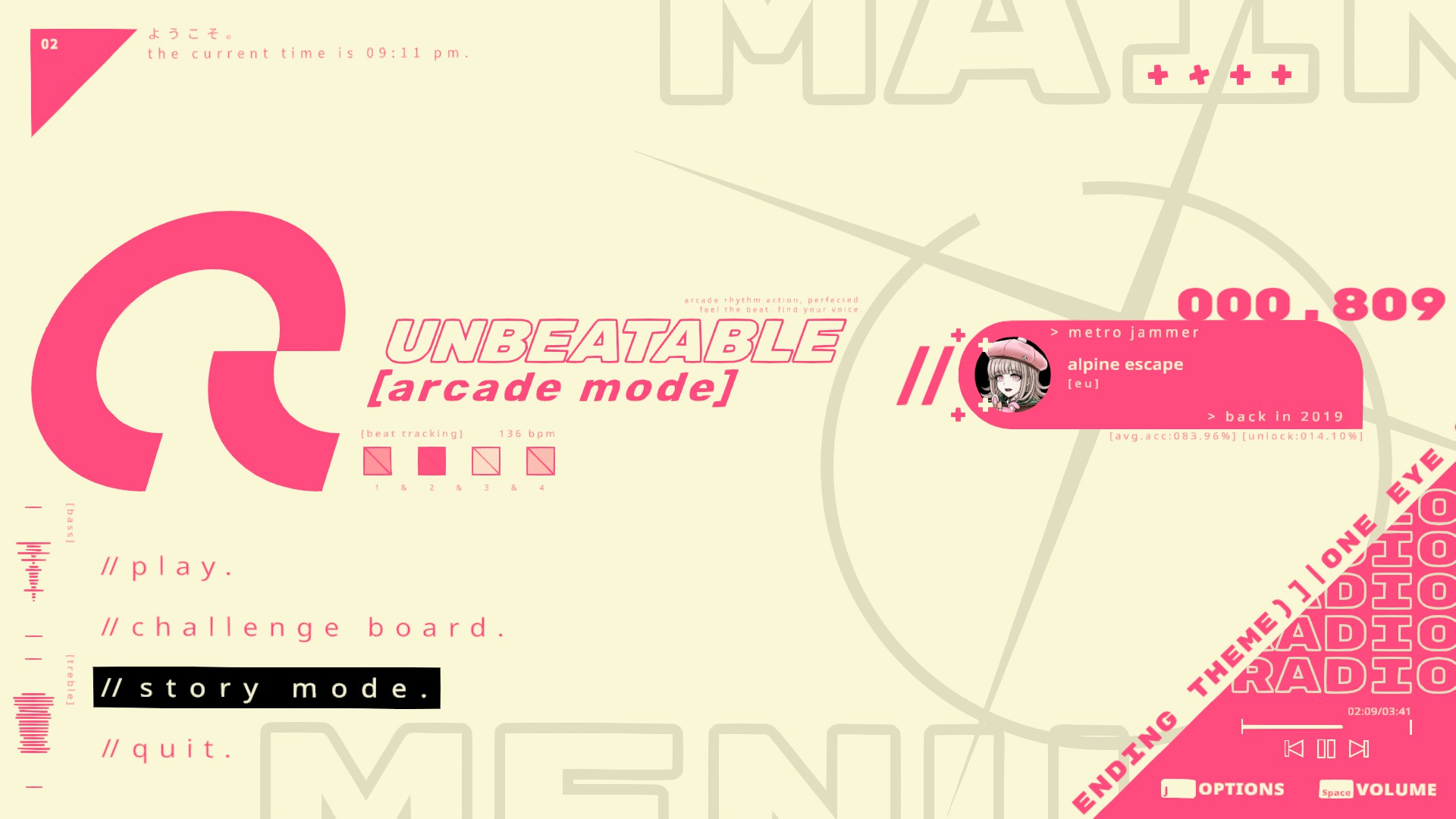
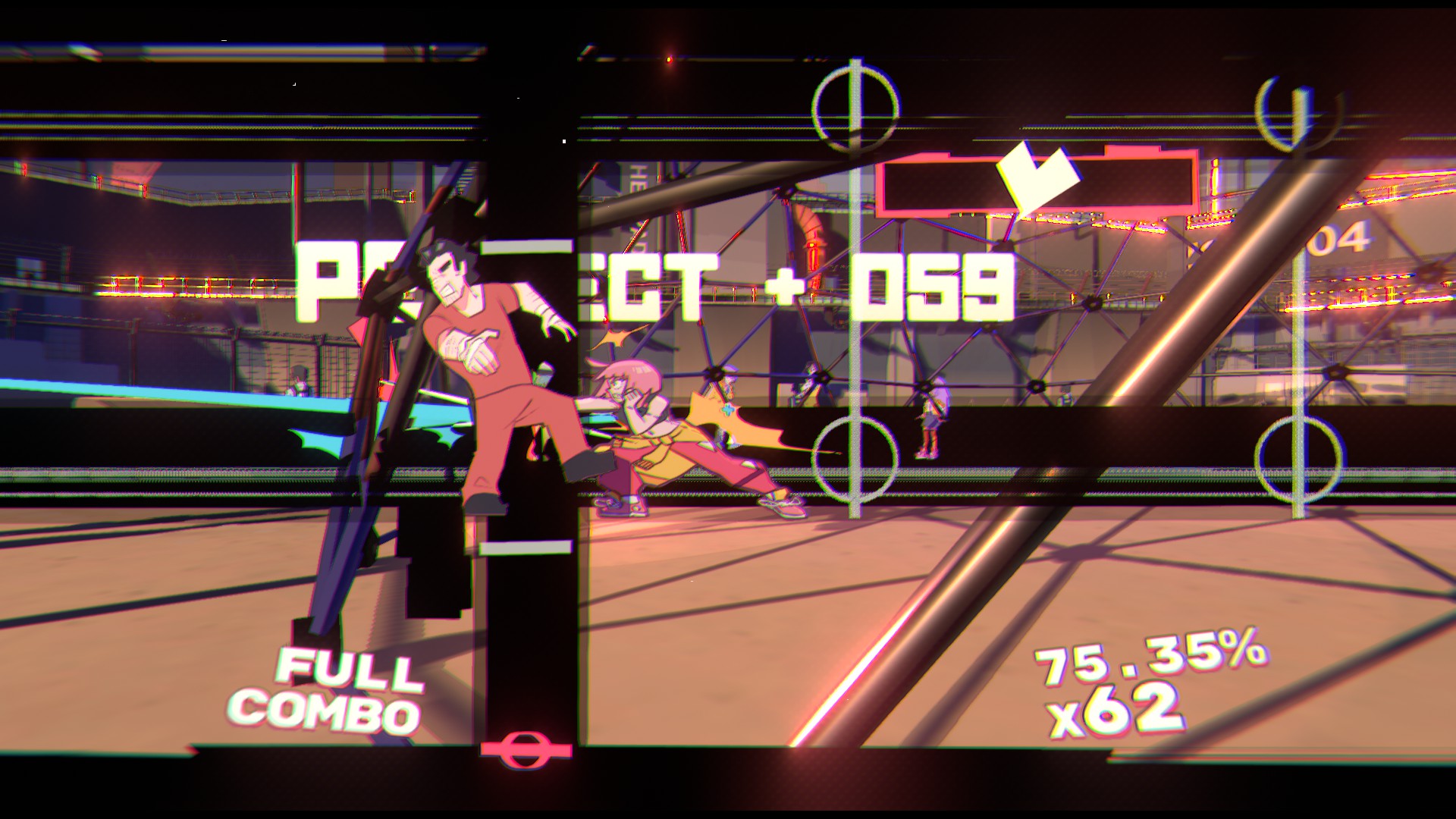
The secondary Arcade mode is where players will probably spend the majority of their time. This is pure Muse Dash-esque rhythm game action for any skill level, with each track having 5 or 6 difficulty charts, and a small array of modifiers to the experience. Arcade mode is also packaged in a beautifully maximalist Japanese UX that welcomes you with pink and white gradients, music metadata, tempo and frequency visualisers, your system clock time, and a quirky retro breakbeat tune.
The selection of songs you begin with is decent, with hidden tracks unlocking after completing more. The selection is largely tracks by the game’s composers Peak Divide, but it does extend out into songs from the White Label demo released in 2021, numerous songs by the band and developers not written for Unbeatable, remixes, and occasionally tracks with no clear relevance to the game. Because of this, many of the songs are the same brand of indie heard throughout the White Label demo and story mode, but there are also some out-of-place chiptune and rap cuts. Variety is key for a rhythm game’s soundtrack, but the ratio of indie to non-indie as of launch feels like these extras just don’t belong in the game yet.
The voice acting is fine but oddly sparse, some key moments are acted while others that might be expected to are not. The quality of performances varies by character, though given that the voices seem to be provided by developers, nobody does a terribly poor job. The VO production is strong but a little over-compressed. It’s only a nitpick, but it irked me the entire game as an audio producer myself. The score, on the other hand, is undeniably fantastic, and probably its strongest area above all else. Its overall sound is a blend of modern indie rock with the vintage dry, warm production of the 1970s, but can turn on a dime to blood-pumping drum ‘n’ bass, or to ambient guitar and keys tracks somewhere in between.
Final Thoughts
Unbeatable brings so much flavour and distinct personality to what is inherently such a simple game at its core that it’s hard to dislike. If you’re still on the fence, a demo is available as well as the White Label demo from 2021. The latter lacks a lot of the final product’s visual polish, but will still give you the exact feel of what to expect from the final game’s mechanics and narrative style.
About the Author

Dylan McCarthy PKA Alpine Escape, a music and sound design production student with a life-long obsession for video games.
Related Posts

The New Zealand Story: Untold Adventure PC Review →

Blossom: The Seed Of Life PC Review →
Sancticide PC Review →