

Traveler’s Refrain Review (Switch)
Summary: Traveler’s Refrain is an action RPG where you explore a mysterious, overgrown forest filled with puzzles, secrets, and strange technology. You play as Traveler, a young man on a personal quest to reunite with a lost love, using a magical instrument to manipulate the world and defeat enemies. The game blends exploration, combat, and music-based abilities into a layered experience that encourages experimentation and rewards careful observation.
3.6
Reverberating Regret
Every melody brings the past crashing back to life! Traveler’s Refrain is a dark, song-casting action RPG developed by Red Essence Games, published by indie.io, and originally releasing on PC on April 11, 2025, with the Nintendo Switch version following on December 11, 2025. It presents itself as a top-down adventure clearly inspired by classic Zelda design while layering in a unique musical combat system that becomes the backbone of both exploration and progression. You guide a traveler named Traveler through a moody, hand-painted forest full of overgrown ruins, strange machines, and hints of ancient technology. From the outset, the game establishes a gloomy, introspective tone that feels very deliberate, even if not every element lands equally well.

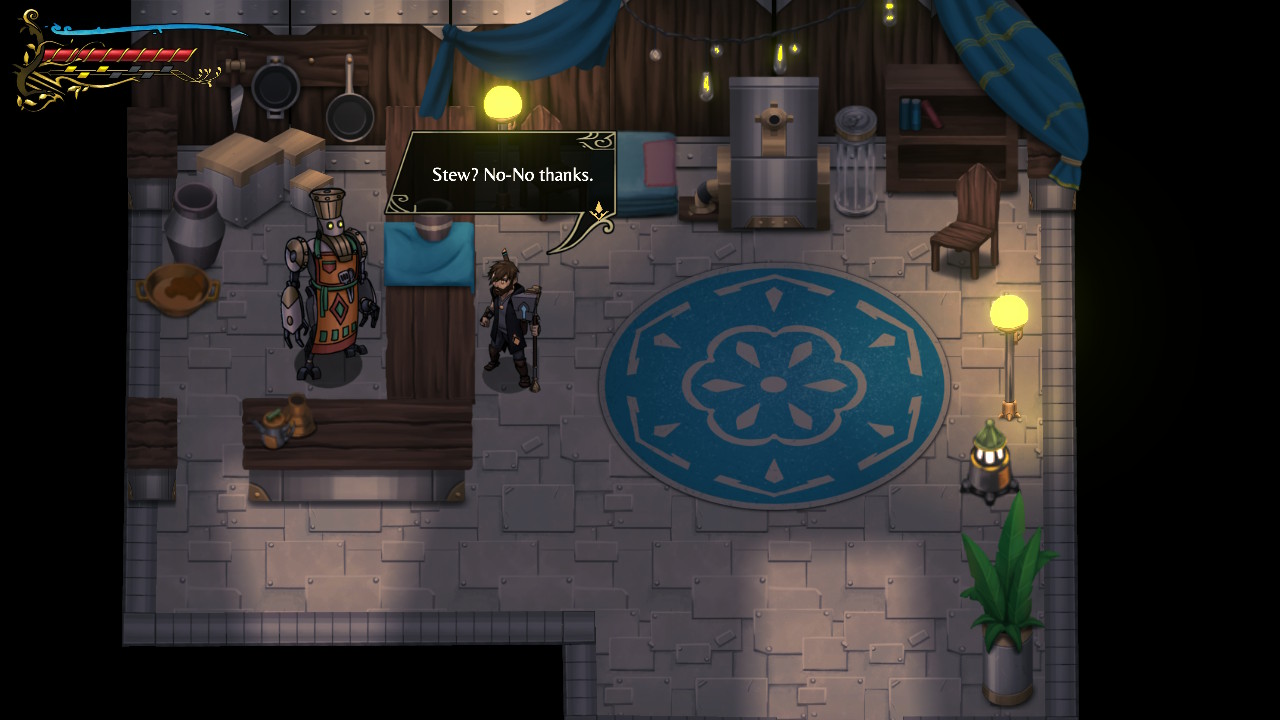
The story serves more as a backdrop of themes than a typical plot-driven RPG. It revolves around loss, obsession, and memory, following Traveler’s desire to reunite with a long-lost love by seeking out a mysterious wish-granting machine hidden deep within a forbidden forest. Along the way, that singular goal expands into helping other characters, both human and mechanical, while being forced to confront fragments of Traveler’s own past through brief visions and surreal environmental shifts. These moments where reality briefly gives way to memories are some of the game’s most striking ideas, though the actual storytelling can feel understated and, at times, less engaging than its setup suggests. It works more on atmosphere and implication than plot twists, which may resonate with some more than others.

The gameplay mechanics and systems are what make Traveler’s Refrain engaging. It follows a familiar metroidvania-inspired loop, granting new tools and abilities that encourage backtracking to uncover hidden paths, optional upgrades, and collectibles. This loop feels satisfying largely because the game respects your time. Exploration is compact and purposeful, with dungeons, caves, and overworld areas that rarely feel bloated. Totems increase health, music sheets raise your verve meter (which allows you to do special attacks), and red crystals are used to upgrade both Traveler’s weapons and songs. Everything contributes to a smooth sense of advancement that stays manageable.
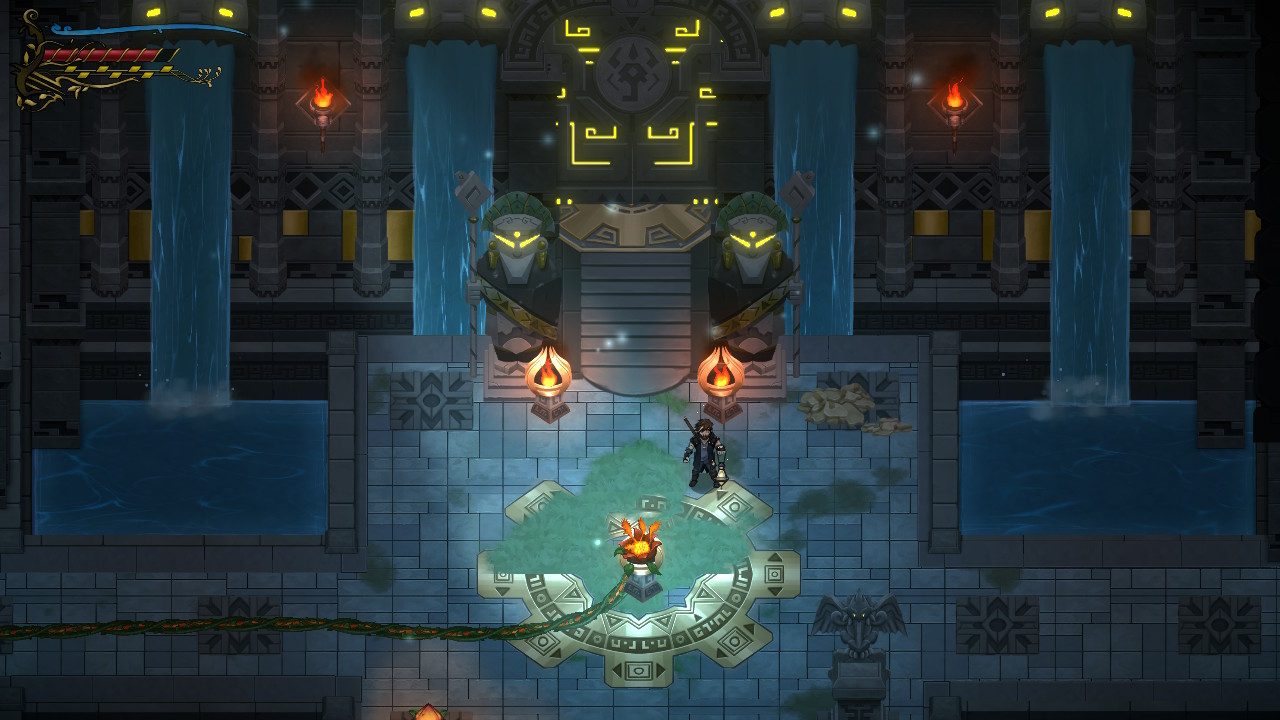
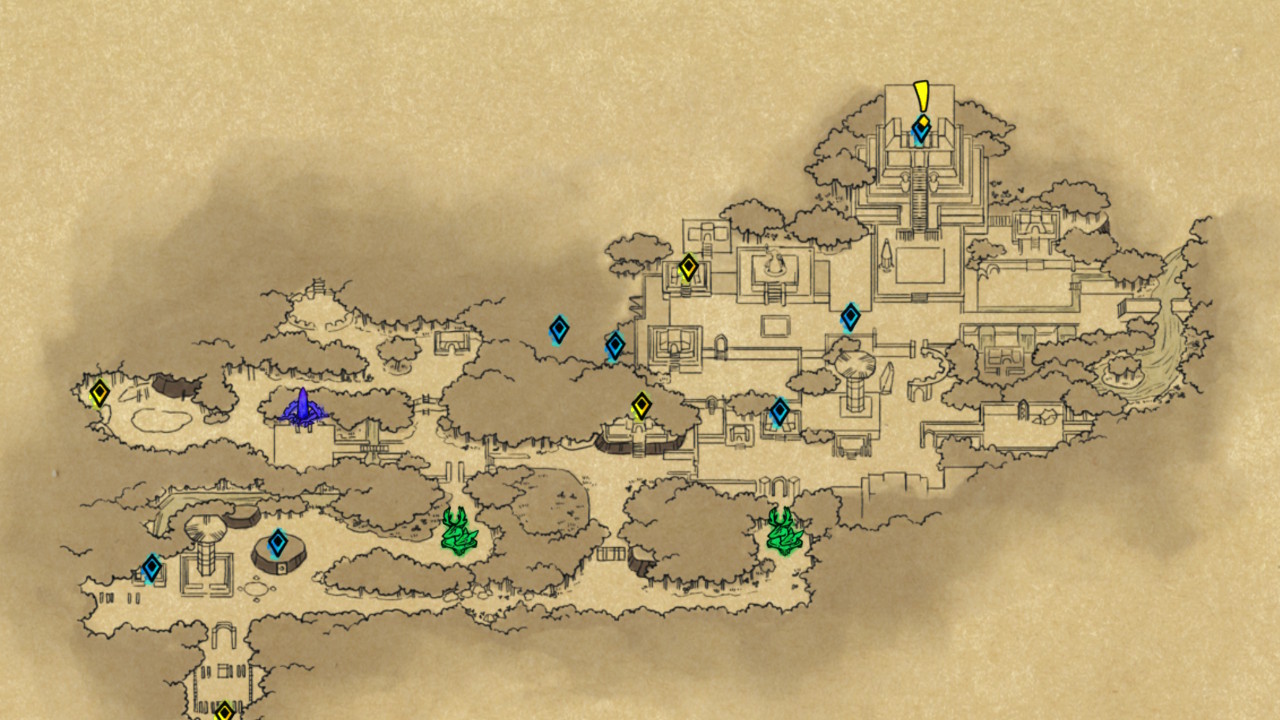
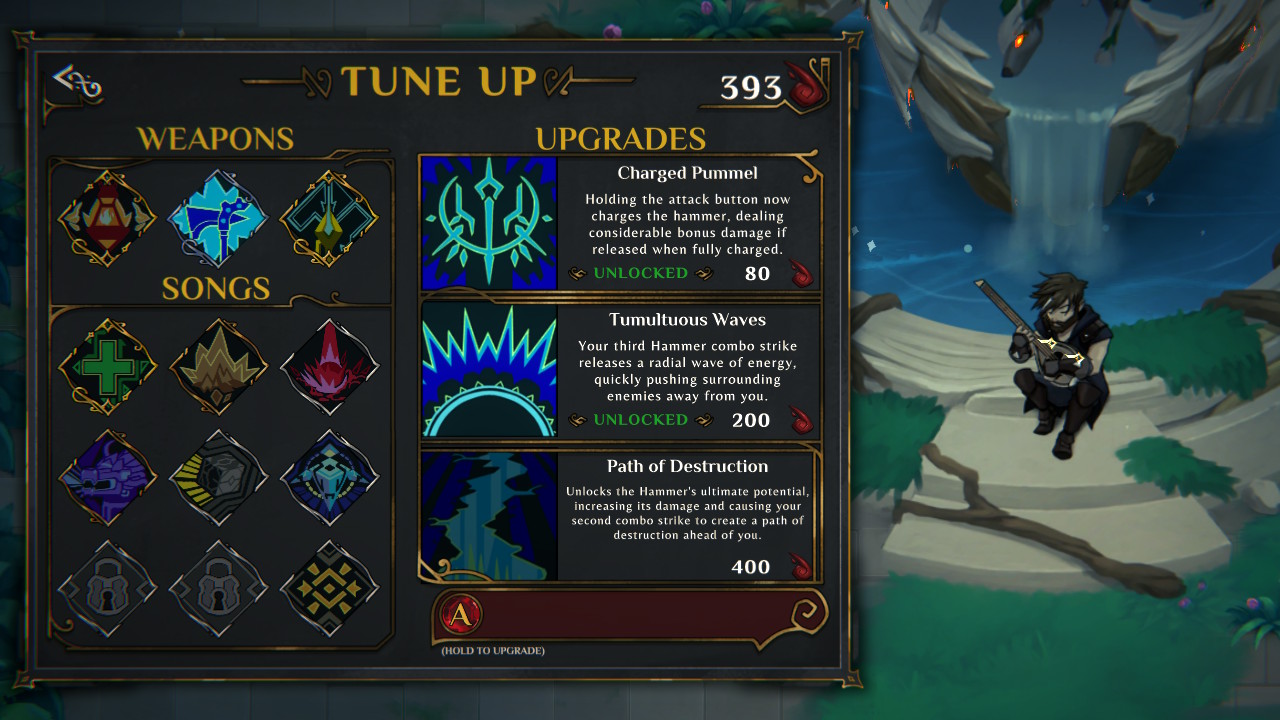
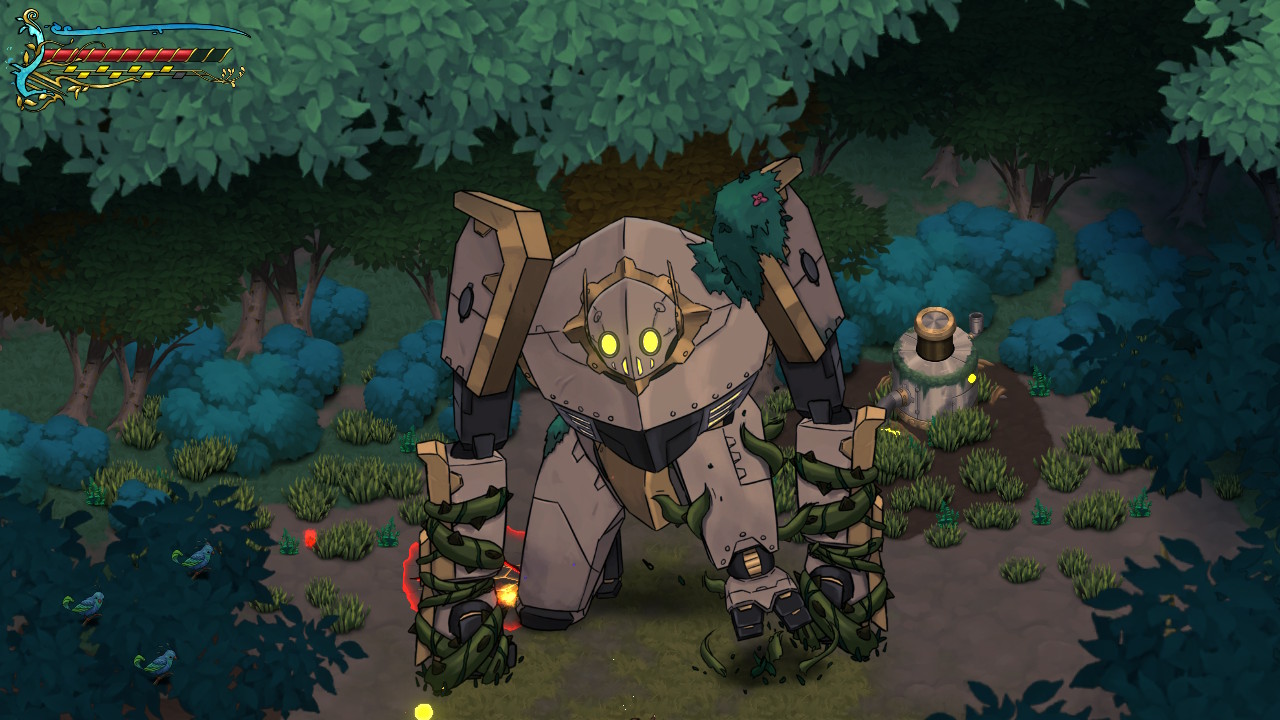
Combat blends real-time action with musical inputs in a way that feels surprisingly natural once it clicks. Traveler begins with a lantern that deals fire damage and can burn environmental objects, but additional weapons like a hammer dramatically change how encounters and puzzles are approached. The hammer hits harder, can shove large objects, and often trivializes enemies that the lantern struggles against, encouraging experimentation rather than sticking to one tool. On top of melee combat, Traveler can pull out his instrument and cast song abilities using directional inputs within a limited time window. These songs create effects like spike traps, bombs that detonate behind you, shields, or healing melodies. Casting songs drains verve, an energy resource that is replenished by attacking enemies or destroying objects scattered throughout the environment.
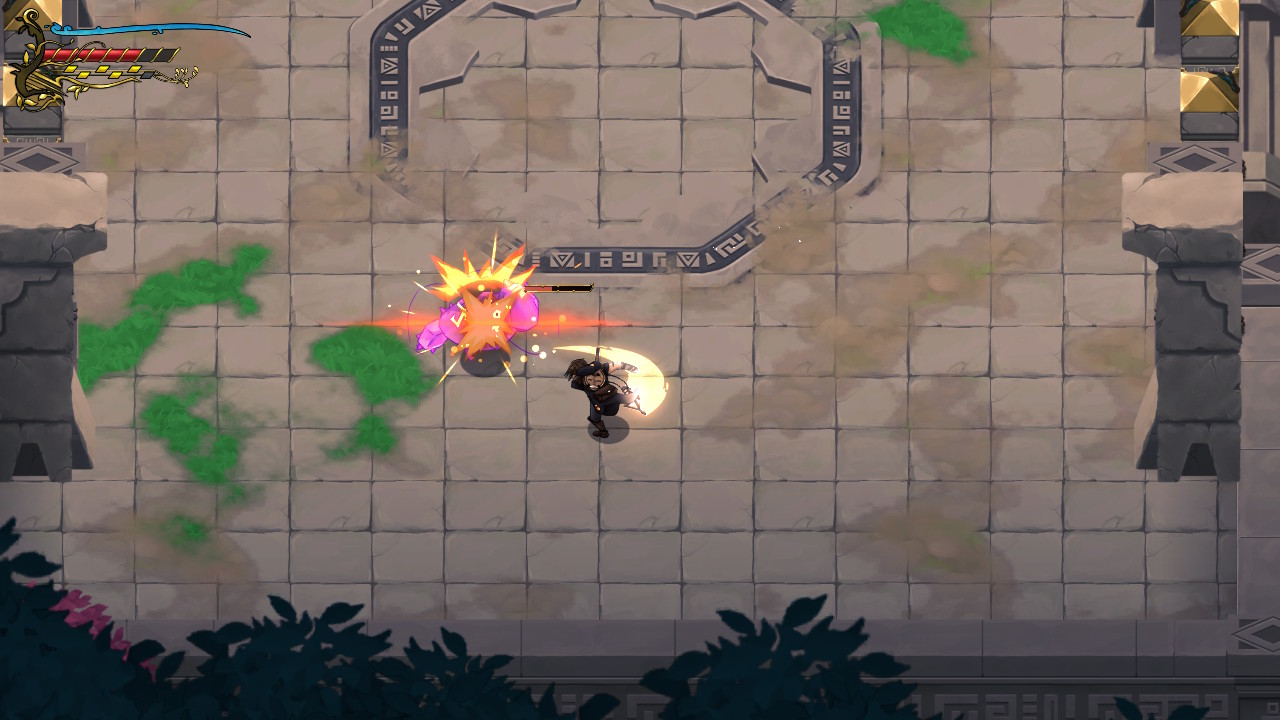
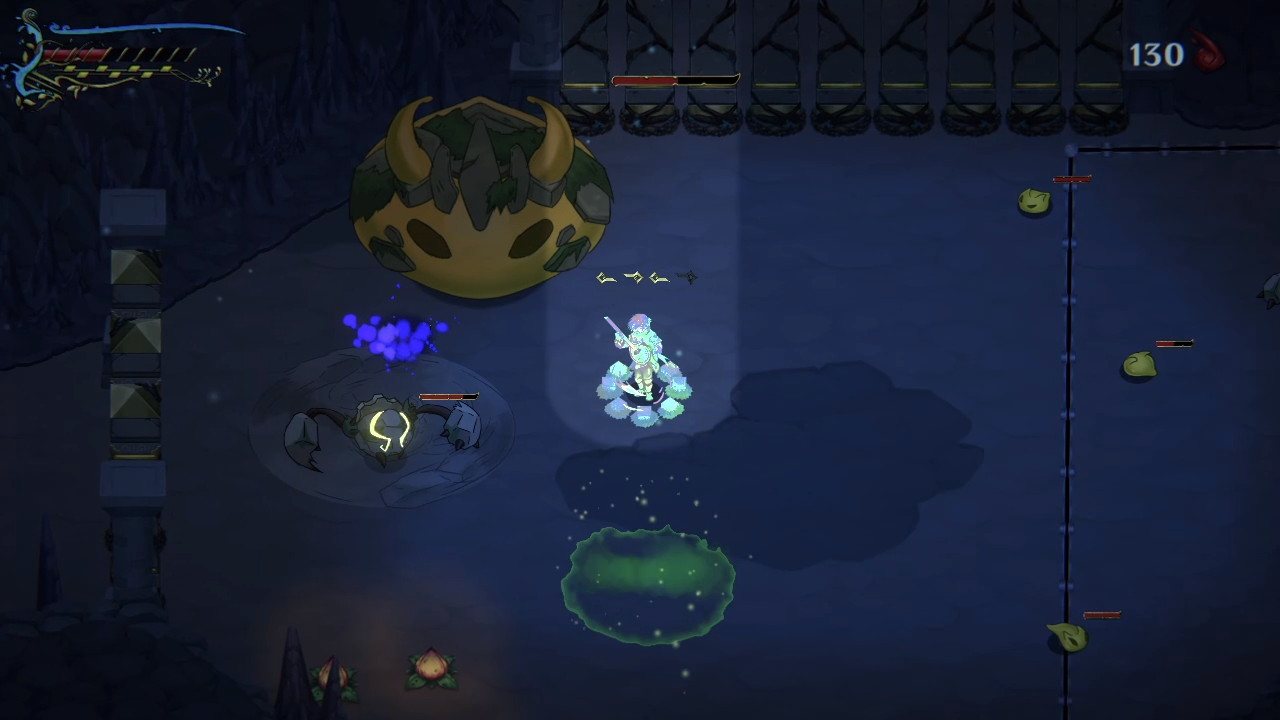
This system gives combat an almost puzzle-like quality. Positioning, timing, and resource management matter, especially when enemies crowd the screen or environmental hazards are involved. There is also a Virtuoso ability that charges through combat and temporarily enhances attacks, adding another layer of decision-making during tougher encounters. Different songs cost different amounts of verve, and upgrading them can dramatically change their utility, making build choices feel meaningful. While the combat is not the tightest or fastest, it is consistently engaging and creative, especially when weapons, songs, and environmental interactions all come together.
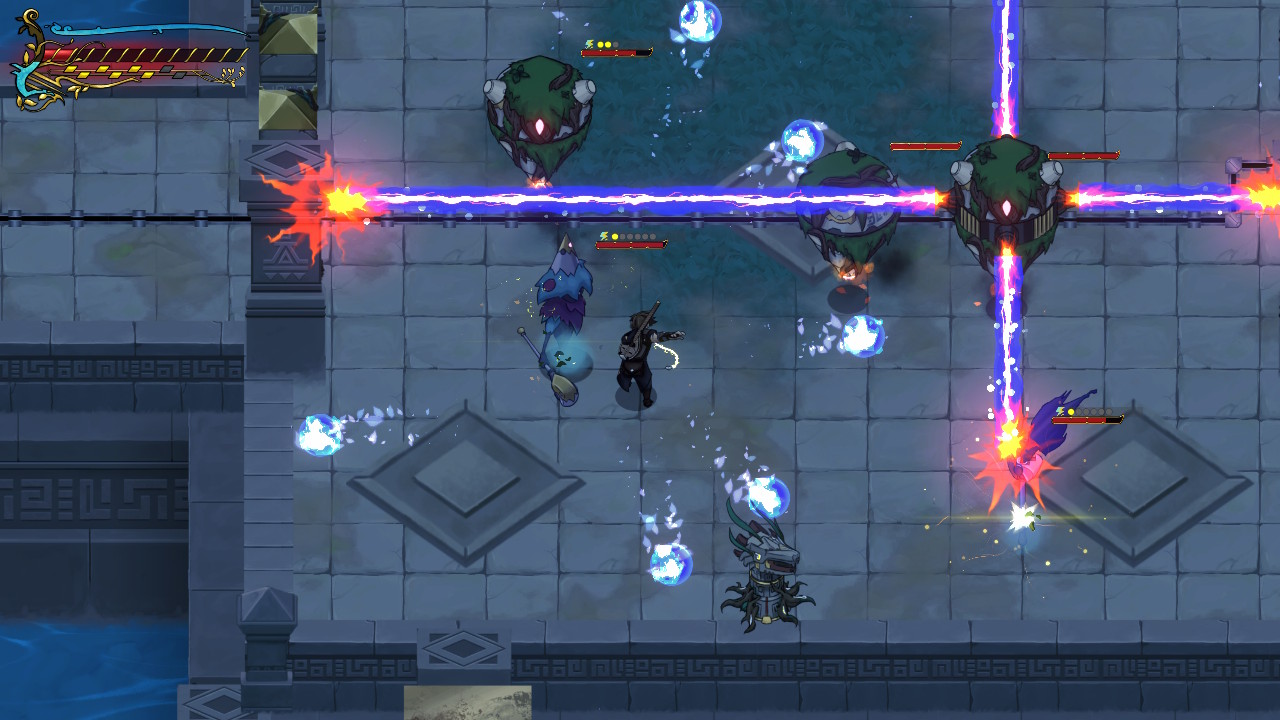
Puzzles are another strong point. They range from simple environmental interactions to more elaborate sequences involving electricity, levers, enemy placement, and timed hazards. Dungeons in particular are well designed, with clever use of foreground and background depth, verticality, and layered mechanics. Solving these areas feels rewarding, not just because of the upgrades you receive, but because the game does a good job of teaching and remixing its ideas without overexplaining them. Backtracking with newly unlocked abilities often leads to meaningful rewards rather than filler content, reinforcing the sense that exploration is always worthwhile.
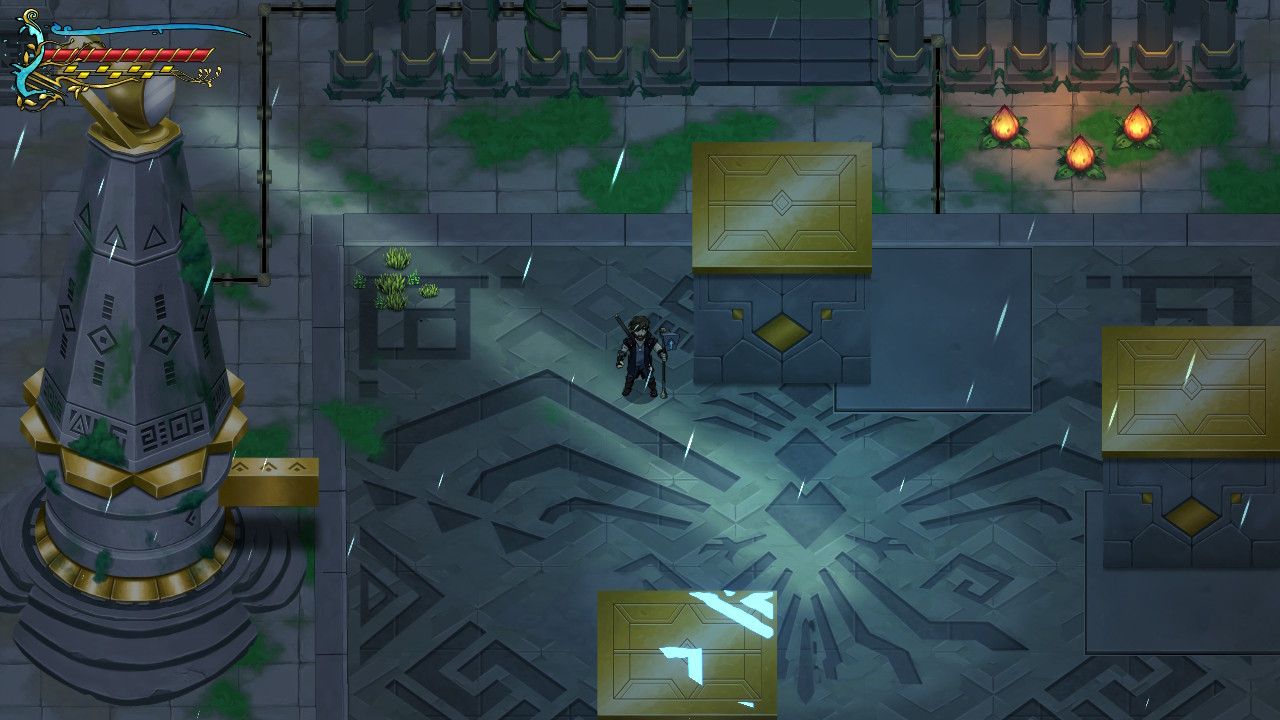
Visually, Traveler’s Refrain is consistently impressive. The hand-drawn art style gives the world a distinct identity, blending natural environments with ancient, overgrown technology in a way that reinforces the game’s central themes of machine versus nature. Foreground details like birds perched on branches and layered background vistas add depth to the world, while environmental transitions during vision sequences are particularly striking. These brief moments where the environment flickers and reshapes itself are some of the most memorable visual flourishes in the game.
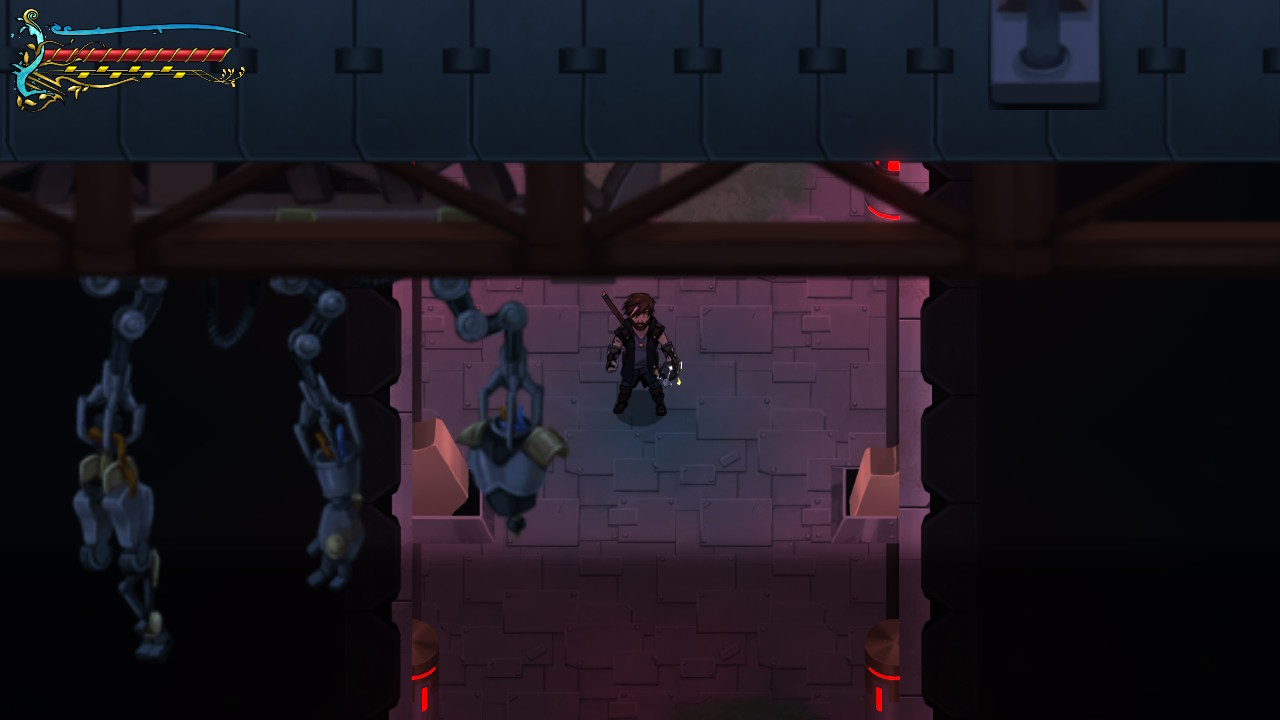
The audio design largely complements the visuals. Music plays an important role, with different songs tied directly to gameplay mechanics, and the soundtrack adapts subtly based on your actions. Voice acting is a mixed bag. Some performances are strong and add personality to the world, while others feel flat or slightly cheesy, occasionally pulling attention away from otherwise emotional scenes. It is serviceable overall, but not consistently excellent.

On the technical side, the Switch version has a few rough edges. Loading screens feel oddly implemented, sometimes presenting text prompts that do not actually serve a function. There is noticeable slowdown in later sections when many enemies are on screen, and occasional hiccups where Traveler can get briefly stuck during combat or movement. None of these issues are game-breaking, but they do chip away at the polish, especially during otherwise intense moments. Combined with a story that may not fully live up to its emotional ambitions, these flaws prevent the game from feeling completely refined.
Final Thoughts?
Traveler’s Refrain offers a strong sense of progression, creative combat, rewarding exploration, and a distinct identity built around music as a gameplay mechanic rather than a gimmick. While the narrative execution and technical performance have their shortcomings, the core experience remains engaging and thoughtfully designed. It is a compact, confident action RPG that feels made with care and intention, and one that stands out among indie releases for its ideas alone. For anyone who values atmosphere, inventive systems, and a steady, satisfying gameplay loop, Traveler’s Refrain is well worth experiencing.
About the Author

Nay Clark Gaming holds a special place in my heart and I never stop talking about video games. I really love all types of games and have an interest in games that have complicated stories and lore because I enjoy untangling the mystery of it all. When I'm not gaming, I unsuccessfully try to control three amazing and incredibly bright kids.
Related Posts

Paranormasight: The Mermaid’s Curse Switch Review →

Virtual Boy for Nintendo Switch 2 Review (Happy MAR10 DAY) →

Under the Island Review (Switch) →