
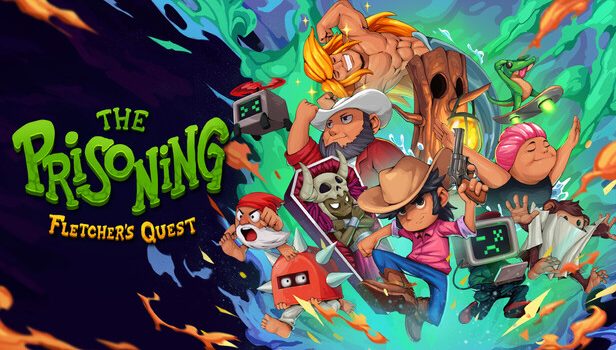
The Prisoning: Fletcher’s Quest Review (Switch)
Summary: The Prisoning: Fletcher’s Quest is a short, precision focused action platformer that blends sharp controls, clever one bullet combat mechanics, and irreverent humor with a story about anxiety and creative burnout. While its boss fights and moment to moment movement are strong, its metroidvania elements and procedural structure feel underdeveloped and never fully expand on their potential. It is an enjoyable, compact experience overall, but one that leaves you wishing it had gone a little further.
2.9
Binding Burnout
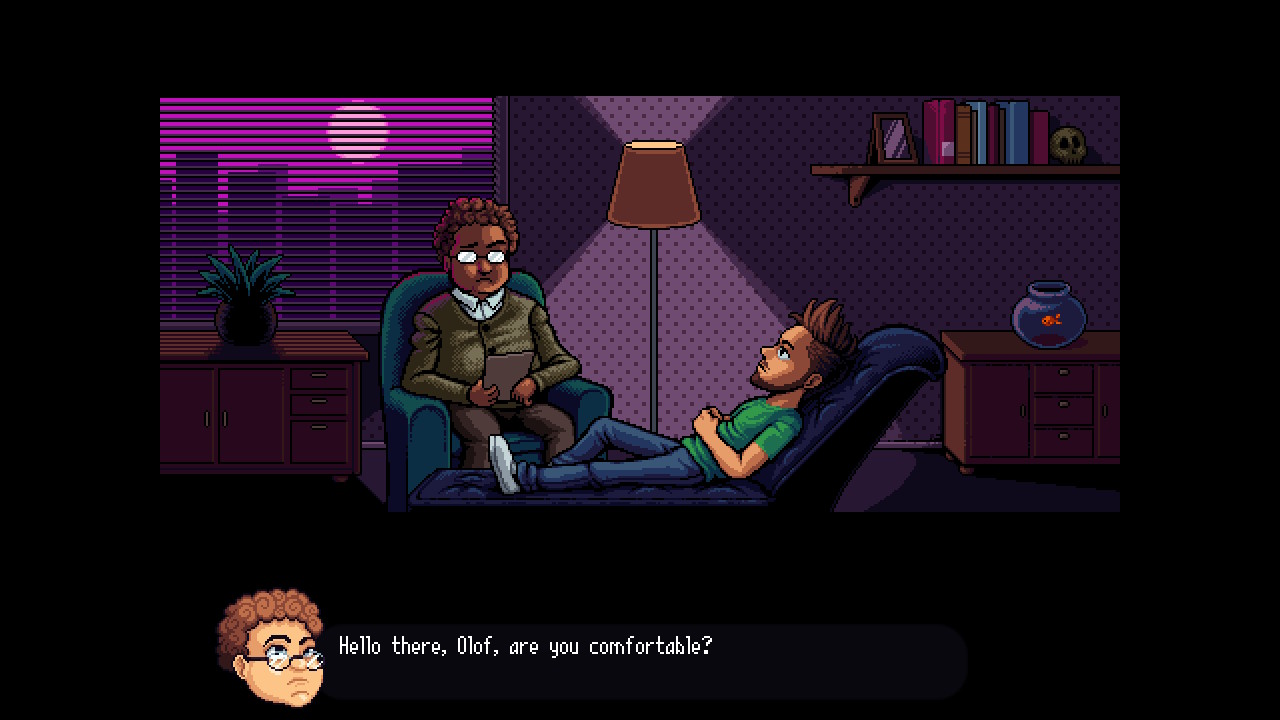
A failed therapy session spirals into a frantic escape through a developer’s collapsing mind! The Prisoning: Fletcher’s Quest is a 2D action platformer developed by Elden Pixels, published by Acclaim, and launched on February 10, 2026 for Steam and Nintendo Switch. Known for titles like Alwa’s Awakening and Alwa’s Legacy, Elden Pixels once again leans into a retro inspired pixel art style and tight side scrolling design. This project, however, is smaller in scope and more experimental in nature. Originally conceived as a prototype in 2020, it has now been fully realized as a standalone release. The result is a concise, platforming focused experience that carries the studio’s signature style while aiming for something more personal. It succeeds in several areas, though it does not fully capitalize on its most interesting ideas.
The narrative centers on anxiety and creative burnout. After a therapy session goes wrong, a struggling game developer named Olof is pulled into a dreamlike version of his own subconscious. Inside this mental prison, his fears and frustrations manifest as enemies, environments, and bosses. The premise is framed as being rooted in real experiences, giving the story a layer of authenticity beneath its absurd presentation. Tonally, the game blends introspection with overt humor. Characters frequently break the fourth wall, and the script leans into crude jokes and exaggerated scenarios, including full frontal pixel nudity and sequences built around drug use and sexual humor. The writing often lands, and there is genuine wit in its self awareness, but at times it pushes a little too hard and becomes cheesy or absurdly juvenile. The contrast can be entertaining, though occasionally uneven.
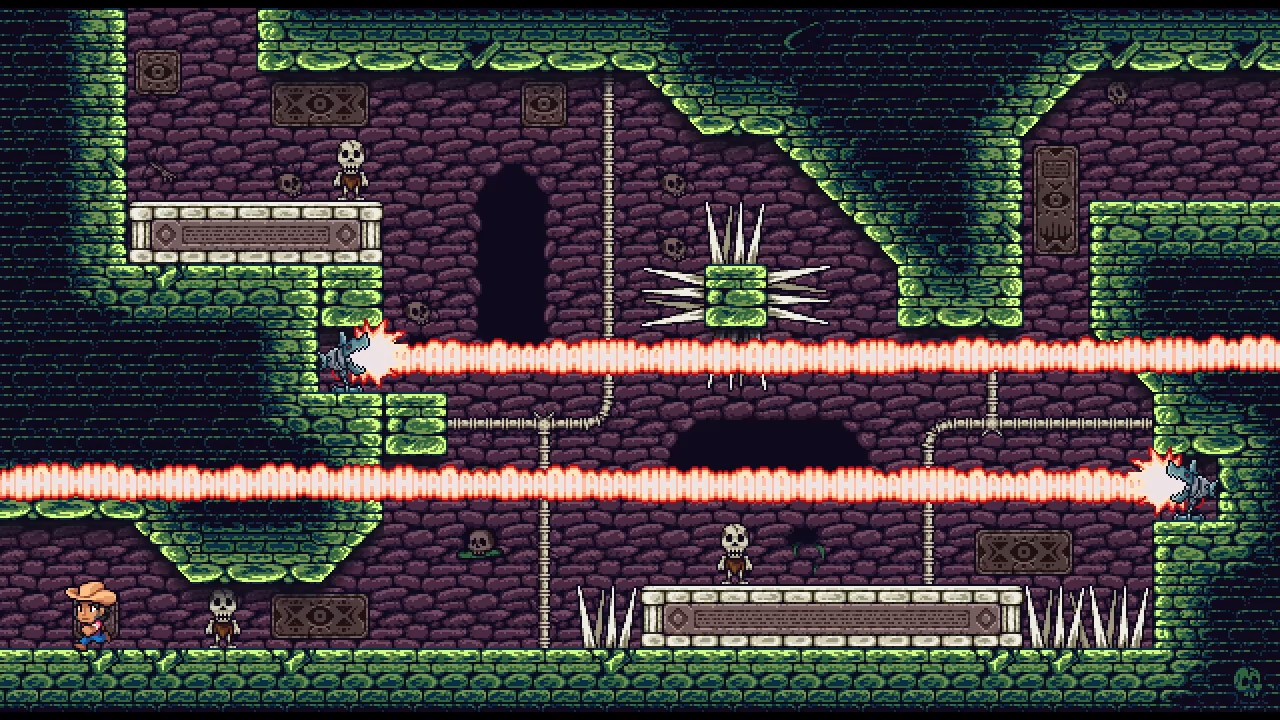
Structurally, the game follows the typical loop you would expect a game like this to have. You progress through a sequence of challenging rooms filled with traps and enemies, reach a save and warp point, and eventually confront a boss. Defeating that boss unlocks a new ability, which allows access to the next section. While this framework resembles a metroidvania, the overall design is far more streamlined. Exploration and backtracking are minimal, and you can complete the game in roughly three to four hours on a first playthrough without worrying about missing substantial content beyond a handful of out of the way collectibles in the form of vinyl records that you can listen to at a jukebox.
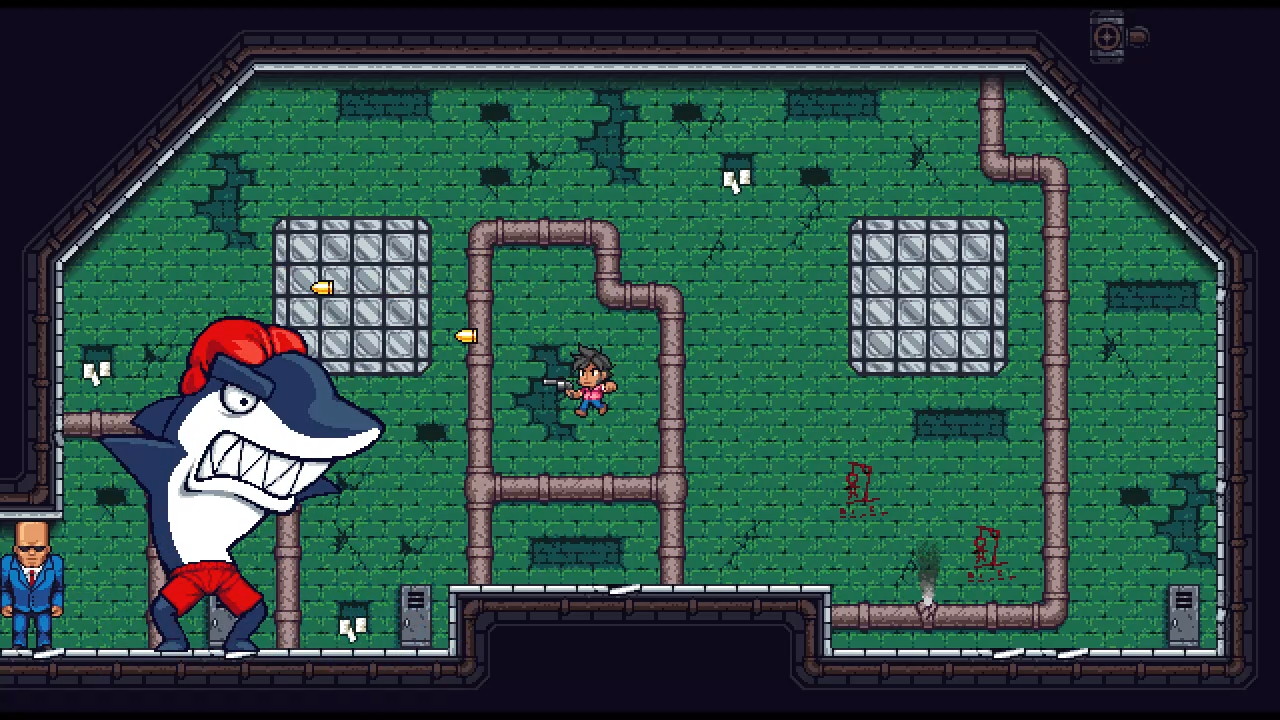
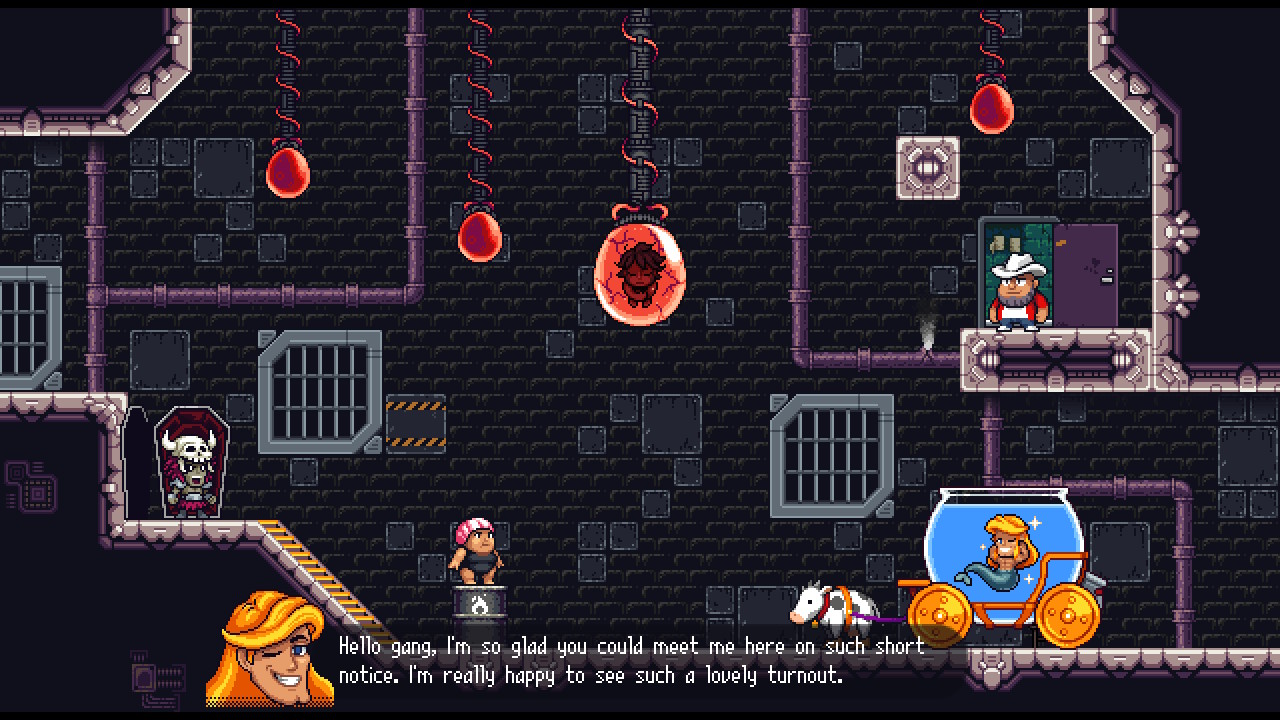
Early on, you obtain a gun that can only have one bullet on screen at a time. If you fire at close range and hit an enemy immediately, you can shoot again without delay. If you miss, you must wait for the bullet to travel off screen before firing another shot. This creates a clear risk and reward dynamic. Playing aggressively allows for rapid attacks, but it also puts you in immediate danger, especially since you can only withstand two hits before dying. In the opening stretch, before acquiring proper clothing and additional tools, the game feels demanding in a satisfying way. Movement and positioning matter, and the checkpoint system reinforces careful play.
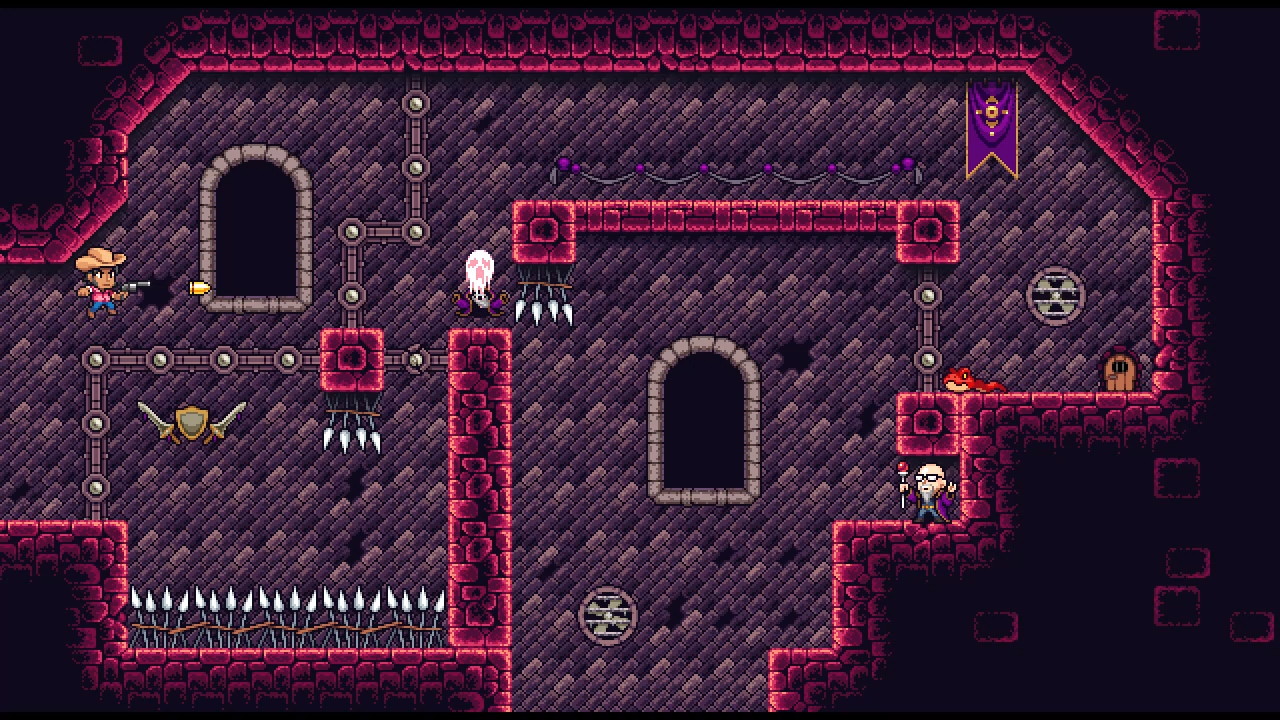
Unfortunately, the mechanic does not evolve as much as it could. The first area integrates enemy variety and environmental hazards in creative ways, but subsequent sections rely on similar patterns. Abilities such as the slide and butt slam provide occasional gating and situational utility, yet they rarely reshape how you approach encounters. After defeating bosses, returning to the hub and interacting with certain characters grants you an extra bullet, effectively removing the single shot limitation. While optional, this upgrade significantly reduces tension. Even without it, the overall difficulty outside of boss encounters declines as you settle into a comfortable rhythm. Once you recognize room layouts and enemy behaviors, you can often move through areas with relative ease.
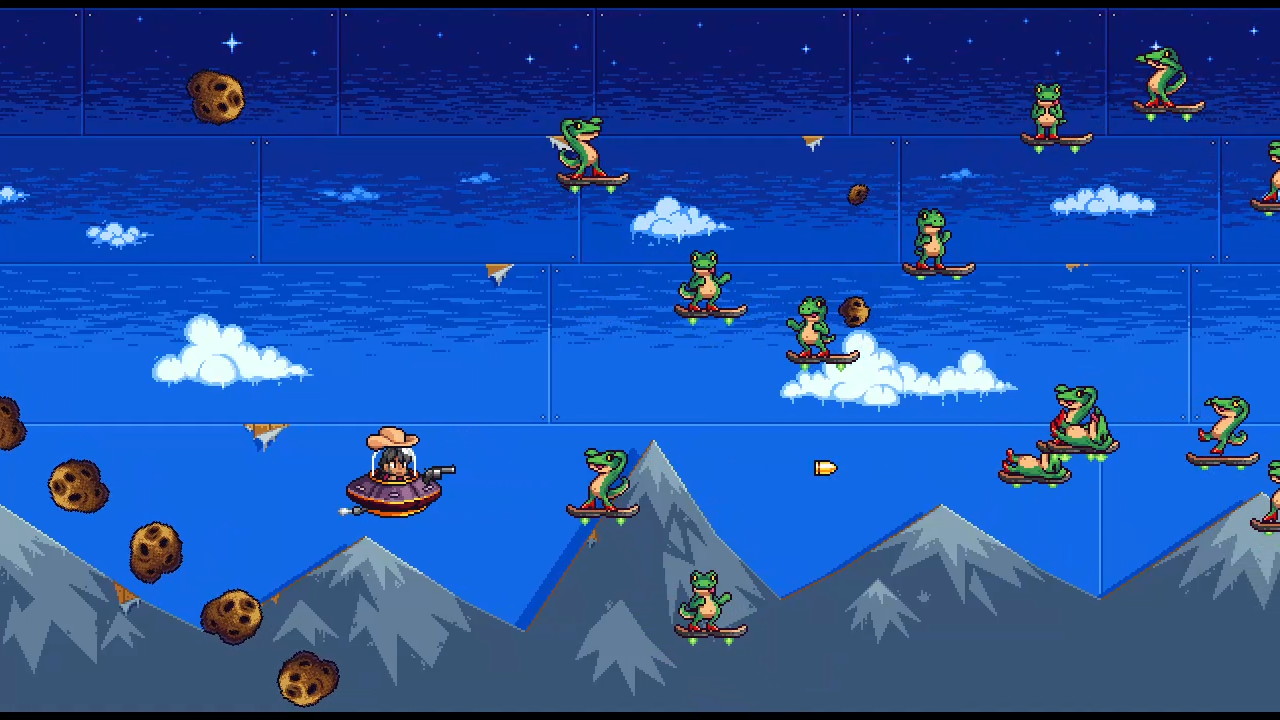
The procedural generation element adds further complexity. Each new save file rearranges the layout of rooms, introducing a degree of variation between playthroughs. In practice, however, the rooms lack enough distinct identity for this reshuffling to feel transformative. The experience remains largely linear, with limited branching paths and only light backtracking for collectibles, of which there aren’t many. Compared to more expansive Metroidvanias, the sense of discovery is restrained. The game functions best when approached as a tightly constructed action platformer rather than a fully realized genre entry.
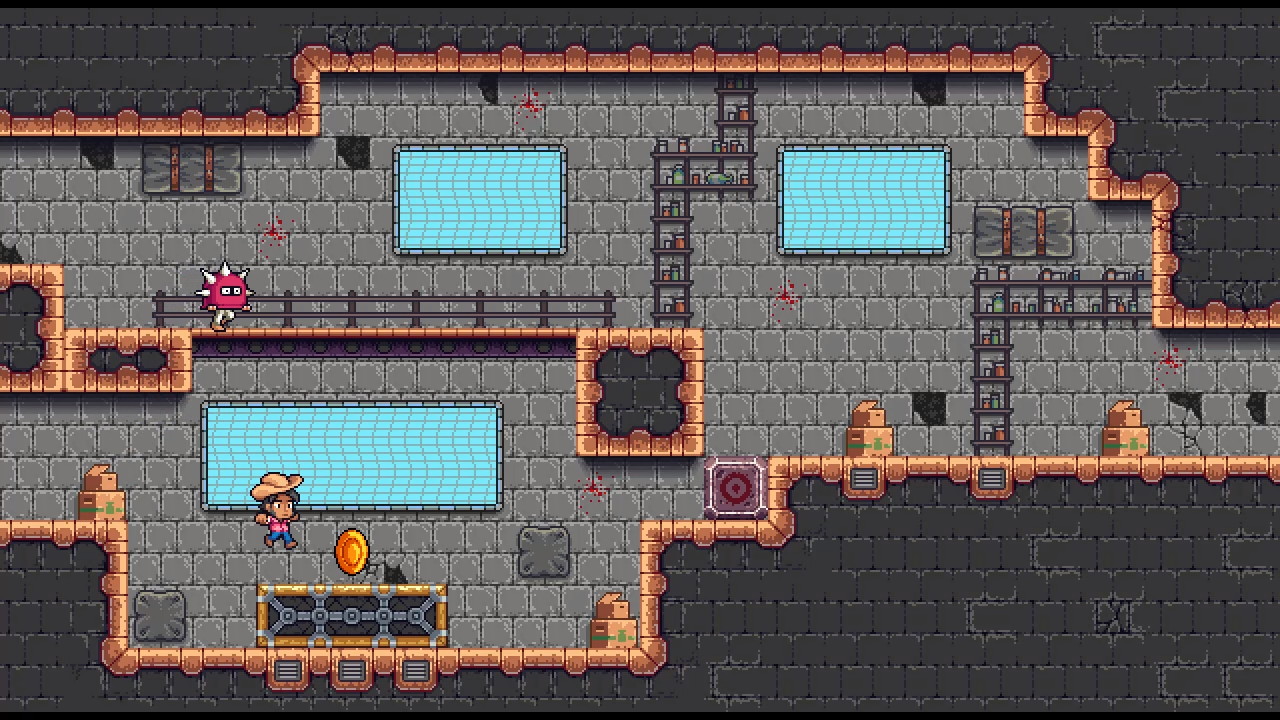
Despite these limitations, the moment to moment gameplay is enjoyable. Controls are responsive, and movement feels precise. Floor spikes, looping corridors, moving obstacles, and a diverse set of enemies keeps the pacing brisk. You encounter ranged foes that fall in a single hit, sturdier cannons that demand multiple shots, wheel bound mice, cars that traverse walls, and creatures that spring from chests. Boss fights stand out as highlights as they demand pattern recognition and deliberate timing, and they inject a welcome spike in challenge. The final encounter in particular leaves a strong impression and closes the game on a conclusive note.
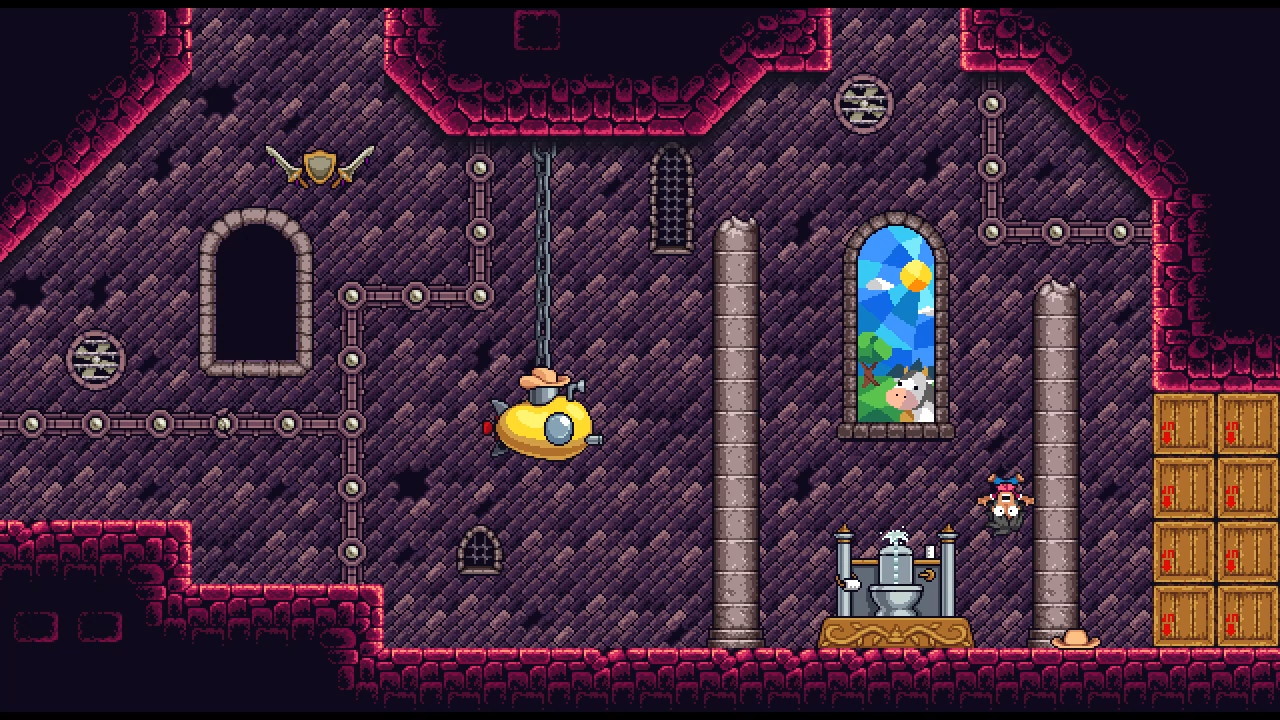
Visually, the retro pixel art is polished and expressive. Character animations, from the subtle bounce of Fletcher’s hat to exaggerated death sequences, add personality. Environmental effects like dust trails during double jumps contribute to a cohesive presentation. Performance on Switch is stable, with no noticeable slowdown or technical issues during my time with the game. The audio complements the aesthetic. The chiptune soundtrack by Dunderpatrullen includes some good tracks, though the primary looping theme can become repetitive over extended sessions. Sound effects are crisp and appropriately retro, which nicely reinforces the game’s tone.
Final Thoughts?
Ultimately, The Prisoning: Fletcher’s Quest is a solid, compact experience that showcases strong fundamentals. Movement feels good, boss encounters are engaging, and the writing has a distinct voice. At the same time, its most promising mechanics are not explored deeply enough, and its metroidvania elements remain surface level. The procedural component adds replay value in theory, but does not meaningfully expand the scope. For anyone seeking a brief, well controlled action platformer with personality, it delivers. For those expecting a robust, sprawling metroidvania, it may feel underdeveloped. It is a good game that hints at something greater, even if it never fully reaches that potential.

About the Author

Nay Clark Gaming holds a special place in my heart and I never stop talking about video games. I really love all types of games and have an interest in games that have complicated stories and lore because I enjoy untangling the mystery of it all. When I'm not gaming, I unsuccessfully try to control three amazing and incredibly bright kids.
Related Posts

Hunt the Night Review (Switch) →

Star Wars: Dark Forces Remaster Review (Switch) →
Paranormasight: The Mermaid’s Curse Switch Review →