

The Heart of Noir: Stephan Franck Reflects on PALOMINO’s Final Chapter (Interview)
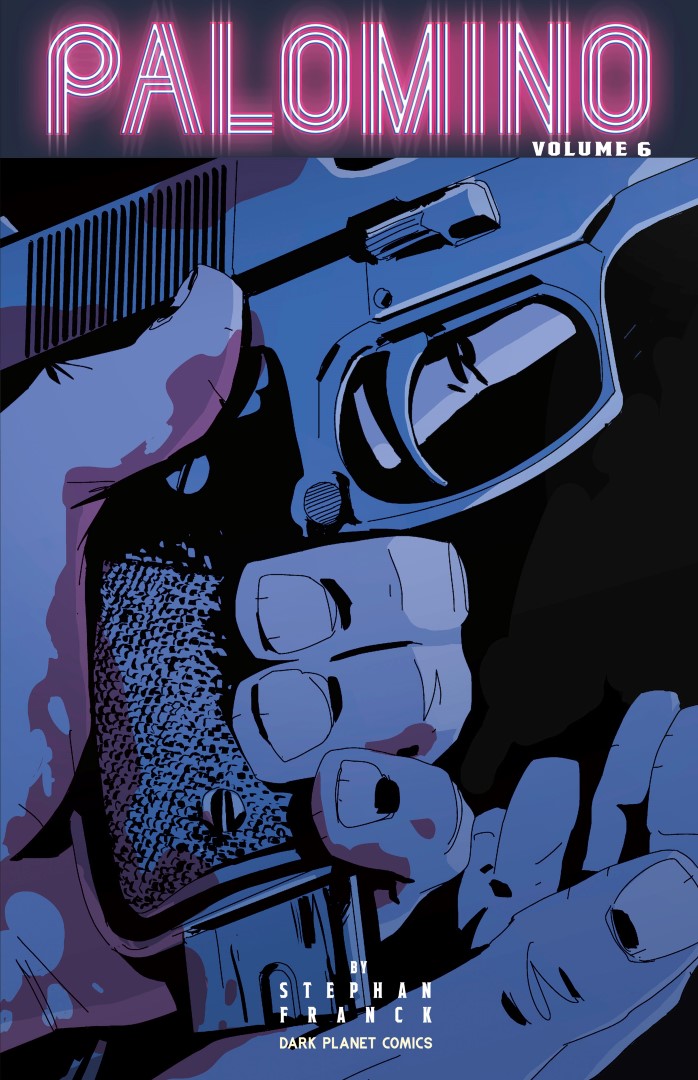
With PALOMINO, Stephan Franck set out to tell a noir story rooted not just in crime, but in family, memory, and the emotional scars that shape us. Spanning the honky‑tonk bars of 1981 to the dawn of the digital age in 1995, the series has become a deeply personal work for the veteran animator and storyteller. In this exclusive interview, Franck talks about the real‑life experiences behind the book, the cultural history of the Palomino Club, and the final night that brings the entire saga full circle.

How personal history shaped the final volume of PALOMINO
Palomino draws from personal experiences—playing in clubs, living, working, and raising children in the Valley—as well as my fascination with neo-noir and mysteries. But on some level, all my stories end up being about family—Silver was a take on blended families, families by choice, and Palomino examines the nature of the parent–child relationship from both points of view.
Like young Lisette, I lost a parent at an early age and was the kind of child always looking for more agency than my age would allow. And like Eddie, I’ve raised amazing daughters who were always very powerful people and old souls in their own right, so I feel deeply connected to both characters.
Blending LA noir with 1980s honky‑tonk culture
Not many people know that Los Angeles used to be a huge country music town and had a vibrant club scene, with the Palomino at its center. That alone gave me a chance to revisit the L.A. noir tradition in a new and unique way.
But beyond the subcultural setting, the Palomino existed at the crossroads of cultural influences of global significance. For 50 years, from Roy Rogers to Ronald Reagan, the Cowboy was the icon by which America sold itself to itself and to the world—and it all came from California: some from the Hollywood studios, some from the Rand Corporation, and some dreamt up over a beer at the Palomino Club.
On any given night, you could have found John Belushi drinking with Jerry Lee Lewis, or a Beatle or a Rolling Stone hopping on stage unannounced, while Burt Reynolds sat up front and Governor Jerry Brown sat in the back. Whether anyone understood it or not, the Palomino was one of the nerve centers of American power, and yet it was a world at the end of its run—a world about to change.
In that context, Eddie and Liz represent what’s permanent: an unbreakable family bond, a need for truth and justice, and the inability to let things go when they’re not sitting right. That’s when noir happens.
The challenge of tying together two timelines (1981–1995)
I often feel that what makes a story feel real is what happens off the page. For Palomino, the key to the 1995 section feeling credible was the 14 years we had jumped over. What had happened in the meantime? How had Lisette reacted, emotionally survived, and rebuilt herself after the events of 1981? Who were the people who gained importance in her life, and to what extent had she really let them in?
That applied to the other key characters as well—Mac, Lori, and to some extent Terry. Fourteen years we never see still needed to make sense both logically and emotionally, represented only indirectly through the characters’ behaviour when we find them again in 1995.
The obsession at the heart of PALOMINO
The central obsession is Liz’s irrepressible need to find out what happened to her mom. It’s the same impulse that drove Eddie. That obsession almost cost him everything at the time of Lena’s disappearance. When another murder hits too close to home, he can’t help but get involved, which proves to be a fatal mistake.
At the beginning of the series, Liz is desperate for answers and even makes bold moves to get them, but she’s just a kid and lacks the agency to solve a crime. That unresolved mystery still looms years later, when circumstances lead her to reopen the investigation. Just like her dad, she puts everything on the line.
Evolving Eddie and Liz’s father–daughter dynamic
There is a fluid dynamic between them around who’s the parent and who’s the child. Eddie has to raise a strong-willed teenager alone, and knowing when to give her space and when to rein it in is a constant struggle. He must also contend with the loss and unsolved mystery of his wife’s disappearance, which has shaped both their lives.
Eddie and Liz are very similar creatures—naturally close—but he feels the need to shield her from parts of the case, creating a wall between them as Liz grows more desperate for answers and he begins to spin out of control.
By the end, Liz is the adult in charge. She has the agency she lacked as a child. She will reopen and solve the case her father couldn’t, or die trying. Long-lost truths may come out, but Liz must do more than survive—she must step out from under her parents’ shadows and be reborn as an adult.
How animation shaped the visual language of the final chapter
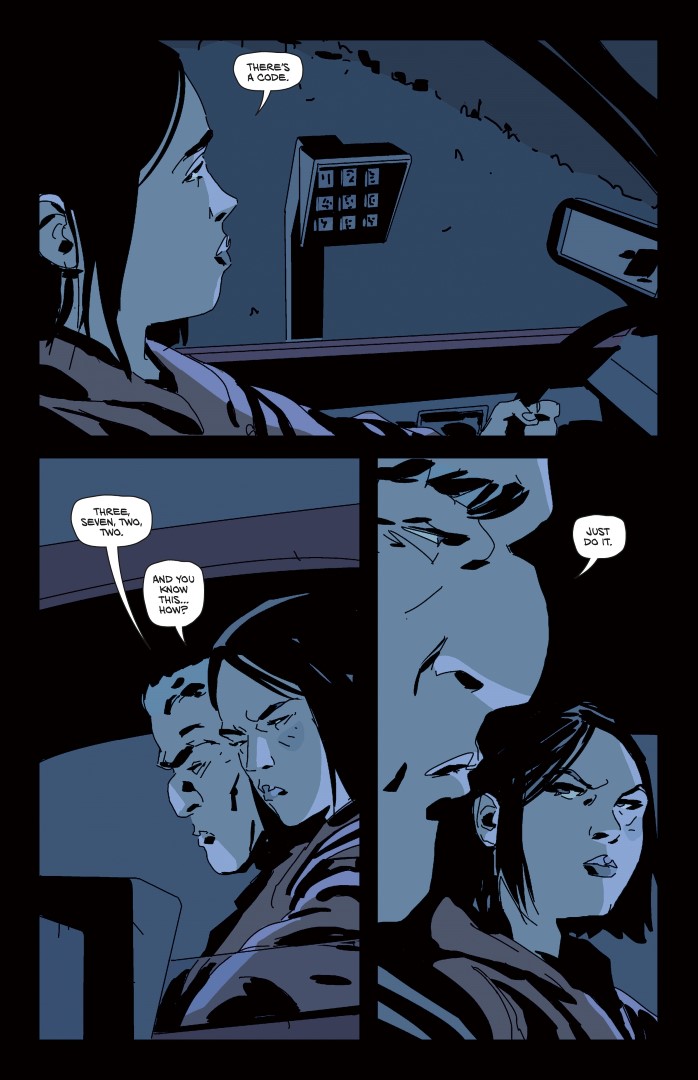
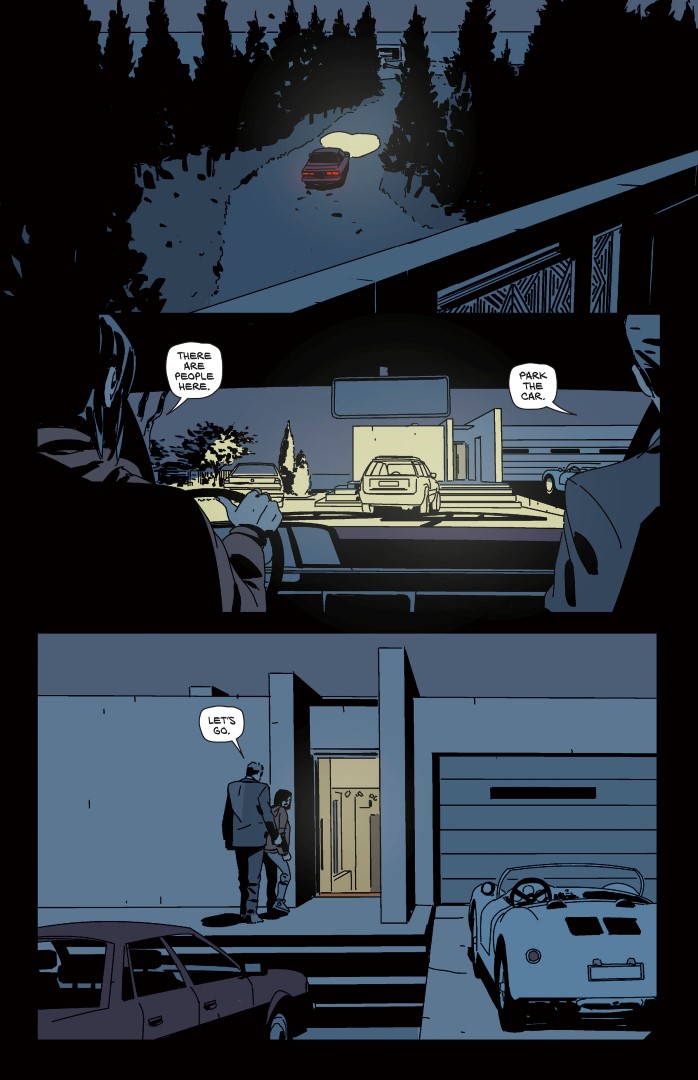
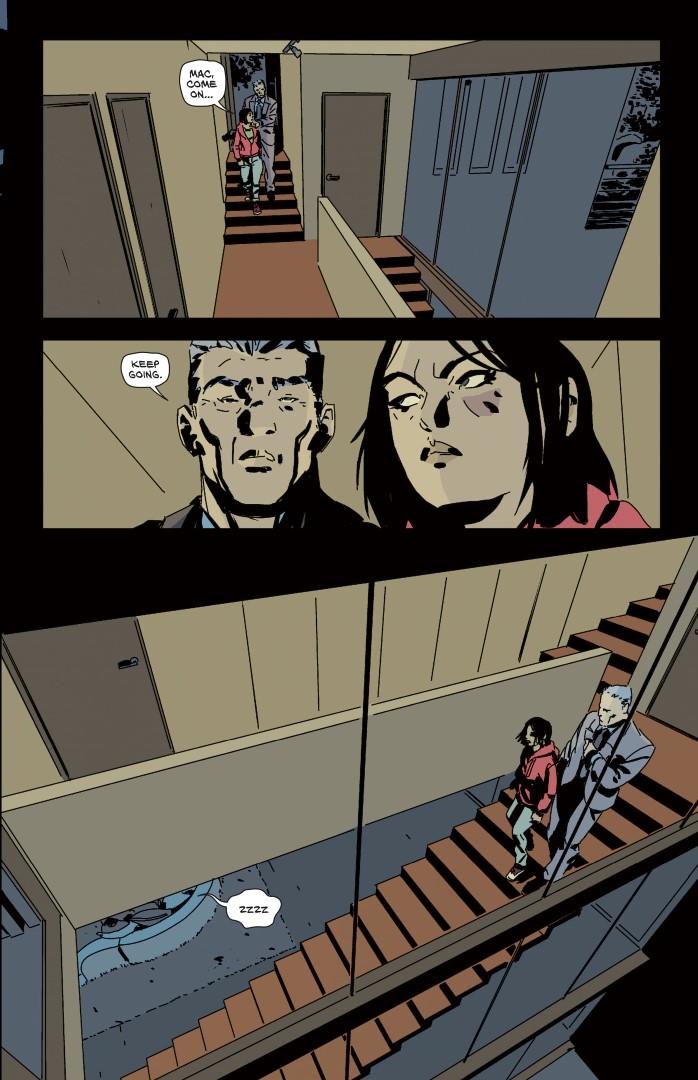
I always try to fuse my favourite aspects of comics and animation into my comics work. I try to make each page unique so it exists as its own artistic statement, not just a succession of panels. At the same time, I put as much film language as possible on the page so it has universal clarity and emotional impact—people often say my books feel like “reading a movie.”
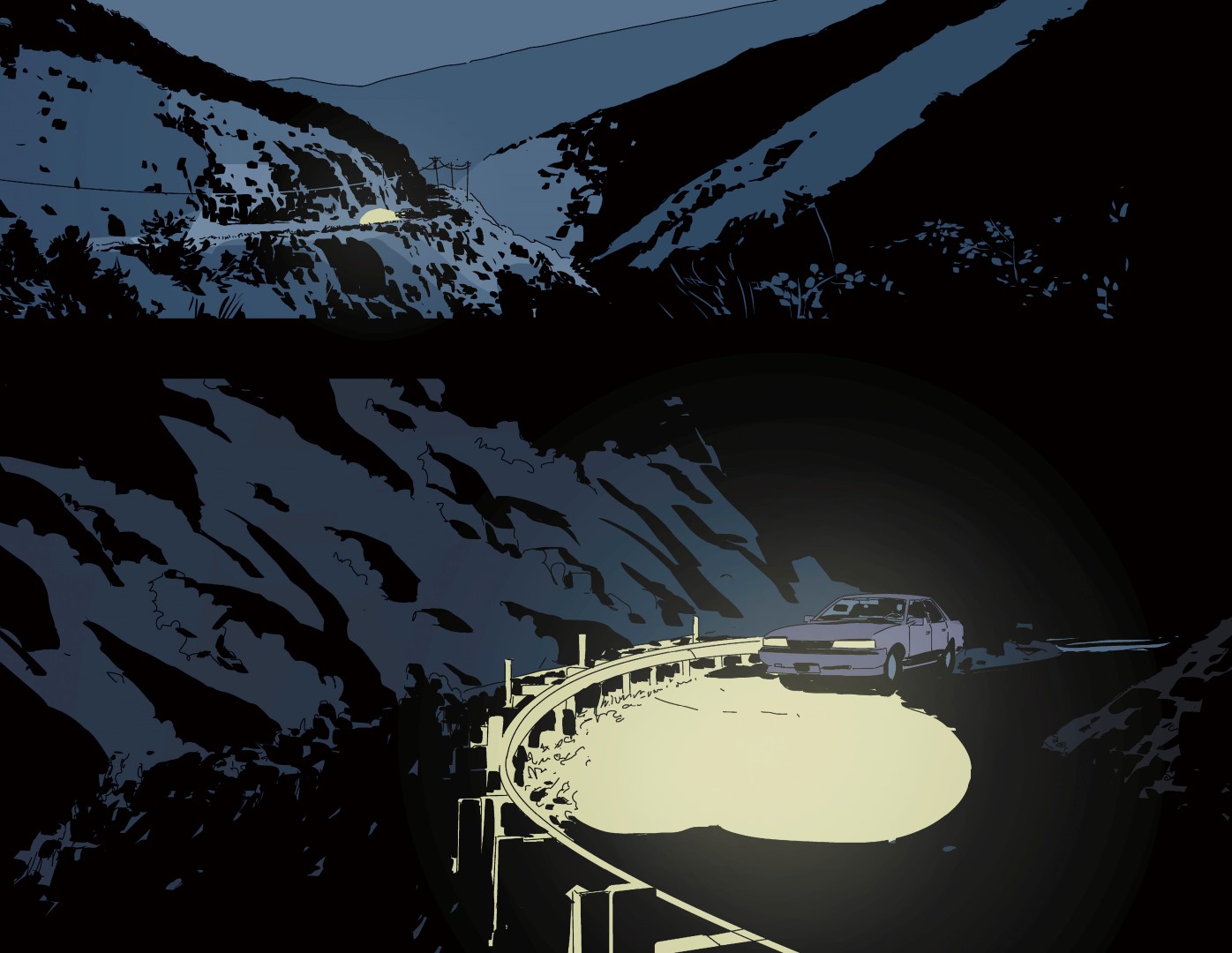
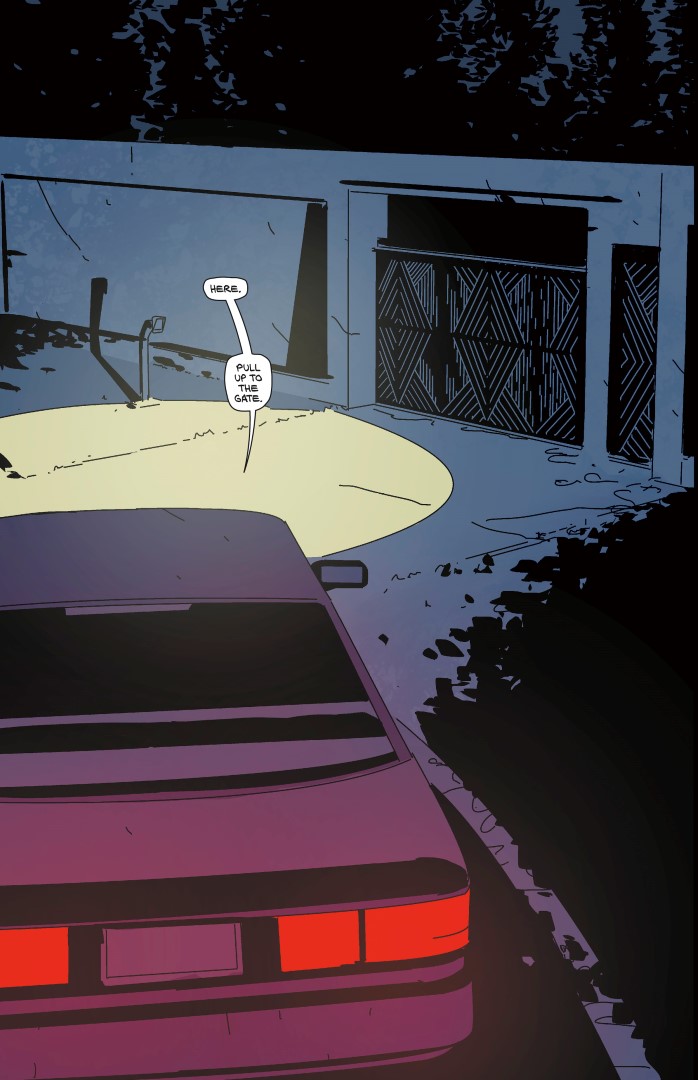
In this final chapter, the story unfolds in continuity and in real time—from 10 p.m. to dawn—as we follow Liz on one final night during which she will solve the case or die trying. It’s a rollercoaster of emotions and revelations, and I’m riding the characters’ experience through that night. In that sense, it’s very much like animation, where you track characters’ acting with great detail through continuous time.
What readers may carry with them from PALOMINO
There is a great tension in life between tradition and change, and Los Angeles is a place where that tension plays out dramatically. Eddie and Liz are steeped in several great American traditions, yet the world is constantly shifting under them.
The story begins in 1981—the club’s high watermark—and ends in 1995 as it closes forever. Similarly, 1995 marks the onset of the digital revolution—something Liz, a contrarian, struggles to embrace—and the free weekly newspaper she works at is about to be pushed aside by Craigslist.
But through it all, their resistance, stubbornness, and moral compass represent the human connection that endures through time, loss, and change. They’re the thread we’re all hanging on by.
Kickstarter’s role in shaping PALOMINO’s finale
Direct connection with readers is my favourite part of doing comics—whether at store signings, conventions, or on Kickstarter. It’s amazing to see my stories become part of other people’s mindscape.
I don’t write to please anyone—not even myself—I just try to tell the story in the most true and fun way possible, and I think that’s what people respond to.
Direct access to the audience, or “controlling the last mile,” also gives an amazing perspective on what the economy really is. At a time when it’s easy to feel small and powerless, grassroots distribution is a reminder that true economic power comes from the people, a few crumpled dollar bills at a time.
A personal favourite from a lifetime of work
It’s hard to choose a favourite because I approached all my work with the same earnestness and passion. To keep moving forward, you have to separate yourself from past work so you can become obsessed with the next thing—it’s like chasing the horizon.
So instead of a favourite, I’ll point to something unique: over twenty years ago, I produced the late Archie Francis’s only album, Money In The Bank. Archie was a California music legend, the house drummer at the Palomino for 40 years, and ACM Drummer of the Year for 11 years in a row.
By the time we became friends, his drumming days were mostly over, but he turned out to be an amazing songwriter—a true cowboy poet with a wicked sense of humour. The album features incredible musicians and Palomino alumni like Jay Dee Maness on steel, and the late guitar legend Al Bruno on his final recording. It was an honour to help bring that project to life.

https://www.kickstarter.com/projects/darkplanetcomics/stephan-francks-complete-palomino-graphic-novel
About the Author

Andrew Bistak When he's not trying to save the world, Andrew enjoys travel (although loathes turbulence), going to the movies, reading and being a dad to his two dogs (and now twins) with his wife.
Related Posts

Bryan Adams Interview: The Art of the Toys That Made Us →

Blood of The Dawnwalker: Crafting a New Dark Fantasy Saga (An Interview with Piotr Kucharski from Rebel Wolves) →

Jordan Mechner Interview: LIBERTY & the Prince of Persia! →