The Drama – Film Review
Reviewed by Damien Straker on the 2nd of April 2026
VVS Film presents a film by Kristoffer Borgli
Written by Kristoffer Borgli
Produced by Ari Aster, Lars Knudsen, and Tyler Campellone
Starring Zendaya, Robert Pattinson, Mamoudou Athie, Alana Haim, Hailey Gates, Zoë Winters, and Jordyn Curet
Cinematography Arseni Khachaturan
Edited by Joshua Raymond Lee
Music by Daniel Pemberton
Rating: MA15+
Running Time: 105 minutes
Release Date: the 2nd of April 2026
Minimal spoilers ahead
Norwegian filmmaker Kristoffer Borgli’s new film defies easy categories. It resembles a rom-com but is loaded with dark humour, tension, and psychology. It solidifies the promise of Borgli’s previous film, Dream Scenario (2023). Nicolas Cage played a man who was ‘cancelled’ because he acted violently in people’s dreams. It was a weird fusion of black comedy and social commentary. The Drama, starring Zendaya and Robert Pattinson, is an equally effective cocktail of cultural satire and twisted imagination. It is far bleaker than its quirky poster suggests. Instead, this Ari Aster-produced film probes people’s performative nature and how our perceptions of others radically transform.
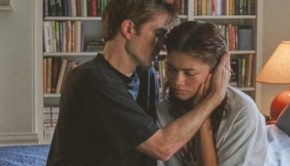
The film opens with an image critical to the plot. It is a close-up of a woman’s ear. Emma (Zendaya), who is reading alone, is partly deaf. Charlie (Pattinson) approaches her and lies about reading the same novel. He soon realises she cannot hear him. The encounter marks an awkward start to their courtship. Two years onwards and they are almost married. Their friends, Mike (Mamoudou Athie) and Rachel (singer and Liquorice Pizza’s Alana Haim), are a couple invited to the wedding. Yet when the four of them share a drink something terrible happens. They each reveal the worst thing they have ever done. Emma’s confession is so dark it shakes the ground. Charlie looks at her differently and Rachel angrily withdraws from the wedding. If you are hoping to read what Emma says, think again!
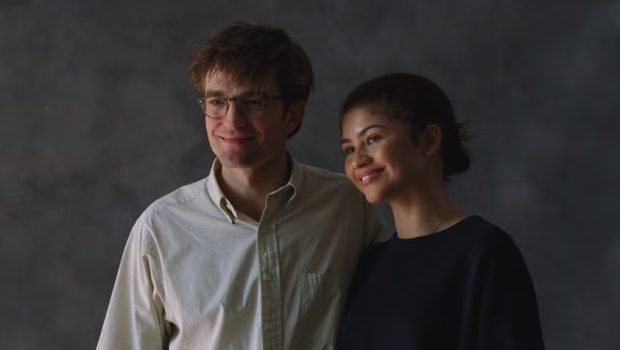
As with Dream Scenario, Borgli’s melding of film genres is endlessly fascinating. A ‘meet cute’ scenario evolves into an unexpected satire of violent American culture and performative activism. Every character is merely an actor. Charlie looks up Emma’s book on his phone and pretends to have read it. Later, he and Emma force smiles while taking their glossy pre-wedding photos. In flashbacks to Emma’s childhood, something truly evil is narrowly avoided only because of another chance encounter. Her political activism thereafter emerges strictly because of peer pressure rather than her own goodwill. The film skims across gender, hypocrisy, and self-empowerment. Yet Borgli is most concerned about perception and whether intent and thought are as meaningful as real action.
Borgli finds unique ways to visualise his theme of perception. The images grow weirder as Charlie’s view of Emma deteriorates. For example, the past and present overlaps. He shows the adult Charlie walking arm in arm with Emma’s younger self. In a chilling nightmare, the two adults are seated in a luxurious restaurant. Emma’s ear starts bleeding profusely, so it streams down onto her dress. There is also a tense moment where Charlie is startled because Emma stands in a doorway brandishing a kitchen knife. Mundane objects, including a coffee mug, remind him of her disturbing confession. These scenes are both suspenseful and funny. The visuals dramatise Charlie’s hysteria and obsessiveness. He is tortured by Emma’s supposed volatility, which makes the proceedings funnier.
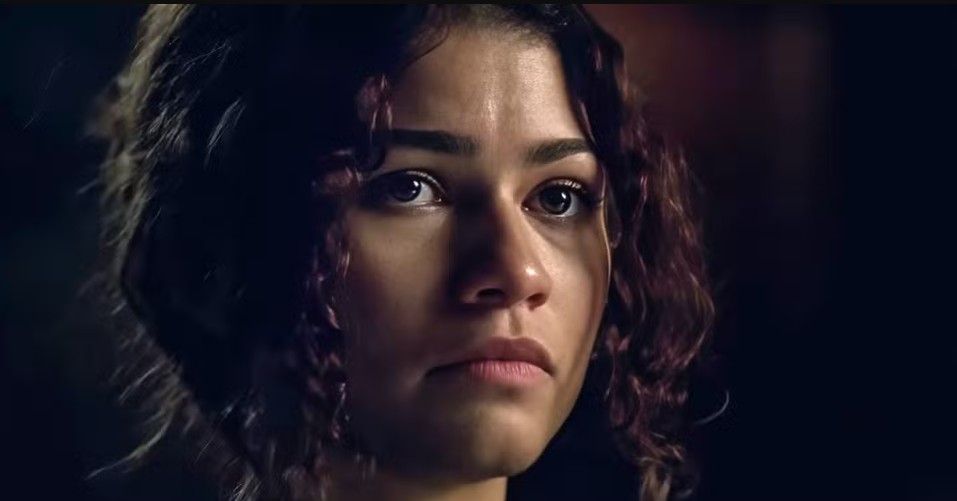
The director draws strong, unconventional performances from his cast. Early on, Pattinson is predictably twitchy, weird, and dishonest. Yet Charlie is the one most affected. He is more emotional compared to Zendaya’s Emma who quietly internalises her difficult past. Charlie is weary of her aggression. She is wounded by being feared instead of loved. Their excellent, gender subversive performances are complemented by memorable side roles. Zoë Winters’ expressions as the wedding photographer are hilarious. Alana Haim as the bitter, eye-rolling Rachel is funny too. She is offended because of a deep personal grievance. Mamoudou Athie is calming as Mike who tries mediating the situation. In short flashbacks Jordyn Curet makes the young Emma lonely when people bully her. As Charlie’s co-worker, Hailey Gates turns one office conversation into a memorable moral debate and more!
What is most impressive about The Drama though is how Borgli marries cringing social situations with psychology and even horror. As with Dream Scenario, these genre elements build scenes by applying pressure to the characters. The story hinges precariously on its suspense as everyone confesses their sins. The couple’s perceptions change, their friends grow distant, and everyone makes terrible choices. Borgli unearths unique images and fun wordplay to enrich the personal conflict. The internal battle is also humanised by two of today’s most mesmerising young actors. The film is admittedly exhausting as it brings its couple down. Yet it is impossible to ignore such a deliberately provocative, funny scenario. It will have people debating whether action and intent equally define us.
Summary: An effective cocktail of cultural satire and twisted imagination. It will have people debating whether action and intent equally define us.
4
Suspenseful
About the Author

Damien Straker is a freelance writer and film critic. He studied at the University of Sydney and graduated with an Arts Honours degree in Film Studies. He is a pop culture aficionado and enjoys talking about all films, 90s TV shows, ninjas and watching Rugby League. His favourite film directors are Alfonso Cuarón, Clint Eastwood and Alexander Payne.
Related Posts
The Drama – Film Review →
The Magic Faraway Tree – Film Review →
EXIT 8, the Japanese cult phenomenon lands in Australian cinemas April 23 →