
Shadowgate VR: The Mines of Mythrok Review (PSVR2)
Summary: Stepping into this VR dungeon crawler puts you directly in the heart of a dangerous fantasy world. You explore traps, solve clever puzzles, and wield magic while navigating dark corridors and hidden secrets. With a mix of methodical exploration, combat, and guidance from your raven companion, it delivers a challenging and immersive adventure from start to finish.
4
Dwarven Depths
Classic adventure design takes on new weight when you are physically inside the dungeon itself. Shadowgate VR: The Mines of Mythrok arrives on PlayStation VR2 as both a revival and a reinvention. What if you could finally step inside one of the most infamous fantasy adventure games of all time? Developed by Zojoi in collaboration with Azure Drop Studios and published by Zojoi, the game originally launched on Meta Quest in 2021 and later on PC VR, before making its long-awaited PSVR2 debut on December 9, 2025 after a delay aimed at polishing the experience. Rather than remaking the 1987 point-and-click original directly, this version builds on the 2014 Shadowgate remake and reimagines it fully for virtual reality, transforming its classic dungeon-crawling DNA into a first-person VR adventure that emphasizes exploration, puzzle solving, and atmospheric immersion.
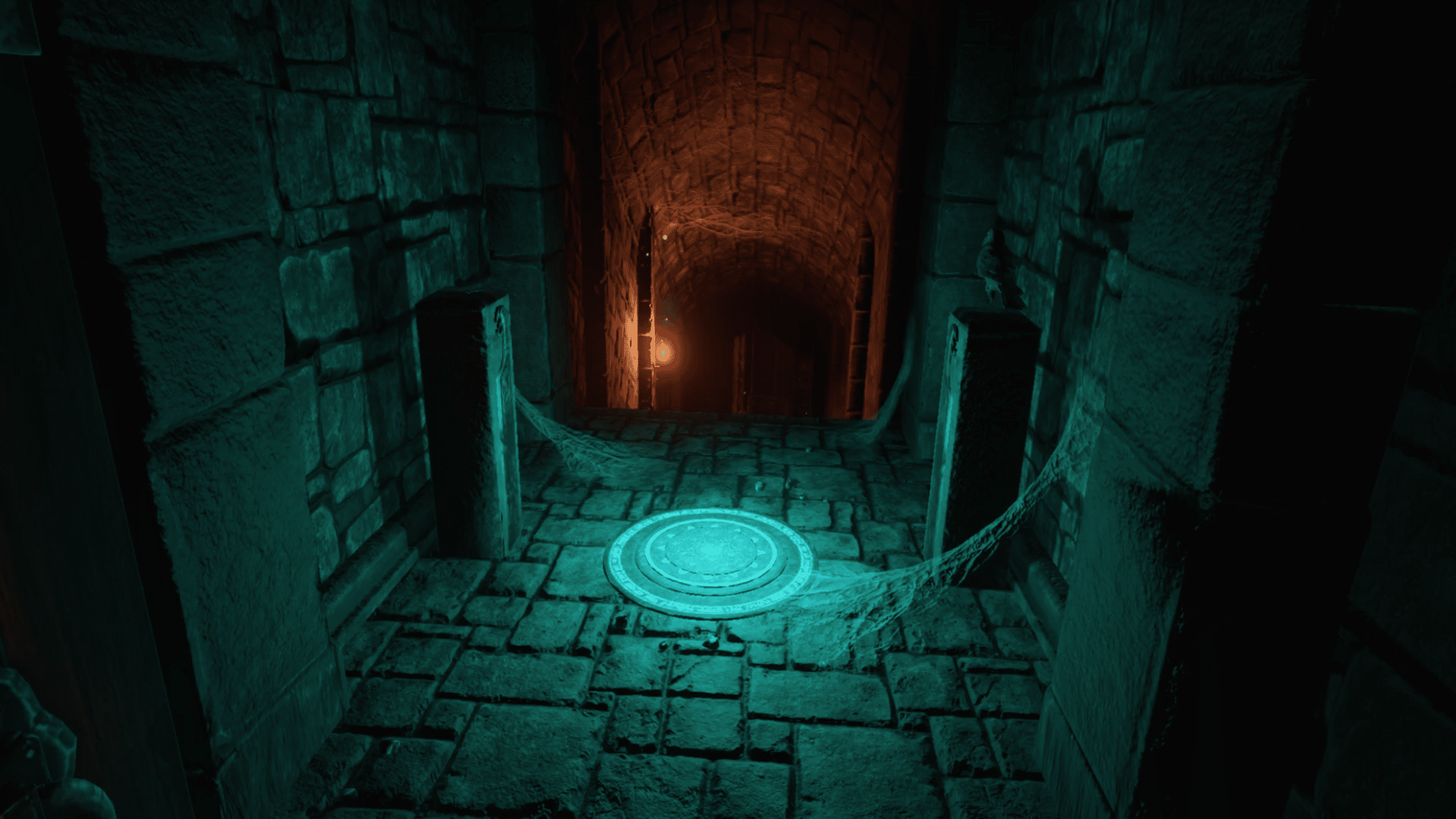
The Mines of Mythrok retains Shadowgate’s identity while reframing how you interact with it. You play as a lone sorcerer summoned by Lackmir the Timeless, a powerful wizard of the Circle of Twelve, to stop Talimar the Starless, an exiled sorcerer attempting to escape his prison and unleash shadow magic upon the realms. Your journey takes you deep beneath the mountains into abandoned dwarven mines, guided by Odin, Lackmir’s raven familiar. The narrative unfolds steadily through environmental storytelling and constant character interaction, with Odin offering commentary, guidance, and sarcastic quips, while Talimar taunts you from the shadows. It’s a simple setup, but one that keeps momentum through consistent narration and a persistent sense of threat, even if it’s clear this is only the opening chapter of a larger saga rather than a fully self-contained epic.
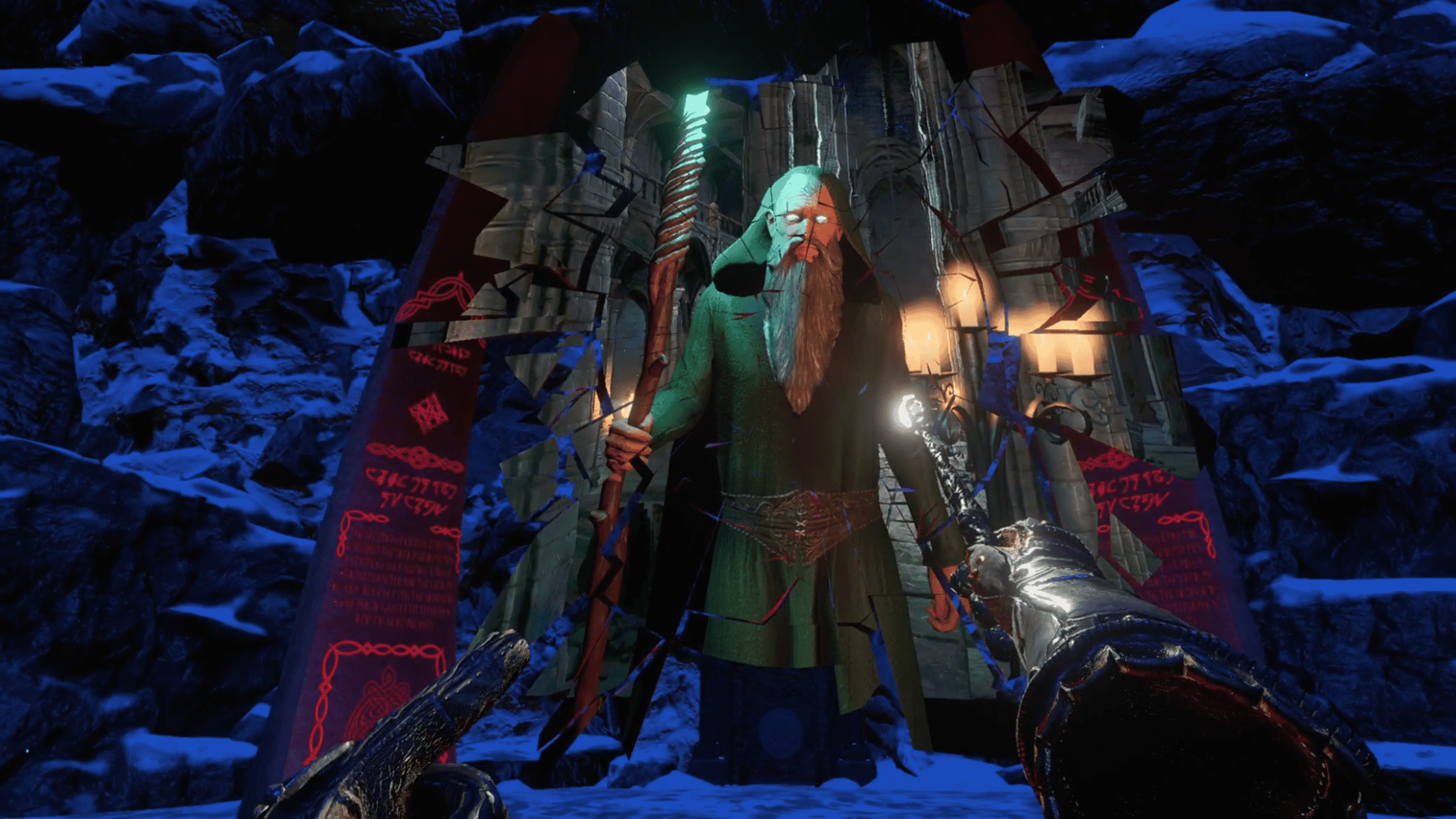
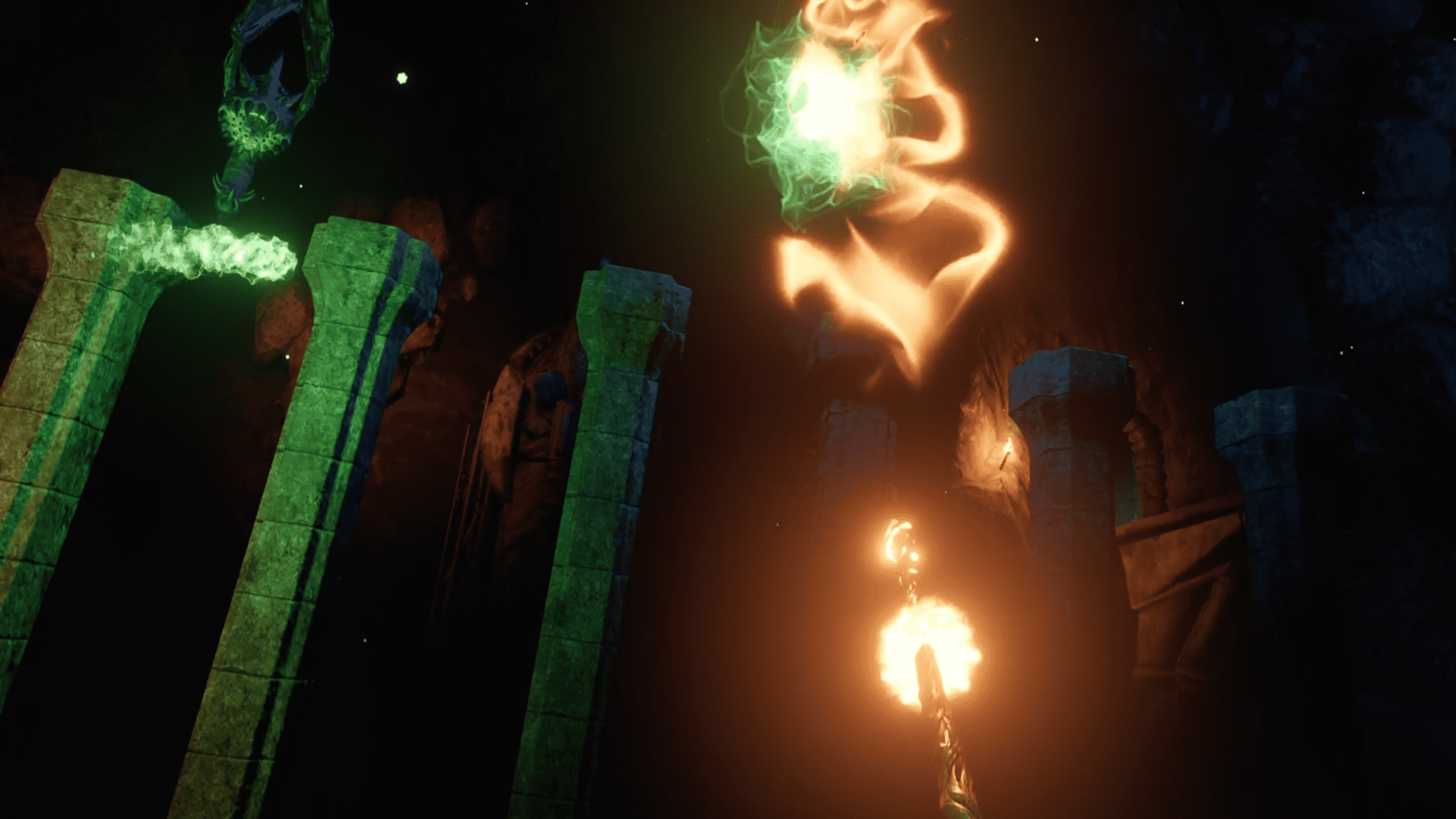
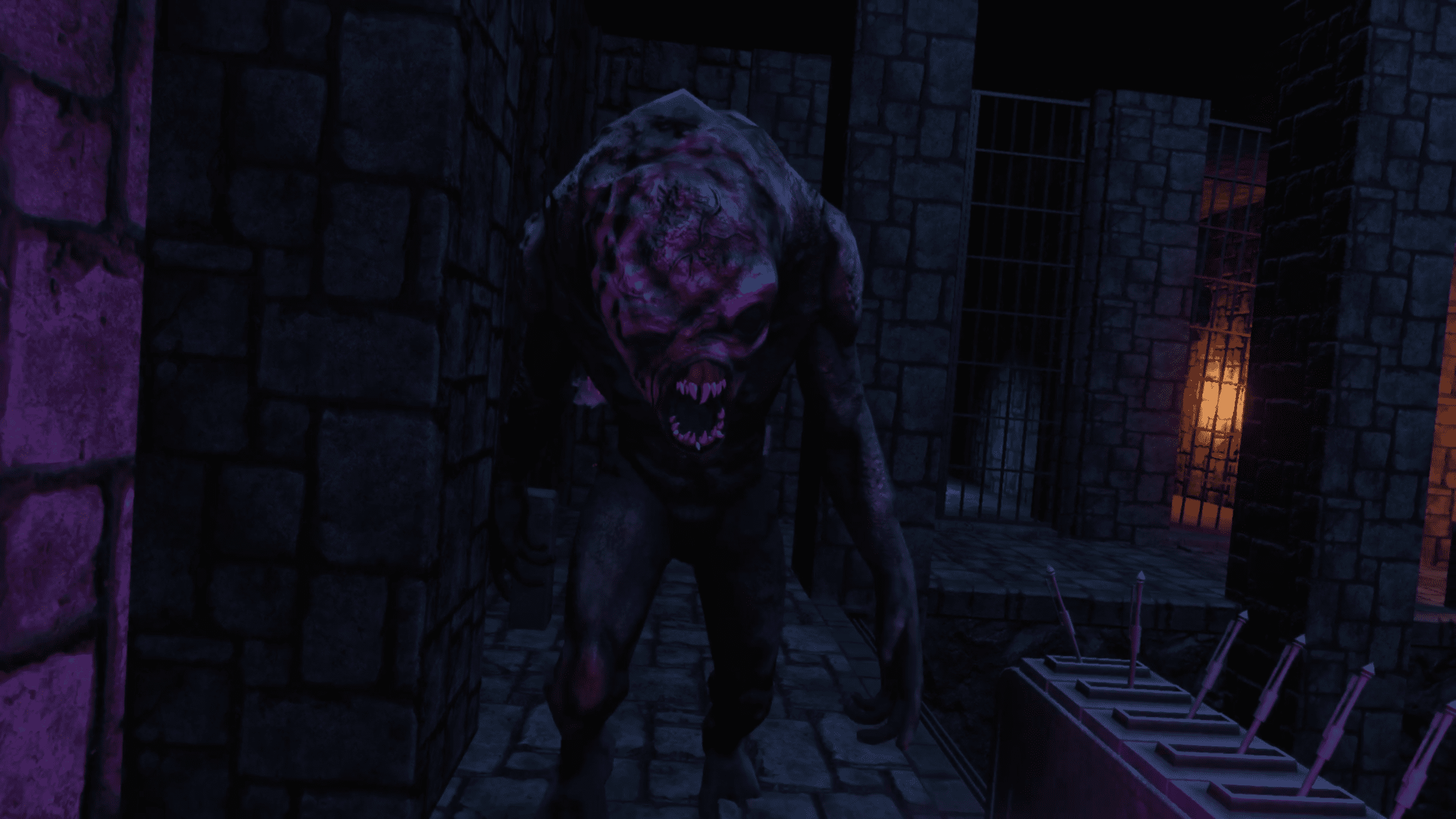
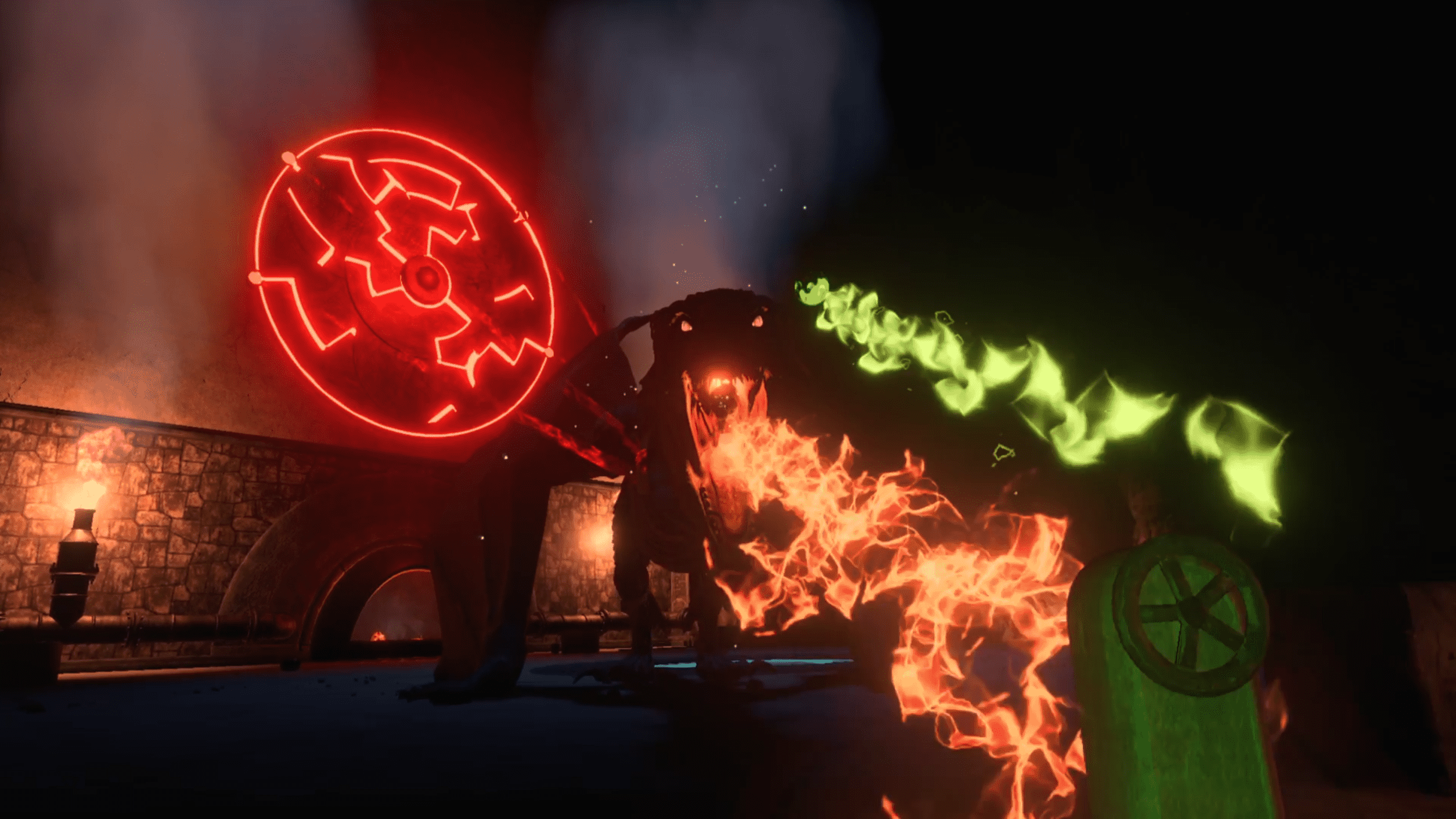
Gameplay leans hard into old-school dungeon crawler sensibilities, just filtered through modern VR design. You explore claustrophobic corridors and cavernous chambers, searching for keys, hidden switches, and secret pathways while carefully navigating traps that can quickly send you back to your last save. Combat is straightforward. Your magic wand fires elemental projectiles and a summoned shield blocks incoming attacks. Enemies range from spiders and slug-like creatures to flying demons and bat-like monsters, varied enough to keep encounters from feeling monotonous even if the underlying mechanics remain simple. Combat rarely demands complex strategies, but surprise attacks and cramped spaces can still punish careless play, reinforcing the game’s cautious, methodical pace.
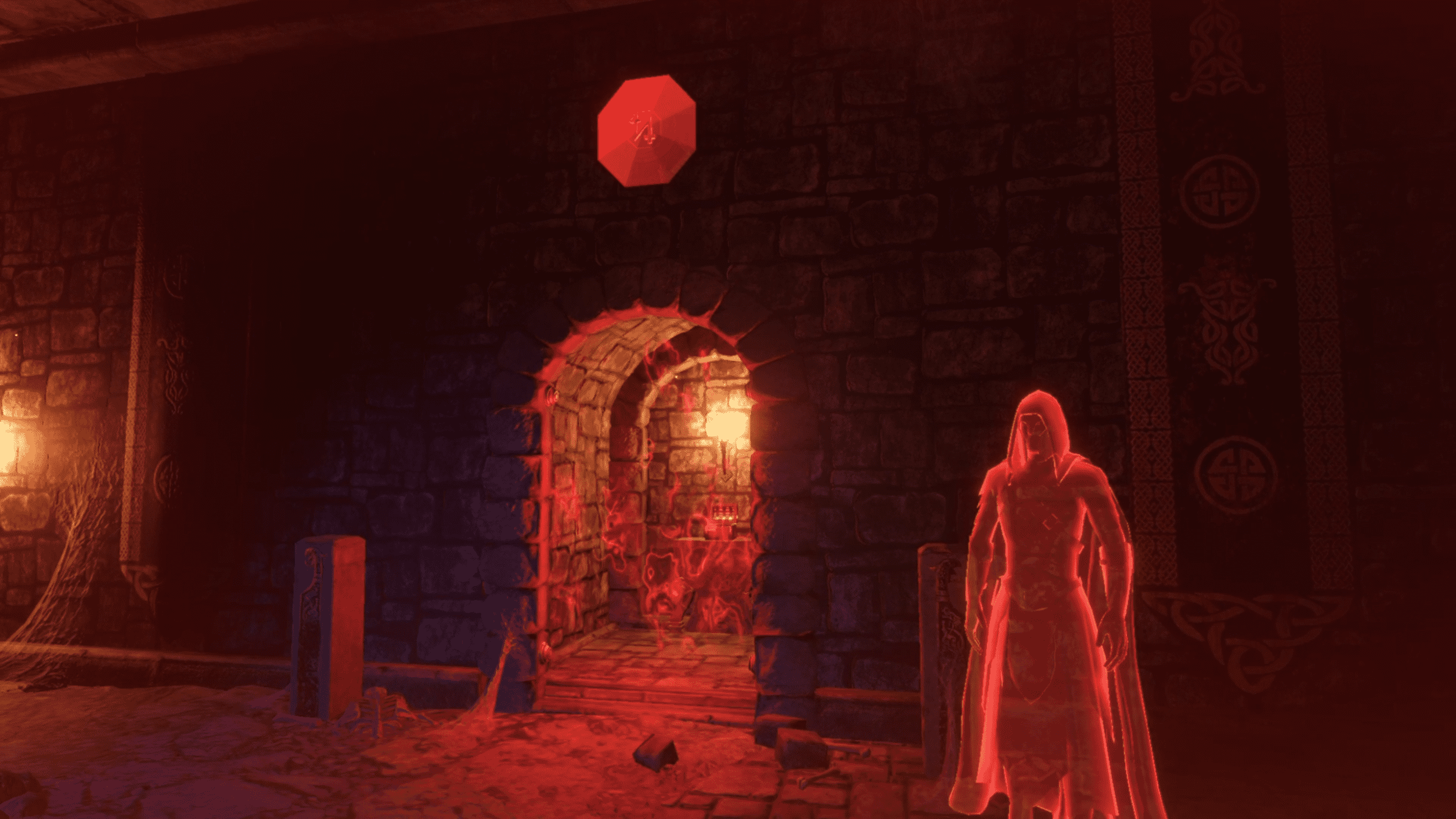
Odin is central to how everything ties together. At the press of a button, you can call him to your side, link with his vision, and scan rooms for traps, hidden objects, or obscure puzzle elements. He also serves as the game’s built-in hint system, offering guidance when you’re stuck, assuming the audio behaves as intended. This raven-eye perspective is more than a novelty; it’s a crucial mechanic that feeds directly into puzzle design, exploration, and pacing. Many challenges are built around information you simply wouldn’t notice without using Odin properly, making him feel less like optional assistance and more like a core part of your toolkit.
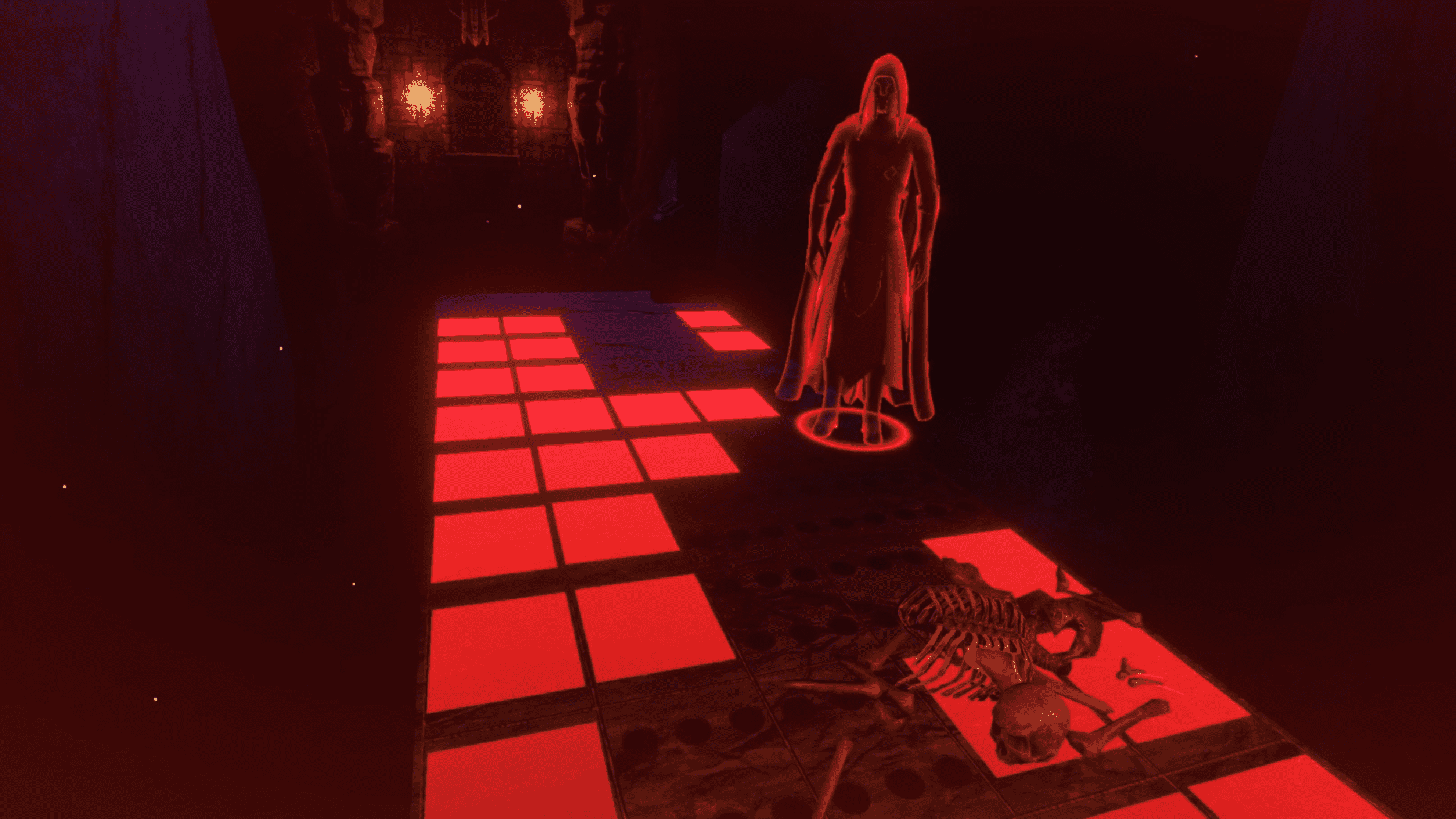
The Mines of Mythrok is built around its puzzles. They’re varied, frequent, and smartly integrated into the environment, asking you to manipulate runic stones, dodge timed magical barriers, coordinate lever pulls, climb chains, and weave through trapped hallways under pressure. Some puzzles mix traversal and timing, forcing you to move quickly or teleport precisely before hazards reset, while others encourage experimentation like burning objects, blasting suspicious walls, or revisiting earlier rooms with new knowledge. The game rarely spells things out, and solutions aren’t always obvious, which can be frustrating in spots but also deeply satisfying when everything clicks. There’s a genuine sense of discovery here, especially for those who are willing to comb every room for secrets.
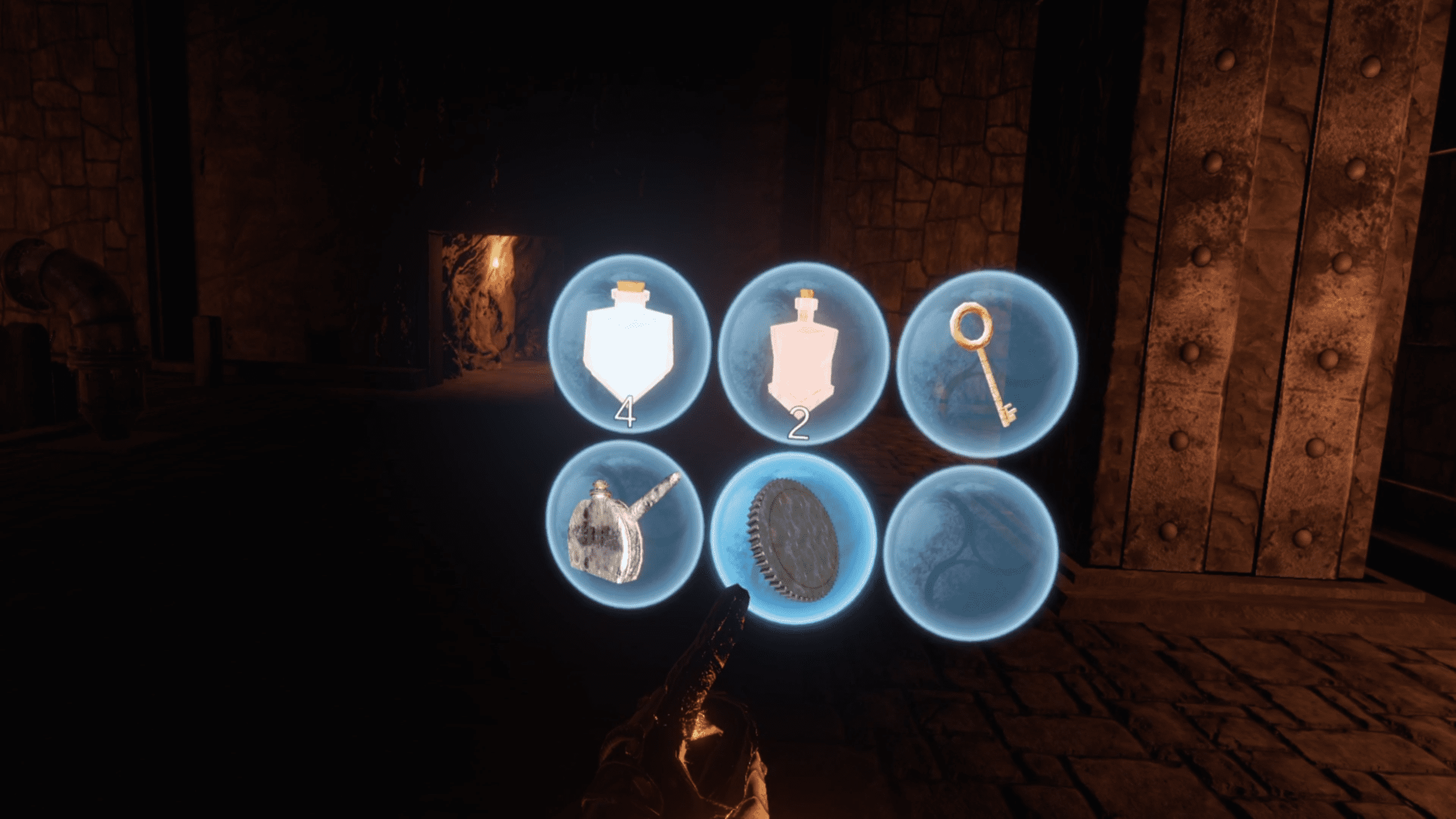
Movement and VR implementation are largely thoughtful, if occasionally awkward. The game supports smooth locomotion and teleportation simultaneously, and while teleporting is optional early on, it eventually becomes required for certain puzzles which is a design choice that can catch you off guard. Saving is handled through rune circles scattered throughout the mines, but the process isn’t clearly explained, requiring you to stand still for a few seconds before progress actually locks in. These systems work once you understand them, but the lack of clear onboarding leads to unnecessary trial-and-error early on. That said, the comfort options are extensive, including customizable turning, movement speed, seated or standing play, height adjustment, dominant hand selection, and even a “silly spiders” mode that replaces realistic arachnids with cartoonish alternatives for arachnophobic players.
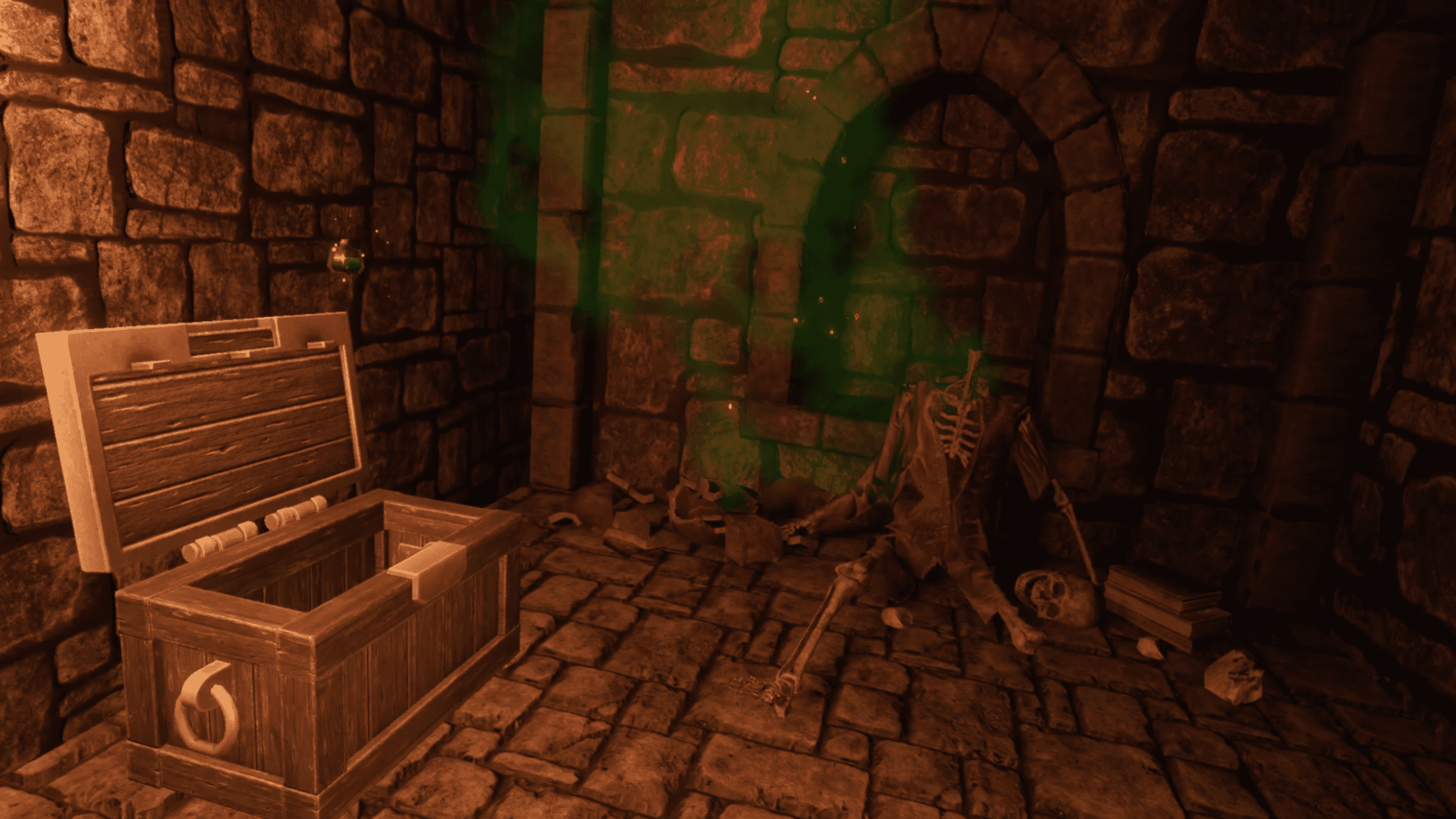
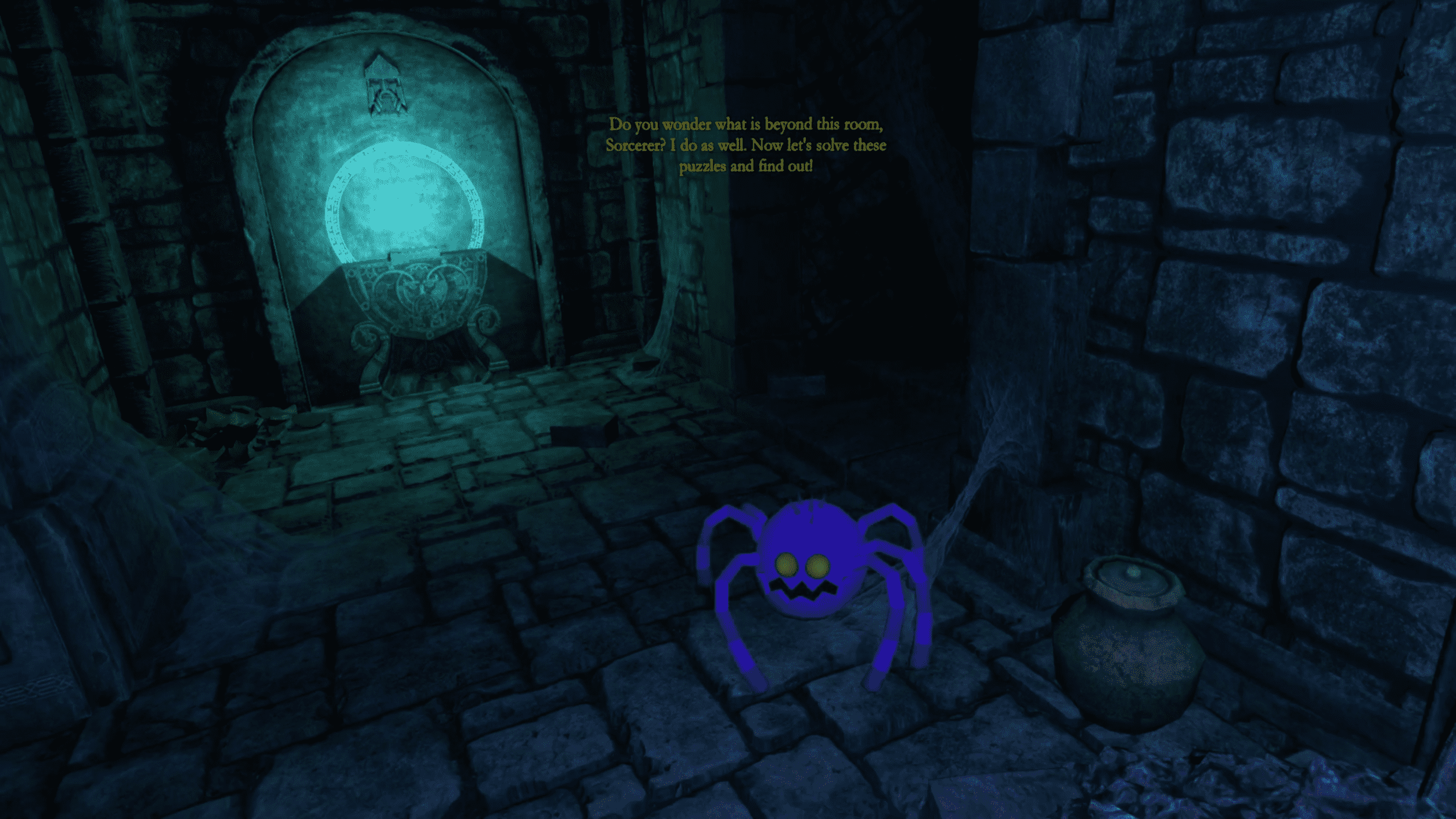
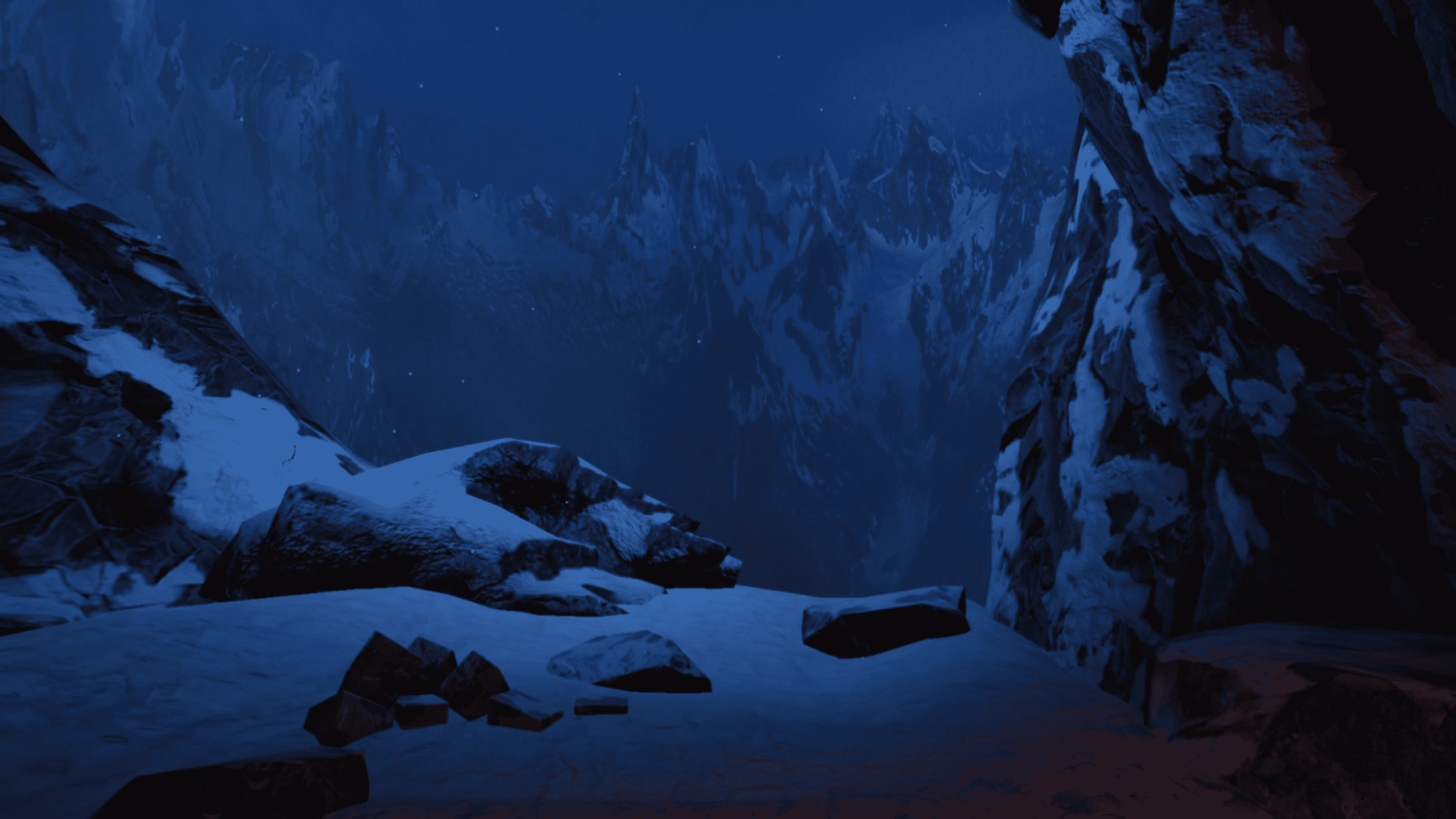
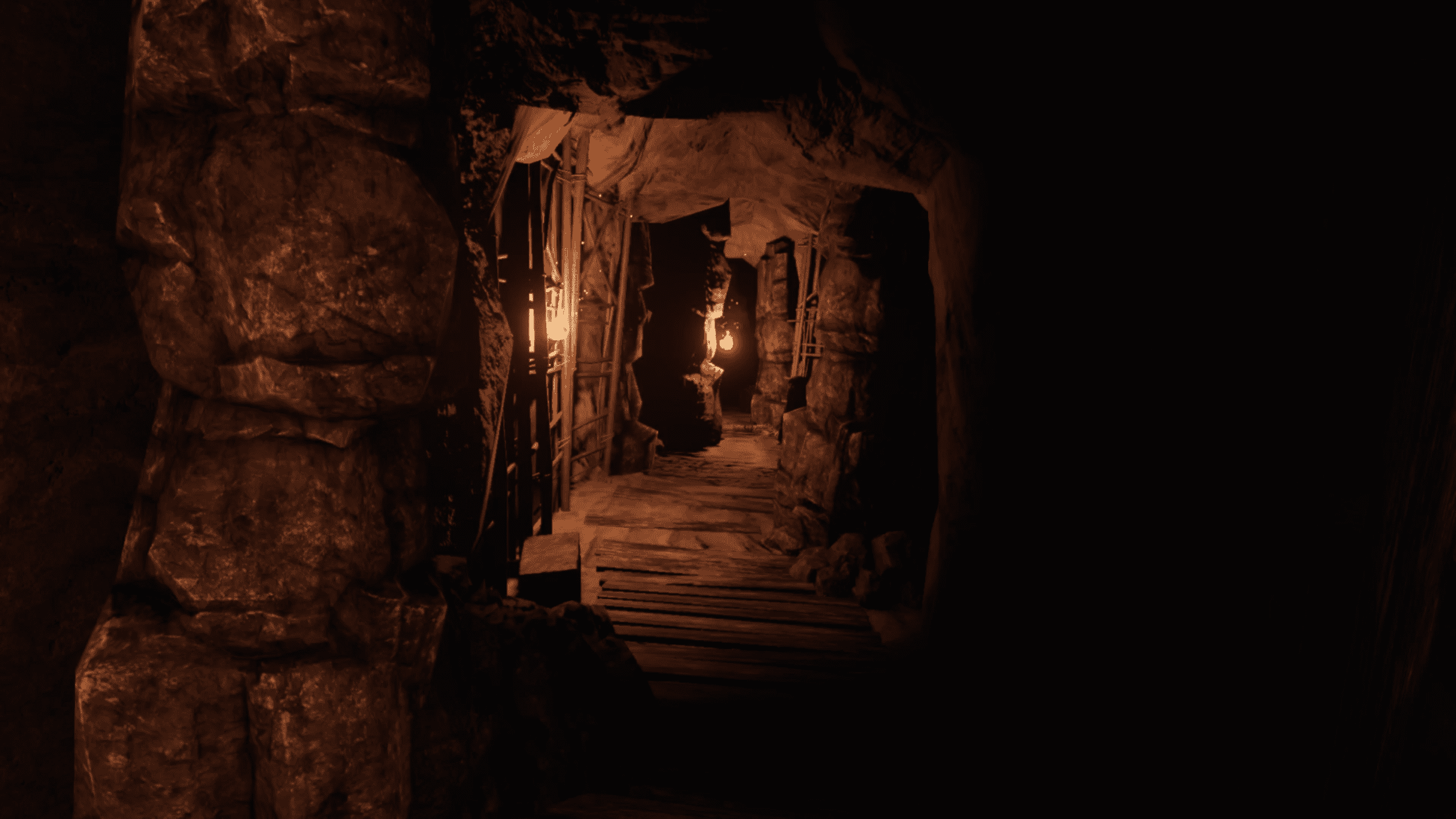
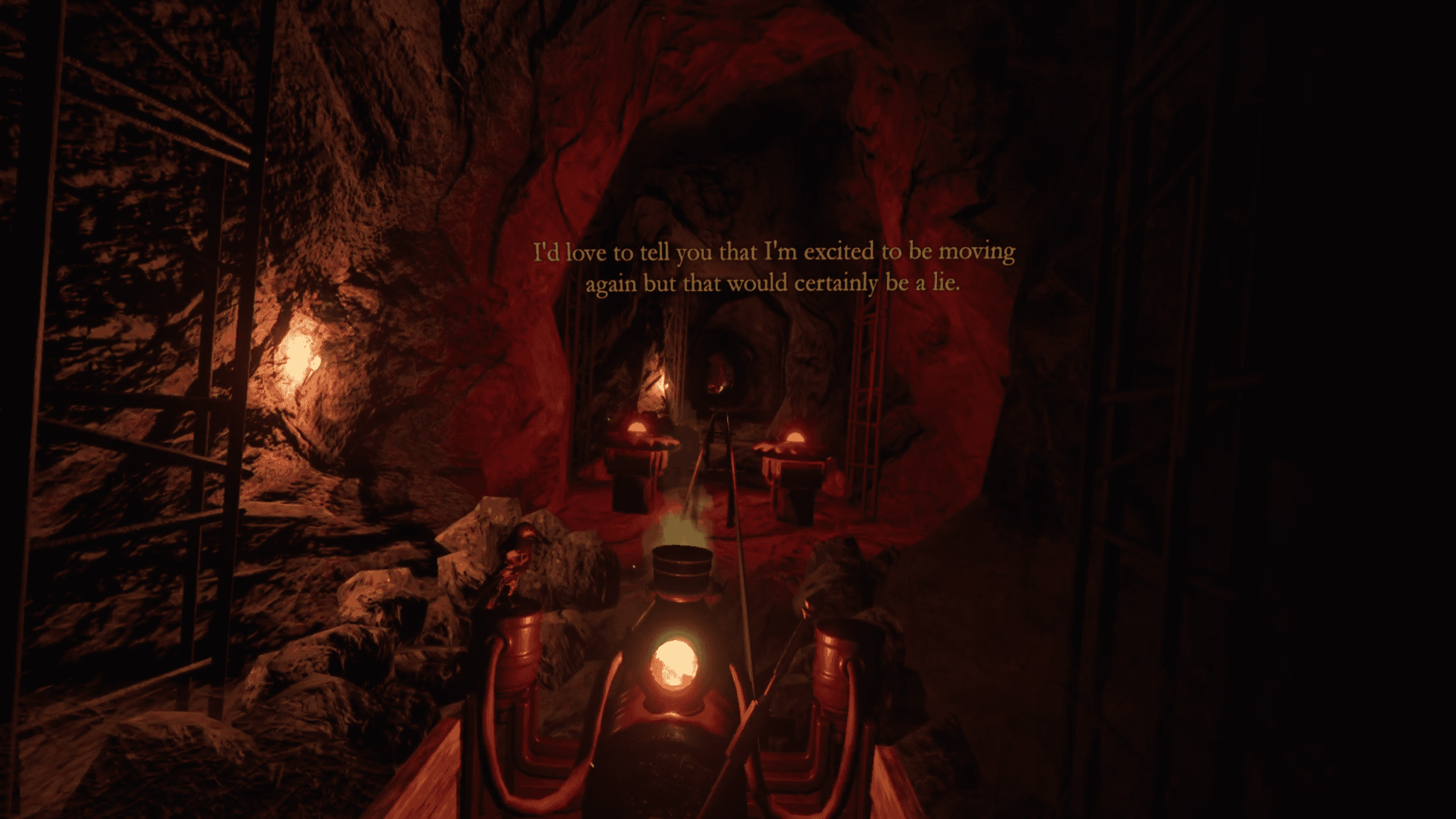
Visually, the PSVR2 version is a noticeable step up from earlier releases. Lighting is the star of the show, with lava-lit caverns, moonlight filtering through cracked ceilings, glowing runes, and deep shadows giving the mines a moody, oppressive atmosphere. While some textures and geometry betray the game’s earlier VR roots, with occasional sharp edges or slightly blurry assets, the overall presentation feels cohesive and immersive rather than dated. Enemy designs are effective, environmental variety keeps long corridors from blending together, and holographic messages and magical effects add flair without overwhelming the aesthetic.
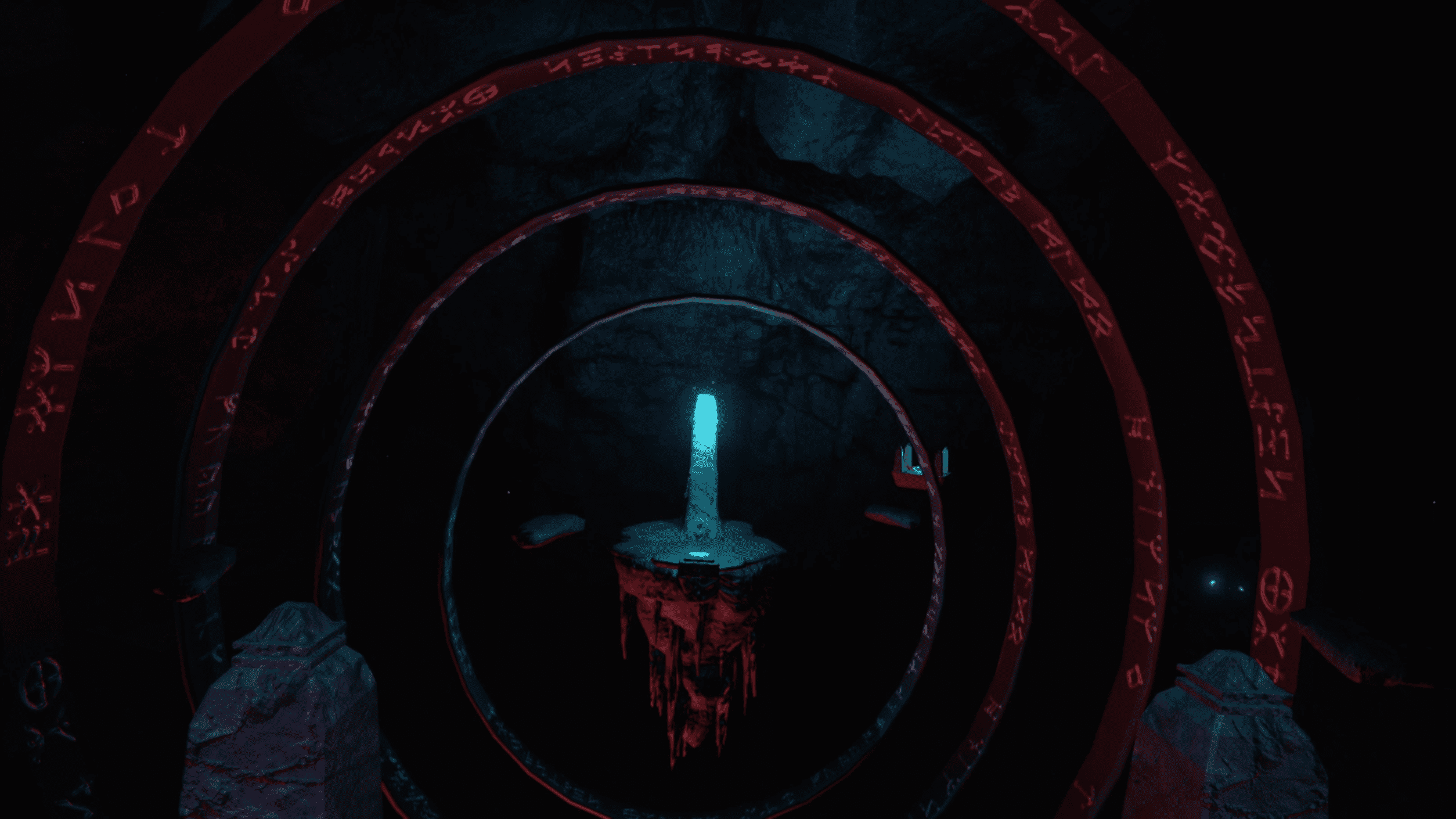
The audio design does a lot of heavy lifting. Environmental sounds like crackling fire, echoing footsteps, and crumbling stone, help sell the sense of place, and Rich Douglas’s soundscape complements the visuals well. Voice acting across the board is strong, especially Odin, whose constant commentary adds personality and levity. However, audio bugs can significantly undermine this strength. On multiple occasions, Odin’s dialogue failed to play entirely, even as his beak visibly moved, leaving critical hints inaccessible during puzzle-heavy sections. Given how reliant the game is on its hint system, this issue is more than a minor annoyance, though it doesn’t completely derail the experience.
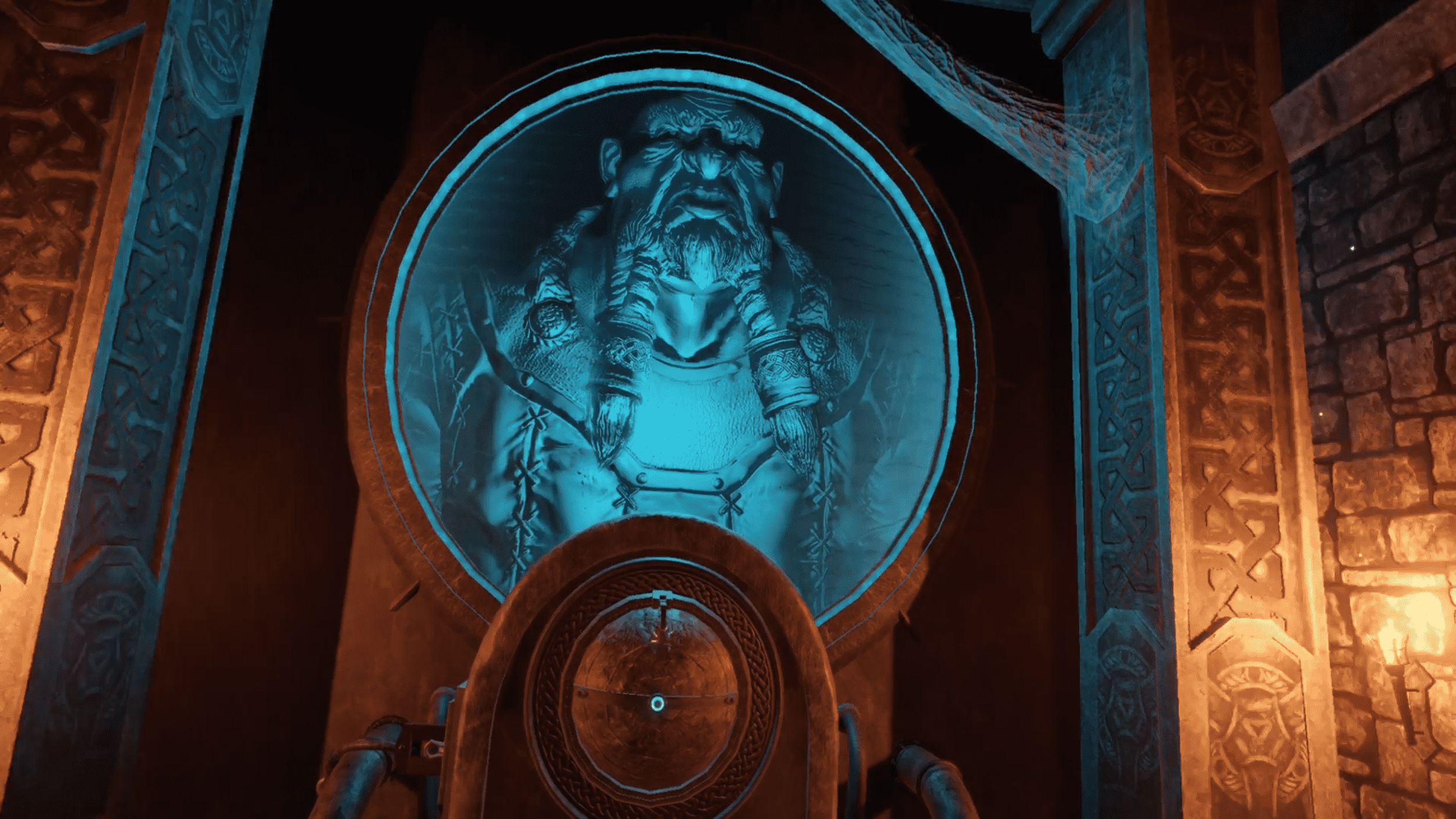
There are also some rough technical edges. Elevators can trigger inconsistently, occasionally launching you upward before you’re fully positioned, leading to accidental deaths. One minecart sequence even resulted in a physics glitch that sent me flying out of bounds before crashing back down. These moments are rare, but memorable, and slightly undercut the otherwise solid sense of polish the PSVR2 version aims for.
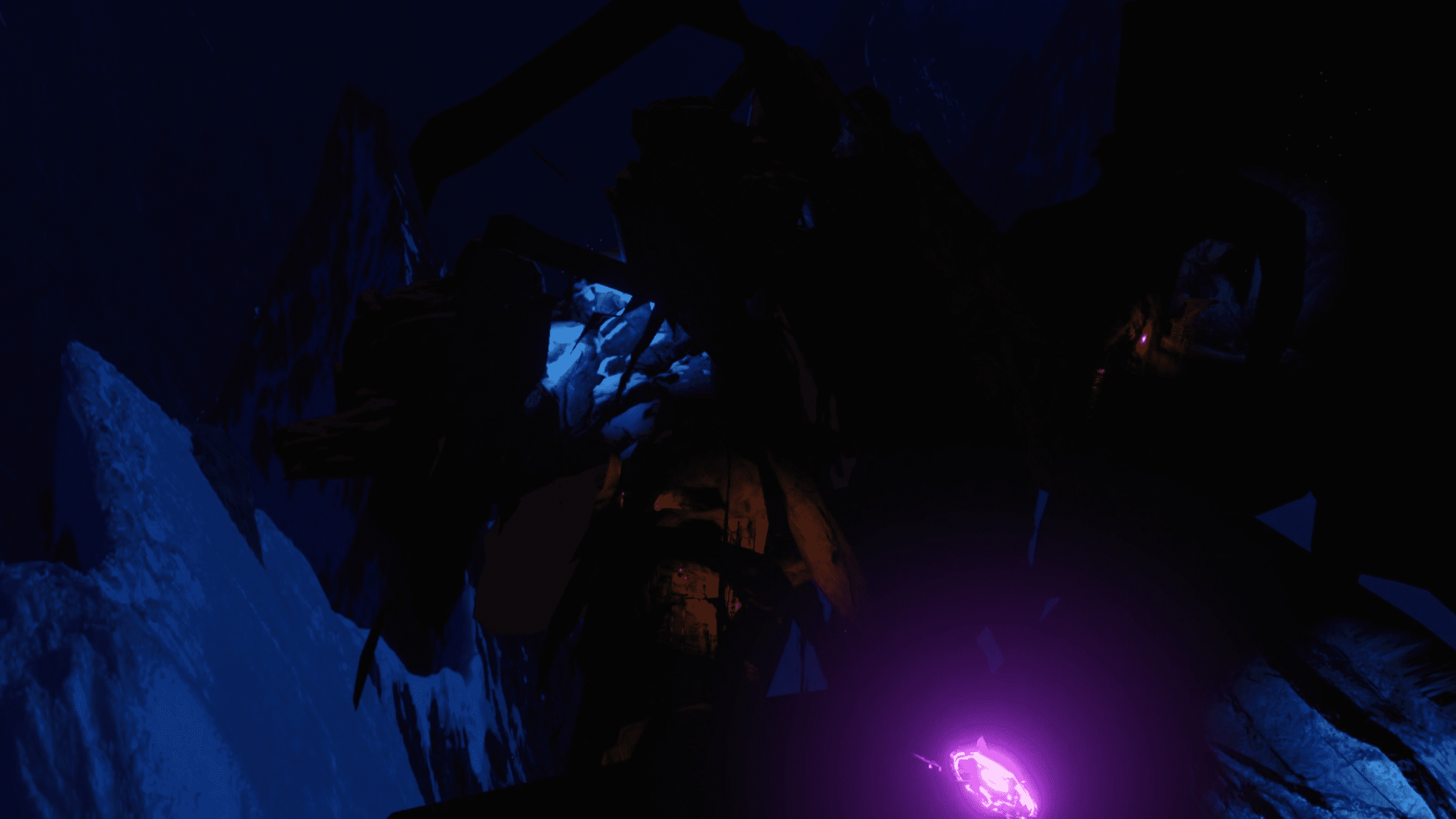
Despite its flaws, Shadowgate VR: The Mines of Mythrok succeeds where it matters most. It captures the spirit of classic Shadowgate, its danger, puzzles, and deliberate pace, while making the leap into VR feel purposeful rather than gimmicky. The journey takes around six to eight hours on a first playthrough, with four difficulty modes (including a punishing Ironman option) and a wealth of secrets that encourage replayability. The ending may feel abrupt, especially knowing this is only part one of a larger story, but the ride itself remains consistently engaging.
Final Thoughts?
This is a confident, atmospheric VR dungeon crawler that knows its audience. It isn’t perfect, and some design choices feel dated or under-explained, but the blend of exploration, puzzles, and immersive worldbuilding makes it an easy recommendation for fans of methodical adventure games and classic fantasy design. For those willing to embrace its old-school mindset and forgive a few rough edges, Shadowgate VR: The Mines of Mythrok stands as a strong PSVR2 experience and a promising foundation for what comes next.
About the Author

Nay Clark Gaming holds a special place in my heart and I never stop talking about video games. I really love all types of games and have an interest in games that have complicated stories and lore because I enjoy untangling the mystery of it all. When I'm not gaming, I unsuccessfully try to control three amazing and incredibly bright kids.
Related Posts

Umami Grove Review (PSVR2) →

Mulan 2125 – Episode 2 Review (Quest) →

Roboquest VR Review (PSVR2) →