
Samsung 9100 Pro SSD 8TB Review
Summary: Samsung 9100 Pro SSD 8TB provides exceptional performance and more importantly, exceptional storage!
4.9
Storage & Performance!
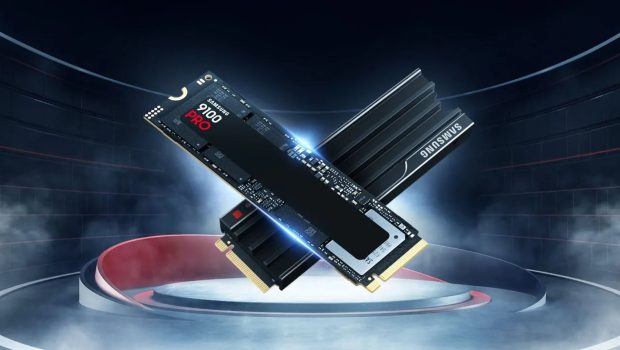
The Samsung 9100 Pro SSD 8TB stands out as one of the largest-capacity consumer NVMe drives on the market. Built on the latest PCIe Gen5 bandwidth platform, it combines Samsung’s in‑house Presto controller with V8 V‑NAND technology to deliver exceptional sequential performance. The drive features a two‑sided M.2 2280 design and comes in two versions, one with a heatsink and one without. The 9100 Pro lineup is available in 1TB, 2TB, 4TB and I had the chance to exclusively review the massive 8TB non-heatsink model for Impulse Gamer.
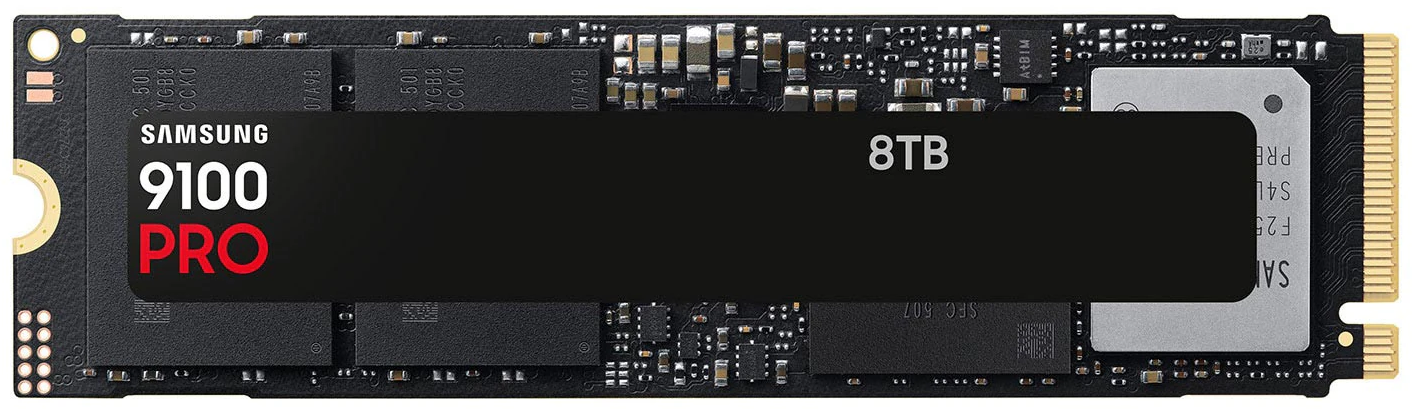
The Samsung 9100 Pro is aimed at users who require both high capacity and strong sequential performance. It is particularly suited to large video editing projects where multi‑gigabyte files are moved frequently, AI and video editors that benefit from sustained throughput or for gamers who want access to a large library of games. So while it may target professionals, enthusiasts and gamers, anyone who needs large capacity with speed will reap the rewards of the Samsung 9100 Pro SSD 8TB model.
In Australia as of December 2025, the 8TB version retails for around $1549 AUD, though some online retailers list it for less. While this positions the drive firmly in the premium tier, the price is justified by its large capacity and PCIe Gen5 architecture. Sequential speeds are impressive and although random I/O performance is competitive rather than class‑leading compared to smaller Gen5 SSDs, in practical terms this distinction is negligible.
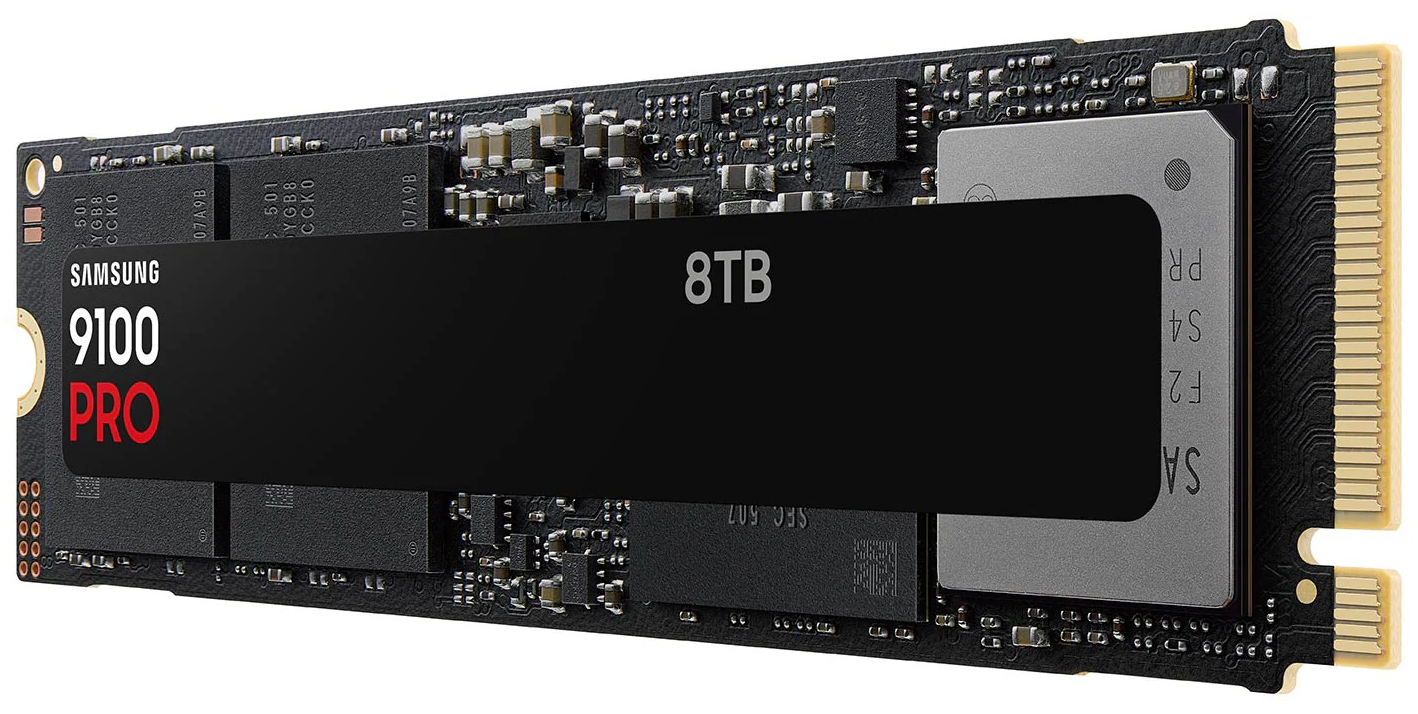
According to Samsung, active power draw sits around 11 to 12 watts, with idle consumption under 100 milliwatts. Sustained workloads generate significant heat, so a heatsink or aftermarket cooling solution may be recommended for users, depending on their computer setups. The form factor is M.2 2280 with a two‑sided design and the drive works with PCIe Gen5 x4 slots while backward compatible with Gen4 at reduced speeds. The heatsink version also fits the PlayStation 5 expansion bay and given the technology of this console, performance is limited to Gen4 speeds but wow, 8TB of direct game access is very impressive.
Unboxing & Gallery
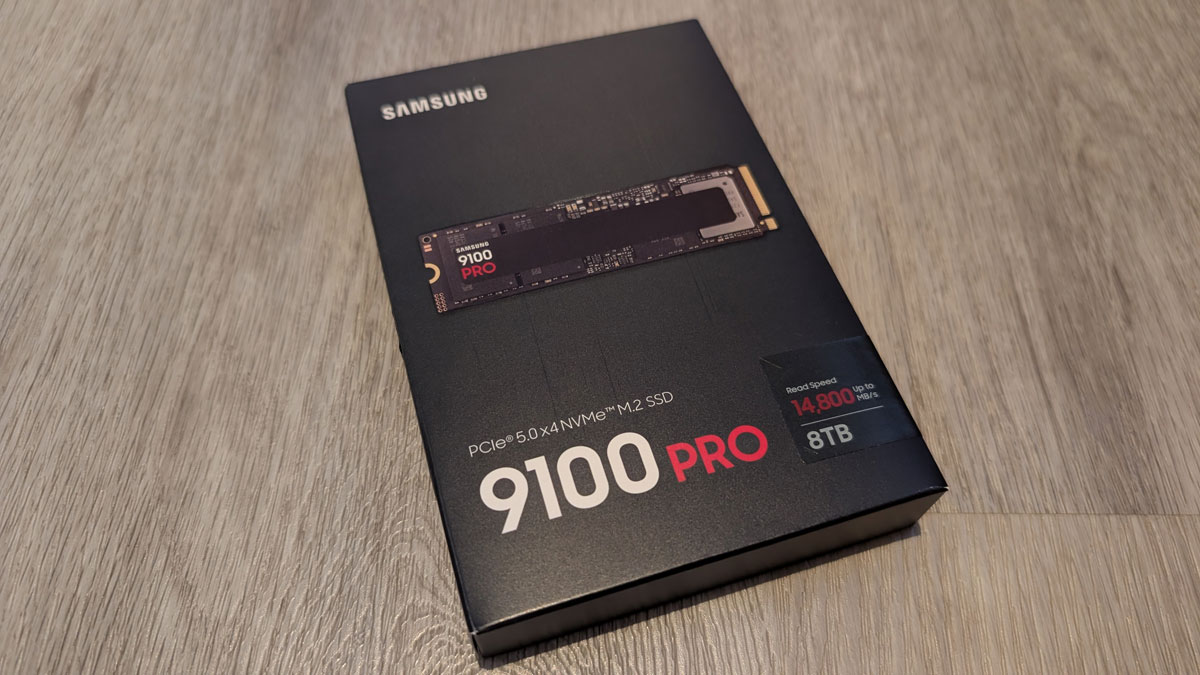

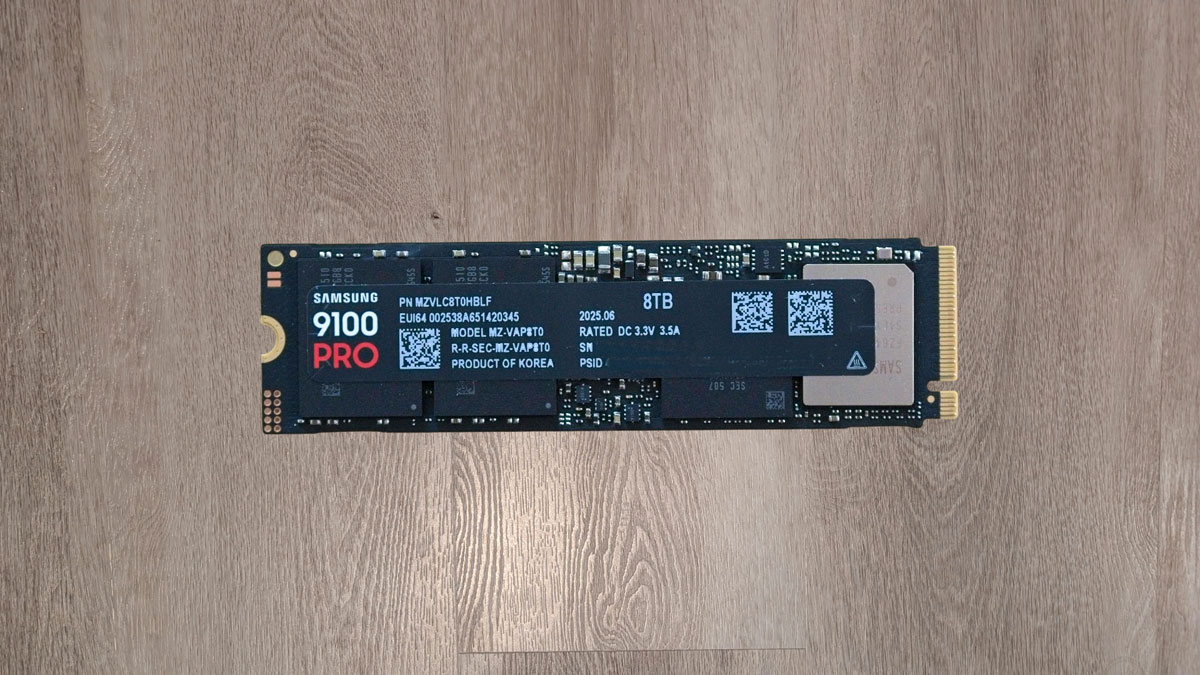
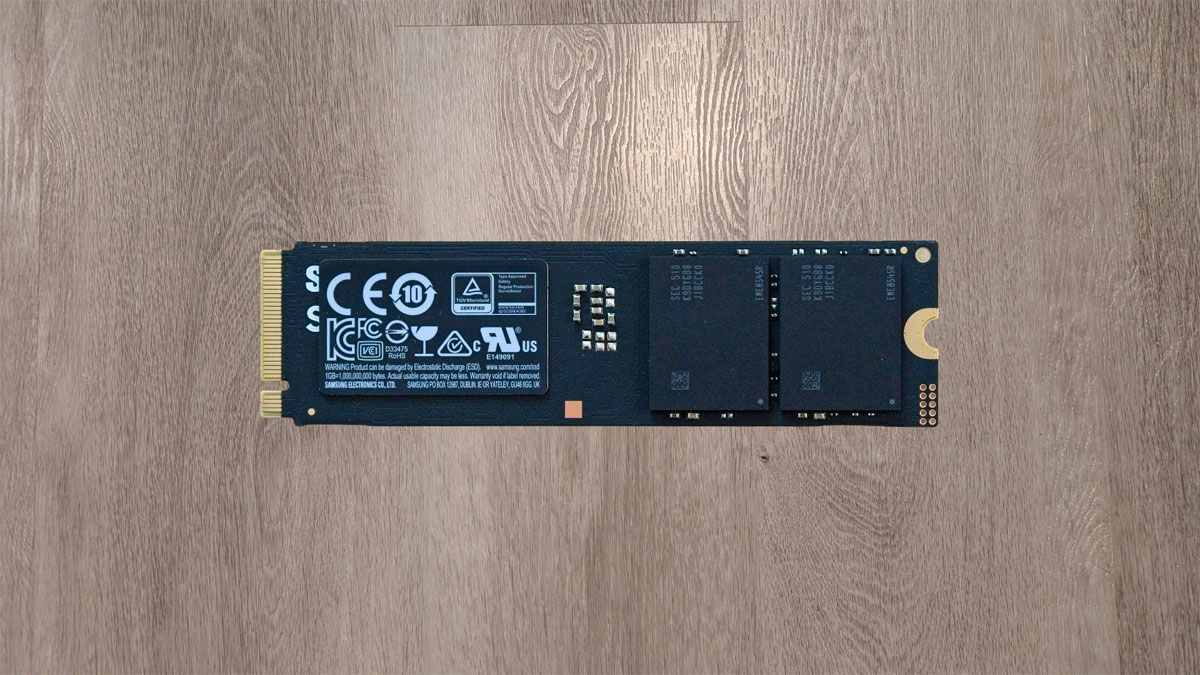
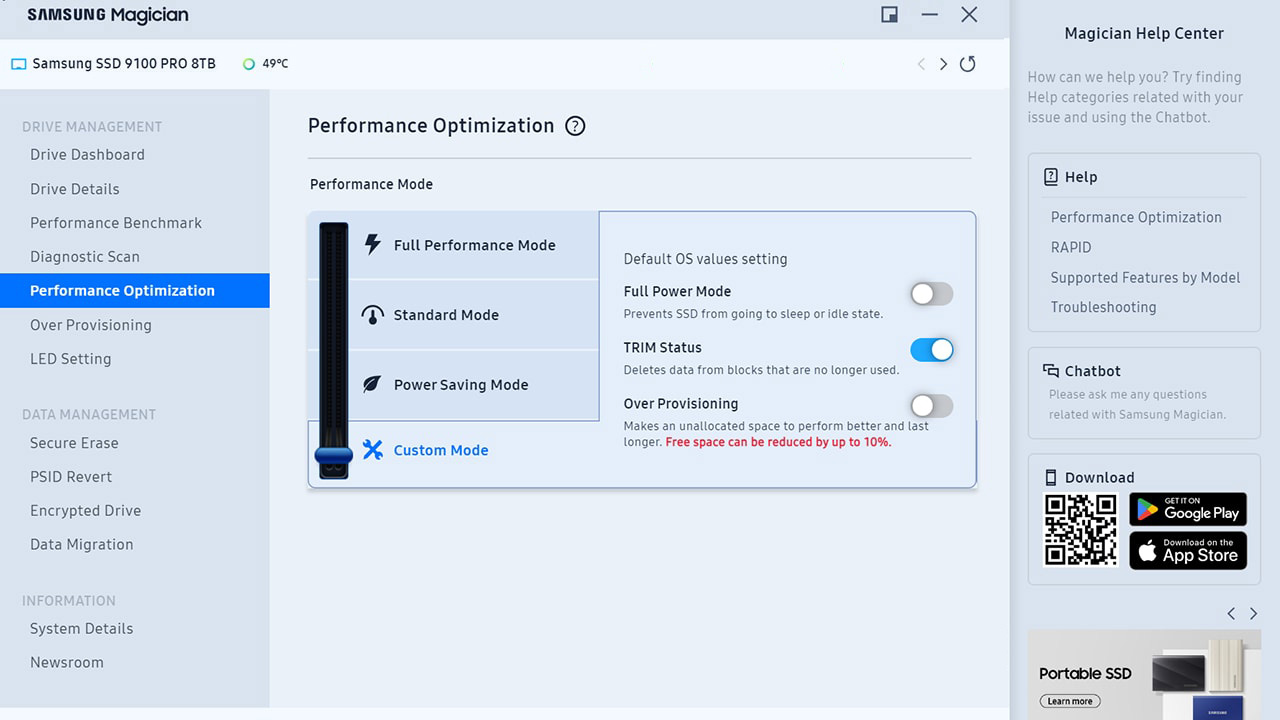
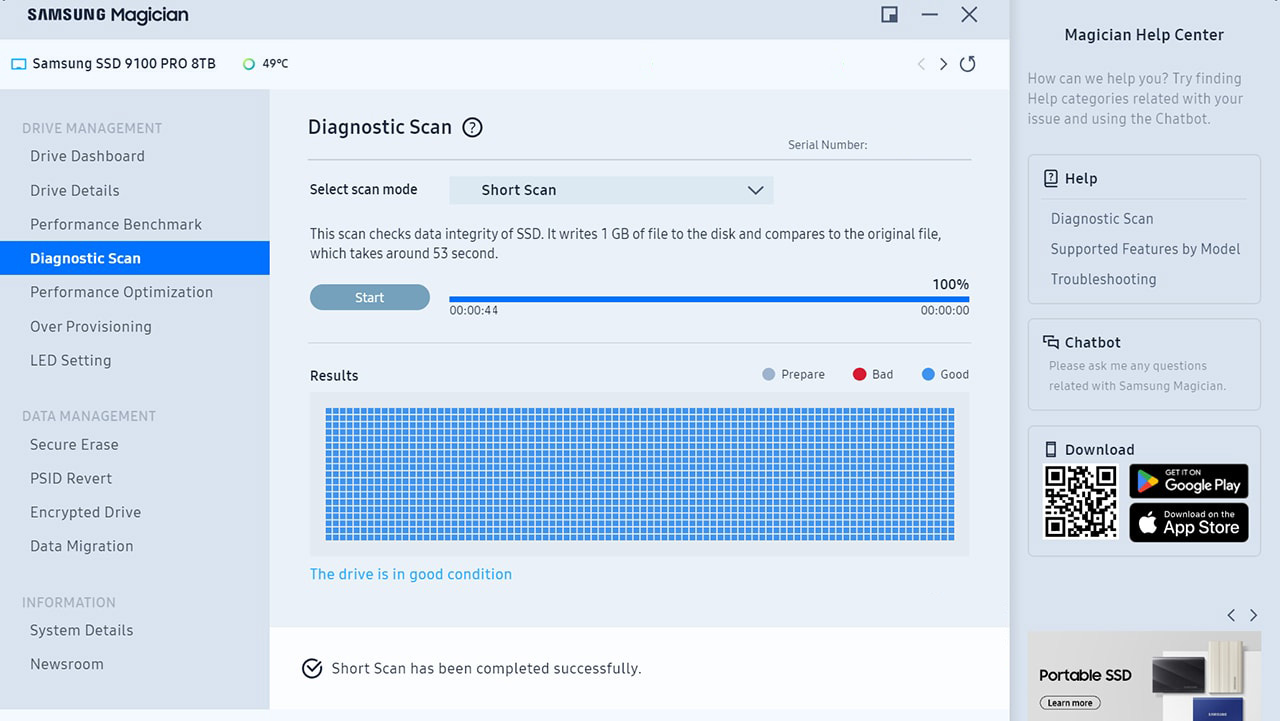
Our test system consisted of an AMD Ryzen 7 9800X3D processor, an ASRock X670E Taichi motherboard, 32GB of DDR5‑6000 memory plus Windows 11 Pro (latest build) and more importantly installation was easy as it fitted straight into our motherboard with no issues whatsoever. Also, to maximise the drive, you need to install Samsung Magician that is your one-stop shop SSD management tool. Magicians unlocks detailed drive information, performance benchmarking, error scanning and secure erase. Also support the user are flexible optimisation modes that include Standard, Full Performance, Power Saving plus custom profiles.
Benchmarks
CrystalDiskMark delivered impressive sequential speeds of 13,200 MB/s read and 14,150 MB/s write, while ATTO showed similar scaling behaviour, topping out at around 13,460 MB/s read and 12,240 MB/s write. AS SSD produced slightly lower sequential figures at 10,300 MB/s read and 11,150 MB/s write and its 4K results — a crucial metric because it reflects how quickly a drive can process the tiny random files that dominate operating system, application and game workloads measured 78 MB/s read and 220 MB/s write. CrystalDiskMark’s own 4K test landed a little higher at 82 MB/s read and 180 MB/s write.
In broader system‑level testing, PCMark’s Storage benchmark returned a solid 4,500‑point score, while 3DMark’s Storage test came in at 3,900. The difference between the two is worth noting: PCMark focuses on everyday responsiveness across a wide mix of real‑world tasks such as application launches, file transfers and general system activity, whereas 3DMark’s Storage test is more gaming‑centric, simulating asset streaming, game installs and save‑load operations. Together, they provide a well‑rounded picture of how the drive behaves under both productivity and gaming workloads.
Random performance sits in the 2.2–2.5 million IOPS range that is strong for an 8TB Gen5 drive, even if it’s not quite as latency‑tuned as some smaller high‑performance models. Then again, those drives don’t come close to offering this kind of capacity.
Final Thoughts?
Even though the Samsung 9100 Pro SSD 8TB is best described as a capacity‑focused Gen5 drive, it excels in sequential throughput and offers one of the largest single‑drive storage options available to consumers. Random I/O performance is adequate but not groundbreaking, meaning it is not the fastest option for database or heavily transactional workloads. For professionals handling large datasets or video projects, the combination of speed and 8TB capacity is compelling. For PC gamers, it provides convenience by consolidating massive libraries onto one drive or if you have the budget, a worthy upgrade for your PlayStation 5 Pro.
Samsung 9100 Pro SSD 8TB
| Specification | Details |
|---|---|
| Model | Samsung 9100 Pro (MZ‑VAP8T0BW) |
| Capacities | 1TB, 2TB, 4TB, 8TB |
| Form Factor | M.2 2280 (two‑sided design) |
| Interface | PCIe 5.0 x4, NVMe 2.0 |
| Controller | Samsung Presto (S4LY027), 8‑channel |
| NAND Flash | Samsung V‑NAND V8 (236‑layer TLC) |
| DRAM Cache | LPDDR4 DRAM (1GB per TB capacity, e.g. 8GB for 8TB model) |
| Sequential Read | Up to 14,800 MB/s |
| Sequential Write | Up to 13,400 MB/s |
| Random Read (4K) | Up to ~2,500K IOPS |
| Random Write (4K) | Up to ~2,200K IOPS |
| Power Consumption | ~11–12W active, <100mW idle |
| Thermal Throttling | Begins around 80–85°C; heatsink recommended for sustained workloads |
| Endurance (TBW) | 1TB: ~750 TBW • 2TB: ~1500 TBW • 4TB: ~3000 TBW • 8TB: ~6000 TBW |
| Warranty | 5‑year limited warranty |
| Heatsink Option | Available (PS5 compatible, runs at Gen4 speeds; note Sony officially certifies up to 4TB) |
About the Author

Adrian Gunning Adrian lives in Melbourne Australia and has a huge passion for gaming, technology and pop culture. He recently finished his a Bachelor of Journalism and is currently focusing on games journalism. When not writing and playing video games, Adrian can be found in Comics 'R' Us debating the pros of the DC Universe and cons of the Marvel Universe.
Related Posts
Aiper EcoSurfer S2 Review →
ASUS Republic of Gamers Announces New Strix OLED XG27ACDMS, and XG27AQDMES Monitors →

Taya Necklace Reimagines AI Wearables; Public Preorders Open →