
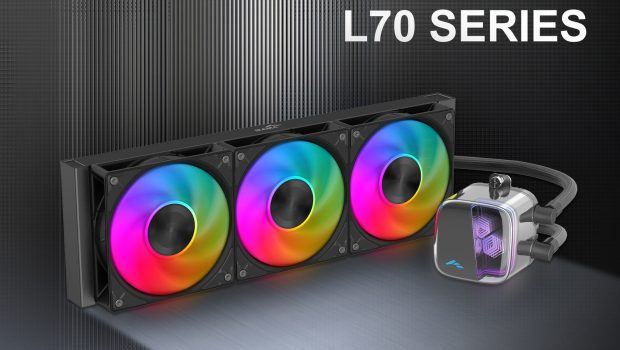
Sama L70 Black 360mm AIO Liquid CPU Cooler Review
Summary: The Sama L70 Black 360 mm AIO proves itself as a capable and effective cooling solution
3.8
Cooling Power
On modern gaming desktops, CPU cooling is no longer just about preventing overheating; it’s about creating thermal headroom for sustained performance. With processors like AMD’s Ryzen 7 7700X designed to boost aggressively until they encounter thermal limits, an effective CPU cooler can be the difference between a system that merely runs and one that consistently performs at its best.
The Sama L70 Black 360 mm AIO enters a crowded market of liquid coolers that often prioritise aesthetics as much as function. Paired with a CPU known for running hot by design, the L70 presents an opportunity to see whether a large AIO can deliver meaningful thermal and performance benefits beyond visual appeal alone.
Testing Rig
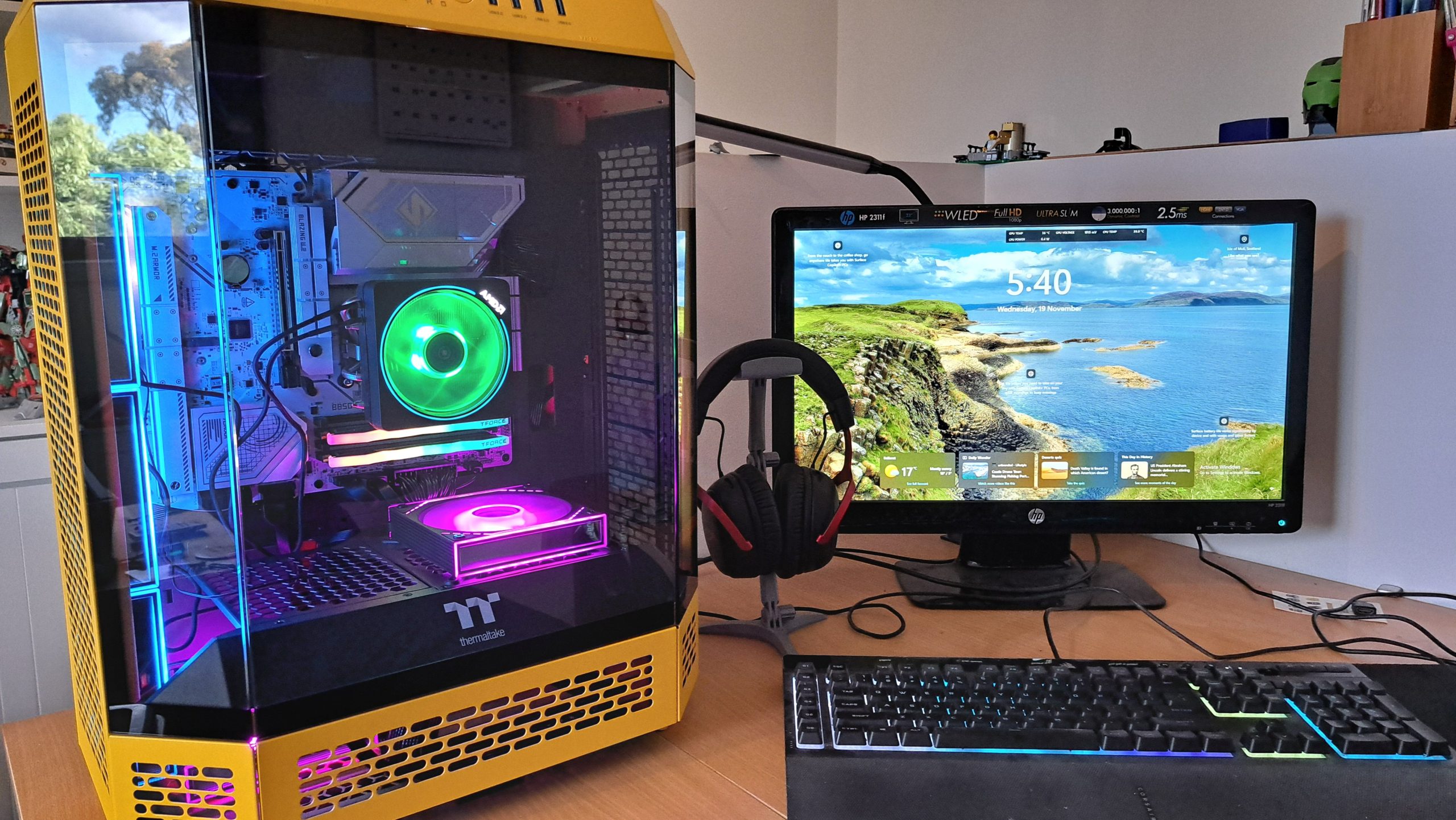
-
- Motherboard: B850 ASRock Steel Legend WiFi AM5 ATX
- CPU: AMD Ryzen 7 700x
- RAM: Team T-Force Delta RGB Black 32GB (2x16GB) 6000MHz CL30 DDR5
- Case Thermaltake Tower 600 – Bumblebee Yellow
- SSD: Team T-Force A440 Lite 1Tb M.2 PCIe Gen4x4 SSD – Blazing M.2 SSD Slot
- PSU: SilverStone DA850R-GMA 850W Power Supply
- Fans Controller: Thermalright TL-FAN and ARGB HUB x8 Fan Hub Controller
- Fans:
- 3 x 120mm Thermalright TL-M12R-S Reverse ARGB Fan, Black – Left Bracket
- 1 x 120mm Thermalright TL-M12R-S Reverse ARGB Fan, Black – Shelf Bracket
- 1 x 120mm Thermalright TL-M12R-S Reverse ARGB Fan, Black – Case Bottom
- 2 x 140mm Thermaltake Case Fan, Black – Top Bracket
- GPU: RX 9070 XT Steel Legend
- OS: Windows 11 Home
Design
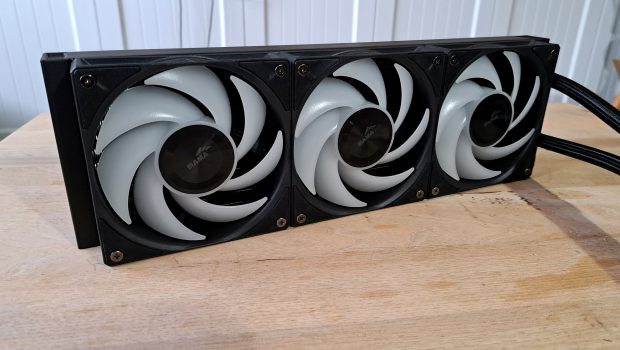
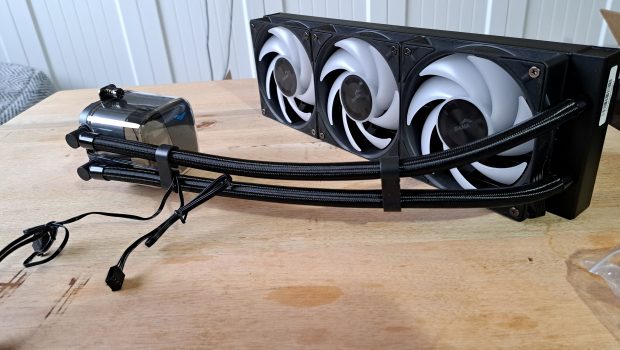
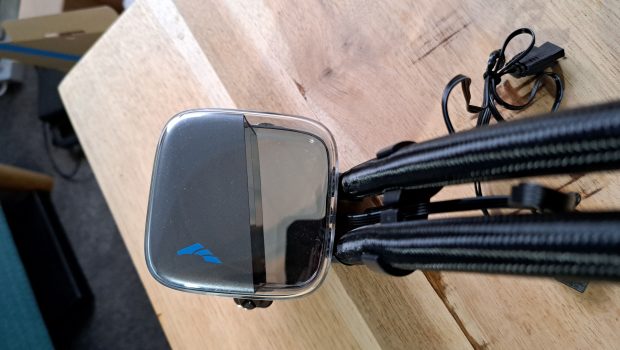
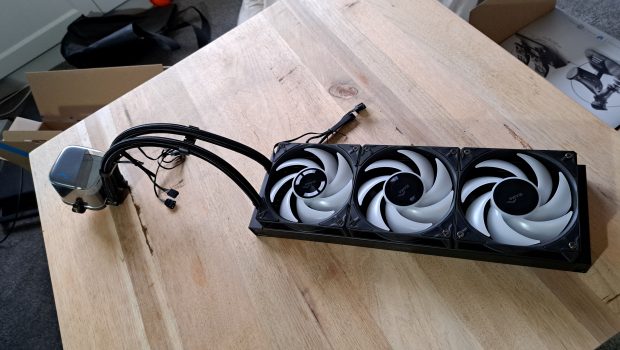

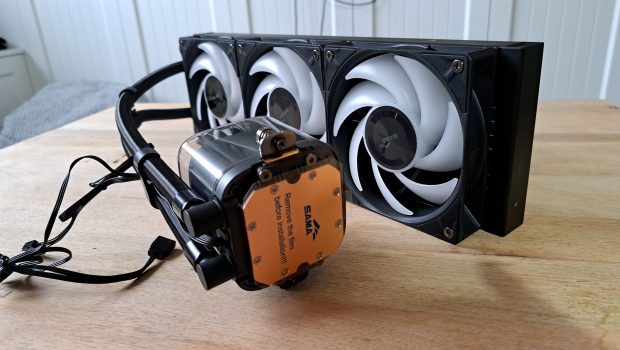
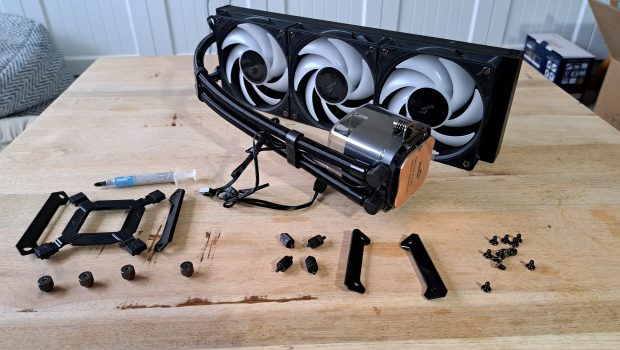

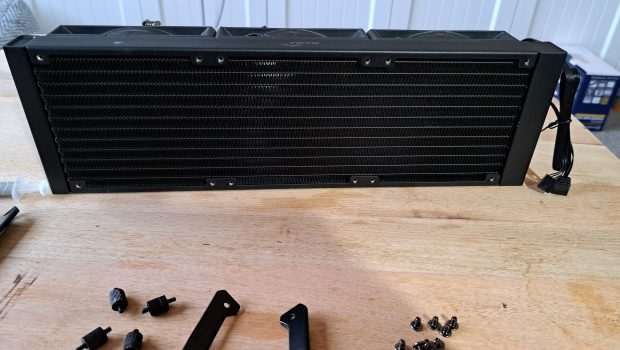
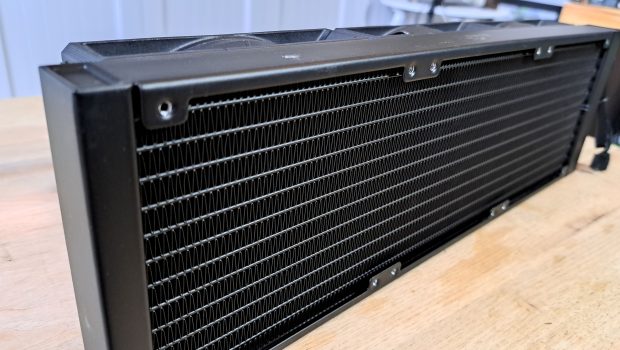
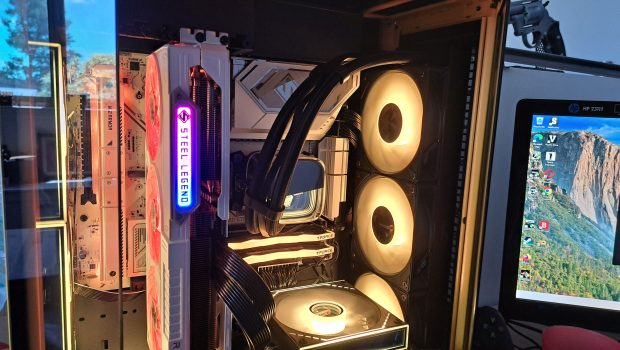
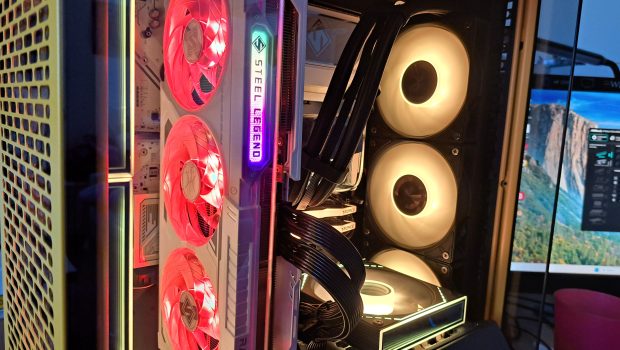
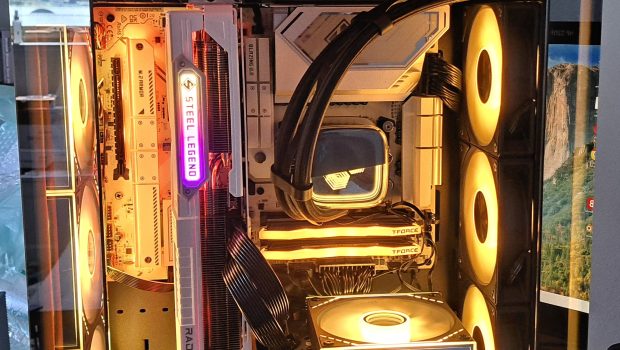
Measuring at only 27mm, the aluminium radiator, combined with the three preinstalled 120mm x 28mm fans, does an impressive job at reducing temperatures while leaving plenty of room for airflow and cable management. Since the Thermaltake Tower 600 case mounts the motherboard vertically, with the IO ports only accessible through the top of the case, using an AIO that can accommodate the unique layout is something that the Sama L70 AIO does incredibly well.
At its core, the L70 AIO features a newly designed ceramic pump that increases the lifespan and durability of the device, making it more resilient to thermal loads compared to other models that use plastic components which can warp over time. Considering that most AIO pumps sit directly over the CPU, designing the pump with ceramic parts over plastic means that heat transferred from the CPU will be carried away by the liquid coolant and not stay trapped in the one part that’s literally designed to circulate the cold coolant.
One design feature that separates the L70 AIO from other liquid coolers is the position of the tubes on the water block. Rather than connecting the tubes to the bottom of the water block like other AIO coolers, the Sama L70 places the rotating angled connectors on the right of the water block, nestled between the CPU and the RAM slots. Combined with the 400mm tubes, this design choice makes the Sama L70 AIO a perfect choice for PC builders working with compact cases or limited space, especially when considering the thickness of the radiator and fans. Furthermore, the L70 AIO comes with two detachable cable clamps with a designated middle slot for concealed cable management. Using the clamps is optional, but it is perfect for discretely running the fan cables to the motherboard headers without needing to do advanced cable management — a welcome addition for those who either suck at cable management or are building a compact build.
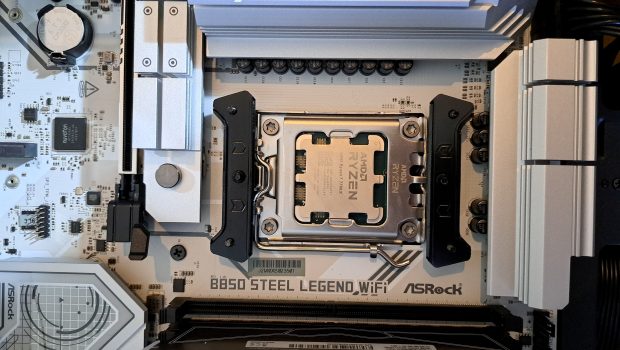
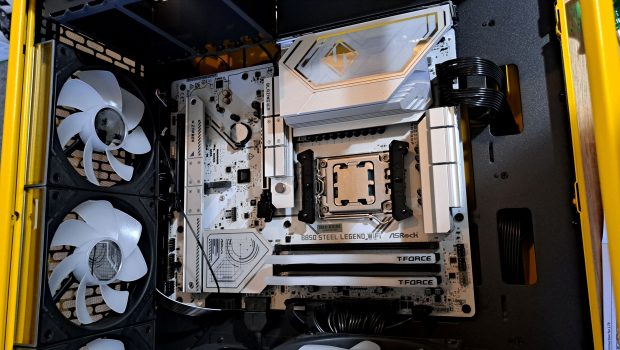
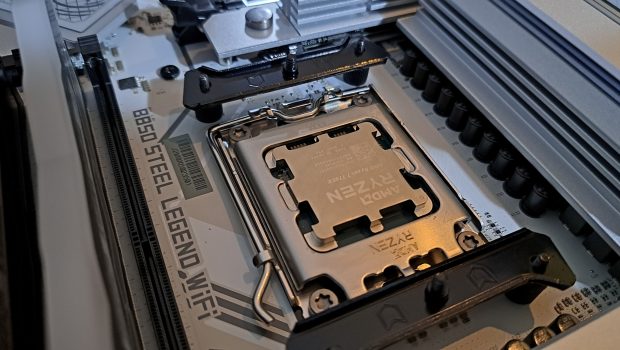
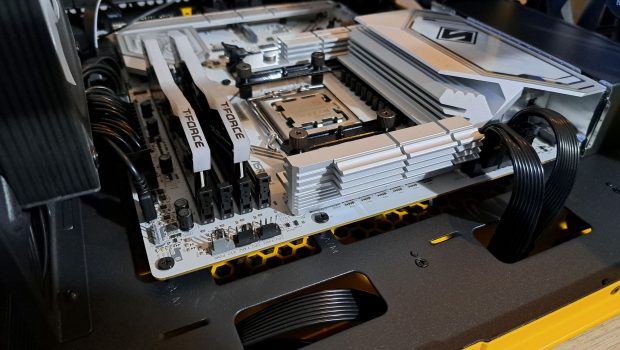
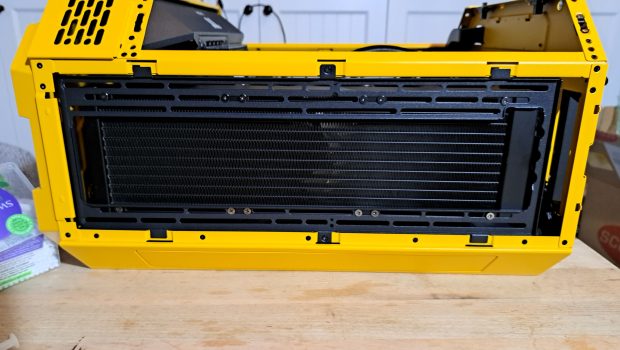

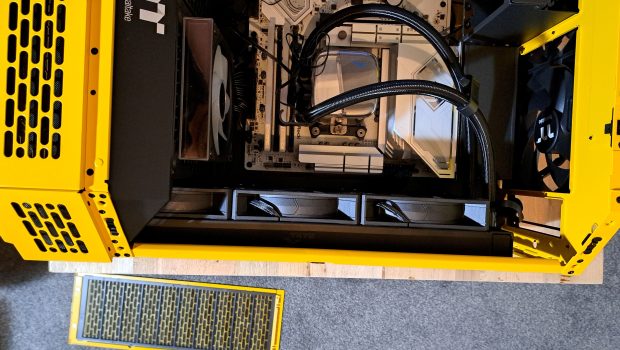
Aesthetically speaking, the Sama L70 AIO is quite striking in a black finish and helps emphasise the vibrant ARGB fans, especially when going with a bright contrasting neon colour scheme. Although the centre of the fans doesn’t have any ARGB or illuminating effects, the polished, dark chrome finish combined with the impressive 28mm thickness of the fan provides the radiator with an element of imposing power, making it look and feel quite bold and powerful, especially when using slimmer 25mm fans within the case for general ventilation.
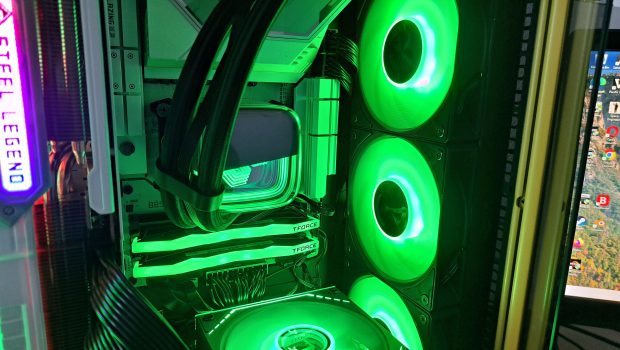
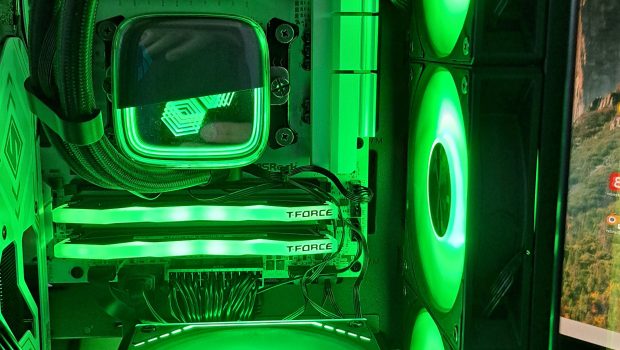
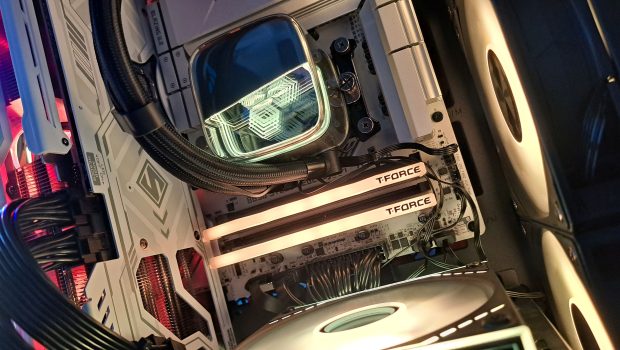
Unfortunately, what should be the standout centrepiece of the Sama L70 AIO — the water block with its infinity mirror ARGB design — doesn’t quite achieve the visual effect that I feel the designers were trying to emulate. Rather than create the infinity mirror optical illusion on a single surface, the Sama L70 tries to achieve this effect by removing a large diagonal chunk of the water block and then projecting the effect on the two exposed surfaces. While this sounds impressive in theory, the actual result is half a glowing logo that can only be viewed from head-on. Any attempt to look at the water block from any other angle will result in a black acrylic cube or a jumble of neon shapes.
Performance
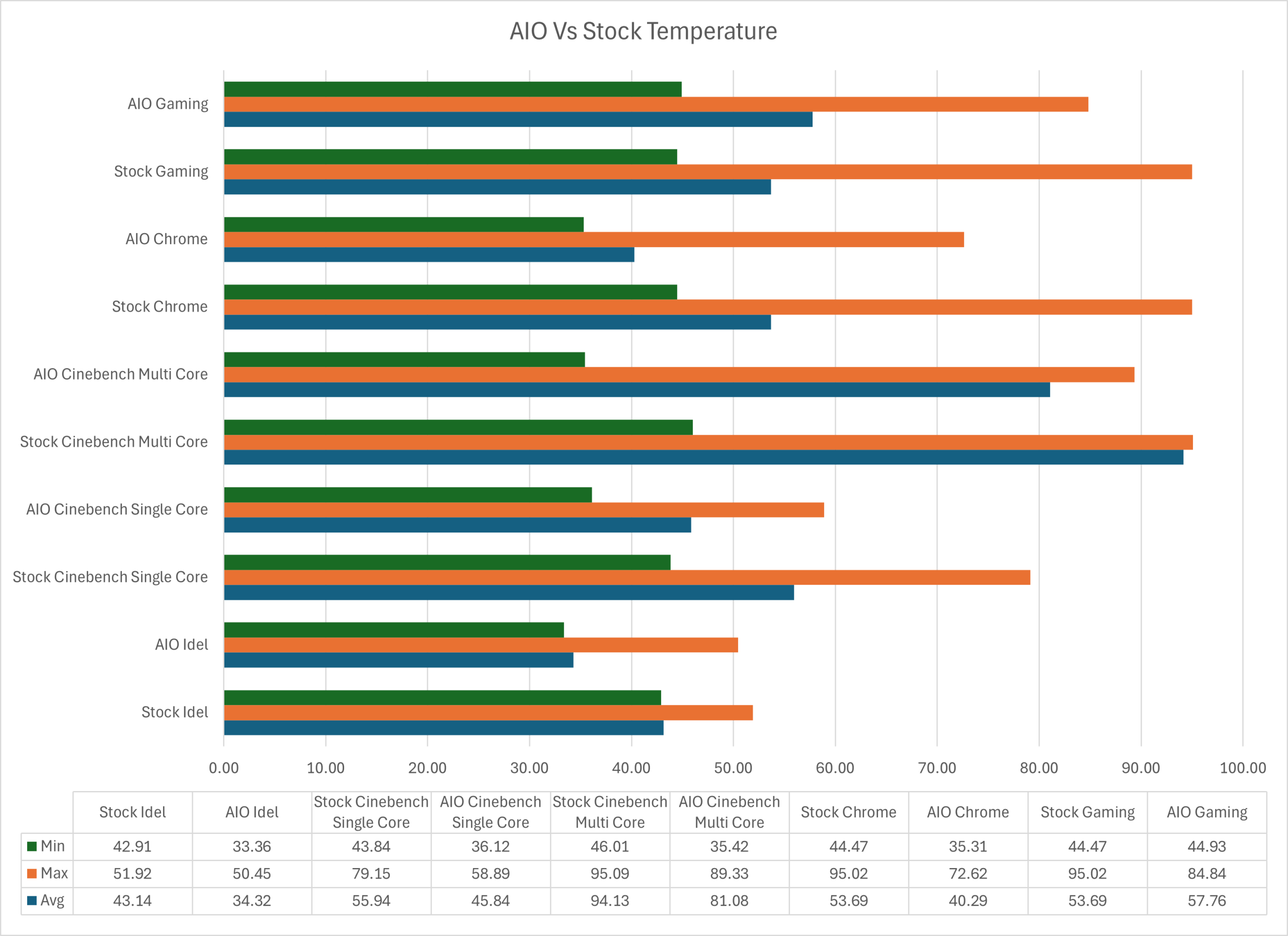
For performance testing, I approached this in two phases. The first was a direct head-to-head comparison between the Sama L70 Black 360 mm AIO and AMD’s stock Wraith Prism cooler, tested without GPU influence. The second phase involved extended gaming sessions with the GPU installed, introducing real-world heat load into the system.
This approach was intentional. While synthetic benchmarks are useful, gaming workloads better represent how a high-end cooling solution performs in a fully populated system, particularly with a thermally aggressive CPU like the Ryzen 7 7700X.
It’s also worth noting that these results were recorded in a fully configured gaming system rather than an open bench with spare parts to make a test rig. The case I’m using, the Thermaltake Tower 600, prioritises internal space and visual presentation over traditional front-to-back airflow, while the RX 7900 XT introduces significant GPU heat during gaming workloads. In this context, the Sama L70’s ability to maintain substantially lower CPU temperatures, especially during gaming, truly highlights its ability to move CPU heat away from the socket area and out of the case entirely.

Phase 1 – Stock vs AIO (Baseline Testing)
Before introducing GPU heat and extended gaming loads, I wanted to establish a baseline comparison between the Sama L70 Black 360 mm AIO and AMD’s stock Wraith Prism cooler. This phase focuses on everyday behaviour and synthetic workloads, allowing the cooling performance of each solution to be evaluated in isolation.
During a 15-minute idle test, the Sama L70 consistently maintained lower average temperatures than the stock cooler. While peak temperatures between the two were similar, the AIO held temperatures approximately 8–9°C lower on average, indicating more effective heat dissipation even under light system load. This behaviour is typical of larger AIOs, where the radiator and coolant volume help smooth out short thermal spikes that are more noticeable on compact air coolers.
The difference became more pronounced during Cinebench single-core testing. Here, the Sama L70 maintained temperatures roughly 10°C lower on average, with significantly reduced thermal spikes compared to the Wraith Prism. On a Ryzen 7 7700X, a CPU designed to boost aggressively until it reaches thermal limits, this additional headroom allows the processor to sustain peak boost behaviour more consistently, rather than backing off due to rising temperatures.
Under Cinebench multi-core load, the temperature gap narrowed, which is expected on Zen 4 processors that are designed to push toward their power and thermal envelope regardless of cooling solution. While the Sama L70 did not dramatically reduce peak temperatures in this scenario, it maintained lower average temperatures and greater thermal stability over time, helping prevent throttling during sustained workloads.
Taken together, Phase 1 results show that the Sama L70’s advantage is not simply about lowering peak numbers. Instead, it provides consistent thermal headroom — particularly under lightly threaded and burst-heavy workloads — setting the stage for more noticeable gains once GPU heat and extended gaming sessions are introduced.
Phase 2 – Gaming & Sustained Load Testing
With baseline behaviour established, Phase 2 introduces real-world thermal stress by reinstalling the GPU and subjecting the system to extended gaming sessions. This phase is intended to reflect how the Sama L70 performs in a fully populated gaming system, where CPU and GPU heat interact within the confines of the case.
During gaming workloads, the thermal advantage of the Sama L70 became immediately apparent. Compared to the stock Wraith Prism cooler, CPU temperatures were consistently 10–15 °C lower, with the largest gap appearing during longer play sessions where internal case temperatures had time to stabilise. Rather than climbing steadily over time, temperatures under the AIO remained controlled and predictable.
This behaviour highlights one of the key advantages of a large AIO in a high-performance gaming system: the ability to move CPU heat away from the socket area and out of the case, rather than allowing it to accumulate alongside GPU heat. With the RX 9070 XT contributing significant thermal load during game play, the stock air cooler was far more susceptible to heat soak, whereas the Sama L70 maintained thermal separation between CPU and GPU workloads.
On a Ryzen 7 7700X, this reduction in sustained temperature has a direct impact on how the CPU behaves. Lower and more stable temperatures allow the processor to sustain boost clocks more consistently, reducing thermal cycling and avoiding the small performance dips that can occur when temperatures repeatedly approach thermal limits. In practice, this translated into a smoother and quieter gaming experience, with fewer sudden fan ramp-ups and more predictable system behaviour.
Phase 2 ultimately reinforces the idea that the Sama L70’s value extends beyond synthetic benchmarks. In a real gaming environment, particularly in a visually focused case with a high-power GPU, the AIO delivers meaningful thermal headroom that directly benefits both performance consistency and acoustic comfort.
Final Thoughts
While the Sama L70 Black 360 mm AIO may come from a lesser-known brand, its performance under load leaves little room for doubt. Paired with a thermally aggressive CPU like the Ryzen 7 7700X, the L70 consistently demonstrated its ability to manage sustained workloads, even in a fully populated system and during extended gaming sessions.
Aesthetically, the Sama L70 will inevitably be a matter of personal taste. Some design elements are more successful than others, particularly when compared to more established premium brands. That said, the thermal results speak for themselves, delivering a 10–15 °C reduction over AMD’s stock cooler in scenarios where thermal headroom matters most.
While it may not be the ideal fit for every themed build, the Sama L70 Black 360 mm AIO proves itself as a capable and effective cooling solution. For users looking to keep a high-performance system running cooler, quieter, and more consistently under heavy gaming or productivity workloads, it is well worth considering.
About the Author

John Werner Web Designer by day, Gamer by every other hour. No game is too big or too indie for this gamer. I review from the heart and an open mind. Every game is worth giving a go!
Related Posts

ASUS Republic of Gamers Presents Next‑Gen Gaming Innovations, Commemorates 20 Years of ROG Gaming Excellence in Australia →

ASUS Groundbreaking AI PC 2026 Lineup Hits Australian Shelves →
Mother’s Day gifting made easy from Kogan →