
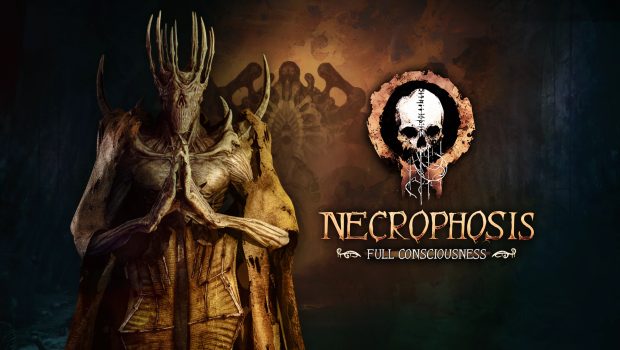
Necrophosis: Full Consciousness Review (PS5)
Summary: Necrophosis: Full Consciousness is a haunting descent through a collapsing universe where forgotten gods and endless decay shape every step forward. Its surreal landscapes and grotesque imagery create an unsettling atmosphere that constantly pulls you deeper into its strange world. Even with its simple puzzle structure, the game leaves a lasting impression through pure mood, artistic vision, and existential horror.
3.8
Rotting Reverie
Death has never looked this mesmerizing! Necrophosis: Full Consciousness is a first person horror adventure developed by Dragonis Ares and Adonis Brosteanu, published by Dragonis Games, and released on May 28, 2026 as the definitive version of the original Necrophosis experience. This package includes the base game originally released in April 2025 along with the new Subconsciousness expansion, creating a complete surreal horror journey centered around decay, consciousness, and cosmic suffering. Right away, the game draws obvious comparisons to Scorn through its biomechanical imagery and oppressive atmosphere, heavily inspired by the disturbing works of H. R. Giger and Zdzisław Beksiński. Even with those similarities, Necrophosis manages to carve out its own identity through its philosophical tone and relentless focus on mood over action. It is less mechanically involved than Scorn, but if you are willing to sink into its bizarre world and simply absorb everything around you, there is a lot here to appreciate.
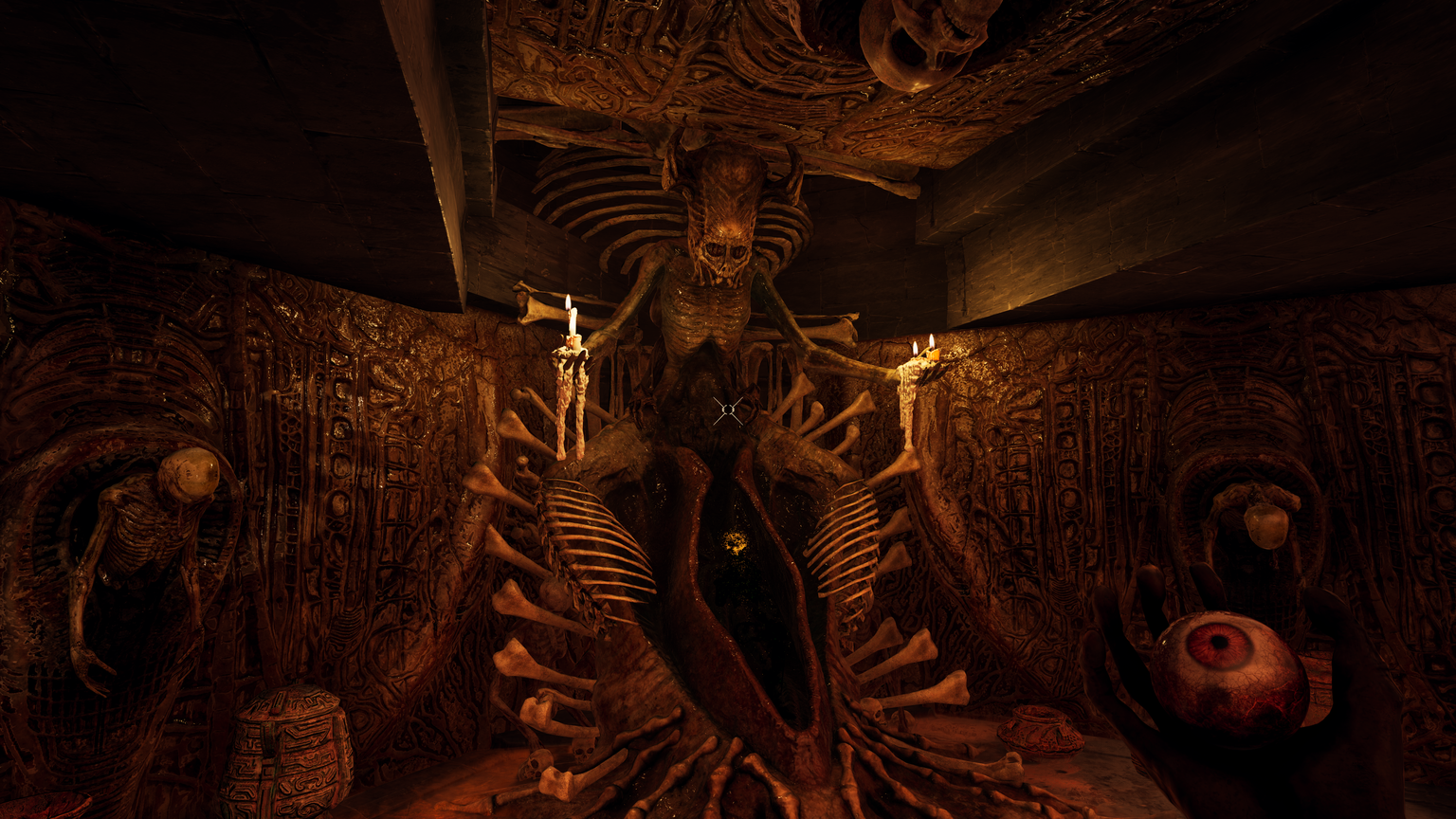
The story is intentionally cryptic and dreamlike from beginning to end. You awaken as Consciousness itself in a universe where death has already consumed everything, yet even death no longer functions properly. Bodies continue to rot without ever truly disappearing, gods linger in eternal suffering, and emotion itself seems to have become physical matter within the world. The game constantly speaks in riddles and poetic fragments, with characters delivering strange monologues that feel somewhere between prophecy and despair. There is always the sense that something larger is happening just outside your understanding. Elder gods acknowledge your arrival with surprise and caution, guiding you through rituals and tasks that never fully explain themselves until much later. The Subconsciousness expansion adds another layer by placing you in the role of the other half of this fractured existence, diving deeper into the mental and spiritual collapse behind the world itself. The narrative can absolutely feel confusing for long stretches, and the ending is not necessarily explosive or deeply satisfying in a traditional sense, but the game clearly prioritizes atmosphere and interpretation over direct answers. The journey through these horrifying landscapes matters far more than the destination.
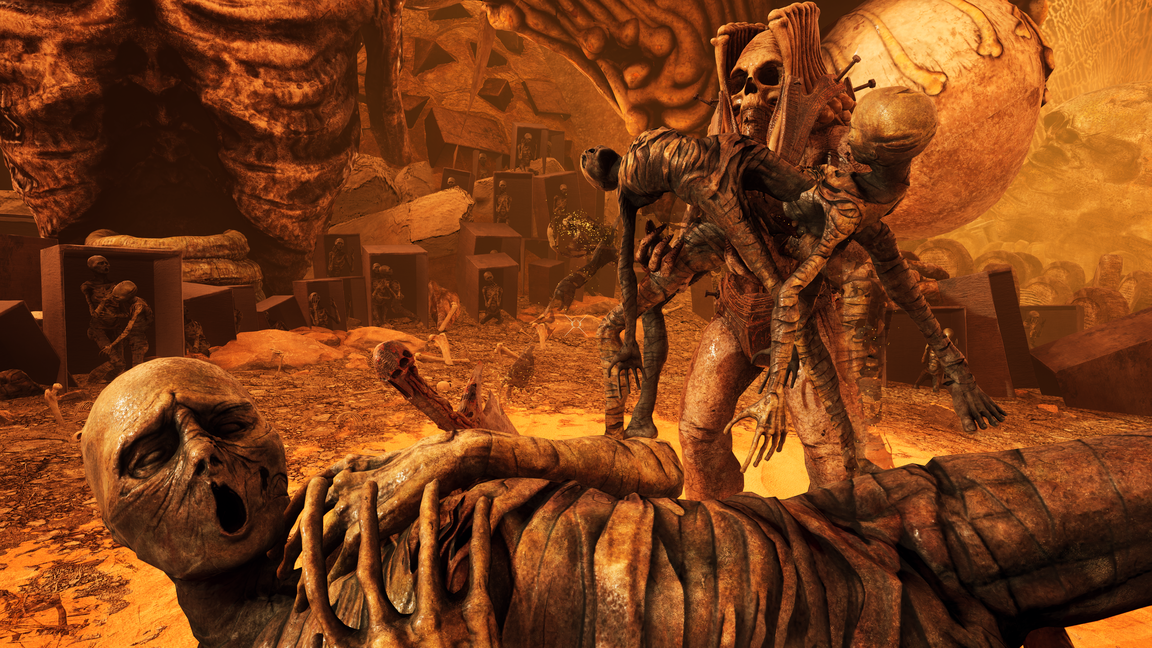
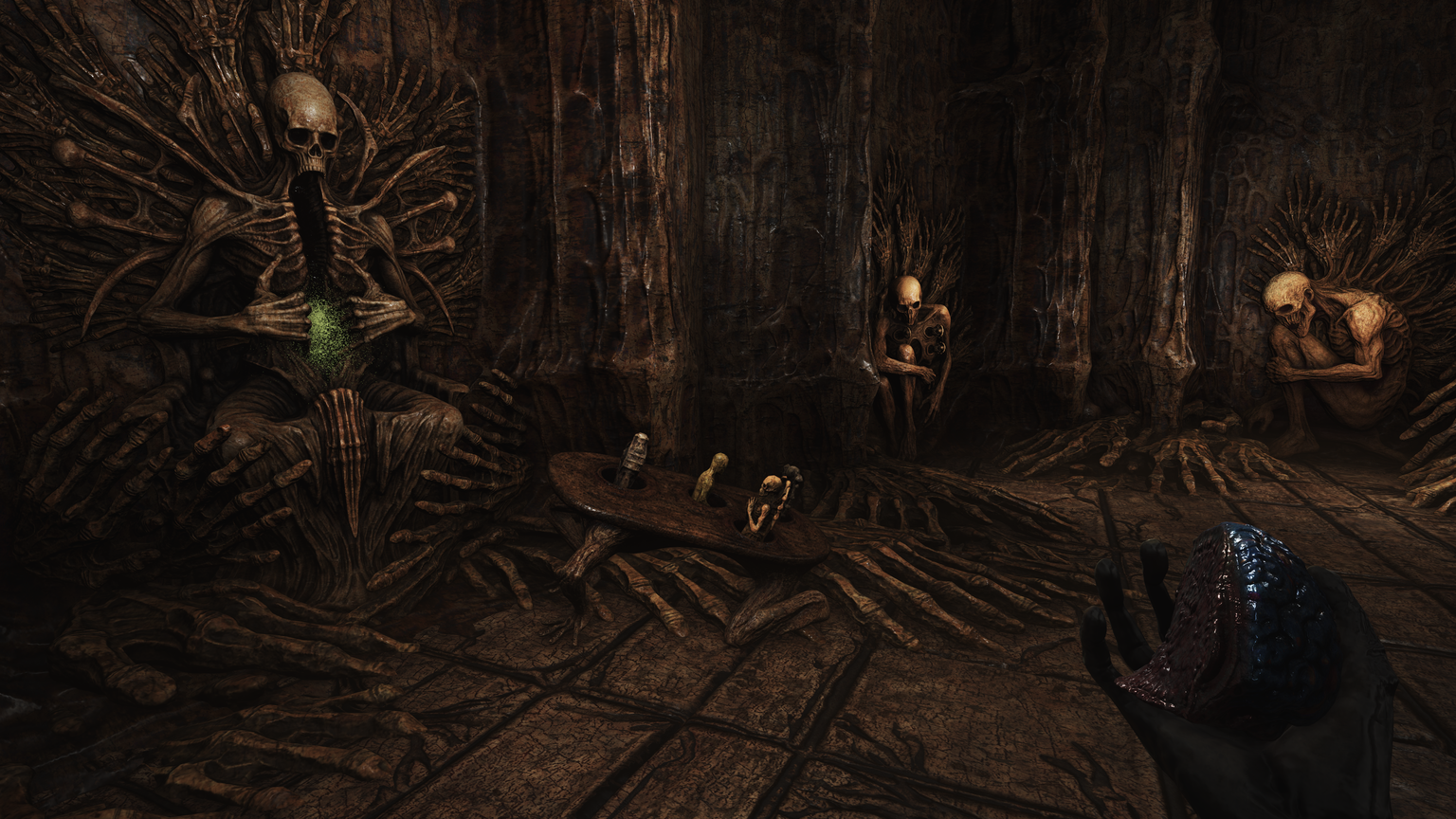
Gameplay is extremely simple, and whether that works for you depends entirely on what you want to take away from your time playing. Most of your time is spent exploring large environments, interacting with strange objects, and solving environmental puzzles by finding specific items and placing them in the correct locations. The structure repeats often. You enter an area, receive some vague objective from a grotesque entity or environmental clue, then wander through the surrounding space until you discover the tools needed to progress. In another game this repetition might become exhausting, but Necrophosis survives because the environments themselves are so imaginative that you constantly want to see what disturbing creation waits around the next corner.
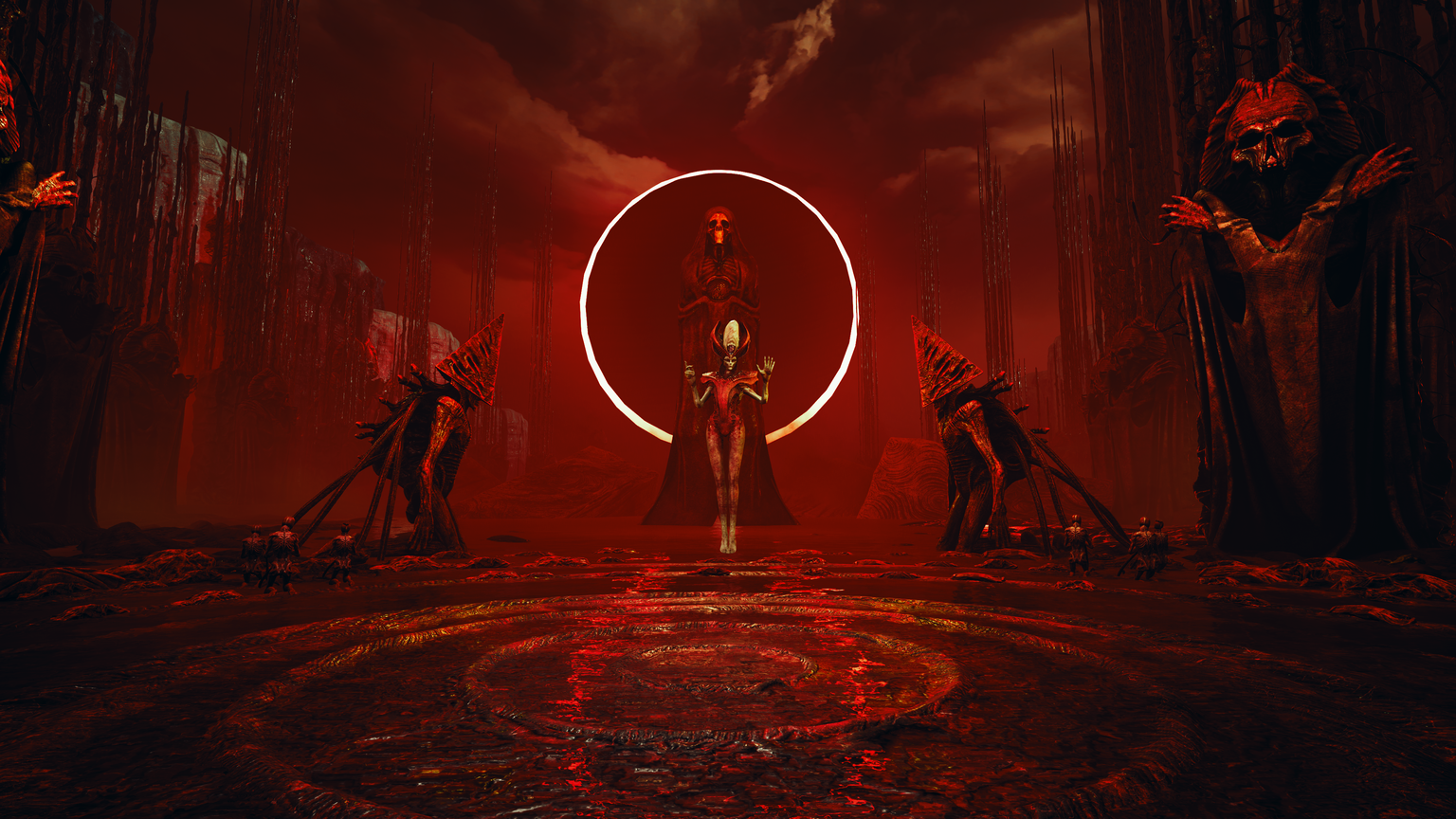
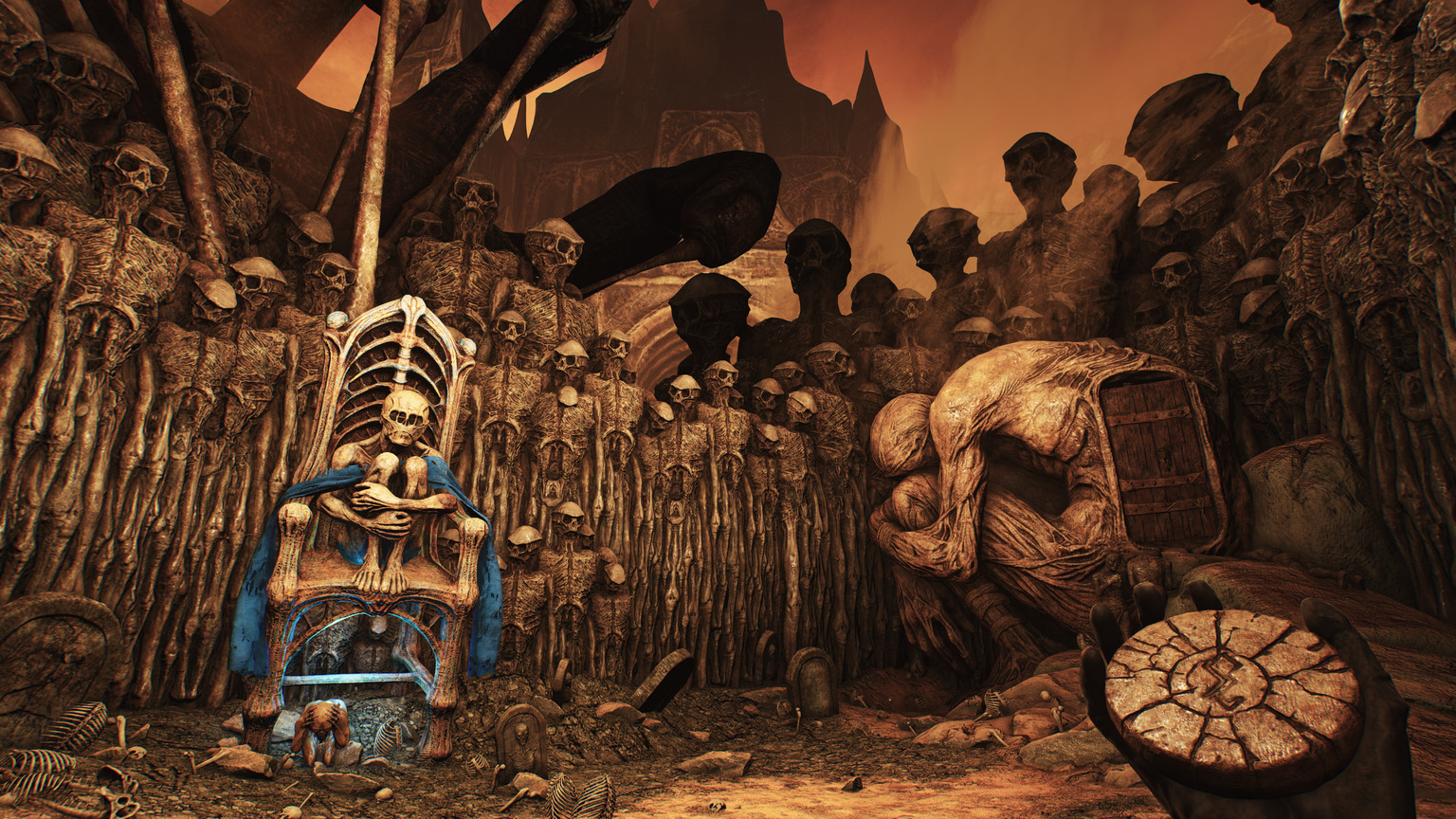
The puzzles are generally straightforward and rarely difficult enough to become frustrating. You may place skulls into fleshy mechanisms, drag corpses toward giant living structures, activate strange biological machines, or manipulate organic devices that barely resemble recognizable technology. Some sequences briefly let you control other beings entirely. One moment you are operating a creature fused to a weapon, while another has you dragging a broken body across the floor to trigger mechanisms or simultaneously activating switches through possession mechanics. These moments are short lived, but they help break up the pacing enough to keep things engaging. There is also optional lore scattered throughout the world through tablets, skulls containing poetic-like writing on scrolls, and mysterious statues that react to collected coins. None of it dramatically changes the gameplay, but it adds extra layers to the already dense atmosphere and helps flesh out the larger themes surrounding consciousness, decay, and endless existence.
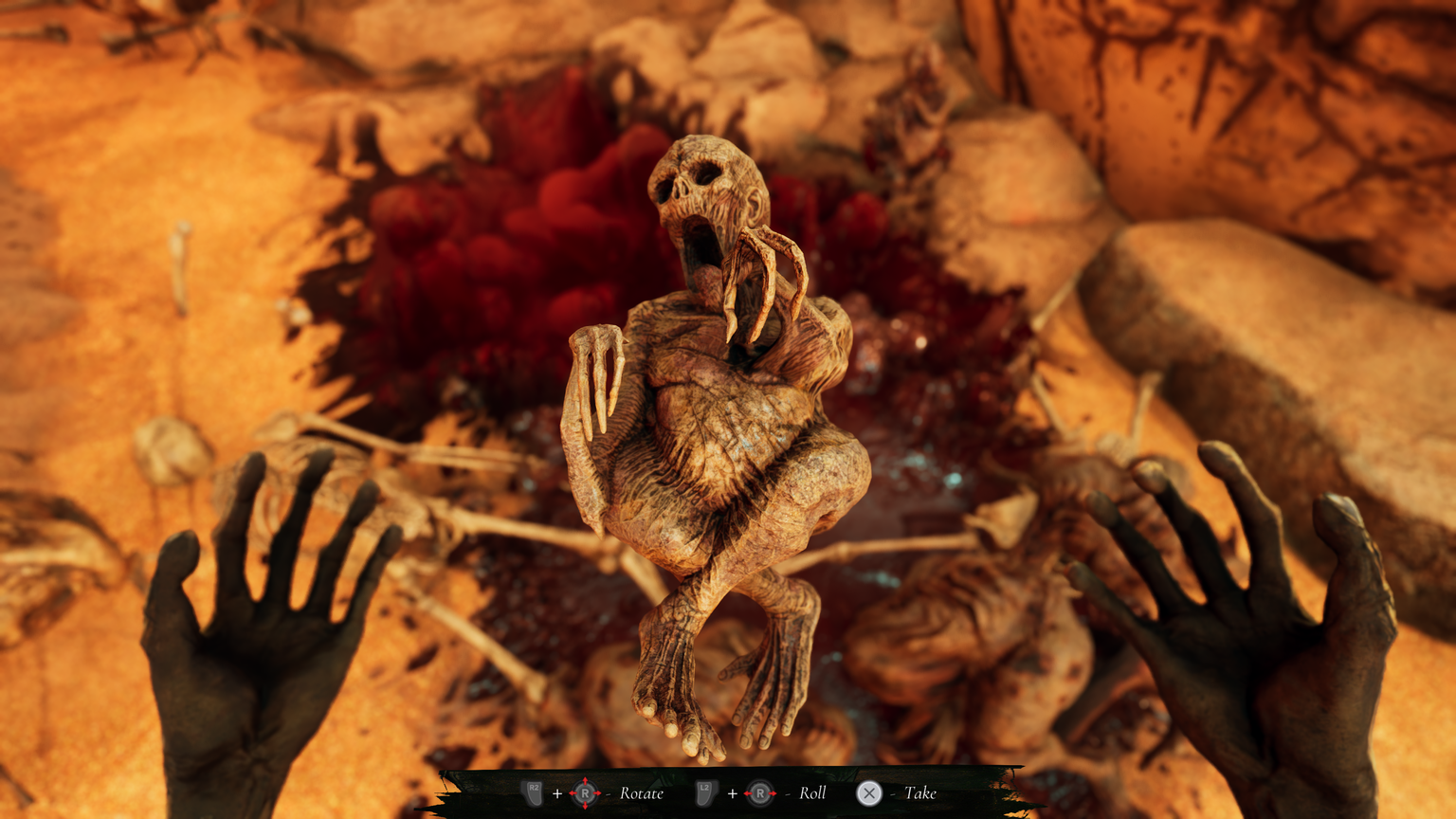
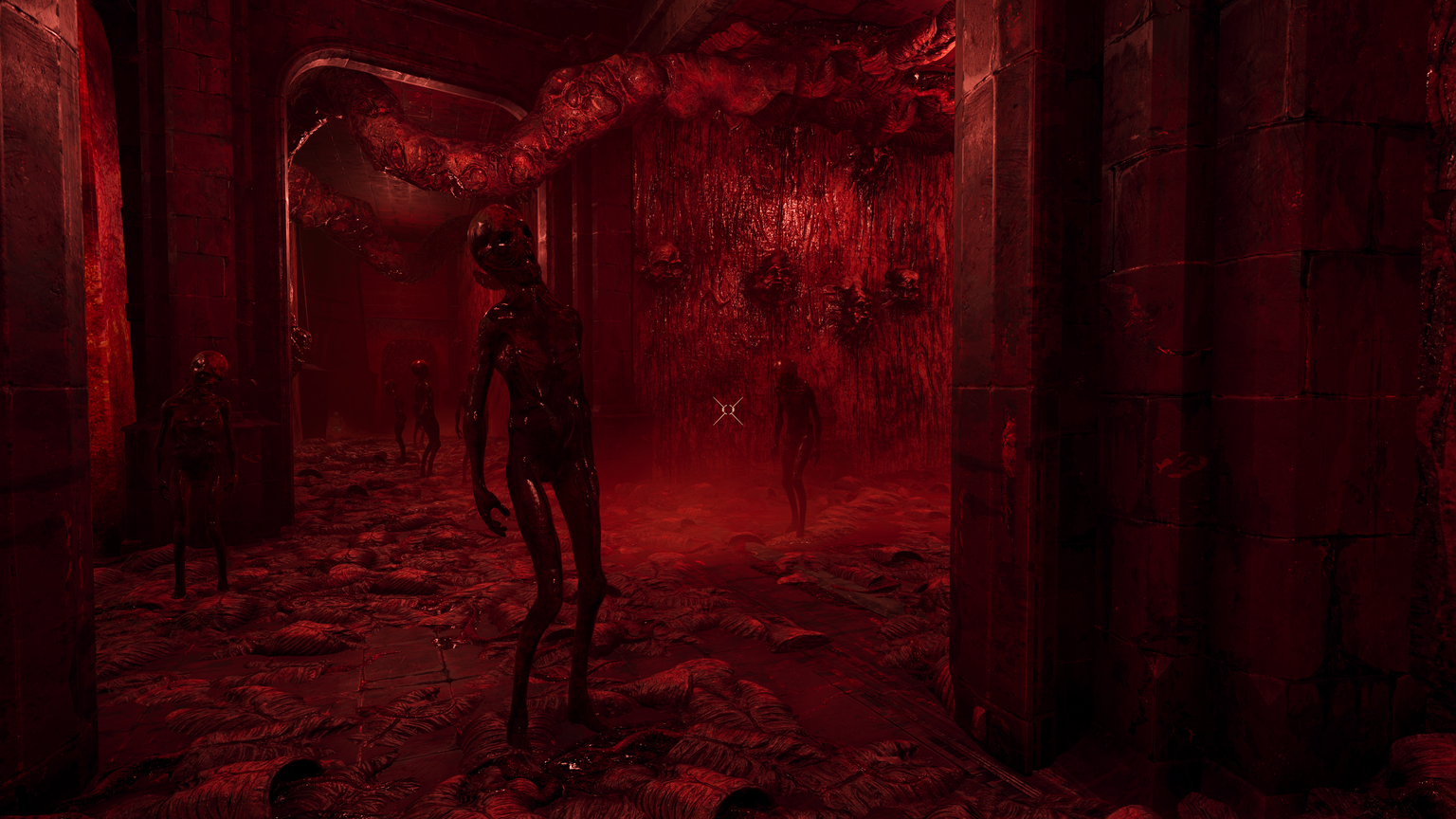
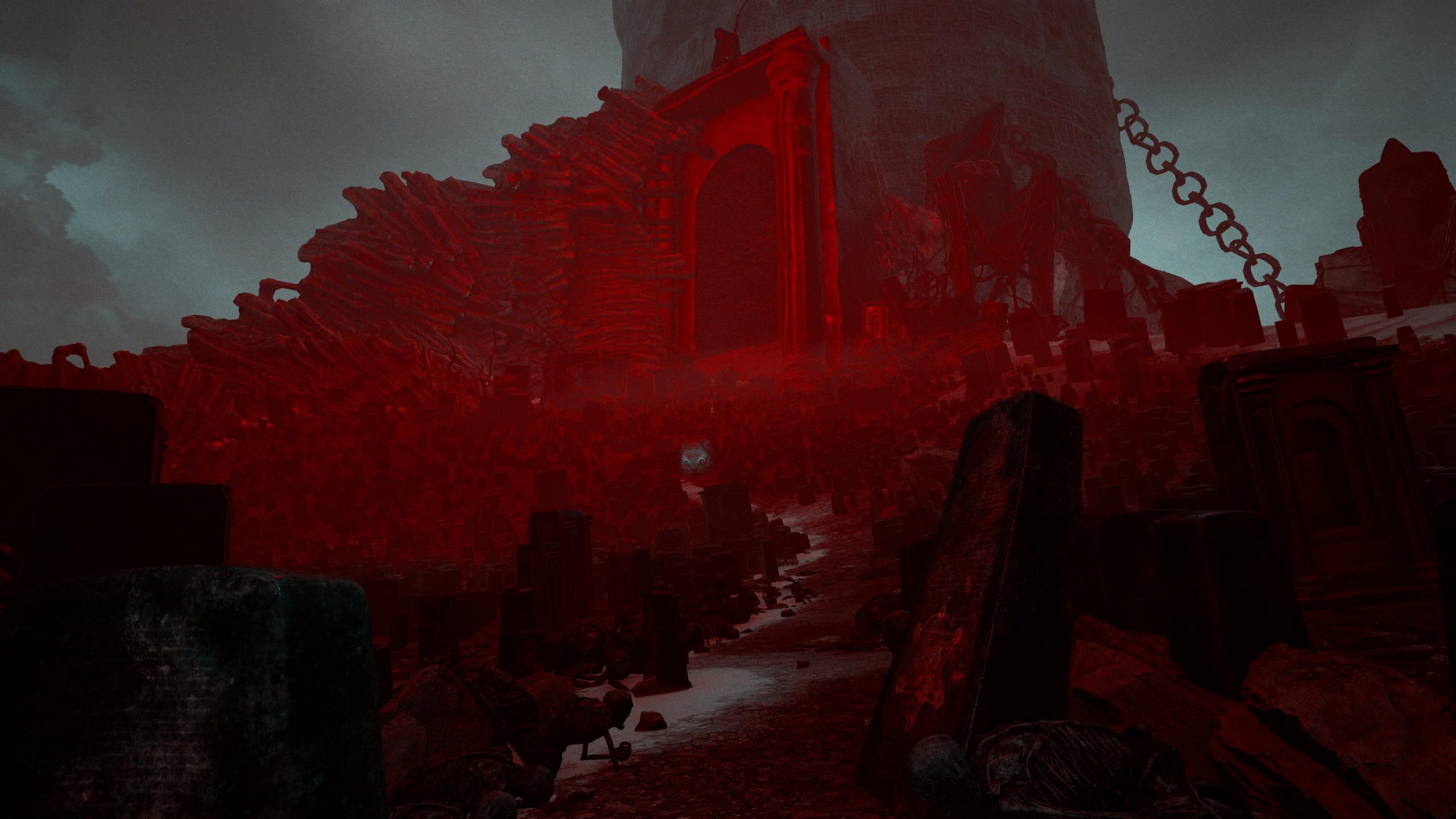
What really carries the game is the presentation. Graphically, Necrophosis is stunning in ways that are often genuinely uncomfortable to look at. Every environment feels handcrafted to maximize dread and fascination at the same time. Walls breathe with trapped skeletons fused into them, towering figures loom silently in the distance, and entire landscapes look like the remains of dead civilizations collapsing into flesh and bone. The art direction constantly feels oppressive without becoming visually repetitive. Not only are you walking through horror themed environments, but you are moving through a world that feels biologically wrong on every level, where existence itself has become diseased. The influence of Beksiński especially comes through strongly in the architecture and endless decaying vistas, while the Giger inspiration appears in the organic structures and grotesque creature design. Even when you are doing something mechanically basic, the world itself keeps your attention locked in because there is always another disturbing visual waiting ahead.
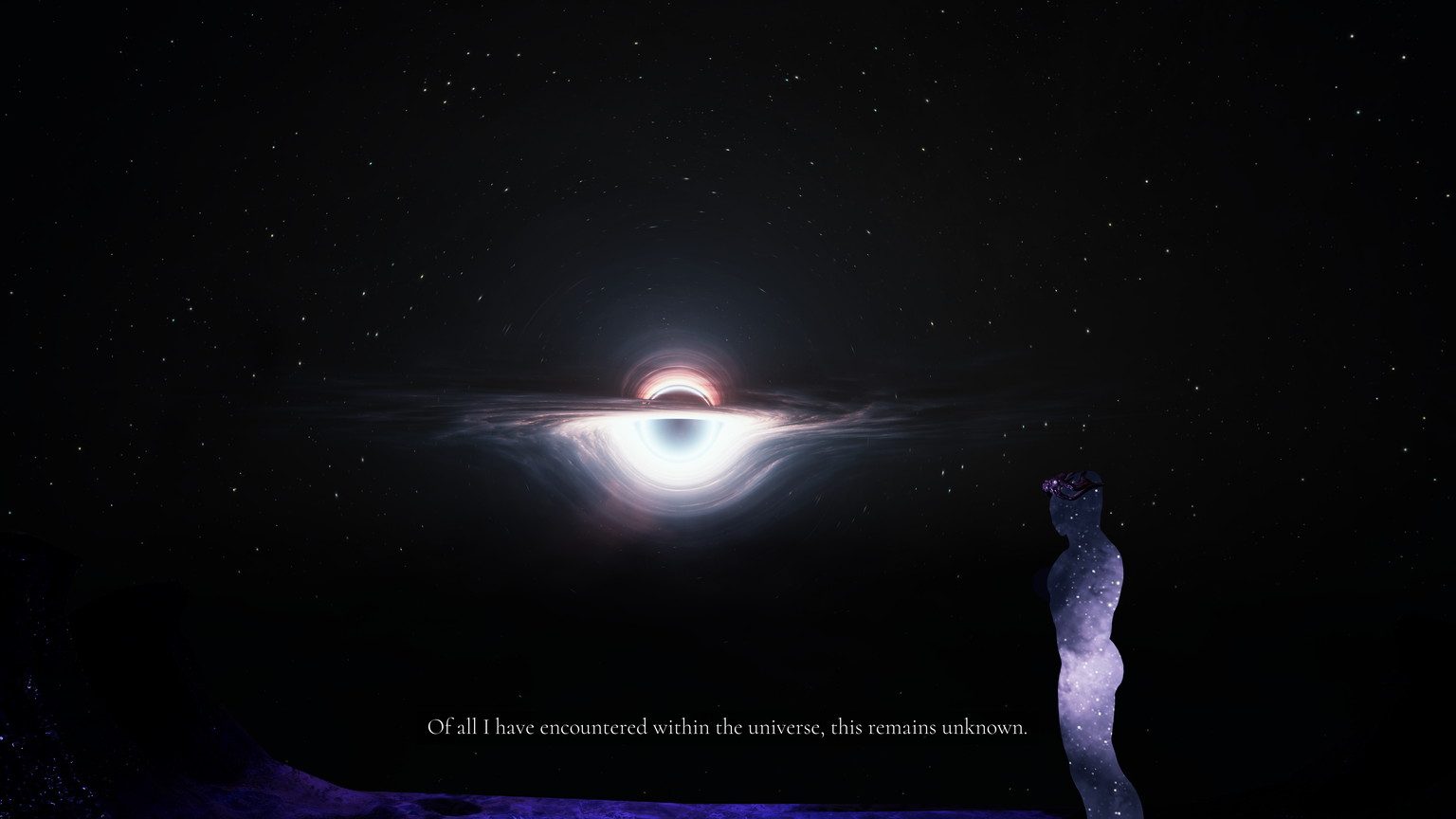
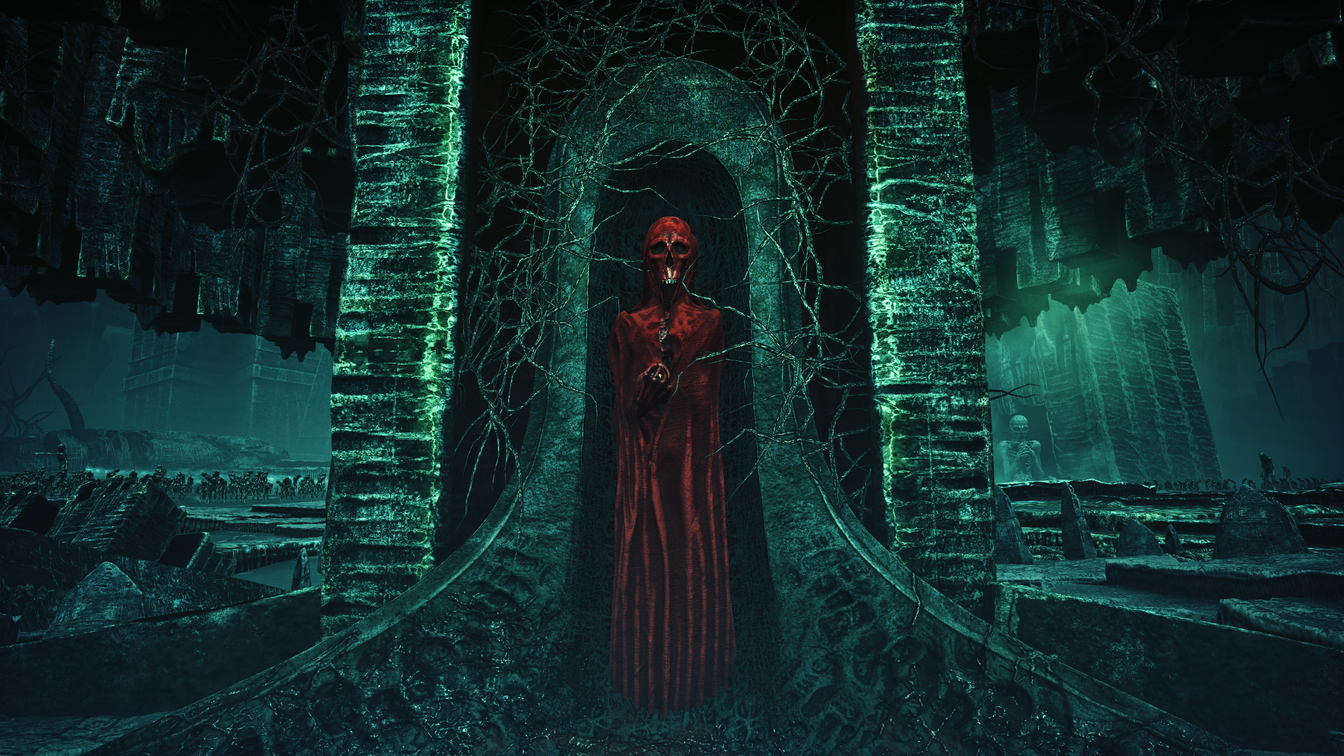
The audio design complements the visuals perfectly. Music is minimal, somber, and droning, often blending into the environment itself instead of standing out as traditional background tracks. Voices sound exhausted and ancient, sometimes layered together into unsettling whispers that barely feel human anymore. Many conversations echo unnaturally or overlap in strange ways that make every interaction feel uncomfortable. Combined with the game’s constant use of cryptic wording and philosophical narration, the soundscape creates an atmosphere that feels oppressive from beginning to end. Necrophosis understands that horror does not always need jump scares or direct threats. Sometimes all it takes is tone, sound, and visual discomfort working together to make you feel trapped inside a dying universe.
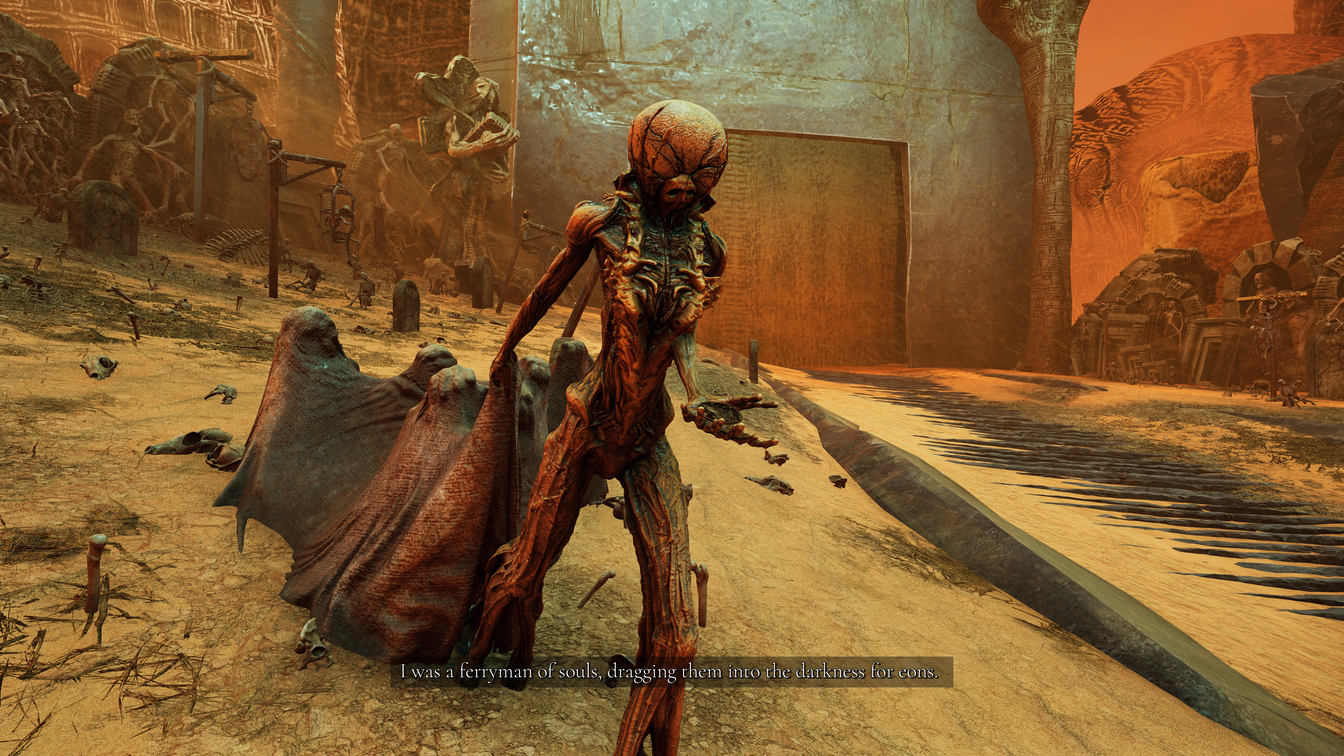
The Subconsciousness expansion is a nice addition to the package even if it is fairly brief. It adds a couple of new areas, expands some of the themes introduced in the base game, and gives the overall story a stronger sense of completion. At the same time, it does feel a bit short lived, especially since it can easily be finished in under half an hour. Still, having it included here makes Full Consciousness feel like the proper definitive edition instead of just a rerelease.
Final Thoughts?
Overall, I really enjoyed my time with Necrophosis: Full Consciousness. It is not a mechanically deep game, but what is here is interesting nonetheless. This is an experience driven horror adventure built almost entirely around atmosphere, surreal imagery, and existential dread. If you go in expecting intense combat, complicated systems, or deeply layered puzzle design, you will probably leave disappointed. But if you are someone who loves immersive horror worlds and strange artistic experiences, this game absolutely succeeds at what it sets out to do. The visuals are unforgettable, the atmosphere is consistently oppressive, and the world itself is fascinating enough to carry the relatively simple gameplay loop. Fans of Scorn in particular should absolutely give this one a look because Necrophosis scratches a very similar itch while still feeling distinct enough to stand on its own.
About the Author

Nay Clark Gaming holds a special place in my heart and I never stop talking about video games. I really love all types of games and have an interest in games that have complicated stories and lore because I enjoy untangling the mystery of it all. When I'm not gaming, I unsuccessfully try to control three amazing and incredibly bright kids.
Related Posts

QUEENS OF THE STONE AGE ANNOUNCE MASSIVE TOUR OF AUSTRALIA AND NEW ZEALAND TO CLOSE 2026 →

New DuRoBo 6.13″ ePaper Focus device designed for reading →

‘I WANT YOUR SEX’ STARRING OLIVIA WILDE AND COOPER HOFFMAN IN AUSTRALIAN CINEMAS 27 AUGUST →