
MY HERO ACADEMIA: All’s Justice Review (PS5)
Summary: All’s Justice delivers fast, explosive 3v3 battles where every character feels distinct and full of personality. The game mixes intense combat with exploration, missions, and collectibles, giving fans a lot to dive into. Despite a few rough spots, it stands as a polished, content-rich experience that celebrates everything My Hero Academia has to offer.
4
Go Beyond!
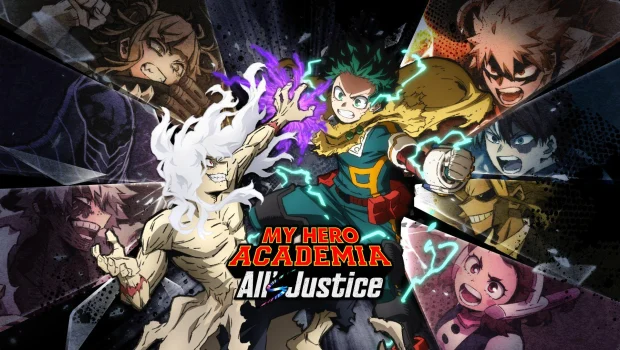
Heroes clash, cities crumble, and going Plus Ultra is the only way to win! MY HERO ACADEMIA: All’s Justice is a super powered 3D arena fighter developed by Byking, published by BANDAI NAMCO Entertainment, and is releasing on February 6, 2026 for PlayStation 5, Xbox Series X|S, and PC. It serves as the third and final entry in the One’s Justice sub series, following My Hero One’s Justice and My Hero One’s Justice 2, and is positioned as the definitive send off for the anime’s climactic Final War arc. Like many anime arena fighters, it adapts the source material directly, but All’s Justice is far more ambitious than its predecessors. It feels like a genuine attempt to refine every system, expand the scope of content, and present the My Hero Academia universe in its most explosive and confident form yet.
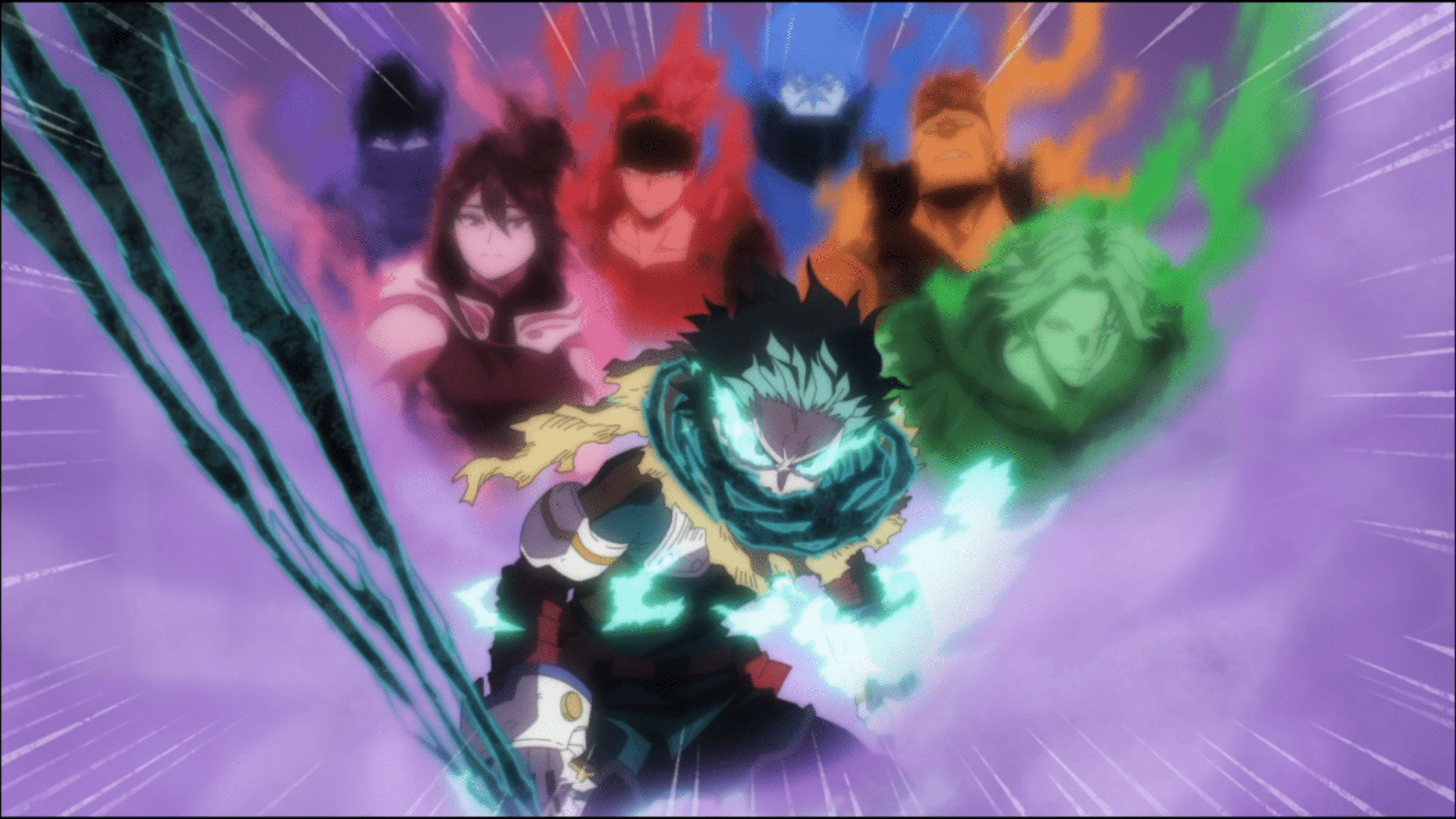
Although the game technically includes a story mode, it is not telling an original narrative. Instead, it reinterprets the final arc of the anime through a mix of cinematic cutscenes and playable battles. What stands out is how these scenes are presented. The game blends fully animated character model sequences, stylized anime stills with motion effects, and fast cutting transitions between frames to sell intensity. When it works, it works incredibly well. Some scenes feel more emotionally charged than their anime counterparts thanks to tighter pacing and dramatic framing. The way overlapping battles are laid out across chapters also helps visualize how chaotic and simultaneous the Final War truly is. That said, the presentation is inconsistent. Late in the story, cutscene quality takes a noticeable dip with awkward lip syncing, freezes, and rough transitions that feel unfinished. These issues are especially frustrating because earlier scenes look excellent, making the drop in quality feel amateurish rather than a technical limitation.
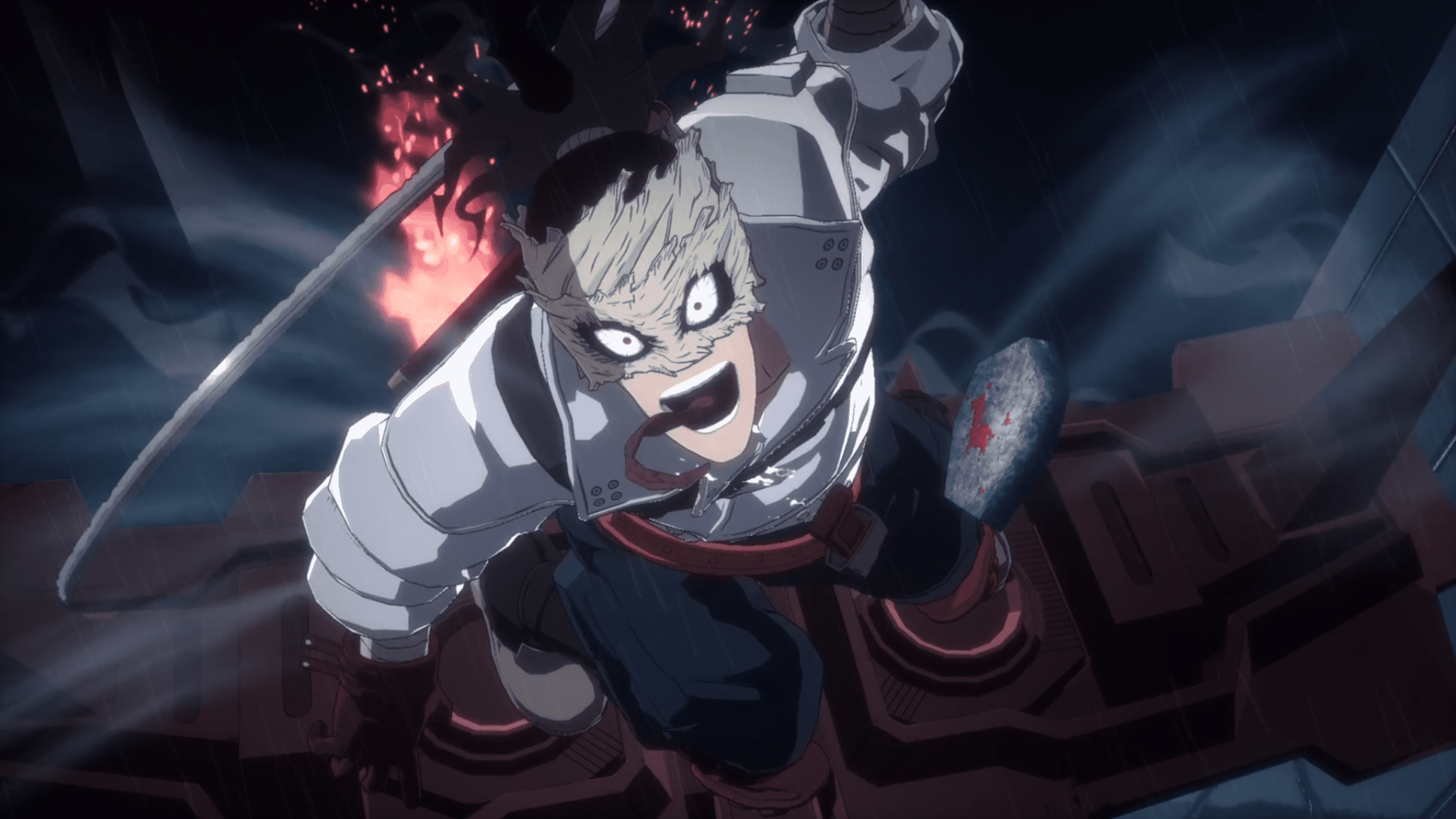

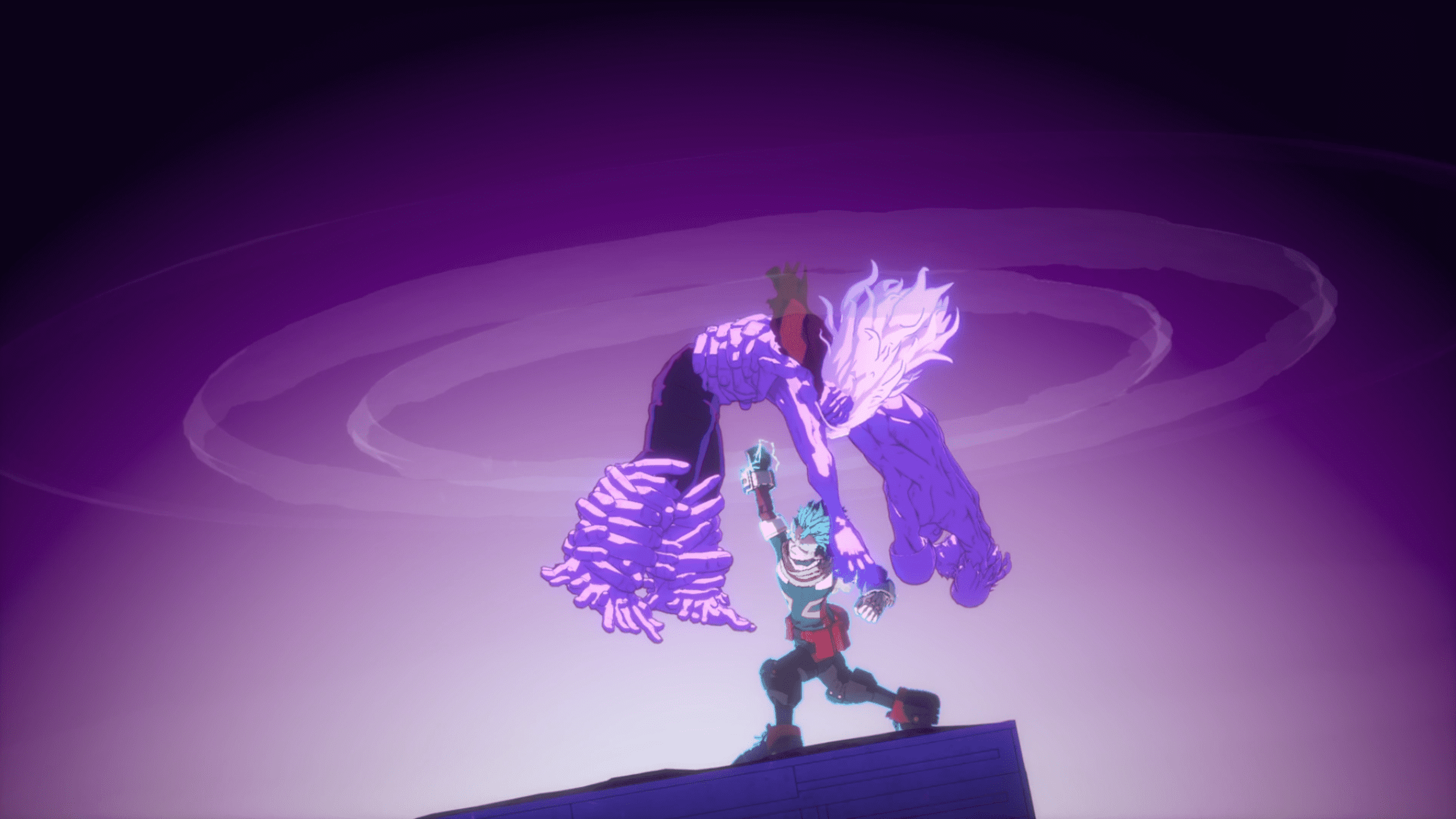
All’s Justice strongest quality is its fast, confident, and deeply engaging gameplay. It is a fast paced 3v3 arena fighter that emphasizes mobility, timing, and character synergy. Movement feels immediately better than previous entries. Dashing, jumping, air dashing, and chasing opponents with target combos all flow together smoothly, making fights feel fluid even when the screen is filled with effects. Combat revolves around a layered system of target combos, unblockable attacks, and counter attacks that function like rock paper scissors. Unblockables pierce guards, counters shut down aggression, and mistimed attacks can leave you wide open. Once you understand how these systems interact, fights become much more nuanced and rewarding.
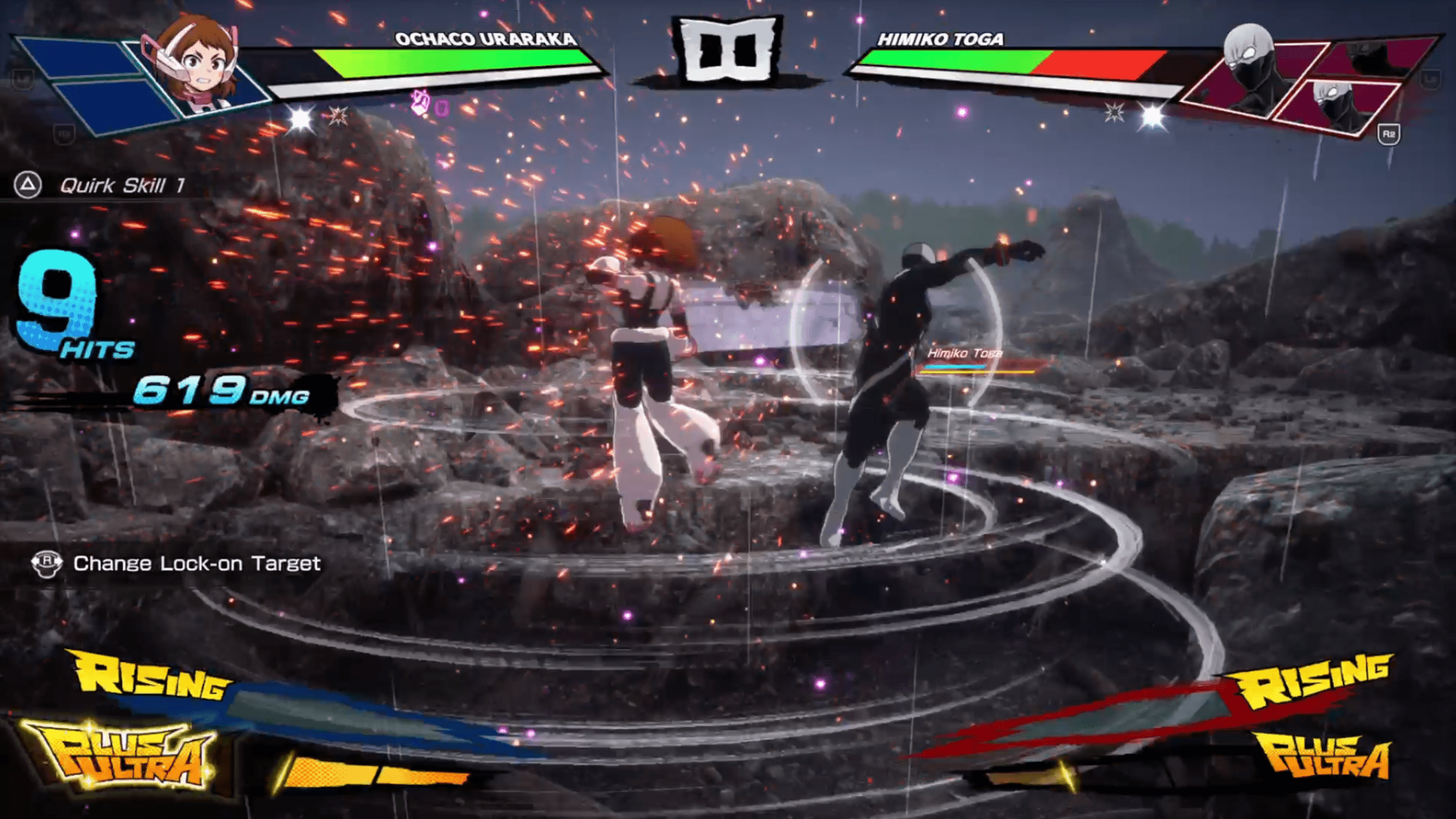
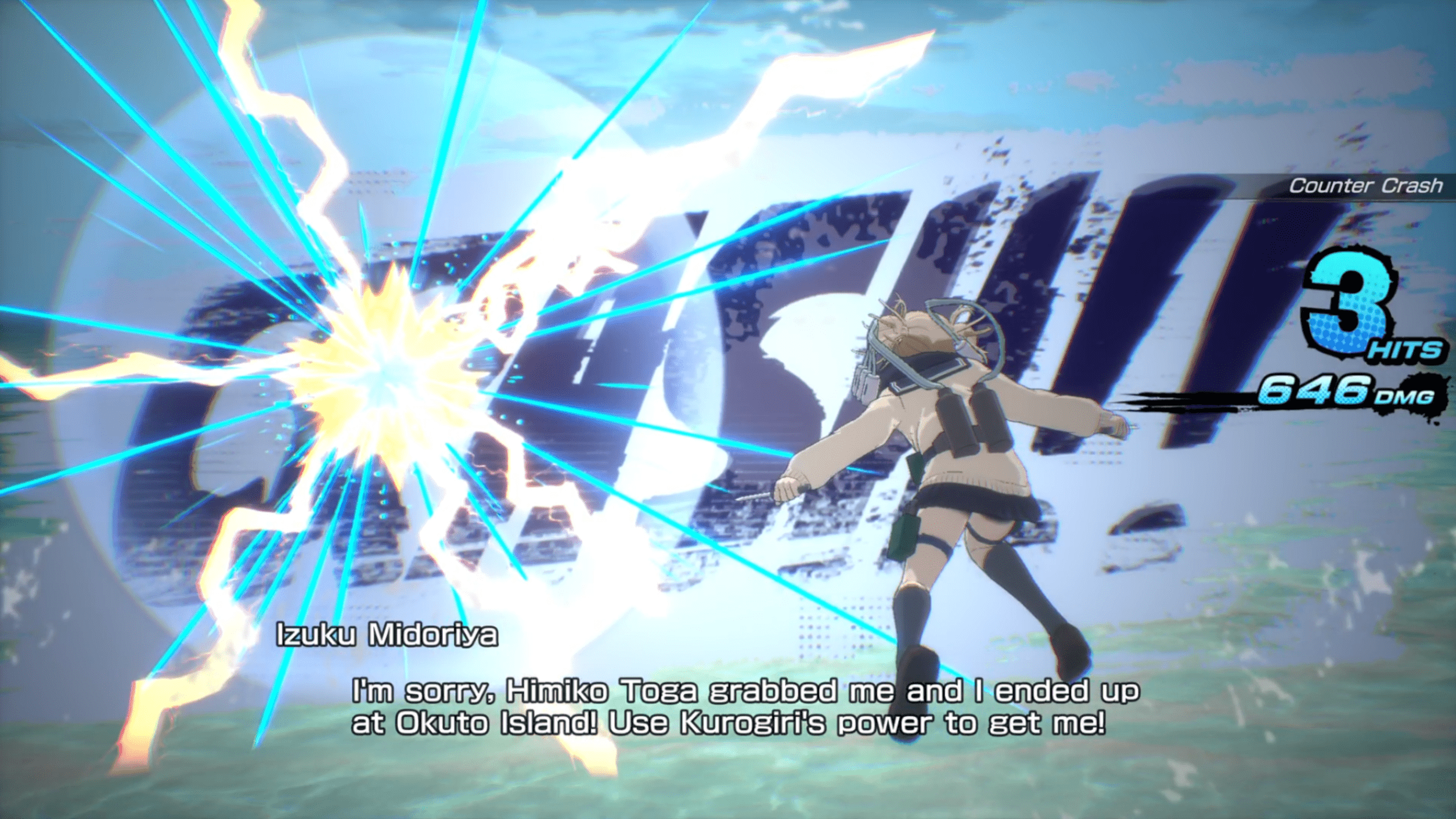
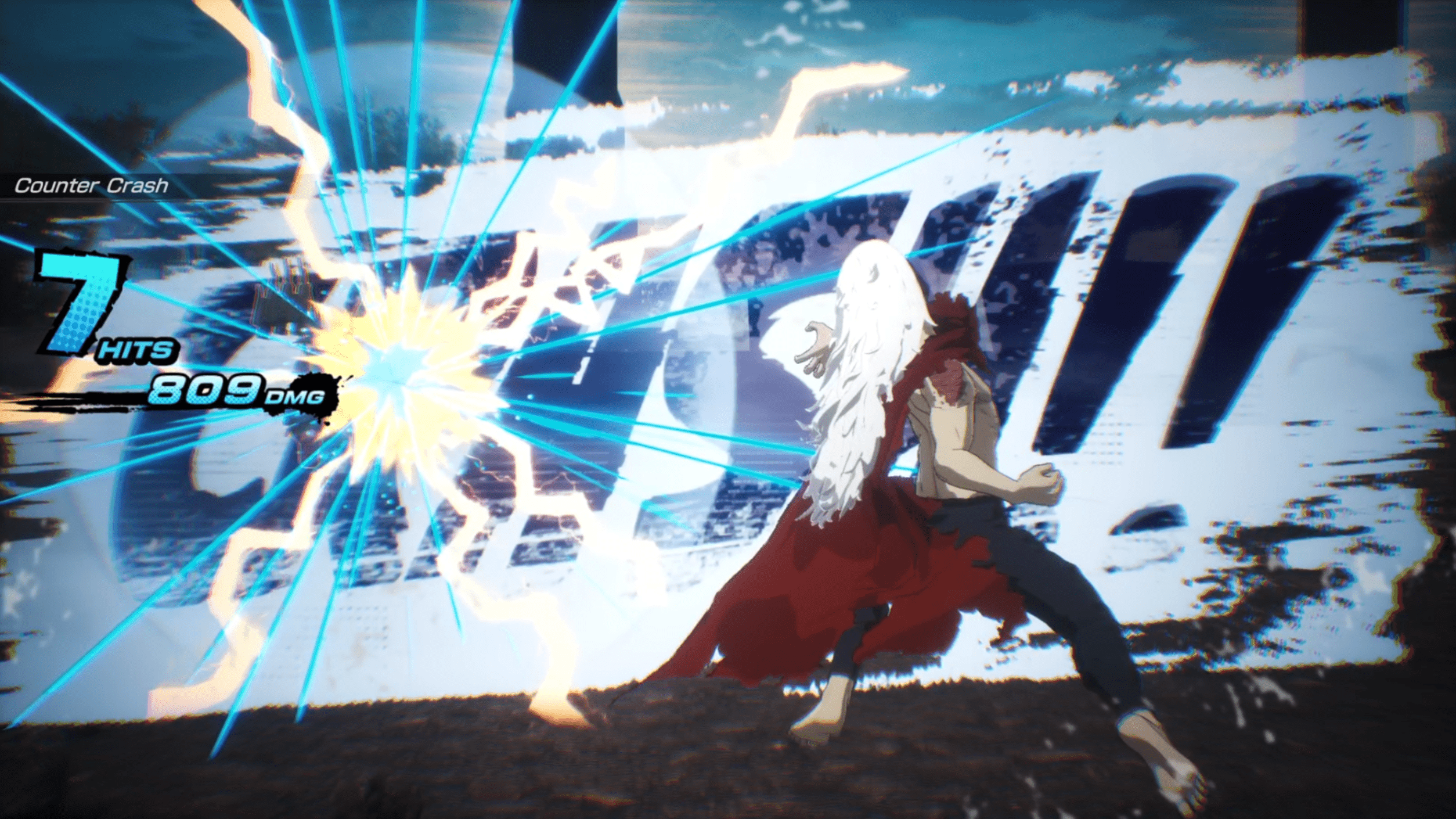
Each character feels distinct, which is critical for a series with such a massive cast. Quirks are not just visual flair but directly inform how each fighter controls, moves, and pressures opponents. Triangle and circle inputs combined with directional movement unlock different ground and air based Quirk skills, while Rising mode temporarily boosts attack power, movement speed, and special properties once its gauge is filled. The Plus Ultra gauge stores up to three stocks and allows for powerful ultimate attacks or character specific effects, adding another strategic layer. Guarding, directional dodging, emergency escapes, and Counter Crash mechanics all contribute to a combat system that rewards awareness and practice rather than button mashing.
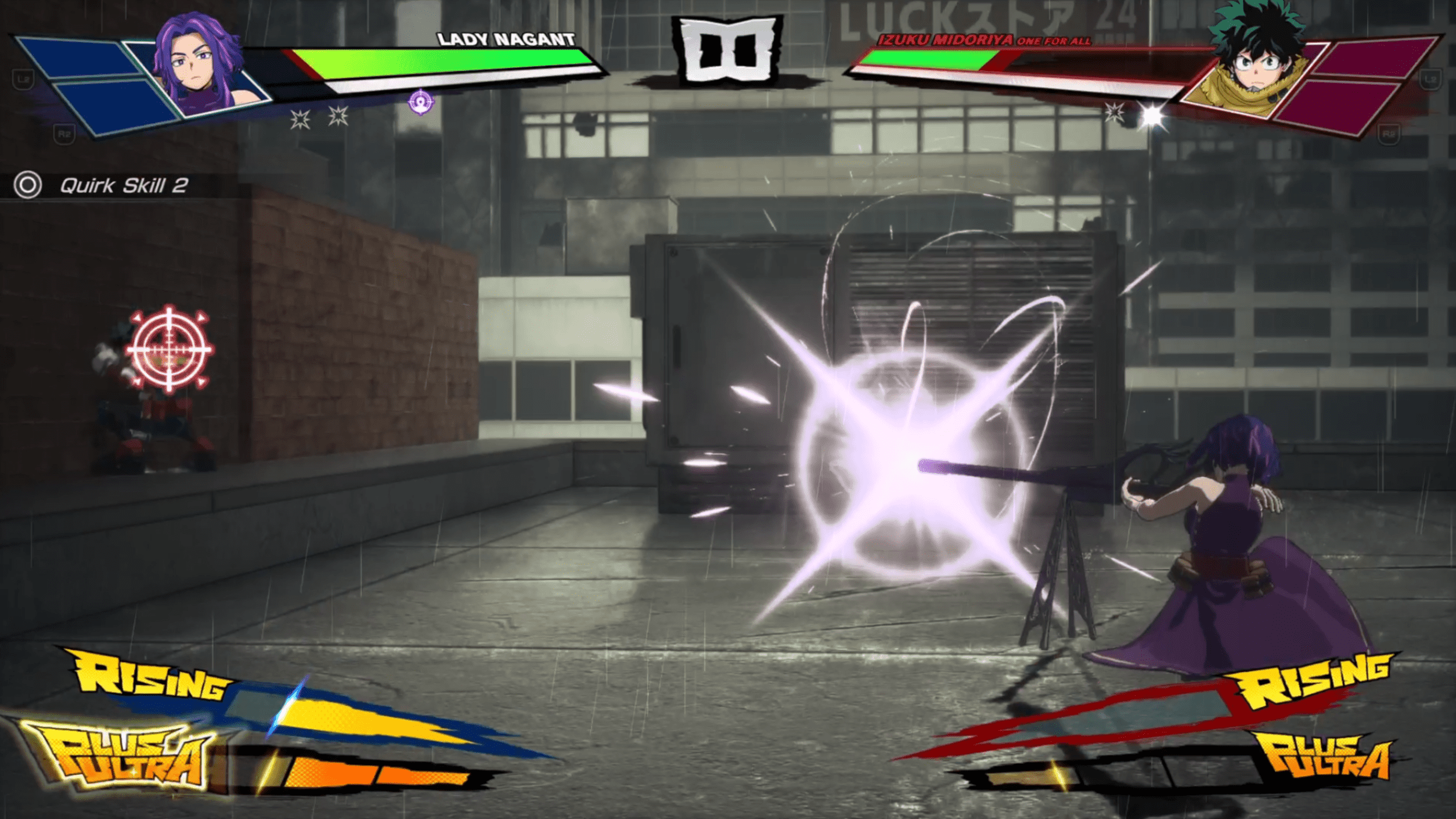
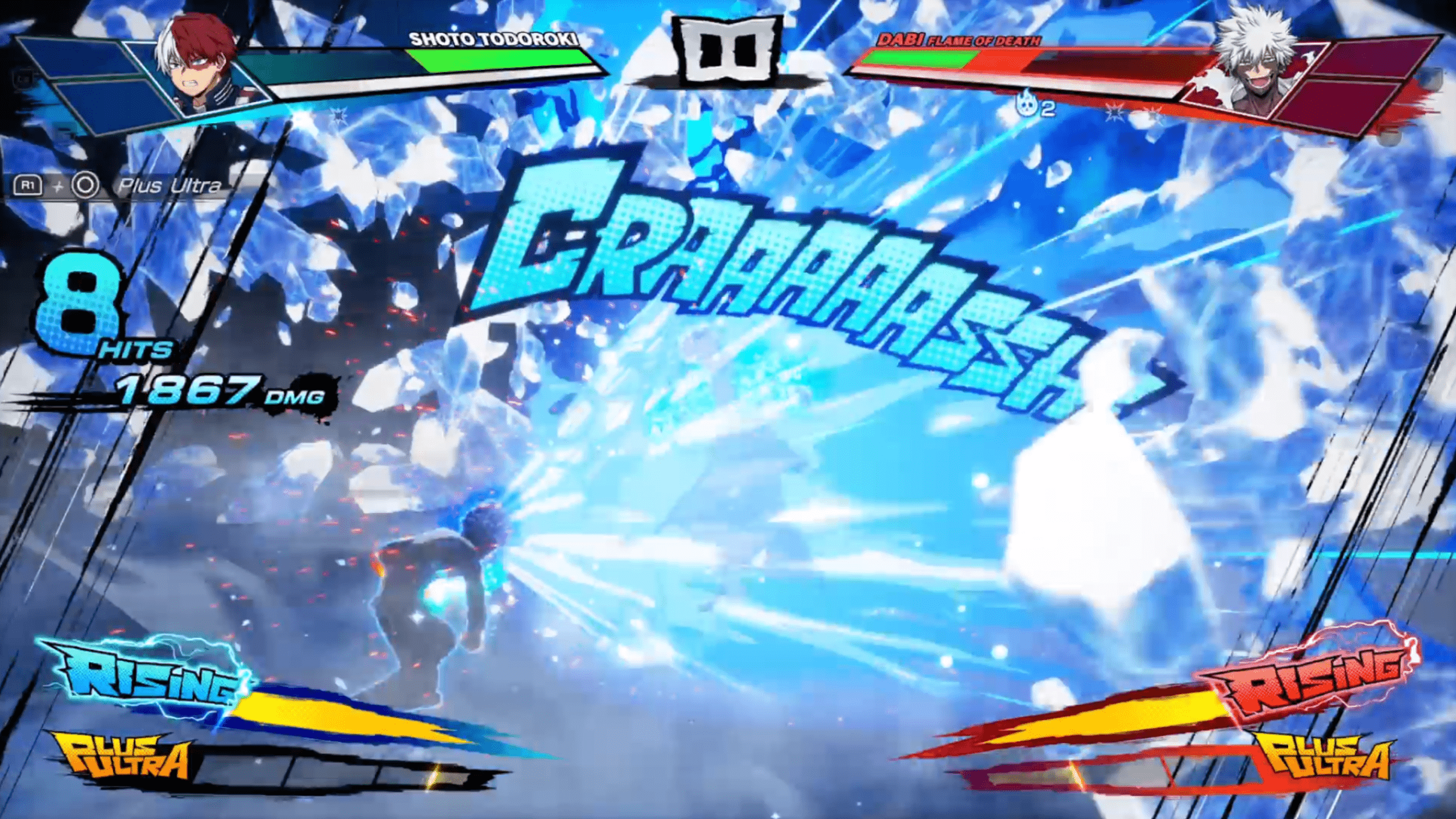
The game also offers two control styles. Normal mode automates certain actions, making it easier for newcomers to jump in, while Manual mode gives full control over inputs and timing. As you improve, switching to Manual makes the combat feel deeper and more satisfying, especially when chaining character swaps and optimizing combos. The roster is large and varied, and experimenting with team compositions is genuinely fun. Finding character synergies and developing your own preferred setups adds a lot of replay value. It is disappointing that some notable characters like Star and Stripe are missing, though they feel like obvious candidates for future downloadable content alongside additional stages.

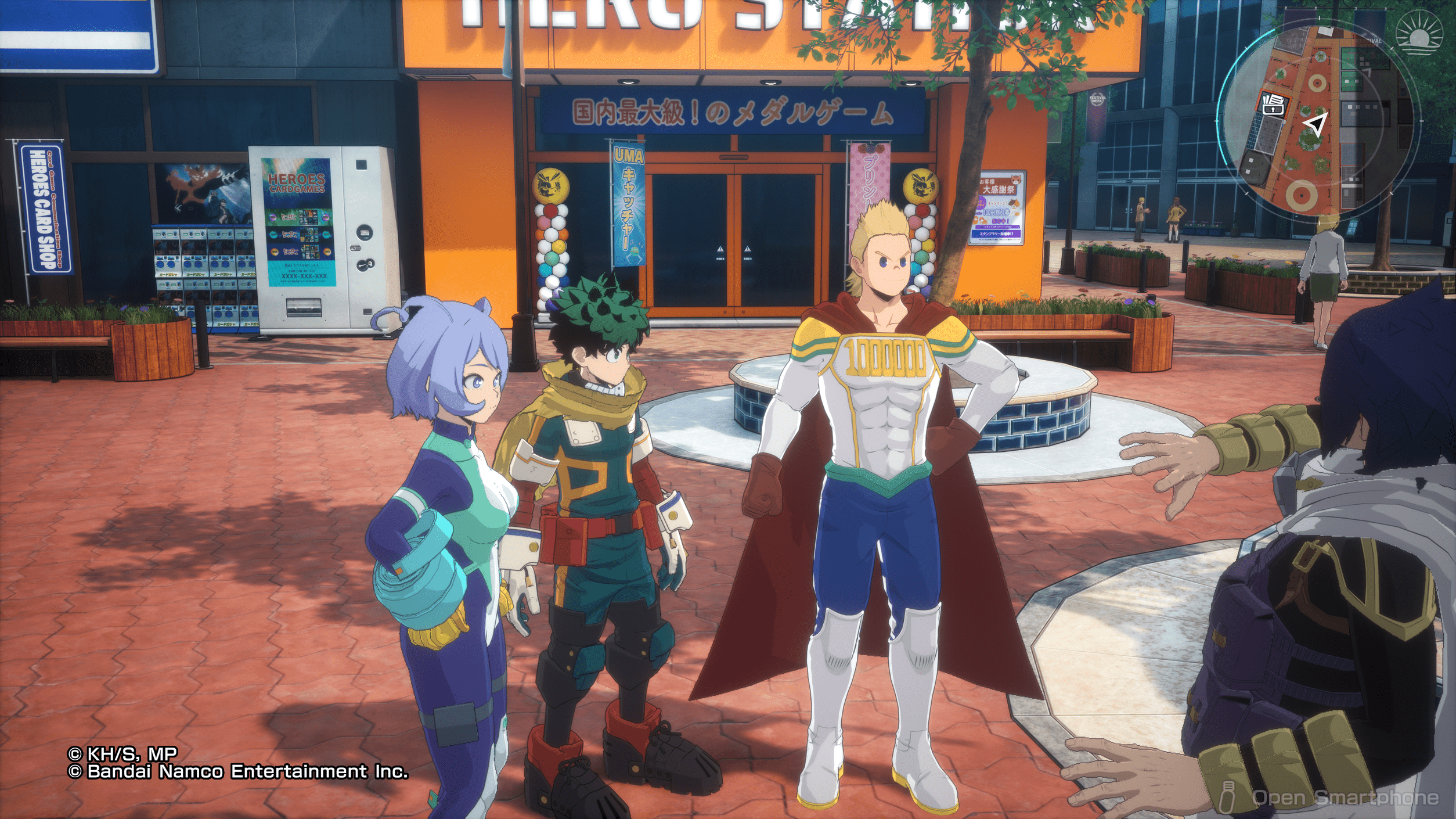
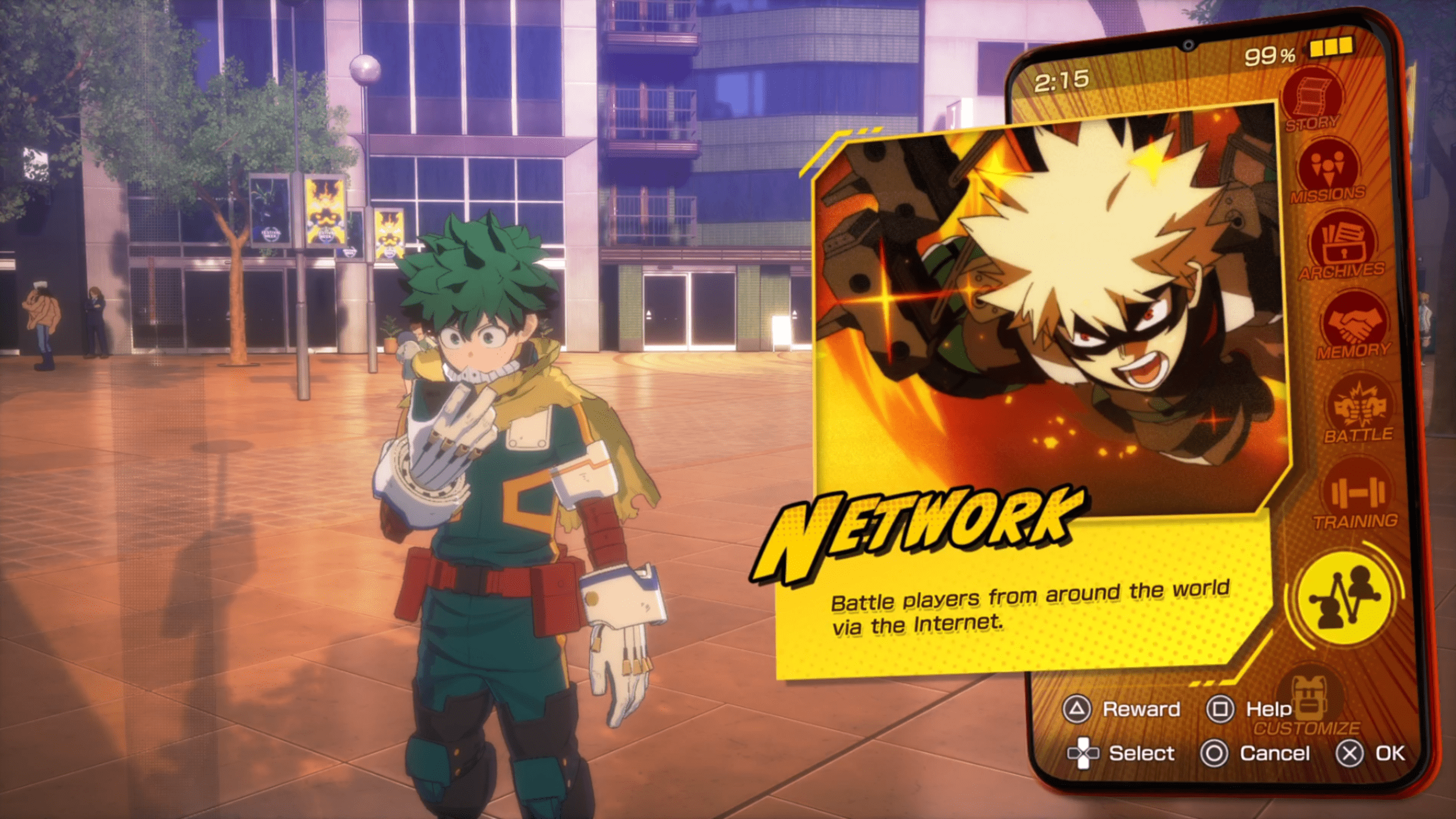
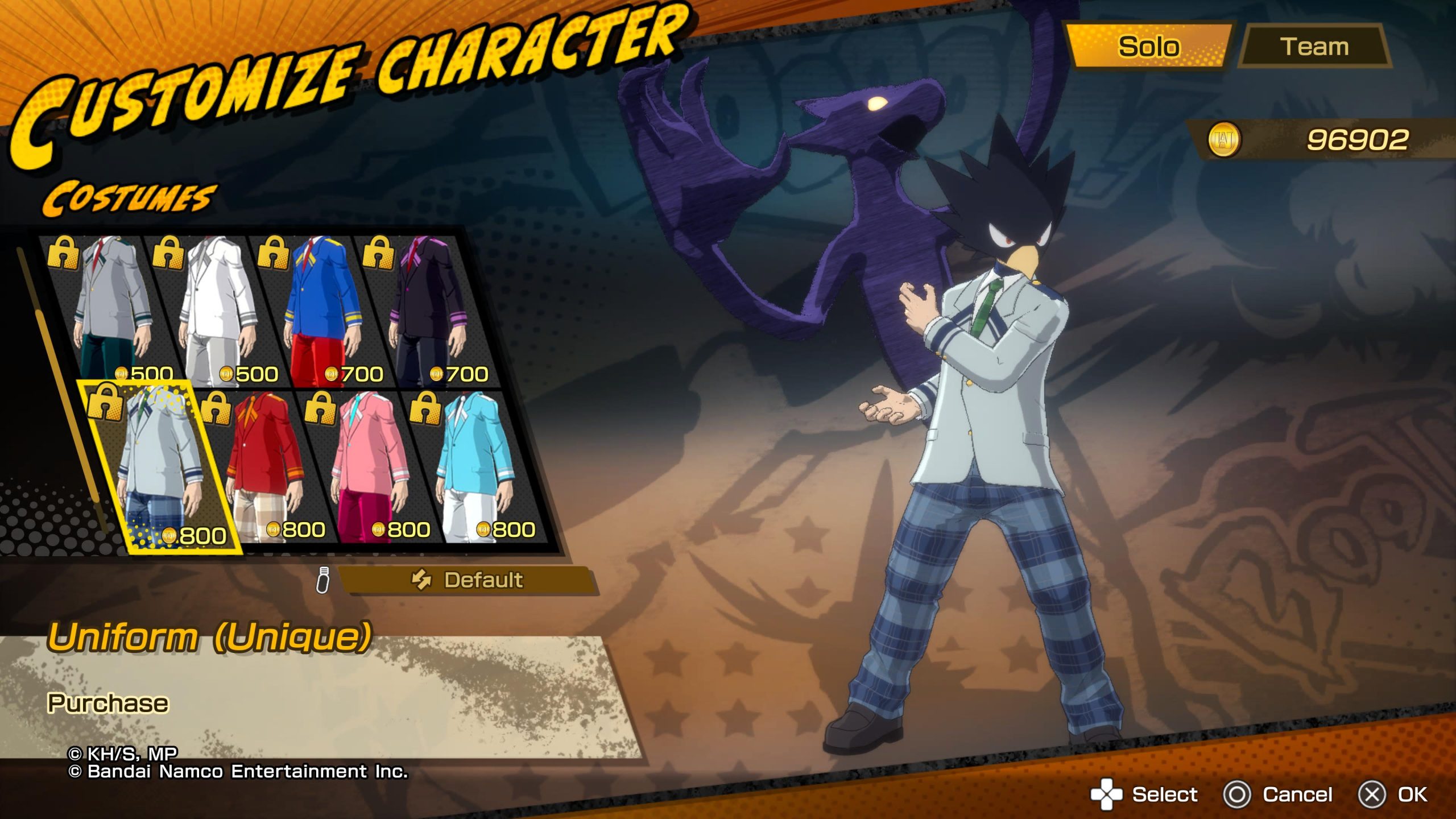
Outside of pure combat, All’s Justice is packed with modes and systems. The game opens in the Main Stage, a small city hub that acts as both a menu and a playable space. You can run around, talk to characters, trigger battles, enter buildings like the gym for training and free battles, or visit shops to customize UI elements, costumes, and color variations. Deku’s smartphone also functions as a quick menu, letting you jump into any mode instantly if you prefer efficiency over exploration.
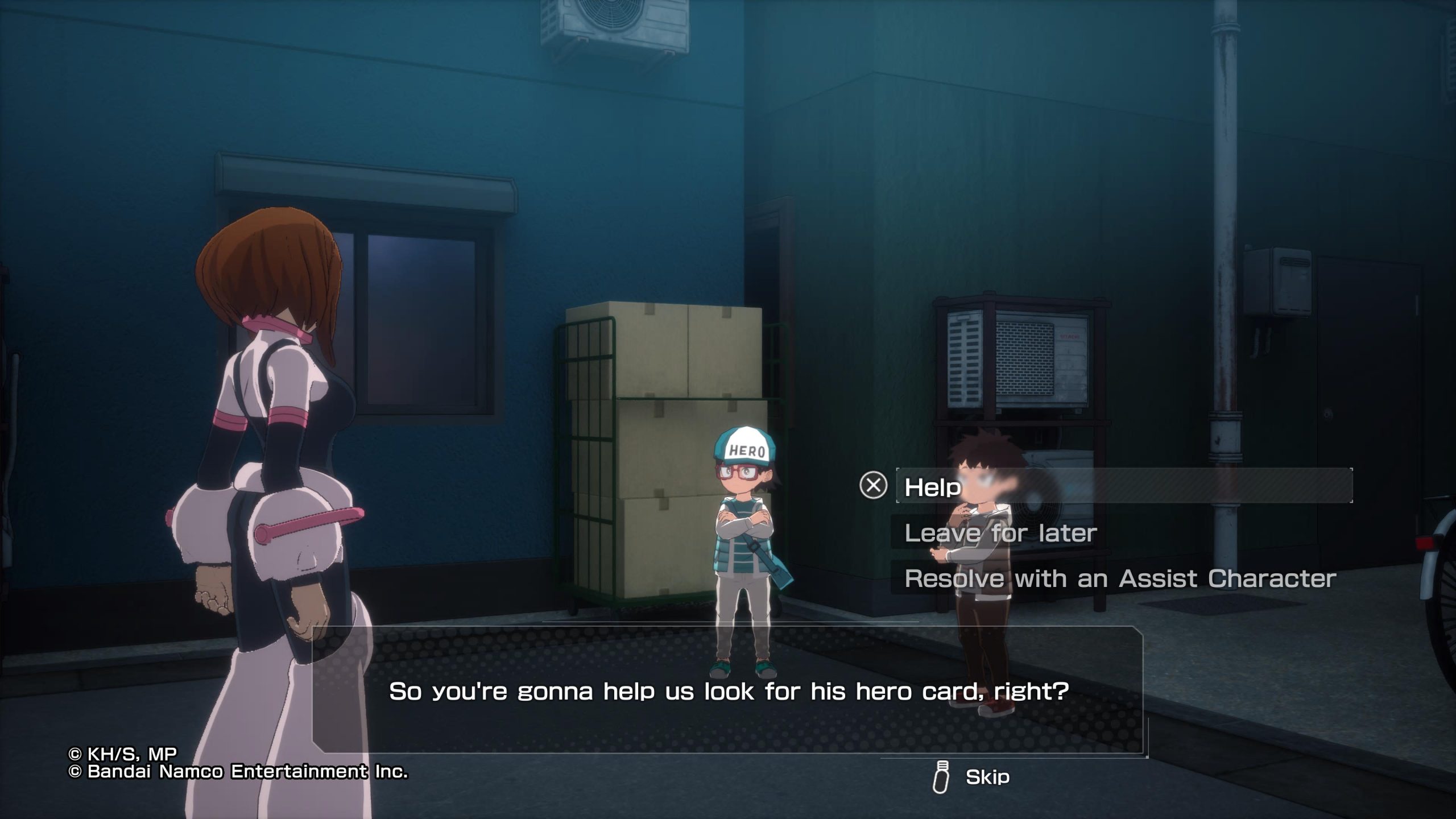
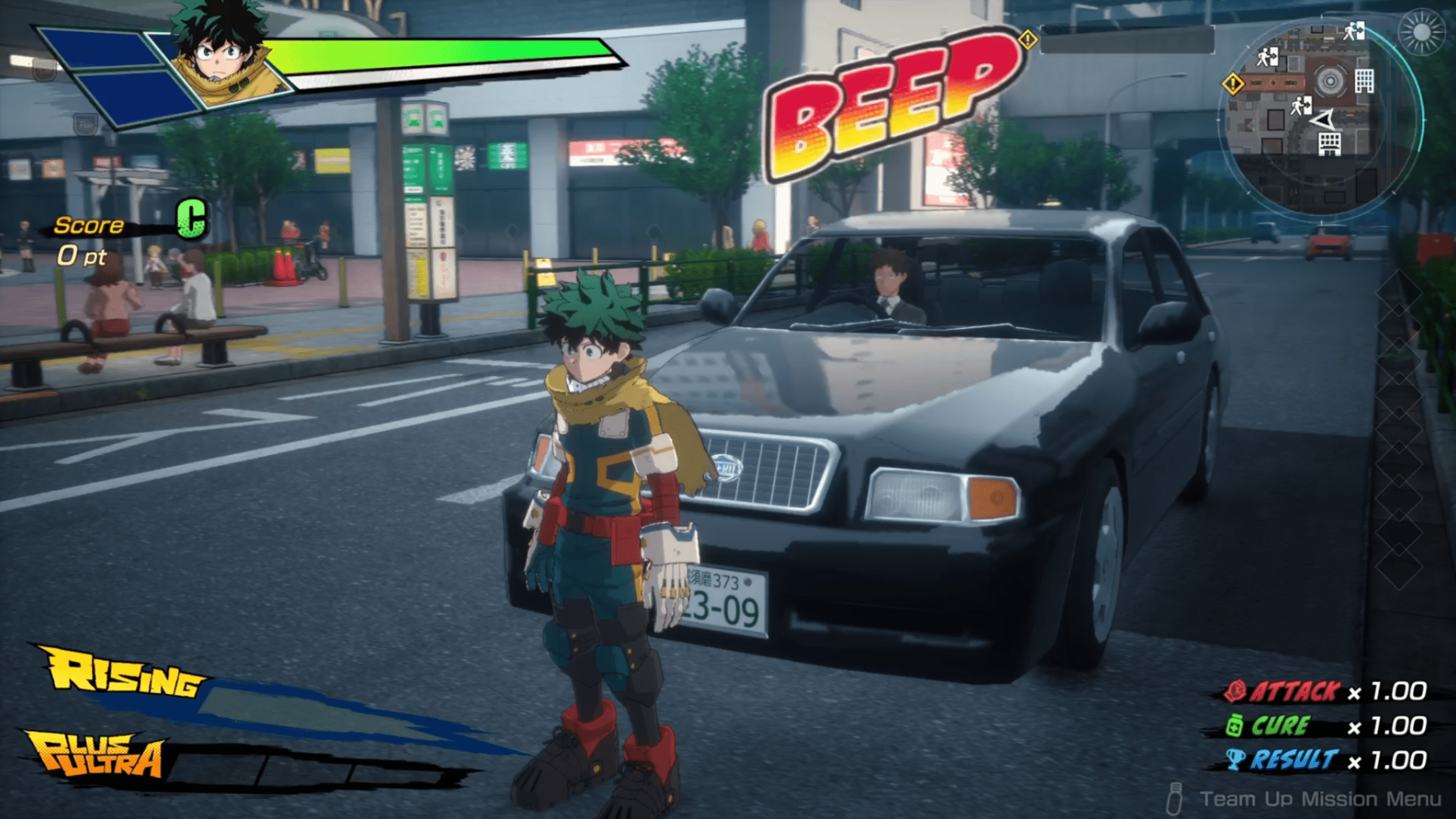
Team Up Mission is one of the more ambitious additions. Set in a virtual reality simulation, it drops you into a city map filled with main missions, sub missions, and character specific tasks. These range from combat encounters to lighthearted objectives like helping Ochako search for a lost cat or assisting a student with a vending machine quest. You recruit allies, manage health and stamina with Hero Coins, and earn scores that determine rewards. While the mode does a good job combining combat, exploration, and character interactions, its structure feels oddly segmented. Some missions end abruptly after a single objective, and the flow between tasks can feel disjointed. It is fun and content rich, but it could have been more cohesive.
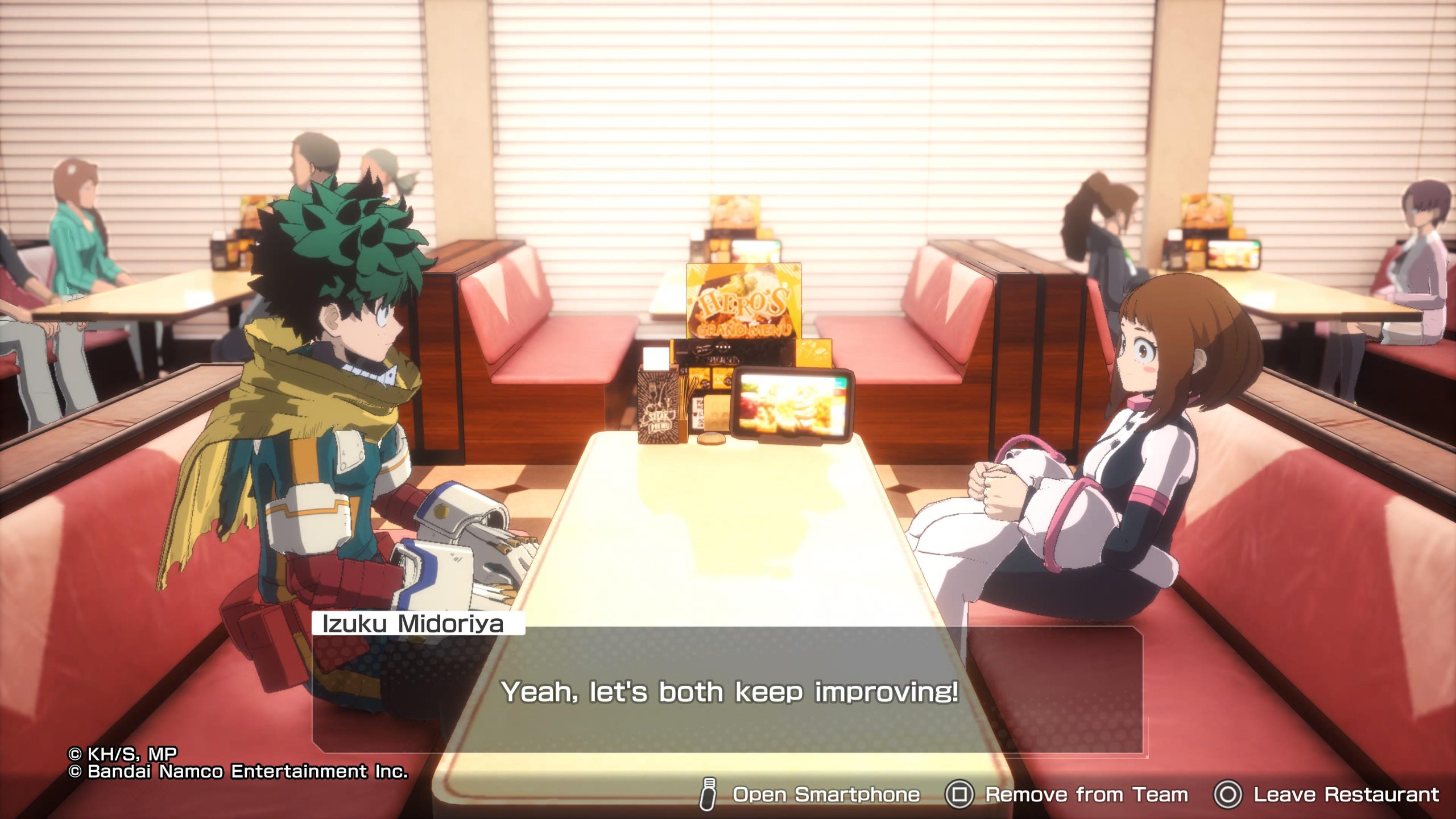
There are plenty of other modes to support replayability. Archive Battle lets you relive iconic moments from across the series. Character Memory places you in a relaxed restaurant setting where you can review collectibles, listen to unlocked music, rewatch cutscenes, and engage in original character focused scenarios through a diary system. Online multiplayer is also present and functional, offering standard network battles against other players.
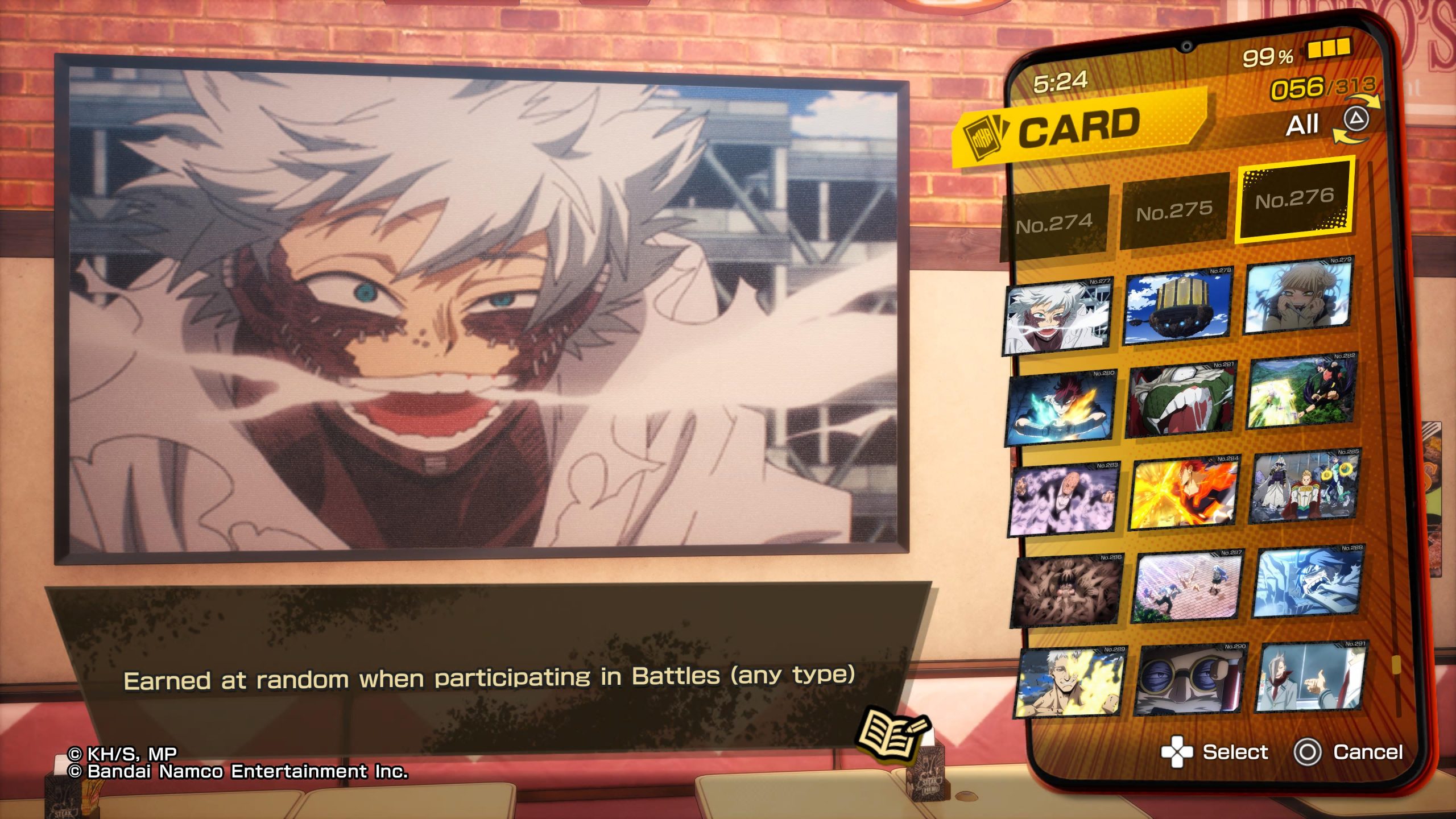
Visually, All’s Justice is generally strong. Character models are sharp, expressive, and faithful to the anime, especially during battles and high quality cutscenes. Destruction effects and particle work sell the power of Quirks, although performance can dip during heavy city destruction, particularly in larger fights. The limited number of stages, only nine, also holds back the sense of scale. The city environments are compact, which makes movement abilities like Blackwhip or gravity based traversal feel underutilized. A larger map would have better justified the freedom the mechanics offer.
The audio presentation is solid overall. Voice acting captures the spirit of the anime, even if a few performances feel slightly off. Sound effects are punchy and make hits feel impactful, which is crucial for a game this kinetic. The soundtrack leans heavily into shonen energy, shifting between breezy, uplifting tracks during exploration and intense rock driven themes during combat. It fits the tone well without becoming excessive or annoying.

There are issues that cannot be ignored. The game froze a few times during my playthrough, though it recovered quickly. Enemy AI can be inconsistent, sometimes dealing massive damage while you chip away at their health, creating frustrating difficulty spikes. Certain late game fights force you to battle brute enemies on a single health bar, turning encounters into trial and error slogs where opponents appear to read your inputs and it is not always clear how to handle the situation. These moments clash with the otherwise balanced and skill driven combat the game establishes earlier.
Final Thoughts?
My Hero Academia is not only one of my favorite shows of all time, but a series that has resonated with so many people, and All’s Justice feels like an important, celebratory milestone for the franchise as a whole. Despite some odd hiccups, MY HERO ACADEMIA: All’s Justice feels like a meaningful evolution of the series. It is faster, tighter, and more confident than past entries, with a huge amount of content and a combat system that rewards dedication. For fans of the anime, it is an easy recommendation and arguably the ultimate My Hero Academia game. For newcomers, it is still a fun and flashy arena fighter, though the emotional weight of the story will not land as hard without context. Either way, if you are here for exciting fights, expressive characters, and sheer spectacle, All’s Justice delivers. Plus Ultra!

About the Author

Nay Clark Gaming holds a special place in my heart and I never stop talking about video games. I really love all types of games and have an interest in games that have complicated stories and lore because I enjoy untangling the mystery of it all. When I'm not gaming, I unsuccessfully try to control three amazing and incredibly bright kids.
Related Posts

Screamer PS5 Review →

Project Songbird Review (PS5) →

Unsealed: The Mare Review (PS5) →