
Mortal Kombat: Legacy Kollection Review (PS5)
Summary: The Mortal Kombat: Legacy Kollection celebrates and pays homage to the classic Mortal Kombat games from the arcade to home consoles, to early portable entries on the Gameboy Advance.
4.4
Klassic Kombat
As hard as it is to believe, Mortal Kombat has been brutalizing bones and raining down viscous claret on players since August 1992 (the birth year and month of this writer oddly enough). Debuting in arcades, Mortal Kombat shocked the videogame industry with its unrelenting graphic violence, its merciless bloody combat, and of course those demonically delicious decapitations known as FATALITIES!
Now over 33 years later, the Mortal Kombat franchise has received a celebratory packing, featuring all of the original arcade Mortal Kombat games Mortal Kombat 1, Mortal Kombat 2, Mortal Kombat 3, Ultimate Mortal Kombat 3, and Mortal Kombat 4; as well as the early console entries Mortal Kombat Trilogy, Mortal Kombat Mythologies: Sub-Zero, and Mortal Kombat: Special Forces; and several Gameboy Advance titles Mortal Kombat Advance, Mortal Kombat: Deadly Alliance and Mortal Kombat: Tournament Edition. Does this “Kollection” do justice to Mortal Kombat’s legacy or is it as pristine as a disheveled corpse?
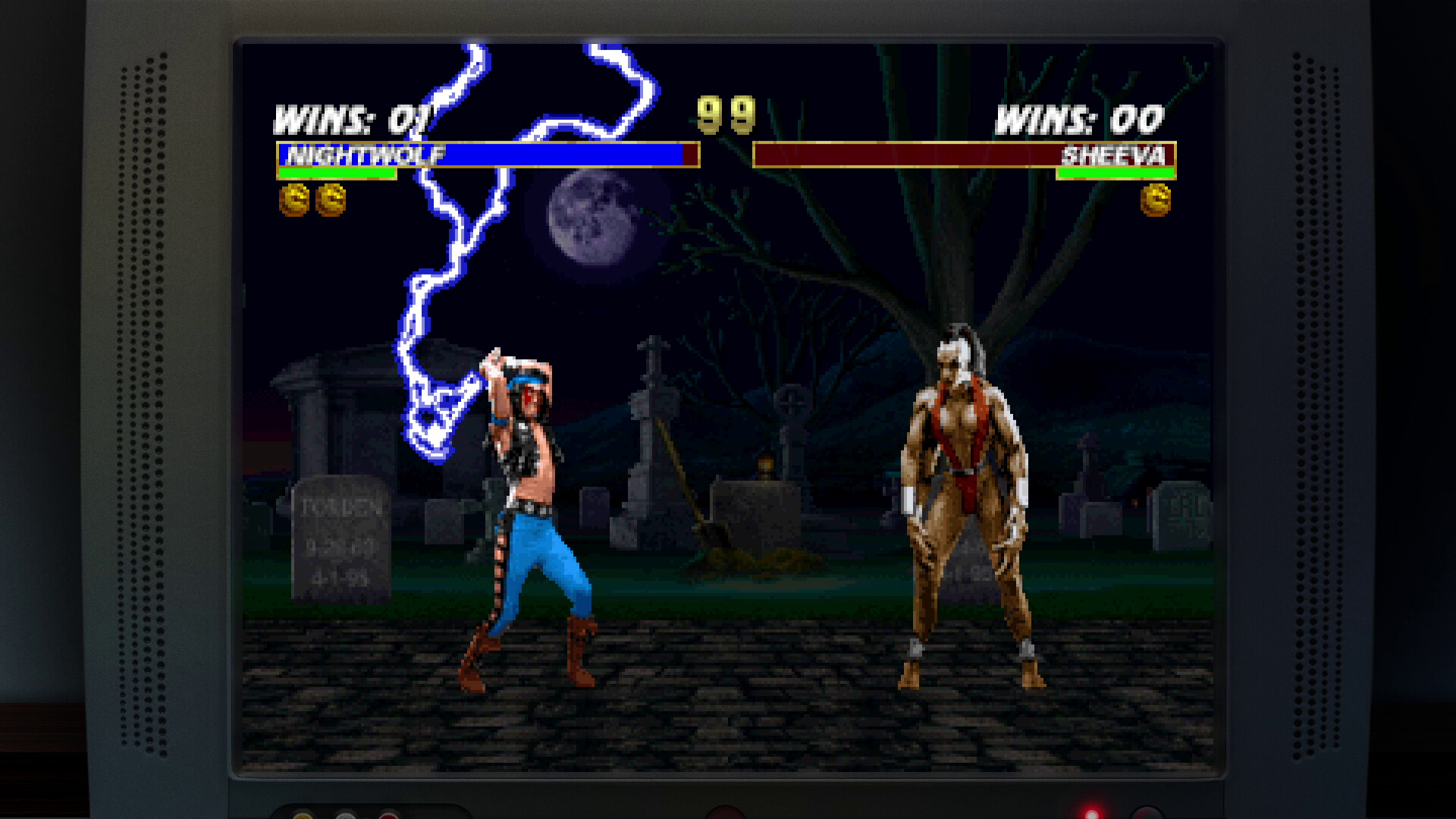
It’s important to mention upfront that none of the featured games in this Kollection are modern, meaning of course you won’t be able to indulge in Mortal Kombat 1, nor Mortal Kombat 11, Mortal Kombat X, the 2011 Mortal Kombat reboot and so on. This collaboration of games is about celebrating the early days of Mortal Kombat, a sumptuous history lesson for those who’ve always wanted to go back and play the originals. You may find it disappointing that some of the early 2000s entries are Gameboy Advance versions instead of their console counterparts, but if you know what you’re getting you shouldn’t be perturbed. There has evidently been a lot of care and attention poured into this videogame anthology, and you won’t feel short-changed after experiencing it all because there’s plenty of meat on its bones.
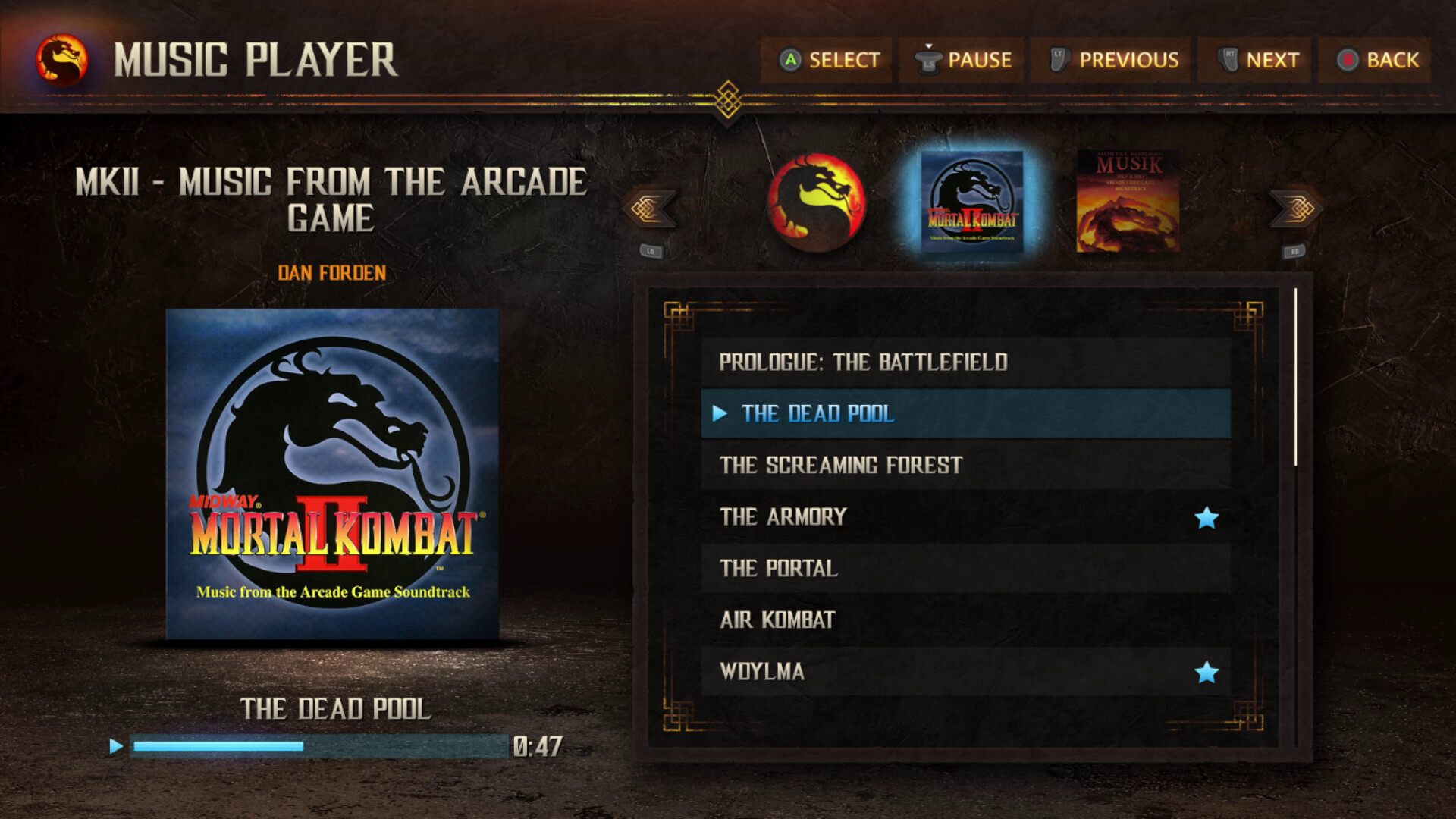
This Kollection is luxurious if you are a fan of the history and evolution of Mortal Kombat, as it bundles in not only all the games mentioned above this paragraph, but interviews and documentaries add a sumptuous blood-bursting Brutality on top of all the retro-infused roughhousing rinsed in red. The Krypt is chock-full of insights courtesy of timelines consisting of landmark events throughout the lineage of Mortal Kombat, and it’s quite intimidating to peruse it all like Scorpion just before he tears out your jugular.
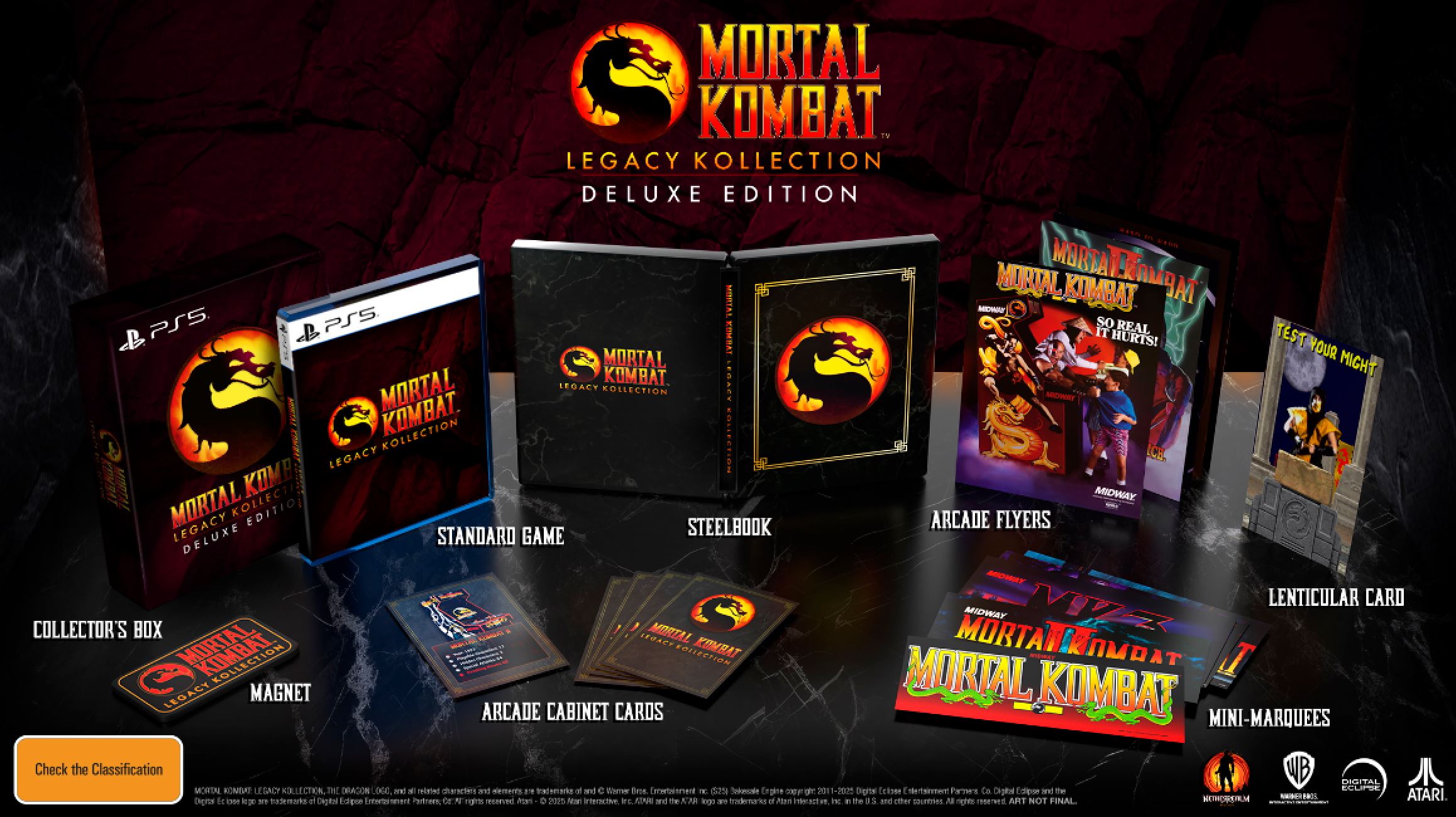
You don’t often see many games containing interview and documentary-related content, certainly not to the extraordinary degree the Mortal Kombat Kollection does. You’re essentially getting a museum’s worth of detail in one game on top of all the featured Mortal Kombat games, and that is outrageous value for money. When we too often see Deluxe Editions with their cosmetic pre-order incentive packs filled with throwaway cosmetic tat, this Kollection reminds us what getting our money’s worth is really about.

As is typically the case with classic re-releases, the controls of these MK classics will take some adjusting to. The first MK for instance is slow and moves register at a sluggish pace thanks to the digitized sprites used. On top of this, performing fatalities requires swift button inputs and memorization, which is still the case in modern-day Mortal Kombat games, yet input registering is unreliable. Movement, particularly in the vastly compromised Game Boy Advance version of Mortal Kombat, is stiff and fights are likened to two frozen people trying to physically provoke each other. Also, get ready for tough competition who can bamboozle you with bone-breaking combos in less time than it takes for you to shout GET OVER HERE! Mortal Kombat games are known more for their bloodshed and violence than their fighting mechanics, but if you want mechanically sound fighting games, go and play TEKKEN and Street Fighter. Nevertheless, Mortal Kombat has always been about gruesome and gratifying challenge, and it’s fantastic to see it represented nostalgically here for both newcomers and old-school fans alike.
Besides preferring its competitors fighting mechanics, most of the statements above aren’t criticisms, they’re part of appreciating the history of Mortal Kombat and how far the franchise has come over the decades. The original Mortal Kombat has been preserved lovingly without tarnishing what makes it one of the most revered classics in gaming history. The same can be said of its arcade sequels, its console counterparts and all the portable entries and spin-offs represented in this package.
Beyond the core entries and all of their revisions, improvements and new feature that’d go on to become staple of the series like Test of Might, the spin-off games such as the Mortal Kombat Mythologies: Sub-Zero and Mortal Kombat: Special Forces provide side-scrolling stages where you battle rank and file enemies while dodging traps and carrying on past checkpoints and towards mission completion. This structure appears like a rewarding change of pace from the usual one-on-one fighting dynamic, offering plenty of traps to slink through and some tough encounters, as well as sumptuous MK prequel lore that makes this spin-off decent fan service. However, beating up rank and file just to get to the larger more challenging encounters while reasonable, are lackluster and ridiculously rote. The same goes for insta-kill traps that force you to utilize careful footing to avoid. In spite of their problems, these spin-off titles add zest due to the expanding lore packed into them, and you won’t find Mortal Kombat’s competitors providing sumptuous story-led spin-off titles, do we?
Despite the Kollection’s old-school flaws and antiquated design tropes, they’re really easy to venture into and pull out of in a way that makes them joyously accessible. Of course this accessibility goes hand-in-hand with retro simplicity because these games were designed for short and satisfying bursts of play and never feel overlong and riddled with drag. This is why they are perfectly ideal for the collection because they aren’t immersed in complexity or depth. Even the GBA versions fit snug inside this package because of their pared back design and compromises. You may long for the PS2 version of Mortal Kombat: Deadly Alliance, though clearly the emphasis of this retro assemblage of MK games is on the most basic and streamlined titles.
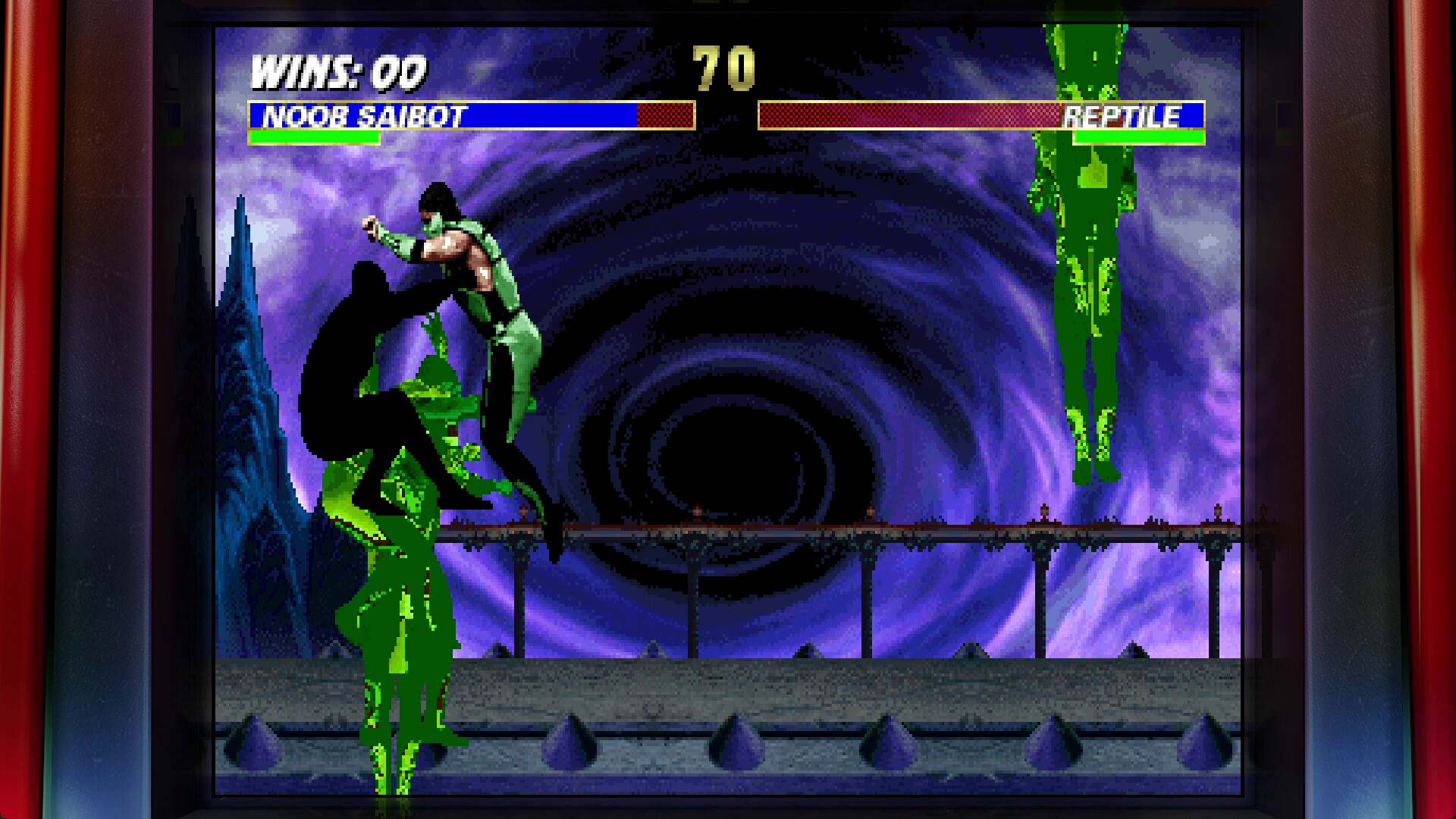
Adding to the retro feel of this Kollection is the display of each game. When you pick one of the titles to play, you’re experiencing them as though you’re playing them from a rad Television set. This choice to abandon the traditional widescreen approach is very novel because nostalgia is heightened and considering you’re playing bona-fide fighting game classics from the 90s and early 00s, why wouldn’t you want to be completely immersed and consumed in the moment as you play these games through this TV-style format?
Final Thoughts
Whether you’re a fan or an old hand at Mortal Kombat, the Mortal Kombat: Legacy Kollection is unmissable. There is a vigorously faithful and feature rich adherence to preserving the core aspects of the original arcade versions of the Mortal Kombat games, as well as bringing along intriguing PS1 spin-offs and early 00s Gameboy Advance titles. If you’re looking for more modern entries you will be disappointed, but if you appreciate the legacy and the history of the Mortal Kombat franchise, this is an impressive and essential collection that ought to be a precedent for other retro videogame collections developed in the future.
WANT TO WIN A COPY OF MORTAL KOMBAT LEGACY KOLLECTION DELUXE EDITION ON PS5? CLICK HERE!

Related Posts

Fatal Frame II: The Crimson Butterfly: Remake Review (PS5) →

NBA Bounce + GOAT DLC: (PS5) Review →

WWE 2K26 Review (PS5) →