
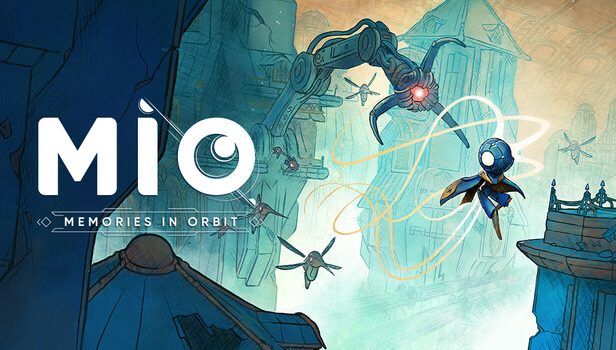
MIO: Memories In Orbit Review (PS5)
Summary: MIO: Memories In Orbit is a thoughtful, artistically driven Metroidvania that pairs elegant movement and purposeful exploration with a striking audiovisual identity. The game excels in its cohesive world design, meaningful customization systems, and a steady sense of discovery that rewards curiosity. The result is a confident, memorable experience that stands comfortably among the genre’s strongest modern entries.
4.5
Stellar Systems
In a genre crowded with familiar ideas, MIO: Memories In Orbit carries a subtle gravity that slowly pulls you deeper into its world. MIO: Memories In Orbit arrives on PlayStation 5, Xbox Series X|S, PC, Nintendo Switch, and Nintendo Switch 2 as an ambitious step forward for Douze Dixièmes, the studio previously known for the introspective puzzle-platformer Shady Part of Me. Published by Focus Entertainment and released on January 20, 2026, the game marks the developer’s first full dive into the Metroidvania genre. That places it in a crowded and highly competitive field. The last few years have seen an almost overwhelming number of 2D Metroidvanias, many of them excellent, ranging from grim dark fantasy to elegant sci-fi explorations. Standing out in that space requires more than competence; it requires a clear artistic identity and a strong sense of purpose. Fortunately, MIO: Memories In Orbit has both. Rather than chasing trends or mimicking genre giants, it confidently builds on Douze Dixièmes’ established aesthetic and thematic strengths, delivering a thoughtful, visually striking experience that feels deliberate, cohesive, and emotionally grounded. It ultimately earns its place among the stronger modern entries in the genre.
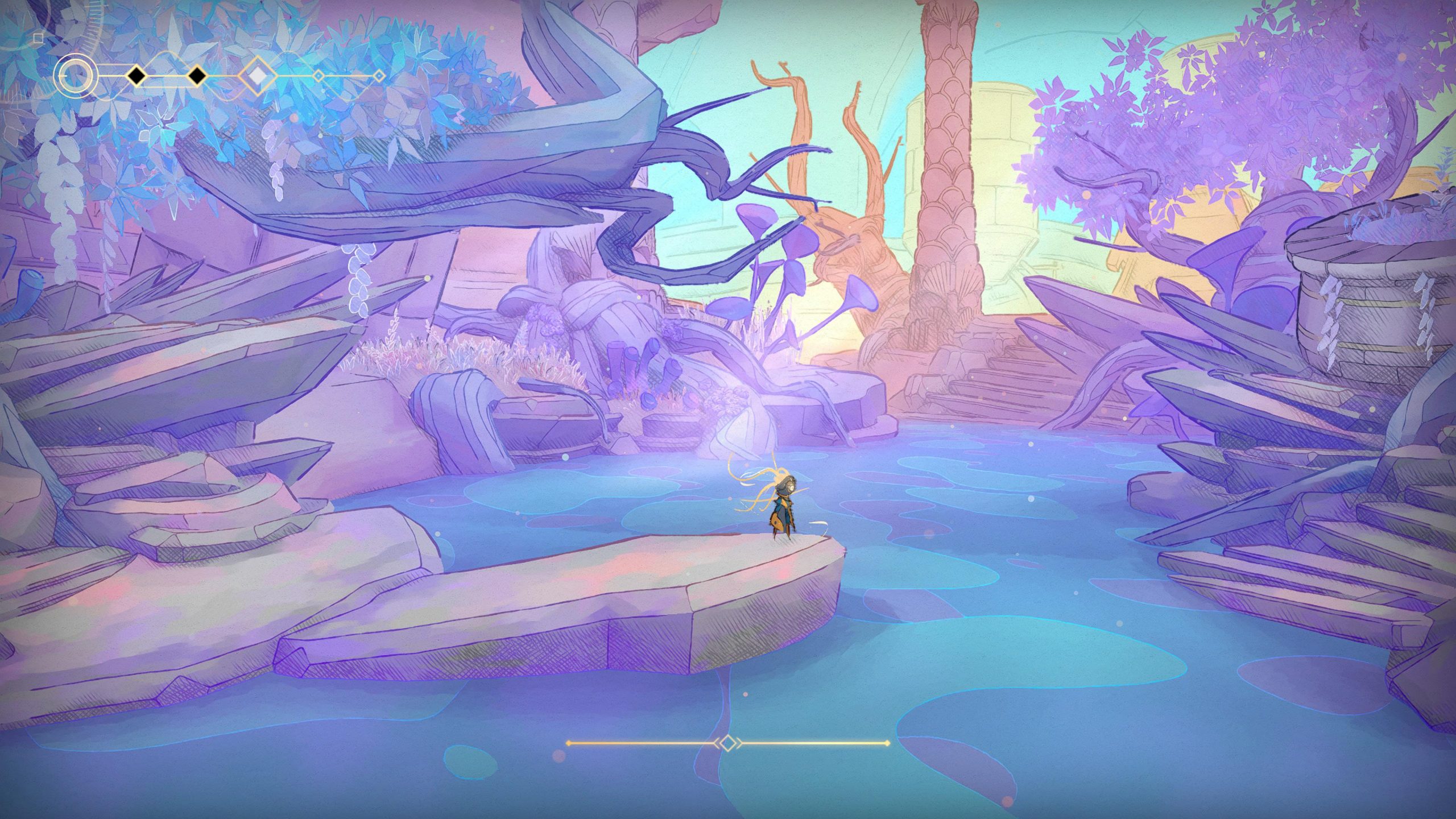
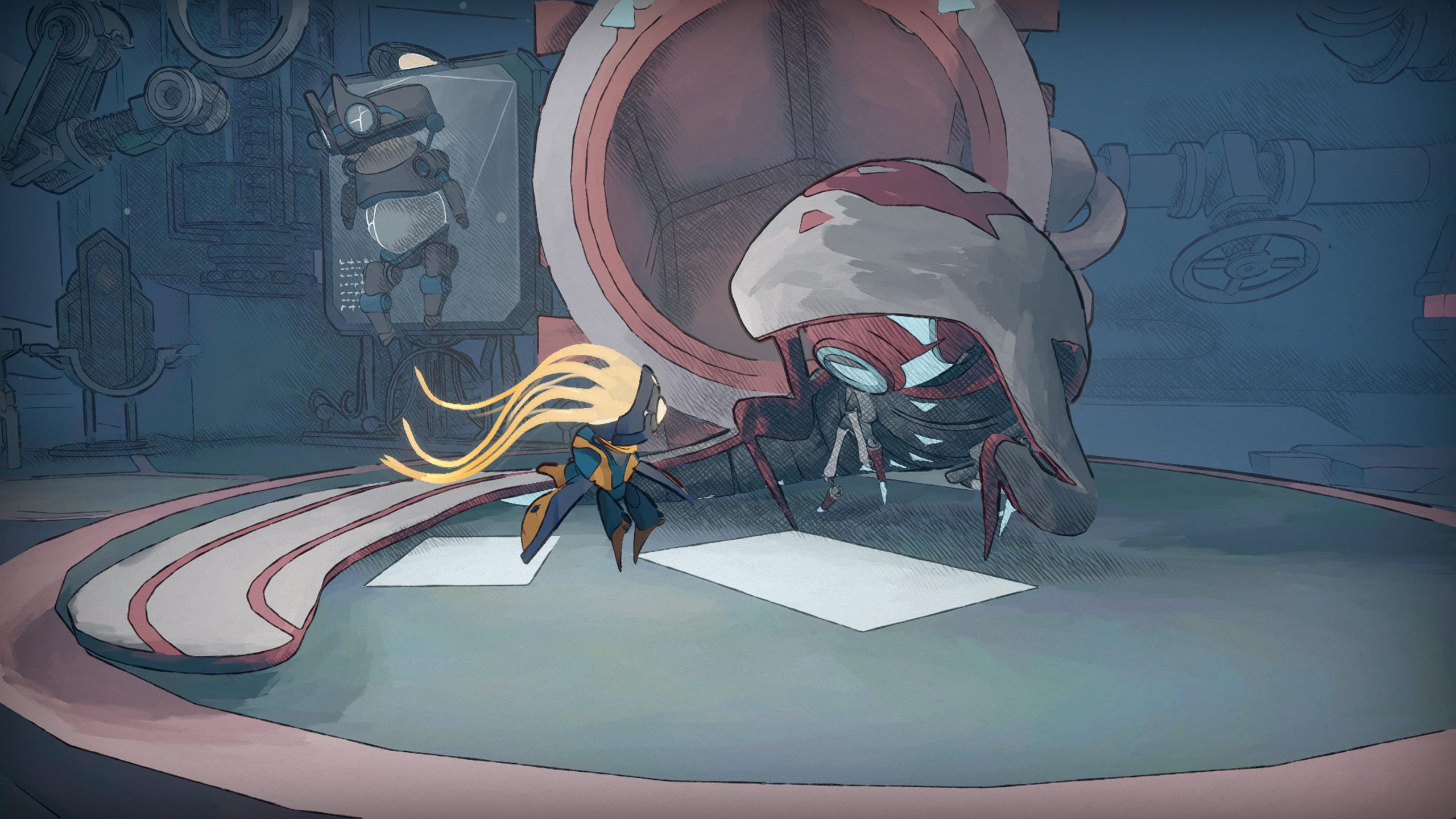
The game opens with a sense of disorientation. You awaken as Mio, a slender android with long, wiry golden hair, lying amid twisted metal, fallen debris, and humming machinery. The setting is the Vessel, an enormous technological ark drifting through space, now clearly damaged and partially abandoned. Almost immediately, the game establishes its tone. It’s cold, mechanical, and yet strangely alive. Pipes pulse like veins, structures tremble as if breathing, and remnants of a once-functioning society linger in the background. As Mio ascends through this fractured environment, it becomes clear that something fundamental has gone wrong. The Vessel’s core systems are offline, its connections severed, and its caretakers silent. Early on, Mio encounters Shii, an entity tasked with protecting the Vessel’s spine, who becomes both a guide and a narrative anchor. Through Shii, Mio learns of the Pearls, the powerful components responsible for maintaining the ark’s balance. To restore any hope of survival, Mio must venture to the Vessel’s farthest reaches, reconnect with these Pearls, and confront what caused the collapse in the first place.
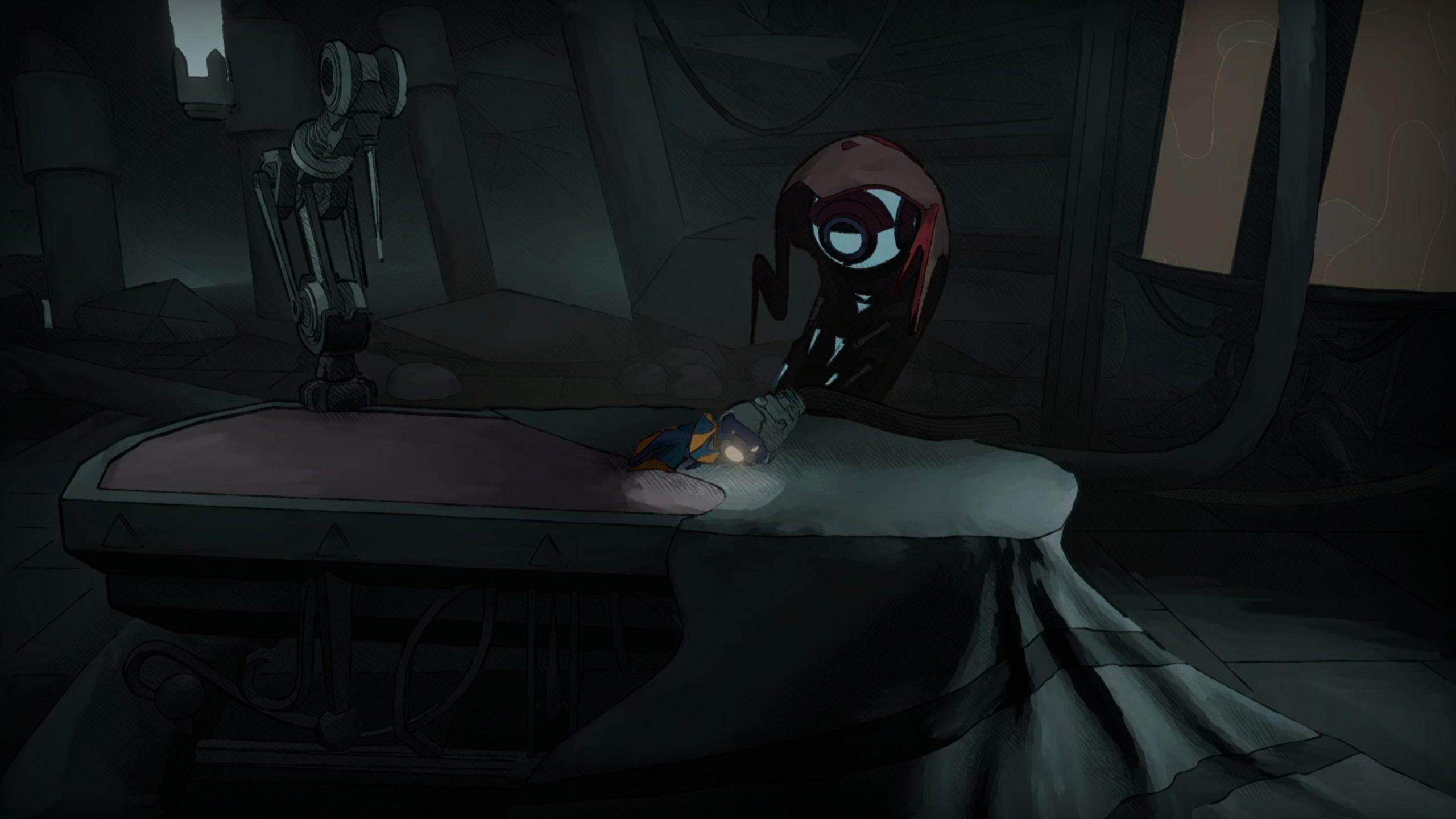
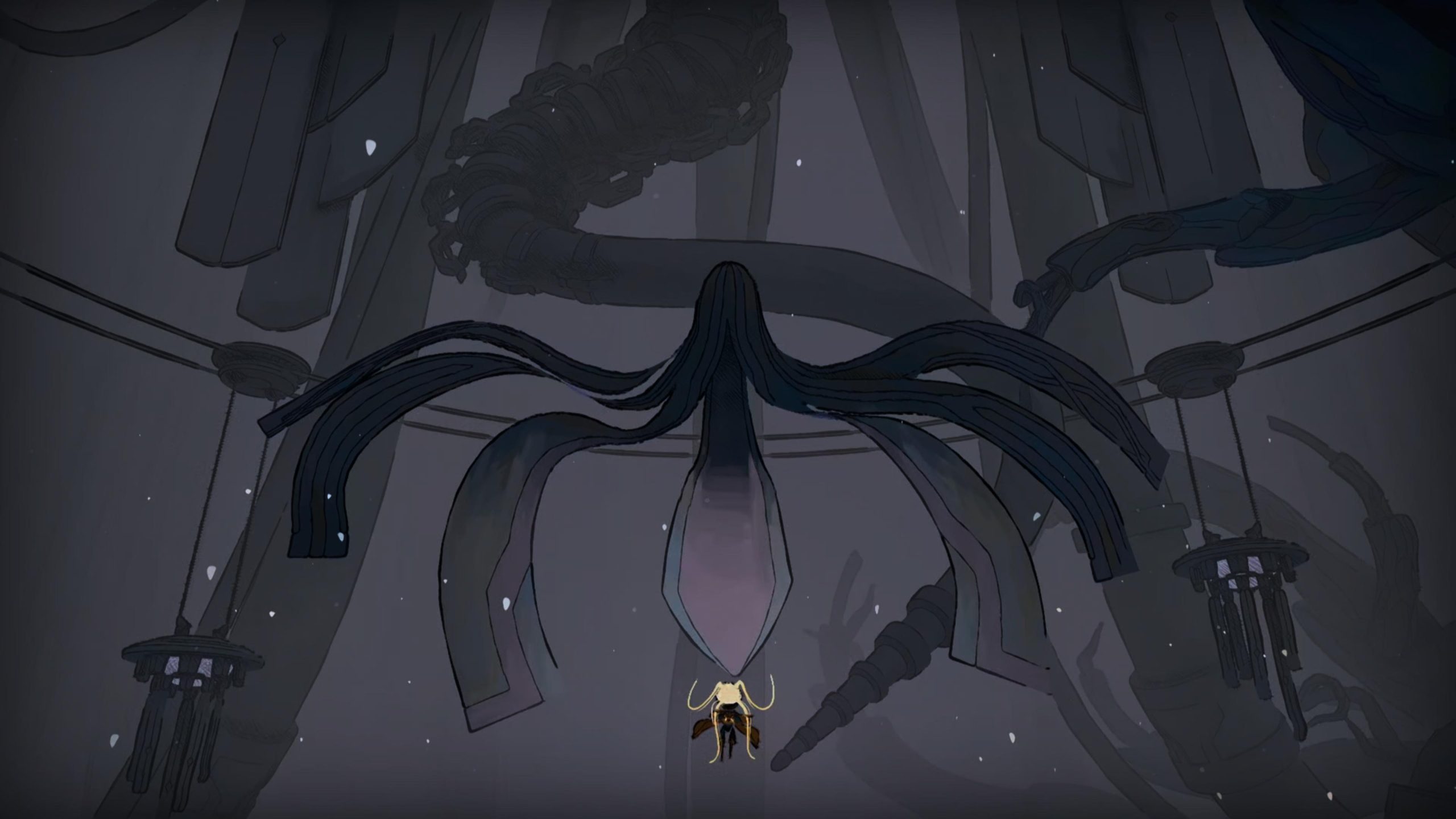
Narratively, MIO: Memories In Orbit unfolds gradually, favoring atmosphere, implication, and environmental storytelling. The broad strokes of the mystery are relatively easy to piece together before the final hours, but that predictability does not diminish its impact. The strength of the story lies in its themes rather than its surprises. Ideas of humanity, purpose, memory, and remorse are woven throughout the experience, reflected not only in dialogue but in level design, enemy behavior, and the remnants of daily life scattered across the Vessel. Conversations with other robots, many of whom have adapted to decay in different ways, add texture and emotional weight. There is a sadness to their existence, balanced by moments of warmth and resilience. Mio herself, though largely silent, feels defined through animation, movement, and player agency, becoming a vessel for reflection. The result is a story that feels cohesive and meaningful.
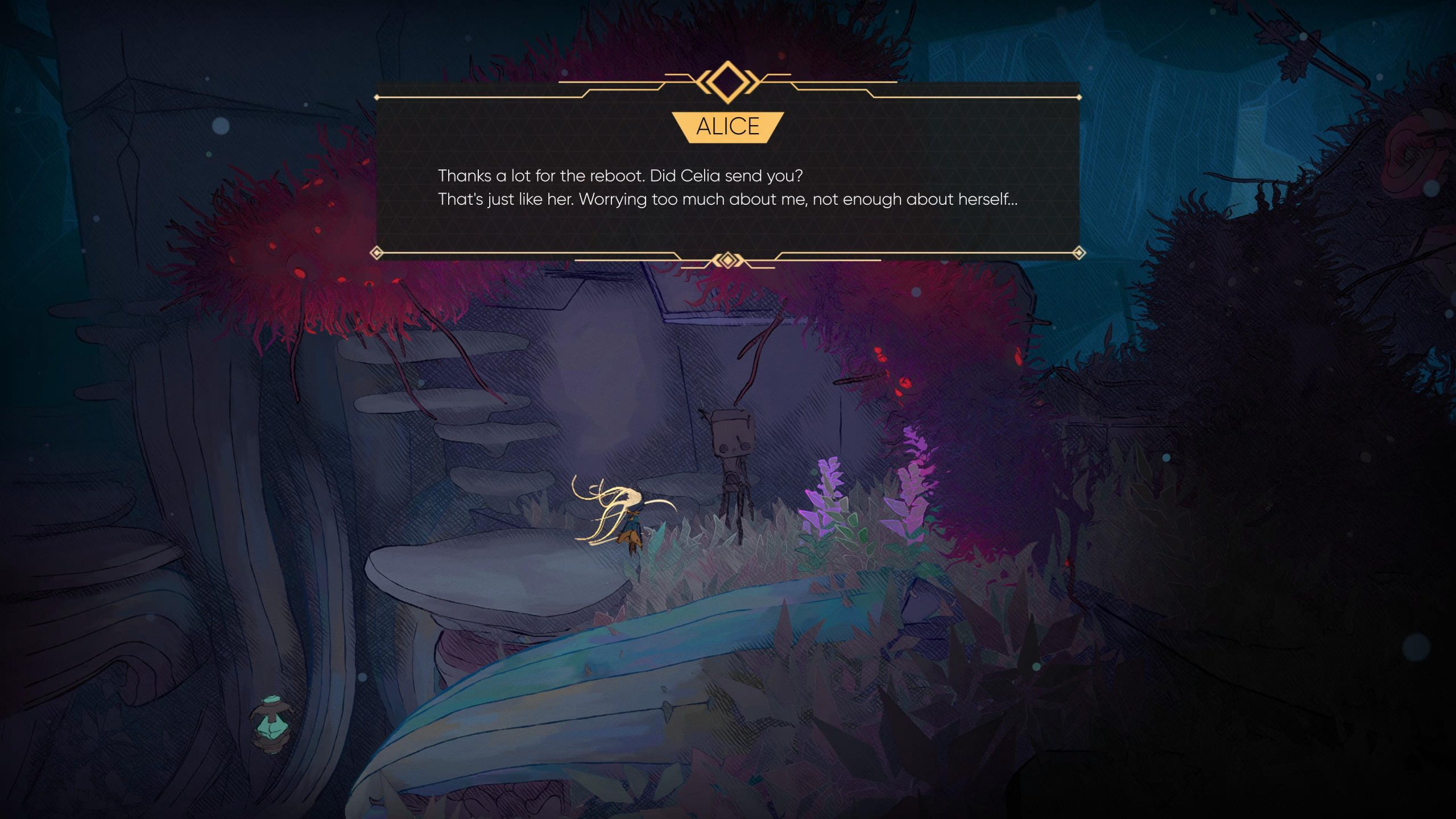
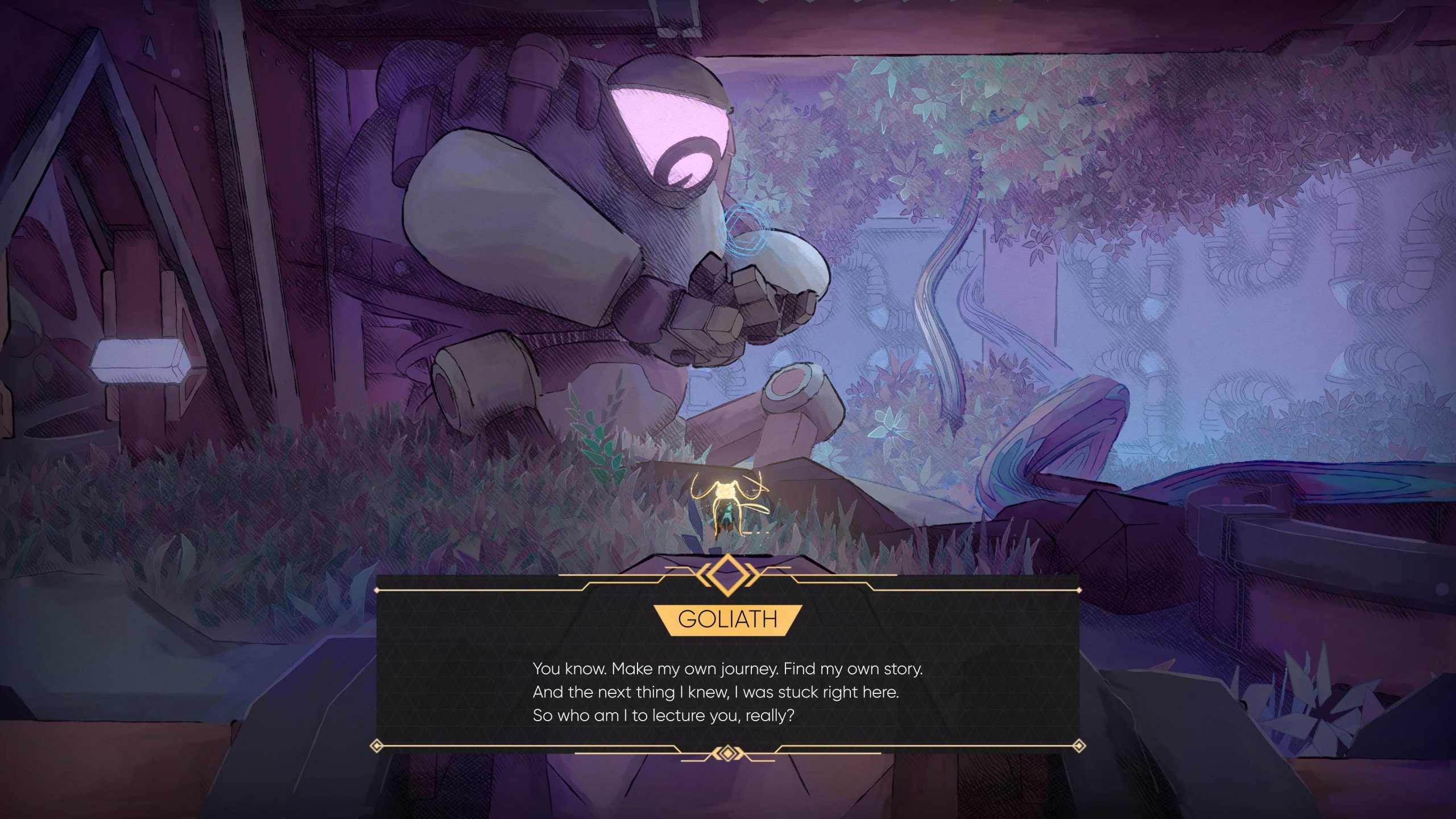
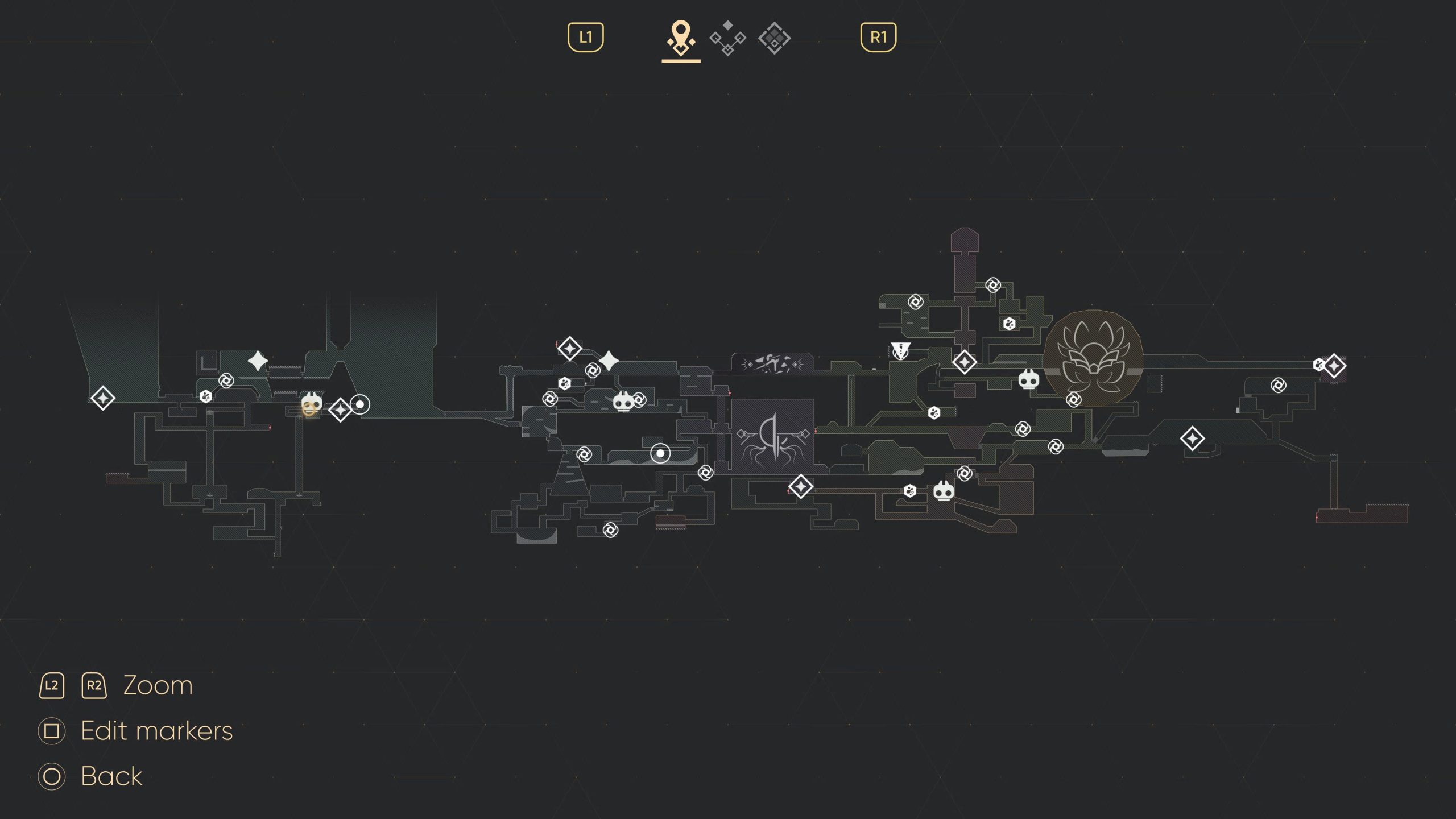
MIO: Memories In Orbit follows the familiar Metroidvania structure. You begin with limited abilities and a modest combat toolkit, gradually expanding both as you explore the Vessel’s sprawling map. Progression is tightly linked to exploration, with new powers unlocking access to previously unreachable areas. Objectives tied to the main story naturally push you deeper into the ark, but curiosity is consistently rewarded. Hidden rooms, optional challenges, and carefully concealed upgrades encourage thorough exploration without making it feel mandatory. The map itself is large but intentionally designed, with regions weaving into one another in ways that feel logical and spatially coherent. Backtracking is frequent, but rarely tedious, especially once shortcuts begin to open and fast travel becomes available.
Enemy encounters and boss fights form a steady rhythm throughout the journey. Regular enemies are varied enough to keep combat engaging, and while they can initially feel overwhelming, familiarity breeds confidence. Learning attack patterns and environmental hazards turns once-frustrating encounters into manageable challenges. Bosses, in particular, are a standout. They are creatively designed, visually distinct, and mechanically demanding without feeling unfair. Some battles can verge on hair-pulling difficulty, especially when first encountered, but success almost always comes down to understanding patterns and refining movement rather than attempting to brute-force your way through. That sense of mastery is euphoric and carries through to the game’s final encounters.
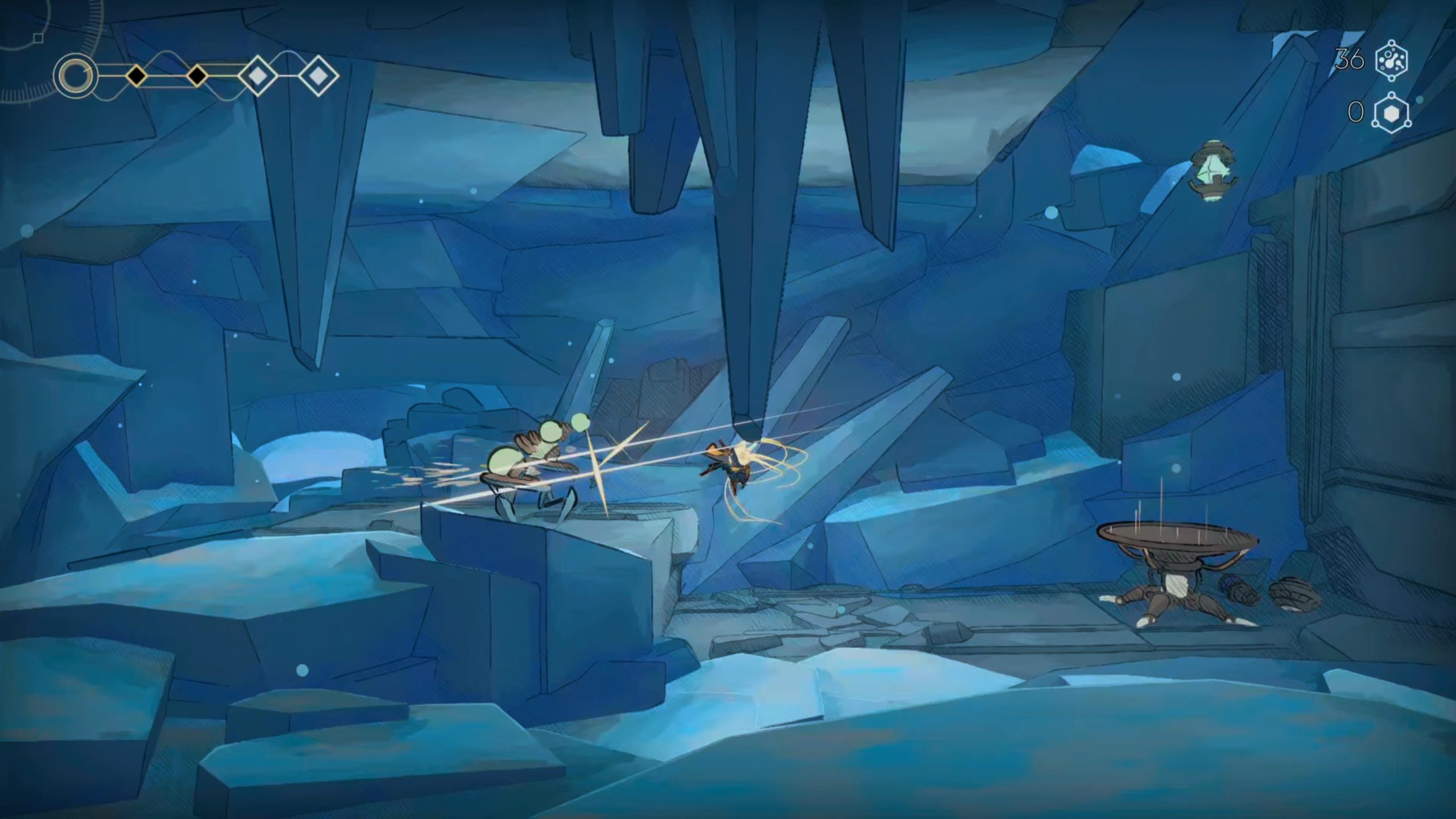
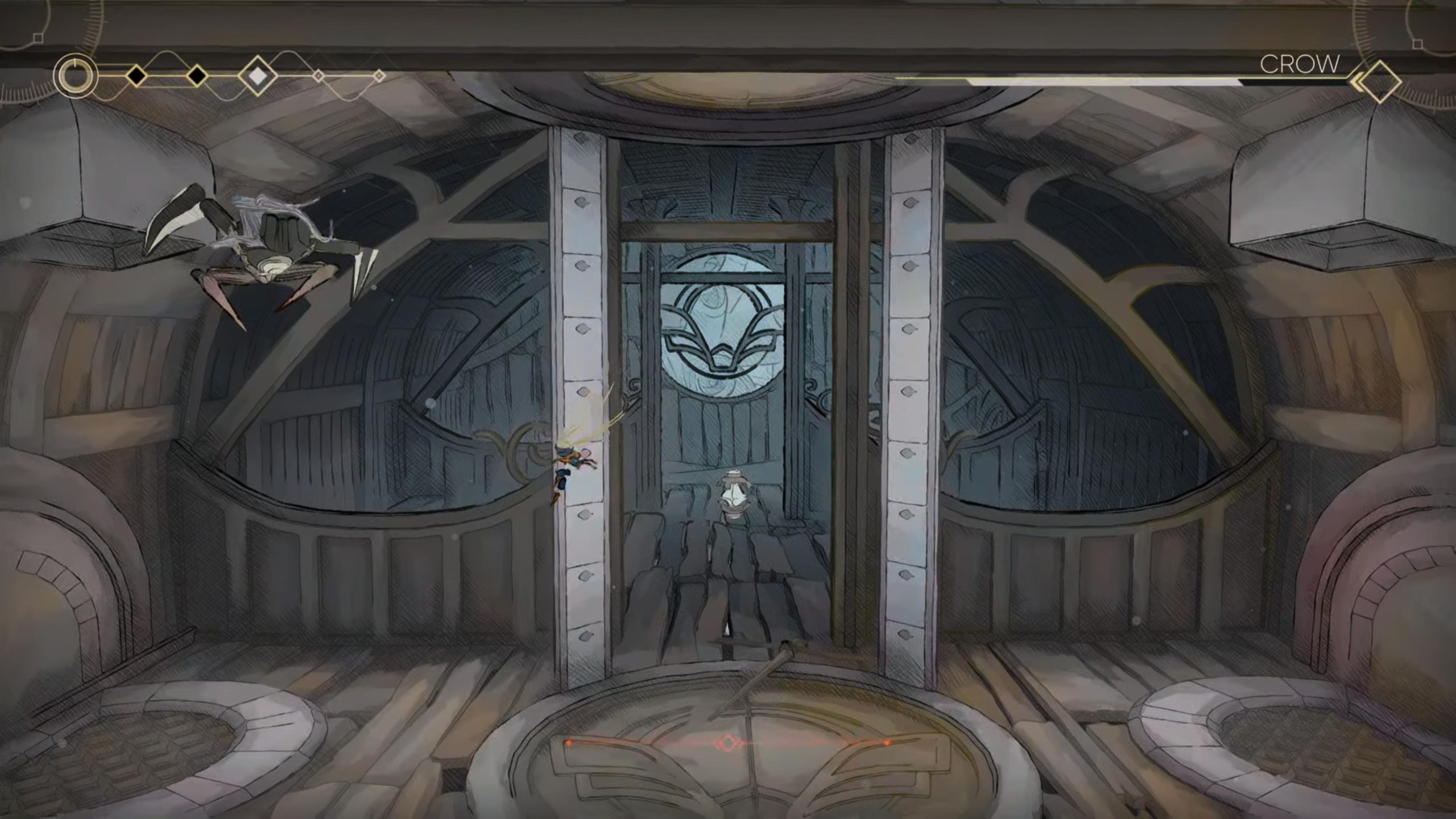
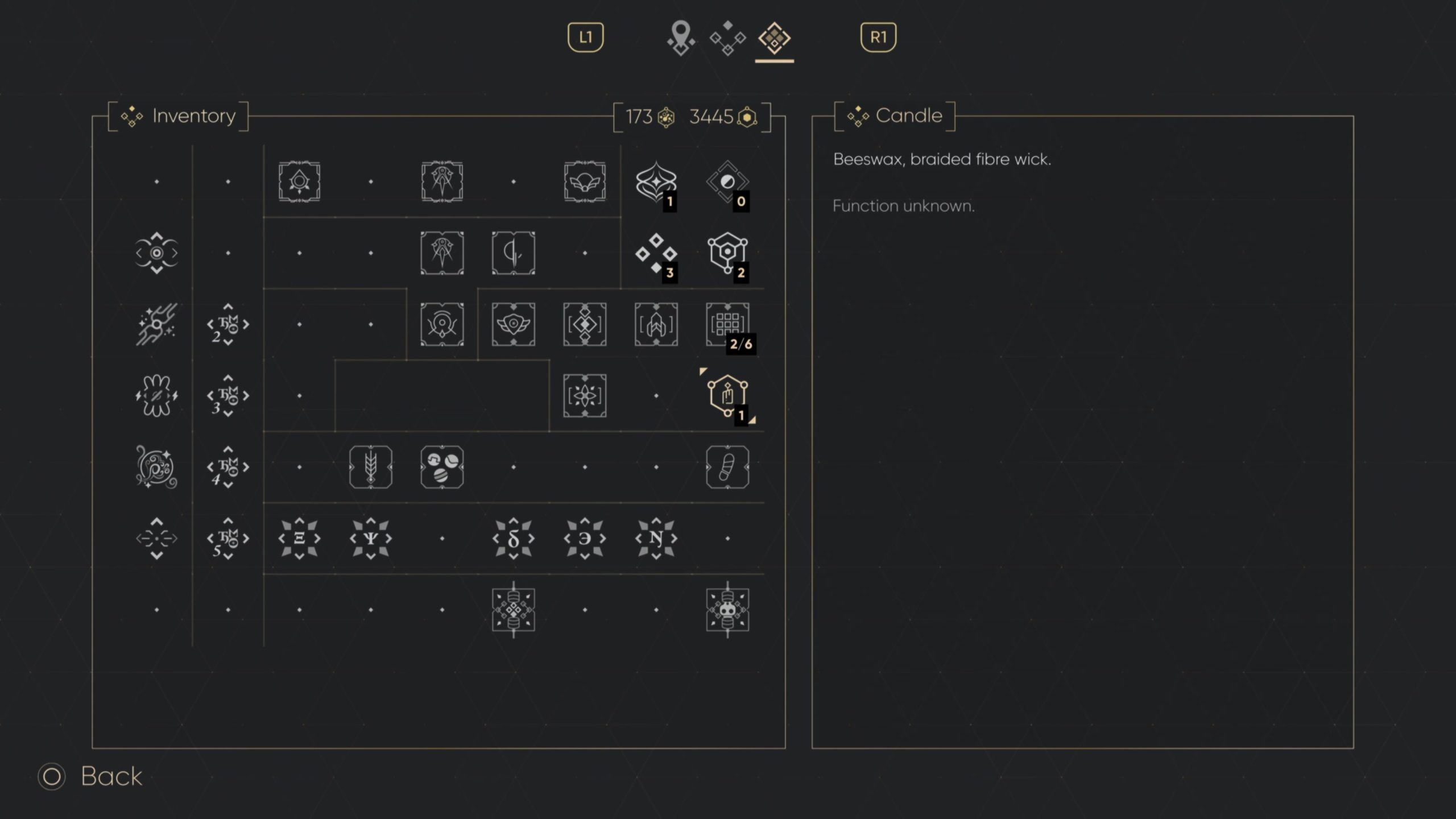
Saving and progression systems are clearly inspired by genre staples but are implemented with enough nuance to feel purposeful. Nexus points serve as save locations, fully restoring health and providing access to the Modification Center, where Mio’s build can be adjusted. However, fast travel between Nexus points is initially restricted. Only those overseen by Overseers, angelic robot figures tied to specific Nexus points, can be used as travel hubs. This limitation reinforces the game’s pacing by preventing early overuse of fast travel while still respecting your time later on. Combat rewards come in the form of Nacre Droplets, a resource dropped by enemies. As expected, death results in the loss of a significant portion of these droplets, introducing risk into exploration and combat. To balance this, the game provides machines that crystallize droplets into a permanent form, ensuring that careful players can mitigate loss through smart planning.
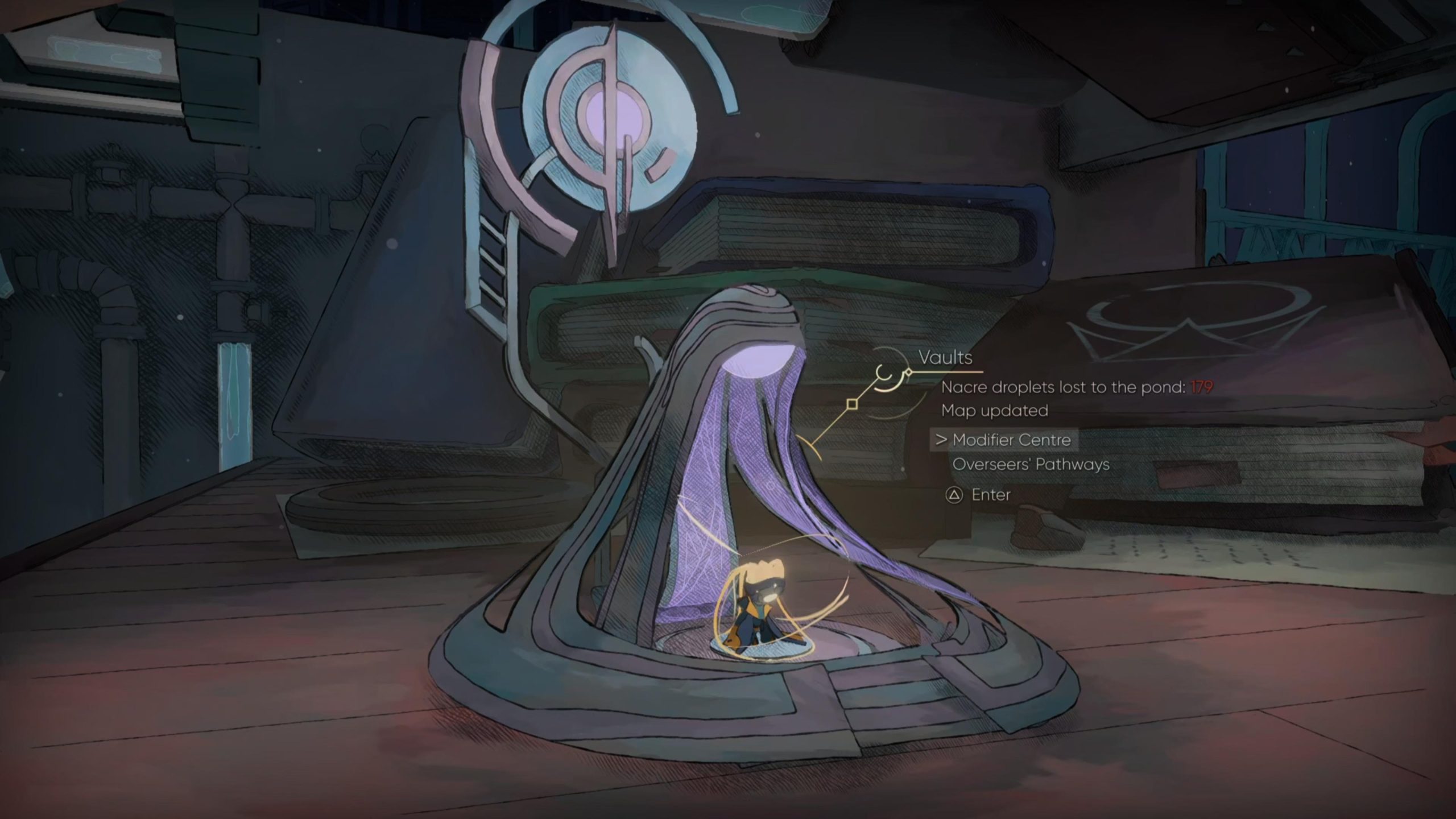
Exploration consistently feels rewarding due to the sheer variety of discoveries scattered throughout the Vessel. Lore pickups flesh out the ark’s history and life before its collapse, while trinkets and artifacts hint at a time long gone. Functional items such as keys, mysterious components, old robot cores, and modifier extensions provide tangible benefits. Collecting coating components, for example, permanently increases Mio’s health after gathering enough pieces. This layered reward structure ensures that nearly every detour yields something useful, whether mechanical or narrative. Importantly, the Vessel never feels bloated or arbitrarily large. Each area appears intentionally constructed, with item placement reinforcing the sense that this is a real, interconnected space rather than a collection of isolated levels.
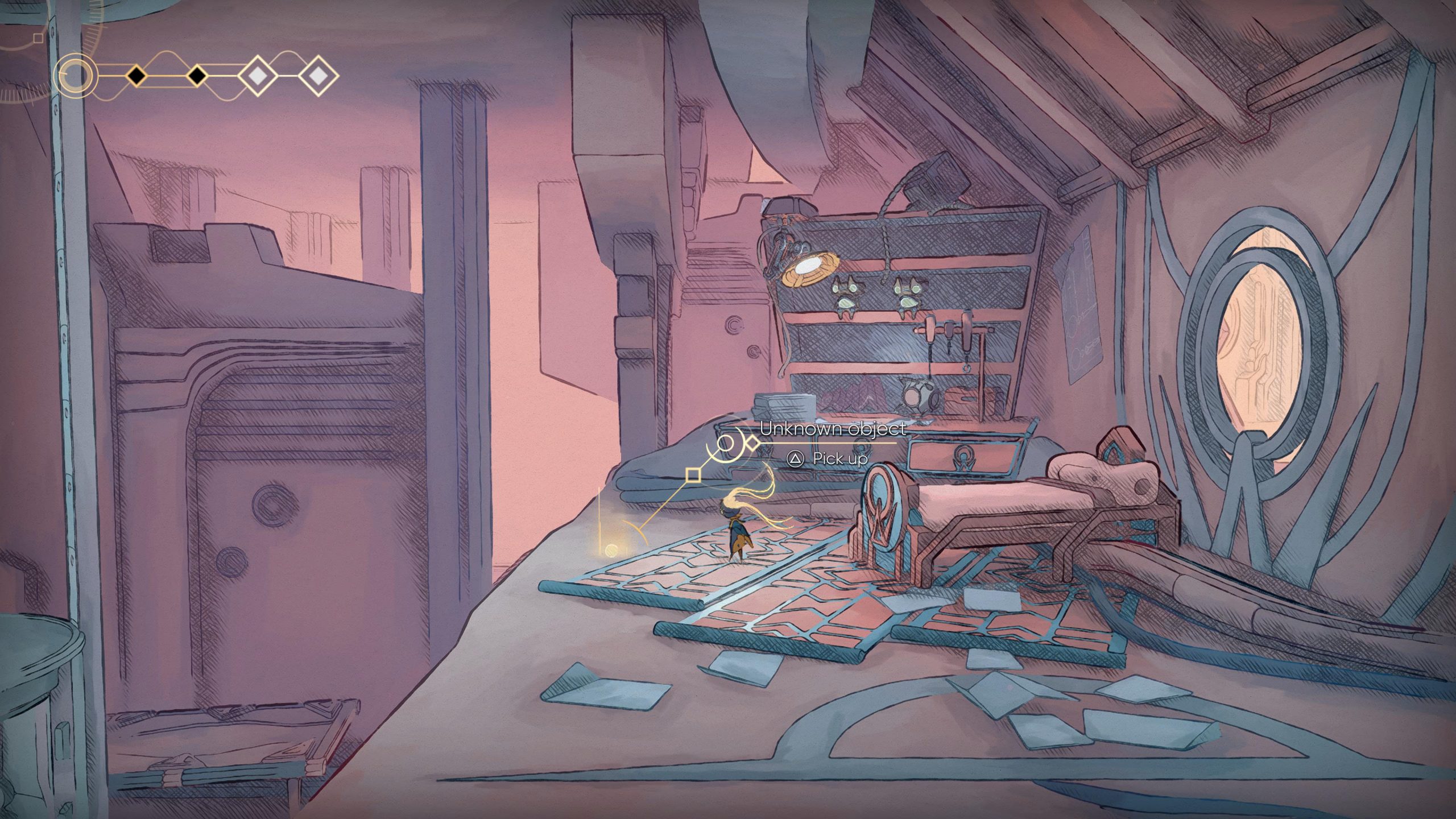
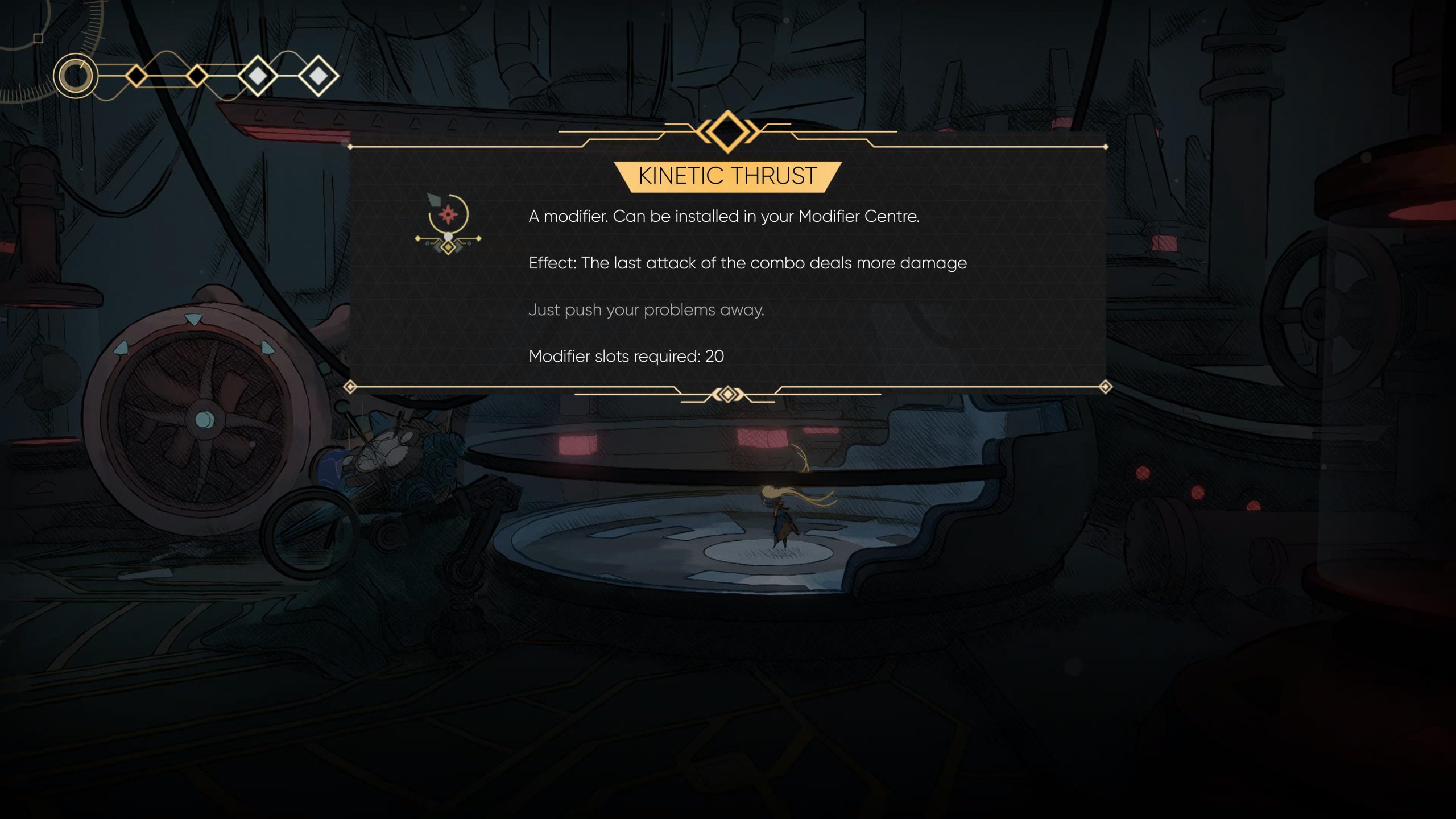
The modifier system plays a central role in shaping how Mio feels to control and how combat encounters unfold. Modifiers are installed into an Allocation Matrix with a limited number of available slots. Each modifier consumes a specific number of nodes, forcing you to make meaningful choices. A modifier like Kinetic Thrust, which increases the damage of the final hit in a combo, occupies fewer nodes than more transformative options such as Sharpened Hairpin, which allows Mio to damage enemies while grappling. Because slots are limited, you must constantly weigh offense against utility and survivability against mobility. This system encourages experimentation, particularly before boss fights or difficult traversal sections.
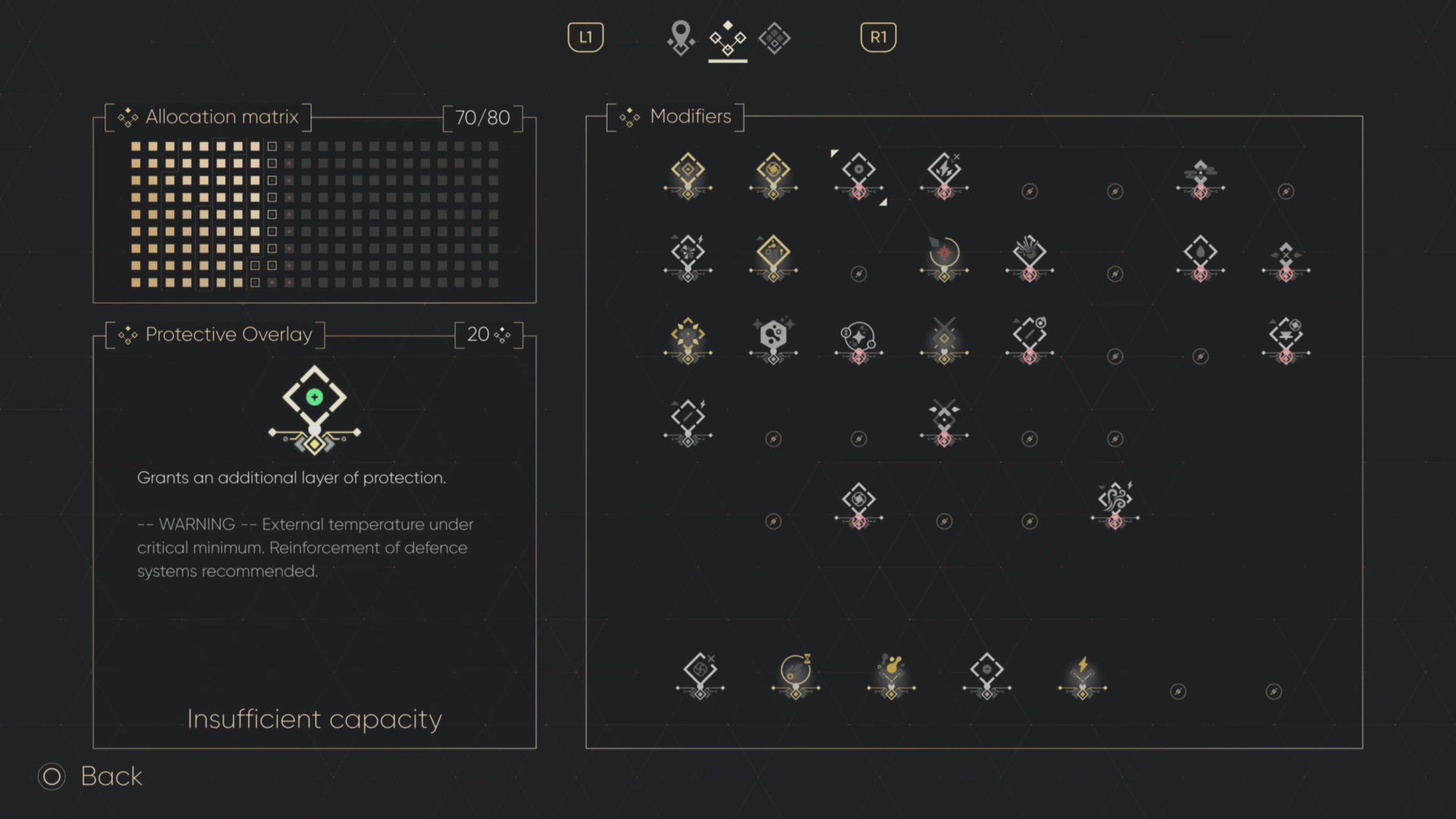
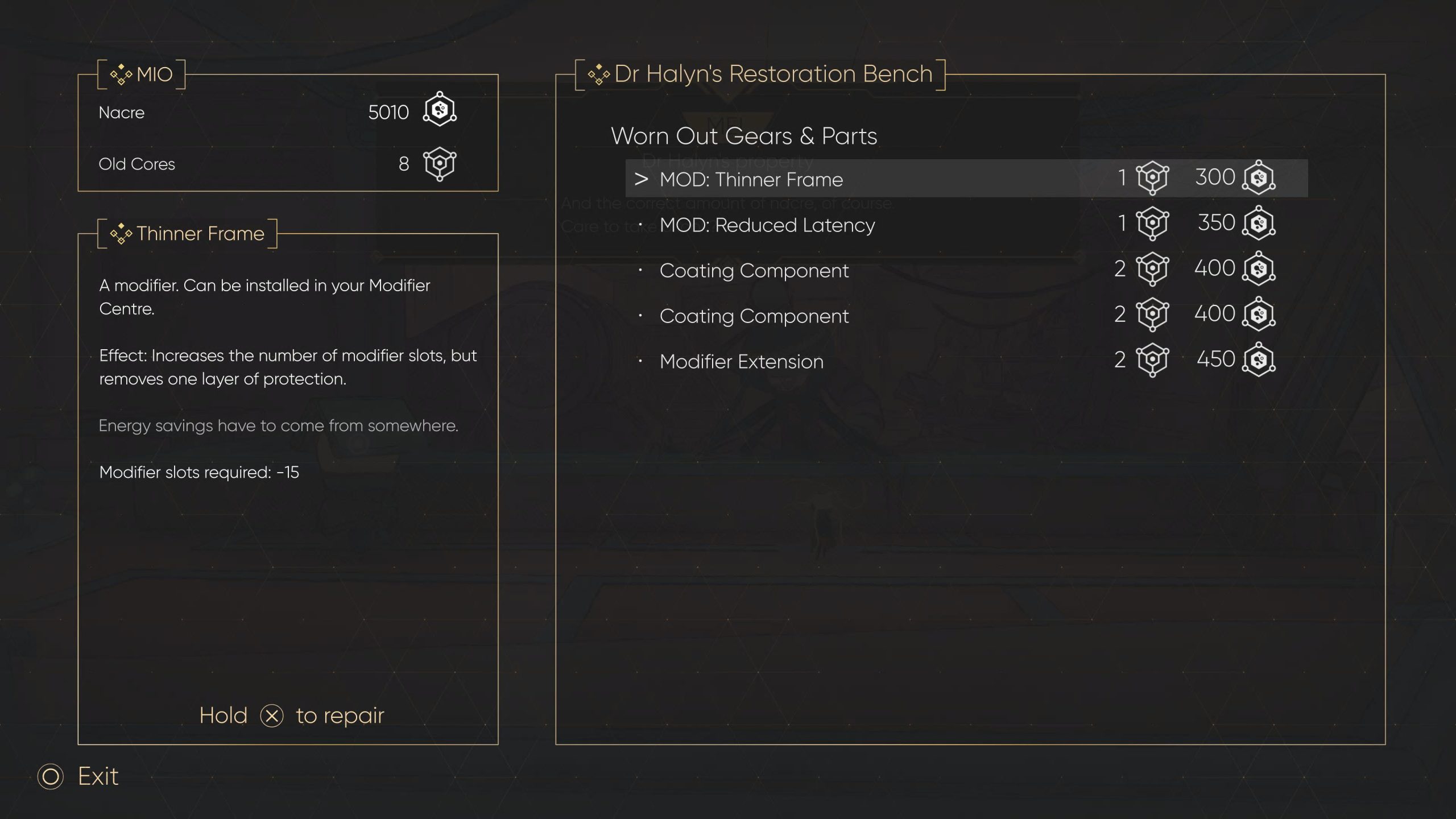
Further complexity comes from Mods that intentionally weaken Mio in one area to expand her capabilities in another. Thinner Frame, for instance, increases available modifier slots at the cost of reducing health. These trade-offs are significant and well-balanced, rarely feeling like obvious choices. Mods are found through exploration or purchased from Mel, a snake-like robot who operates Dr. Halyn’s Restoration Bench. Trading Nacre and Old Cores for upgrades adds another layer of decision-making, suggesting the idea that progression is about thoughtful customization rather than linear power growth.
Despite the Vessel’s scale, it is almost always clear where progress lies, even when multiple paths are available. The game opens up gradually, and while there are moments when you can choose between tackling different bosses, the overall flow remains intuitive. Environmental variety helps keep exploration fresh. One moment you may be sliding across icy platforms, the next bouncing off elastic plant growth to reach hidden ledges. As in the best Metroidvanias, breaking through a wall to reveal a shortcut back to a Nexus point is both satisfying and relieving, reinforcing a sense of spatial mastery.
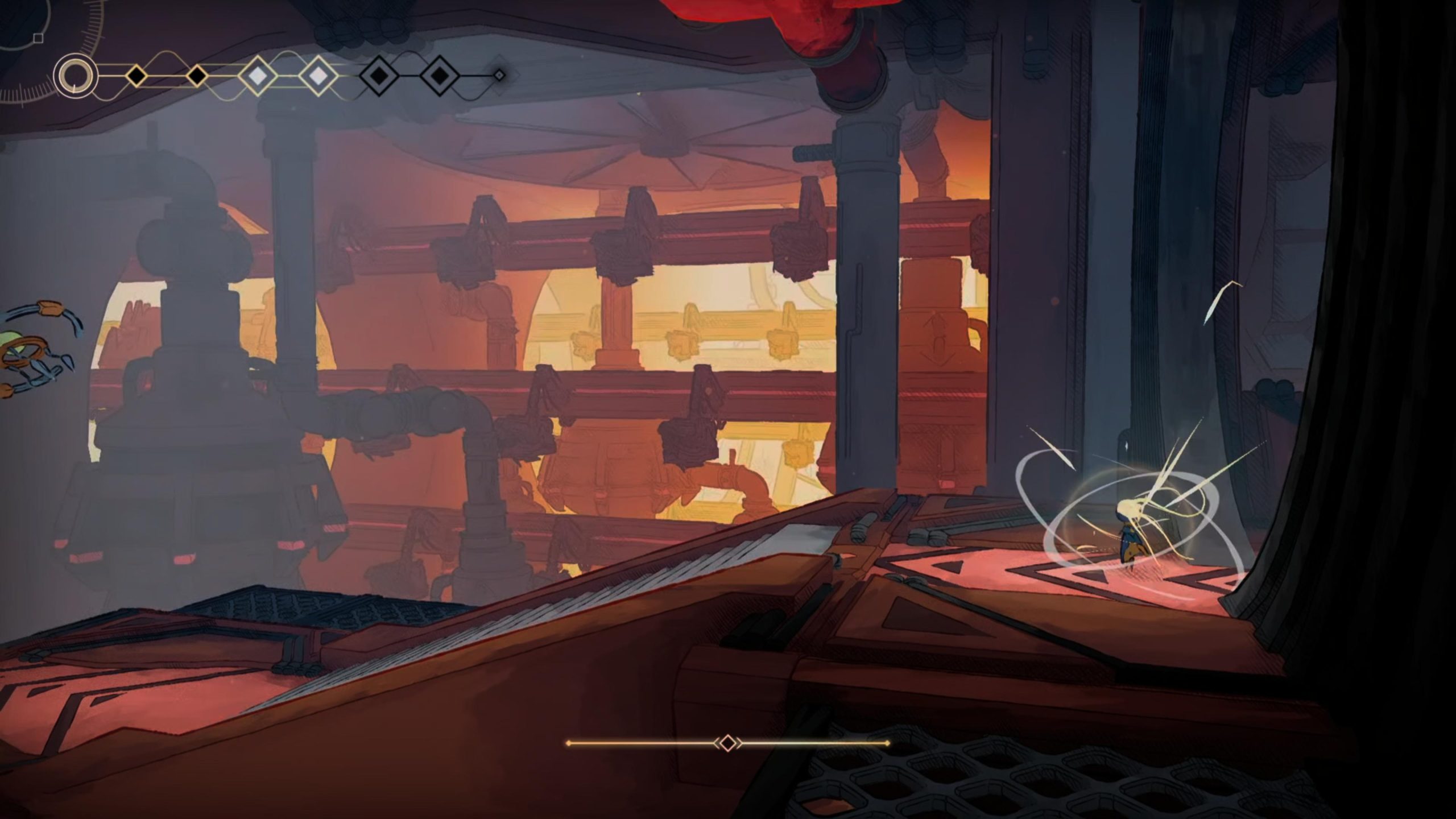
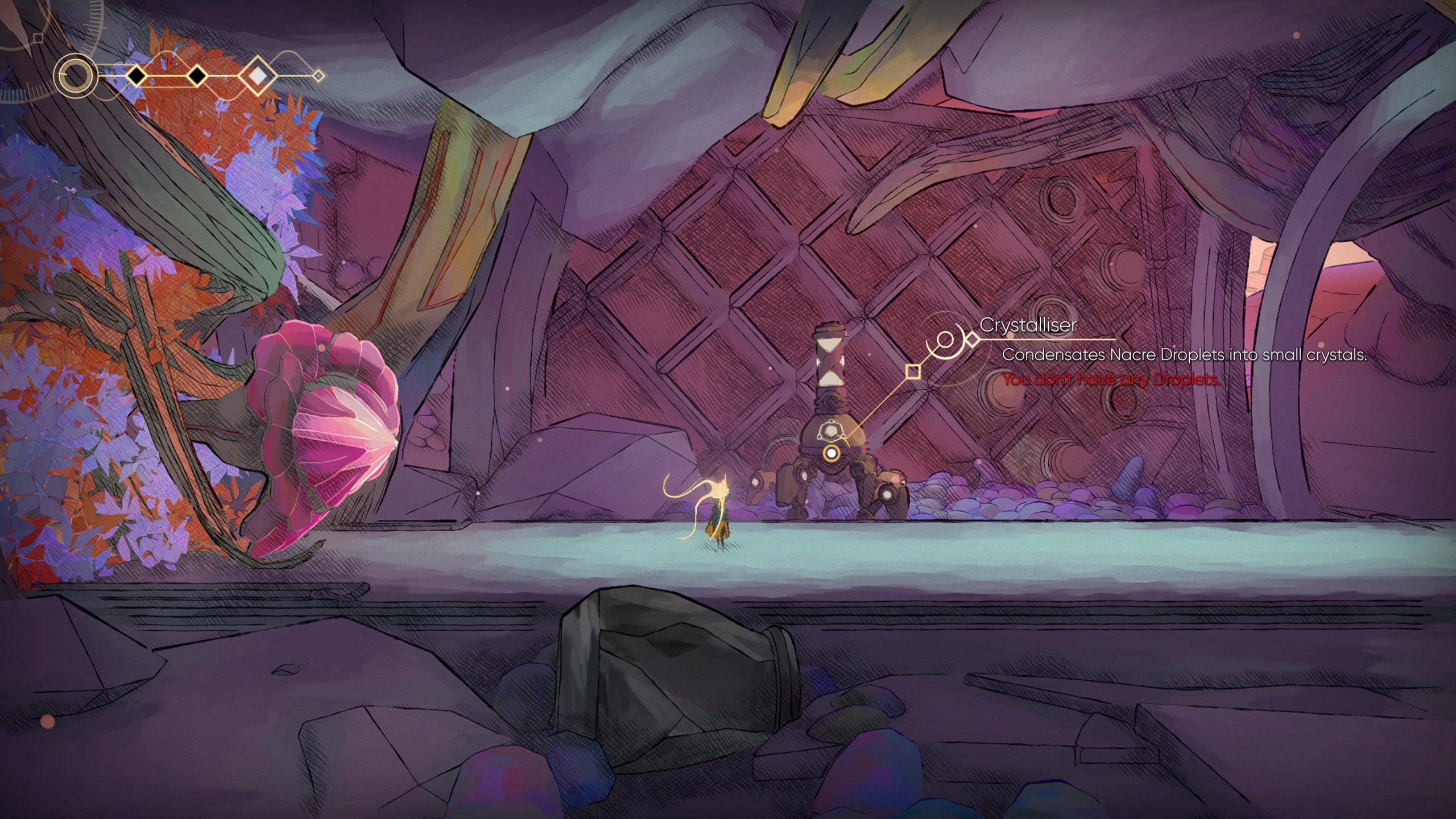
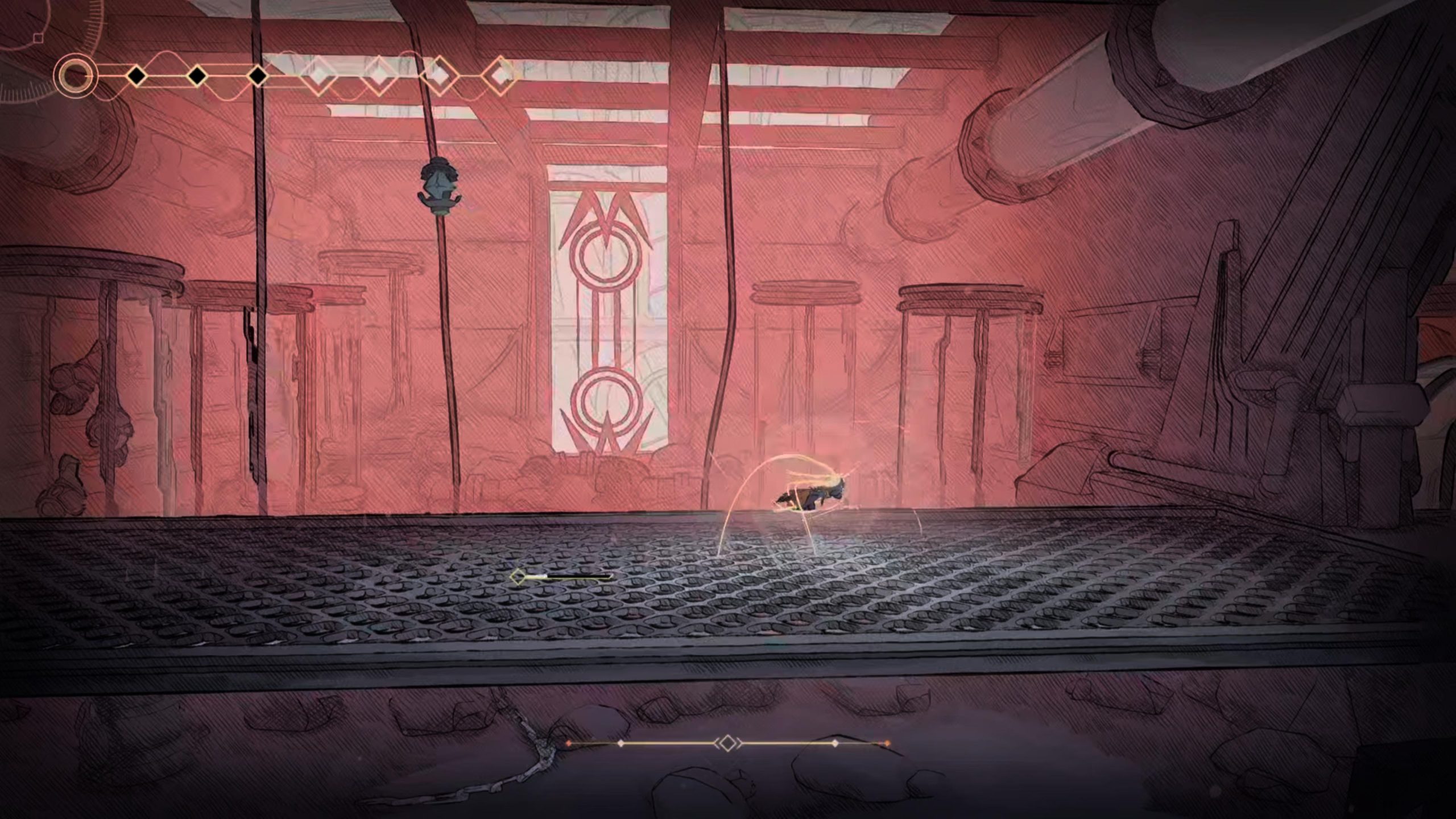
Mio glides across the world with a fluidity and poise that’s almost balletic, her animations conveying both elegance and latent strength. There is a deliberate contrast between her graceful motion and her metallic form, reinforcing the game’s thematic tension between machine and soul. A stamina gauge governs advanced actions, requiring careful management. Stamina refills while grounded, but clever interaction with enemies and environmental objects allows skilled players to chain actions together. Striking enemies, bouncing off specific objects, or interacting with designated flora can reset stamina mid-air, enabling complex movement sequences. Later sections introduce intense platforming gauntlets that demand precise timing, spatial awareness, and mastery of Mio’s full toolkit. These sequences are challenging and sometimes unforgiving, but immensely rewarding when completed. The Hairpin ability is central to both movement and combat. Using her hair to latch onto green crystallized points, Mio can pull herself forward or reposition mid-air. This mechanic integrates seamlessly into level design, creating traversal puzzles that feel organic. Over time, additional movement abilities expand these possibilities further, making traversal increasingly expressive and personal.
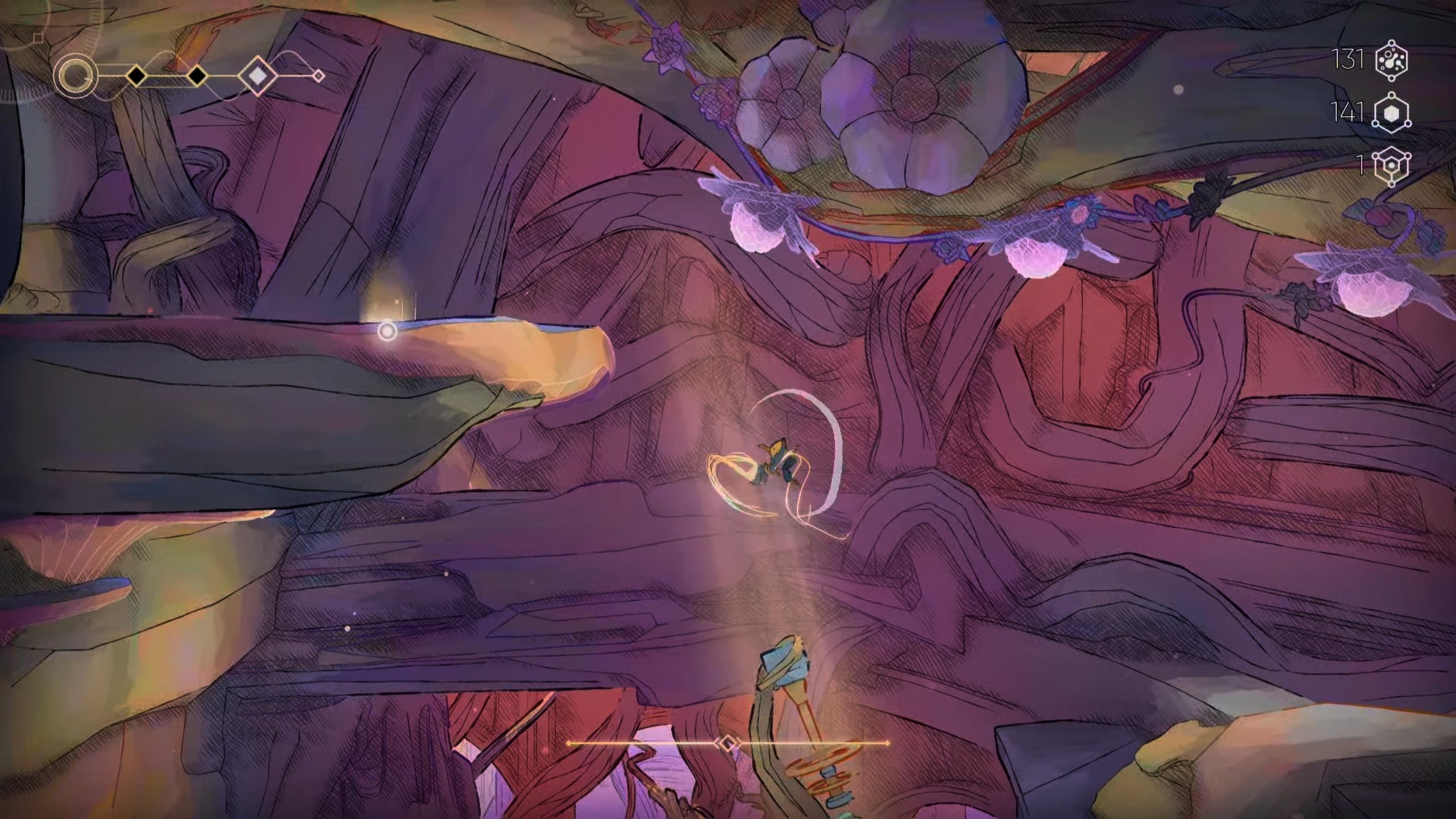
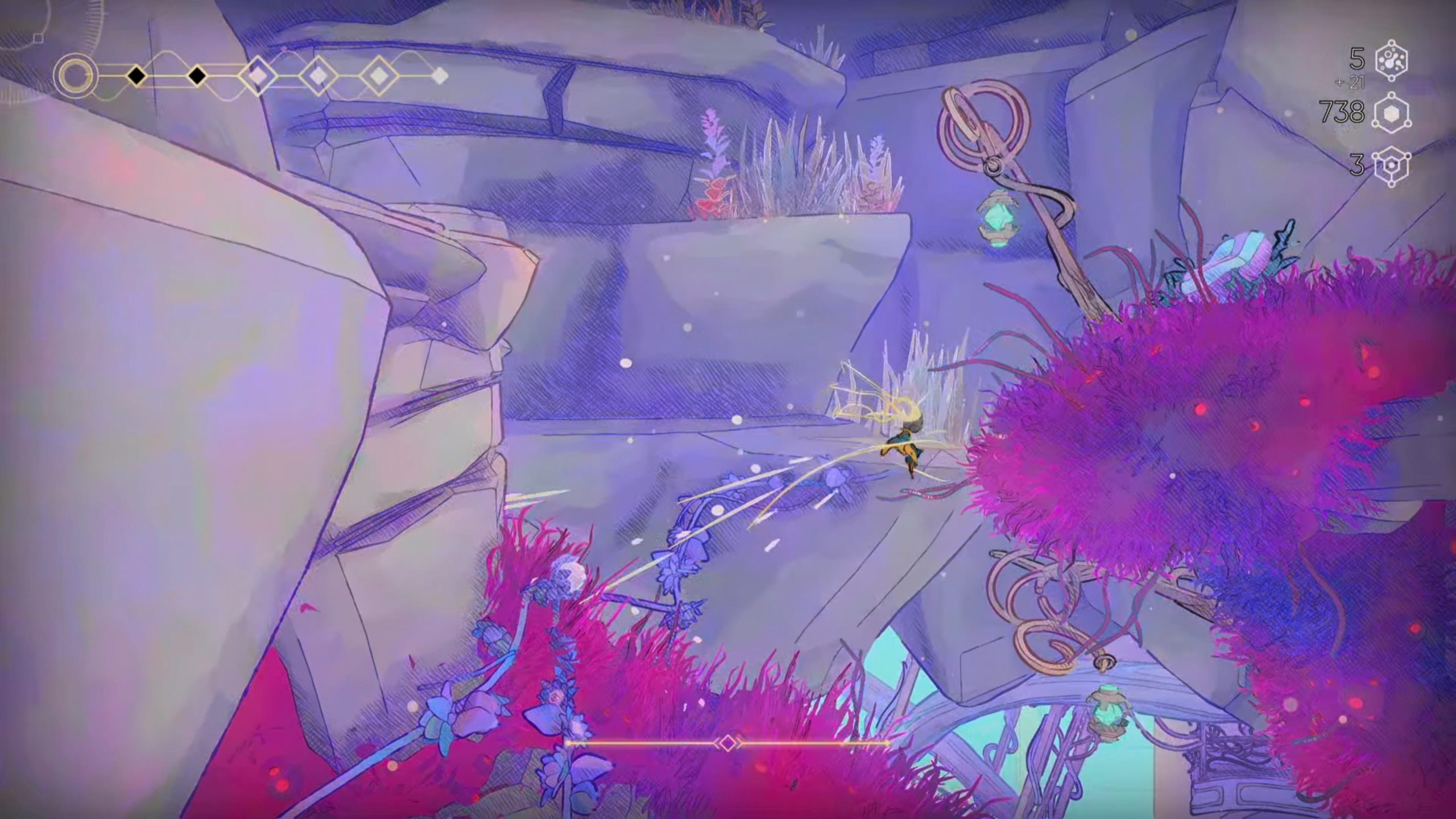
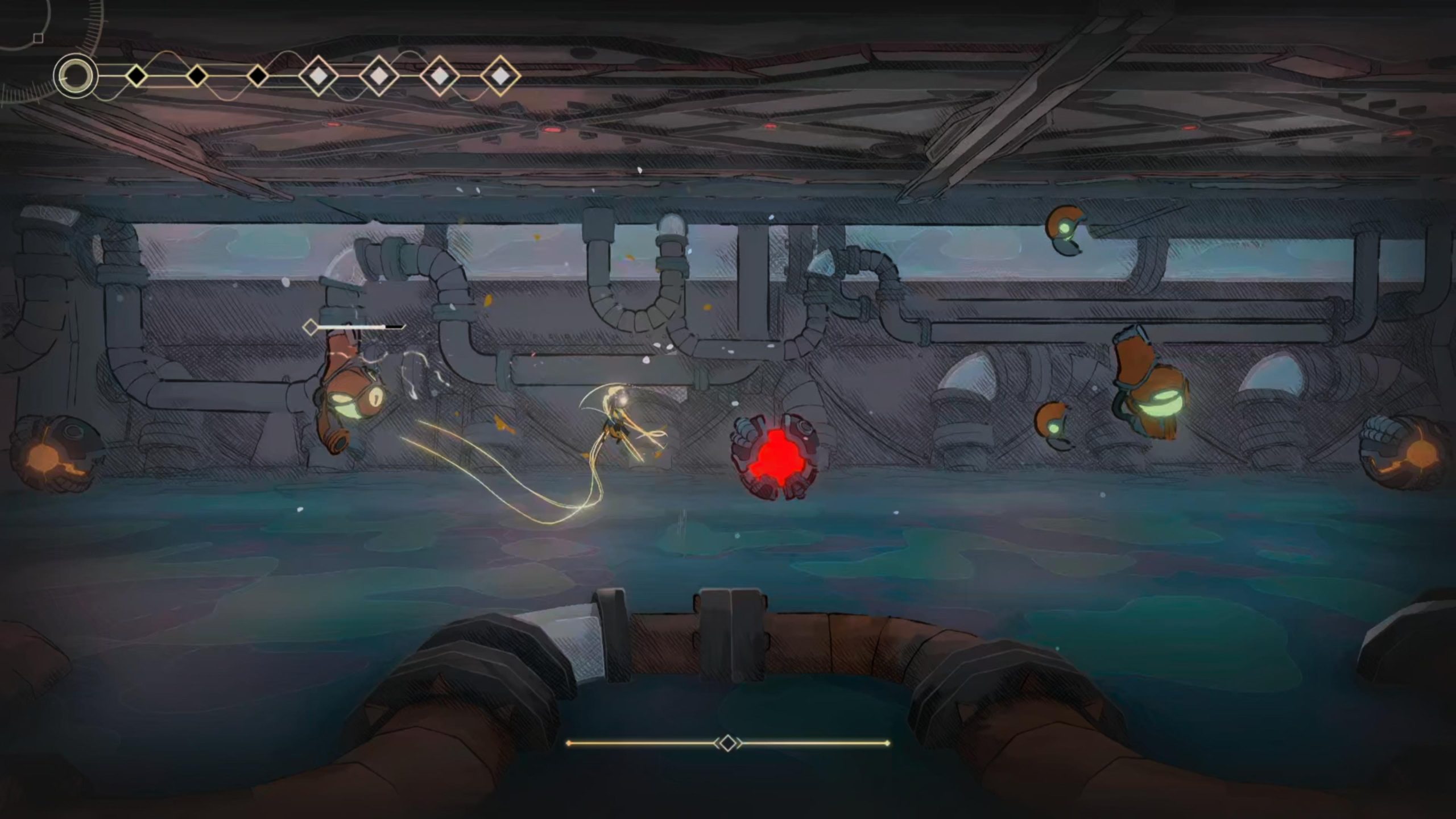
Combat, by comparison, is more restrained. Mio’s basic moveset is simple, consisting of a three-hit combo and situational attacks when aiming upward or downward. On paper, this might sound limiting, but in practice it works because combat is designed to interlock with movement. Using mobility to outmaneuver enemies, reposition mid-fight, or strike from unexpected angles is far more effective than standing still and trading blows. Enemy variety supports this approach. From small spider-like machines to aggressive hammer-wielding robots and foes that overwhelm by spawning smaller enemies, encounters require attention and adaptability. Boss fights take this philosophy further by combining elaborate attack patterns with arena layouts that encourage constant movement. While some battles may feel overwhelming at first, success consistently comes from observation and patience rather than raw reflexes.
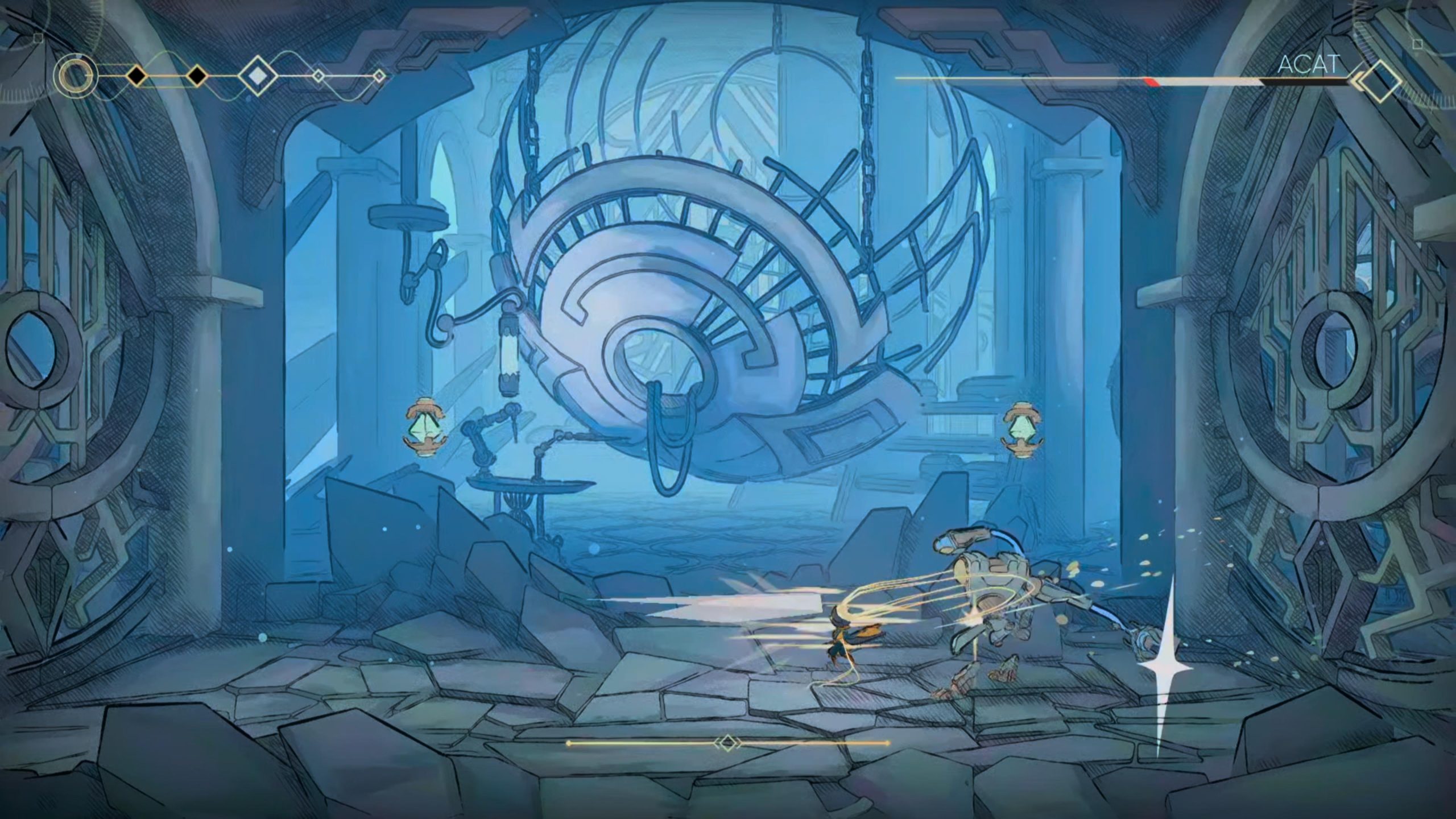
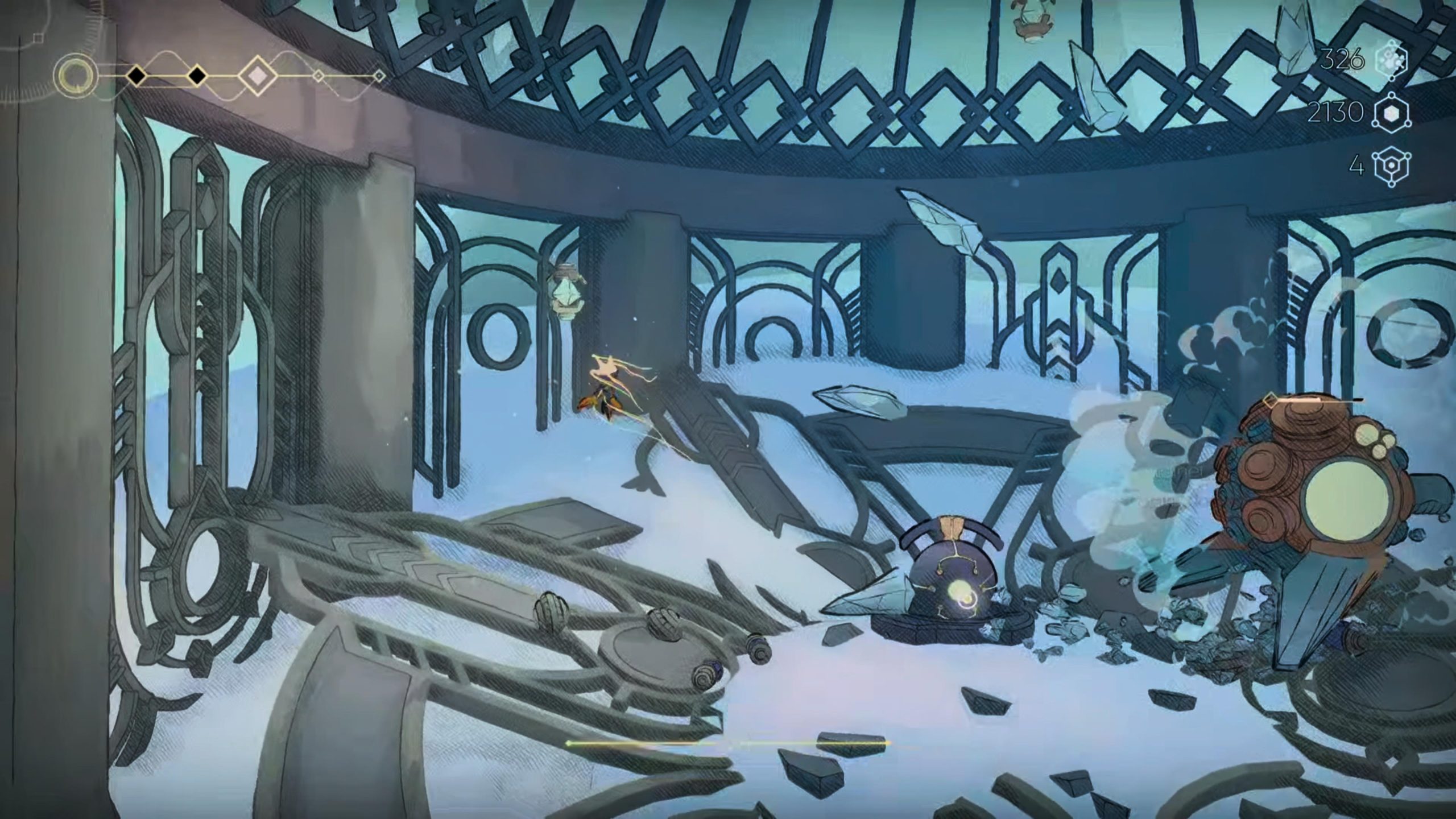
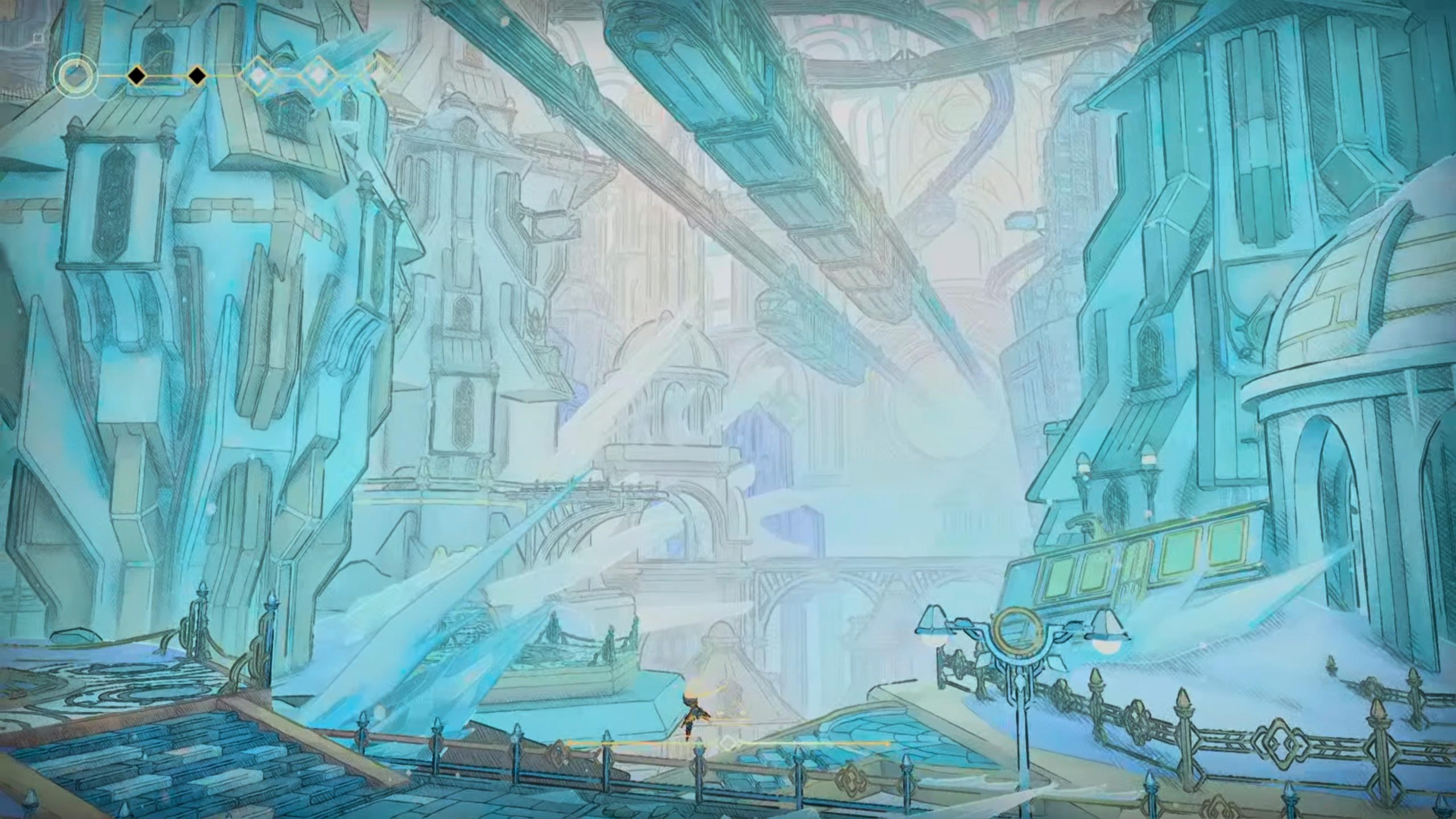
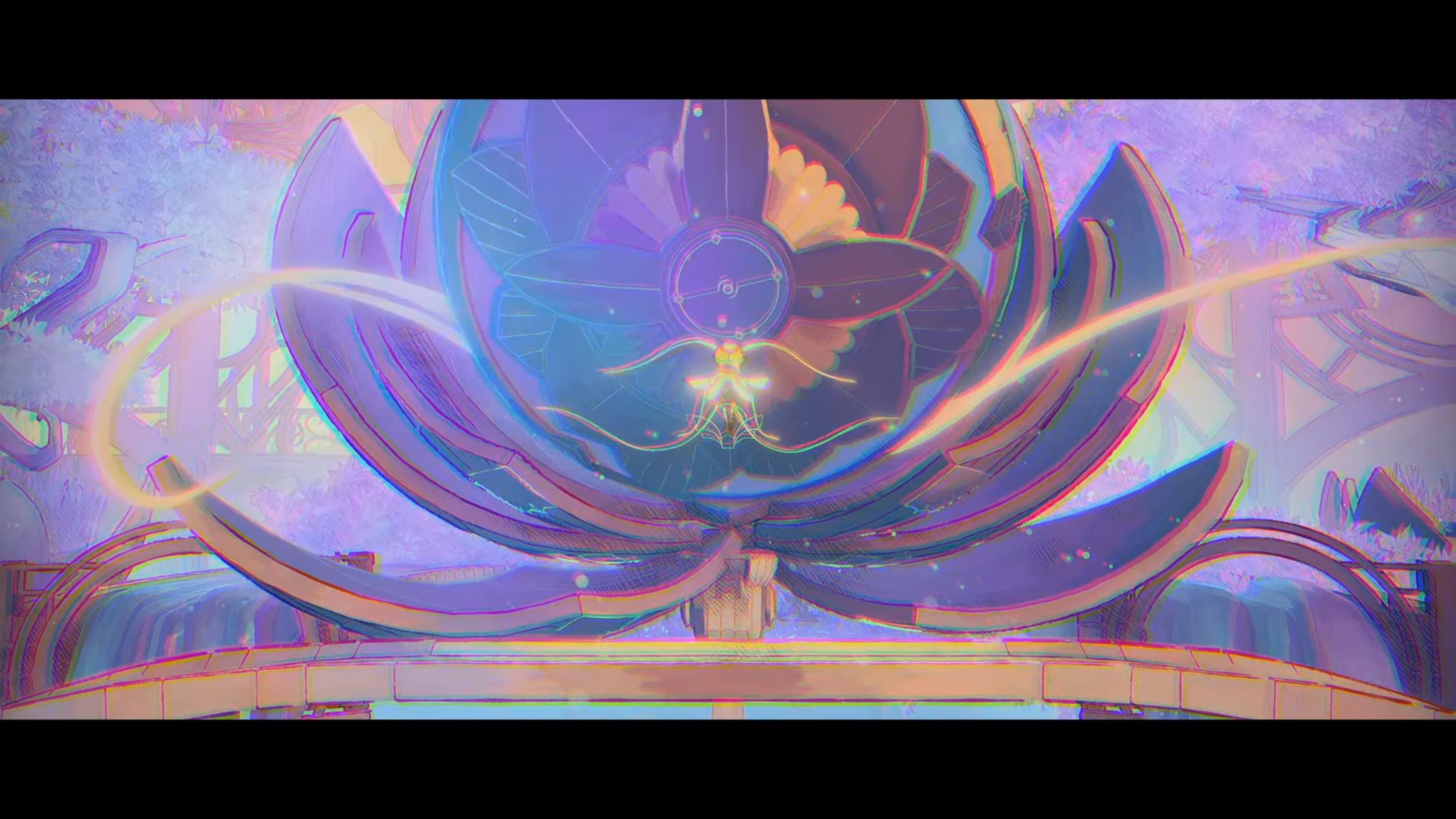
Visually, MIO: Memories In Orbit is striking. The watercolor-inspired palette immediately recalls Shady Part of Me, but here it is applied on a much grander scale. Soft blues, lilacs, and greens dominate naturalized areas of the Vessel, while rusty browns and muted industrial tones define mechanical zones. Cold tundra sections lean into layered blues and whites, creating a palpable sense of chill. A rough, sketch-like film overlays the entire presentation, tying the visuals together and reinforcing the game’s themes of memory and impermanence. The HUD and menu design are refreshingly clean and uncluttered, with a subtle robotic aesthetic that complements the game’s themes and neatly ties the overall presentation together without ever feeling distracting. The art direction feels cohesive and confident, never sacrificing clarity for style. Performance on PS5 is excellent, with crisp visuals and smooth frame rates throughout. Over the course of the playthrough, technical issues are notably absent, with no bugs, glitches, or collision problems to detract from immersion.
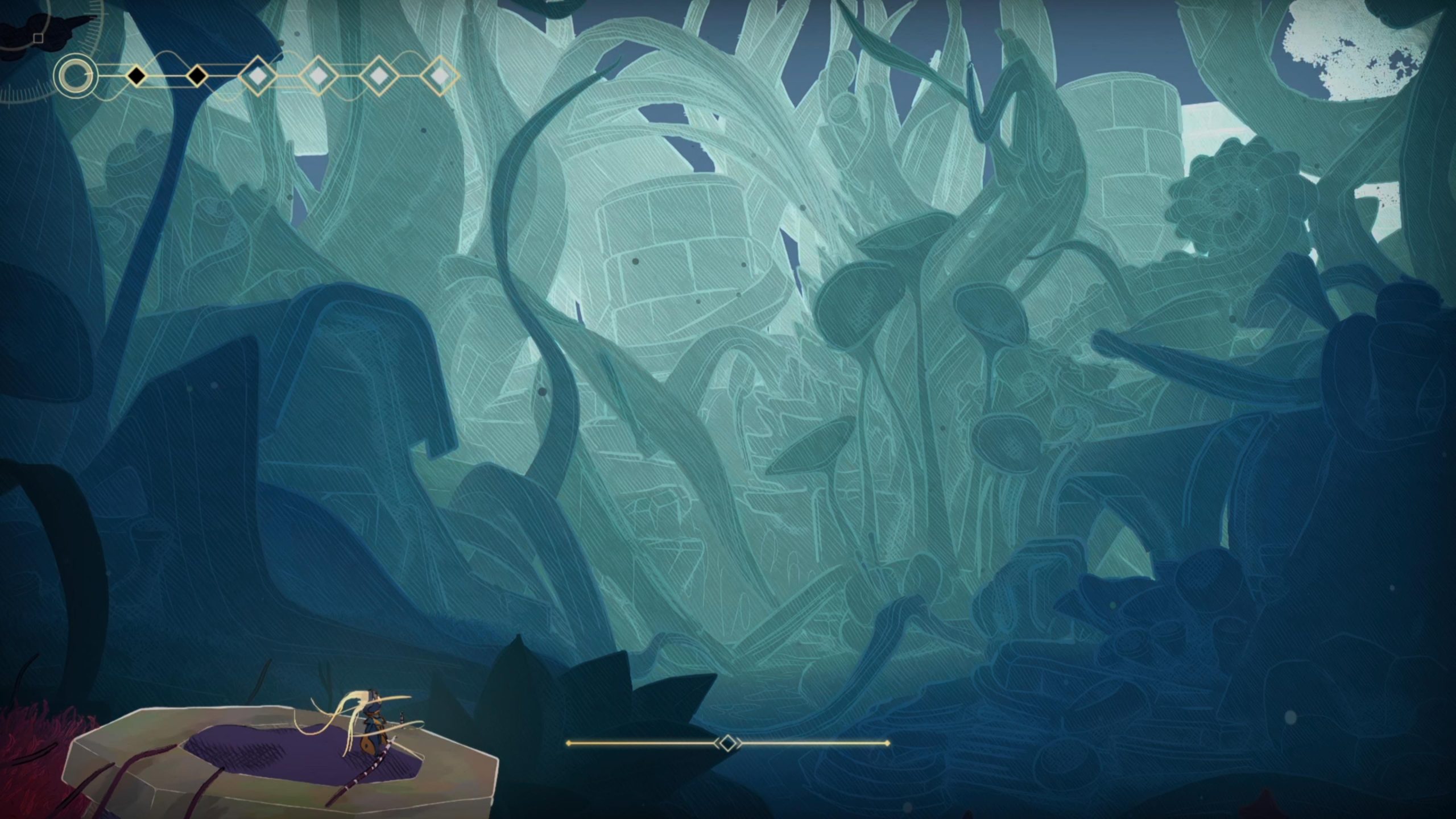
The audio design is equally impressive. The soundtrack blends choral elements with softer, atmospheric compositions, elevating key moments and lending emotional resonance to exploration. Music swells at just the right times, underscoring the scale of environments or the gravity of story beats. Sound effects are finely tuned. Attacks land with satisfying impact, environmental interactions are clearly communicated, and subtle audio cues reward exploration. Even small details, such as the gentle pitter-patter of Mio’s hair as she crawls, contribute to the game’s tactile feel. Together, the audio and visual elements create a deeply immersive experience that feels carefully considered from start to finish.
Final Thoughts?
MIO: Memories In Orbit stands as a confident, artistically driven Metroidvania with thoughtful design, expressive movement, and thematic cohesion. Exploring the Vessel feels less like checking off objectives and more like uncovering something forgotten, piece by piece. For a studio stepping into new territory, Douze Dixièmes delivers an experience that feels assured and purposeful. With its evocative world, elegant mechanics, and emotional undercurrent, MIO: Memories In Orbit emerges as one of the strongest early releases of the year, earning a well-deserved place among the genre’s modern standouts. It is memorable, distinctive, and absolutely worth the journey.
About the Author

Nay Clark Gaming holds a special place in my heart and I never stop talking about video games. I really love all types of games and have an interest in games that have complicated stories and lore because I enjoy untangling the mystery of it all. When I'm not gaming, I unsuccessfully try to control three amazing and incredibly bright kids.
Related Posts

Fatal Frame II: The Crimson Butterfly: Remake Review (PS5) →

NBA Bounce + GOAT DLC: (PS5) Review →

WWE 2K26 Review (PS5) →