
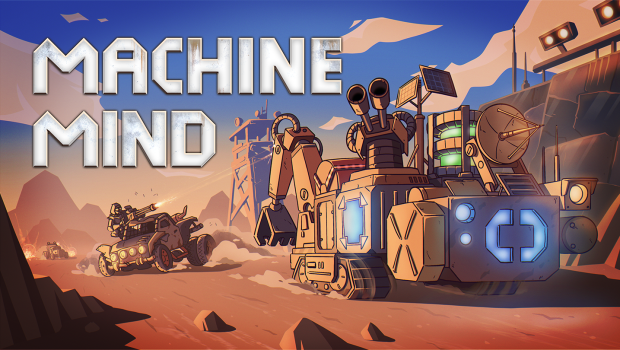
Machine Mind Review
Summary: Machine Mind is a game full of innovative, but half-baked ideas. Other, more successful titles tried to combine RTS and Shooter elements into a much more enjoyable experience, such as Rift Breaker, but Targem Games can’t deliver its latest game with the same quality. Perhaps with a bit more time and a few quality-of-life updates, Machine Mind will become a better, more enjoyable experience.
3.2
Great Ideas, Questionable Execution
Indie games is where the most innovative ideas can be found, and that is probably why we see more and more indie games getting universal acclaim in recent years, to the point that the 2025 Game Awards was almost exclusively The Best Indie Game of the Year award! Machine Mind is one of those Indie titles that has a lot of potential, especially since it comes from a developer and publisher like Targem Games that really loves vehicular combat. But how successful is Machine Mind in materializing those great ideas into enjoyable video game mechanics?
Machine Mind is part Real-Time Strategy, part Isometric Shooter. Players need to maintain a base of operations and gather resources while engaging in vehicular combat scenarios. The game opens with a crash site on a post-apocalyptic Earth in which humanity escaped to a space station after a nuclear war. The unnamed protagonist is greeted by what remains of the ship AI as they realize their consciousness is all that remains of their humanity after the crash, and it is contained in a Mind Module. Consequently, the protagonist can now control vehicles called bots and automations remotely, trying to find a way to get back to the space station and flee from the wasteland of the Earth.
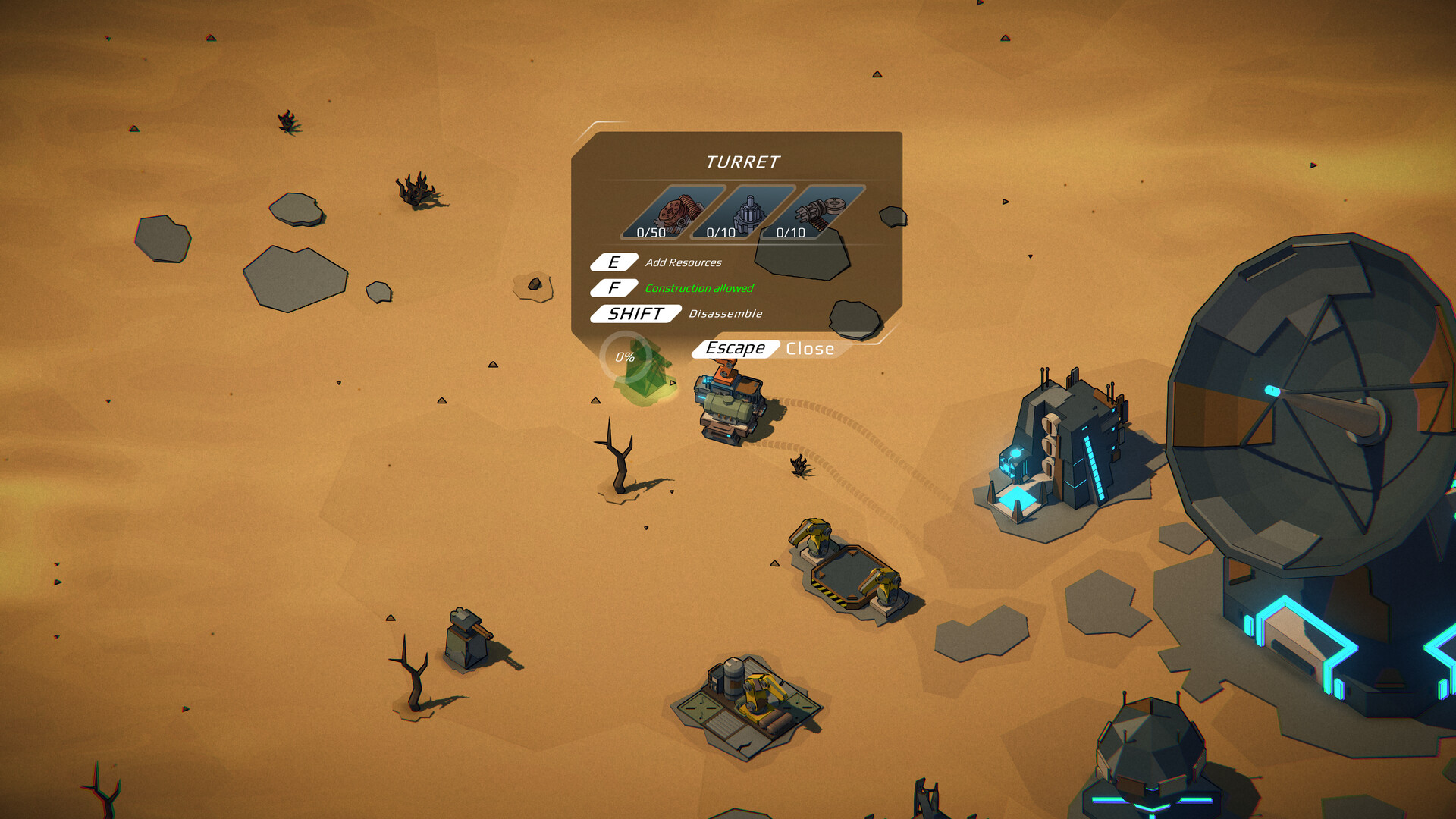
As the game starts, players need to build and maintain a base like any other RTS game. Power management, raw material collection, building health management, research for new technology, and all other usual base-management tasks are present in this game as well, but they are just a bit more cumbersome due to the camera movement and field of view limitations. As mentioned before, Machine Mind is also an Isometric Shooter, and the devs sadly decided to keep that camera choice for the whole experience, even the base-management tasks. That is why you need to keep moving around the base and put your bot at the right angle and right distance from buildings to interact with them. Building new structures is also a pain in the neck, as your bot is considered an obstacle that prevents buildings from being placed on it, even temporarily, so that you can move it and start building them later.
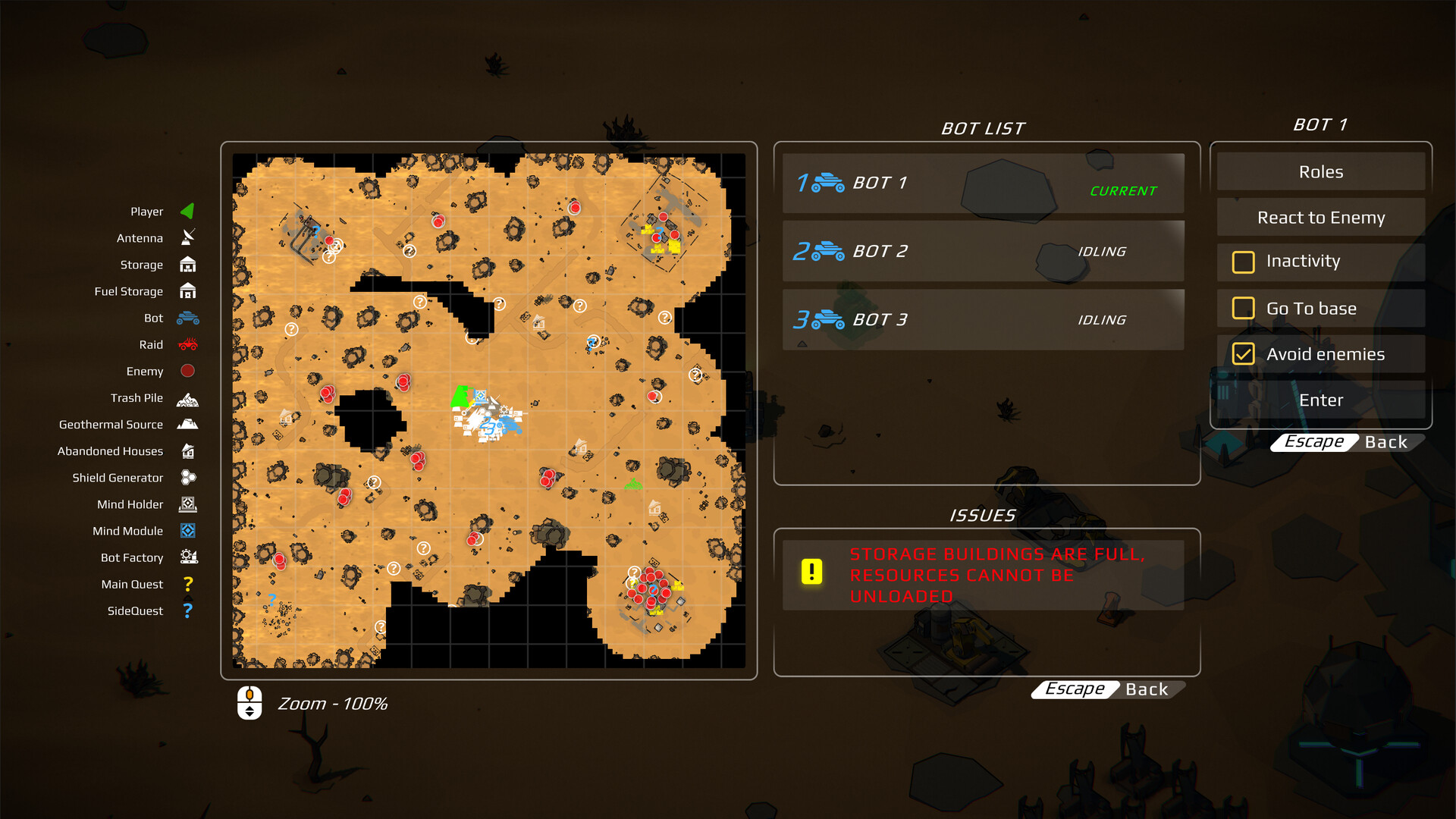
Most of the management tasks in the game can be automated using other bots. Bots can be created in a factory and be equipped with different weapons, such as a shotgun, machine gun, and railgun, and management modules like repair tools, building tools, digging tools, etc. Each bot can be either individually controlled in real time or assigned automated tasks such as repairing damaged infrastructure and building new ones, or collecting and extracting resources while the player controls another bot and explores the wasteland for new opportunities or advances the story. Though the automation is usually working well, there are inevitable instances of pure pain when the bots are stuck in uneven terrain or can’t find the best way to reach their destination, or even frequently bumping into each other in closed spaces of the base, like dodgems. Managing the bots is also difficult. I could not find any way to dismantle a bot completely or change its engine to a better one. Though the modules can be taken on and off as you wish, the general structure of a bot can’t be modified, and if you mistakenly create, for example, a long trailer-like bot and decide to turn it into a wider, more square-like bot later, you just can’t.
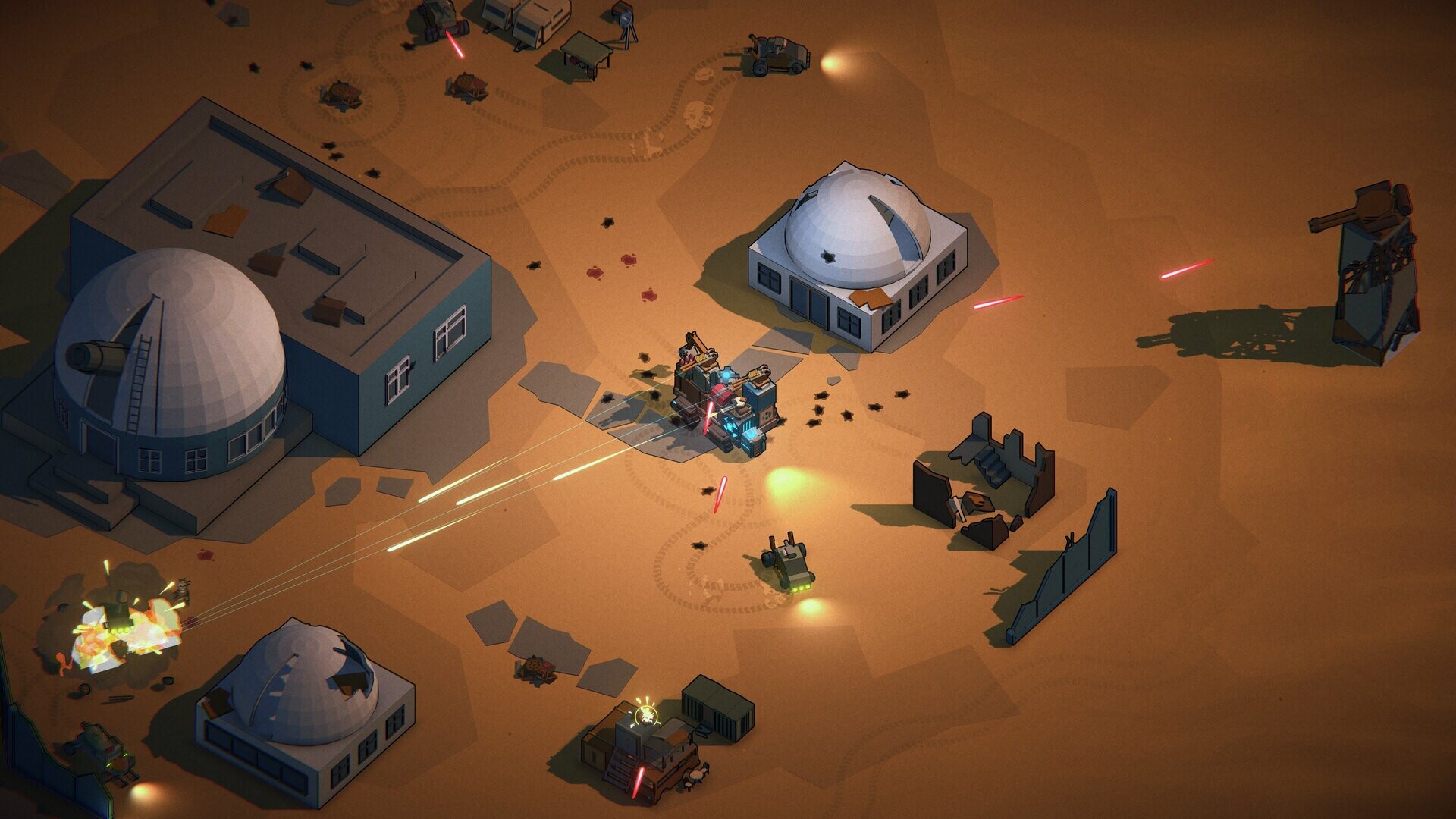
The vehicular combat aspect of Machine Mind is perhaps its best part. Each bot has a limited capacity for modules, and each module consumes a specific amount of power as well; thus, players need to strategically choose what modules to equip to balance out the space and power restrictions. Combat modules also have their limitations when it comes to aiming. If you put two machine guns right in front of each other, they limit each other’s line of sight. Thus, even the action-oriented aspects of the game need a considerable amount of brain power. The environmental hazards, such as harsh weather conditions and polluted air, as well as different enemy offensive tactics, such as homing missiles, also add to the complexity of modules needed to put up with these challenges throughout the game. Though the arsenal at the player’s disposal is not extraordinarily diverse, it manages to get the job done.
The game also suffers from minor but unmissable quality-of-life issues. There is no real tutorial phase, and everything is just explained via a journal-like tab on the go. Thus, some features are neglected and not properly explained, which is confusing. For example, you create a bot and equip it with an ore extraction module. Now it should be able to go around and collect ores automatically, right? Wrong! You need to research the ore collector role for your bots first before they can use the tool, and this is not pointed out correctly. Another missing quality-of-life feature is manual saves. Imagine playing an RTS game without manual saves. It’s crazy, yeah? Well, it’s called Machine Mind. The game holds up to four autosaves, and they will overwrite each other, so if you think you misplanned your tactics and need to get back to a couple of hours ago and start over, you just need to start the campaign from scratch.
Machine Mind is a game full of innovative but half-baked ideas. Other, more successful titles tried to combine RTS and shooter elements into a much more enjoyable experience, such as Rift Breaker, but Targem Games can’t deliver its latest game with the same quality. Perhaps with a bit more time and a few quality-of-life updates, Machine Mind will become a better, more enjoyable experience.

Related Posts

Underground Garage PC Review! →

Poker Night at the Inventory Review →

Crisol: Theater of Idols Review →