
Leviticus – Film Review
Reviewed by Damien Straker on the 7th of June 2026
Maslow Entertainment presents a film by Adrian Chiarella
Written by Adrian Chiarella
Produced by Samantha Jennings, Kristina Ceyton, and Hannah Ngo
Starring Joe Bird, Stacy Clausen, Mia Wasikowska, Jeremy Blewitt, Ewen Leslie, Davida McKenzie, Nicholas Hope, and Zamira Newman
Cinematography Tyson Perkins
Edited by Nick Fenton
Music by Jed Kurzel
Rating: TBA
Running Time: 87 minutes
Release Date: the 18th of June 2026
Leviticus is a successful queer horror thriller, elevated by a clever story concept. The timing could not be better. In the US, low budget horror films Obsession and Backrooms are breaking records and rewriting the studio rulebooks. This entry will not receive the same hype or publicity. As an Australian film it is admittedly not as slick as those two movies.
Yet its muted form is appropriate for its queer themes and depiction of loneliness. It is more of a mumblecore take on free love between drifters than a gruesome splatterfest! It is also openly political. It dramatises how religious extremism represses sexuality and queer communities. The title refers to Leviticus 18:22 in the Bible, which says homosexuality is an abomination. More positively, the story finds its humanity through its excellent young performers and a seasoned veteran too.
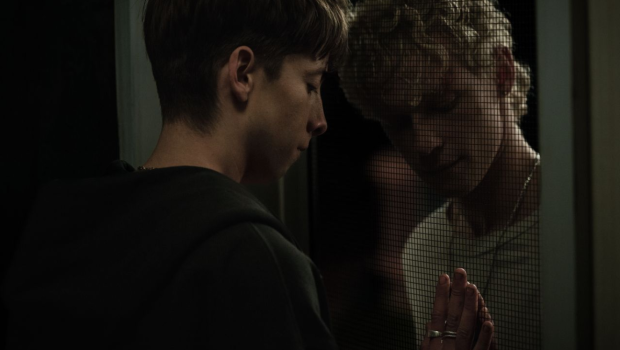
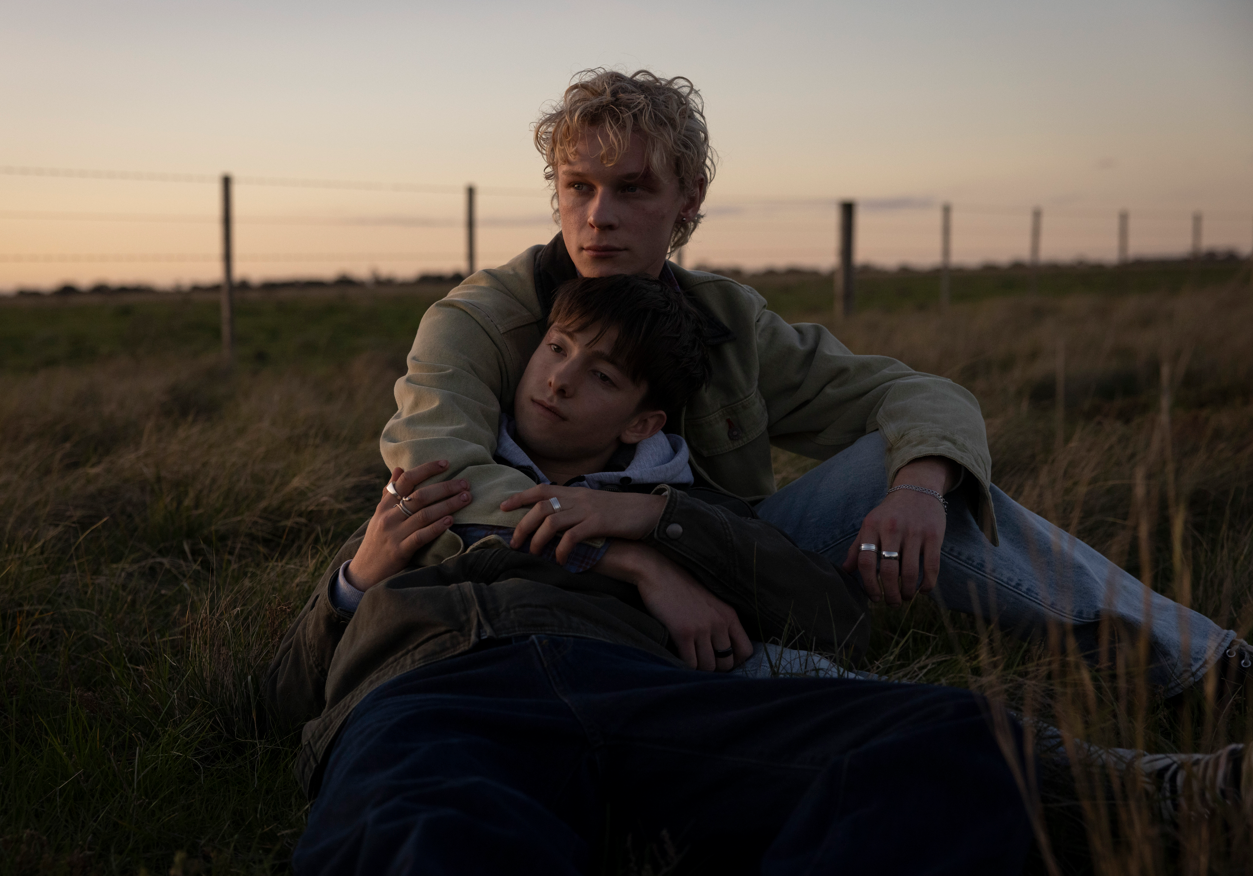
Talk to Me’s Joe Bird gives a remarkable performance as Naim. The shy young fellow has moved to a sleepy town with his conservative mother, Arlene (played by Mia Wasikowska). Naim soon befriends a fellow schoolboy named Ryan (Stacy Clausen). The two of them bond, wrestle, and then kiss inside an abandoned warehouse. They opt to keep their love secret because it is too dangerous in a small town.
Yet jealousy and betrayal soon send their relationship into the clutches of the Deliverance Preacher (Nicholas Hope). The evil preacher’s local church group uses a powerful deterrent against homosexuality. Their ritual is part conversion therapy and part exorcism! The spell means when you see the person you love, you feel they are brutally attacking you. After Naim is subjected to the deadly work of the preacher he is now convinced Ryan is intent on murdering him.
Leviticus marks the feature film debut of Melbourne-based filmmaker Adrian Chiarella. He excels in capturing the banality of a small, homophobic town. The film’s colour scheme is appropriately muted and grey. It infers the sense of conformity and blandness where free love hides. The grey tones are also visible in the ominous plumes of smoke released from factories in the background. The muted colour grading and heavy industrial imagery illustrates a place frozen in time.
Chiarella moves the camera in unsettling and effective ways. There are two fascinating shots using the same technique. The first is a slow camera retraction as it withdraws from a series of old powerlines. The movement suggests an old world receding into the past. Later, Naim enters a house. The camera draws away from him. It shows Naim containing his feelings for Ryan by physically avoiding him.
The technical feats are matched by the cleverness and restraint of the central concept. Having the preacher dissuade his victims from homosexuality is a horror-rift on conversion therapy. Religious extremists impose their bleak prejudices on young people to condition them into believing they are heterosexual. In this instance, the villains use a cigarette lighter to impose their will.
The logistics behind this ‘pray the gay away’ technique are irrelevant. What matters is the effect. Naim is brainwashed into thinking Ryan is attacking him. His lover becomes the film’s bogeyman and objective. Tension boils around whether it is really Ryan or his violent doppelganger stalking Naim.
Throughout this chilling binary, the film is scary but avoids cheap jump scares and lavish set pieces. There is no final confrontation with the Deliverance Preacher. Instead, there are betrayals before a decision around independence is made. It distinguishes the story from predictable movie endings.
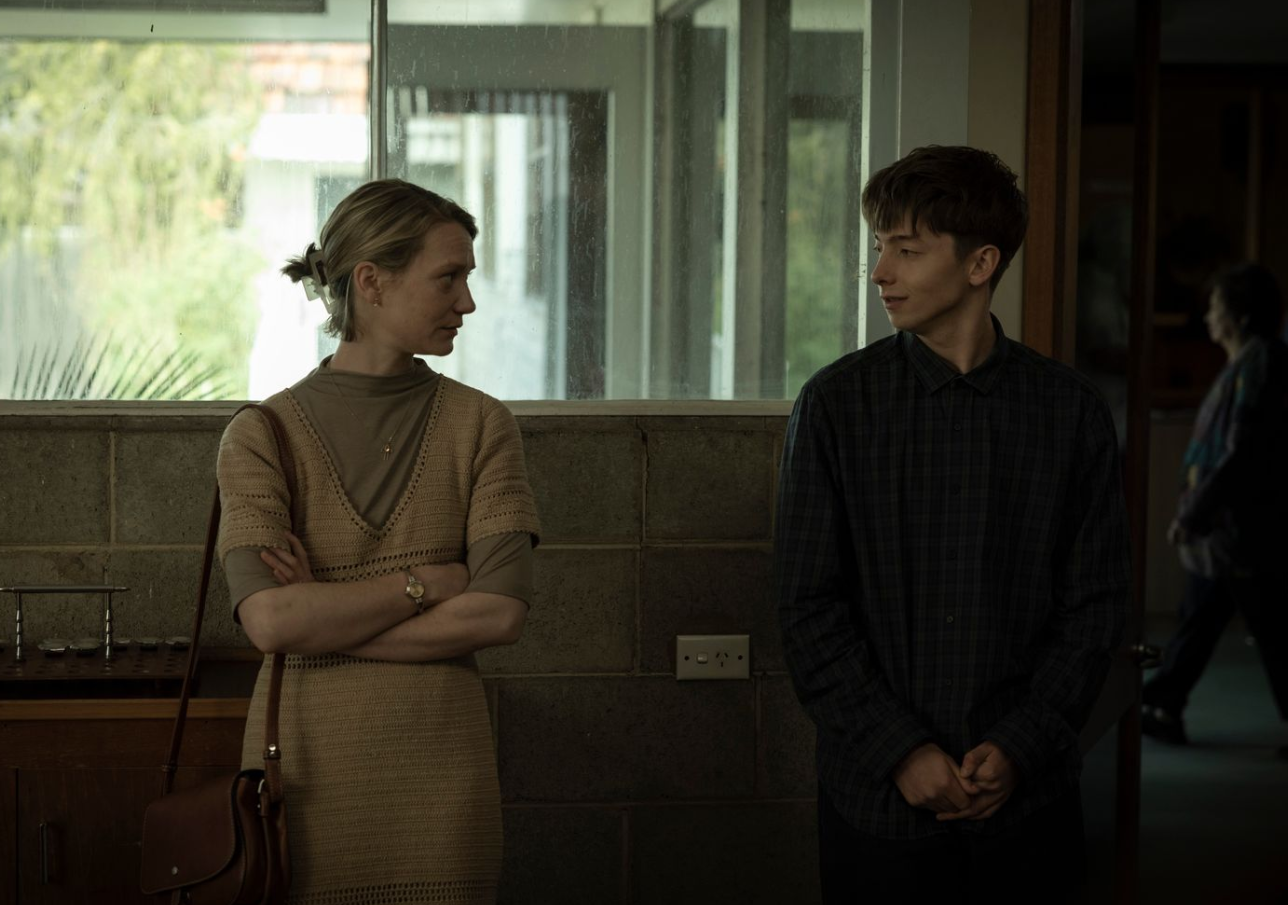
Leviticus is further humanised by Joe Bird’s very impressive turn as Naim. His body language throughout the film is perfectly expressive of his angst and loneliness. It makes him an entirely sympathetic, vulnerable protagonist who we believe is worthy of love. Even a small moment in the chapel where he gently wrings his hands together suggests his alienation from the community.
Stacy Clausen brings an imposing physicality to his role that is completely befitting of the duality of his character. It is a pity though the backstory for people like him is scarce. Even with minimal dialogue Mia Wasikowska reminds us of what an incredible actress she is. The unbroken intensity in Arlene’s eyes is as unnerving and cold as the way she drags her son into this mess.
The film succeeds because it does not overplay its hand. Rather than amplifying gore and special effects, it leans into a unique concept and builds tension and sympathy for its leads. It is a love story disguised as a horror film where two drifters outgrow their backwater town. The queer themes around free love and social conditioning are timeless as civil liberties are erased. Meanwhile, the muted visuals infer the town’s regression, and the performances enrich the characters’ humanity. It will not receive the same publicity as other major horror films, but it remains its own compelling genre entry.
Summary: A successful queer horror thriller, elevated by a clever story concept and Joe Bird's emotional performance.
3.5
Impressive
About the Author

Damien Straker is a freelance writer and film critic. He studied at the University of Sydney and graduated with an Arts Honours degree in Film Studies. He is a pop culture aficionado and enjoys talking about all films, 90s TV shows, ninjas and watching Rugby League. His favourite film directors are Alfonso Cuarón, Clint Eastwood and Alexander Payne.
Related Posts

Johnny Depp Makes Surprise Ebenezer Appearance at SDCC + Introduces New Trailer! →
Tenor: My Name is Pati Film Review →

Imprint Films September SteelBooks – DEATHSTALKER COLLECTION & RED SONJA →