
It Was Just an Accident – Film Review
Reviewed by Damien Straker on the 31st of January 2026
Madman presents a film by Jafar Panahi
Written by Jafar Panahi
Produced by Jafar Panahi and Philippe Martin
Starring Vahid Mobasseri, Mariam Afshari, Ebrahim Azizi, Hadis Pakbaten, Majid Panahi, Mohamad Ali Elyasmehr, Delnaz Najafi, Afssaneh Najmabadi, and Georges Hashemzadeh
Cinematography Amin Jafari
Edited by Amir Etminan
Rating: M
Running Time: 104 minutes
Release Date: the 29th of January 2026
Contains some spoilers
Iranian filmmaker Jafar Panahi’s twelfth feature film is an exquisite psychological thriller. As expected, it is a powerful critique of the tyrannical Iranian regime. Panahi himself, sixty-five, has been imprisoned several times in Iran and barred from travelling and making films. He has retained the support of major Hollywood filmmakers. Their petitions might account for his continually daring filmmaking. He filmed It Was Just an Accident in Iran in secret. Aside from its political viewpoints, it is also an incredibly efficient piece of storytelling. Nothing is wasted. The tension is sustained up to its climax. Surprisingly, there is also some black humour, which counters the bleakness. Panahi’s efforts more than justify winning the Palme d’Or award at last year’s Cannes Film Festival.
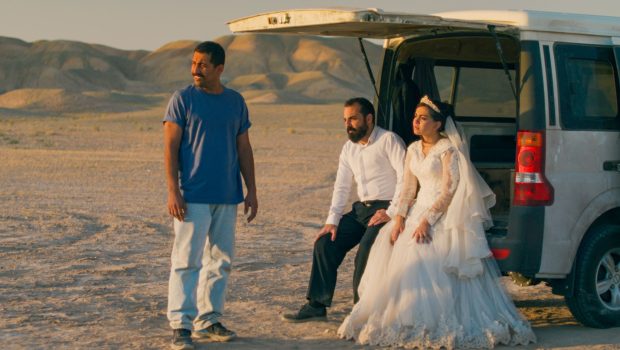
Accident’s story opens with a family of three driving at night. They include a father named Eghbal (Ebrahim Azizi), his wife (Afssaneh Najmabadi), and their young daughter (Delnaz Najafi). They are playing music when suddenly Eghbal hits and kills a dog. The car breaks down, forcing him to ask for help at a garage. Inside is Vahid (Vahid Mobasseri) who insists on keeping the lights off to hide. Vahid is convinced Eghbal is his old enemy, ‘Peg Leg’. It is because he has a creaky prosthetic leg. The next day Vahid quietly pursues him before kidnapping him and stuffing him inside his van. Eghbal’s capture soon introduces a bride and groom, Goli (Hadis Pakbaten) and Ali (Majid Panahi), their photographer, Shiva (Mariam Afshari), and a hot-tempered man named Hamid (Mohamad Ali Elyasmehr). Everyone says they were hurt by Eghbal, but no one is certain he is actually ‘Peg Leg’.
The precision of Panahi’s craftsmanship resonates strongest. His filmic style is described as ‘neorealism’. The authentic depiction of Iran, the tension and danger, is palpable. Panahi pairs his neorealist form with precise stylistic choices. Throughout Accident scenes are filmed in extended takes. In the opening scene, Eghbal’s family is framed in one shot. The decision heightens the intensity and reflects Eghbal’s dedication to them. Later, Vahid is photographed in an extended mid-shot sitting in his car and during the climax, a character is filmed continuously while tied to a tree. The unbroken takes reflect the group’s collective trauma and their inability to relinquish their anger.
Given the confronting subject matter, the film’s humour is surprising. The theme of mistaken identity grows comical due to the possibility that Vahid’s efforts to kidnap and nearly bury Eghbal alive might be in vain. The chaotic, satirical energy rises as more characters continue piling into Vahid’s van. Everyone grieves collectively, but no one can completely identify their man. It is a road movie where we see the number of people Eghbal has impacted but equally how many lives Vahid affects. For example, Goli’s health and insistence on staying in the van starts straining her relationship with Ali. It is also quietly funny seeing her in her wedding dress pushing the van when it breaks down. The film’s focus is trauma and memories. Generating light relief in this same context is an incredible feat.
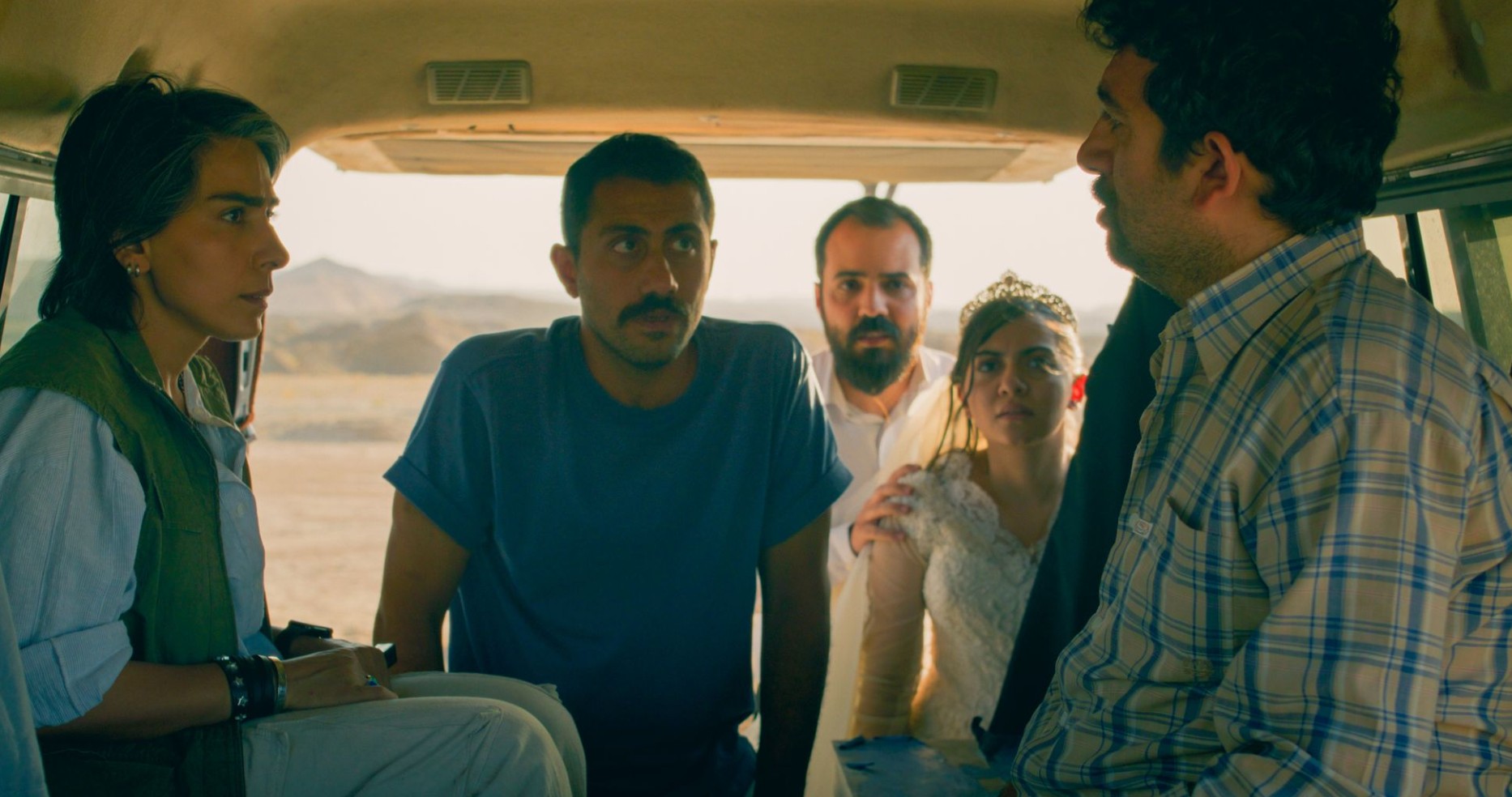
The performances evoke superb naturalism and strong direction. The extended takes provide an enormous amount of time for the actors to inhabit their roles. As Vahid, Vahid Mobasseri embodies the anger he directs at Eghbal only to doubt his beliefs. He makes the film comparable to an anti-revenge parable. The kidnapping soon mirrors the regime’s terror. Meanwhile, Mariam Afshari as Shiva shows scepticism of Vahid before partaking in a gripping interrogation. Ebrahim Azizi has Eghbal plead for his life in disturbing, believable ways. Mohamad Ali Elyasmehr’s Hamid becomes increasingly brutal towards Eghbal, which makes proceedings tense and impacting. The natural performances and worldly details of the side characters both ensure the film is always absorbing.
It Was Just an Accident succeeds on many levels. Entering the film cold is incredible because of how Panahi unpacks the story’s revelations. With surgical precision, he reveals the real protagonist and the various people disrupted by Eghbal and Vahid’s actions. Even in its closing frames, the dramatic question about identity remains deliberately ambiguous. The film is about revenge’s blindness and how one becomes the problem they rallied against. The superb performances and integration of tension and dark humour make the film exceptional. It Was Just an Accident is nominated for the Best International Feature Film and Best Original Screenplay Oscars. It should have been nominated for Best Picture. It’s a terrible oversight for an otherwise great Iranian film.
Summary: Iranian filmmaker Jafar Panahi’s twelfth feature film is an exquisite psychological thriller.
5
Superb
About the Author

Damien Straker is a freelance writer and film critic. He studied at the University of Sydney and graduated with an Arts Honours degree in Film Studies. He is a pop culture aficionado and enjoys talking about all films, 90s TV shows, ninjas and watching Rugby League. His favourite film directors are Alfonso Cuarón, Clint Eastwood and Alexander Payne.
Related Posts

Project Hail Mary – Film Review →

How to Make a Killing – Film Review →

Midwinter Break – Film Review →