

Interview Nico King (Co-founder & Executive Creative Director at Chaos Theory Games)
We catch-up with Co-founder & Executive Creative Director at Chaos Theory Games, Nico King to talk… gaming and their upcoming release called Rusthaven!
Welcome to Impulse Gamer Nico!

Chaos Theory has championed a “for-purpose” mission since 2012. How does that ethos act as a filter for the projects you take on and the partners you choose to work with?
We’ve always wanted to make games about hope.
The line between entertainment and impact is blurrier than people think. There are heaps of games that make the world better simply by bringing people together, offering comfort, or helping them see things differently. The difference for us is that we’re very intentional about how we approach it.
Our “for-purpose” ethos acts as a filter. We ask: Does this project move the world in a direction we believe in? That doesn’t mean every game needs to be overtly educational or support a social cause. It means we’re drawn to stories about restoration, empathy, community, and possibility.
We’re especially interested in imagining better futures. If we can help players picture a hopeful world, even for a few hours, that vision becomes easier to believe in – and maybe easier to build.
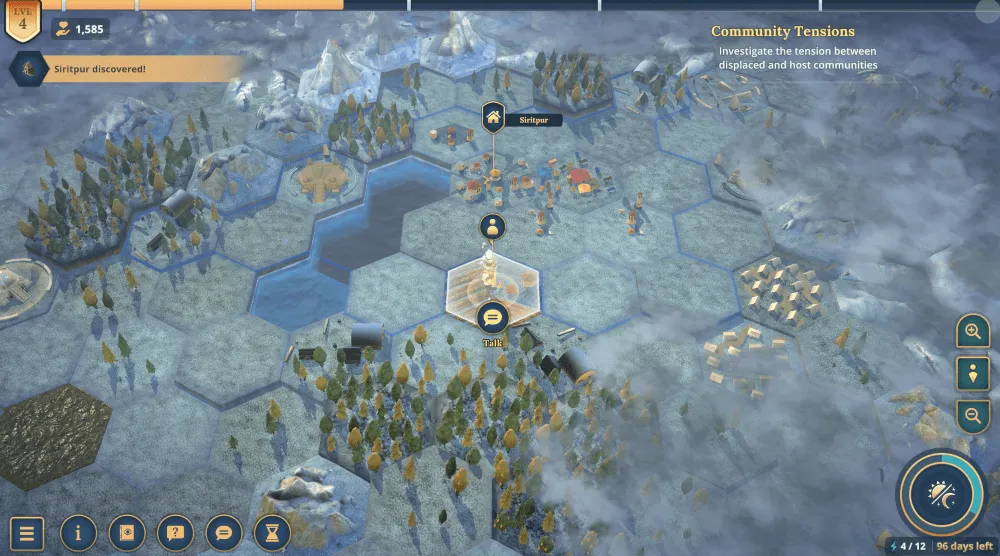 Sharmila by Chaos Theory Games
Your team is famously multidisciplinary, keeping everything from art to marketing in-house. How does having all those voices in the room from Day 1 change the way a game like Rusthaven evolves compared to a more siloed studio?
We’re a team of 16, and most of us are senior generalists. That creates a very particular kind of studio culture.
In many studios, creative, technical, and marketing decisions happen in sequence. For us, they happen simultaneously. Marketing is in the room when the core fantasy is defined. Tech is in the room when narrative ideas are explored. Art is contributing to the game’s design from day one.
Each discipline has competing drives and focuses – creatives want it to look as good as possible, engineers want it to be easy to build and maintain, marketing wants clear hooks and maximum ‘wow’ moments. When those drives are managed well, they don’t dilute a game – they sharpen it.
That cross-pollination from day one makes the game more cohesive and helps it reach more players.
You’ve spent years mastering “transformational” and serious games. What’s the most surprising lesson from the world of educational gaming that you’ve applied to your entertainment-focused titles?
The biggest lesson we’ve learned is that meaning works best when it’s embedded in mechanics, not delivered as a message.
We spent years making what I like to call “undercover education” – games designed to teach or shift perspective without feeling like school. We’ve seen firsthand that players don’t want to be told what to think. They want a playground where they can experiment and draw their own conclusions. The art of transformational games is being able to shape and build that playground.
In Rusthaven, the themes of restoration and second chances aren’t diatribes delivered by your companions. They’re built into the core loop. You salvage. You repair. You rebuild. You give broken things new purpose.
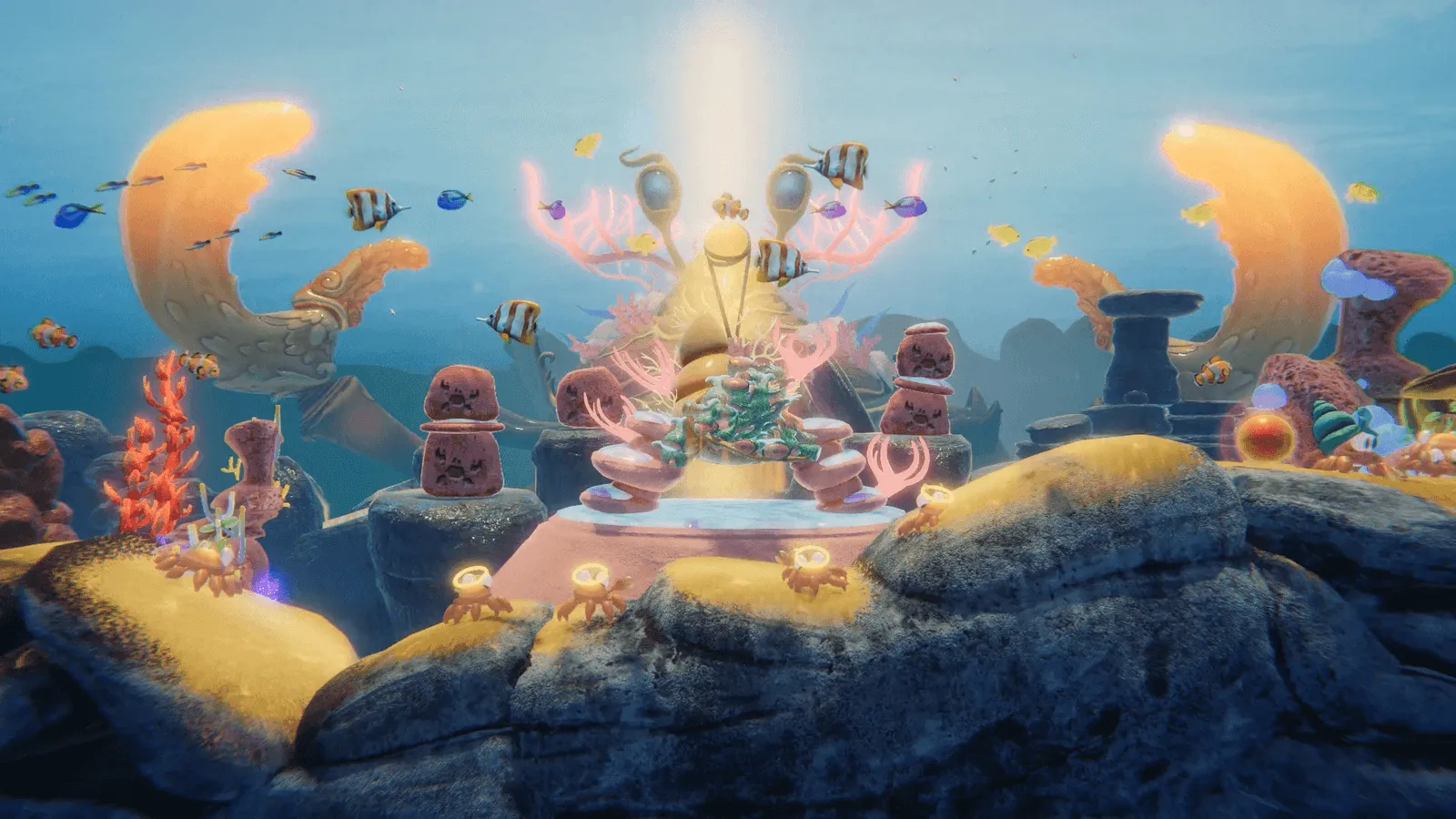
Grab God by Chaos Theory Games
The Australian dev scene is having a massive moment right now. Beyond the geography, what do you think defines the “Australian Design Culture” in games today?
Generosity is the word that I think best sums it up, and something I have heard from international developers who visit. There’s a humility and openness to the dev scene here, and apparently that’s quite rare.
When our studio was just starting out, I reached out to founders of major studios for advice, most of whom I’d never met. About 85% of them said yes and shared so much that it helped us build the company into what it is today.
There’s a general sense that if one Australian team is winning, we’re all winning. Classic rooting for the underdog vibes.
With increased government support for local IP, how has that safety net changed your creative risk-taking? Does it allow you to tell stories that might have been “too niche” five years ago?
For us, it’s been transformative. Programs like the DGTO and support from Screen Australia have fundamentally changed our trajectory. Rusthaven received production funding from Screen Australia, and without that backing, we simply couldn’t have taken this creative leap.
Game development requires significant upfront investment, and Australia doesn’t have a deep private investment ecosystem for games (yet). Government support allows studios like us to be more competitive globally.
It absolutely enables risk-taking. It allows us to pursue a hopeful solarpunk post-collapse game – and bring it to life with confidence.
You’ve collaborated with global giants like the UN World Food Programme. How does being an Australian-based studio influence your perspective when tackling international, high-stakes projects?
It’s an interesting question, as Australia is geographically isolated but culturally diverse. That combination definitely shapes how we work.
Because Australia is a small market, we’ve always had to think globally. We design for players everywhere and have to focus on how to make games for people from different perspectives and preferences.
When you’re working on real-world issues, authenticity and trust are really important. We spend time listening to subject matter experts, communities, and stakeholders, to help define what the game should be.
Rusthaven is described as a “reboot of the world.” In a genre often defined by grit and gloom, why was it important for the team to lean into a “hope-punk” or cozy aesthetic for a post-collapse setting?
Post-apocalyptic settings are often used to explore what it means to be human. Initially, we set out to make a game that explores the idea of a robot community and how a group can work to build a better future. The clean slate of an abandoned planet was the perfect setting for that story.
Rusthaven draws inspiration from things like Wall-E, Treasure Planet, and the broader solarpunk movement – imagining futures built on reuse, repair, and community rather than resource extraction or dominance.
Solarpunk is based on the idea that to build a better future, we need to be able to imagine it, and we imagine a future that is built through small, meaningful acts taken by individuals. That philosophy is embedded in Rusthaven’s DNA.
We like to call it an “anti-apocalypse.” It’s not about surviving the end of the world. It’s about designing what comes next.
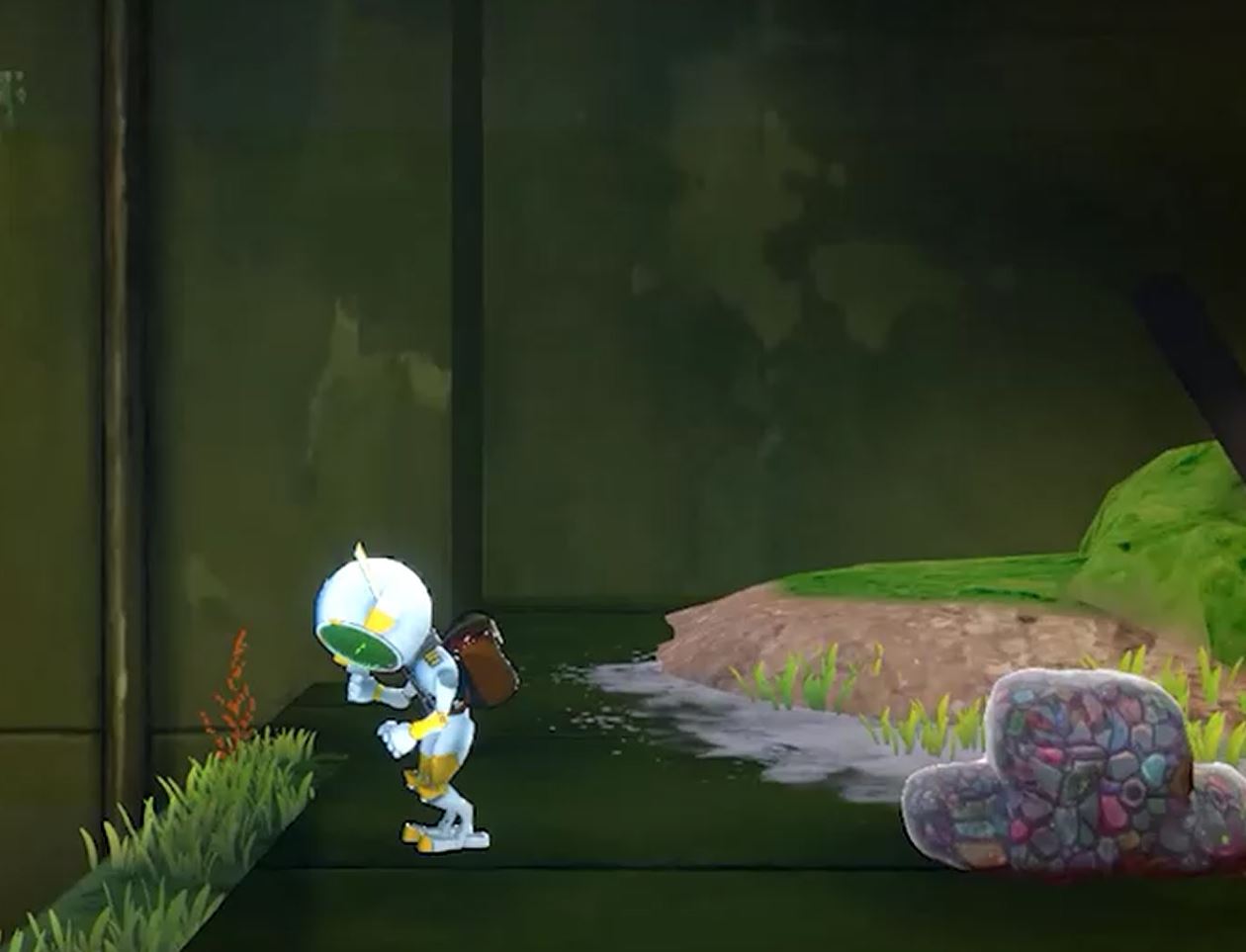 Rusthaven by Chaos Theory Games
The game centers on salvaging and “re-homing” broken bots. Beyond just a gameplay loop, what were the core emotions you wanted players to feel when they bring a piece of abandoned tech back to life?
There are two main emotional throughlines: satisfaction and empathy.
On a mechanical level, repairing feels like fixing something IRL – focused, tactile, and rewarding. There’s a deep human pleasure in cleaning things up, or making whole what was once broken.
But emotionally, each companion character carries scars from their ‘previous life’. When you restore them, it’s personal. We want players to feel catharsis, pride, and responsibility. You’re not just collecting NPCs to add to your crew. You’re helping someone rediscover who they are and build their identity for this new world.
Rusthaven is ultimately about second chances – for machines, for communities, and for the world itself.
Between solar-powered skyships and upcycled retro-tech, Rusthaven is clearly green-coded. How do you balance those environmental themes so they feel like a natural part of the world-building rather than a “preachy” lesson?
We make sure the themes emerge from the systems. The skyship runs on solar power because that’s the best option available in this world. Upcycling retro tech isn’t a message – it’s a mechanic that reinforces the core theme of second chances.
If a theme feels pasted on, players will feel it instantly. In Rusthaven, the environmental undertones are simply the way the world functions.
As you head toward launch, what’s that one specific “aha!” moment or hidden detail in Rusthaven that you’re most desperate for players to stumble upon?
I love watching players slowly realise that beneath the cozy exterior, there’s history. Rusthaven is warm and inviting, but some of the companions carry darker backstories. Seeing players connect the dots and discover who the characters really are has been incredibly rewarding.
There are also quieter delights. Some players have noticed the map subtly mirrors New South Wales, our home state. And there are a few Simpsons references hidden in there.
We haven’t announced the release date yet, but we are currently planning for next year, so I’m sure that there will be even more ‘aha’ moments to come.
About the Author

Andrew Bistak When he's not trying to save the world, Andrew enjoys travel (although loathes turbulence), going to the movies, reading and being a dad to his two dogs (and now twins) with his wife.
Related Posts
March 12, 2026FATAL FRAME II: Crimson Butterfly Remake (Makoto Shibata and Hidehiko Nakajima Interview) →

Ben Prendergast Interview →
DRUM TAO’s Taro Harasaki on Tradition, Innovation and the Power of Performance (Interview) →