
Gridz Keeper Review (Switch)
Summary: Gridz Keeper is a simple, grid-based puzzle game with classic Lights Out-style design. Its clean presentation and accessible difficulty make it a good entry point for younger players or puzzle newcomers, even if experienced fans will find it far too easy. While functional and mildly enjoyable, the lack of depth, variety, and meaningful use of its zombie theme keeps it from standing out.
1.8
Background Bites
Gridz Keeper is a top-down puzzle game developed by Double Mizzlee in collaboration with eastasiasoft, and published by eastasiasoft. It launched on Nintendo Switch on January 7, 2026, continuing the publisher’s trend of small, self-contained puzzle titles designed for quick play sessions. Gridz Keeper is built around a familiar “Lights Out”-style concept, presenting you with a series of grid-based logic puzzles that emphasize cause-and-effect thinking. It’s a straightforward game with a clear mechanical focus, though one that ultimately plays things very safe.
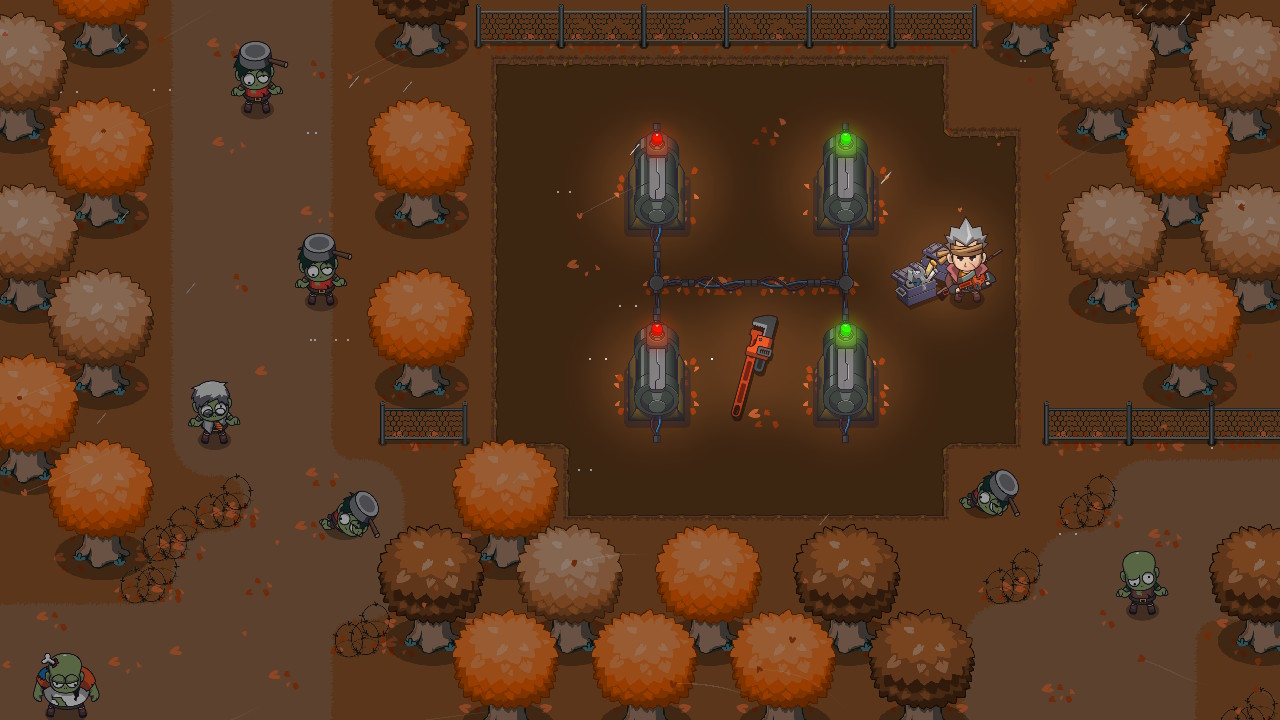
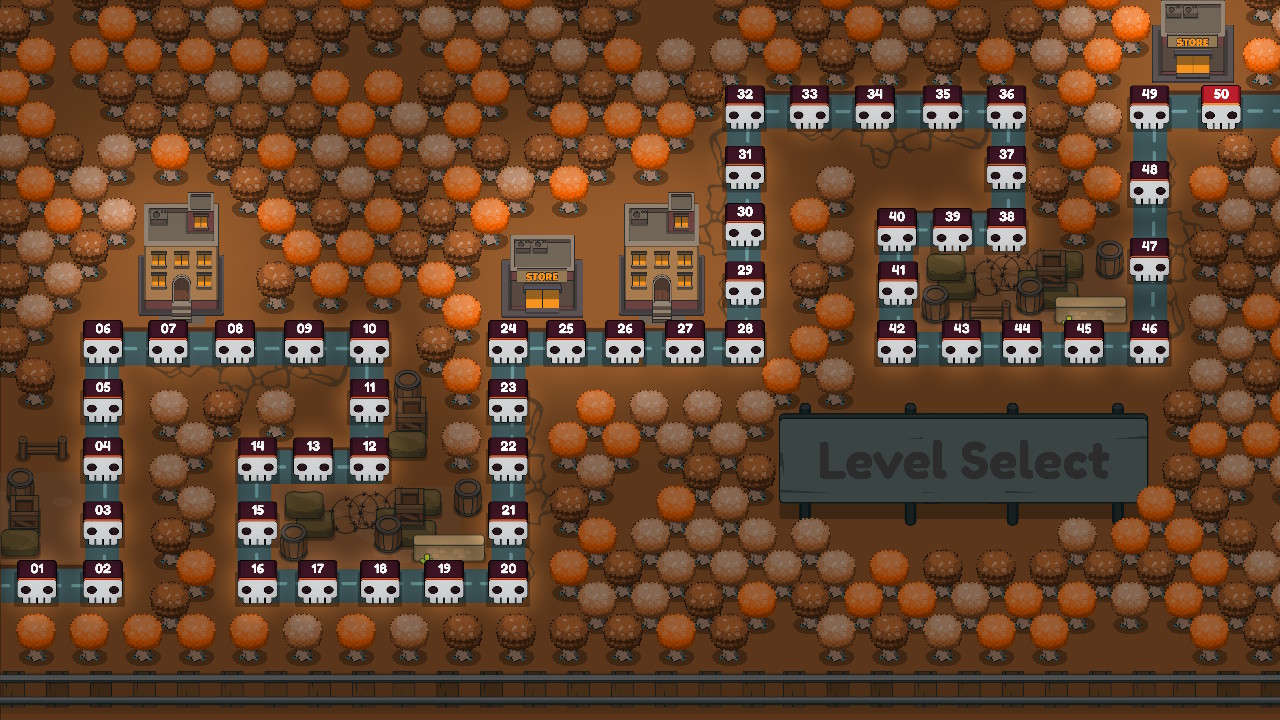
The game’s premise places you in the middle of a zombie apocalypse, but not in the way most games do. Instead of fighting off hordes of undead, you take on the role of the last remaining repairman tasked with restoring power to the grid so survivors can keep the lights on. That’s the extent of the narrative, and it’s largely confined to the game’s description rather than the experience itself. Once you start playing, there are no cutscenes, dialogue, or contextual storytelling elements to reinforce this setup. You complete all 50 levels, the credits roll, and that’s it. While the story from the game’s description isn’t offensive or misleading, it feels underutilized. Even a simple opening image or closing illustration could have helped sell the stakes, especially since the repairman’s character design is actually quite charming.
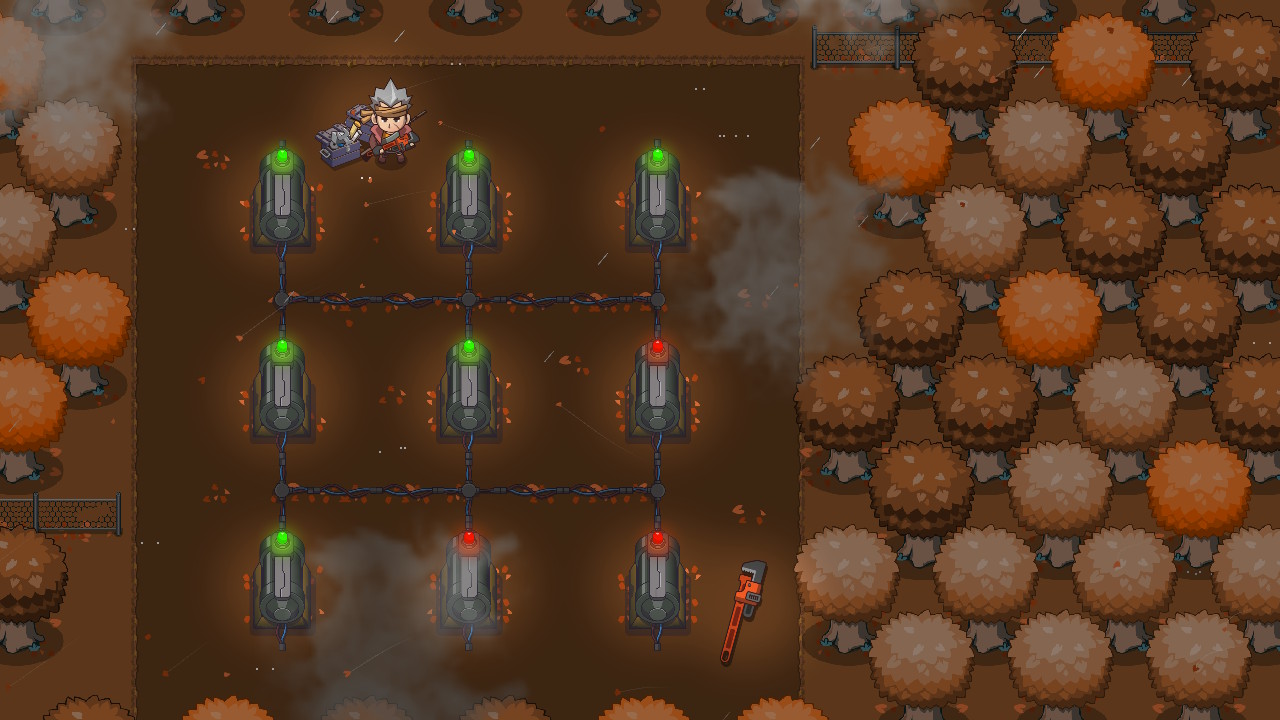
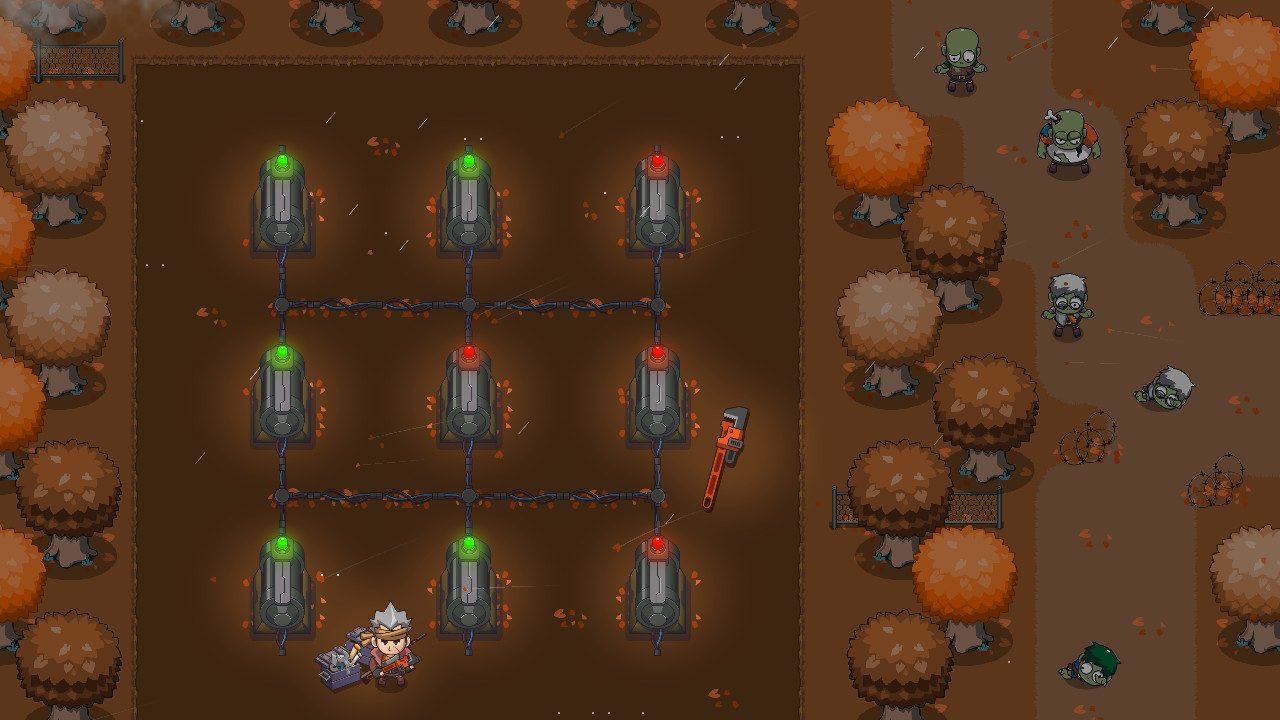
Gameplay is presented from a top-down perspective, with you controlling a wrench-shaped cursor rather than a character directly. Clicking on a generator toggles its state, but also affects any generators adjacent to it, forcing you to think several steps ahead. The objective in every level is the same which is to activate all generators simultaneously. Some stages introduce larger grids or different starting configurations, occasionally reusing layouts with altered activation patterns. Mechanically, the game is clean and functional, but also extremely limited. There are no additional systems layered on top of the core idea, and the zombie theme never meaningfully intersects with the puzzles themselves. Zombies appear occasionally in the background, but they are completely static and serve no mechanical purpose. They don’t interfere, apply pressure, or introduce any sense of urgency, which makes their inclusion feel purely cosmetic.
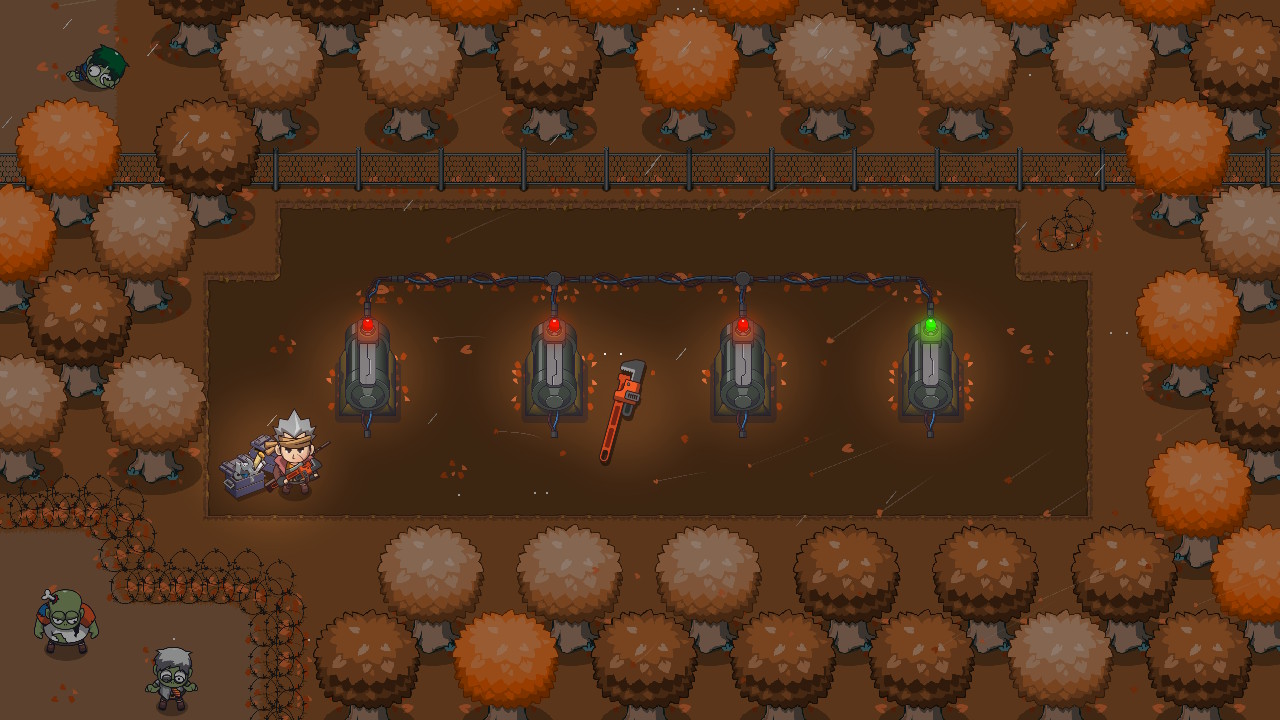
For anyone familiar with Lights Out-style puzzles, Gridz Keeper is very easy. The solutions tend to reveal themselves quickly, and most levels can be completed in seconds once the logic clicks. As someone experienced with this type of puzzle design, I was able to breeze through the majority of the game, finishing the entire set of 50 levels in roughly half an hour. That said, this accessibility clearly works in the game’s favor for a younger audience or anyone new to puzzle games. Gridz Keeper functions well as an introductory logic puzzle experience, easing anyone into the concept without overwhelming them. Unfortunately, it never evolves beyond that introductory phase, and the difficulty curve remains mostly flat throughout.
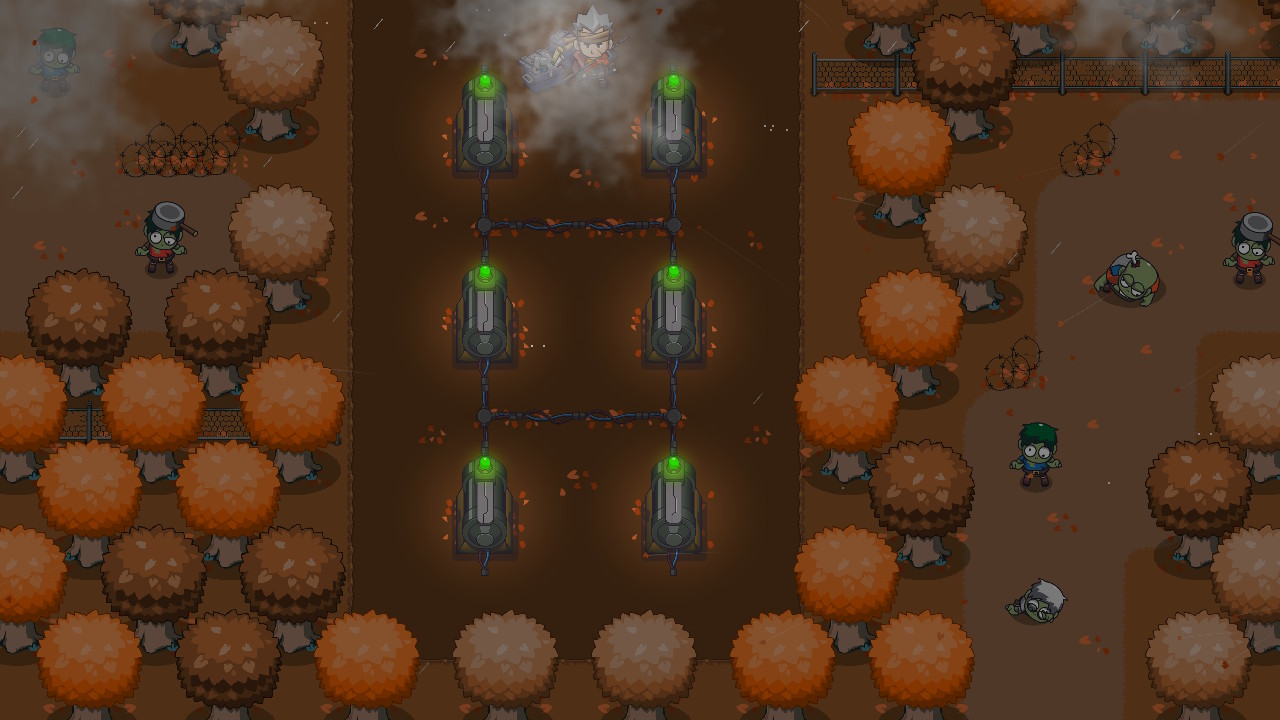
Visually, Gridz Keeper adopts a bright, cartoony art style that is immediately readable and clearly aimed at a broad audience. The repairman sprite is appealing, and the generators are easy to distinguish at a glance. However, environmental variety is minimal. Every level takes place outdoors, usually surrounded by trees, with the occasional zombie added to the scenery. Over the course of 50 stages, this repetition becomes noticeable. A handful of alternate settings such as rooftops, abandoned factories, or city streets could have gone a long way in keeping the presentation fresh. The audio design is similarly modest. The background music is serviceable but generic, rarely drawing attention to itself. Sound effects fare a bit better, with the audible “ding” of activating generators providing a small but satisfying bit of feedback during play.
Final Thoughts?
Gridz Keeper is a game I enjoyed on a basic level because I genuinely like this style of puzzle. However, it’s hard not to feel that the experience stops short of its potential. At $4.99, the price is reasonable, but given the game’s simplicity, short runtime, lack of meaningful difficulty escalation, and unused zombie theme, it may still feel slightly overpriced for some. While the presentation is cute and the puzzles are functional, there’s very little here to sustain long-term interest or justify revisiting once the credits roll. Gridz Keeper works best as a gentle, kid-friendly logic game or a brief distraction that’s pleasant, but ultimately limited.
About the Author

Nay Clark Gaming holds a special place in my heart and I never stop talking about video games. I really love all types of games and have an interest in games that have complicated stories and lore because I enjoy untangling the mystery of it all. When I'm not gaming, I unsuccessfully try to control three amazing and incredibly bright kids.
Related Posts

Love Eternal Review (Switch) →

Seafrog Review (Switch) →

The Prisoning: Fletcher’s Quest Review (Switch) →