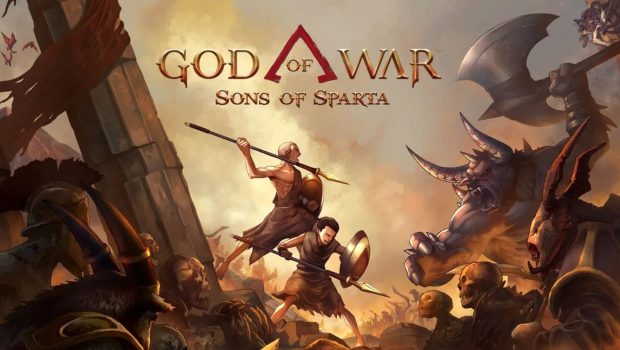
God of War Sons of Sparta Review (PS5)
Summary: God of War Sons of Sparta takes Kratos back to his early Spartan years in a side scrolling adventure that blends exploration with heavy combat. While it adds background to his relationship with Deimos and experiments with a retro style format, it rarely feels as powerful or focused as the mainline entries. It is a decent, occasionally engaging detour that struggles to live up to the legacy attached to its name.
3
Fury Falters
Before he ever set foot on Olympus, before the ashes and the rage became legend, Kratos was just a Spartan boy trying to survive brutal training beside his younger brother. God of War Sons of Sparta is a 2D Metroidvania developed by Mega Cat Studios and Santa Monica Studio, published by Sony Interactive Entertainment, and released on February 12, 2026 for PlayStation 5. After ten entries in the franchise, not counting remasters and rereleases, this side-scrolling prequel takes a sharp turn from the cinematic third person formula the series is known for. It is not a disaster worthy of the Fates, but it does feel like the series has stepped off Mount Olympus and into unfamiliar territory, standing apart from the legacy that built its name.
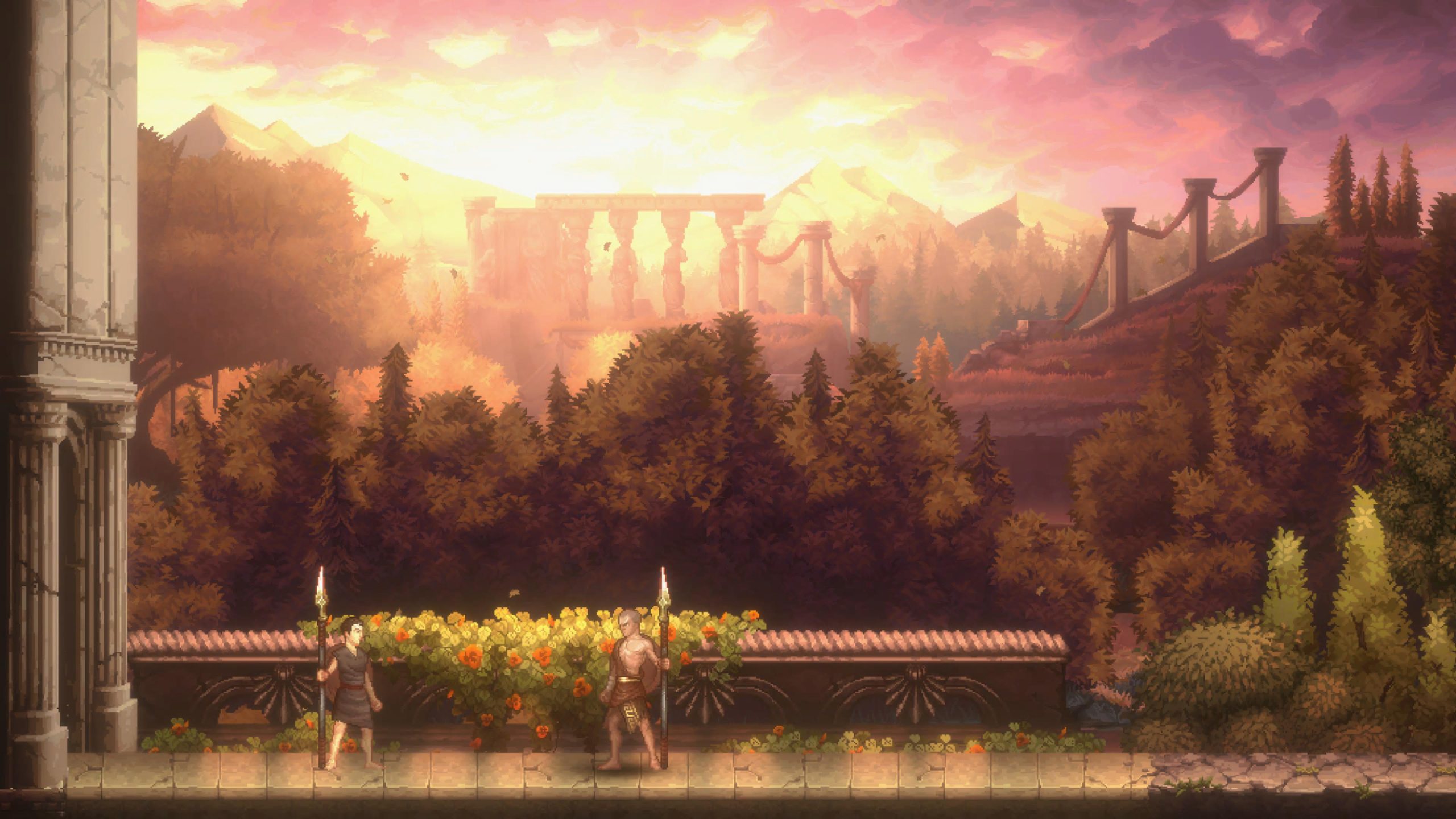
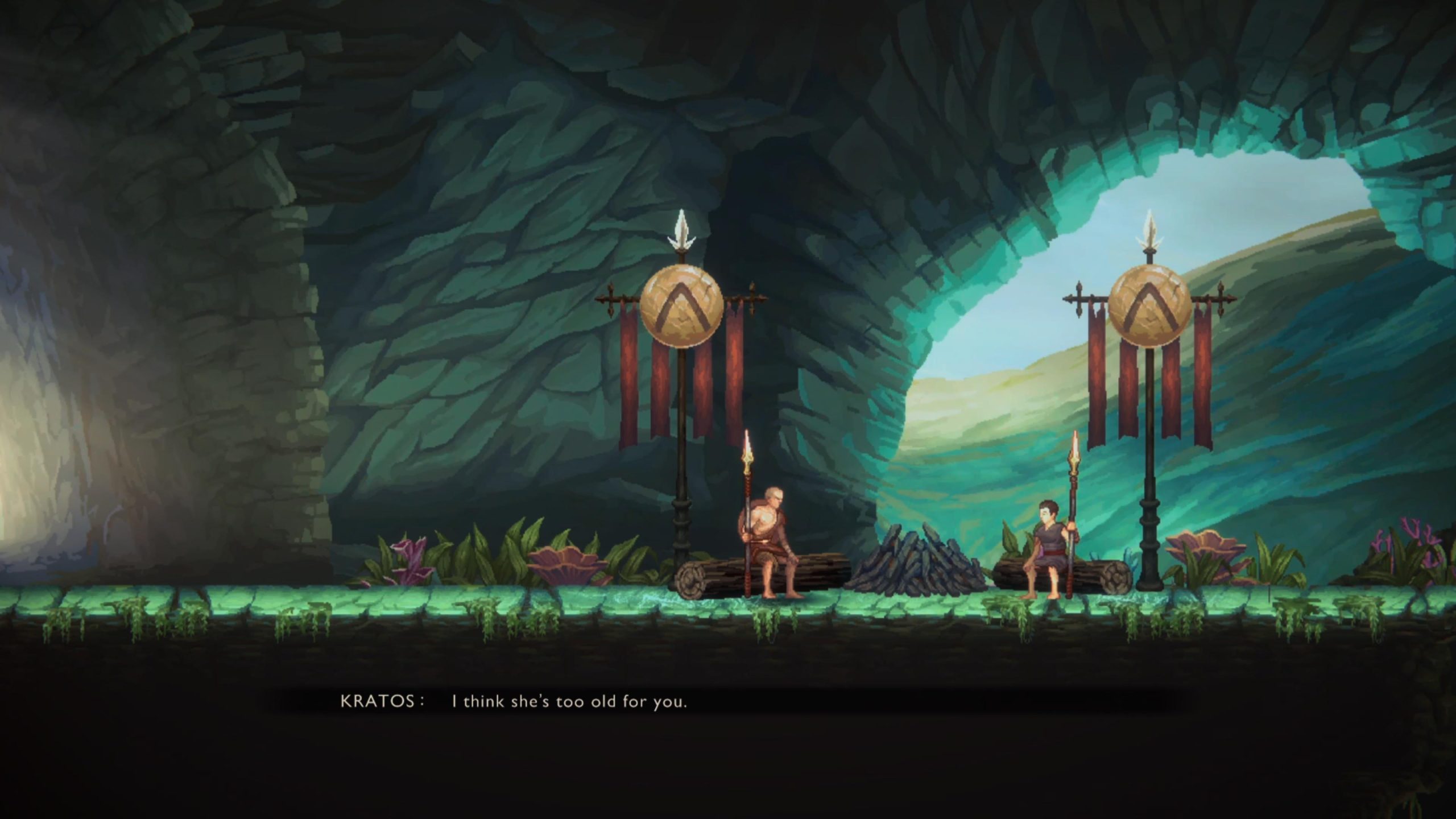
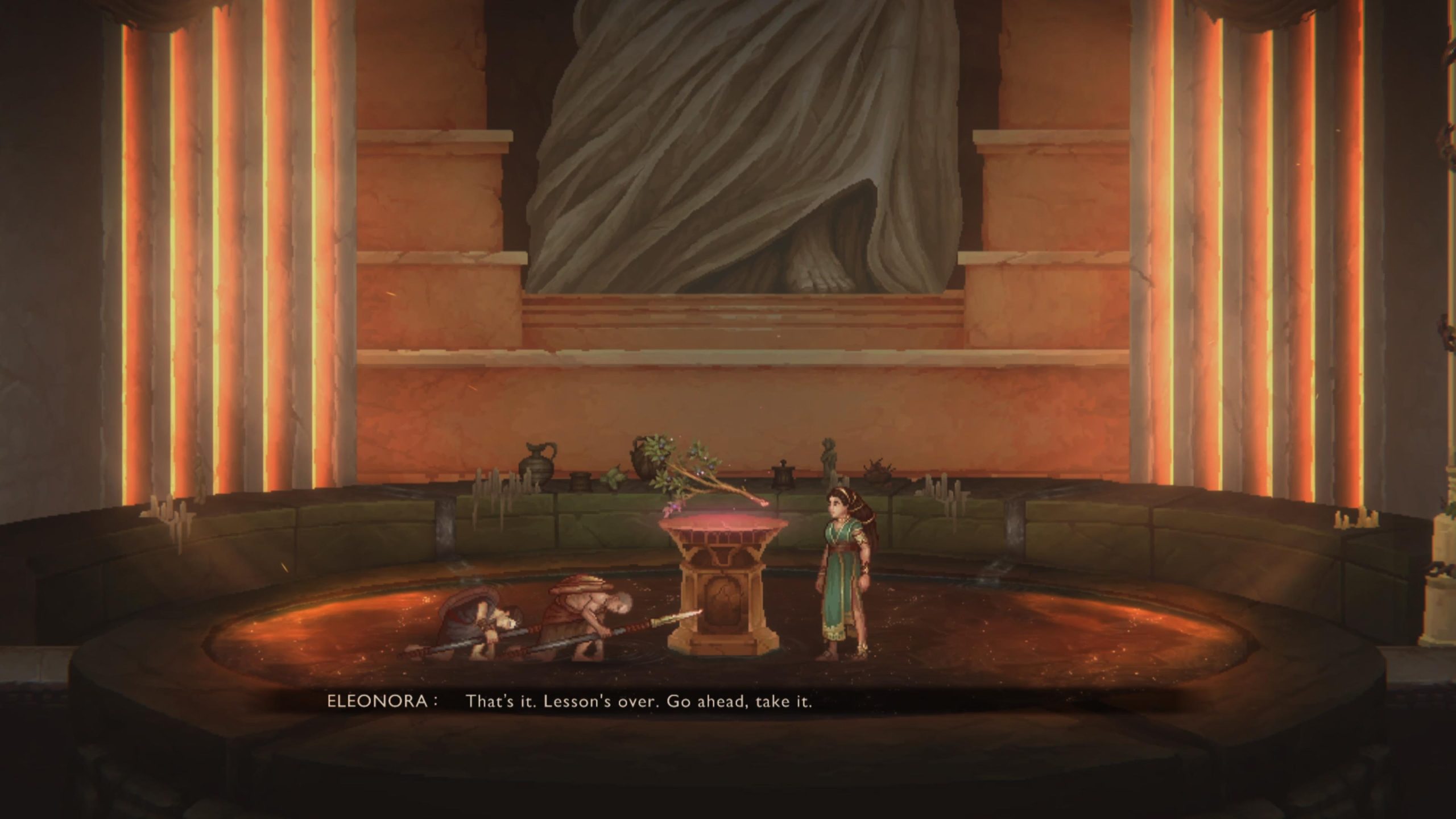
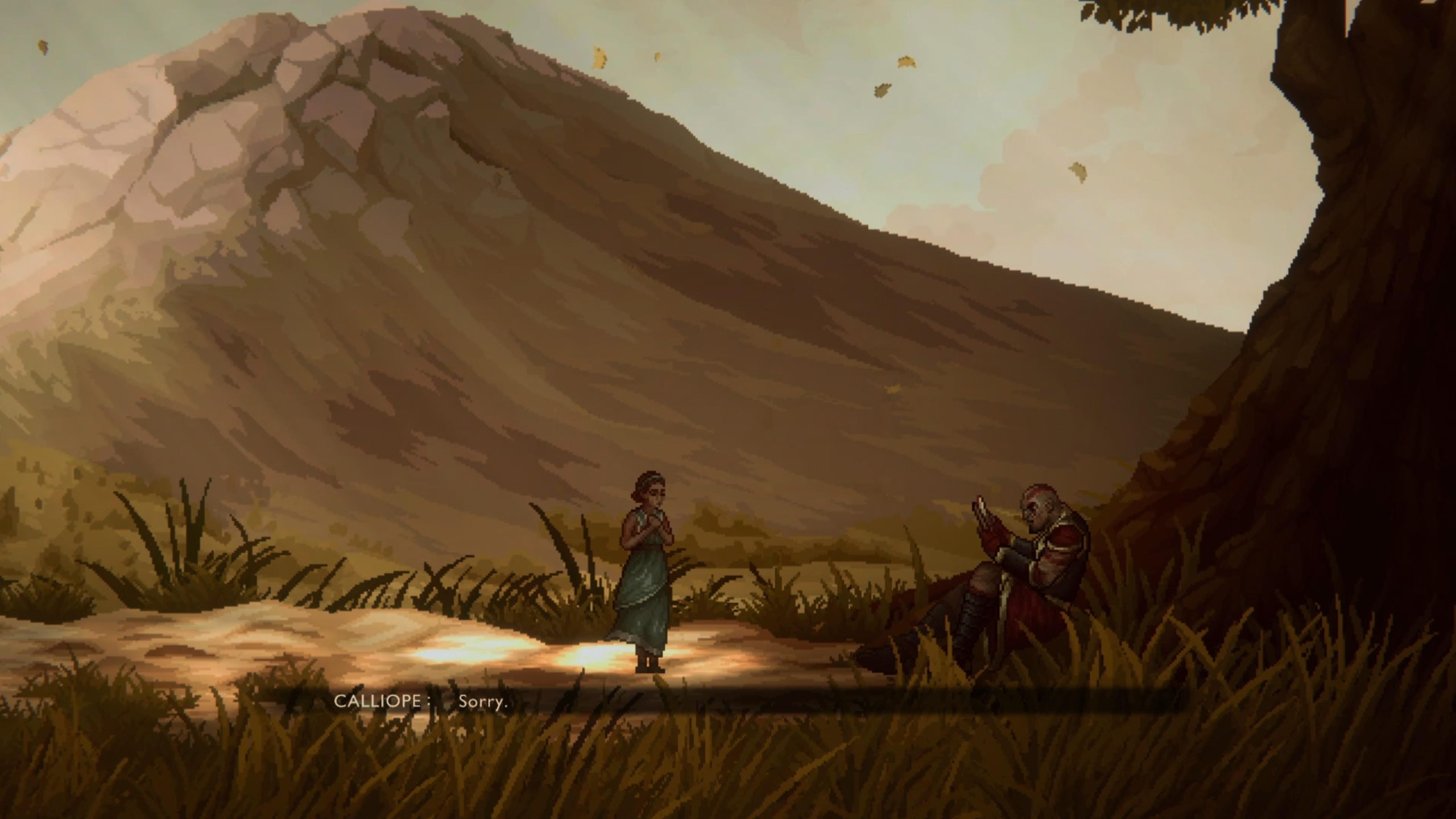
The story frames itself as a memory. Adult Kratos recounts this chapter of his youth to his daughter Calliope, which gives the entire experience a reflective tone. You follow young Kratos and Deimos during their years in the Spartan agoge, the harsh state run training program that molded boys into soldiers loyal only to Sparta. When a fellow cadet goes missing, the brothers leave the safety of their regimented world to track him down, stepping into ancient Laconia and facing monsters that test both their skill and their bond.
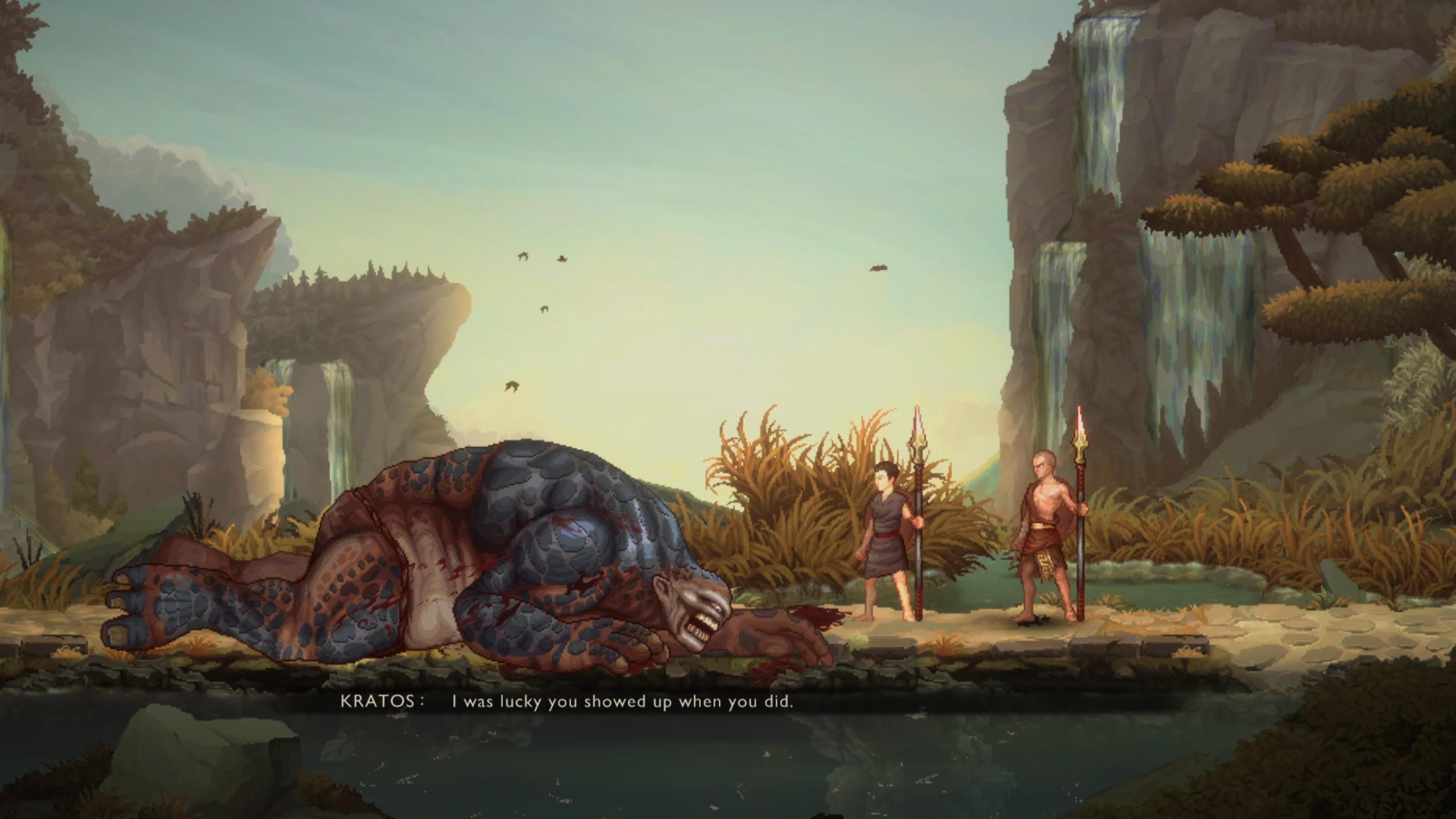
There is a clear coming of age angle here. Kratos is still serious and responsible, but you see hints of vulnerability and immaturity while Deimos is brash and impulsive. They talk about girls, they bicker, and they question what duty really means. For longtime fans, there are interesting bits of lore woven throughout, and hearing the story narrated with that familiar gravitas is nostalgic. At the same time, because Kratos is telling this to his daughter, he openly admits he is softening parts of the truth. Cruel moments are glossed over and certain details get filtered. That framing device is clever, but it contributes to a tone that sometimes feels lighter and more exaggerated than you might expect. What could have been a raw look at the making of a monster instead feels sanitized. Anime styled inflections, upbeat musical cues, and frequent interjections from Calliope create a tonal disconnect. It is a cool side story, but it does not always feel like the God of War you know.
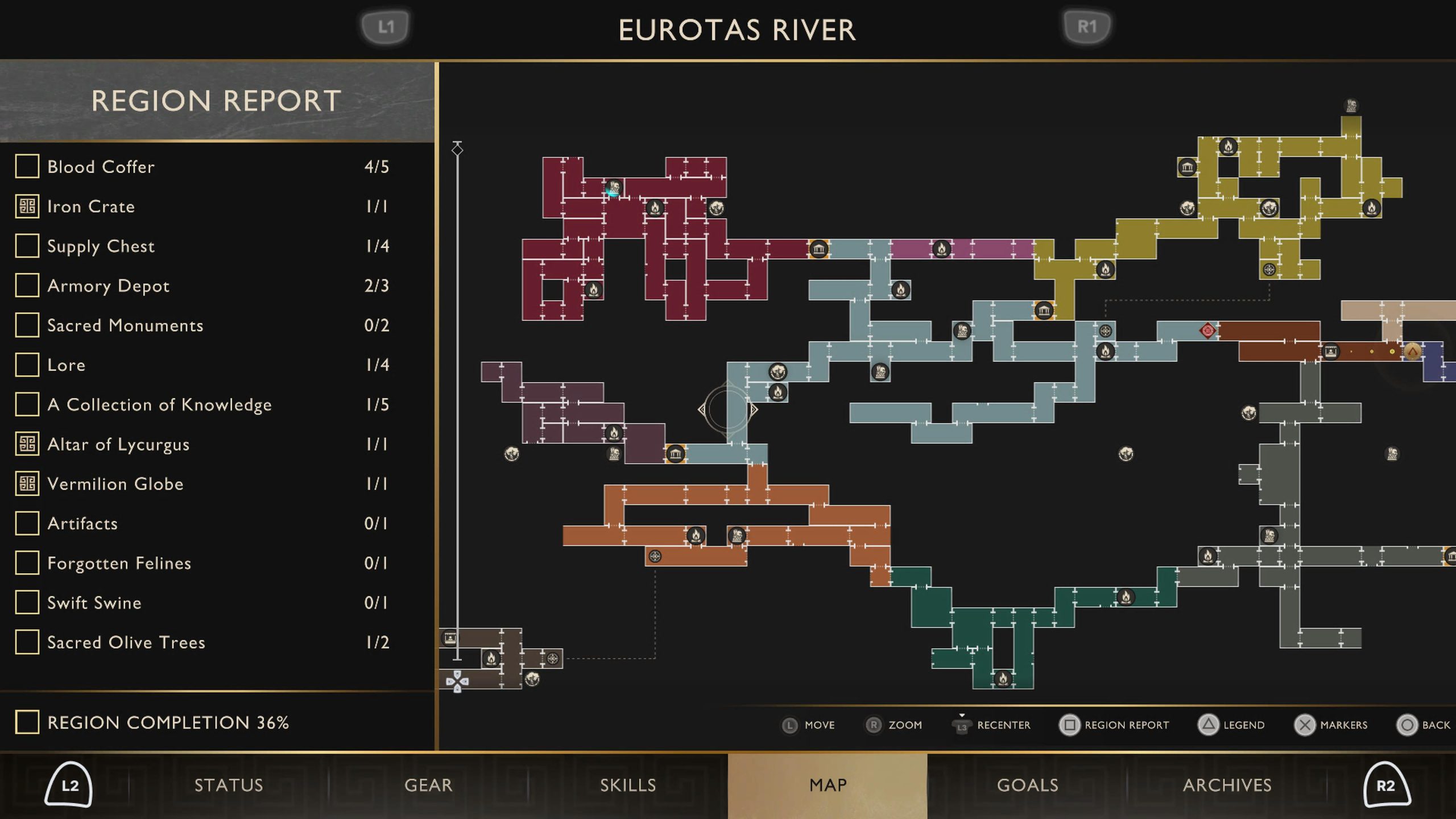
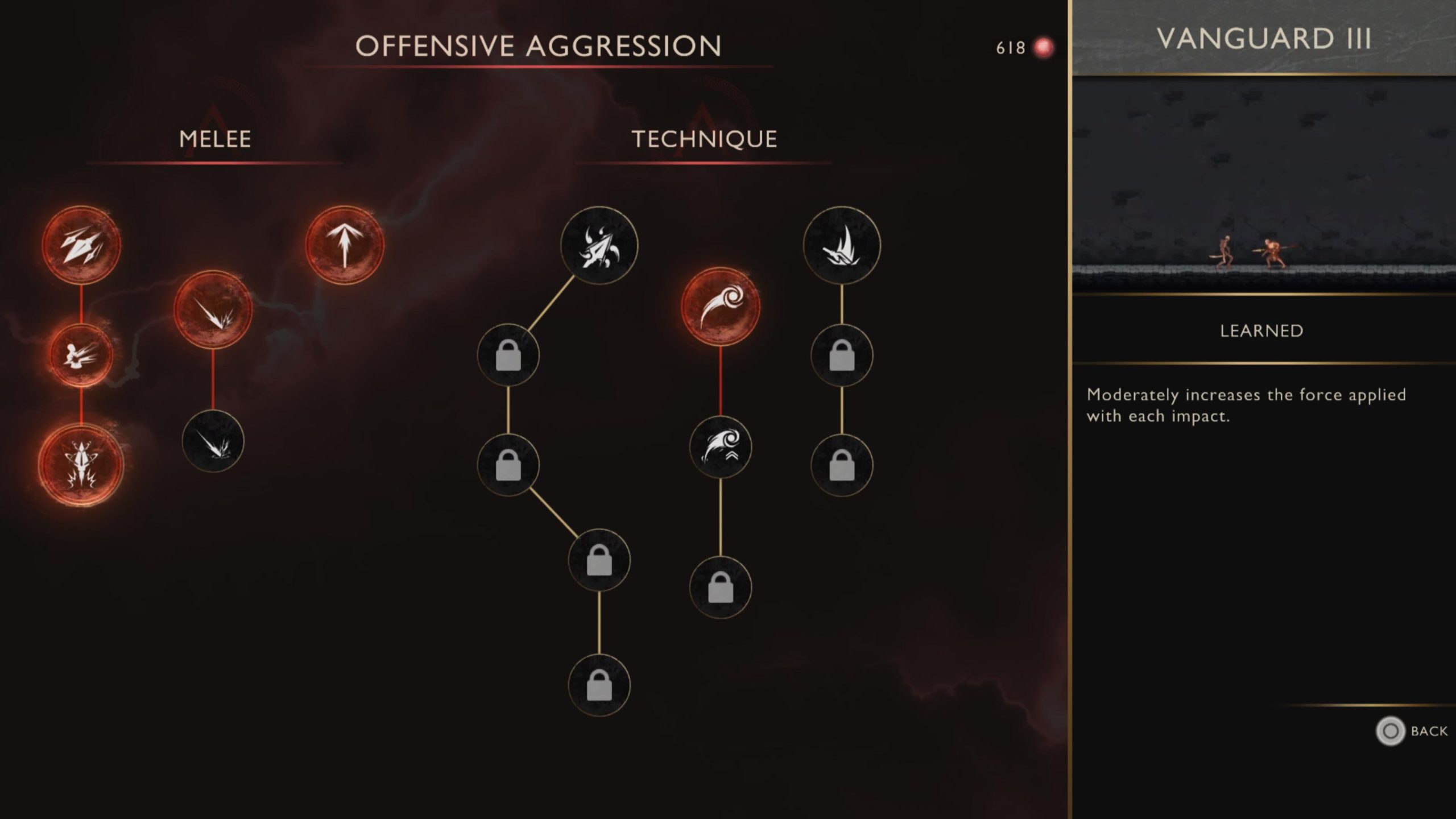
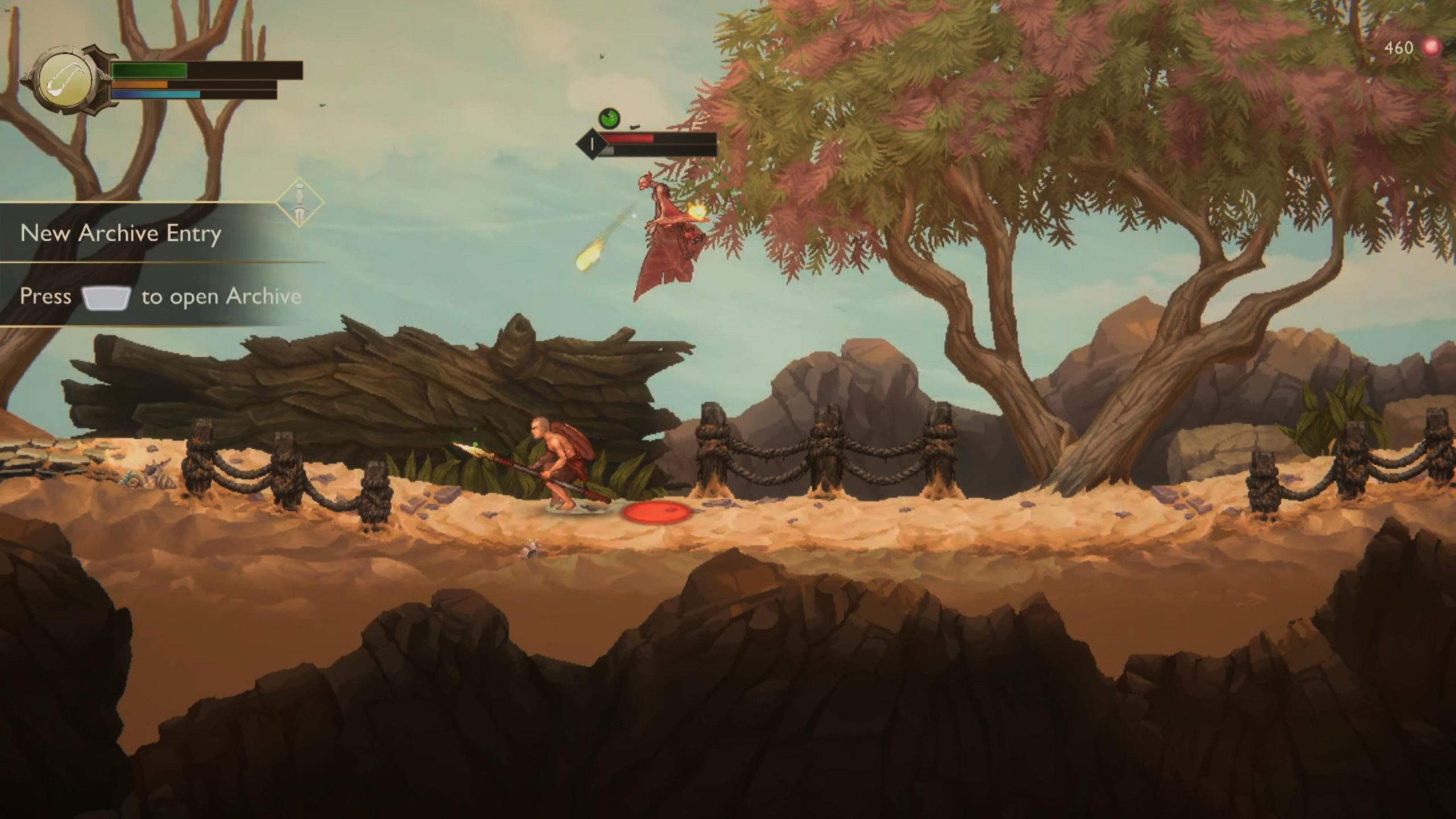
Gameplay is where the biggest shift happens. This is a straightforward combat heavy Metroidvania. You explore a large interconnected 2D map filled with locked pathways, hidden chests, and ability gates that require specific tools to bypass. Early on, your move set is limited to basic jumps, dodges, and spear strikes. As you progress, you unlock traversal abilities, combat upgrades, and divine gifts that open up previously unreachable areas. There are clear quest markers when a new tool is required to advance, and you can place custom markers on the map to remind yourself where to return later. Structurally, it checks all the genre boxes. The problem is that it rarely goes beyond them. In a space already crowded with exceptional Metroidvanias, simply being sufficient is not enough, especially when the name God of War is attached.
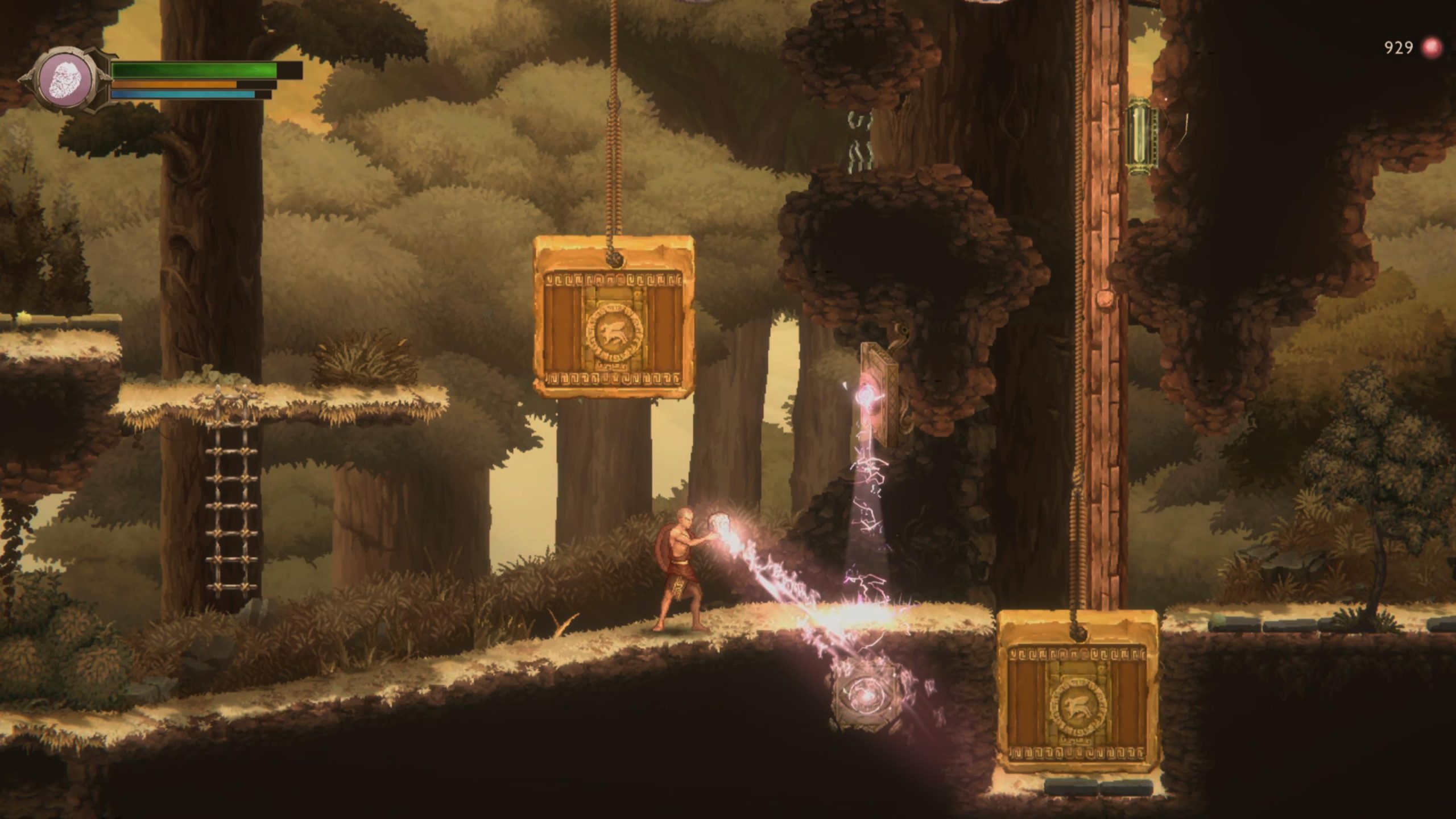
Moment to moment, it actually feels good to play for the most part. You can roll to evade, block or parry with your shield, and focus on either a dodge heavy or defensive style depending on how you prefer to approach fights. The spear is your primary weapon, and it can be modified with different attachments that add new attributes or elemental effects. A frost tip might slow enemies and other upgrades can petrify foes or add status effects that change how encounters unfold. Equipping attachments to your belt can buff these abilities and effects even more. You still must be weary of your enemies and the environment though. A Gorgon can turn you to stone, poison sludge drips from ceilings, and tight platforming sections keep you alert.
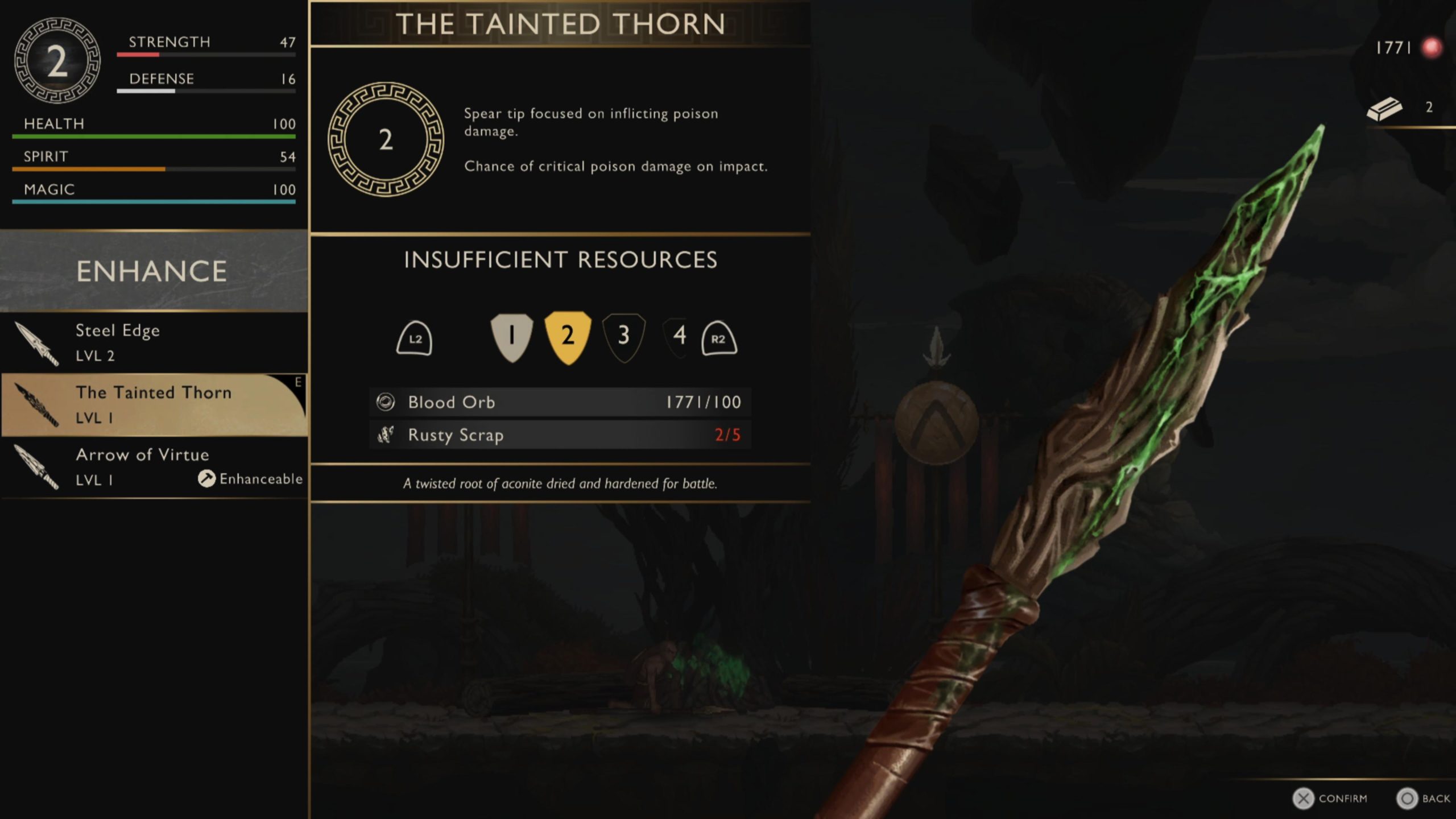
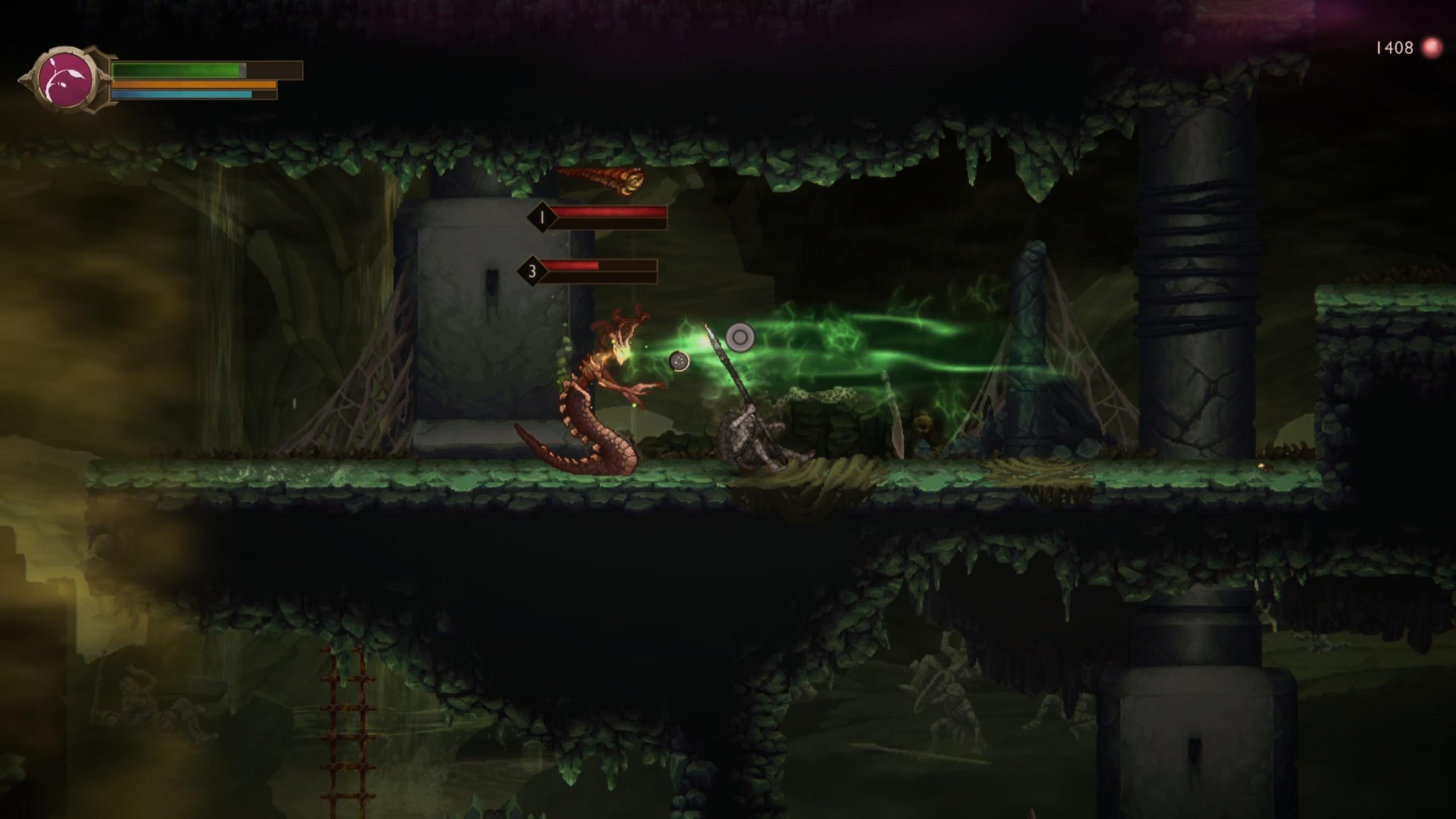
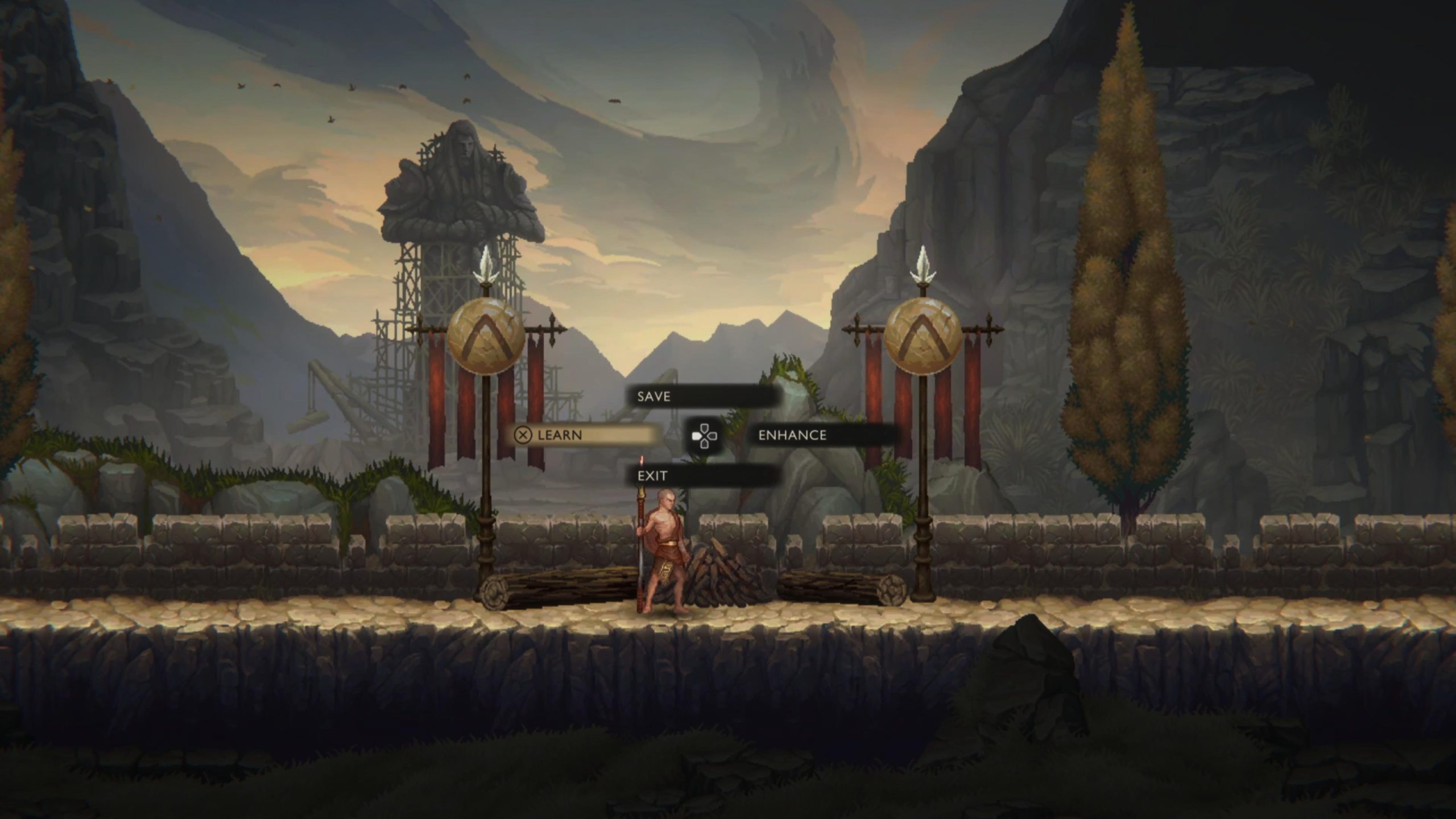
You manage three core meters. Health refills with green orbs, Magic with blue orbs, and Spartan Spirit with yellow orbs. Red orbs return as your main currency, letting you unlock new abilities and enhance gear at campfires scattered throughout the world. Those campfires also function as save points and upgrade hubs. You gather materials to craft new spear and shield components at a blacksmith, and you visit temples dedicated to various gods to receive Blessings that grant new abilities. These temples double as fast travel points, and you can return later with specific offerings to power up even further. Abilities like sprinting with Nike’s sandals or striking distant targets with Apollo’s sling add variety, but none of it feels particularly bold or inventive.
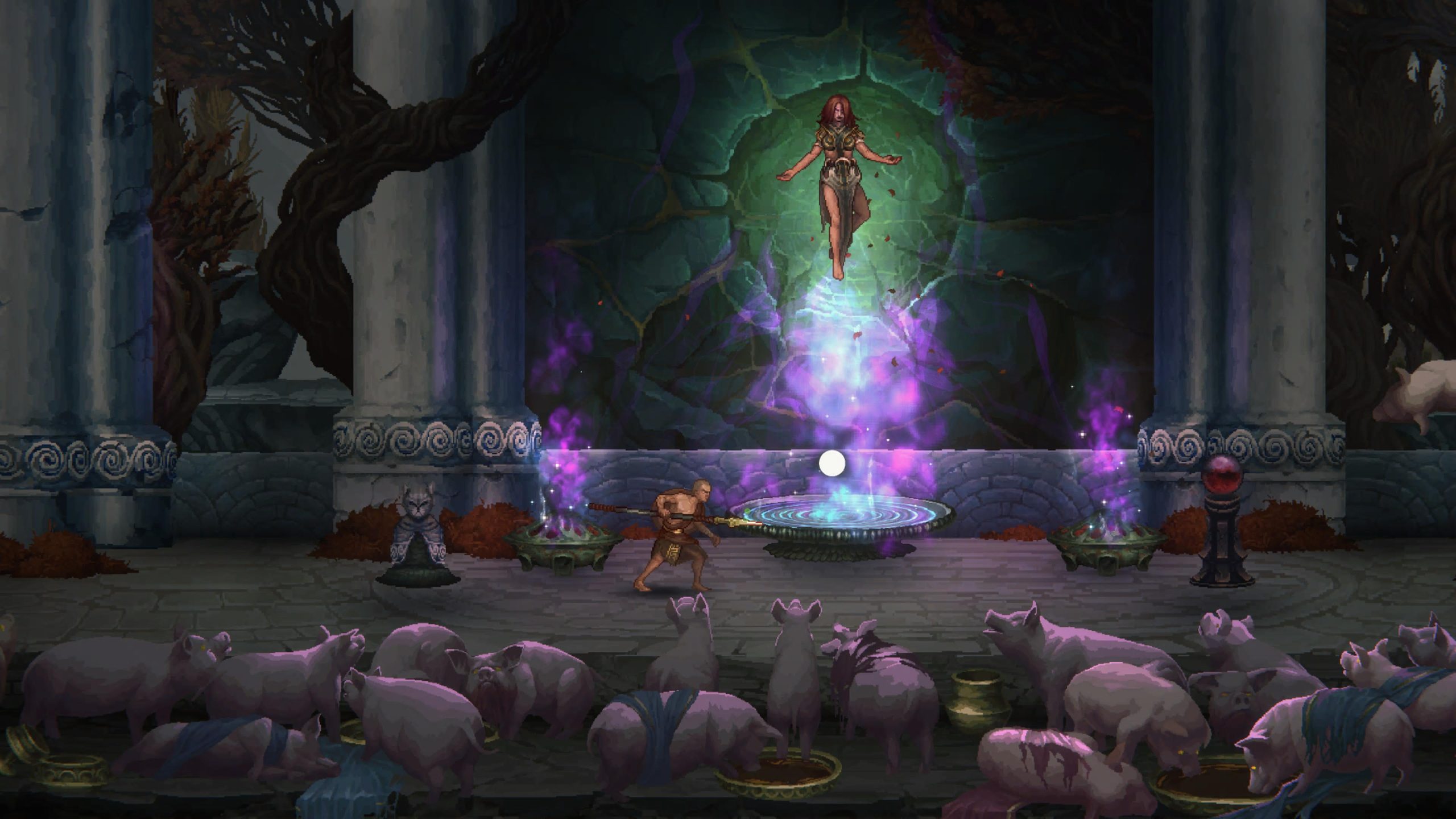
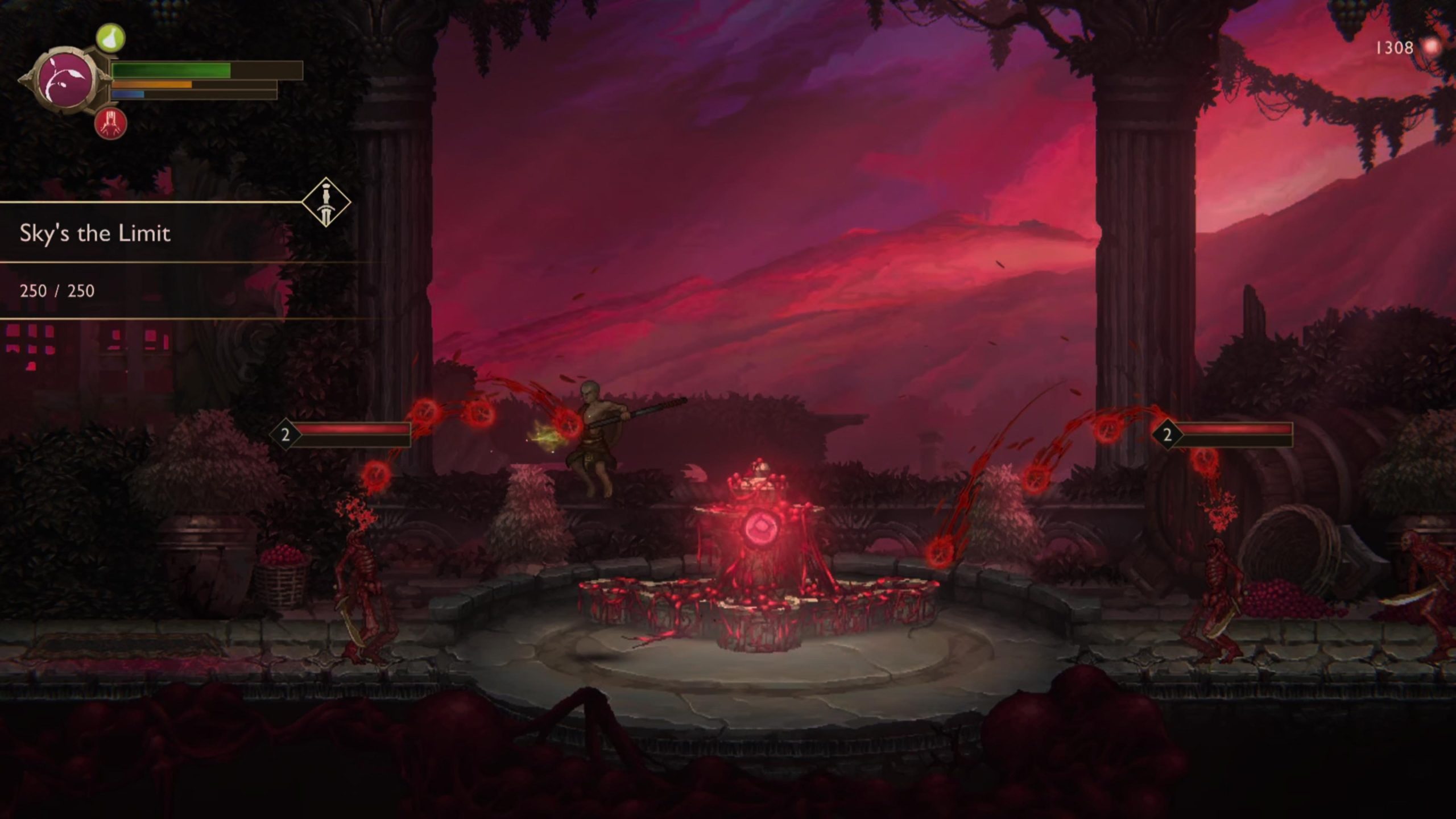
Combat is easily the strongest pillar, even with its limitations. You telegraph enemies’ attacks through their different flashes of color. For example, red signals an unblockable move and purple warns you to get completely out of the way. Learning these patterns, swapping attachments, and managing your meters gives encounters some nuance. Boss battles in particular are impressive, featuring large monsters that look fantastic in motion. The animations sell impact well, parrying feels satisfying, and explosions and finishing blows carry weight. Even so, once you settle into the rhythm, many fights boil down to rolling behind enemies and chipping away at their health bar. The systems never fully evolve into something memorable, even with the abundance of powers the game throws at you. There is depth, but it often feels underutilized.
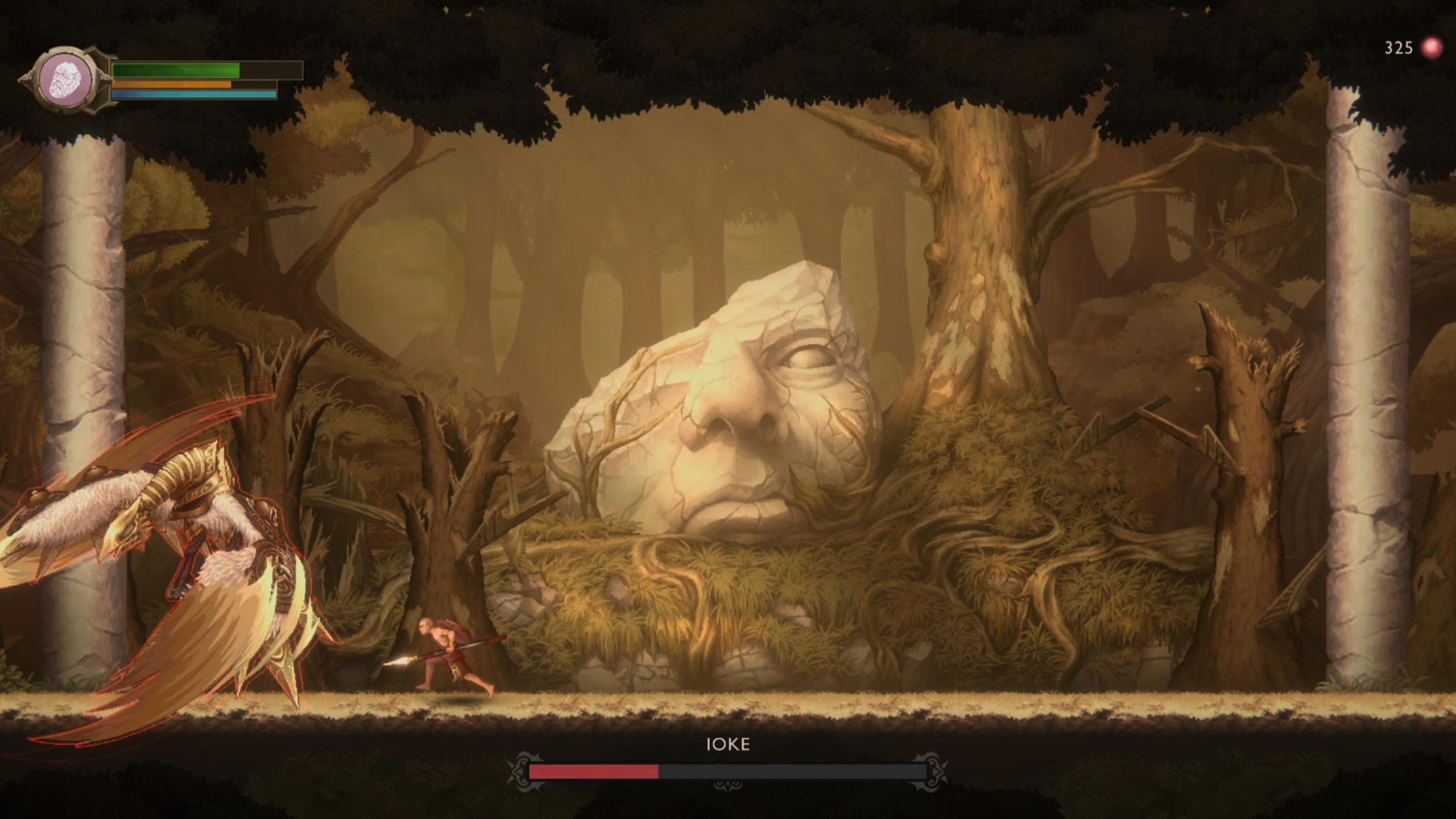
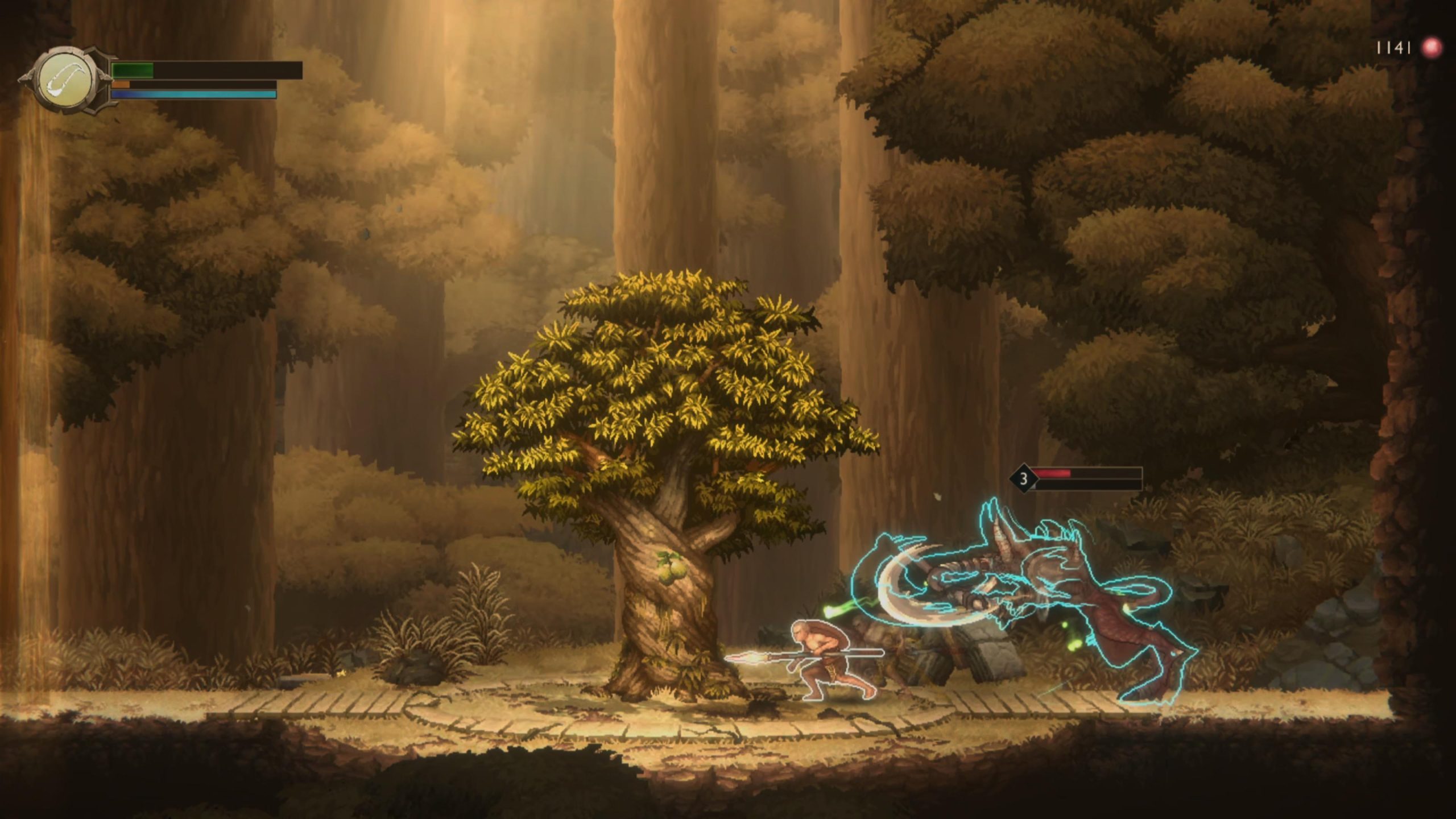
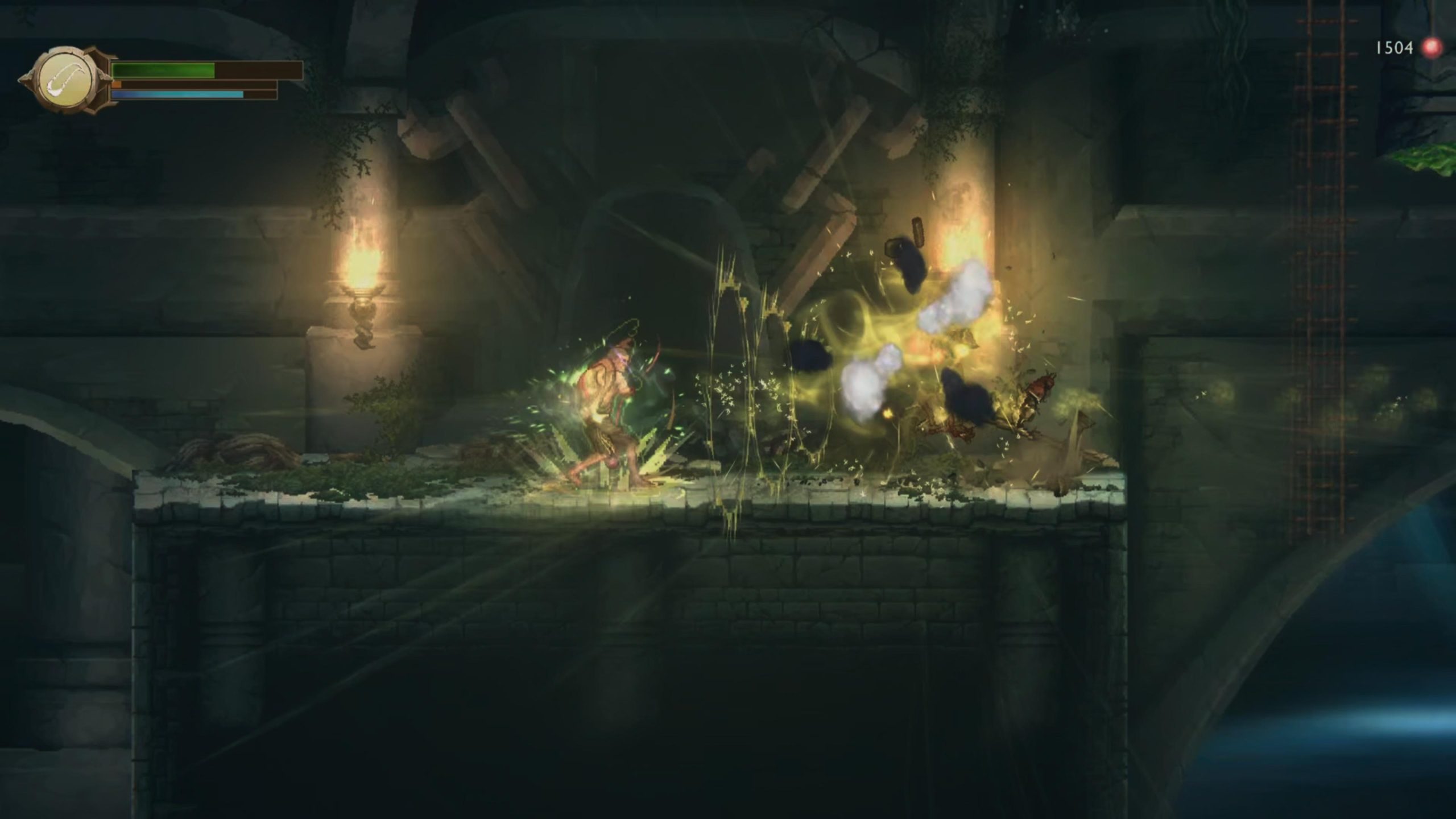
Visually, the pixel art direction is bound to split opinion, and at times it feels slightly uneven. Its dense, mildly grungy aesthetic clearly pays homage to retro action titles, but that indie sensibility occasionally clashes with the prestige typically associated with the franchise. The environments are where the presentation shines. Layered foregrounds and backgrounds give ancient Laconia a sense of depth and atmosphere, and the world often feels richly constructed despite the limited scale.
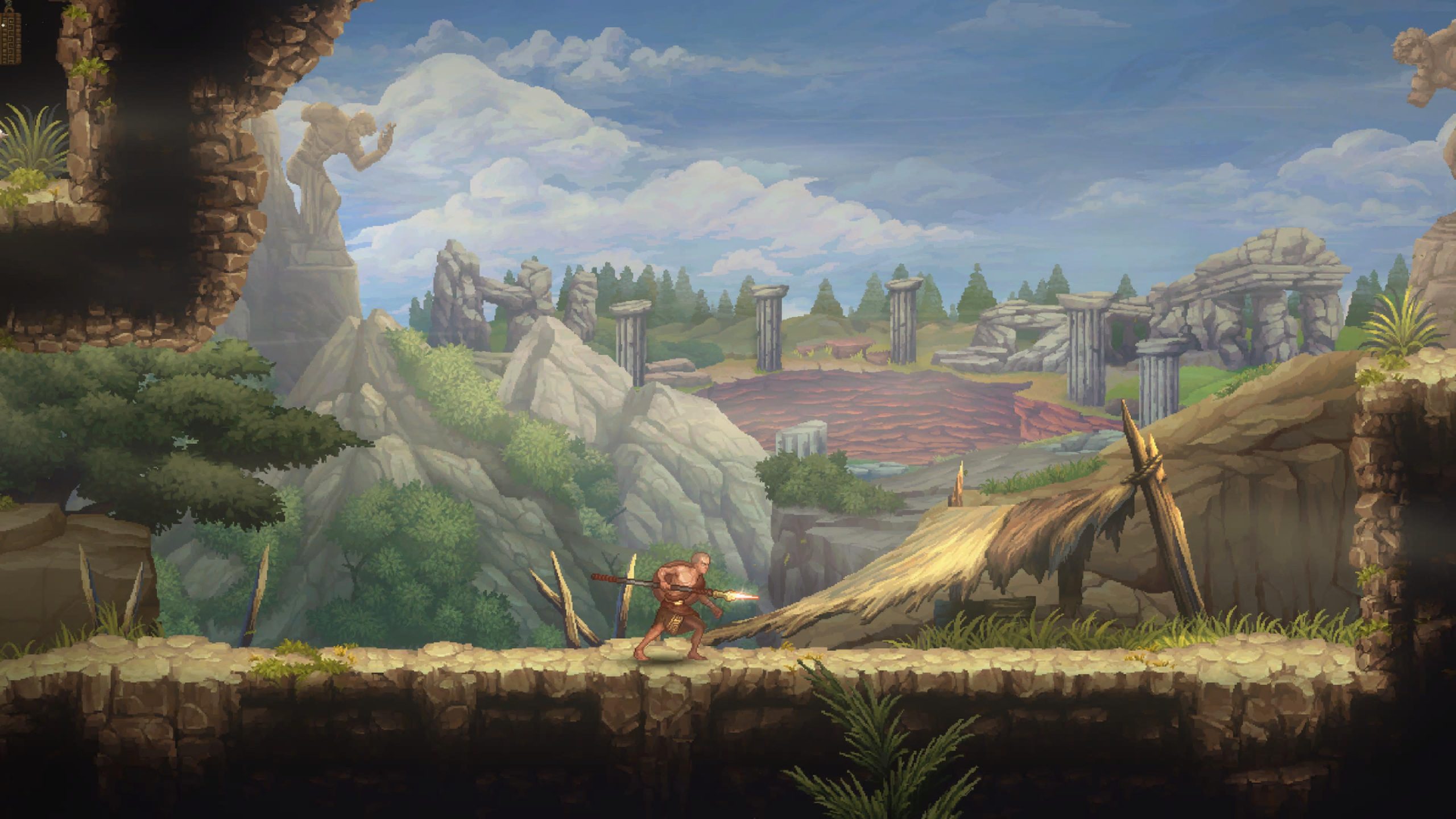
Enemy designs are particularly strong, with animations that generally inject personality into encounters. However, the character sprites do not always hold up under scrutiny. Kratos’ hunched idle stance can look rigid in closer shots, and certain animation loops, whether it is subtle breathing cycles or the exaggerated collapse of defeated enemies, sometimes come across as artificial rather than fluid. It is never outright unattractive, but it rarely carries the polish or grandeur one might expect. Even so, the painterly approach succeeds more often than it falters.
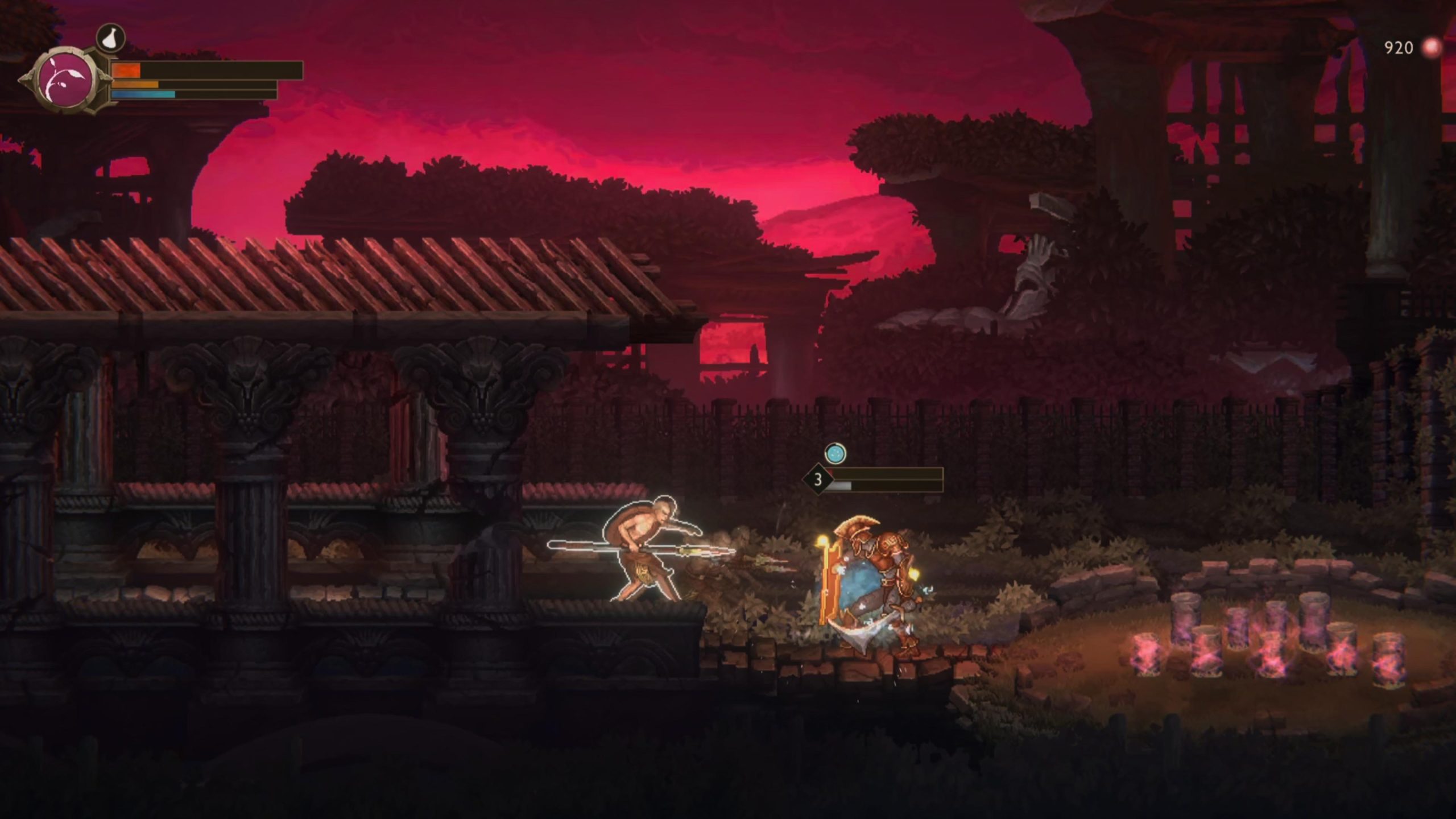
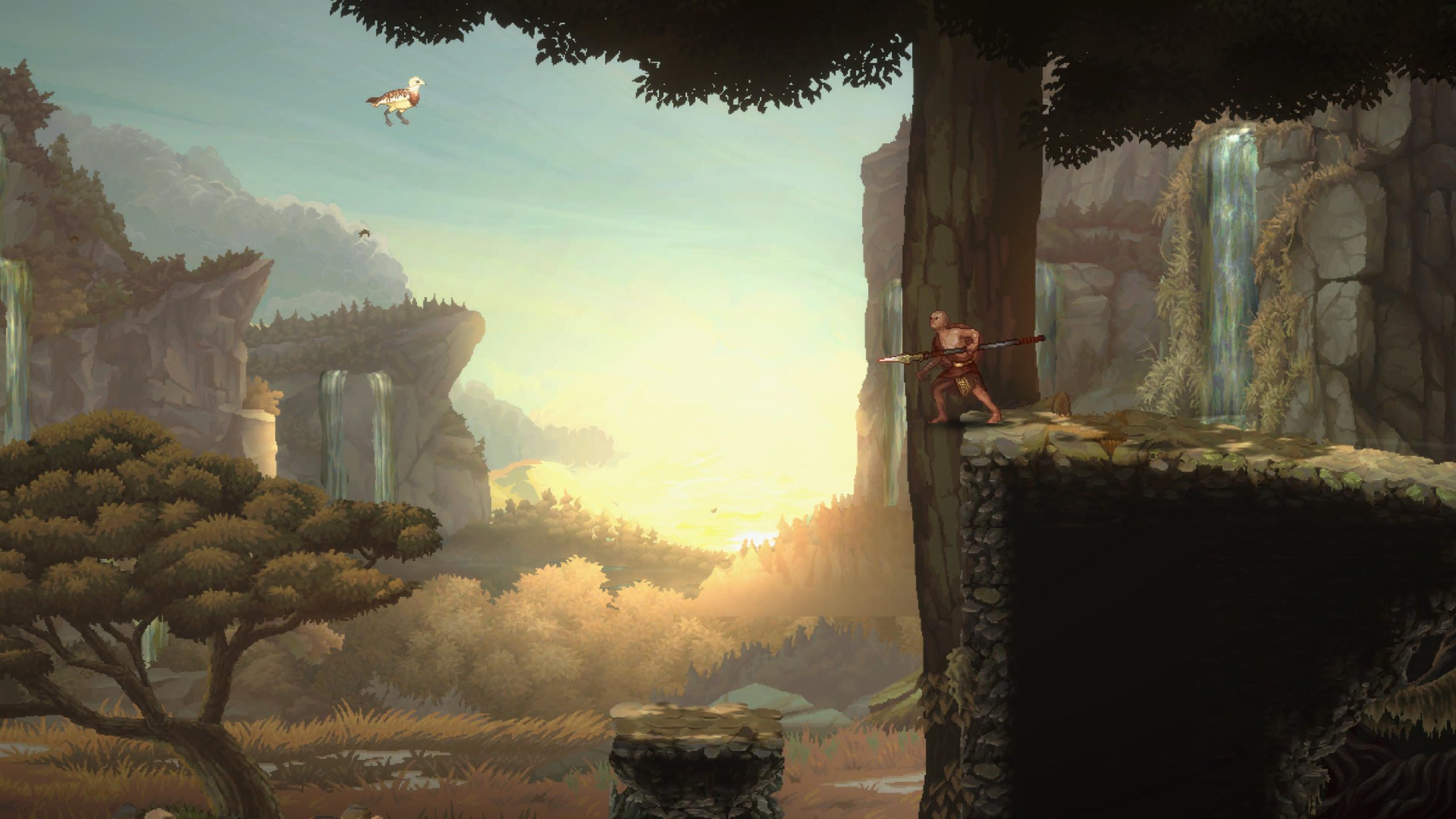
The audio punches above what you might expect from a smaller scale side-scroller, but it is also where some of the tonal disconnect becomes most noticeable. The music itself is good on a technical level, yet it rarely feels like it truly belongs in God of War. The sharp violins and boastful horns are present, but the compositions lean too modern and feel like they are trying to grab your attention instead of capturing the weight, sorrow, and mythic intensity that define Kratos and the world around him. Rather than sinking into the atmosphere, some tracks sit on top of it.
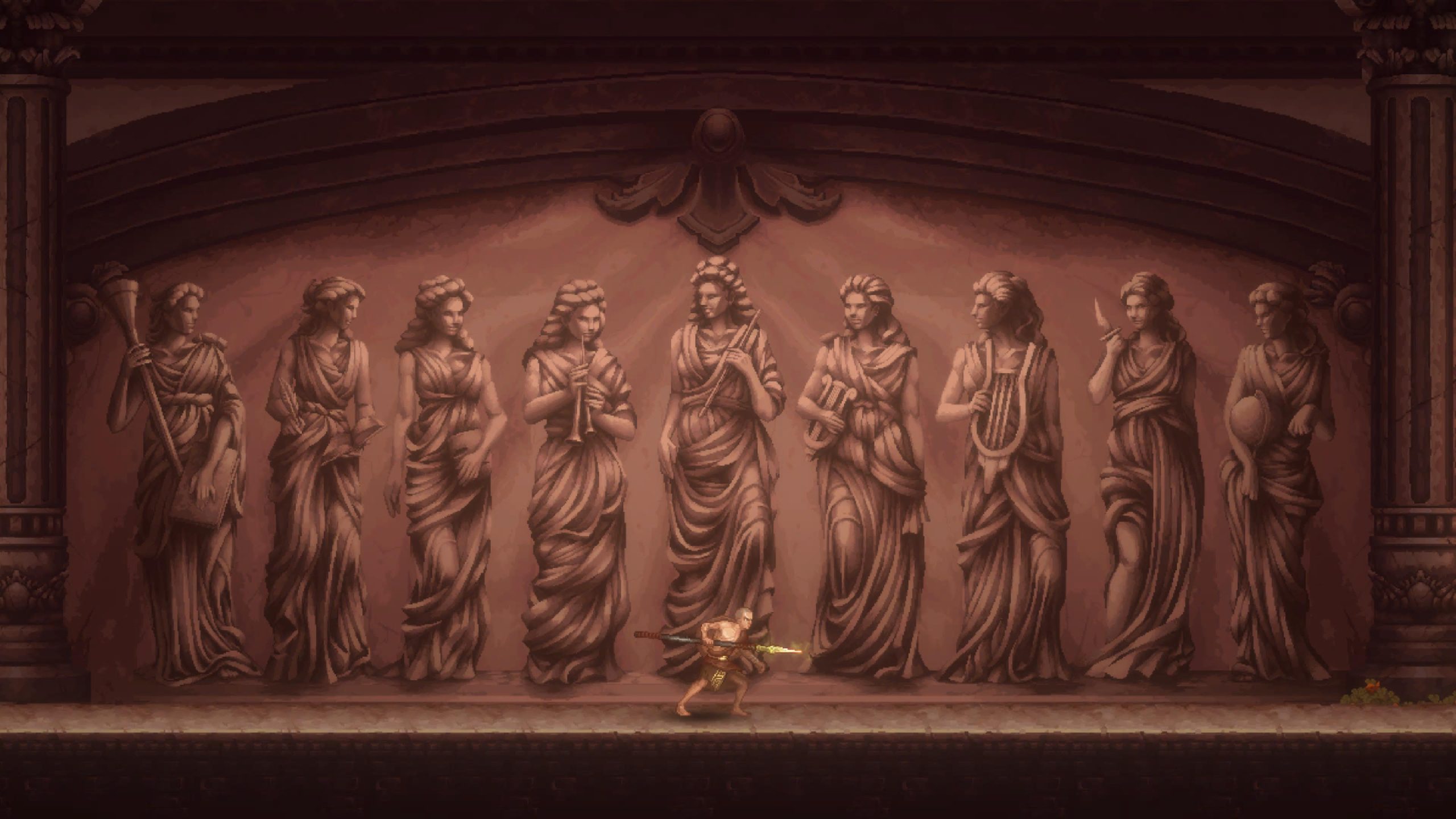
The voice acting is objectively strong across most of the cast, and there is clear effort behind the performances, but personally I did not connect with the more anime leaning, upbeat delivery. The chipper tone feels oddly placed against a title carrying the God of War name, and that contrast can come across as off-putting rather than refreshing. At times, though, there is almost too much expression. The voices are mixed so cleanly that they can feel detached from the world, as if they are layered over everything else instead of living within it. A few performances land awkwardly, and Calliope in particular can become grating during certain exchanges. On the other hand, the sound effects are excellent. Every parry, spear thrust, and enemy collapse has a punchy, crunchy impact that reinforces the weight of combat and keeps encounters satisfying on a tactile level.
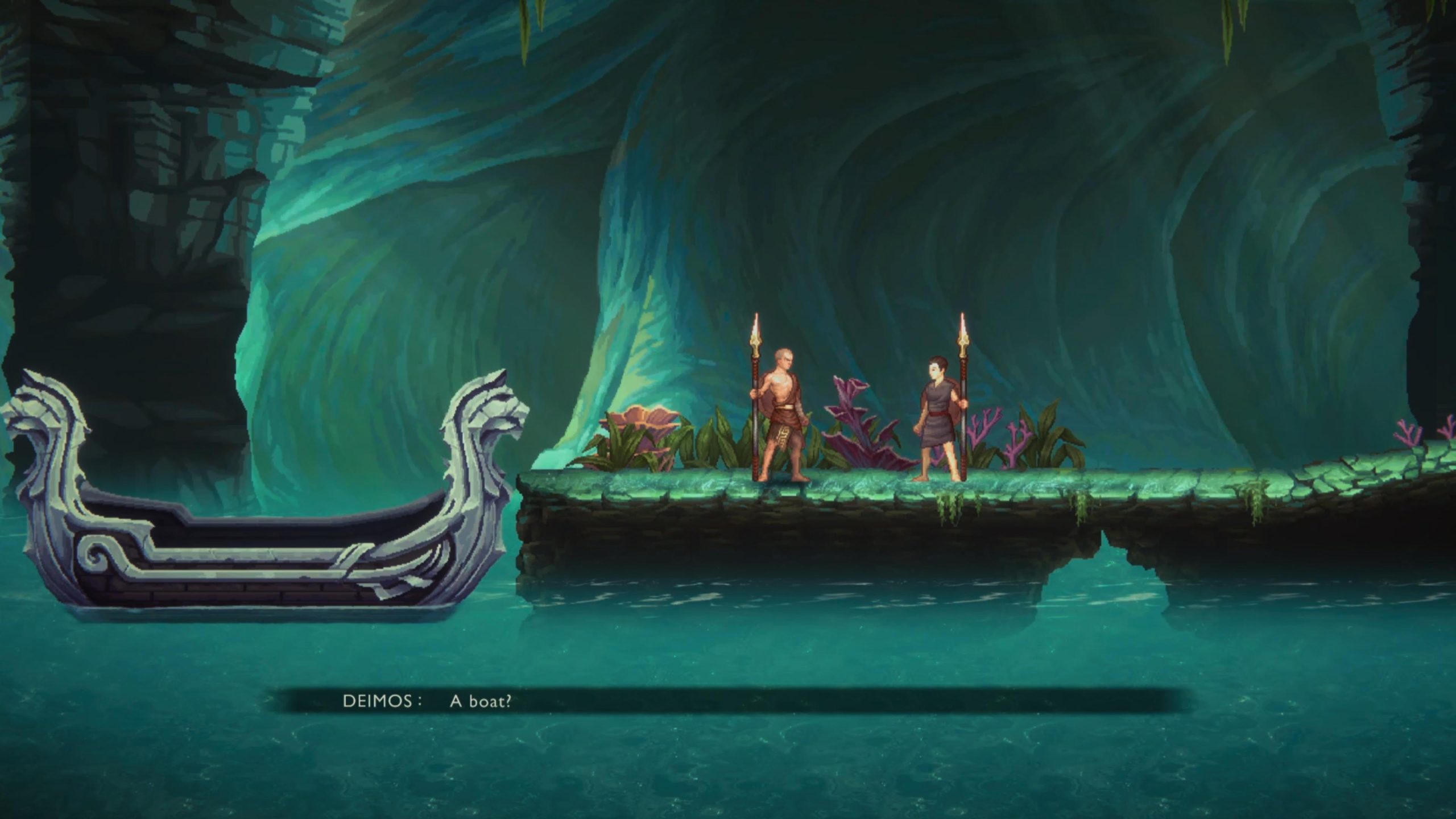
There are design issues that drag the experience down. Objectives pop up constantly. You clear one task and are immediately flooded with notifications for new objectives, side challenges, archive entries, and orb rewards. The constant stream of information interrupts the flow and cheapens the sense of discovery. The game wants to reward you for everything, but in doing so it overwhelms you. Cutscenes occasionally pause awkwardly, with characters standing silently for several seconds before dialogue begins, making you wonder if the game broke. Enemies sometimes linger at the edge of platforms, forcing you into cheap exchanges where you repeatedly jump and swipe just to clear space. At times, I came across multiple enemies all bunched up together continually walking into a wall. Occasional bugs, like voiceover failing to trigger or subtitles lagging behind, add to the rough edges. None of this ruins the game, but it reinforces a sense that it is a bit rough around the edges.
Final Thoughts?
This is a competent Metroidvania wrapped in the skin of a legendary franchise. It offers around ten to twelve hours if you focus on the main path, and easily double that if you chase every collectible and upgrade. There are solid boss fights, a decent upgrade loop, and moments where the ambition shines through, but it never rises above competence. When the genre is packed with exceptional entries, being good is not quite enough. For a flagship name like God of War, expectations are higher. You will likely have a good time if you go in understanding what it is. It is not revolutionary. It does not meaningfully expand Kratos’ legacy. It feels smaller, safer, and more diluted than it should. There are flashes of potential and occasional bursts of fun, but they are buried under tonal inconsistencies and design decisions that hold it back. It is not terrible. It is just underwhelming, and that may be the most frustrating outcome of all. Do not be sorry. Be better.
About the Author

Nay Clark Gaming holds a special place in my heart and I never stop talking about video games. I really love all types of games and have an interest in games that have complicated stories and lore because I enjoy untangling the mystery of it all. When I'm not gaming, I unsuccessfully try to control three amazing and incredibly bright kids.
Related Posts
Fatal Frame II: The Crimson Butterfly: Remake Review (PS5) →

NBA Bounce + GOAT DLC: (PS5) Review →

WWE 2K26 Review (PS5) →