
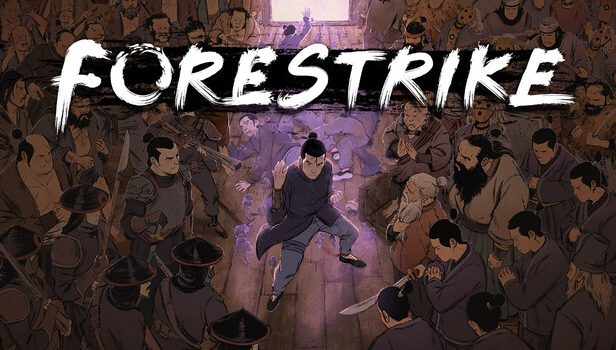
Forestrike PC Review
Summary: Forestrike's excellent mechanic of the same name makes this martial arts roguelike a deceptively challenging strategy.
4
Try, Try Again
Going into Forestrike, I was expecting it to have more than a whiff of Slowclap’s excellent brawler Sifu about it. It is, after all, another martial arts-themed roguelike (granted, Sifu is much more roguelite than roguelike), with plenty of smashable items and kung fu-kicking bad guys to take out. What I didn’t expect was just how much Forestrike would remind me of the likes of chess-puzzler Into the Breach. While it is, at its core, a side-scrolling beat-’em-up, thanks to its fantastic Forestrike mechanic, it’s also one of the most satisfying and challenging puzzlers I’ve had the chance to play in a while.
Before I even got into Forestrike’s gameplay, though, I was surprised at just how much effort had gone into the game’s storyline. If it’s not your first time around the indie gaming circuit, you’ll know all too well that it’s common for games akin to Forestrike to forgo much in the way of plot points in favour of getting you straight into the gameplay. Forestrike’s a little different, though, and there’s ample worldbuilding to be had, all revealed through meaty conversations with your allies and enemies, and even a few cutscenes littered here and there. The story itself is pretty simple; you play as Yu, a martial arts master of the Forestrike form, who is sent on a journey to save the Emperor from the influence of an evil Admiral. It’s simple stuff, but it all works fairly well, and there are tons of dialogue to be had, especially as you complete runs, win or lose.

But really, you’re here for the gameplay, and luckily, that’s where Forestrike shines the most. By entering Forestrike, Yu can plan and prepare attacks before he lays waste to his enemies. Forestrike essentially acts as a sandbox for practicing and perfecting each round before you try it for real. Most levels, for example, require you to deal with specific enemies in a certain order to avoid taking damage or task you with finding a way to counter attacks you can’t avoid. By completing levels under the influence of Forestrike, you can take on as many practice runs as you like to find the best way to take on each mission.
As well as being tasked with clearing screens of bad guys, missions usually come with optional objectives that unlock further rewards that can help you on your path to victory. These typically require deeper strategic thinking; for example, how can you clear two bad guys within three seconds while still keeping your health up, or what move can you pull off to make the guy charging at you smack into one of his friends rather than you? It’s a dangerous dance, deciding whether to risk it all for a bonus objective, but, more often than not, the benefit typically outweighs the risk, unlocking new attacks and powers, or useful bonus gold to spend in the game’s shops.
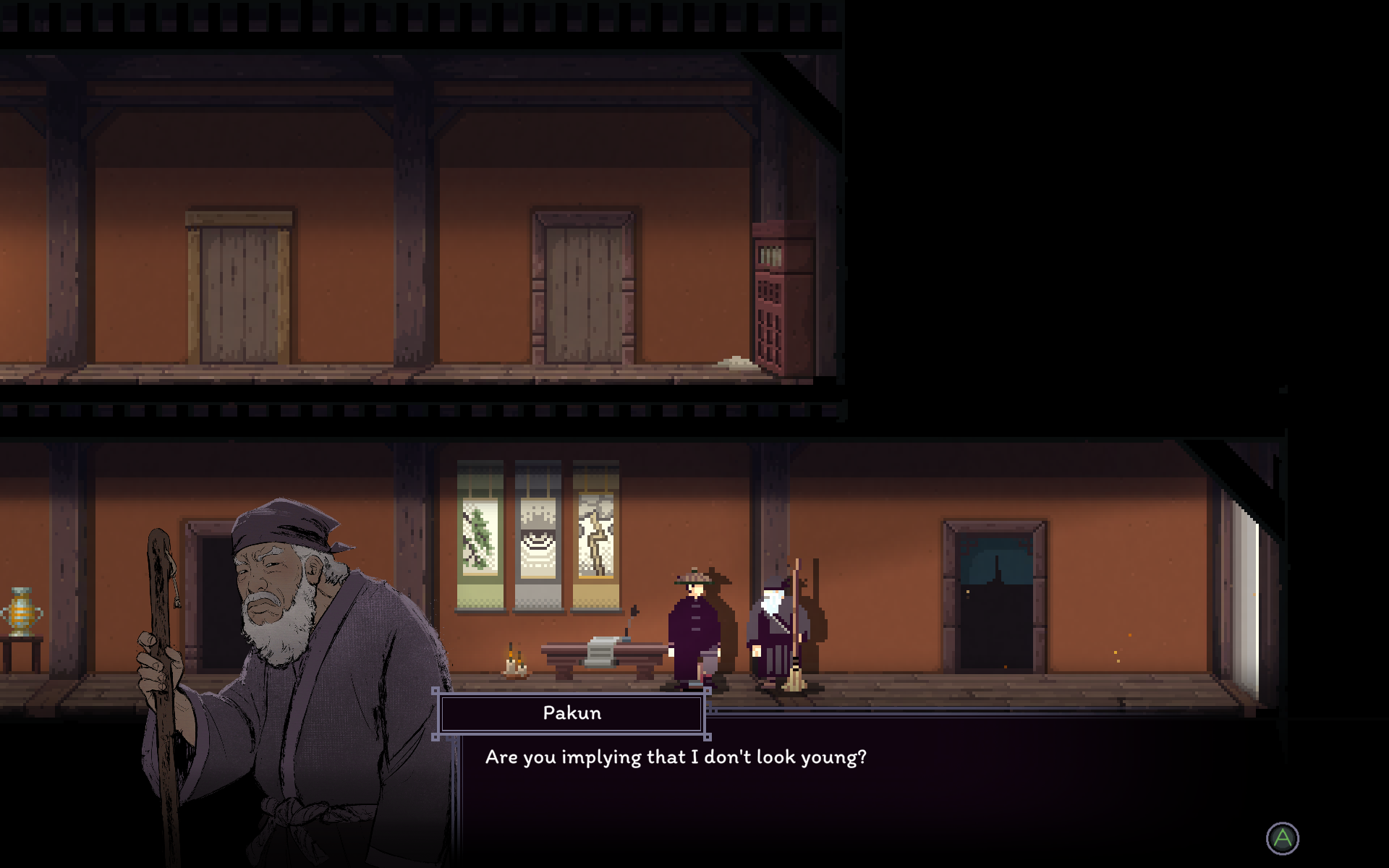
Despite being a martial arts whiz, Yu is somewhat easy to take down, but it’s here, as a long-time fan of the likes of Into the Breach, that I felt right at home. Like Into the Breach’s deceptively deep strategy, Forestrike requires detailed planning to ensure your precious life and resources aren’t depleted too quickly. While Yu can dodge and block, these resources are incredibly limited, so knowing when to use them is key to victory. Sometimes, a well-timed punch is a better option for a charging enemy, for example, in order to save your dodge for an incoming stick to the face. Once you’ve had enough planning, you can put your plan into action, but just because you’re well-practised doesn’t mean you’re going to pull off your carefully laid plans when it comes to the real thing. Thankfully, though, Forestrike’s combat is incredibly tight and easy to execute, meaning messing up an expertly choreographed attack in Forestrike’s ‘real-world’ is a rare, but no less frustrating, feat.
If you do take too many hits, though, in true roguelike fashion, you’ll find yourself back at your monastery, ready to dust yourself off and start again. The further you progress, the more goodies you unlock to improve future runs, such as new unlockable attacks, as well as a lotus flower resource that you keep between runs, which can be used as a one-time consumable to bring you back to life. There are plenty of tricks up Yu’s sleeves, too, with four different styles to learn, each with a focus on a different playstyle. Early styles, for example, such as ‘Leaf’, have Yu capitalising on enemy manipulation and dodging, whereas the late-game ‘Tiger’ schooling focuses on a much more aggressive playstyle. Just because you pick a style to start a run with, though, doesn’t limit you to that specific style. There’s ample opportunity during runs to learn abilities from other schools, meaning you can combine your favourite abilities to make the most of Yu’s potential.
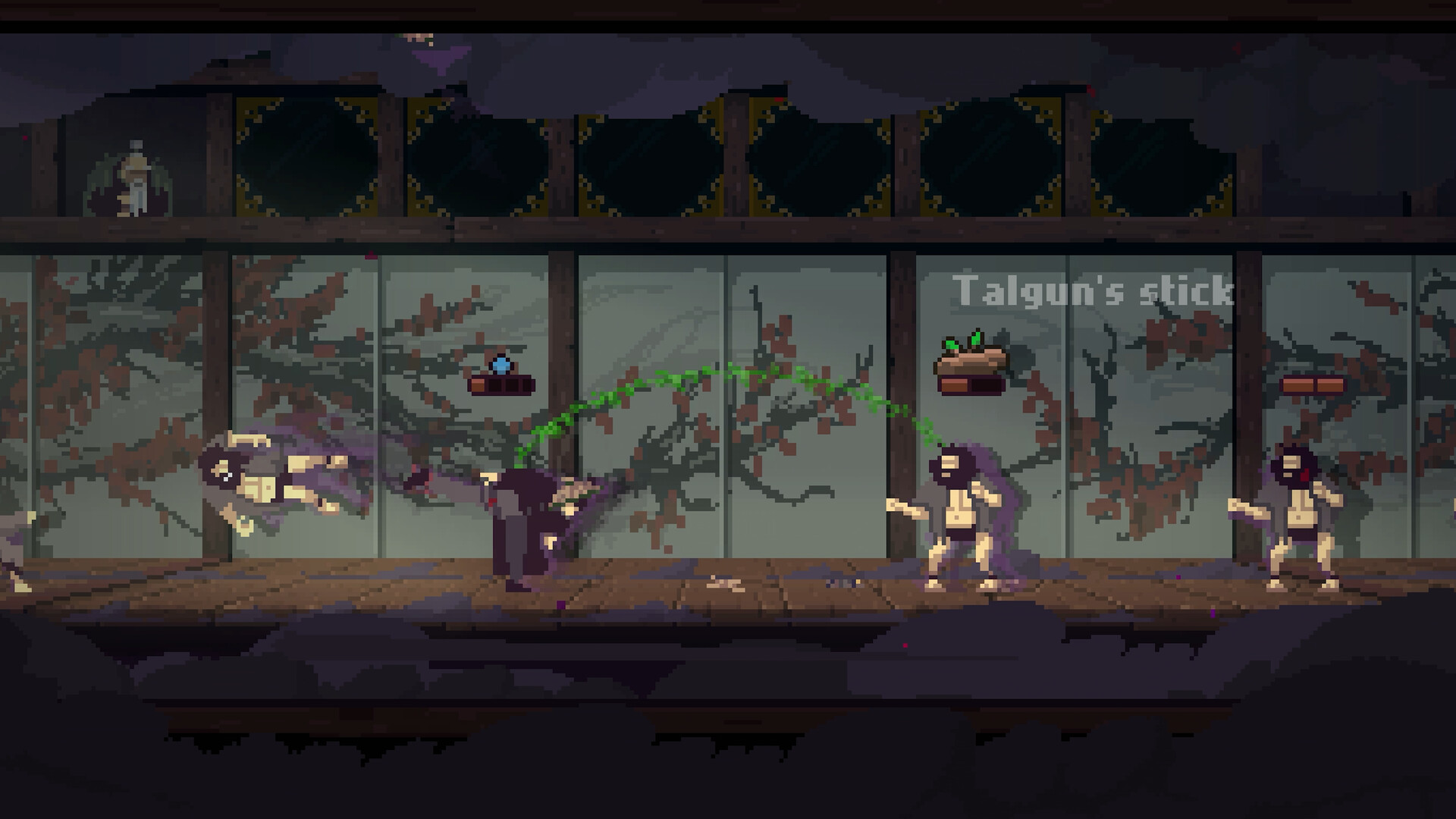
When (or if) you successfully complete a run, you’ll be given the opportunity to enter ‘reality mode’, which stops you from using Forestrike altogether. This essentially turns Forestrike runs into a series of tough, beat-’em-up gauntlets, which, while fun for a little while, removes what makes Forestrike so engaging. Forestrike is what makes, well, Forestrike, and without it, it becomes just another tough-as-nails roguelike. Still, it’s nice to see something added on as a pat on the back for completing a successful run, but it’s not something I found myself going back to too often. Elsewhere, though, Forestrike rarely slips up. The minimalistic pixelated artwork won’t be for everyone, and runs do take a while to kick in (I found myself skipping more than a bit of dialogue as the game went on), but Forestrike is such an engaging concept that I kept finding myself coming back to try, try again.
Final Thoughts?
It’s easy to get muddled in the endless sea of roguelikes, but occasionally, you wander on one that feels really special. Forestrike ticks that box. With a simple premise and a great combination of pick-up-and-play combat and involved strategy, Forestrike makes for a mighty fine martial arts adventure.

Related Posts

Neon Inferno Review →
Cairn Review (PC, Steam Deck) … the ascent calls! →

Fatal Fury: City of the Wolves Legend Edition Review (PC) →