
Direction Quad Review (Switch)
Summary: Direction Quad is a compact, top-down puzzle game built around the restriction of diagonal-only movement. Its simple one-button control scheme quickly evolves into a demanding test of timing, planning, and spatial awareness as new mechanics are layered in. Short, challenging, and easy to pick up, it delivers a satisfying burst of retro-styled puzzle design despite a light, largely secondary story.
3.8
Calculated Croaks
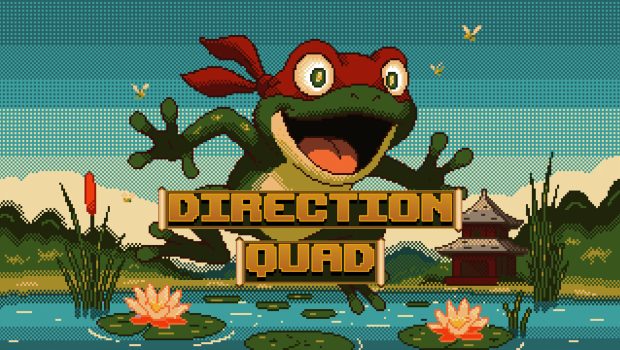
Direction Quad is a top-down puzzle game developed by No Checkpoint in collaboration with eastasiasoft, and published by eastasiasoft. It launched on Nintendo Switch on January 14, 2026, joining the publisher’s steady stream of compact, mechanically focused indie titles. At a glance, Direction Quad presents itself as a minimalist, retro-inspired puzzle experience where movement is restricted entirely to diagonals. What sounds immediately simple becomes the backbone of a game that thrives on precision, quick thinking, and repeated trial-and-error, delivering a short but engaging challenge that fits neatly into portable play.
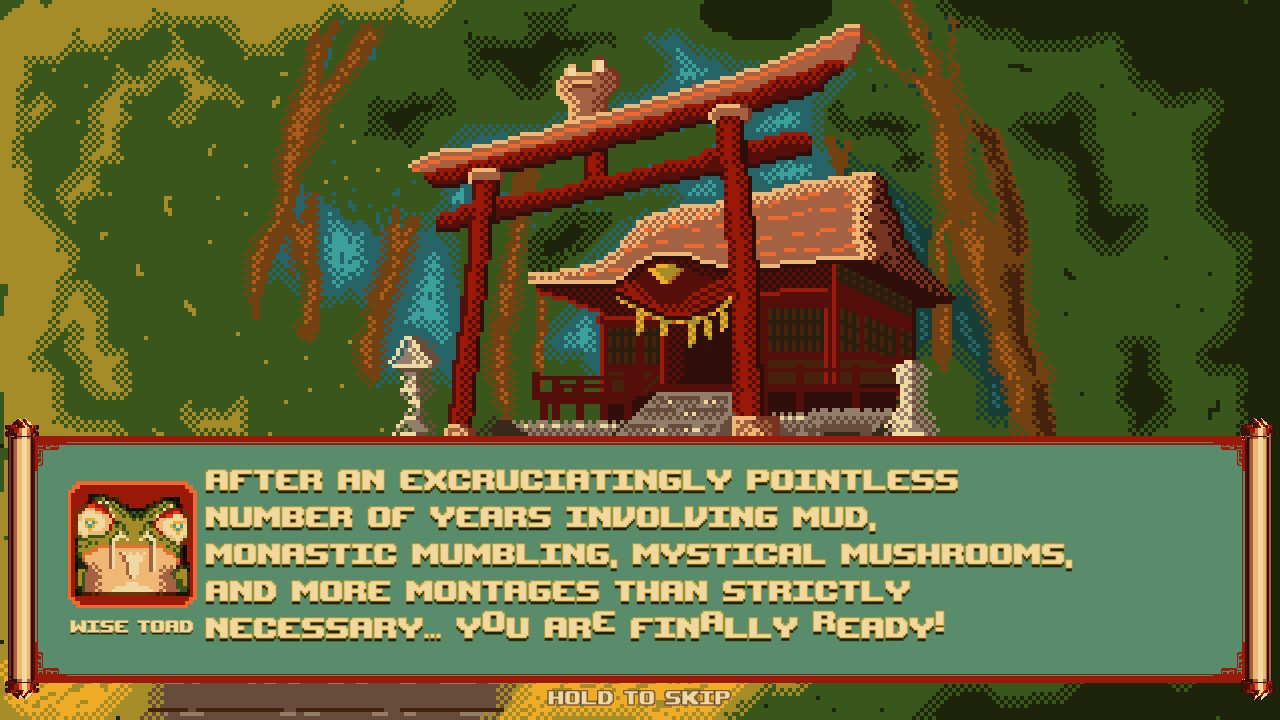
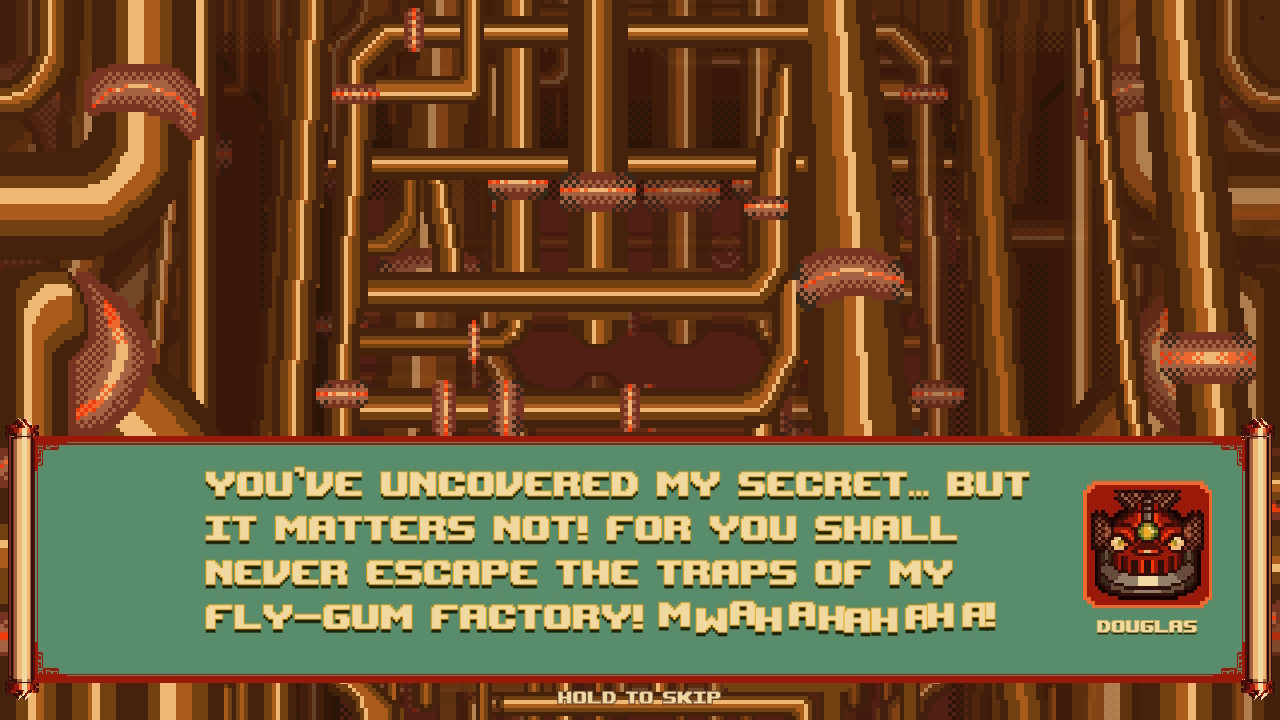
You play as Quad, a frog who has just completed years of grueling training under the Wise Toad. As the so-called “Chosen One,” Quad is tasked with completing the Ten Terrible Trials to earn the title of Warrior Toad. Quad, however, is far less enthusiastic about destiny than his mentor, frequently complaining about the inconvenience of heroics, the dangers ahead, and the lack of something as basic as a lunch break to eat his sandwich. The narrative unfolds through text-only sequences between levels, with occasional flavor text appearing before stages to frame the next challenge. The tone is whimsical and knowingly cheesy, which works well enough for what it is, but the presentation does limit its impact. Given how strong the pixel art is elsewhere, the absence of character portraits or expressive artwork during dialogue feels like a missed opportunity to give the cast more personality. Ultimately, though, the story is clearly secondary, existing to provide context rather than emotional weight.
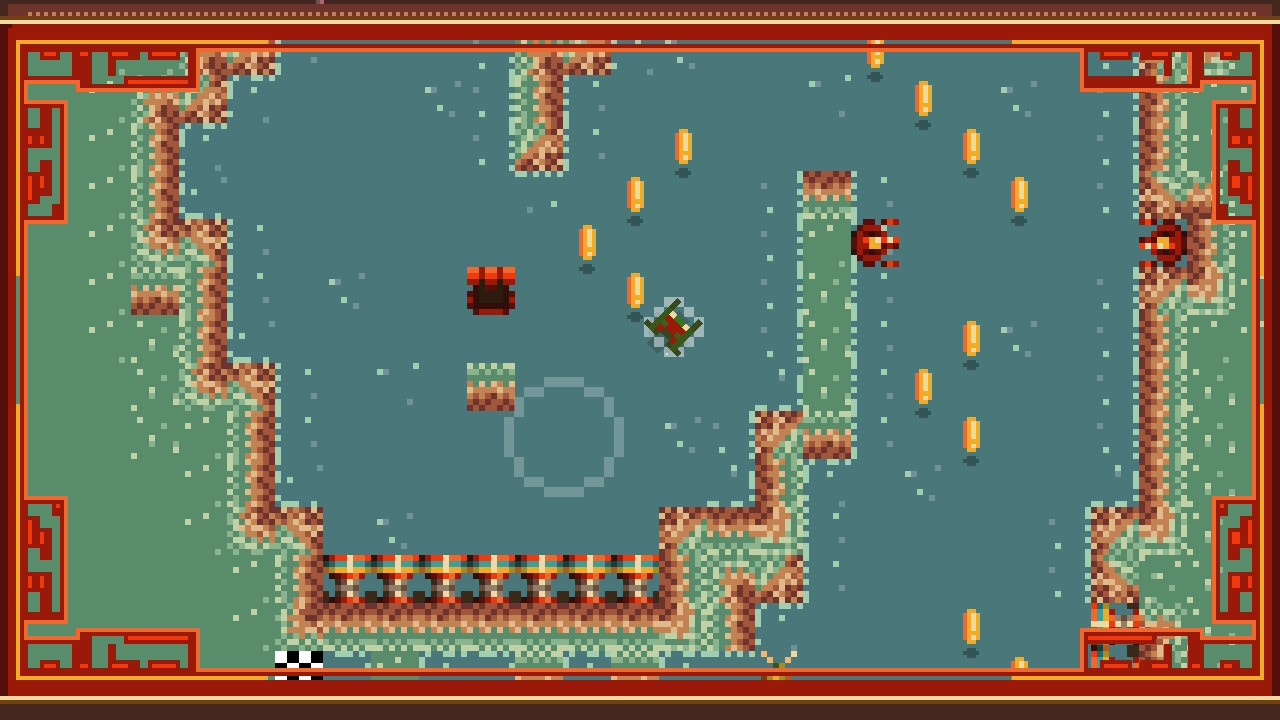
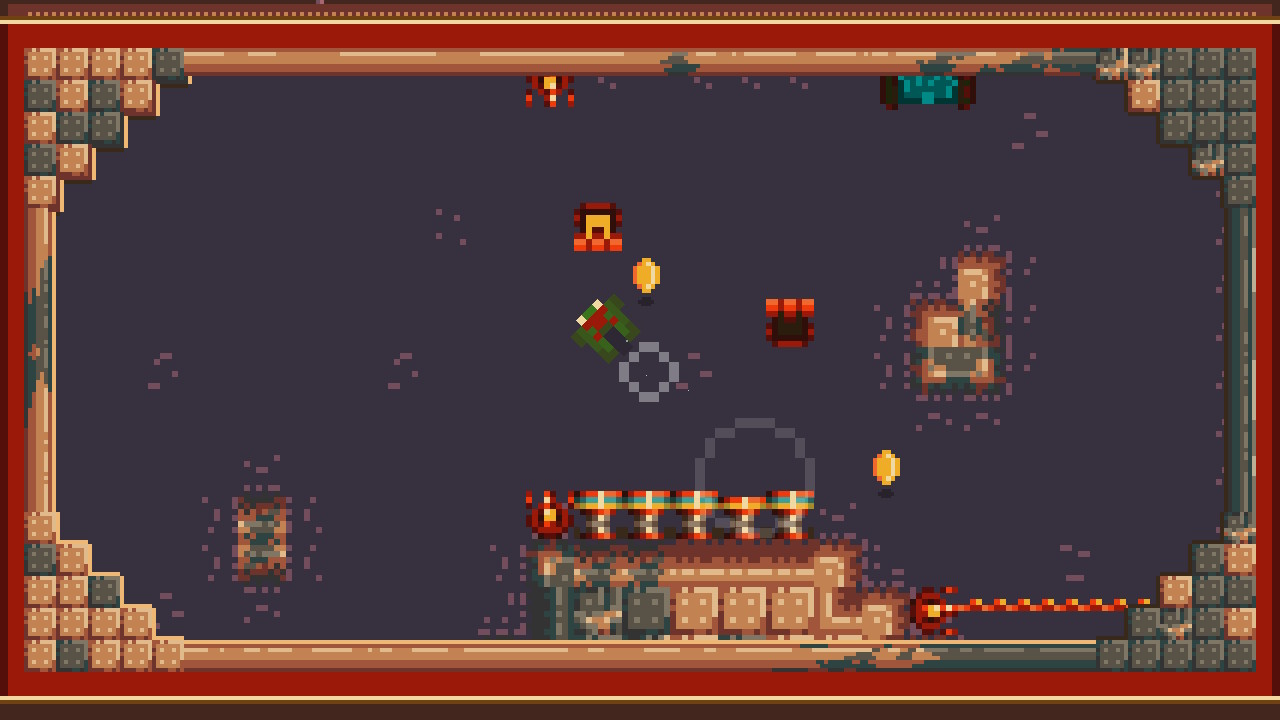
Viewed from a top-down perspective, each level is essentially a compact maze with a clear start and finish. Quad is constantly in motion and can only move diagonally, never stopping unless he collides with something, which immediately resets the level. With a single button press, you switch Quad’s movement axis, effectively redirecting him left or right, or up or down, depending on the diagonal he’s currently traveling. It’s a clever control scheme that feels intuitive, yet it’s surprisingly difficult to master. Early levels ease you in gently, but as layouts grow more complex, your fingers and brain quickly find themselves out of sync.
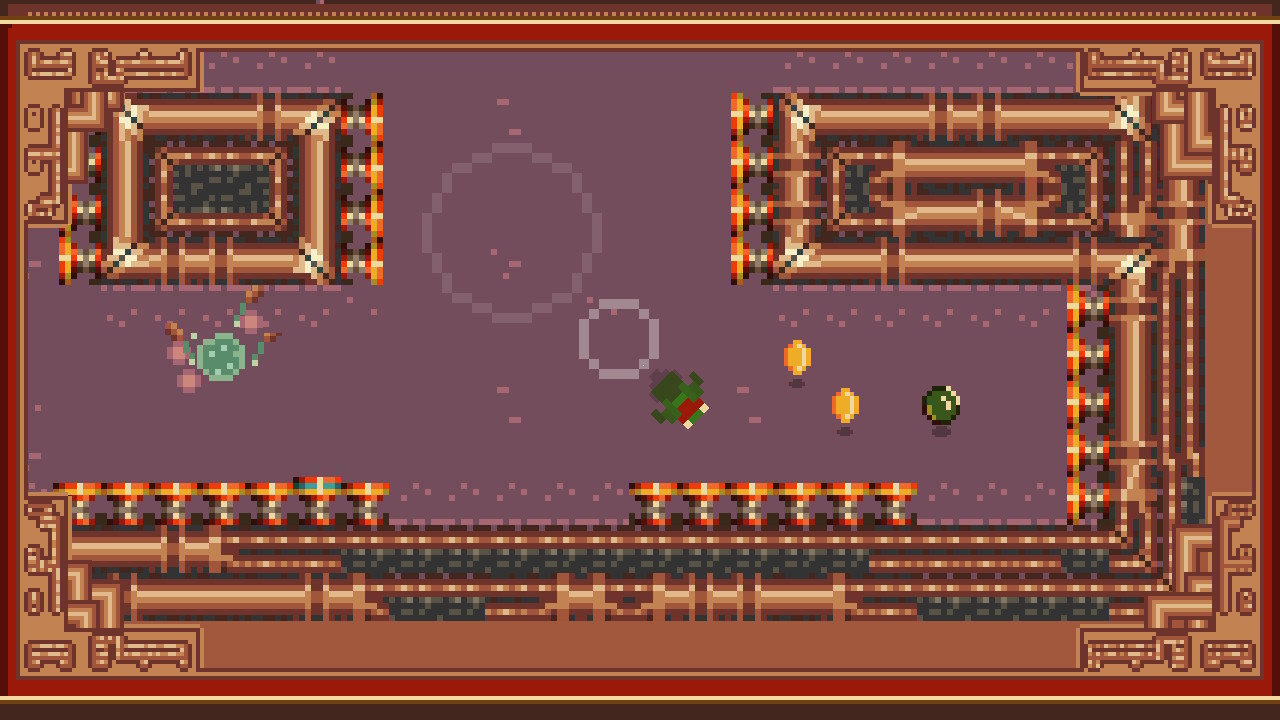
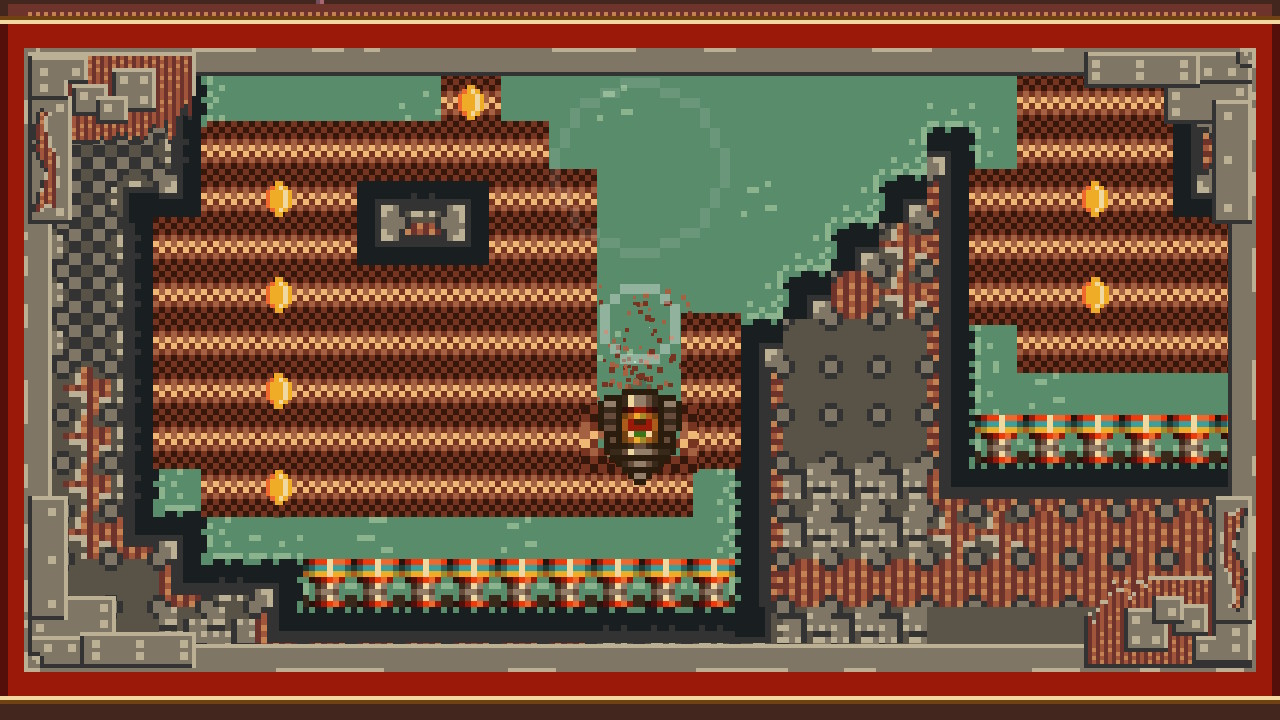
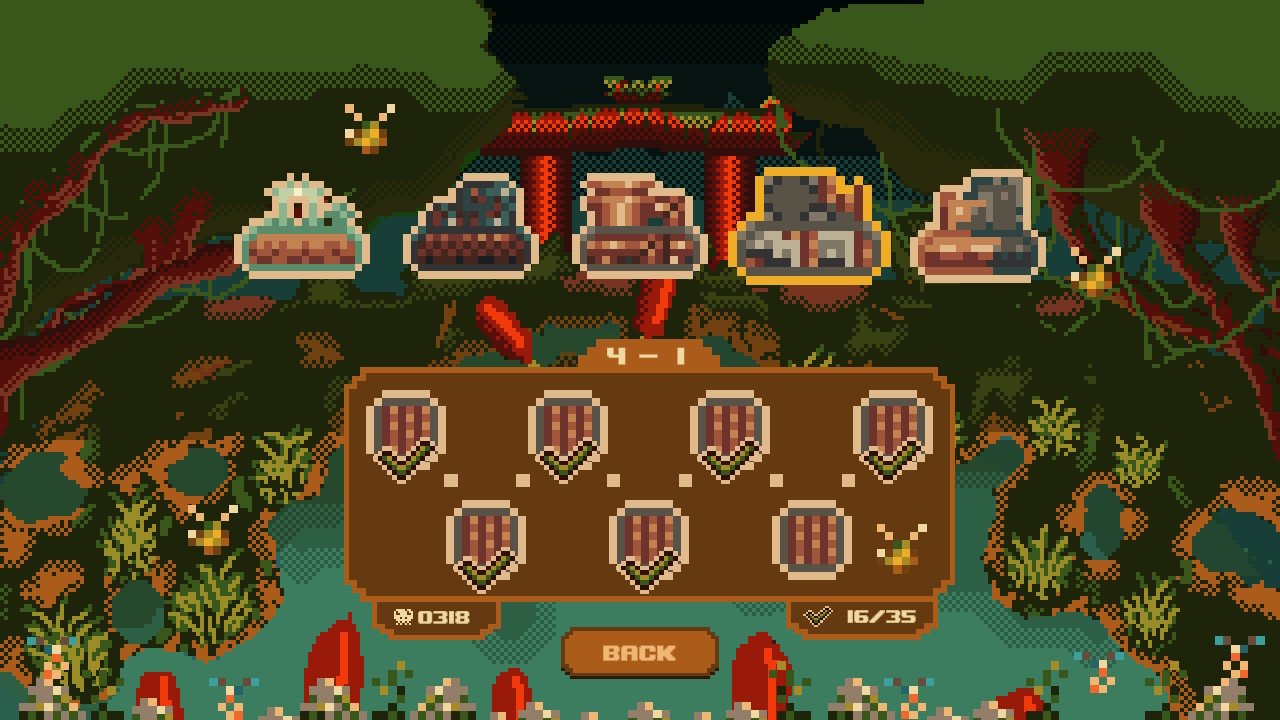
As the game progresses, new mechanics are layered in thoughtfully. Bumpers placed along walls allow Quad to ricochet in controlled ways, becoming essential tools for navigating tighter spaces. Later stages introduce pick-up projectiles that can be fired at switches to open laser gates, drill vehicles that let you burrow through dirt terrain, and warp gates that instantly reposition you across different sections of a level. None of these mechanics feel extraneous; instead, they build naturally on the game’s central movement concept. Collectibles like coins and flies are scattered throughout each stage, and collecting everything earns you a satisfying checkmark, subtly encouraging replay and mastery. Completionists will find plenty of reason to revisit levels, as grabbing every item often requires careful planning, deliberate backtracking, and near-perfect execution.
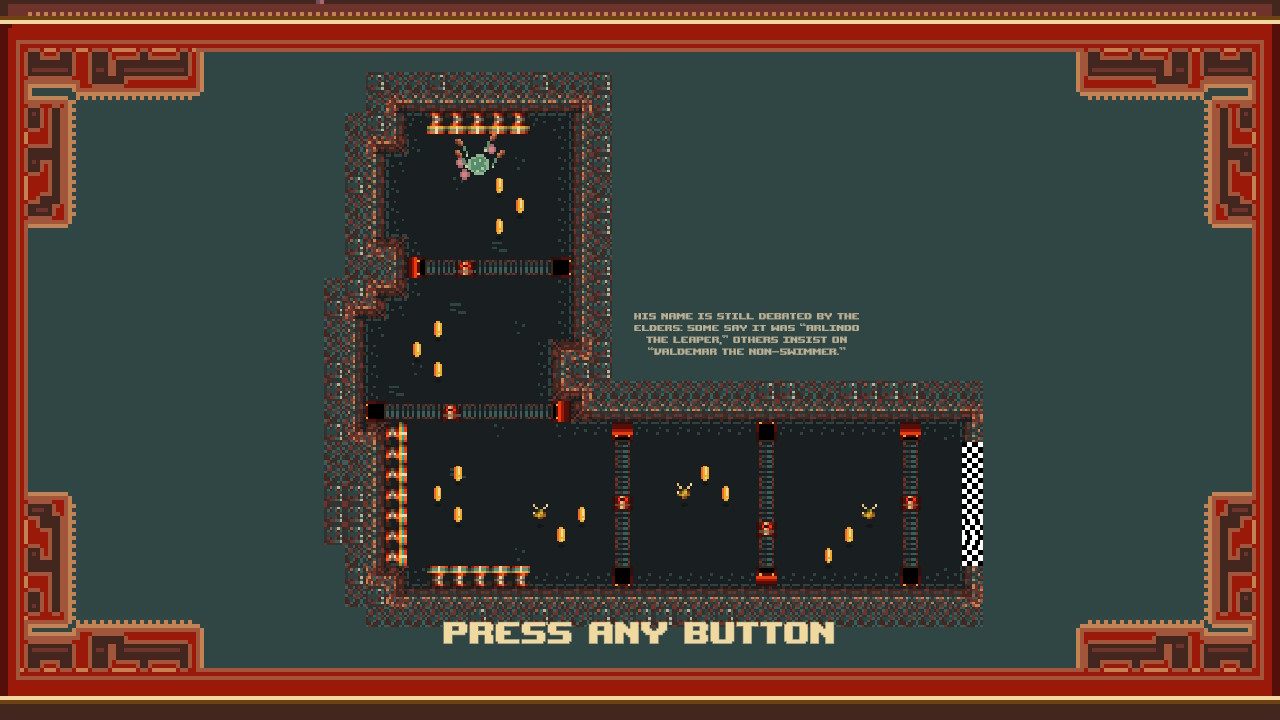
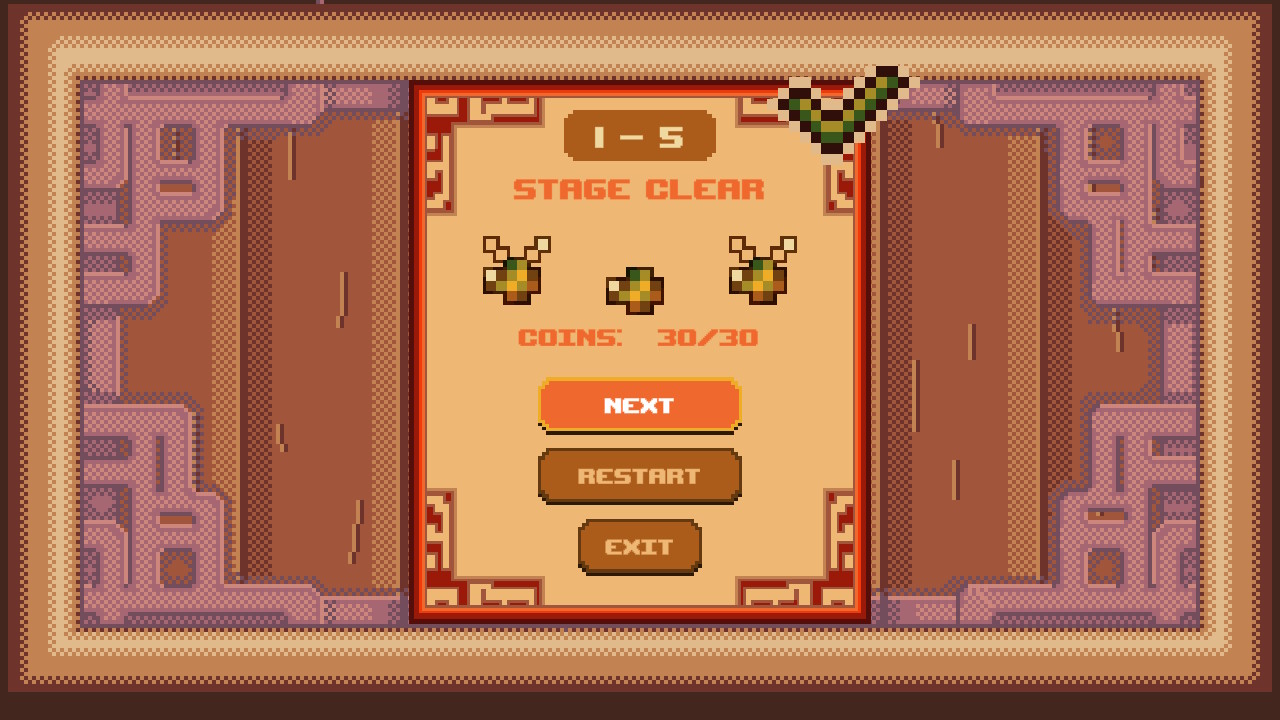
Direction Quad can be punishing, especially in later stages where moving enemies, tight corridors, and precise timing are layered together. That said, the game’s quick restarts and one-button input make failure far less discouraging than it might otherwise be. Each attempt is brief, encouraging the familiar “one more try” mindset even when frustration sets in. The main campaign can be completed in just a couple hours if you push straight through, but pursuing full completion adds a meaningful layer of depth and challenge that extends the experience.
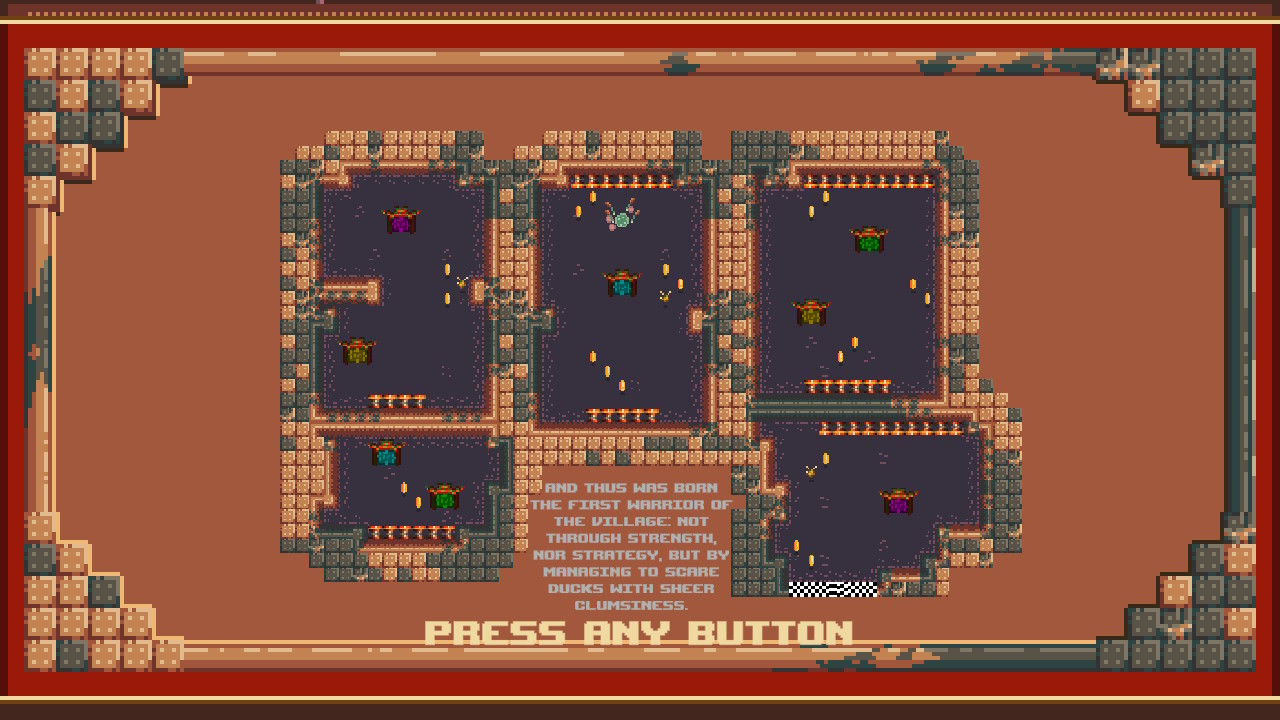
Visually, Direction Quad succeeds by keeping things clean and readable. The chunky pixel art embraces a retro aesthetic without sacrificing clarity. Environmental details like the ripples trailing behind Quad as he hops, the sparkle of collected coins, and the subtle variations in color palettes between stages all add visual interest without cluttering the screen. Purple waters, red walls, dark blue swamps, and forest-green backdrops help distinguish areas while maintaining a cohesive style. The simplicity works in the game’s favor, ensuring that hazards and paths are always easy to read, even when levels become dense.
The audio design complements the visuals well. The soundtrack leans into bouncy, percussive chiptune melodies filled with bloops and bleeps that evoke frog-like hopping and constant motion. Sound effects are punchy and satisfying, reinforcing the physicality of each directional switch and successful maneuver. While the music isn’t especially varied, it fits the pace and tone of the game and never overstays its welcome during shorter play sessions.
Final Thoughts?
Direction Quad is a focused, well-executed puzzle game. At a budget-friendly $4.99, it delivers a clever mechanical hook, a solid challenge, and a polished presentation that makes it easy to recommend. Its story is skippable, and the overall experience is brief, but those shortcomings are softened by the game’s low price and strong design fundamentals. For anyone looking for a compact, retro-styled puzzle game with a unique movement twist and a satisfying difficulty curve, Direction Quad is an easy pick-up.
About the Author

Nay Clark Gaming holds a special place in my heart and I never stop talking about video games. I really love all types of games and have an interest in games that have complicated stories and lore because I enjoy untangling the mystery of it all. When I'm not gaming, I unsuccessfully try to control three amazing and incredibly bright kids.
Related Posts
Paranormasight: The Mermaid’s Curse Switch Review →

Virtual Boy for Nintendo Switch 2 Review (Happy MAR10 DAY) →

Under the Island Review (Switch) →