
Code Vein II PS5 Review
Summary: While Code Vein II's narrative leaves a lot to be desired, and the lack of multiplayer is disappointing, the gameplay is incredibly engaging and satisfying. With a few gameplay and performance adjustments, the game stands to be among the best Soulslikes this year.
4
Bloody Good Combat
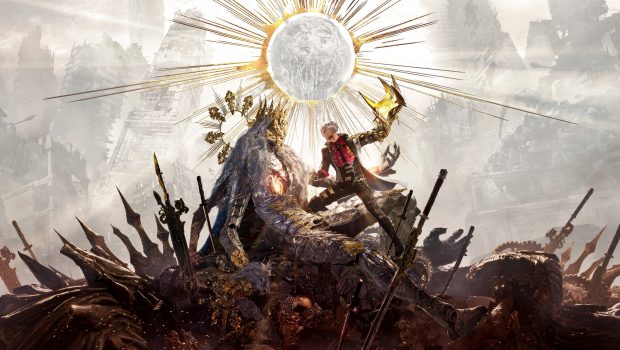
Code Vein II is Bandai Namco’s sequel to its fan-favorite Souls-like game, Code Vein. After several years since its first installment, the sequel offers newer systems, a fresher look, new characters, and an interesting, albeit convoluted, new narrative. Code Vein II, like its predecessor, is set in a world where society has collapsed. It takes place after a disaster known as the Resurgence, which corrupted everything it touched and turned living beings into monsters. The catastrophe wiped out most of humanity and ushered in the age of vampire-like beings known as Revenants, while many of the few remaining humans became Revenant hunters. A Revenant named Idris once managed to seal the Resurgence, but it returned a hundred years later, sparking a war known as the Upheaval.
During this conflict, several heroes resealed the Resurgence by absorbing it into themselves and entering a cocooned, dreamlike slumber, becoming legends among the populace. In the present day, those heroes’ dormant bodies are beginning to collapse, and each fallen hero draws the world closer to destruction. To prevent another calamity, you play as a Revenant hunter who travels back in time alongside Lou, a time-traveling Revenant, to locate the heroes, obtain the keys to their cocoons, and return to the present to destroy them before they can unleash devastation.
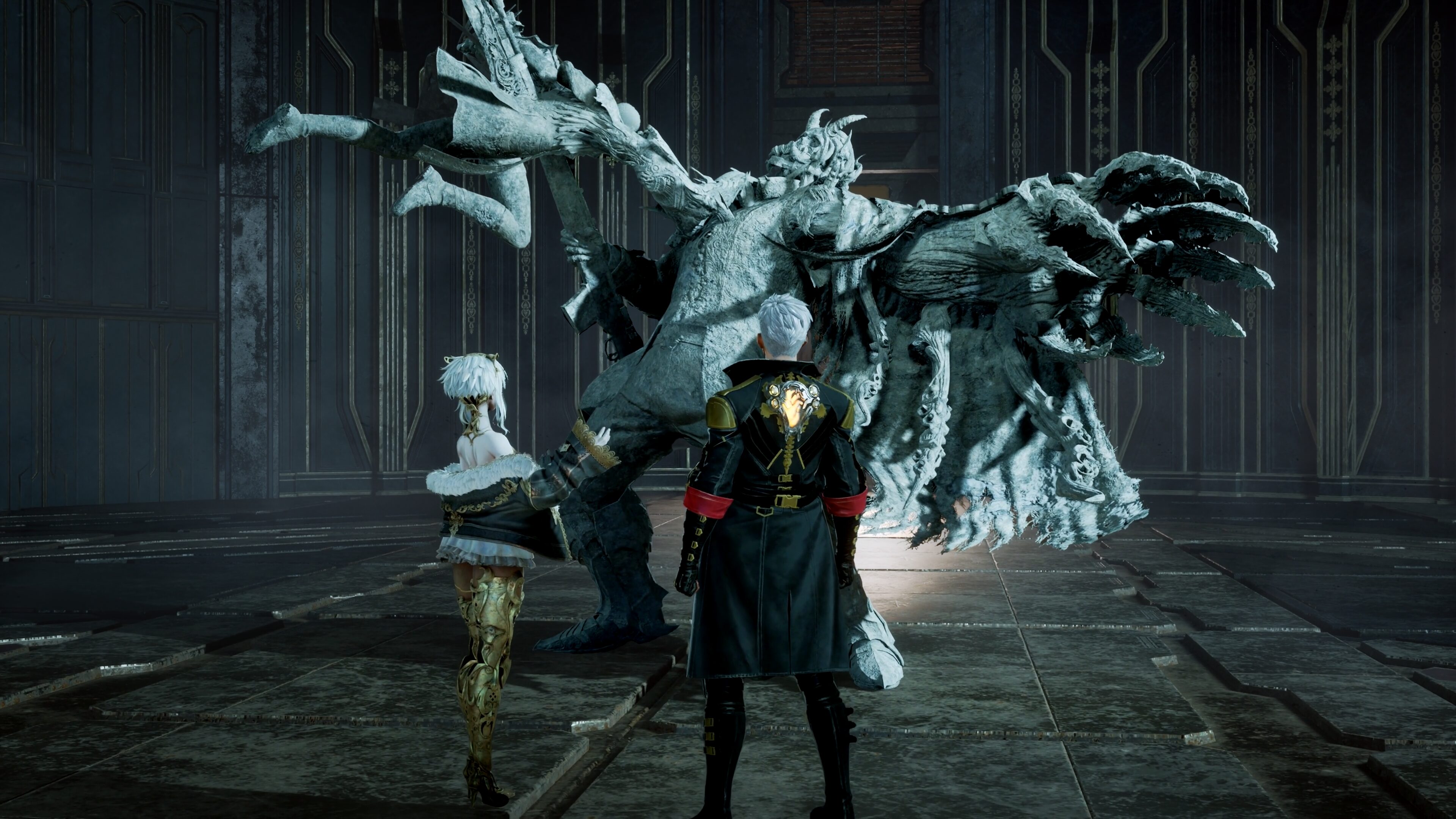
Code Vein II’s story, while sporting an interesting concept, is incredibly hard to follow at first and quite convoluted. The game begins with an exposition lore dump that introduces the world, the revenants, and a war, but does not go into the details of the Resurgence’s nature or how it came to be. Instead, it makes things even more complex by adding time travel. Players navigate this world through two timelines, the past and the present, meeting characters and their past counterparts in the process, and learning about the Upheaval and the heroes. It’s hard to understand the characters’ true purpose, especially for those who didn’t play the previous game and didn’t learn how revenants came to be..
As such, new players will have to learn and understand several narrative elements to fully appreciate the plot. However, as they progress through the narrative, things become clearer, especially when they encounter several heroes and learn their stories and what happened centuries earlier. Additionally, while the narrative is interesting, many characters are admittedly tropey and predictable, and it doesn’t help that your character is voiceless yet still heavily involved in the narrative and cutscenes, which makes them feel underwhelming. However, a few characters, especially the heroes, are interesting, and the game sports many highly engaging scenes and twists.

Narrative aside, Code Vein II’s gameplay is incredibly fun and is the best part of the game. Instead of a revenant, players play as human revenant hunters who take the blood and abilities of revenants and use them to strengthen themselves. Like the first game, combat is through a standard hack-and-slash system, with AI revenant partners that assist in combat. Each partner is different from the last, and players can level them up and find new ones as they progress through the game. Players can swap partners at rest points called mistles, and each partner has different combat styles and abilities, and some can be summoned to be fighters, while others can only help with stat buffs or special abilities. The AI partner system works incredibly well, even better than in the first game, as each partner is helpful, doesn’t get in the way, and is different enough to keep gameplay refreshing.
Aside from that, players can also collect Blood Codes, which are overall stat boosters they receive from a revenant that serves as a specific build. Some affect health and abilities, others stamina, Ichor, defense, and more. Blood Codes can be leveled up the more you fight enemies with them active. Once they are, they can then be replaced with a stronger version of the Blood Code.
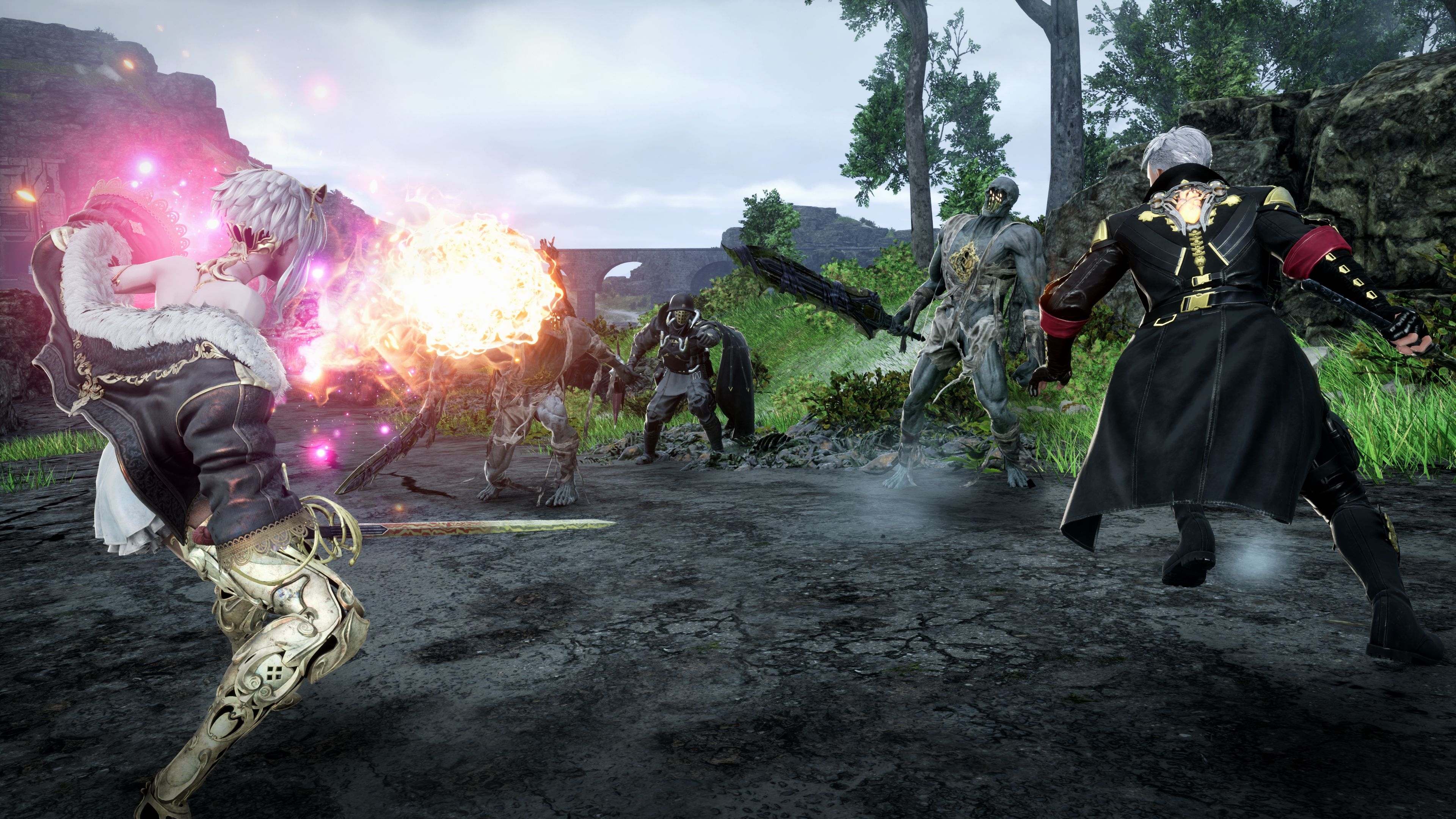
Then there are several amazing weapon types, all of which are incredibly fun to use: each has special weapon attacks that are different from the last and are immensely fun to execute. Then there’s Jails, the game’s secondary weapon and attack system that has special abilities, many of which are tied to the revenants you have equipped as your partner. These are varied and include a gigantic claw, a gigantic scythe, and more. Each Jail has specific traits and stats, and they can all be upgraded to be more efficient.
There are also Boosters that temporarily increase specific stats, shields, restoratives, weapon upgrades, the ability to change a weapon’s type or element, and more. Like most RPGs, the game has a lot of moving parts, and players who didn’t play the first game may take a bit of time to wrap their heads around it all. However, the gameplay is still incredibly fun, and, like most souls-likes, fighting enemies, increasing player stats, and finding the best weapons are the core of what makes it engaging. However, unlike most Soulslikes, the game has unique flaws. For one, as in the first game, players still cannot upgrade specific stats at rest points.
Instead of manually investing points into attributes, players can only use the Blood Code system to change their overall stats. Your stats are determined by the Blood Code you equip, which functions like a class. While this makes things simpler, it does take some of the joy out of building characters. Additionally, unlike the first game, the bosses are not very challenging, especially at the start. Most early and even mid-game bosses can be taken down pretty easily if you’re playing the game right and actively using partners to their full extent. Thankfully, some later-stage bosses ramp up the difficulty, are sufficiently challenging, and require players to think on their feet.
Other than that, unlike Code Vein, the sequel notably lacks multiplayer, which is disappointing and feels like a missed opportunity, especially as the game is designed to accommodate multiple fighters. Aside from gameplay, Code Vein II’s visuals are simply astounding. Character models are far from unique, but character designs are incredibly detailed, intricate, and attractive, with a gothic punk aesthetic from the first game, but enhanced in all the best ways. The art direction is marvelous, with picturesque environments from lush flora and fauna exteriors to intricate interiors with the same gothic aesthetic. Performance-wise, the game notably suffers from several annoying cutscene frame drops and texture pop-ins, even in performance mode. Oddly enough, this doesn’t happen much during actual gameplay.

Final Thoughts?
Overall, while Code Vein II’s narrative leaves a lot to be desired, and the lack of multiplayer is disappointing, the gameplay is incredibly engaging and satisfying. With a few gameplay and performance adjustments, the game stands to be among the best Soulslikes this year.
About the Author

Abdul Saad Abdul Saad is an avid gamer and computer geek. He's been writing for four years on news, reviews, previews, and more on multiple gaming sites. When he isn't writing or playing the latest JRPG, he can be found coding games of his own or tinkering with something electrical.
Related Posts

Screamer PS5 Review →

Project Songbird Review (PS5) →
Unsealed: The Mare Review (PS5) →