
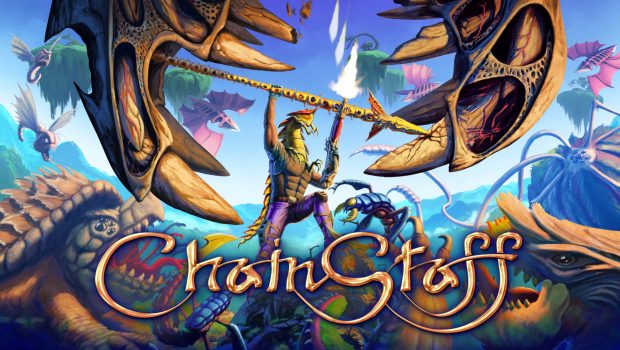
ChainStaff Review (Switch)
Summary: ChainStaff is a fast-paced action platformer built around a single, highly flexible weapon that blends combat and movement into one system. You explore alien-infested environments while making choices that affect your abilities, progression, and how the story unfolds. It’s a game focused on experimentation, replayability, and learning how to master its unique traversal and combat flow.
4.1
Tethered Torment
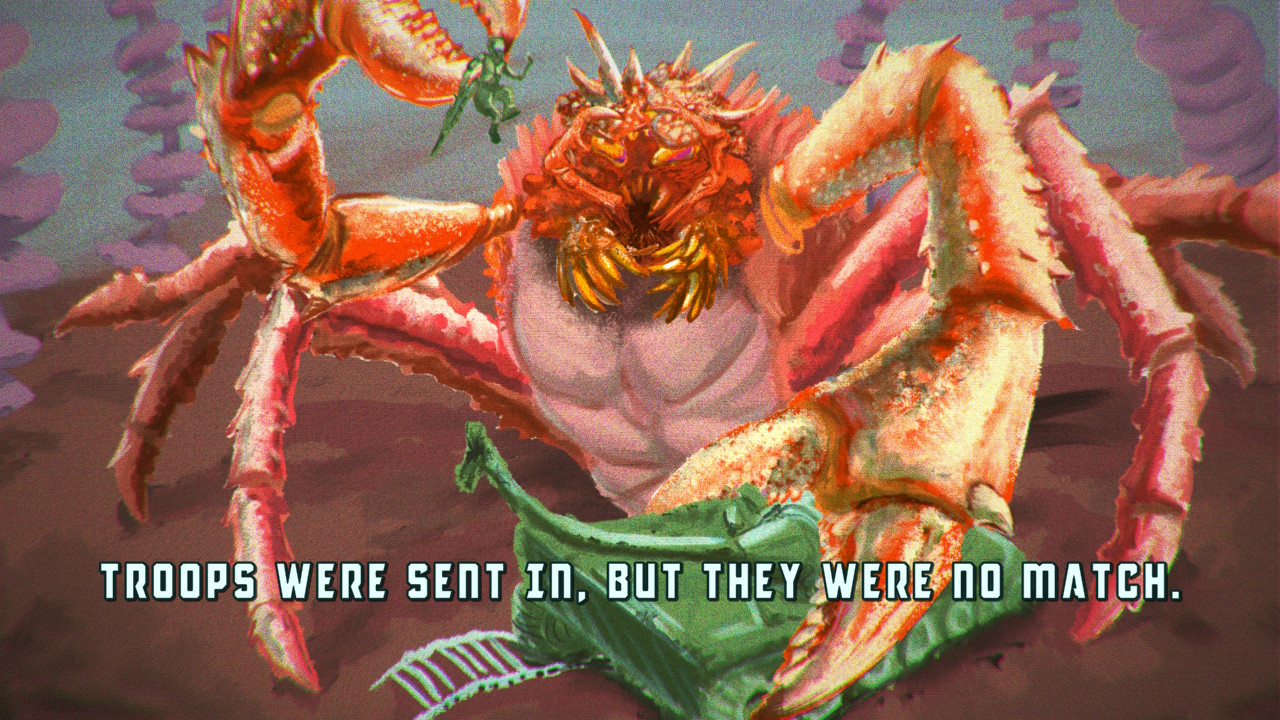
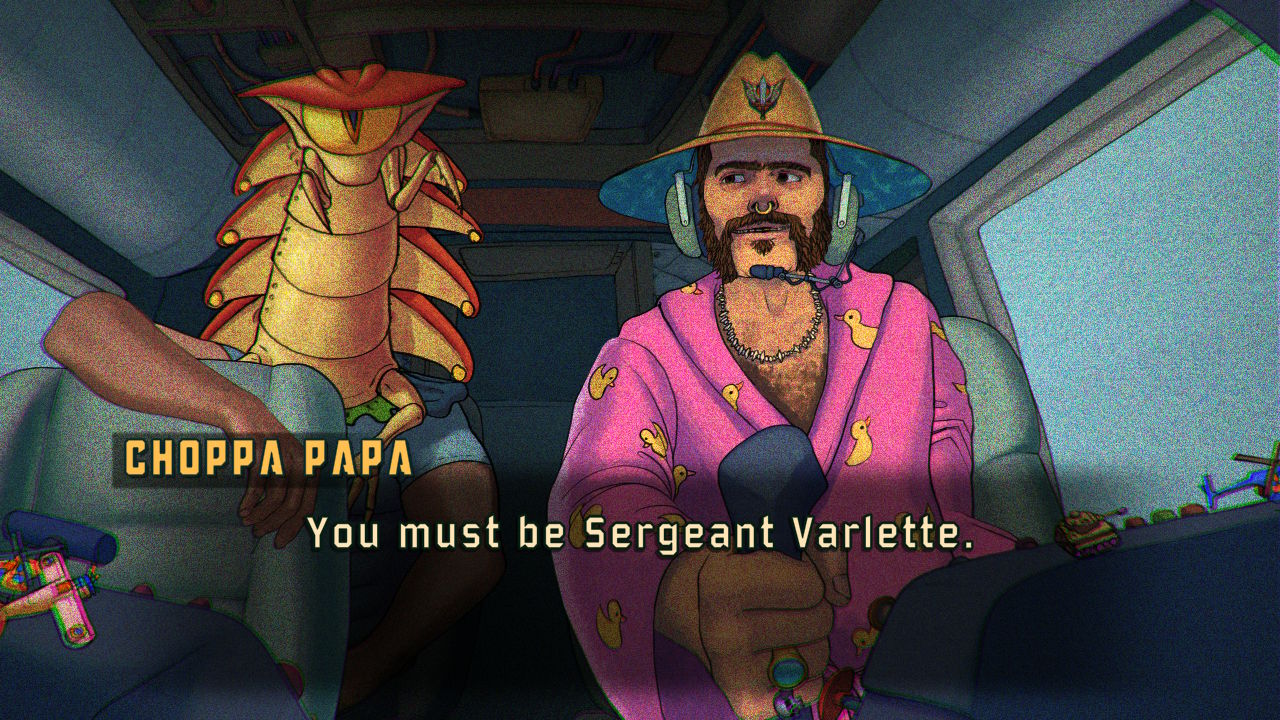
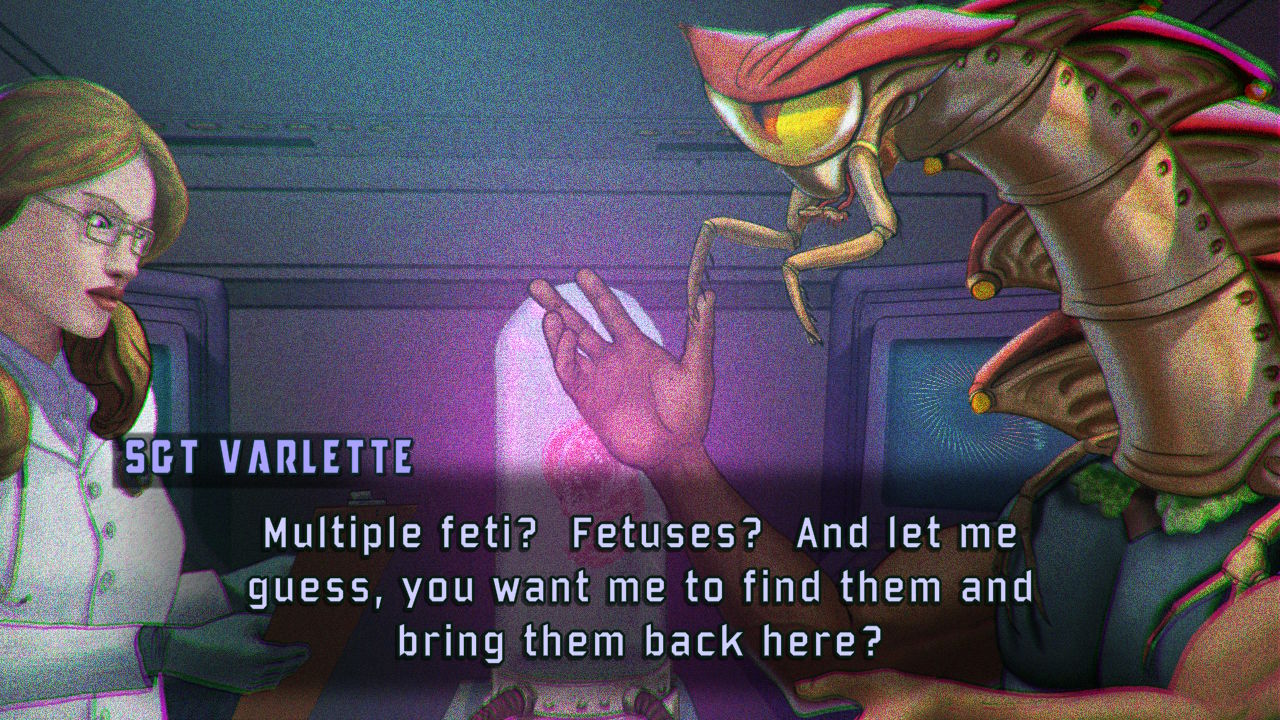
The story leans fully into its strange premise and benefits from doing so. Earth is being overrun by alien bugs spawned from Star Spores, and things are going about as badly as you’d expect. You play as Sgt. Jesse Varlette, who fights the invasion, but becomes part of it when a parasite crashes onto his head and bonds with him. It keeps him alive, but not in a comforting way. His body is changed, his humanity is questionable, and removing the parasite would mean death. In exchange, you gain the ability to control the ChainStaff and stand a chance against what the game calls The Encroachment. The narrative is weird, sometimes dark, and often surprisingly funny. The tone stays light enough to keep things moving, but there’s an underlying tension in how your choices shape who Var becomes.
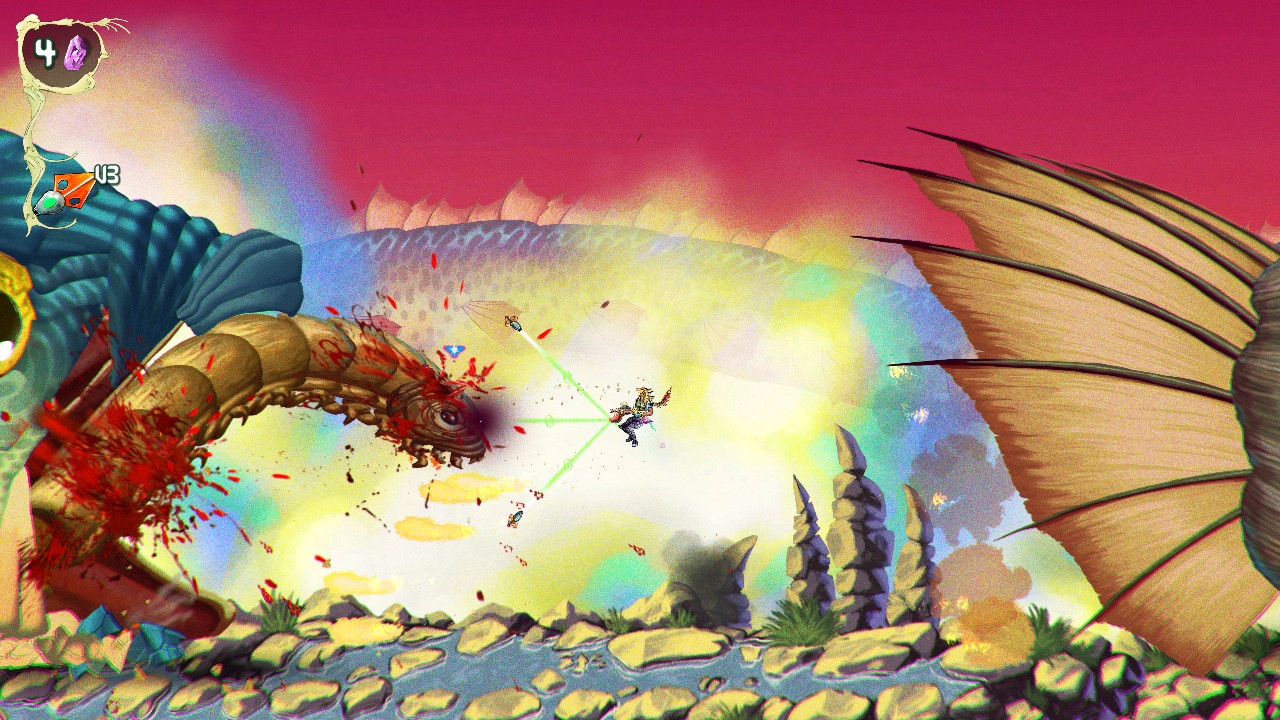
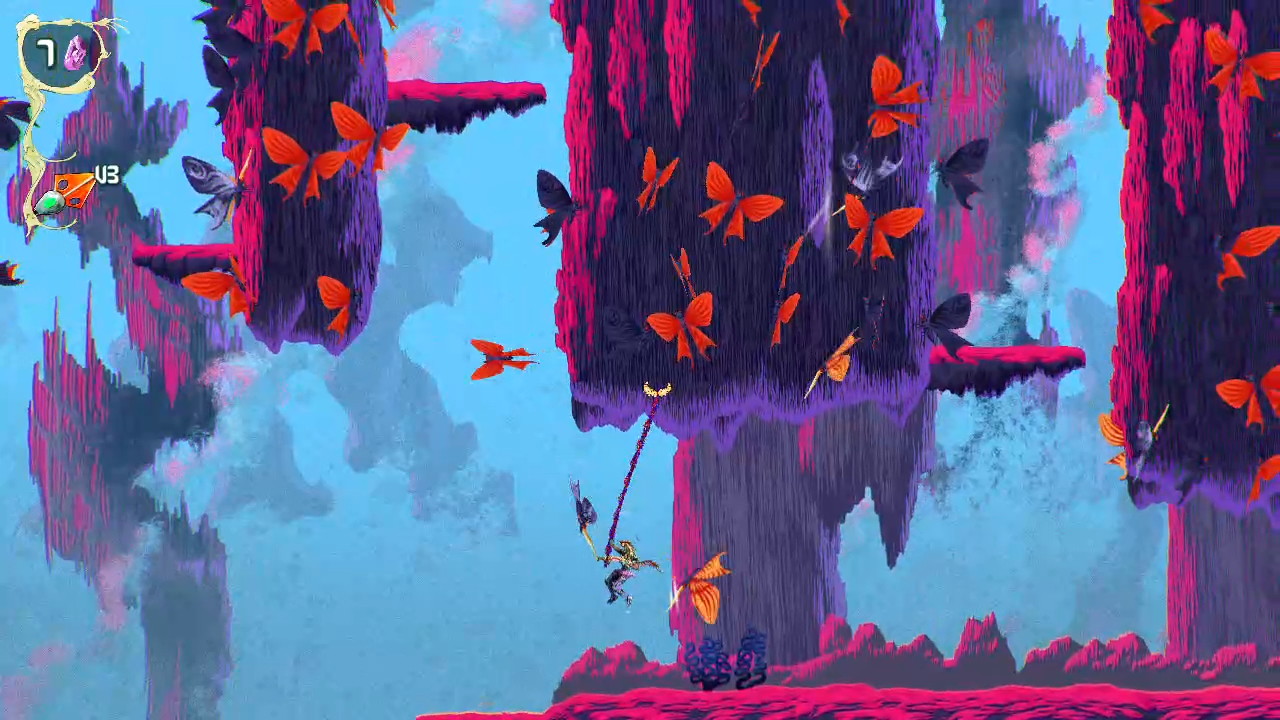
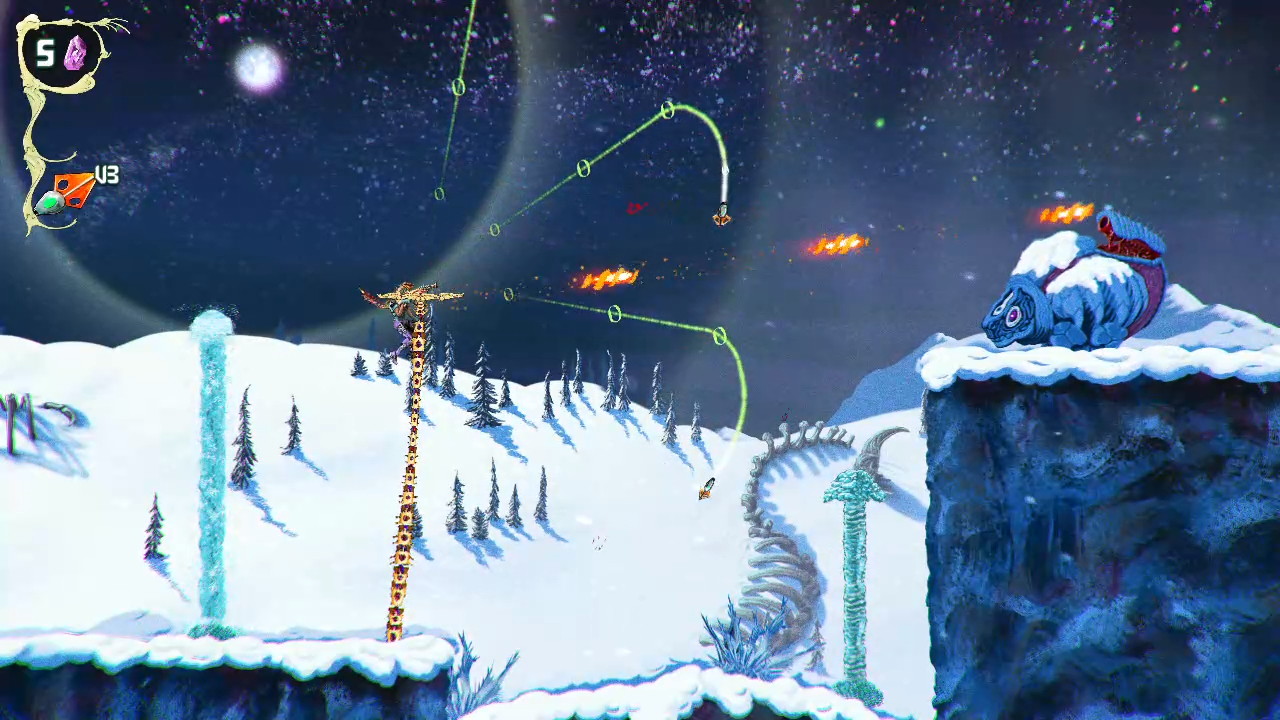
Levels are large, side scrolling spaces with a strong sense of verticality, and while it isn’t a full Metroidvania, it borrows just enough from that structure to keep exploration meaningful. You’re collecting Star Spores to progress through a set of branching stages, with optional routes leading to upgrades, minibosses, and secrets. Movement and combat are tightly connected, and both revolve around mastering the ChainStaff. You can throw it in an arc or launch it straight ahead, plant it into surfaces to create platforms, swing across gaps, block incoming attacks, and even reposition it mid use to create bridges or gain better angles in combat. It’s less of a weapon and more of an extension of your body, and once it clicks, the game opens up in a big way.
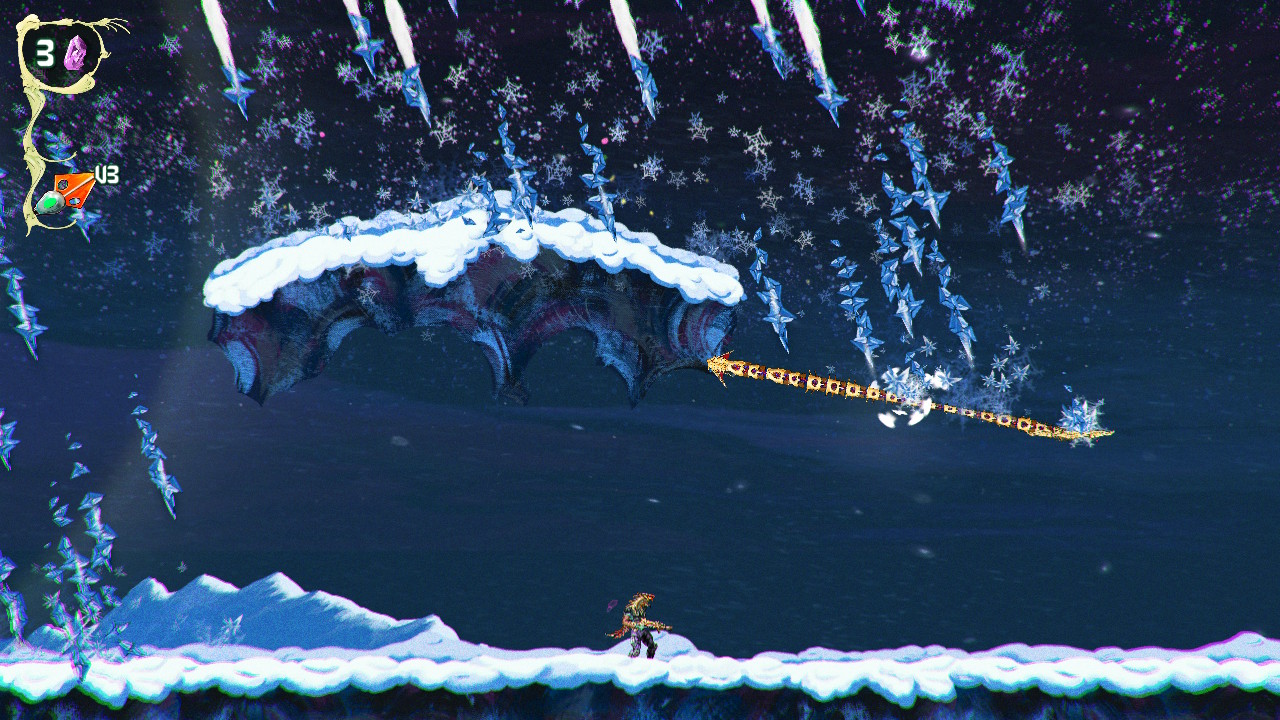
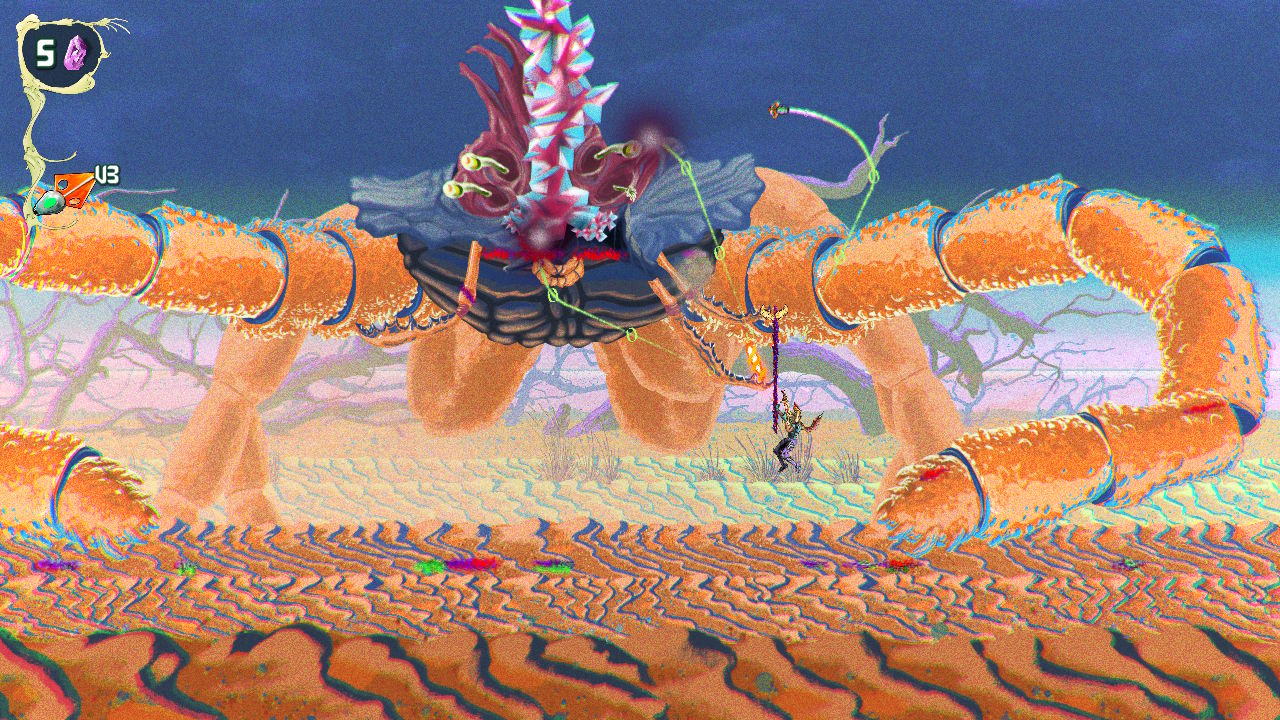
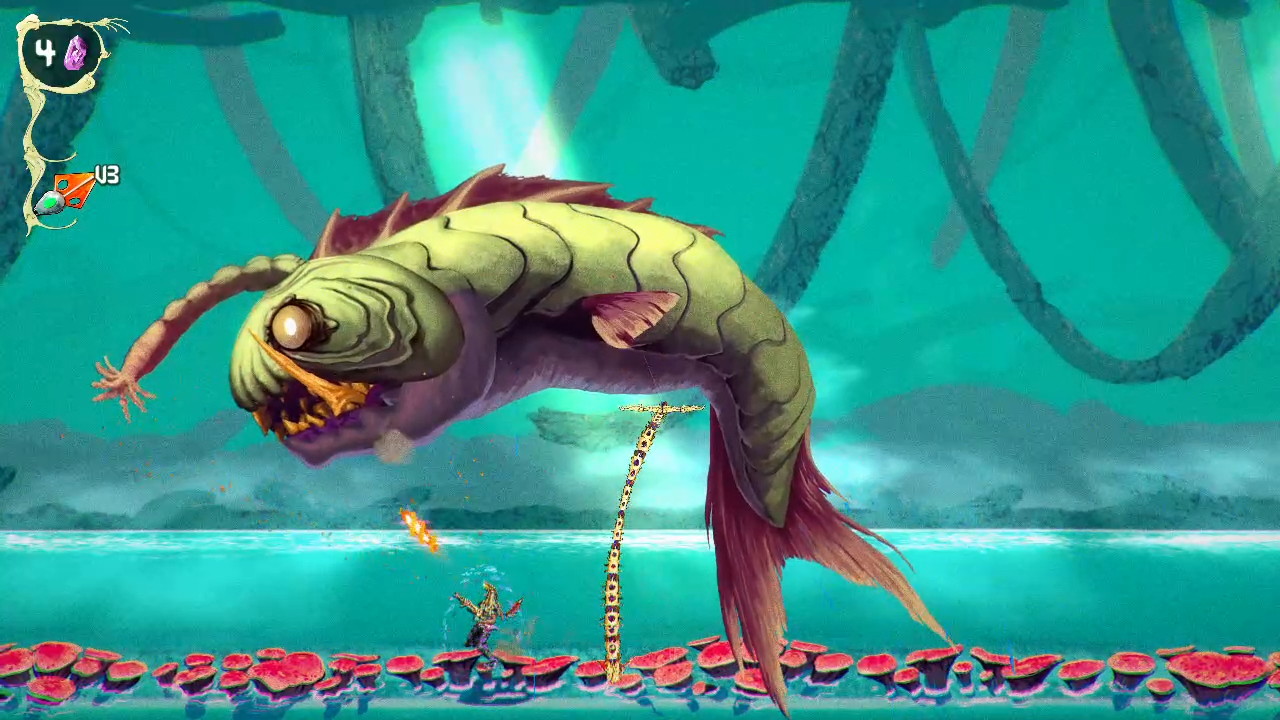
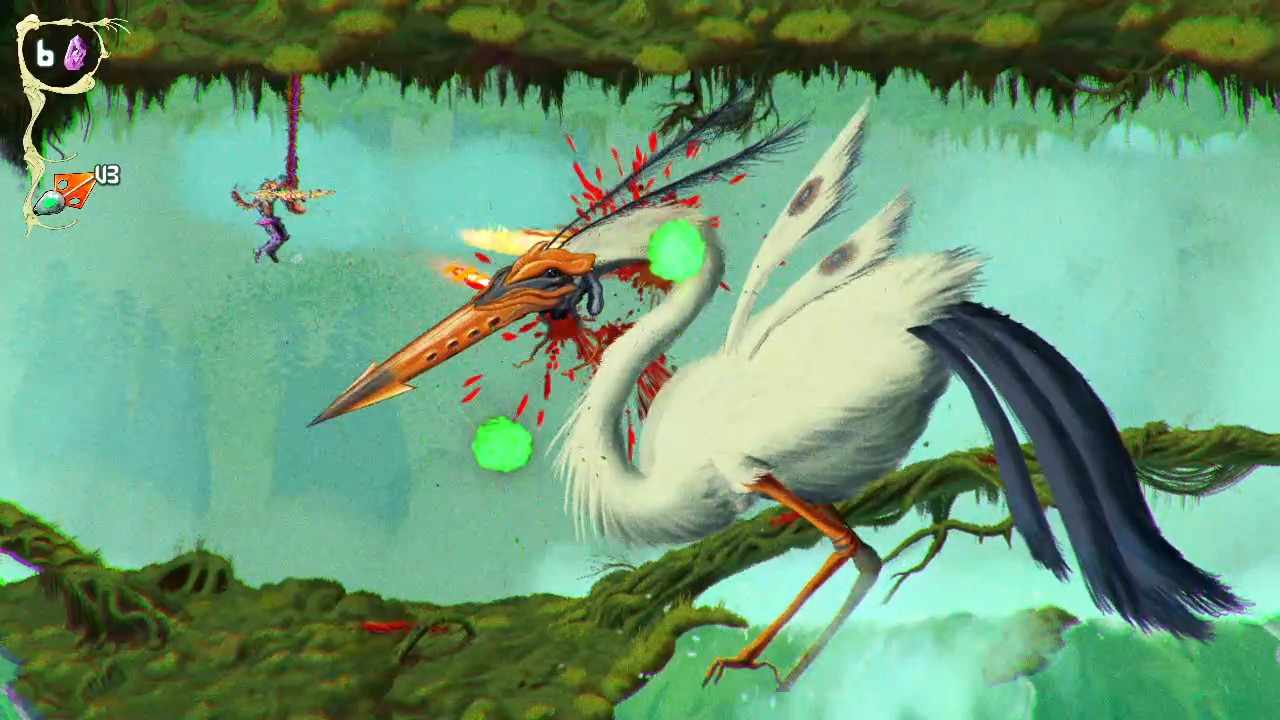
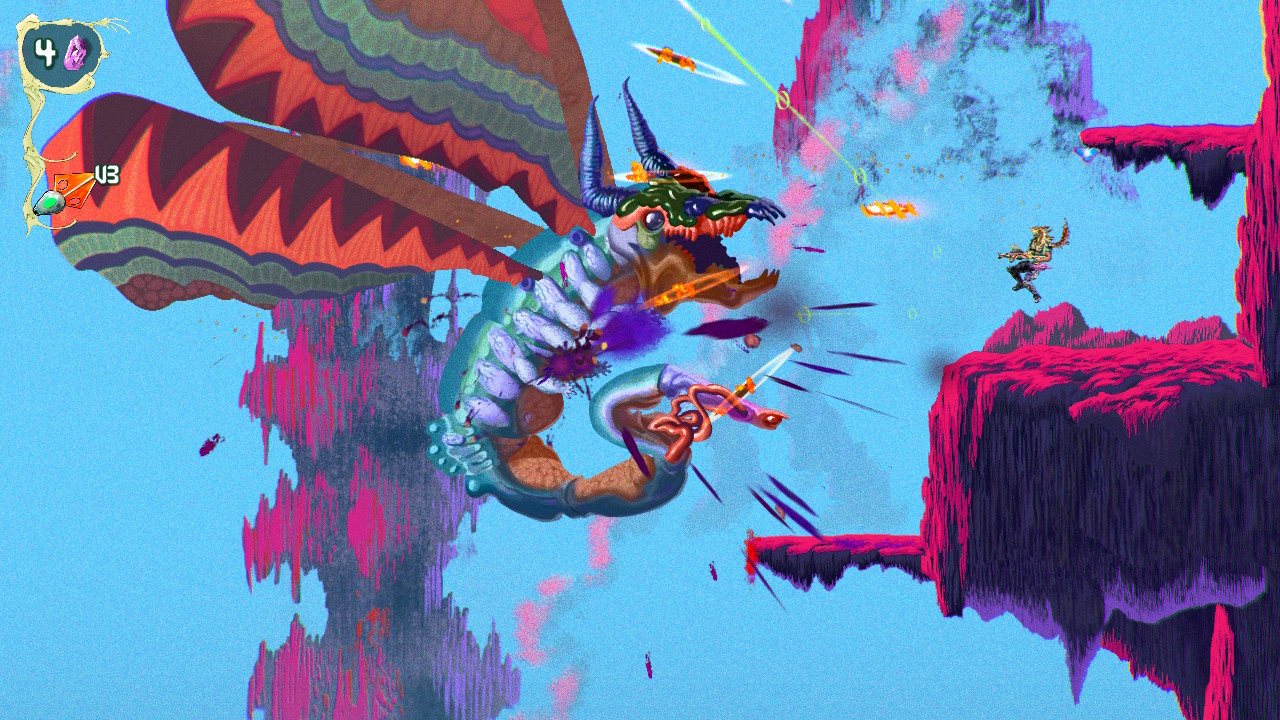
Combat itself is fast and varied, supported by a wide range of enemy types that force you to think about positioning and timing. Some enemies hang back and fire from a distance, others rush you, and some barely acknowledge your presence at all unless provoked. You do have a standard gun that fires in all directions, but it plays more of a supporting role. The real depth comes from how you use the ChainStaff in combination with your environment. Boss fights push this even further, often asking you to learn patterns and find specific ways to turn their attacks against them, whether that means blocking projectiles at the right time or using their movement to set up your own offense.
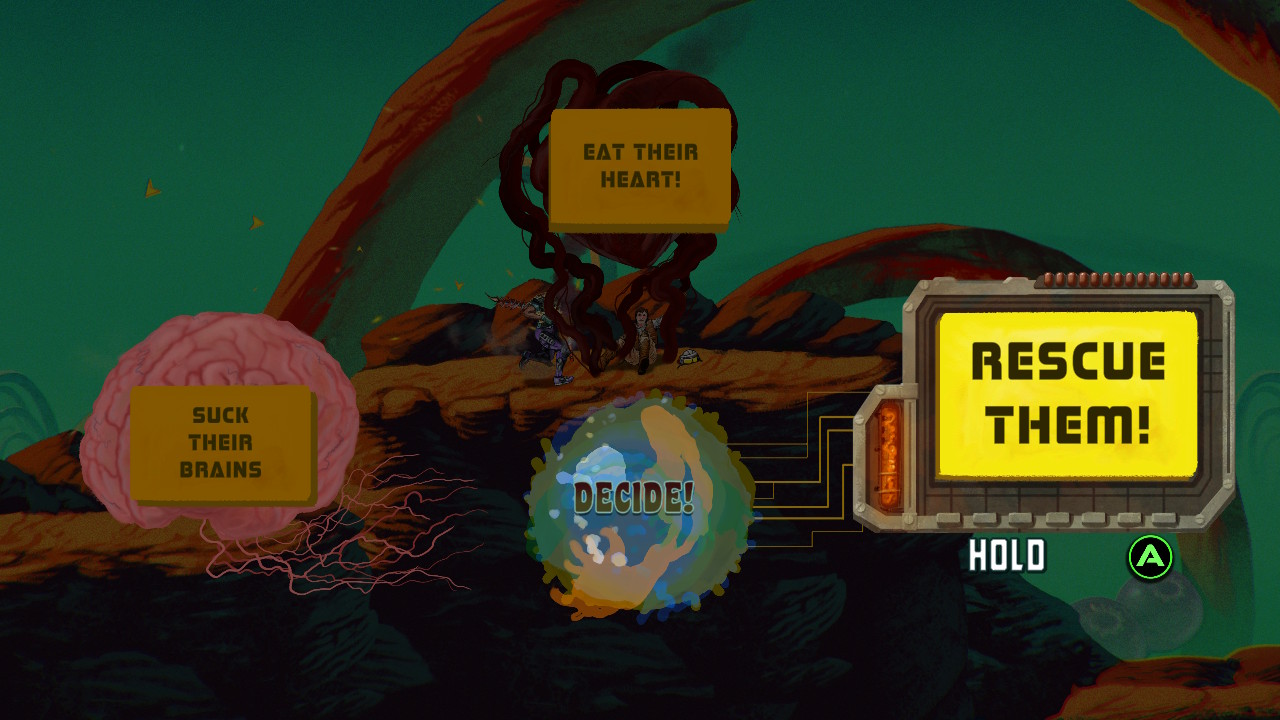
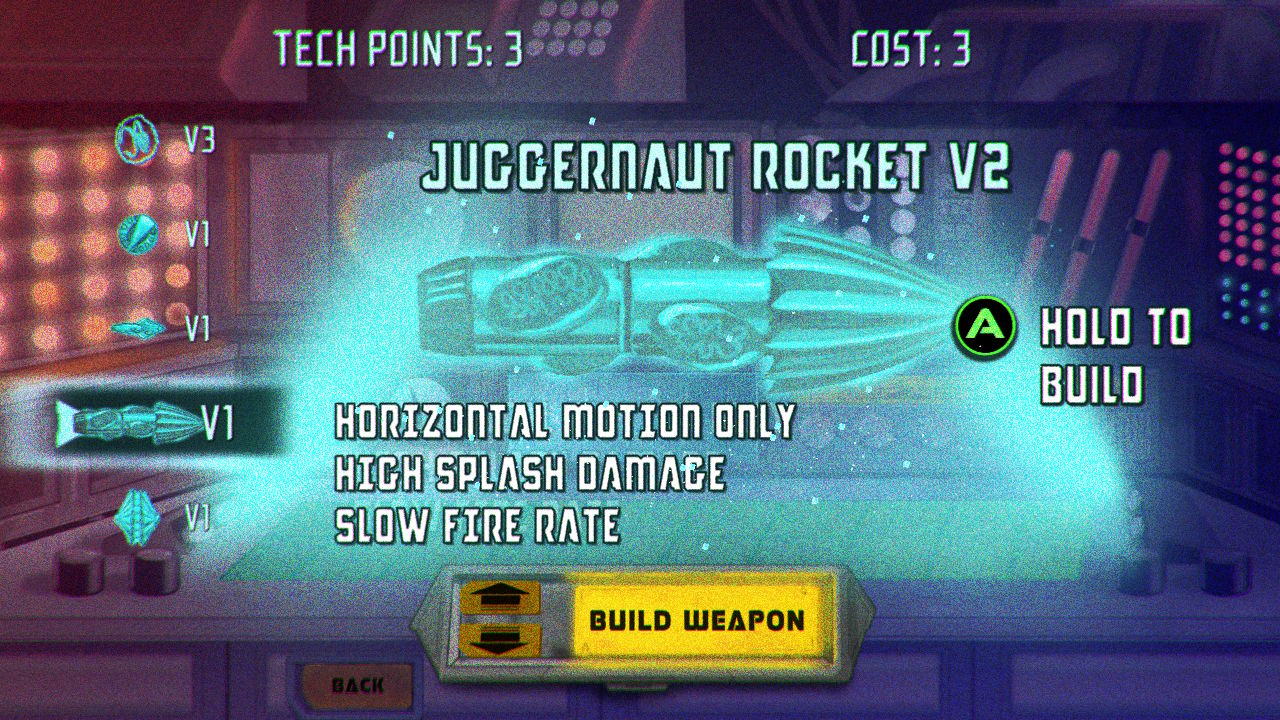
Progression adds another layer through meaningful choices. As you explore, you’ll find downed soldiers, and what you do with them matters. You can save them to earn tech points that improve your survivability and unlock secondary weapons like orbiting mines or homing shots, or you can harvest them, gaining power through a more aggressive path that upgrades your gun and shifts your trajectory. These decisions affect not just your abilities but also the story, leading to multiple endings that give the game replay value. On top of that, collecting ChainStaff fragments upgrades its core abilities like damage, reach, and charge speed, reinforcing how central it is to everything you do. New Game Plus lets you carry that growth forward, making it easy to revisit earlier areas and explore different outcomes.
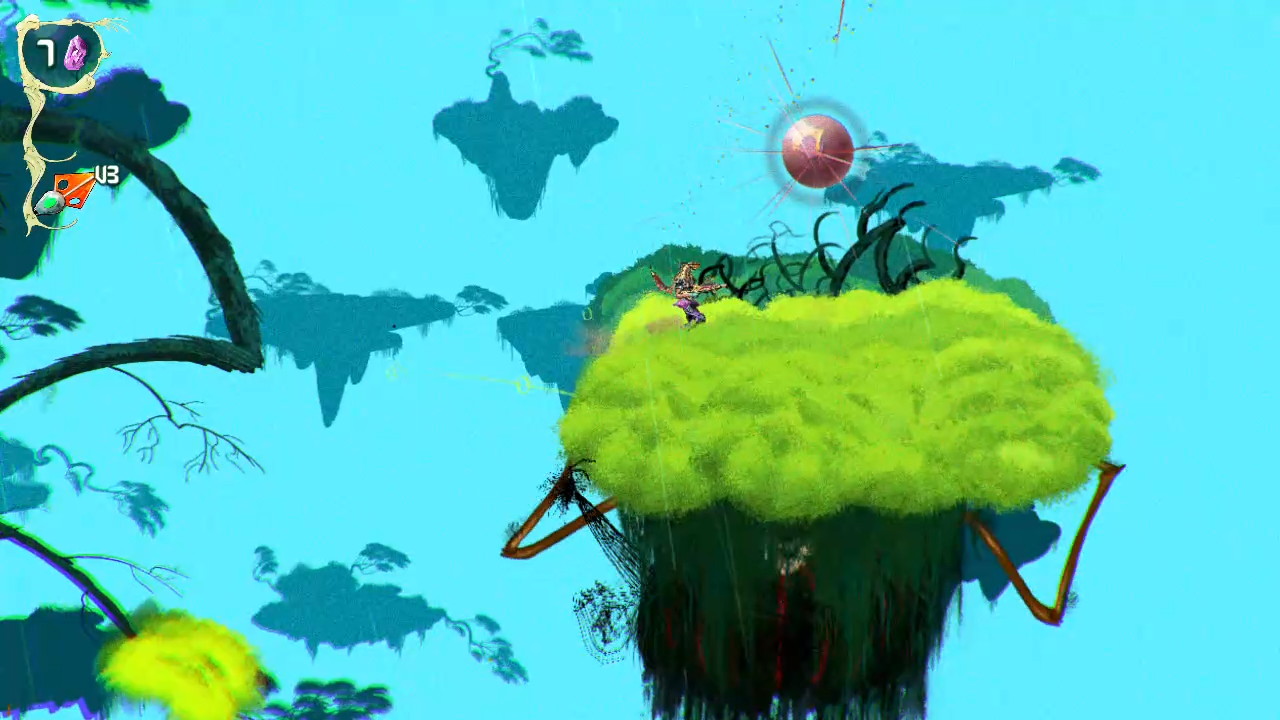
There are also ability upgrades in the form of parasites that expand how you move through the world. Some let you float across hazardous terrain, others give you offensive options like explosive attacks or mobility upgrades like a double jump. These additions tie back into the exploration loop, encouraging you to return to earlier levels with new tools and uncover paths you couldn’t reach before. Even with these elements, the game never feels overwhelming. It stays focused on momentum and experimentation, letting you approach situations in different ways without overcomplicating things.
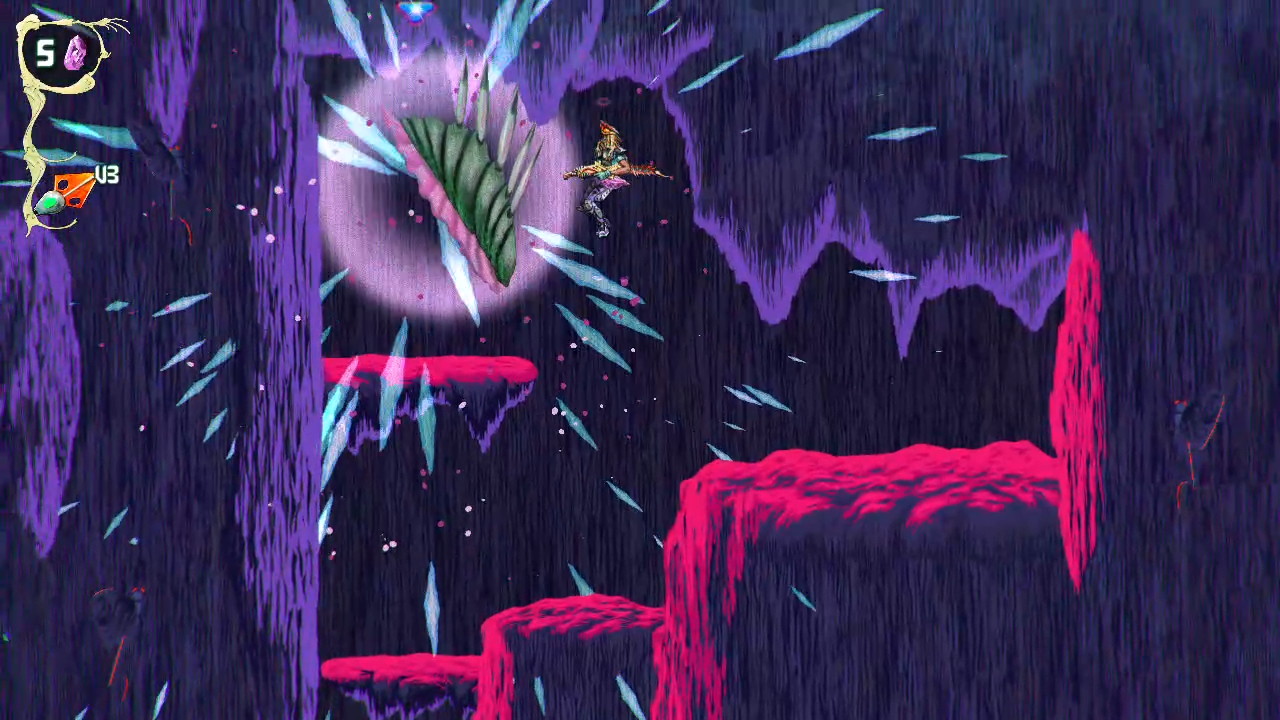

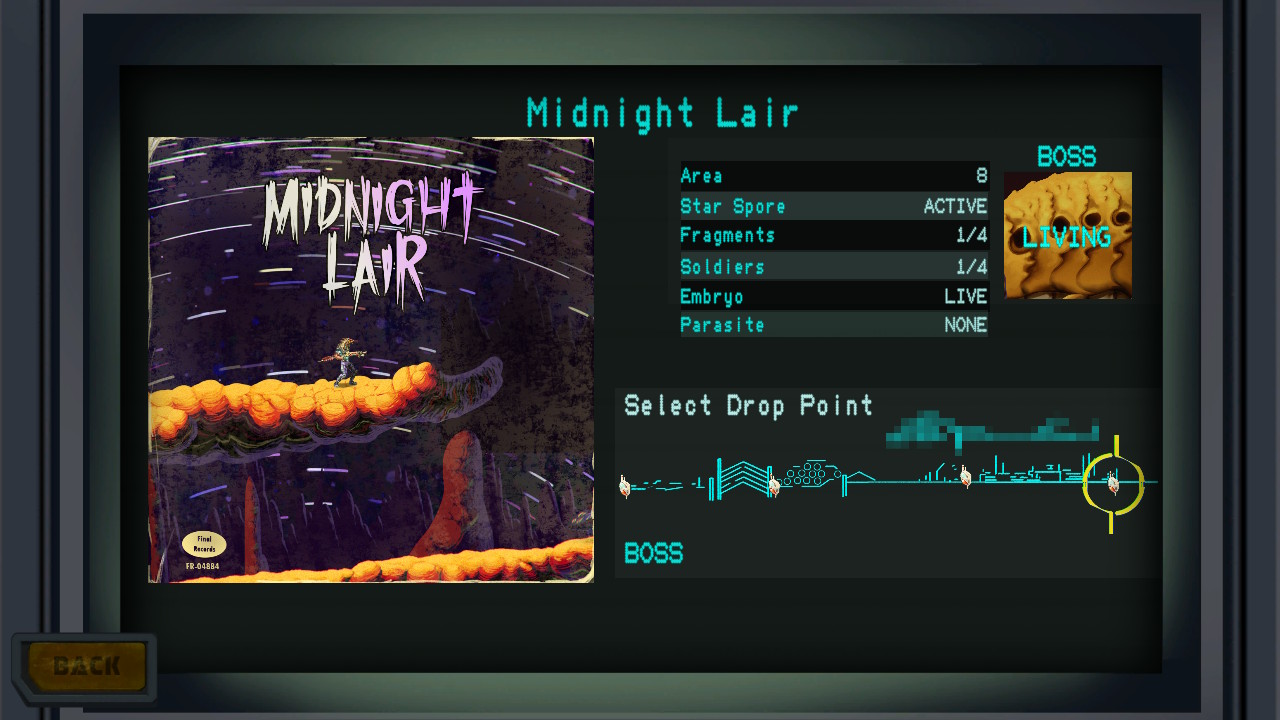
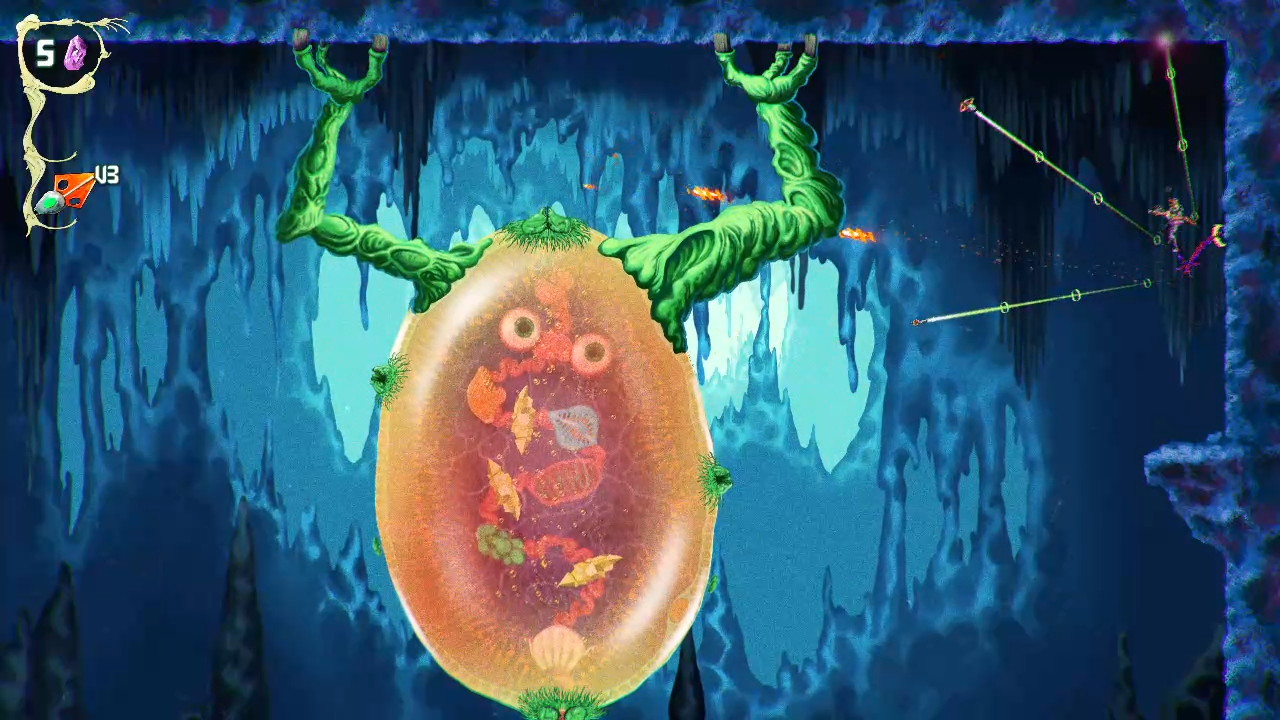
Visually, ChainStaff stands out in a big way. The art direction pulls heavily from 70s and 80s album cover aesthetics, and it shows in every environment and enemy design. You’ll move through icy caverns and swamp-like areas, but they’re layered with surreal details that make them feel completely alien. Creatures are grotesque and imaginative, ranging from armored beetle like enemies to floating monstrosities that barely resemble anything familiar. Bosses push that even further with designs that are equal parts unsettling and impressive. The game doesn’t hold back on gore either, and while it can get intense, it fits the tone. Cutscenes use a motion comic style that feels simple but works well with the overall presentation.
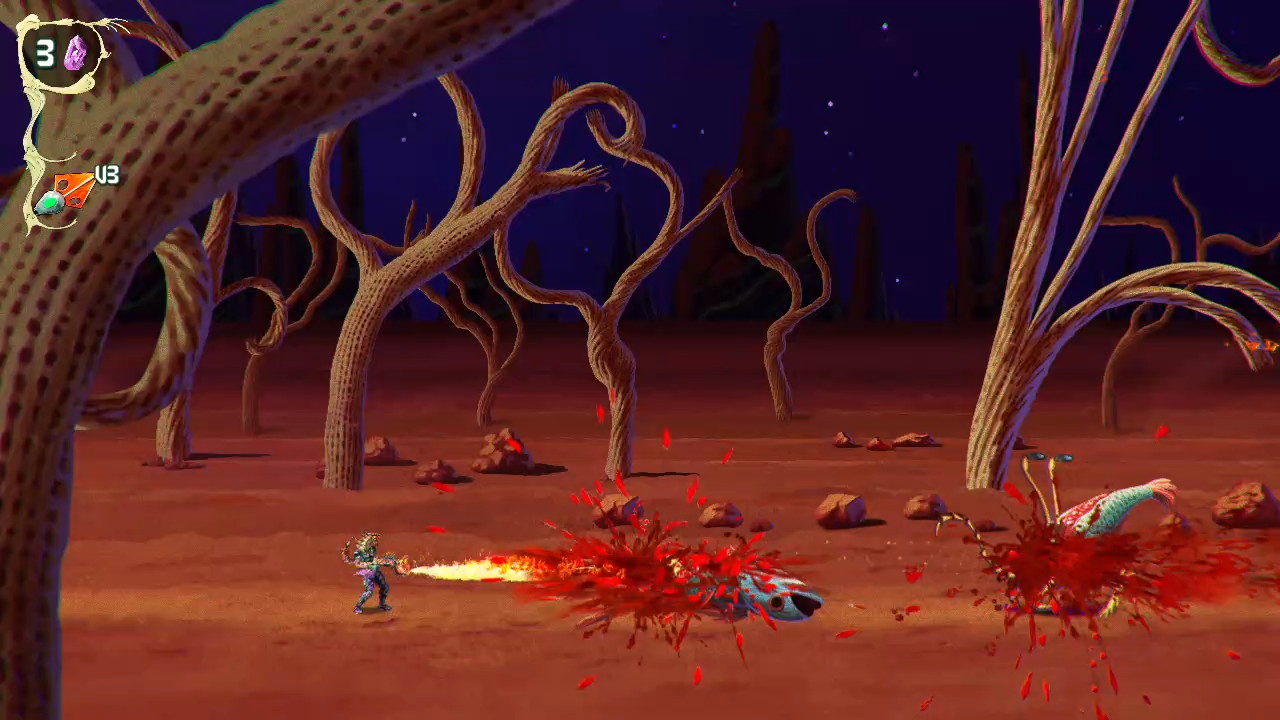
The audio supports the action without completely stealing the spotlight. The soundtrack leans into a rock driven style that keeps the energy up during combat and exploration, and while it doesn’t always stand out as much as the visuals, it fits the game’s tone nicely. Sound effects work just as well, especially in combat, where impacts and enemy reactions have a satisfying weight to them. There’s a certain crunch to the way enemies break apart to expose their weak spots that reinforces how physical everything feels.
That said, I did run into a decent amount of issues. There are some technical hiccups that can interrupt the flow. Crashes can happen, particularly around extraction points at the end of levels, which can be frustrating even if your progress is saved. There are also occasional oddities like invisible walls interfering with movement or bosses not triggering their next phase correctly, requiring a restart. These moments don’t completely derail the experience, but they do stand out in a game that otherwise feels so well put together.
Final Thoughts?
ChainStaff is the kind of game that sticks with you because of how confidently it commits to its ideas. It takes a single mechanic and builds an entire experience around it without losing momentum or focus. The combination of strange storytelling, flexible gameplay, and striking visuals makes it feel distinct in a crowded genre. Even with some rough edges, there’s a lot here to enjoy, especially if you like mastering systems and finding your own rhythm within them. It’s also easy to see the appeal for speedrunning with how fluid movement can become. If it catches your interest even a little, it’s worth stepping into, because there’s not much else that plays quite like it.
About the Author

Nay Clark Gaming holds a special place in my heart and I never stop talking about video games. I really love all types of games and have an interest in games that have complicated stories and lore because I enjoy untangling the mystery of it all. When I'm not gaming, I unsuccessfully try to control three amazing and incredibly bright kids.
Related Posts
Rhythm Heaven Groove Review (Switch) →

Crocs Levels Up With New Super Mario Collection, Launching 15 July →

Ball x Pit: The Shadow Update Review (Switch) →