

City Tales – Medieval Era Review (PC)
Summary: City Tales - Medieval Era 1.0 steps into familiar city-builder territory, placing you in the role of a newly appointed ruler.
4
Cosy Kingdom
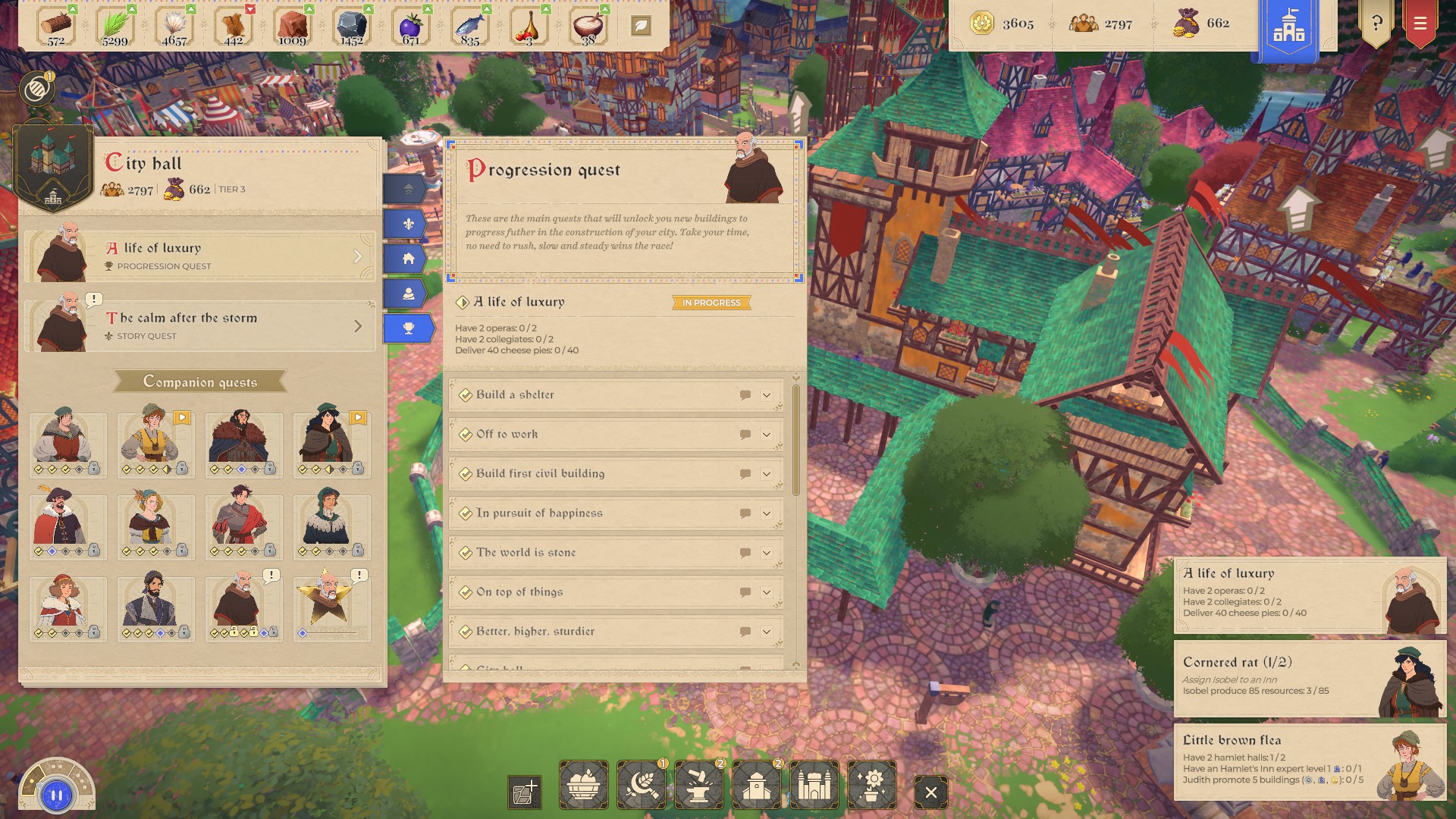
Right out of the gate, City Tales has you naming the kingdom you’ve inherited from your father, Duke Leon, and choosing whether you’ll rule as Lord, Lady, or Liege. You’re then introduced to your first companions, Mischa, Judith, Alberic, Isobel, Eike, and Rowena, each with their own backstory. As the story unfolds, more companions join your cause, and their personal quests run alongside the main storyline from your advisor as you work to build your new civilisation.
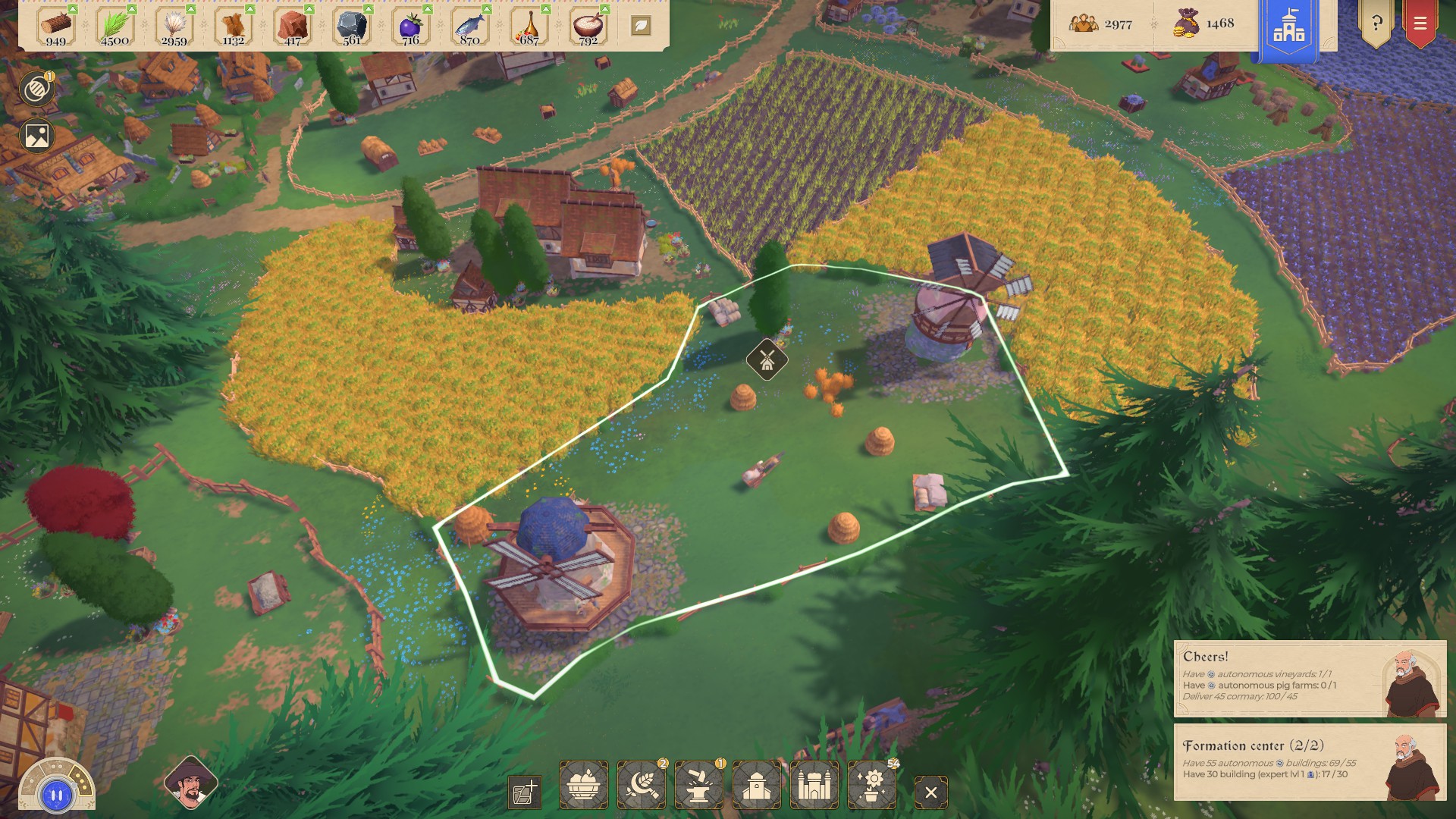
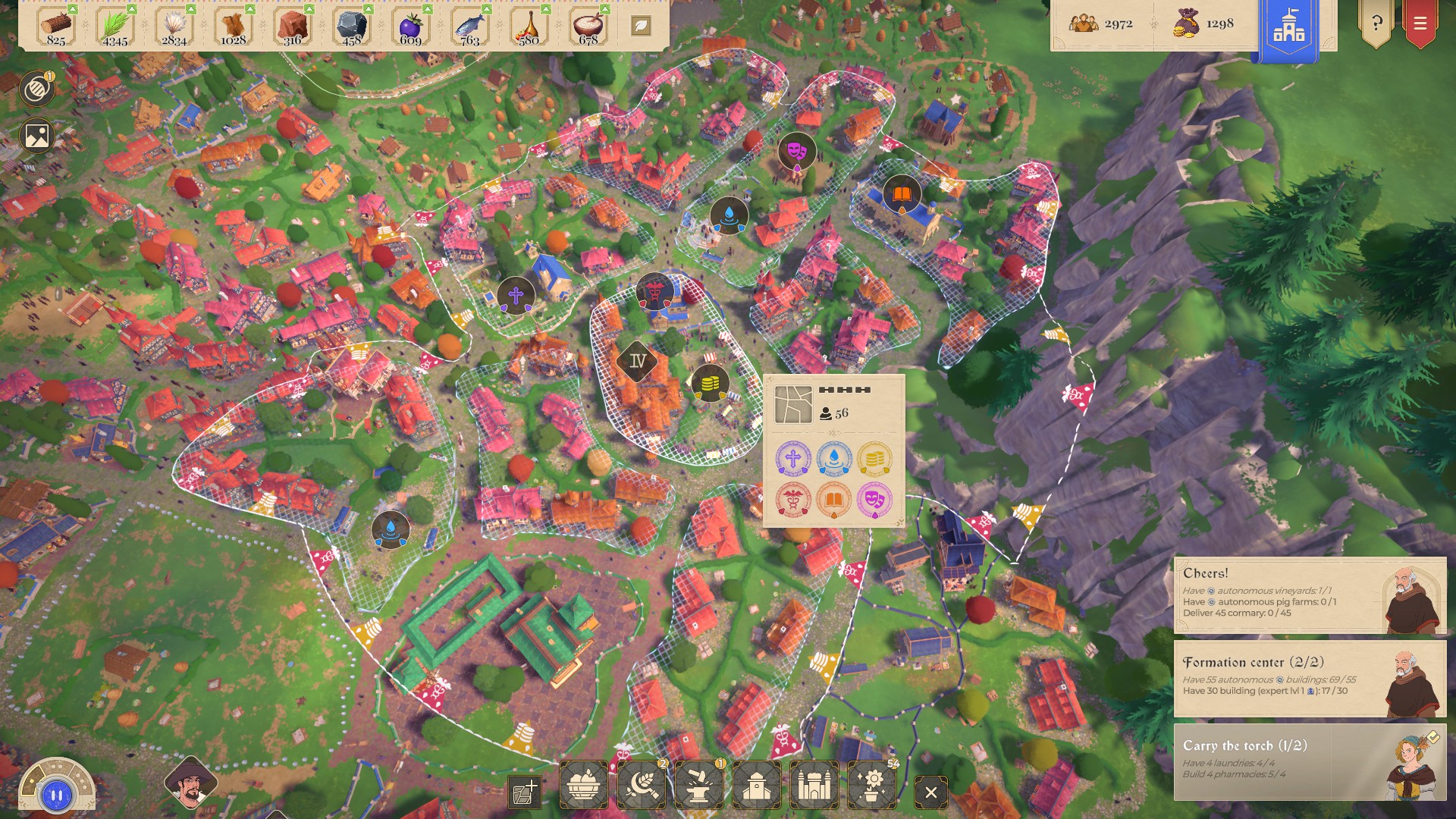
City Tales follows the typical city-builder structure: start small, learn the systems, expand your influence, rinse and repeat. However, instead of micromanaging individual buildings, you place residential districts that automatically populate with homes. To expand your population and upgrade these new homes, you need to meet their requirements in the form of civil buildings, which include essential amenities like fresh water, pharmacies, elementary schools, and more. These amenities have upgrades of their own, and you’ll need higher-tier buildings to have higher-tier homes. What makes this mechanic more interesting is that each district can accommodate only two civil buildings. To ensure every district benefits from a civil building, you need to be strategic about which districts you place each one in so that other districts are within range of its amenities.
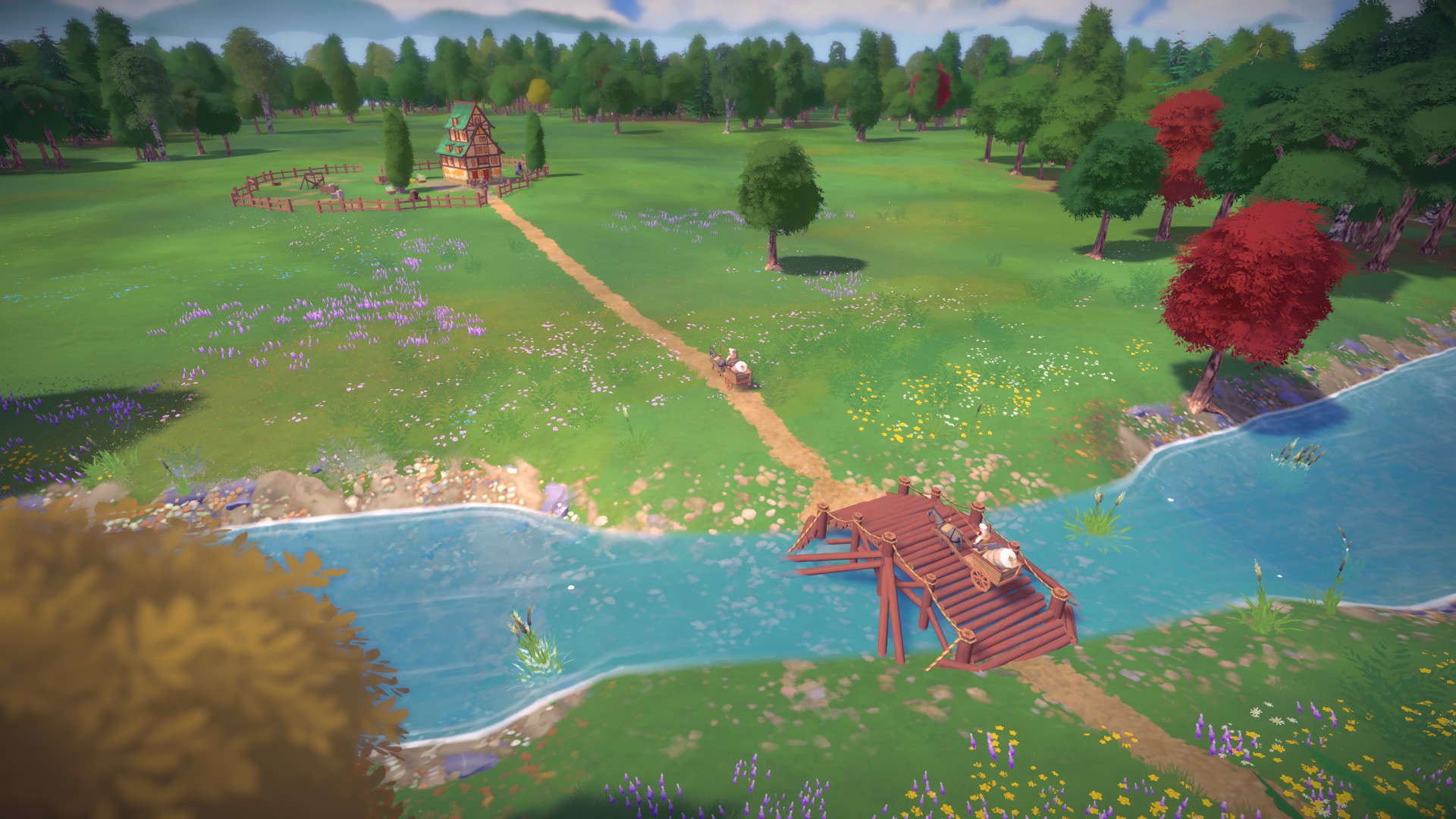
Moreover, resource-gathering structures and production buildings add another layer to consider. Resource-gathering structures like clay pits and iron mines are to be placed outside districts close to areas rich in that resource, while production buildings like tailor shops and carpentry workshops replace homes within districts. Each production building needs one companion assigned to it initially, acting as a manager to get operations running. These buildings become autonomous over time so that you can assign your companions to other tasks, but keeping your companion stationed there longer improves building efficiency and generates prestige. As companions work, they level up skills such as gathering, craftsmanship, farming, and others. Skills cap at level eight, and higher proficiency means buildings achieve autonomy faster, freeing up your companions for other tasks quicker.
As you progress and gain more inhabitants, you can build hamlets, allowing you to expand the kingdom and access resources that you couldn’t previously. A companion is required to be situated at a hamlet until you upgrade the hamlet building, after which the companion can be freed up once again. The skills possessed by the companion chosen for a hamlet directly influence their area, increasing production and prestige for all production buildings inside the hamlet, but only while they are situated there.
All these systems are closely tied to the game’s economy, which is where things start to feel less polished. One area that feels rough is the financial system. While the game explains that maximising production lines and upgrading to higher-tier homes will generate income, it is not always obvious when that money actually arrives. While playing, there were long stretches spent waiting for funds to roll in, with little indication of when income would increase, even after upgrading a significant number of houses.
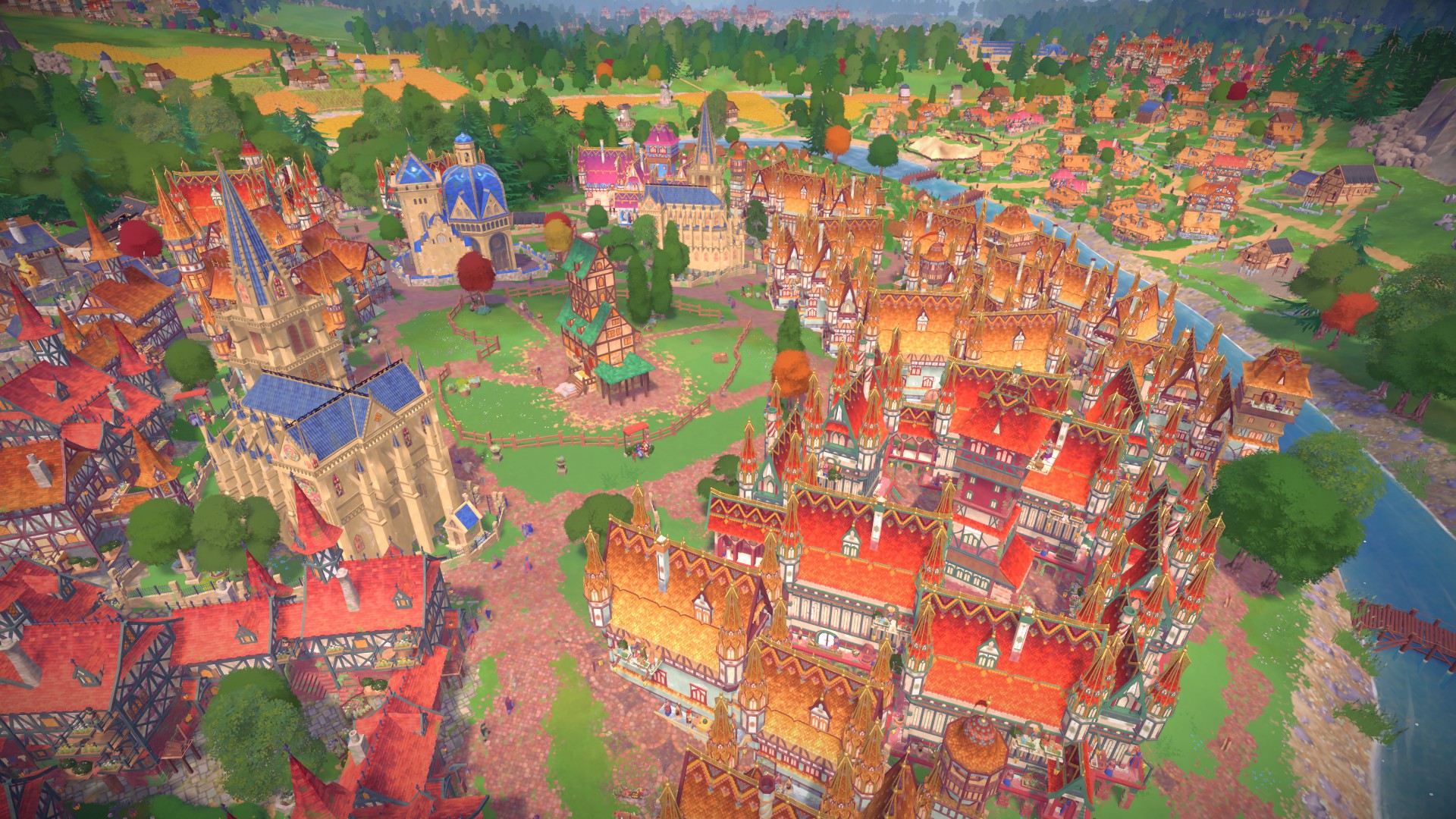
Even with that confusion around money, City Tales is still an enjoyable place to spend time, largely thanks to how it looks. The visuals are genuinely pleasant to look at, especially once you start unlocking higher-level buildings. These are packed with small details, like winding villas with bay windows, often surrounded by colourful gardens. Flower-filled meadows and gently flowing streams that make everything feel calm and lived in. It has the kind of storybook art style that makes you want to zoom in and just watch the game tick along for a while.
The soundtrack also deserves special recognition here. Lutes, flutes, and soft vocals from Iris Roche weave together and shift seamlessly with your kingdom’s growth. The music responds well to gameplay, swelling during moments of expansion and achievement, then settling into contemplative arrangements during quieter building phases. Composer Benoît Vanhoffelen has crafted a score that feels authentically medieval.
City Tales embraces a slower, cosier approach to city building. The district system rewards strategic placement rather than constant micromanagement, and the companions add depth to the story and gameplay mechanics. Combined with a soundtrack that quietly adapts to your progress, the game creates a cohesive medieval atmosphere that is easy to settle into. For players looking for a city builder with a rewarding gameplay loop that doesn’t require constant micromanagement, City Tales offers a satisfying alternative.
About the Author

Jade Darton Jade is a web developer and Computer Science BSc student from Suffolk, UK with a passion for games and writing about them.
Related Posts

PC Game Reviews →

Vultures – Scavengers of Death PC Review →

Voidling Bound PC Review →