Ricardo Delgado Interview: VAMPYRE: A Costa Rican Folktale
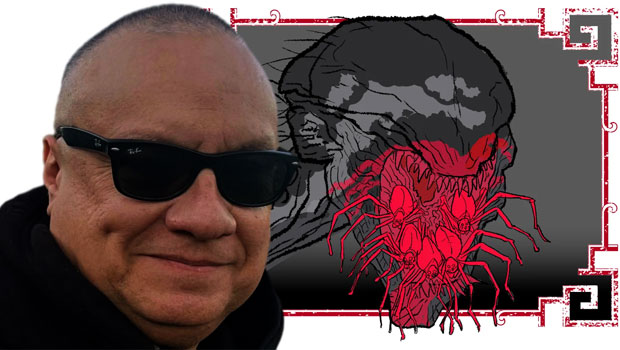
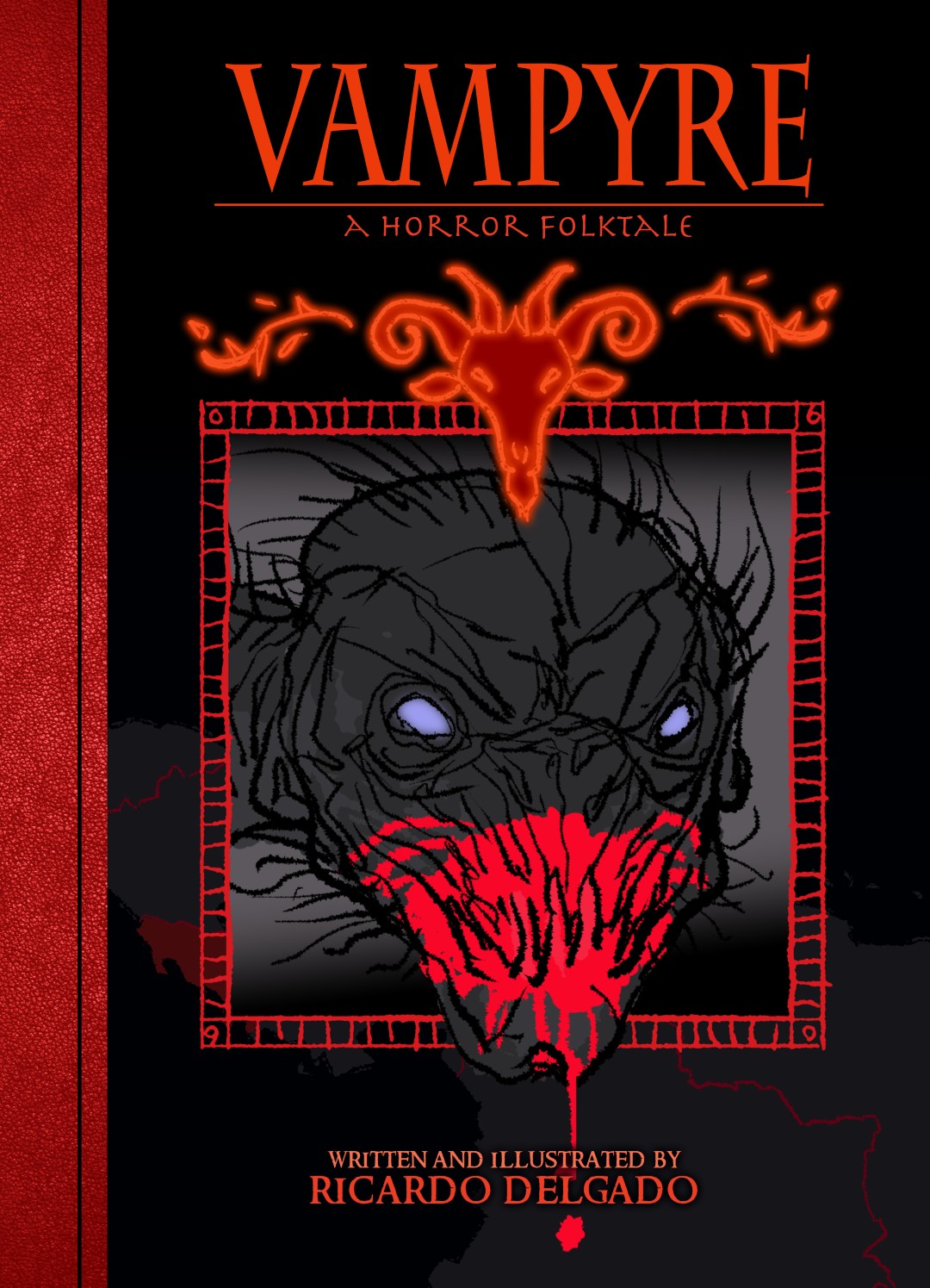
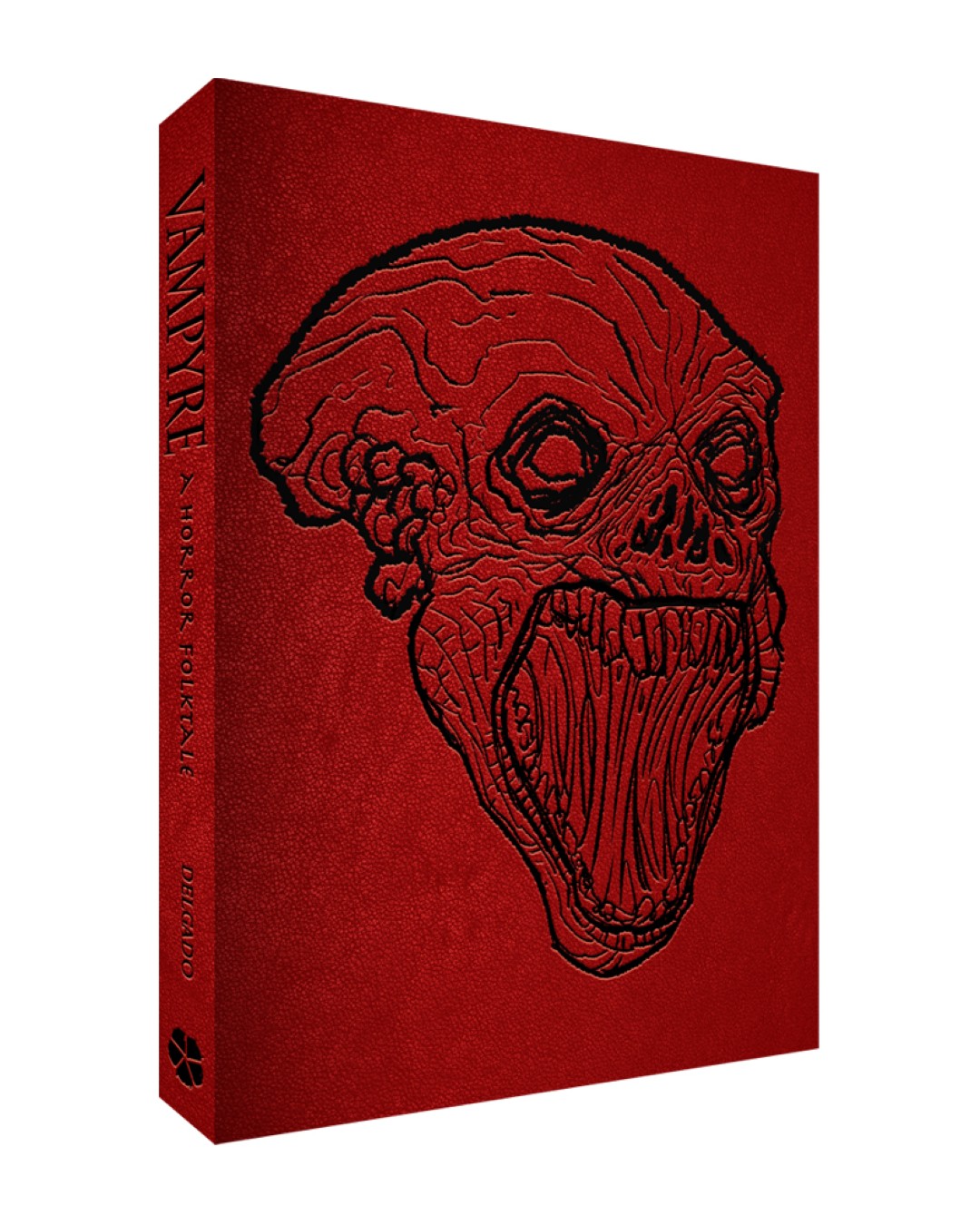
We catch up with Ricardo Delgado, the Eisner Award‑winning creator and one of Hollywood’s most influential concept designers who is teaming with Clover Press for VAMPYRE: A Costa Rican Folktale, a bilingual illustrated novel that blends his family history with classic horror. Known for shaping films like Apollo 13, Avatar: The Last Airbender, Men in Black, and Wall‑E, Delgado expands the world of Dracula of Transylvania with a haunting new tale set in 1940s Costa Rica, brought to life through lavish artwork, historical maps, and striking creature designs.
Welcome to Impulse Gamer! So, what inspired you to blend autobiography with classic horror in VAMPYRE: A Costa Rican Folktale, and how did your parents’ stories shape the emotional core of the book?
I have memories of my mom telling us kids what would be considered ghost stories or folk‑tale parables about Costa Rica, and more specifically, her childhood. I was really young and impressionable, and all of her stories took place in her youth and her motherland, so the supernatural and the historical naturally blended together in my mind as I heard her talk about La Llorona (The Crying Lady) and other supernatural characters that mixed seamlessly with her descriptions of our ancestral hometown of Alajuela in Costa Rica. And I was also a weird little kid who constantly read monster magazines like FAMOUS MONSTERS OF FILMLAND and horror comic books like WEREWOLF BY NIGHT and TOMB OF DRACULA, as well as feverishly collecting the classic Aurora Monster model kits—so it all got mixed together into a big bag of Kid Ricardo’s Monster Bag of Memories, lol!
Even though I spent most of my youth in Los Angeles, whenever I went back to Costa Rica it felt like a special place filled with magic, folklore, and religion. I’m not a religious guy—and even back then, not so much—but I had a really active imagination. So when I was told that La Carreta Sin Bueyes (the Cart Without Oxen) would get me if I didn’t go to bed on time, I totally believed it.
The historical aspect of this story comes from my eagerness to capture my parents’ stories of their youth for my children, so they can understand that there was a time before the internet, before eBay, before cell phones—and that during that time, many things happened in their ancestral town that they should remain aware of.
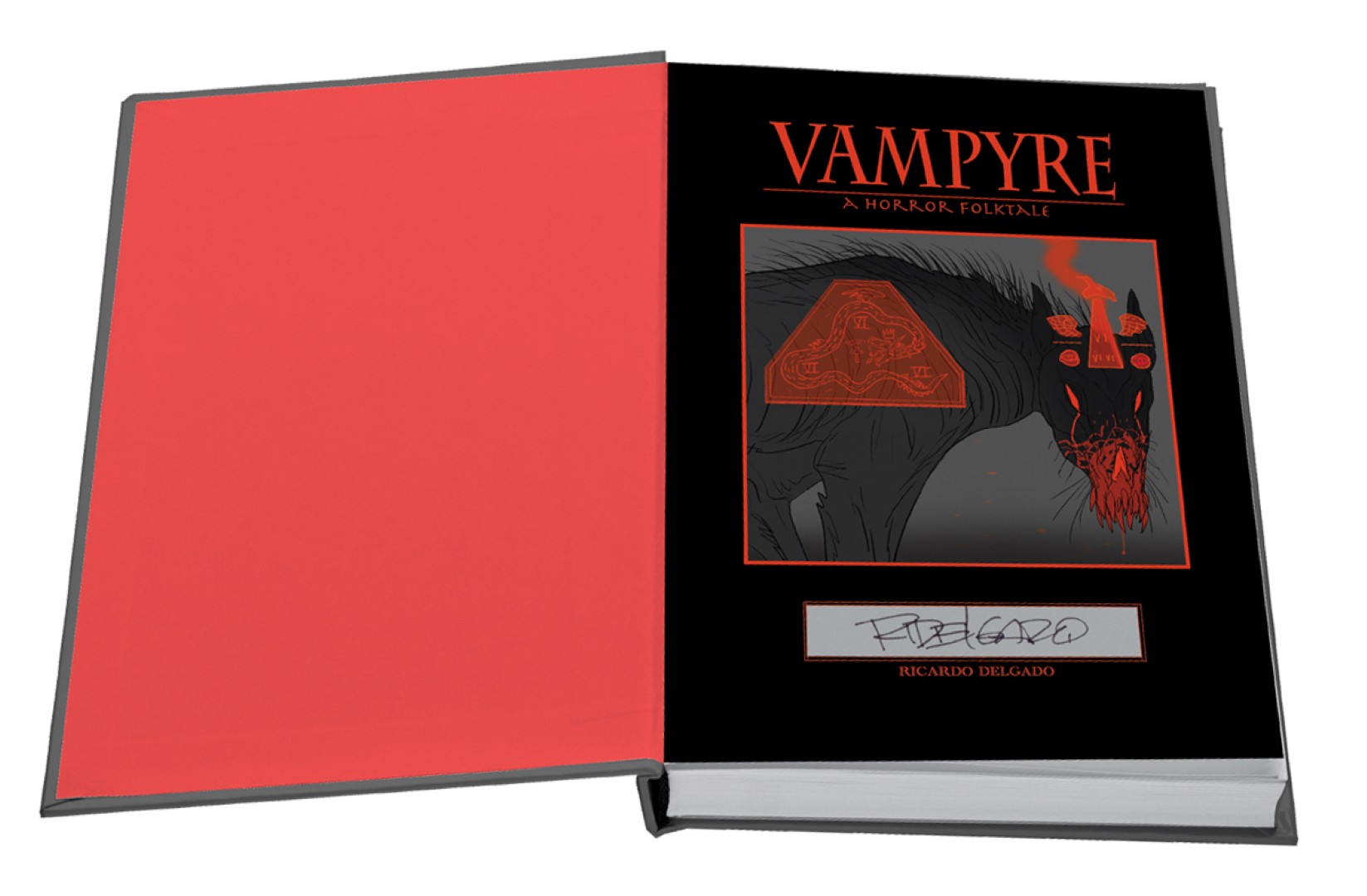
How did returning to the world of DRACULA OF TRANSYLVANIA influence the tone, mythology, or visual language of this new project?
It’s not directly stated in the story, but in my mind, this is part of the DRACULA OF TRANSYLVANIA universe. One of the informal rules of the traditional ghost story is that part of the tale remains shrouded in mystery, and that’s the case with the supernatural aspect of VAMPYRE. It’s the only part of the book that is unexplained and unresolved. Everything else—the history, politics, religion, and cultural aspects—is examined and explained.
It means a lot to me that the story takes place during Holy Week in Costa Rica, which is a very big deal throughout the country. I wanted to explore the cultural roots and customs of that time in Costa Rican history to show how much of the ritual remains and how much has changed. And as a story device, a vampire is easy to toss into any narrative to raise the dramatic stakes—pardon the pun :)
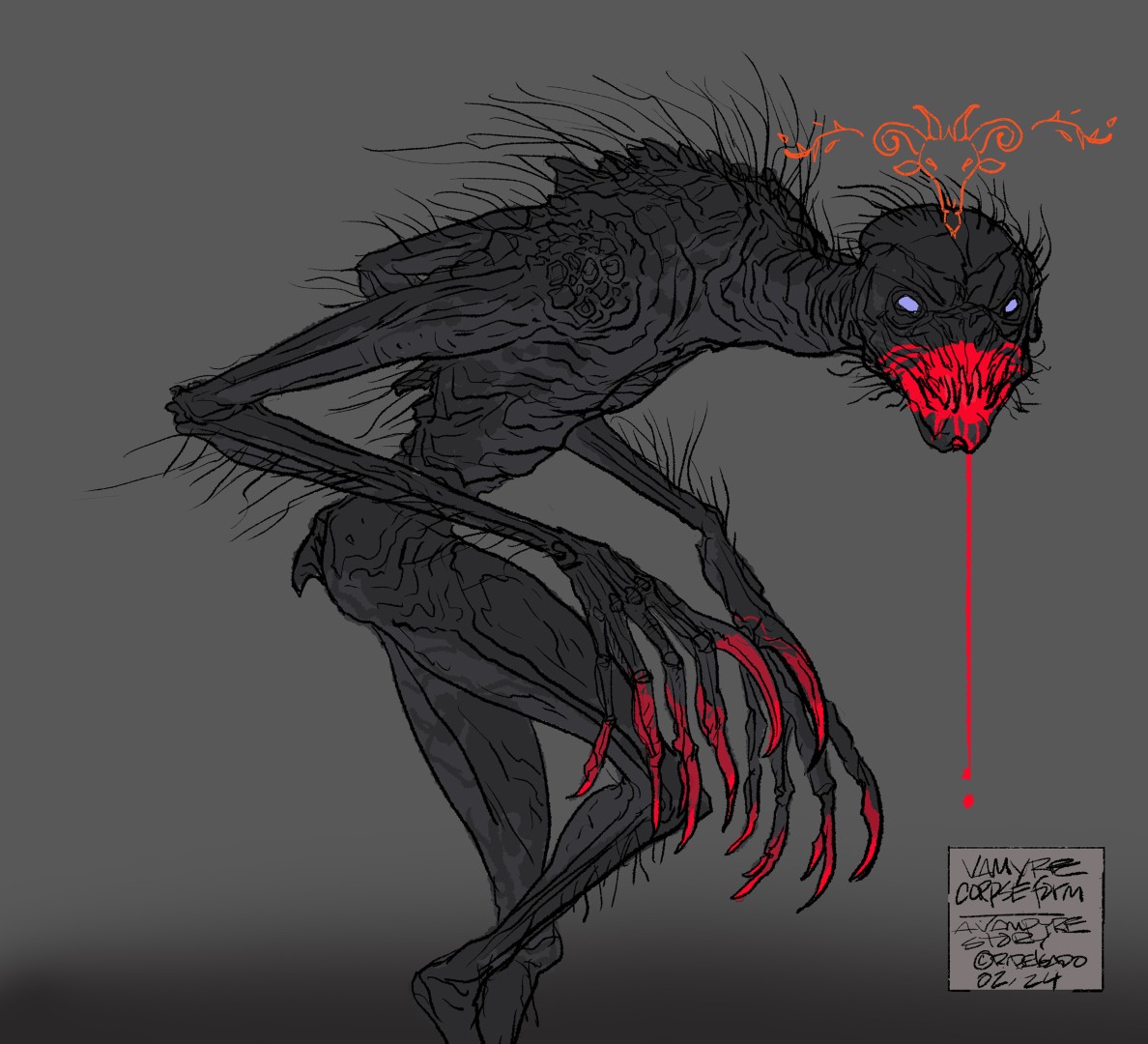
Your creature designs are a major draw. What was the most challenging or surprising aspect of creating a shapeshifting monster rooted in Costa Rican folklore?
This was a big bunch of fun because I wanted to highlight the process movie studios go through when developing creature or character designs for a major motion picture or animated feature. In this process, multiple versions are created and shown to the director and producers, who then make decisions and run them up the flagpole to the studio, which may or may not have a say in the final direction.
I wanted this vampire—much like my version of Dracula—to be a shapeshifter capable of many different forms throughout the story. One of the cool things about my book‑project process is that I don’t have to worry about a VFX budget, which can be the difference between a creature looking really effective and real versus less than believable. Modern audiences are smart and can detect flaws even if they can’t articulate them beyond “that doesn’t look real.”
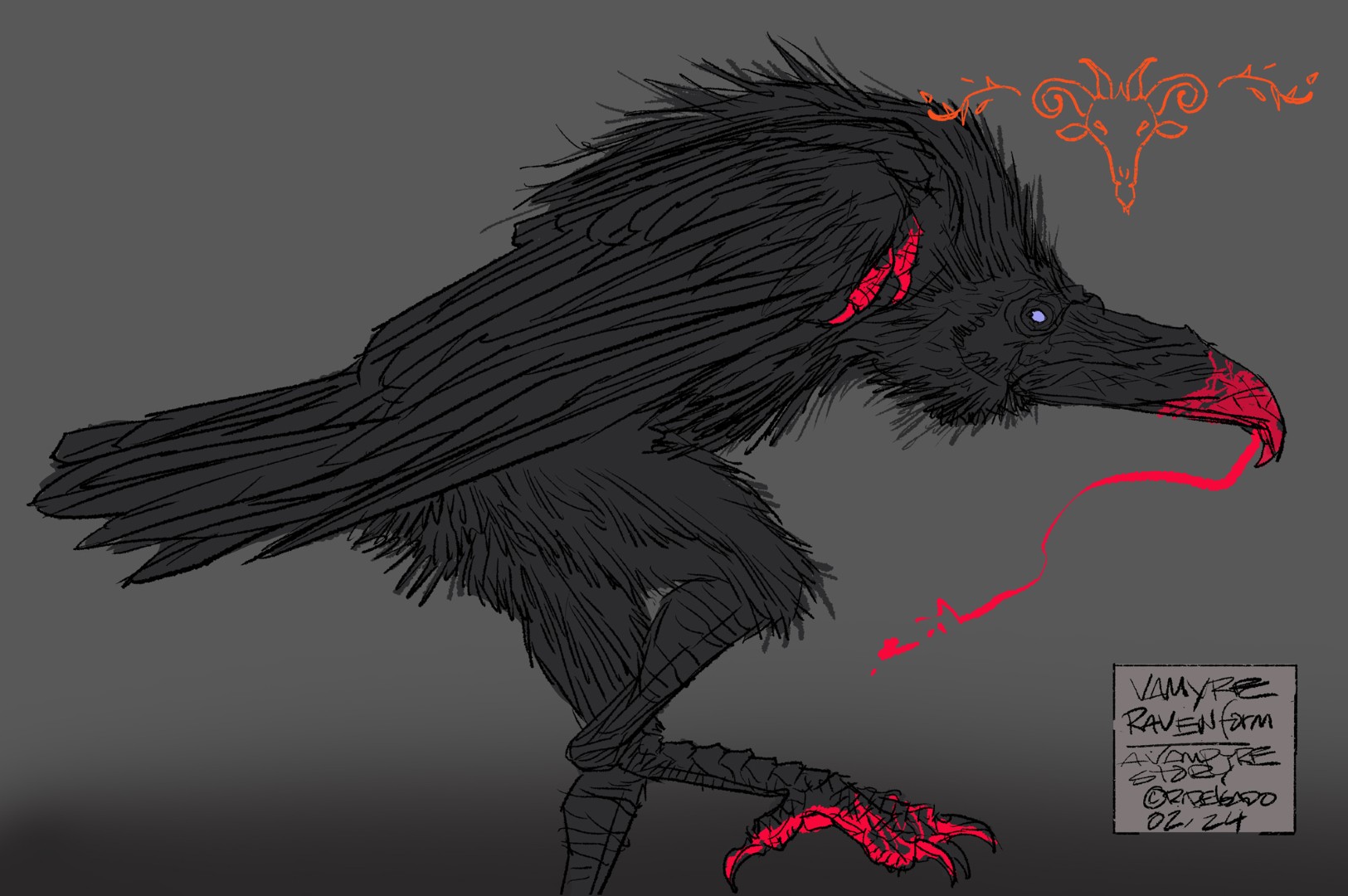
At one point, it turns into a bird. I wanted to use a raven, but they’re not indigenous to Costa Rica, so I ended up referring to a Teñate, which is a lithe black bird—sort of like a roadrunner with the capability of flight. There’s also a cat‑dog creature the vampire transforms into, and for that I looked at the jaguarundi, a very rare, nearly mythical Costa Rican big cat that looks more like a Star Wars species than anything else!
You’ve worked on iconic films like WALL‑E, The Incredibles, and Men in Black. How did your decades in Hollywood visual development inform the storytelling and world‑building in VAMPYRE?
Good question! Sometimes I would design based on what I had already written, and other times I went my own way. For example, on THE INCREDIBLES I did a lot of design development on the Omnidroid, the big robot in the story. I used everything from old tools in my garage to insects and arachnids for ideas and inspiration. I love that final Omnidroid design—it’s so simple and pure—yet I can still see the roots of my early thoughts in some of the attachments the ’bot uses during its fight with Frozone and the Parr family.
For MEN IN BLACK, there were a lot of concepts created under the idea of “just go for it,” and I think early development can reveal what a project wants but also what it doesn’t want in terms of design direction. It was the same here. There are lots of different iterations of the cat form, the bird form, etc., of the vampire, and I do have my favorites—which I won’t name here. You’ll have to ask me next time you catch me at a comic‑book convention, haha!
The book includes historical maps and real locations. How did exploring these places—past and present—deepen your connection to the story you’re telling?
Yes, this book is about a real place, a real time, and real locations tied to my family’s history in Costa Rica. I grew up reading about Stephen King’s New England, Ray Bradbury’s Illinois, and later the real towns, churches, and cemeteries that fill M. R. James’s English ghost stories, so this felt like a natural fit for me.
Much of the initial research I did was over breakfast or lunch with my parents, then fact‑checked as much as possible afterward. But in the end, I traveled to Costa Rica in December 2024 to walk the streets of the story and get a sense of what it might have been like all the way back in 1948 during the Costa Rican Revolution. All of that became the backbone of the book. Everything in the story is based on real locations and history. I took lots of pictures of the actual places, and they’re in the book! The only thing that isn’t real is the supernatural element—which, ironically, doesn’t feel out of place when you’re down there.
Walking those same streets with my father and hearing him remember his childhood right in front of me is a memory I’ll treasure forever. In turn, it helped me create a yearbook of sorts—a document of that time and space—for my kids to enjoy in the future.
This project is bilingual and deeply personal. What does it mean to you to present the narrative in both Spanish and English, especially for readers discovering Costa Rican folklore for the first time?
As an American, I learned to appreciate the dual stories one experiences as a child of immigrants—the idea that you have one foot at home in the States and another in your homeland, wherever that may be. It’s a wonderful, bittersweet notion. With that in mind, I decided to create a Spanish‑language version of the story for both sides of my family in Costa Rica so they could experience the book as well.
Honestly, I was also inspired by a little‑known part of the old Universal horror films: the George Melford Spanish‑language version of DRACULA, filmed at night on the same sets while the Todd Browning/Bela Lugosi version filmed during the day. If you haven’t seen it, check it out—it’s about half an hour longer than the Lugosi version, using the same sets, locations, and dialogue. It’s really cool! John Landis originally told me about it back when I was working on the Universal lot, and I remember buying an old VHS copy in the Universal Studios company store, if memory serves.
In the end, all those old movies helped me shape this book into a unique experience. Costa Rica is a special place, full of magic and folklore, and I was happy to take all of that and put it into a book that I hope you’ll all check out :)
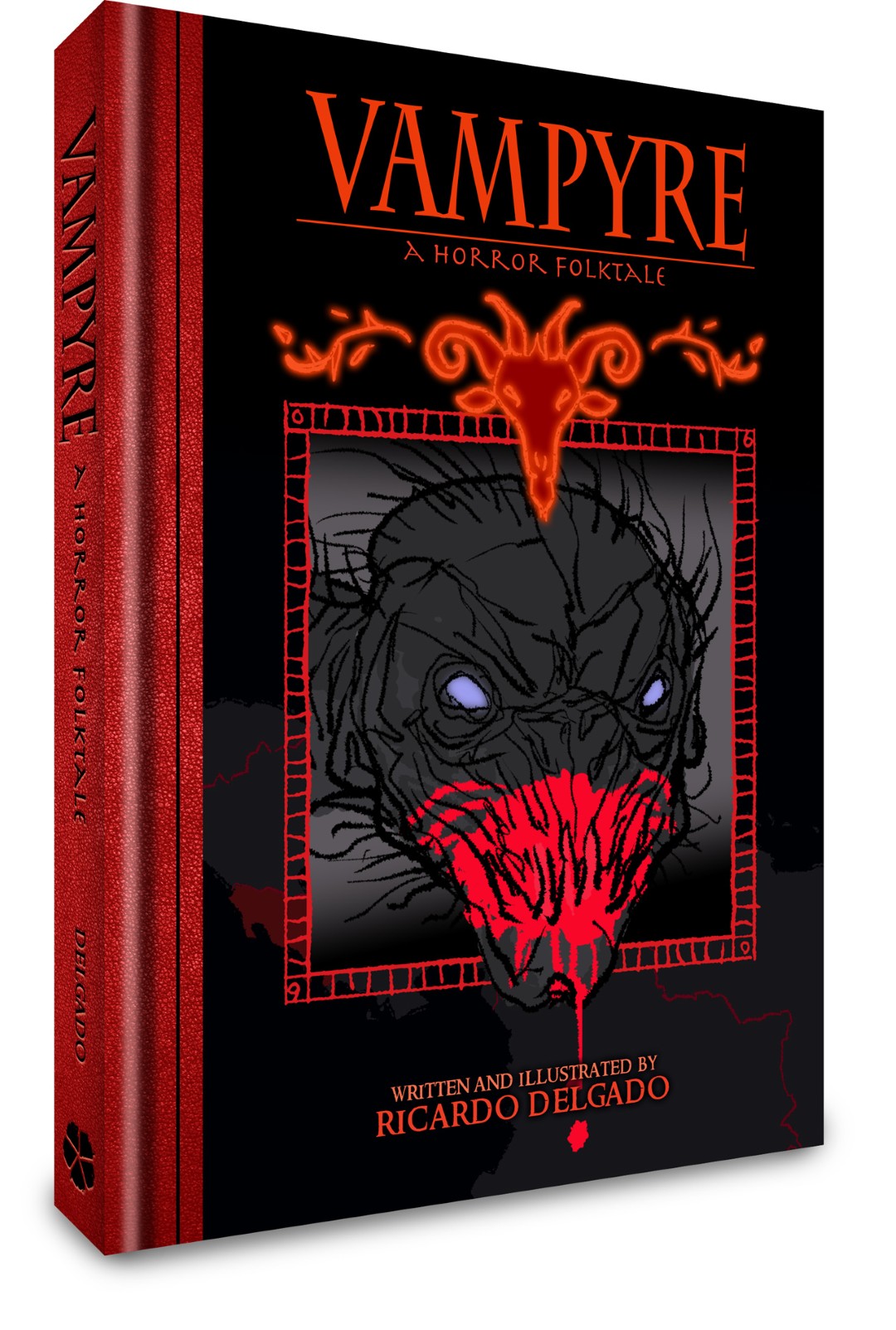
For more information, please visit https://www.kickstarter.com/projects/cloverpress/vampyre-a-horror-folktale
About the Author

Andrew Bistak When he's not trying to save the world, Andrew enjoys travel (although loathes turbulence), going to the movies, reading and being a dad to his two dogs (and now twins) with his wife.
Related Posts
SPIDER-WOMAN 50TH ANNIVERSARY SPECIAL #1 SETS THE STAGE FOR JESSICA DREW’S DARKEST ERA →

Comics Legend Mike Mignola Revisits Hellboy In Hell →
Conan The Barbarian #31 REVIEW →