|
|
||
|
Shame
Reviewed
by
Damien Straker on
February 15th, 2012 |
|
|
|
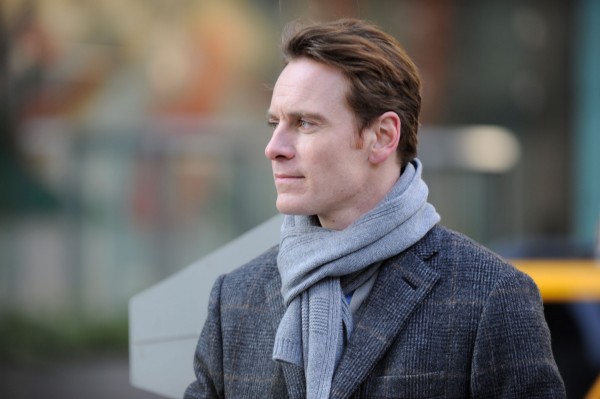
When I went to see Shame what surprised me was the number of middle-aged women watching the film in the audience. On paper Steve McQueen's film sounds like a blokes movie. The title 'Shame' is said to be a reference to the feeling a man experiences once he has ejaculated. Yet the subject of sex here is not for casual exploitation. McQueen is too intelligent for that. He is a trained visual artist and a director who has already challenged us with films like Hunger (2008). Everything in this film, including the sex, has purpose and intention. This is courtesy of the director's unique formal properties and composition that build a world of stasis, followed by an unwilling removal from that safety zone. Brandon's apartment and office are both filmed with white, sterile tones and large panes of glass. These are the cold, physical barriers that disconnect him from sustainable human connections. He is a character who is not interested in making long-term relationships with women but is content with brief sexual encounters and fleeting moments of pleasure. His cyclical nature is reflected in the opening scenes as he walks past the same still shot naked, the steady framing showing his stability and control. Outdoors, he is much the same because he wears one grey coat for most of the film, showing his repression and unchanging ways, but perhaps also an attempt to mask his shame too. His intensity is both an attraction and detriment towards women. His unflinching gazes makes a girl on a train deeply uncomfortable but there is also a very funny scene in a bar where he and his boss meet a group of women but only he succeeds. After trying and saying absolutely everything, his boss David fails because he lacks Brandon's control and self-assurance in knowing exactly what he wants and finding people who match that desire. Fassbender, unlucky to not be nominated for an Oscar, is astonishing in the haunting and intense qualities he gives this character, followed by savage outbursts of anger to counter his repression.
Sissy is Brandon's polar opposite and provides the
perfect
contrast to the controlled and isolated lifestyle. Mulligan in her
brief career
has proven to be an actress of great emotion and innocence. She is one
of the
most promising young talents but we've never seen Carey Mulligan like
this
before. She gives us something unique to her personality: flamboyance.
Due to her
entirely erratic nature Sissy is completely disruptive to Brandon's
structure. Inviting
herself in unannounced, she has a bath and plays records at full blast,
drinks
straight from a carton out of the fridge and becomes blindly entangled
with Brandon's
boss. These details build a picture of someone who is subconsciously
disruptive
of other people's spaces, which is a lot like Brandon, only in a
different way.
Her character is not a bad person, just one who has the desire to be
noticed in
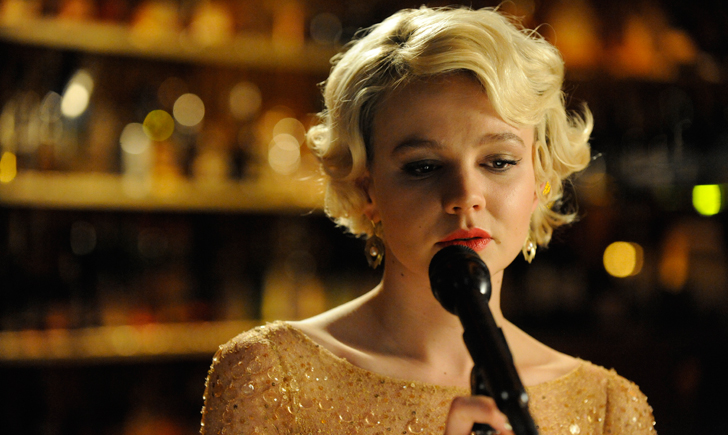
this dynamic city. The most poignant representation of this is a
classic moment
in cinema where Mulligan, who sang live no less, provides a leisurely
but
soulful rendition of 'New York, New York', emphasising her character's
desire
to adapt. As with Brandon, Sissy is defined by her costume too. There's
a great
two-shot in a train station photographing the pair of them together. We
see her
clothes, a leopard print coat and a bright red hat, juxtaposed against
his dark,
gloomy outfit. That one shot perfectly reflects what contrasting
characters
they are. A gutting climatic scene further shows this contrast in
colour but under
the most dramatic and powerful circumstances. Smartly, as she disrupts
Brandon's
life the formal qualities change as well. When she brings David to the
apartment McQueen switches to a handheld camera, and makes the framing
tighter
so that the action is intensified and shows that Brandon no longer has
control
of his whole life. Countering this is a wonderful sequence where
Fassbender is
photographed running down the block in a single tracking shot. It looks
beautiful but also servers to restore stability to his character. What
amounts
from these formal techniques is a film that has to be read because it
is subtle
and beautifully understated, visualising its characters with balance as
flawed
human beings. The film is marred only by a few extra endings but when
the last
one comes it is not cheap or overly ambiguous, just perfect. And who
can argue
with that? |
||