|
|
||
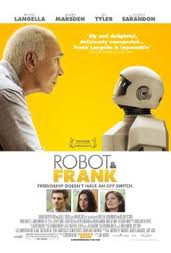
| Robot & Frank Reviewed by Andreas Wong on November 26th, 2012 Sony presents a film directed by Jake Schreier Screenplay by Christopher D. Ford Starring: Frank Langella, Susan Sarandon, Peter Sarsgaard, James Marsden and Liv Tyler Running Time: 92 minutes Rating: M Released: November 15th, 2012 |
|
|
|
Frank (Frank Langella) is a stubborn old man who lives in an anonymous town. He was formerly a professional thief and served prison time for stealing high-end jewellery. His skills were so notorious that his exploits were even referenced in police academies. Now in the twilight of his life, his once agile mind has lapsed into a demented state and his only excitement derives from pleasant flirtations with his local librarian, Jennifer (Susan Sarandon). His attorney son, Hunter (James Marsden), pays him weekly visits and he keeps in contact with his itinerant daughter, Madison (Liv Tyler), but only intermittently. Resentful of his father’s ungrateful detachment, Hunter decides to cease his visits and leave Frank with a robotic helper (voiced by Peter Sarsgaard). It engages in conversations, performs all household duties and helps Frank lead a healthy life. Frank is initially hostile towards the idea but swallows his pride after Hunter threatens to put him in a nursing home should he refuse. Meanwhile, a progressive developer named Jake (Jeremy Strong) implements plans to reform the local library, beginning with the digitalisation of the library’s collection. One day, Frank fortuitously discovers that the robot cannot factor in state and federal laws, and can thus help him commit robberies. He subsequently embarks on a mission to steal Jennifer’s favourite book, a rare edition of Don Quixote, from the library before it is digitalised, with the robot’s assistance. Frank’s reversion to thievery leads to many unexpected emotions and surprises.
|
||